
Reviewed · OLD TOWN TOURS
Katowice Old Town Walking Tour
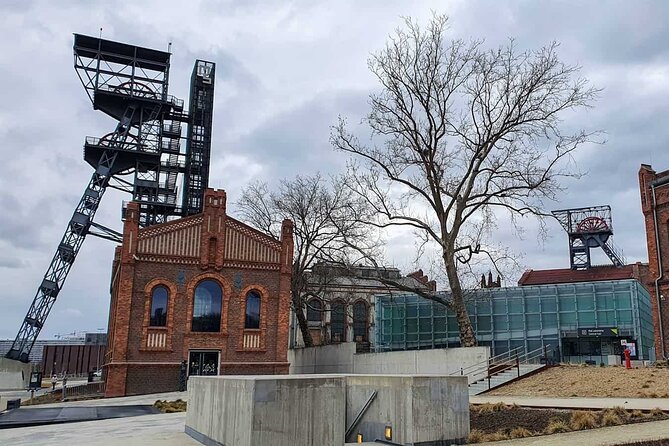
Katowice’s story is not told by one grand old square. It unfolds through Silesian identity, shifting borders, grand churches, communist-era shopping blocks, political buildings, and the famous flying-saucer shape of Spodek. This private walk gives you that wider picture while covering about 6.5 kilometers on foot.
I like two things right away: the mix of old and new, and the chance to ask your own questions in a private group. Guide Malwina is singled out for making the walk both interesting and educational, and a solo visitor received her full attention. The main drawback is the price, $81.62 per person, which is easier to justify for a small group than for one person.
Key points to know before you book
- A 6.5-kilometer route: You will walk steadily for about three hours, with several short stops rather than long indoor visits.
- Private English-language guiding: Only your group takes part, so you can shape the conversation around architecture, politics, religion, or Silesian culture.
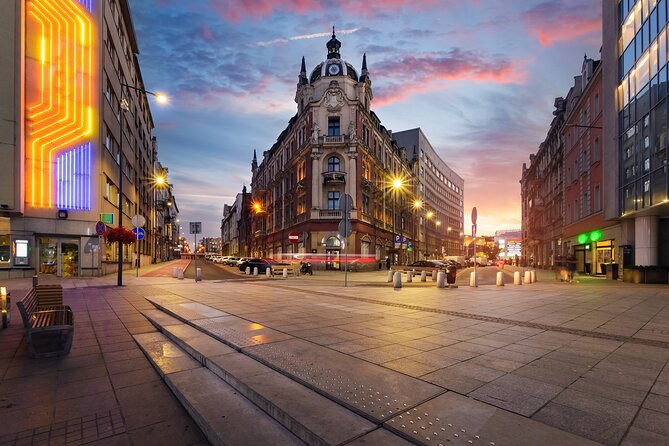
- A strong old-and-new contrast: The route links old tenements and churches with communist-era shopping buildings and the modern-looking Spodek arena.
- Free admission at the listed stops: The tour price covers the walking experience, while the stated stops do not carry an admission charge.
- A useful introduction to Silesia: The churches, parliament building, monuments, and streets help explain the region’s mixed Slavic and German influences.
- Good for active visitors: You need a moderate level of fitness, and poor weather can affect the departure.
Why this walk is really about Silesia, not just Katowice
Katowice is often treated as a practical industrial city, a place to pass through on the way to somewhere else. That misses the point. The city gives you a compact lesson in Silesia, a region shaped by changing political control, mixed cultural influences, religious variety, industrial growth, and twentieth-century upheaval.
This tour works because it puts those subjects on the street. You are not simply looking at facades. You are moving from the main square to churches, civic buildings, shopping streets, monuments, and a major city symbol. Each stop adds another piece.
The walk is conducted in English and is private, which matters here. Katowice’s story has details that can be hard to read from a building alone. A guide can explain why a church feels different inside and out, why a former parliament matters, and how monuments connect to the Silesian uprisings.
The route lasts about three hours, but it is not a slow stroll around one small square. The stated distance is 6.5 kilometers. Wear comfortable shoes and treat the walk as a serious city outing, not a quick orientation.
More Old Town Tours in Krakow
- Old Town Krakow & Wawel Castle Walking Tour
★ 5.0 · 1,508 reviews - Krakow: Bike Tour of Old Town, Jewish Quarter and the Ghetto
★ 4.9 · 1,155 reviews - Krakow: The Old Town Walking Tour
★ 4.8 · 794 reviews
Starting at Market Square and the Silesian Theatre
The meeting point is the Silesian Theatre at Rynek 10. Beginning here gives you a useful first look at Katowice’s changing center.
Market Square brings together several layers of the city. You see the Silesian Theatre, the Skarbek and Zenit buildings, and some of the oldest structures in the city. The Skarbek and Zenit buildings also point to a less romantic but important part of Polish urban life. They were once the shopping dream place of communist Poland, a reminder that department stores can carry political and social meaning as well as consumer appeal.
That contrast is one of the best reasons to take this walk. An old building and a communist-era commercial block may sit within the same urban story, but they tell very different tales. You get a look at how Katowice’s center changed with the times.
The square is also described as a local place for eating, drinking, and nightlife. That makes it worth noting for later. You can use the tour to spot the part of central Katowice that suits you for an evening, though the walk itself is focused on explanation and sightseeing rather than a food stop.
You spend about 15 minutes here. That is enough for an introduction, exterior views, and questions, but not enough for a long architectural study. If you want extended time inside the theatre or a detailed look at every facade, you may need to return on your own.
Inside the Immaculate Conception Church
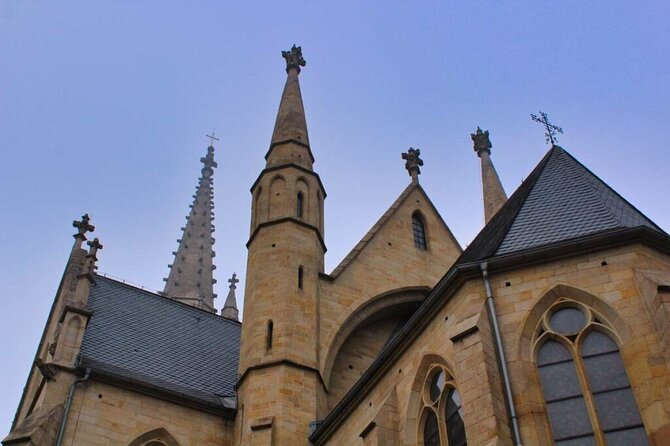
The next major stop is the Immaculate Conception Catholic Church, also called Kosciol Mariacki. You get about 10 minutes here.
The church is presented as an architectural highlight from the outside, with works by leading Polish artists inside. That short stop gives you a chance to compare the building’s exterior form with its interior religious art.
This is also where the tour’s focus on Silesian spirituality becomes more useful. The churches are not treated as isolated monuments. They help show how religion fits into a region shaped by different cultural and political influences.
Do not expect a long church visit with time for quiet study of every artwork. Ten minutes is a brisk look. Still, the stop earns its place because it gives the route a strong visual change after the commercial buildings and market setting.
Music, civic power, and the Silesian Parliament
The Academy of Music in Katowice follows, with about seven minutes allotted. It is described as the most prestigious music academy in Poland. Even with a short stop, the building gives the walk another angle on the city: Katowice is not only about industry and political change, but also about serious musical training and cultural life.
The short timing means this is mainly an exterior visit and a chance to hear why the institution matters. If music is your main interest, ask your guide about the academy while you are there. A private format makes that sort of question easier than it would be in a large group.
The Silesian Parliament is next, with about 10 minutes. This was the former seat of parliament for the Autonomous Silesia Region. That detail is central to understanding why Katowice matters beyond its city boundaries.
The building connects the route to Silesian self-government and regional identity. After seeing a church tied to spiritual life and an academy tied to culture, you arrive at a building tied to political authority. The sequence is well judged, even if the stop itself is brief.
You should think of this part of the walk as a guided introduction to institutions rather than a formal tour of their interiors. The information is valuable because the buildings provide a physical route through the region’s religious, cultural, and political life.
More Walking Tours in Krakow
- Creepy Krakow: 2-Hour City Walking Tour
★ 4.7 · 1,131 reviews - Krakow: Kazimierz Jewish Quarter Walking Tour
★ 4.8 · 571 reviews - Kraków: Old Town & Wawel Castle Walking Tour in English
★ 4.8 · 532 reviews - Krakow: Evening Walking Tour with Spooky Stories
★ 4.7 · 500 reviews
A local theater and Katowice’s informal side
Along the way, the walk passes a theater described as a local favorite with an informal atmosphere. The name is not specified in the tour details, so you should not book this section expecting a particular theater performance or an interior visit.
Its value is more local and everyday. The stop points away from official monuments and toward the places people use for culture and social life. That makes the route feel less like a parade of famous buildings.
The tour also passes a venue used for art exhibitions, international meetups, and other events. Again, the point is not a scheduled event or guaranteed entry. It is a look at how central Katowice continues to serve as a meeting place for art, discussion, and public life.
These brief, less formal stops help balance the large civic landmarks. You see not only what Katowice commemorates, but also where people gather now.
Cathedral of Christ the King and Silesian spirituality
The Cathedral of Christ the King receives about 10 minutes. From the outside, it looks Catholic-like, while its interior is described as Protestant-like. That unusual contrast is used to represent Silesia’s mixed origins and spiritual character.
You do not need to be an architecture expert to appreciate the idea. The building gives you a clear visual prompt: religious identity in Silesia is not always as simple as a first glance suggests. The guide can connect the exterior and interior to the region’s shifting cultural influences.
This may be one of the most rewarding stops if you enjoy places that carry more than one meaning. It is also another reason the private format helps. You can ask about the design, the religious contrast, or the broader history of Silesia without worrying about holding up a large party.
The 10-minute schedule keeps the walk moving. If the cathedral is your main reason for booking, check with the guide about how much interior time is possible. The tour information promises the stop, but not a lengthy visit or a special admission arrangement.
Miarka Square, Dworcowa, 3 Maja, and Stawowa
The longest section of the route lasts about 30 minutes and passes through Miarka Square, Dworcowa Street, 3 Maja Street, and Stawowa. This is where you get the clearest sense of Katowice as a functioning city rather than a collection of monuments.
The route highlights nineteenth-century tenement buildings and the oldest high school in Katowice. Tenements are especially useful for understanding urban growth because they show how the city expanded and how ordinary city blocks can carry architectural character.
Stawowa also gives the walk a more street-level feel. You move through the commercial center and see how older buildings share space with later development. This is a good stretch for asking your guide to point out details you might otherwise miss.
A 30-minute walking section also explains why footwear and fitness matter. The total distance is not extreme for an active person, but you will spend much of the tour standing and walking. There is no indication of a dedicated meal break, so eat beforehand if you need regular food stops.
The route also passes a monument honoring Silesian scouts who opposed the Nazis in 1939. That small detail brings the Second World War into the city walk through a local story, rather than treating the period as a distant chapter.
The Silesian Insurgents’ Monument
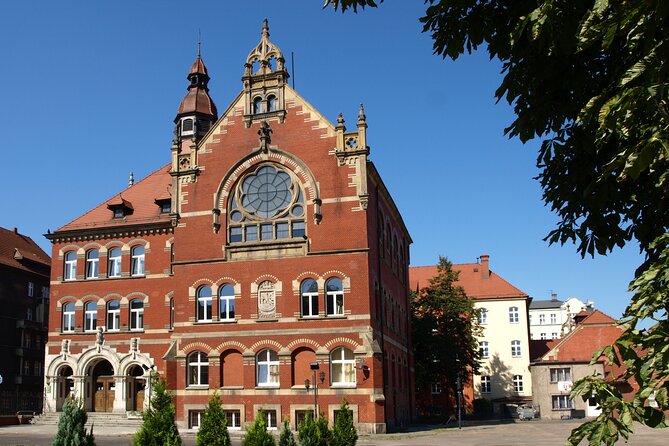
The Silesian Insurgents’ Monument is a 10-minute stop. It commemorates three Silesian uprisings, giving the tour a direct link to the region’s struggles over identity and political control.
This monument is important because it turns a complicated regional subject into something visible in the public space. The Silesian uprisings are part of the reason the region’s past cannot be reduced to a simple Polish or German story.
The earlier stops prepare you for this one. The former parliament introduces regional political power, the churches show spiritual complexity, and the streets reveal layers of city growth. At the monument, those threads come together around Silesian political history.
You will get more from the stop if you ask the guide to explain what the uprisings meant for Silesia. Since the tour is private, this is a natural place to slow the conversation and request more context.
Spodek, the unmistakable city symbol
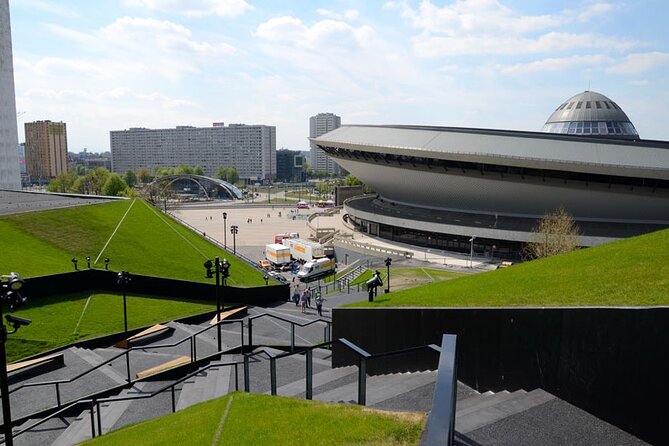
The final listed stop is Spodek, with about 10 minutes. Its saucer-like form is the symbol of Katowice, and it provides a memorable finish to the route.
Spodek gives you the strongest visual contrast of the day. Earlier, you have seen old buildings, nineteenth-century tenements, churches, and civic architecture. Here, the city presents a bold modern shape that is instantly different from the historic center.
The stop is brief, but that is enough to see the building, take photographs, and hear why it matters to Katowice. Since the tour ends back at the Silesian Theatre, Spodek is not the end of your day in practical terms. You return to the original meeting point after completing the circuit.
This final pairing of Spodek with the old center is one of the walk’s best features. You leave with a picture of Katowice that includes both its older urban fabric and its modern public identity.
What the $81.62 price gives you
At $81.62 per person, this is not a budget walking tour. The value rests in the private format and the guide’s attention, not in paid admissions. The listed stops have free admission, and there is no stated meal, transport, or attraction ticket included.
For a group, the cost may make more sense, especially since group discounts are available. A private guide can adjust the conversation, answer specific questions, and keep the pace suited to your party. That flexibility is the main thing you are paying for.
For one person, the price is harder to defend unless you place a high value on individual attention. One solo visitor had the guide’s full attention, which can turn a standard city walk into a much more personal lesson. You should decide if that matters to you before booking.
The three-hour duration is also useful. You cover a broad part of central Katowice without giving up an entire day. Since the route includes history, religion, architecture, politics, and modern city life, the price can be fair for someone who wants a structured first look rather than a self-guided walk.
Who should book this Katowice walk
I would choose this tour if you want context more than a checklist of photo stops. It suits first-time visitors who want to understand Silesia, people interested in architecture and city history, and anyone who prefers a private conversation over a large group.
It is also a strong fit for solo visitors who want to ask many questions. Malwina is specifically praised for her experience and for making the walk an active learning session. You should not assume she will be your guide unless your booking confirms it, but her approach suggests the kind of guiding this experience aims to provide.
You may want another option if you dislike long walks, need frequent sitting breaks, or want lengthy indoor visits. The route covers 6.5 kilometers, and most stops last only seven to 15 minutes. Poor weather can also lead to a different date or a full refund, so keep your schedule flexible.
The tour requires a moderate level of physical fitness. It is near public transportation, and service animals are allowed. Confirmation is sent within 48 hours, subject to availability. Free cancellation is available until 24 hours before the local start time, while later cancellations and changes are not refunded or accepted.
Should you book the Katowice Old Town Walking Tour?
Book it if you want Katowice explained as a Silesian city, not just displayed as a set of buildings. The route’s best qualities are its range, its private format, and its link between churches, civic power, local streets, regional conflict, and Spodek.
The price is the key question. It is a better deal for a small group using the discount than for a solo visitor counting every dollar. Still, solo visitors who value one-to-one guiding may find the personal attention worthwhile.
I would book this for an active three-hour introduction, especially at the start of a Katowice stay. You will finish with clear places to revisit, a better sense of Silesian identity, and a city story that reaches well beyond the market square.
FAQ
Where does the Katowice Old Town Walking Tour start?
The tour starts at the Silesian Theatre, Rynek 10, 40-003 Katowice, Poland.
Where does the tour end?
The activity ends back at the original meeting point at the Silesian Theatre.
How long does the walking tour last?
The tour lasts approximately three hours.
How far do you walk?
The route covers about 6.5 kilometers, so a moderate level of physical fitness is needed.
Is this a private tour?
Yes. Only your group takes part in the activity.
What language is offered?
The tour is offered in English.
Can I cancel for a full refund?
Yes, if you cancel at least 24 hours before the experience start time. Cancellations or changes made less than 24 hours before the start are not refunded or accepted. If bad weather or an insufficient number of participants causes cancellation, you are offered another date or a full refund.
Recently added in Krakow
- Auschwitz-Birkenau and Krakow Private Car Trip from Katowice★ 4.3 · 3 reviews
- Wawel Castle, Old Town with St. Mary’s Church Guided Tour★ 5.0 · 3 reviews
- Wawel Castle, Cathedral, Rynek Underground Tour with Lunch★ 5.0 · 3 reviews
- From Krakow: Chocholow Thermal Hot Springs (hotel pick up)★ 5.0 · 3 reviews
- Private tour to Zakopane and Thermal Baths from Krakow★ 5.0 · 3 reviews
- Legends of Cracow ROBOTIC SHOW★ 4.0 · 3 reviews
- Guided Beer Tour in Krakow★ 4.5 · 3 reviews
- From Krakow: Zakopane and Thermal Pools Guided Trip★ 5.0 · 3 reviews
Old Town Tours, compared.




Bike Tour of Old Town, Jewish Quarter and the Ghetto
Read our review →

Sightseeing EcoCruise around the Old Town of Gdansk
Read our review →
Where else this one turns up