Reviewed · KRAKOW TOURS
Guided Tour of Plaszow Concentration Camp, Kraków
Plaszow is not a site of grand buildings or polished exhibits. It is an open, quiet place where the missing evidence is part of the story. A guide helps you read the ground, the cemetery traces, the memorials, and the few surviving structures as you confront what happened here.
I like two things in particular: the tour gives proper time for reflection, and it explains the camp as a working system rather than reducing it to a few famous names. The Schindler connection adds useful context, but the victims remain at the center. The main drawback is simple: with so few original structures left, you need patience and imagination to picture the camp.
Key points about the Plaszow tour
- Two hours at a quiet memorial site: The route is paced for thought rather than speed.
- A camp built over Jewish cemeteries: You learn how the Nazis destroyed and reused sacred ground.
- The Grey House and cemetery remains: These are among the clearest physical links to Plaszow’s past.
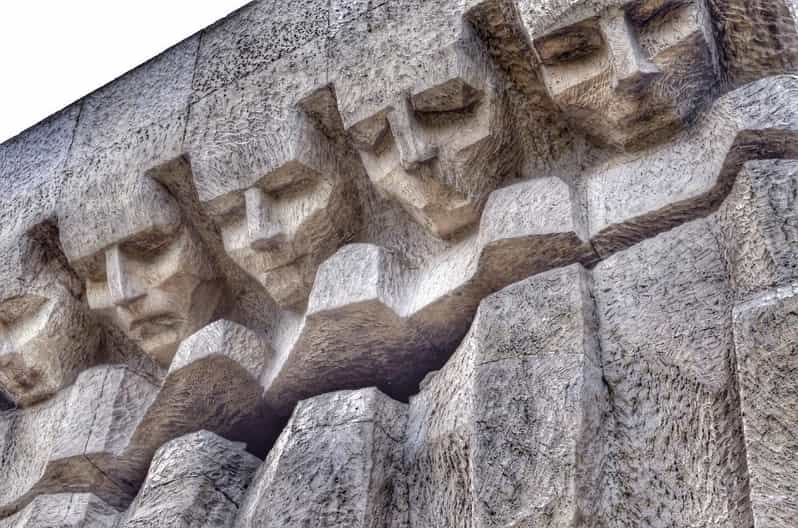
- The Monument of Torn-Out Hearts: You pause at one of the site’s major memorials to the murdered prisoners.
- Schindler’s role in context: The tour explains how work permits and transfers helped save more than 1,000 people.
- One tram ticket included: Arrive 10 minutes early and look for the guide carrying an excursions.city sign.
Why Plaszow feels different from other Kraków memorial sites
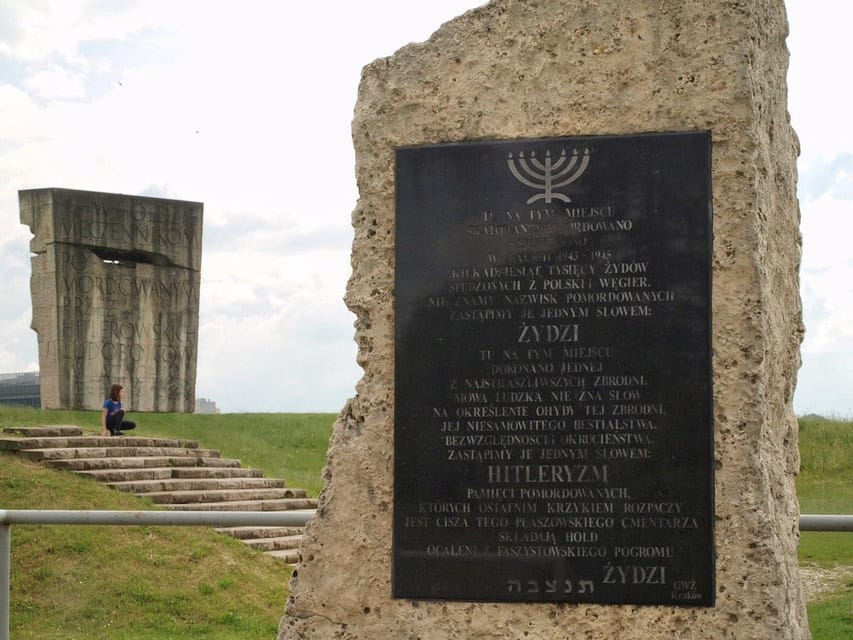
Many historic sites give you rooms, walls, documents, and objects to study. Plaszow offers far less. The camp was dismantled, altered, and left with only scattered remains, memorials, and traces of its former use.
That can make an unguided visit difficult. You may see open ground and have trouble understanding where the barracks, work areas, roll-call square, hospital, and administrative sections once stood. A good guide supplies the missing framework without turning the place into a stage set.
This is a serious visit, not a sightseeing stop to squeeze between cafés. The quiet matters. So does the lack of spectacle. You are asked to look closely, listen, and consider how an ordinary part of Kraków was turned into a place of forced labor, imprisonment, and murder.
The tour lasts two hours, which is a useful length here. It gives you time to move between the major points without making the visit feel like a rushed checklist. You will not see every detail of Plaszow’s complicated history, but you should leave with a clear sense of how the camp worked and why the site matters.
A few more Krakow half days to consider
- From Krakow: Auschwitz-Birkenau Guided Tour & Hotel Pickup
★ 4.5 · 33,358 reviews - From Krakow: Auschwitz-Birkenau Guided Tour & Hotel Pickup
★ 4.5 · 29,340 reviews - Krakow: Auschwitz Guided Tour with Optional Hotel Pickup
★ 4.5 · 15,280 reviews
From Jewish cemeteries to a Nazi camp
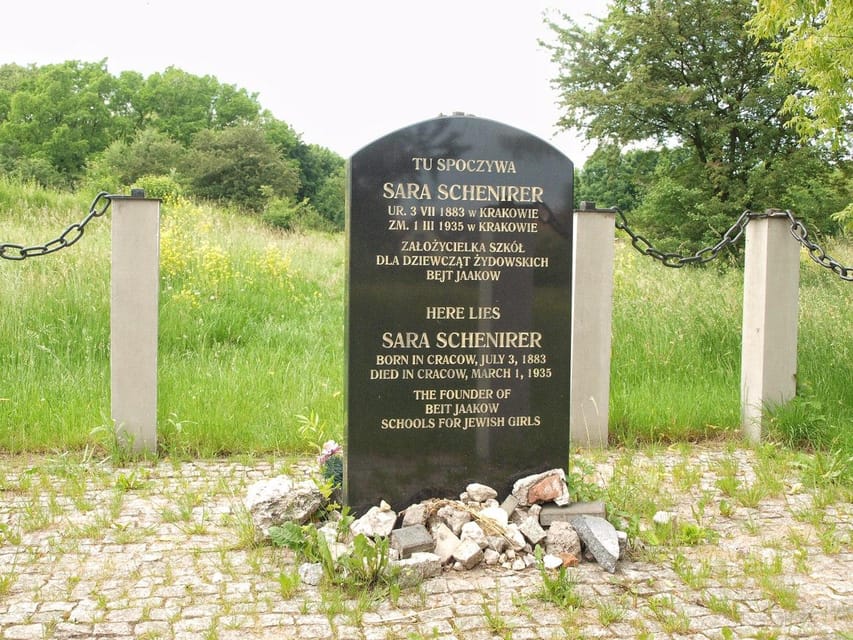
Plaszow was created in October 1942 by the Nazi German occupiers on the grounds of two Jewish cemeteries in Kraków. That fact gives the visit an especially painful starting point. The site was not empty land. It was a place connected to Jewish burial and memory before it was transformed into a camp.
The camp first held Jewish prisoners forced into labor after the liquidation of the Kraków Ghetto. From July 1943, a separate penal-labor section also held Poles. In January 1944, Plaszow was redesignated as a concentration camp.
Your guide explains these changes because the camp did not remain the same throughout its existence. Its purpose, prisoner population, and administration shifted over time. Plaszow also became a transit camp for Hungarian Jews being sent to Auschwitz, tying the site to the wider machinery of deportation.
More than 35,000 people were imprisoned at Plaszow. Around 6,000 were murdered. Executions took place at several points within the camp, and mass graves now sit beneath or near memorial areas. The numbers are stark, but the guide’s job is to connect them to the physical place, so the figures do not float free of the ground beneath your feet.
Reading the few remains at the Grey House
The Grey House is one of the key surviving structures you visit. Its presence helps you understand why Plaszow can feel both tangible and difficult to grasp. One building remains, but the larger camp around it has mostly disappeared.
You also see the ruins of the pre-burial hall and traces of the old Jewish cemeteries. These fragments are not decorated for easy understanding. The guide explains what they were, how the Nazis used the area, and how the cemetery grounds were damaged and incorporated into the camp.
One especially troubling detail is that some paths were paved with fragments of gravestones. That single fact says a great deal about the deliberate destruction of Jewish identity and religious memory. It also gives you something concrete to watch for as you walk.
Do not expect a sequence of preserved interiors. The value lies in understanding what is missing and why. If you prefer museums with labels and original rooms, this visit may feel spare. If you want to see the actual setting and hear how it changed, the guide makes the remains far more legible.
The roll-call square and the camp’s working system
The route includes the former roll-call square, a place where prisoners were assembled and counted. This stop helps shift your understanding of Plaszow from a collection of tragic incidents to an organized camp with strict routines and separate functions.
The guide outlines the living, hospital, administrative, and industrial sections. That organization matters. Prisoners were not simply held in one undifferentiated area. The camp operated through labor, punishment, medical control, administration, and movement between different parts of the site.
You also learn about the camp’s early role as a forced-labor facility for Jews from the liquidated Kraków Ghetto. Later changes brought Polish prisoners into the penal-labor section, and the camp’s redesignation in 1944 reflected its place within the wider concentration-camp system.
This is where the walking format earns its keep. As you move from one area to another, you can begin to understand the distances and relationships between them. The site does not hand you an easy visual reconstruction, but the guide helps you build one carefully.
A different kind of day in Krakow:
- Krakow–Zakopane: Cable Car, Chocholow Baths, Cheese & Vodka
★ 5.0 · 10,720 reviews - Krakow: Auschwitz-Birkenau Guided Tour with Pickup & Lunch
★ 4.5 · 9,800 reviews - From Krakow: Wieliczka Salt Mine Tour
★ 4.6 · 9,393 reviews - Krakow: Auschwitz-Birkenau Guided Tour Pickup/Lunch Options
★ 4.5 · 9,057 reviews
Memorials, executions, and a place for silence
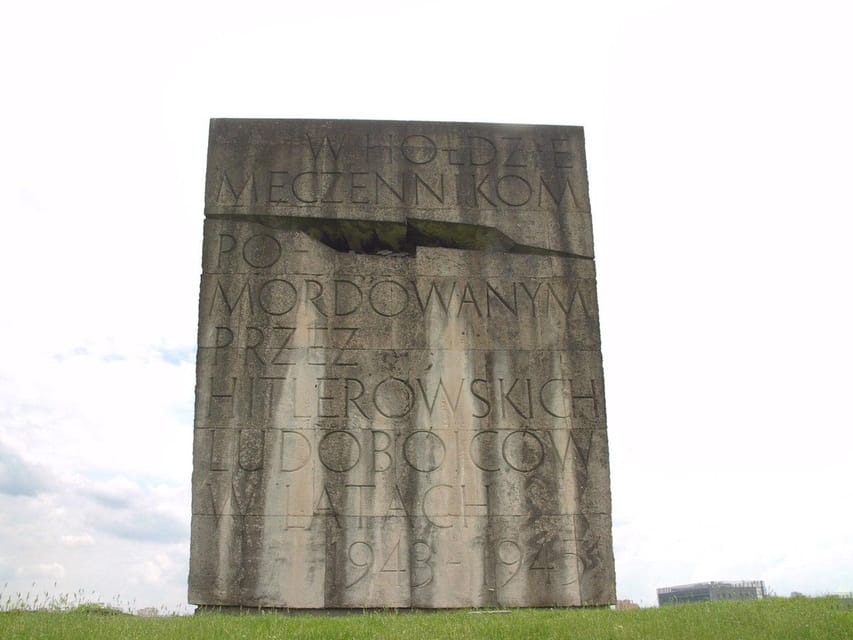
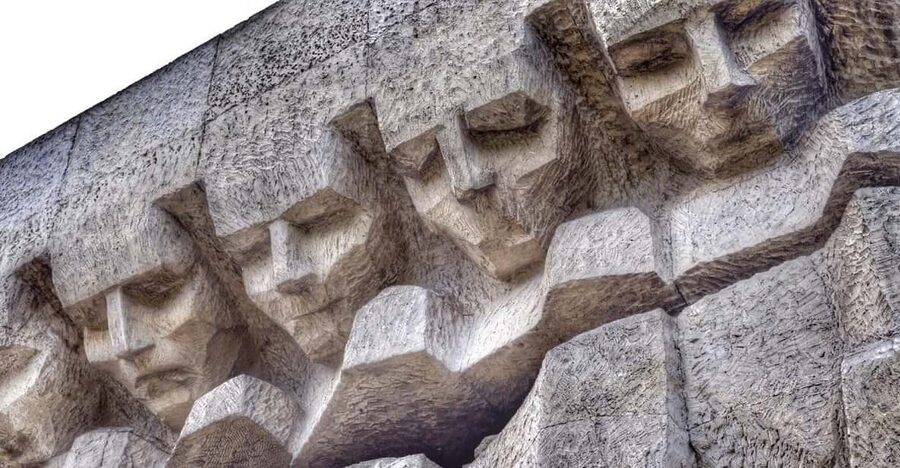
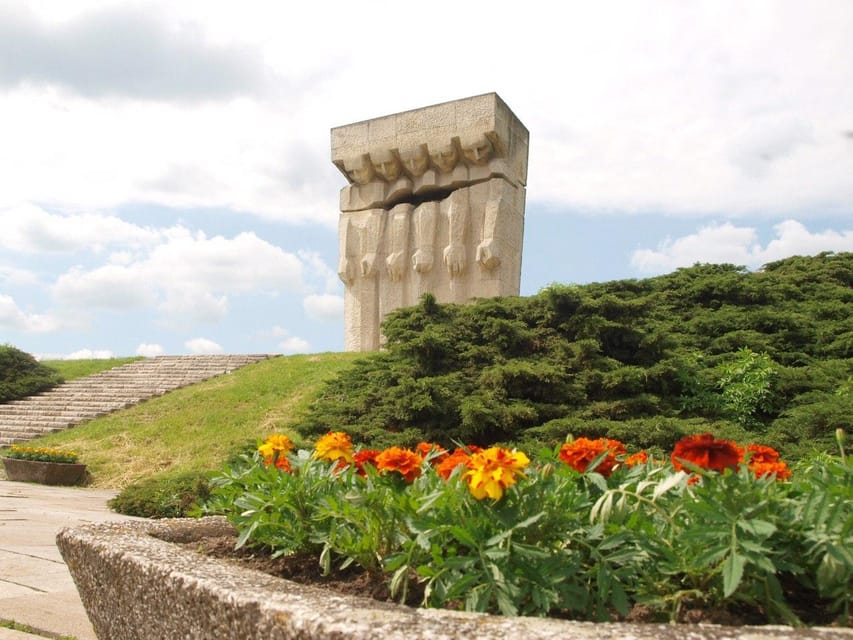
Plaszow contains several memorials connected to the people murdered here. You pause at major markers, including the Monument of Torn-Out Hearts, which is the central memorial named in the tour.
The monument gives the visit a clear point for remembrance. Yet the route does not treat it as the only meaningful place. Executions took place at several locations, and mass graves are marked across the former camp area. The guide places those sites within the wider story of imprisonment and terror.
I appreciate that the route is described as paced for reflection. That is not a minor detail. At a place like Plaszow, rushing from one point to the next can flatten the experience into dates and names. A slower walk lets you stop, listen, and think about what the memorials represent.
The site’s open character can also be emotionally demanding. There are no walls to contain the story, and no single building to tell you exactly where to look. You may need to pay close attention to the guide’s explanations and allow yourself time to absorb the setting.
Oskar Schindler’s connection to Plaszow
Oskar Schindler is an essential part of Plaszow’s story, but this tour treats him as one part of a much larger history. His enamelware enterprise obtained work permits for Jewish prisoners registered through Plaszow. Those permits helped protect people from further transports.
Later, Schindler arranged for his workers to be transferred to his wartime plant in Brünnlitz. More than 1,000 lives were saved through this effort. The story is widely known because of the film Schindler’s List, but the real value of this stop is seeing how the story fits into Plaszow’s administration and prisoner system.
You learn about filming locations connected with the movie as well. That can be useful for film fans, especially if you have visited Schindler-related sites elsewhere in Kraków. Still, the tour does not need the film to justify the visit. The camp’s own history is powerful enough.
A balanced approach matters here. Schindler’s actions deserve attention, but Plaszow was not created to tell his story. Thousands were imprisoned, and around 6,000 were murdered. The guide keeps the focus on the wider group of victims while explaining why Schindler’s name is so closely linked to the site.
What the $29 price includes
At $29 per person, this tour offers reasonable value if you want help making sense of a difficult open-air site. The price includes a licensed guide and a single tram ticket, so you are not paying only for transportation or a brief introduction.
The guide is the main reason to book. Plaszow’s remains are limited, and an English-speaking professional can connect the Grey House, cemetery traces, roll-call square, memorials, and former camp sections into one clear account. Without that framework, you may recognize a few locations but miss how they fit together.
The group size is not specified, so you should not book expecting a private tour. Still, the pace and guide-led format allow time for questions. An especially small group can make the visit more personal. One participant had a guide all to themselves, and the guide took time to answer questions in detail. You cannot count on that arrangement, but it shows the tour can support a thoughtful conversation when numbers are low.
The overall rating is 4.8 from seven ratings, with repeated praise for clear explanations, careful detail, and guides who take questions seriously. One English-language comment simply called the guide great, while other comments in French, Italian, and Spanish describe the guide as passionate, accurate, and helpful. The activity itself is offered in English only, so choose that language when booking.
Timing, meeting point, and practical matters
Plan to arrive at least 10 minutes before departure. Look for the guide holding an excursions.city sign. This is worth taking seriously because late arrivals cannot join once the group has left, and the ticket cannot be refunded after that point.
A tram ticket is included, which removes one small task from the journey to the site. The tour lasts two hours, and starting times vary, so check the available departure before booking.
The activity is listed as wheelchair accessible. If that matters for your visit, you should still consider the nature of an open historic site and confirm the route details at booking. The information provided confirms accessibility, but it does not describe every surface or slope.
You can cancel up to 24 hours before the tour for a full refund. The reserve-now, pay-later option is useful if your Kraków plans are still shifting. These policies do not change the character of the visit, but they make it easier to fit into a short city break.
Who should book this walk
I would choose this tour if you want historical context, a quiet memorial visit, and a guide who can explain what no longer survives. It suits visitors who have already seen Kraków’s major museums and want to understand how the city’s wartime story extended beyond its preserved buildings.
It is also a good fit if Schindler’s List brought you to Kraków, provided you are ready to look beyond the film. You will see related locations and hear about Schindler’s role, but the focus remains on Plaszow and the people imprisoned there.
The tour may be less suitable if you want a highly visual attraction with many intact rooms and objects. Plaszow is mostly open ground, memorials, ruins, and traces. That sparseness is historically meaningful, but it demands more attention than a museum visit.
Families and school-age children may find the subject difficult. The activity is a serious walk through a former camp and execution site. The guide’s explanations are important, and you should decide in advance if the history is appropriate for your group.
Should you book the Plaszow concentration camp tour?
Book it if you want to understand Plaszow rather than simply photograph a memorial. The guide adds real value because so much of the camp has vanished, and the two-hour pace gives you room to think instead of rushing through a grim list of facts.
At $29, the package is fair for a licensed English-speaking guide, a tram ticket, and a careful route through the major remains and memorials. Go with the right expectation: this is a quiet place of memory, not a conventional attraction. If you can accept the open ground and the need to imagine what is gone, this walk offers one of Kraków’s most important historical encounters.
FAQ
How long does the Plaszow concentration camp tour last?
The guided walk lasts two hours.
What language is the tour conducted in?
The live tour guide speaks English. Group tours are offered in one language, so select English when booking.
What is included in the ticket?
The ticket includes a licensed guide and a single tram ticket.
How much does the tour cost?
The price is $29 per person.
Where do I meet the guide?
Look for the guide holding an excursions.city sign at the designated meeting point.
How early should I arrive?
Arrive 10 minutes before the tour begins. Latecomers cannot join after the group has departed, and their tickets cannot be refunded.
Is the tour wheelchair accessible?
Yes, the activity is listed as wheelchair accessible.
Can I cancel the booking?
Yes. You can cancel up to 24 hours in advance for a full refund. You can also reserve now and pay later.
Recently added in Krakow
- Auschwitz-Birkenau and Krakow Private Car Trip from Katowice★ 4.3 · 3 reviews
- Wawel Castle, Old Town with St. Mary’s Church Guided Tour★ 5.0 · 3 reviews
- Private tour to Zakopane and Thermal Baths from Krakow★ 5.0 · 3 reviews
- Wawel Castle, Cathedral, Rynek Underground Tour with Lunch★ 5.0 · 3 reviews
- From Krakow: Chocholow Thermal Hot Springs (hotel pick up)★ 5.0 · 3 reviews
- Legends of Cracow ROBOTIC SHOW★ 4.0 · 3 reviews
- From Krakow: Zakopane and Thermal Pools Guided Trip★ 5.0 · 3 reviews
- Guided Beer Tour in Krakow★ 4.5 · 3 reviews
Krakow Tours, compared.
Auschwitz-Birkenau Guided Tour & Hotel Pickup
Read our review →Auschwitz Guided Tour with Optional Hotel Pickup
Read our review →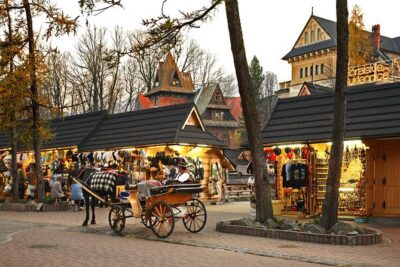
Zakopane: Cable Car, Chocholow Baths, Cheese & Vodka
Read our review →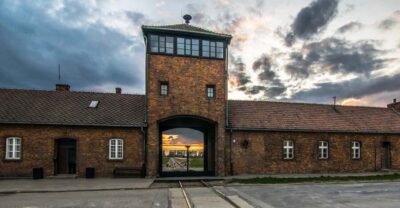
Auschwitz-Birkenau Guided Tour with Pickup & Lunch
Read our review →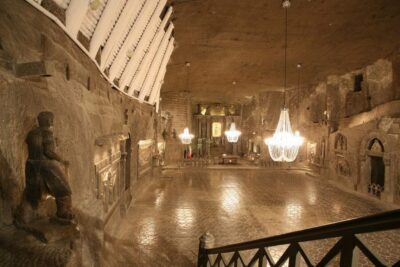
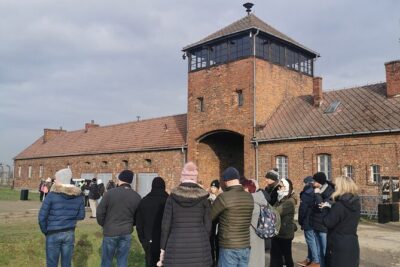
Krakow to Auschwitz Birkenau Guided Tour with Transfer and Ticket
Read our review →
Wieliczka Salt Mine Guided Tour with Transport
Read our review →