
Reviewed · AUSCHWITZ-BIRKENAU MEMORIAL TOURS
From Krakow: Auschwitz-Birkenau Tour with Transportation
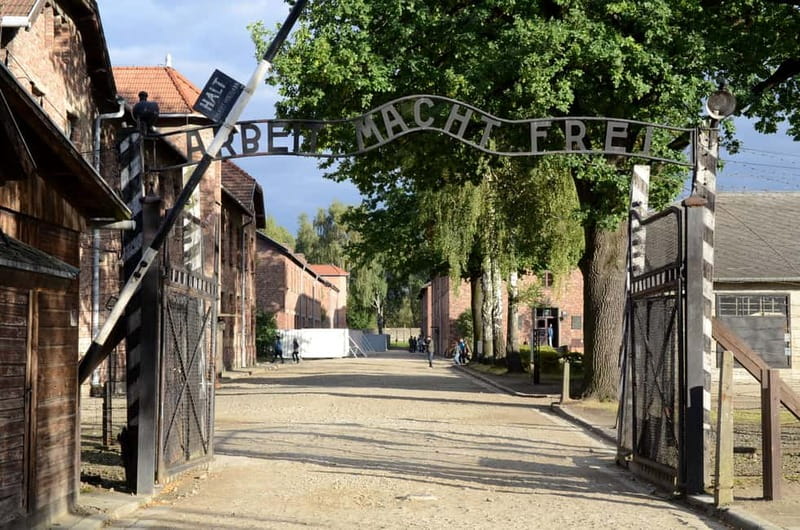
Auschwitz-Birkenau is not a sightseeing stop you simply check off. It is a place of evidence, silence, and difficult facts. This Krakow tour takes you to both Auschwitz I and Auschwitz II-Birkenau, with time at the Judenrampe, where deportation trains arrived and an original rail car remains.
I like the practical setup: round-trip transport from central Krakow and a film during the roughly 75-minute ride help you arrive with some historical context. I also like the choice between a live guide and a self-guided booklet with maps and a suggested route. The main consideration is that this is a long, tightly scheduled day, and the quality of your interpretation depends on the option you book.
Key points to know before booking
- Both camps are included: You visit Auschwitz I and the much larger Auschwitz II-Birkenau site.
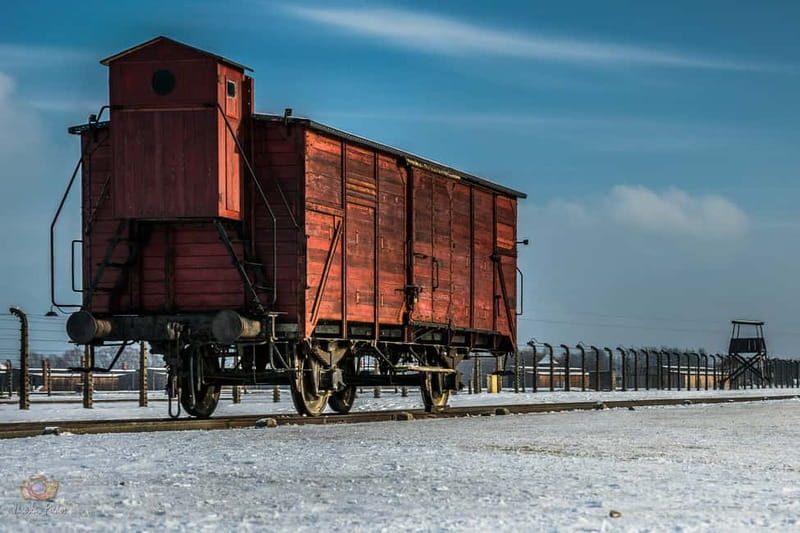
- The Judenrampe adds important context: You see the original camp train car and the rail area used for deportations.
- Guide options change the experience: Some bookings include a professional guide and 3.5-hour guided visit, while others rely on a booklet or tour host.
- Transport is a real benefit: The drive from Krakow takes about 75 minutes each way in a modern vehicle.
- Names must match your ID: Auschwitz-Birkenau requires full participant details, and an incorrect name can lead to refused entry.
- Plan for a serious, active day: Comfortable shoes are essential, large bags are not allowed, and the site is not suitable for wheelchair users or people with mobility impairments.
Why this Auschwitz trip matters
Auschwitz was first established by Nazi Germany as a concentration camp for Polish political prisoners. By June 1940, Jewish prisoners and more than 700 political prisoners had been sent there. The camp system later became the largest site of mass murder during the Holocaust.
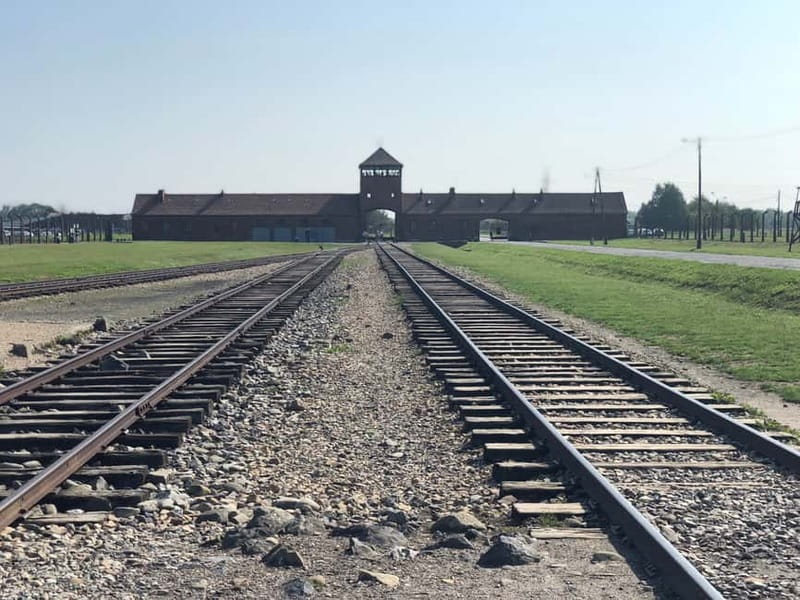
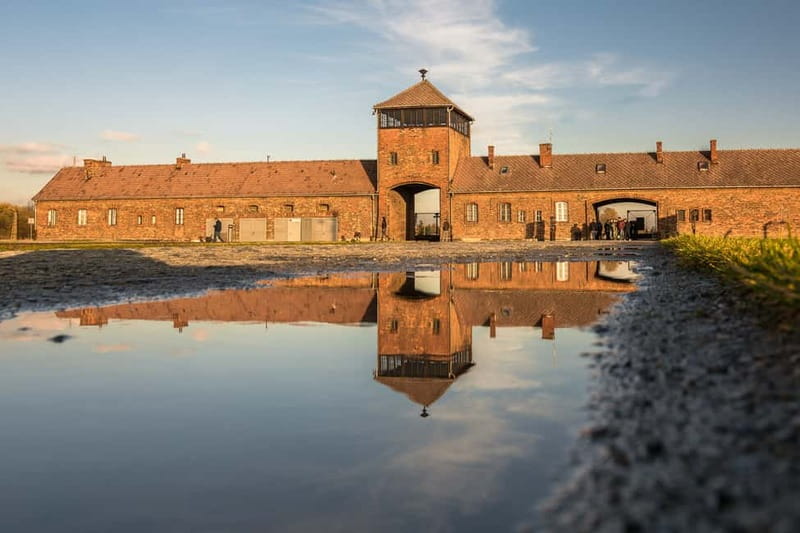
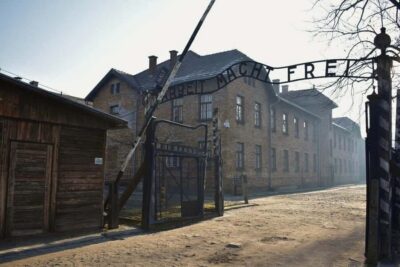
You will see two very different places. Auschwitz I is the original camp, with brick barracks, museum displays, Block 11, the former prison, and the offices from which the camp system expanded. Auschwitz II-Birkenau is far larger and more open, with rows of barracks, watchtowers, fences, rail lines, ruins of gas chambers, and areas where human ashes were scattered.
I find it useful to know this before you arrive: the visit is not built around one single memorial. The power comes from the physical remains and the way the two sites show different parts of the camp system. Auschwitz I helps you understand control, imprisonment, punishment, and killing. Birkenau shows the scale of deportation and mass extermination.
The subject is painful, and the museum expects quiet, respectful behavior. That is not a formal detail to skim over. You will have a better visit if you treat the day as a memorial visit rather than a standard historical attraction.
Other guided visits to the Auschwitz-Birkenau Memorial:
- From Krakow: Auschwitz-Birkenau Guided Tour & Hotel Pickup
★ 4.5 · 33,358 reviews - From Krakow: Auschwitz-Birkenau Guided Tour & Hotel Pickup
★ 4.5 · 29,340 reviews - Krakow: Auschwitz Guided Tour with Optional Hotel Pickup
★ 4.5 · 15,280 reviews
Leaving Krakow and watching the film
Your day begins at a designated meeting point in central Krakow. The main meeting point is in front of the Radisson Blu Hotel at the tourist bus stop, though some booking options use other listed pickup points. Look for a van, minibus, or coach marked KrakowDirect, and arrive 15 minutes early.
Pickup times can change. The operator may move the departure by 30 to 60 minutes, and sometimes by more, with updates sent by email or WhatsApp 12 to 24 hours beforehand. Check your messages before going to bed and again in the morning. This small habit can save you from an unnecessary wait.
The outward drive takes about 75 minutes. Transport is one of the strongest reasons to book this experience rather than arrange the trip yourself. You do not need to work out the route, parking, or return journey, and the host keeps the day moving.
A documentary about the liberation of Auschwitz-Birkenau is shown on the way. It is a useful bridge between Krakow and the memorial. Do not expect a full history course, but the film gives you basic context before you begin walking through the grounds.
The vehicle depends on the departure. It may be a modern minibus or a larger coach. The strongest practical feedback points to clean, warm, comfortable vehicles with seat belts, and one passenger specifically praised a Mercedes minibus with a drop-down screen. That level of comfort matters because you have a long visit ahead and another 75-minute ride back.
Judenrampe and the original railway car
On arrival, the tour leader handles the basic procedures and takes you to Judenrampe. This section lasts about 30 minutes in the listed route.
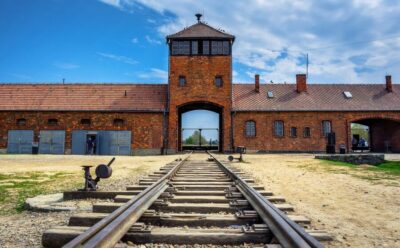
Judenrampe was a railway unloading point used before the rail platform inside Birkenau was completed. Deportation trains brought Jewish prisoners to the area, and people were separated after arrival. Seeing the original train car gives a physical sense of how prisoners were transported, rather than leaving the deportations as an abstract number.
This is a short stop, but I would not rush it. The railway connection explains how the camp system operated across Europe. It also prepares you for Birkenau, where the train tracks run into the camp and the scale becomes easier to grasp.
The exact order can vary according to museum procedures and the option you select. The visitor service sets the pace, so the published timing is approximate. That flexibility is necessary at a major memorial, but it means you should not plan a tightly timed evening activity in Krakow.
Auschwitz I: barracks, punishment, and the first camp
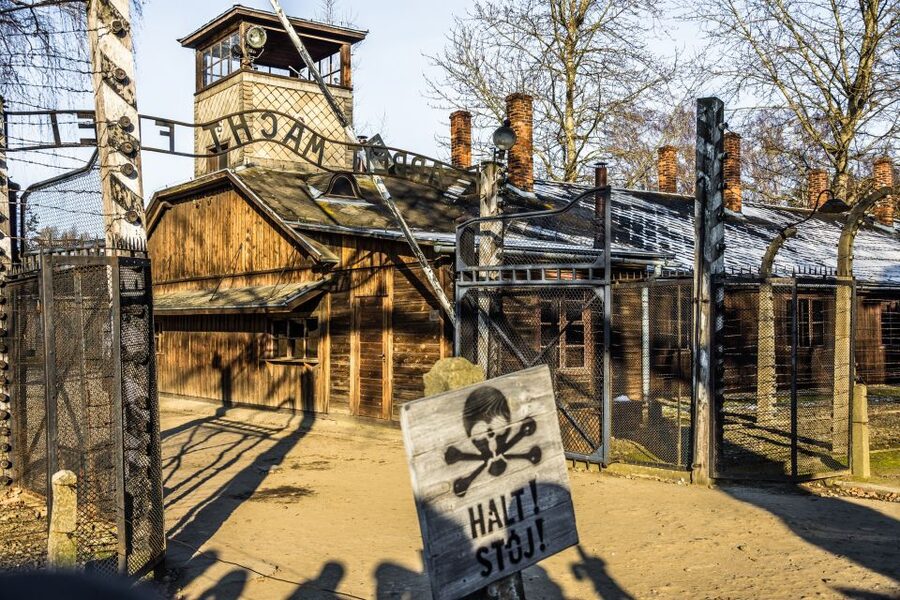
A short transfer of about 10 minutes takes you to the Memorial and Museum area. Your main visit begins at Auschwitz I.
This was the first camp in the complex. The Nazis used it for men and women, political prisoners, forced labor, executions, punishment, and early experiments with mass killing using Zyklon B. The camp commandant’s office and much of the SS administration were also located here.
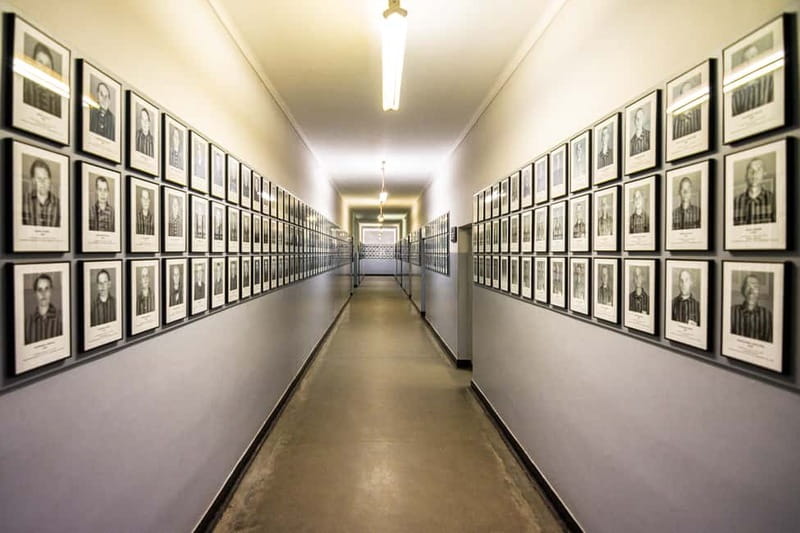
The brick barracks now contain museum exhibitions. You will move through rooms and blocks that explain the camp system through documents, objects, photographs, and preserved spaces. The information can be difficult to absorb, so take your time when the group allows it.
Block 11 is especially important. It served as a central prison for prisoners from across the camp complex. The building helps show that Auschwitz was not only a place of mass murder. It was also a system of imprisonment, punishment, forced labor, terror, and administration.
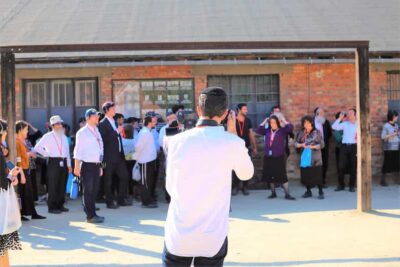
A guided option can help you connect these separate buildings. A professional guide leads the 3.5-hour guided visit when that option is selected, and the group size can reach 30 people per guide. That is still manageable, but it is not the same as a private visit. Stay close enough to hear, especially in enclosed rooms.
The guide names vary by departure. Michael Walker, often called Walker by his groups, has been praised for keeping people together and answering questions. Pawel, Marcin, and Lucaz have also led groups, while drivers and hosts such as Chris and Gregory have received strong praise for clear schedules and friendly assistance. You cannot request a particular person from the information provided, so treat these names as examples rather than a guarantee.
A few more Krakow half days to consider
- Krakow–Zakopane: Cable Car, Chocholow Baths, Cheese & Vodka
★ 5.0 · 10,720 reviews - Krakow: Auschwitz-Birkenau Guided Tour with Pickup & Lunch
★ 4.5 · 9,800 reviews - From Krakow: Wieliczka Salt Mine Tour
★ 4.6 · 9,393 reviews - Krakow: Auschwitz-Birkenau Guided Tour Pickup/Lunch Options
★ 4.5 · 9,057 reviews
The break between the two camp sites
After Auschwitz I, you get a short break before continuing to Birkenau. This is a useful pause, not wasted time.
The first camp can be emotionally heavy because the exhibitions place you close to personal belongings, prison spaces, and the machinery of persecution. A brief rest gives you time to collect yourself before entering the much larger grounds of Auschwitz II-Birkenau.
Keep the break modest. The day follows the museum’s schedule, and the tour host needs to move the group onward. Bring water if you need it, but remember that large bags and luggage are not permitted. Comfortable shoes are more important than stylish ones.
Birkenau: scale, barracks, and ruins
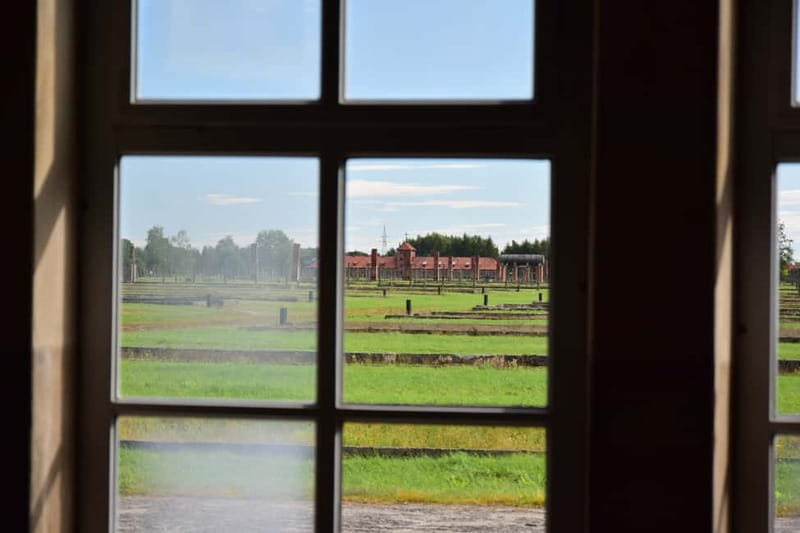
Auschwitz II-Birkenau covers almost 200 hectares. In 1944, more than 100,000 prisoners were held there, including Jews, Poles, Roma, and others. Nearly 300 mostly wooden barracks filled the site.
The size changes how you understand the camp. At Auschwitz I, the buildings feel close and enclosed. At Birkenau, long sightlines reveal fences, roads, watchtowers, barracks, and the railway route across a vast area. You can see why the site could hold so many prisoners and why the camp was designed for mass murder on an industrial scale.
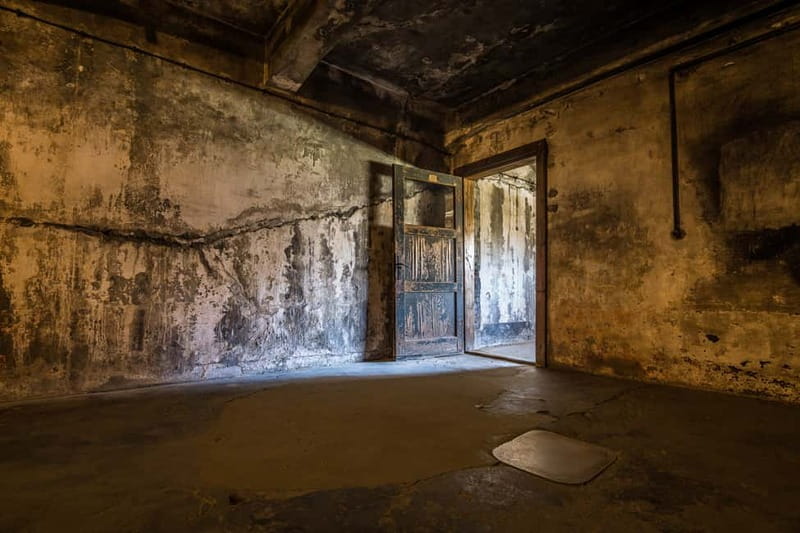
Many barracks are preserved in poor, stark form, while others survive only as foundations or ruins. The remains of gas chambers and crematoria are part of the visit. Human ashes were also scattered across parts of the site. Your guide or booklet should help explain what you are seeing, since the remains can otherwise appear confusing.
A live guide is especially useful here. Birkenau is large, and the meaning of a fence line, rail platform, ruined building, or row of barracks is not always obvious from the structure alone. If you choose a self-guided option, use the map and suggested route rather than wandering at random.
The self-guided choice can work well if you prefer silence and a slower personal response. You receive a booklet in your chosen language with maps, descriptions, and a recommended route. The tradeoff is that you must manage your own attention and timing. If you want fuller explanations and the chance to ask questions, select one of the guided options instead.
Guided tour or booklet: which option suits you?
Read the booking choices carefully. The low advertised price of $22 is attractive, but not every option includes the same service.
A guided booking includes a professional guide and a 3.5-hour guided visit. Guided and skip-the-line options include the relevant entry arrangement. This is the easiest choice if you want the history explained as you go and do not want to think about navigation.
A booklet option includes a route, maps, and descriptions. This gives you more independence and may suit you if you want less spoken commentary. It is not a private tour, though. You still travel with the group, follow the museum’s rules, and work within the day’s schedule.
One option is described as round-trip transport with tour host assistance to get a ticket. The entry ticket is not included in that choice, so check the exact wording before paying. A cheap booking can become less appealing if you assume it includes a guided visit or admission when it does not.
The English-speaking host remains part of the trip, and English and Polish are the stated languages. The film, booklet, and guide language depend on the selected option. If language matters to you, confirm it at booking rather than relying on the general activity title.
Time, group size, and the true cost of the day
The listed duration is seven hours, with another display giving 570 minutes, while the full range can run from seven to 11 hours depending on the option and schedule. The travel time alone accounts for about two and a half hours round trip.
That makes the $22 starting price strong value for transport and access, provided you choose the right package. A guided option costs more than the bare transport arrangement, but the added explanation is worthwhile for most first-time visitors. You are paying not just to reach the museum, but to understand what you are seeing.
The group limit is 30 people per guide. That is not a tiny group, and you may need to stand near the guide to hear clearly. On the positive side, the operator uses small groups when available, and the host helps keep everyone together.
Do not judge the day by the clock alone. Museum rules, entry procedures, walking pace, and crowd control can alter the schedule. I would leave your Krakow evening open, especially if your departure time is changed or the memorial visit runs long.
Practical details that can affect your visit
Bring your passport or ID card. The museum requires the full name and contact details of every participant, and the name on your booking must match your identification exactly. A mismatch can result in refused entry.
Wear comfortable shoes. You will walk across paved and unpaved areas, enter buildings, and cover substantial distances at Birkenau. The tour is not suitable for wheelchair users or people with mobility impairments according to the stated conditions.
Large bags and luggage are not allowed. Avoid arriving with a suitcase or oversized daypack. Alcohol and drugs are also prohibited.
Pickup is optional in the sense that you select from the listed meeting points, but you still need to reach the chosen point yourself unless your booking includes a specific pickup arrangement. Return drop-offs include Starowiślna 65, the Radisson Blu Hotel, Floriana Straszewskiego 17, and Wielopole 2.
Cancellation is flexible up to 24 hours before departure for a full refund, and reserve-now-pay-later booking is available. Those terms are useful if your Krakow plans may change, but they do not remove the need to monitor the amended pickup time.
Who should book this Krakow Auschwitz tour?
I would choose this trip if you want the simplest way to reach both camp sites from Krakow. The transport, film, host, and structured route remove much of the practical work, while the guided option gives you stronger historical support.
It is also a good fit for a first visit. You see Auschwitz I, Birkenau, and Judenrampe in one day, rather than trying to decide which sections to omit. The return transport keeps the visit focused.
I would think twice if you dislike fixed schedules, large groups, or long days. The museum controls the pace, and you may not be able to pause wherever you wish. A self-guided option gives you more quiet time, but it does not turn the outing into a fully independent visit.
Should you book it?
Book this Auschwitz-Birkenau tour if you want reliable transport from Krakow and a clear route through both sites at a low starting price. I would pay extra for the live-guided option unless you already know the history well or strongly prefer reading on your own.
Before confirming, check four things: the exact meeting point, the amended pickup policy, the inclusion of the entry ticket, and whether your package is guided or booklet-based. With those details clear, this is a practical and respectful way to make one of Krakow’s most important visits.
FAQ
How long does the Auschwitz-Birkenau trip from Krakow take?
The trip is listed as lasting about seven hours, or up to 11 hours depending on the selected option and schedule. One duration display gives 570 minutes. The travel time is about 75 minutes each way.
Does the tour visit both Auschwitz I and Auschwitz II-Birkenau?
Yes. The route includes the Memorial and Museum at Auschwitz I and the Auschwitz II-Birkenau camp site.
Is Judenrampe included?
Yes. The route includes about 30 minutes at Judenrampe, where you can see the original camp train car.
Is a professional guide included?
A professional guide is included only with the guided options. Other options provide a booklet with maps, descriptions, and a suggested route, or tour host assistance.
Is transportation from Krakow included?
Round-trip transportation in a modern vehicle is included. You meet at a designated Krakow meeting point, with the main point in front of the Radisson Blu Hotel tourist bus stop.
What should I bring?
Bring a passport or ID card and comfortable shoes. Your name must match the identification details submitted during booking.
Can I bring luggage or a large bag?
No. Large bags and luggage are not allowed. Alcohol and drugs are also prohibited.
Is the tour suitable for wheelchair users?
No. The activity is listed as unsuitable for wheelchair users and people with mobility impairments.
Can I cancel the booking?
You can cancel up to 24 hours in advance for a full refund. Reserve-now-pay-later booking is also available.
Recently added in Krakow
- Auschwitz-Birkenau and Krakow Private Car Trip from Katowice★ 4.3 · 3 reviews
- Wawel Castle, Old Town with St. Mary’s Church Guided Tour★ 5.0 · 3 reviews
- Wawel Castle, Cathedral, Rynek Underground Tour with Lunch★ 5.0 · 3 reviews
- From Krakow: Chocholow Thermal Hot Springs (hotel pick up)★ 5.0 · 3 reviews
- Private tour to Zakopane and Thermal Baths from Krakow★ 5.0 · 3 reviews
- Legends of Cracow ROBOTIC SHOW★ 4.0 · 3 reviews
- Guided Beer Tour in Krakow★ 4.5 · 3 reviews
- From Krakow: Zakopane and Thermal Pools Guided Trip★ 5.0 · 3 reviews
Auschwitz-Birkenau Memorial Tours, compared.
Auschwitz-Birkenau Guided Tour & Hotel Pickup
Read our review →Auschwitz Guided Tour with Optional Hotel Pickup
Read our review →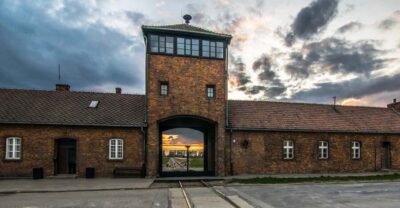
Auschwitz-Birkenau Guided Tour with Pickup & Lunch
Read our review →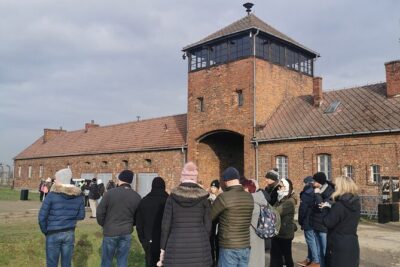
Krakow to Auschwitz Birkenau Guided Tour with Transfer and Ticket
Read our review →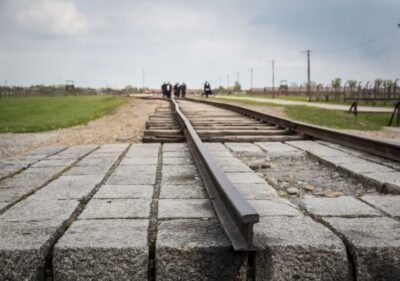
Auschwitz Birkenau Small Group Tour with Pickup
Read our review →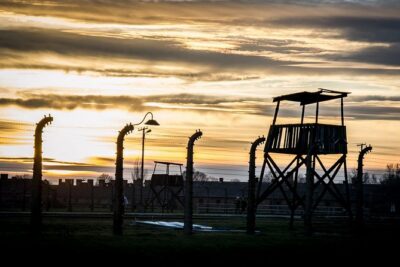
Auschwitz Birkenau Guided Tour with Ticket Hotel Pickup Small Van
Read our review →Where else this one turns up