
Reviewed · GOLF CART & SEGWAY TOURS
Electric Scooter Tour: Full Tour – 3-Hours of Magic!
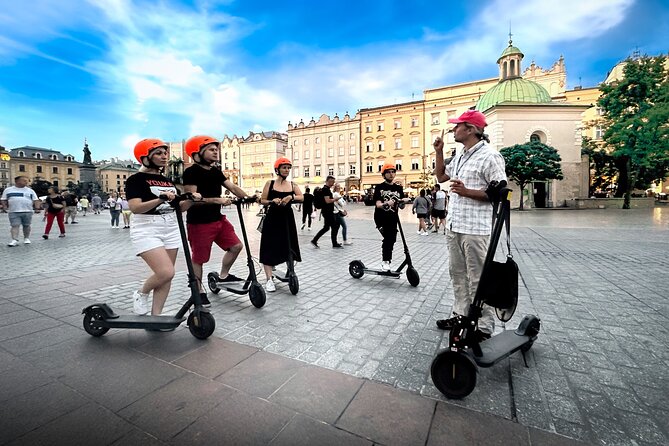
Warsaw is a large city, but this tour lets you cover its key sights without spending three hours trudging from monument to monument. After a short lesson, you ride your own electric scooter from the Royal Castle and Old Town to the former Jewish Quarter and the Palace of Culture and Science.
I like the broad route, which gives you a useful first look at Warsaw’s many faces. I also like the local guidance, especially if your guide is Nikita, whose humor and clear explanations have made a strong impression. The main thing to weigh is the outdoor format: you ride in rain or shine, and winter darkness can arrive early.
Key points before you book
- A full three-hour city route: You see far more than just the Old Town, including the Ghetto Heroes Monument, POLIN Museum, Saski Garden, and the Palace of Culture and Science.
- Your own electric scooter: The scooter saves your legs on longer stretches, but you still need to feel comfortable steering and riding outdoors.
- A strong first-day overview: Your guide points out major sights and suggests other places to visit during your stay.
- Several photo-friendly stops: Castle Square, the Warsaw Mermaid, the Multimedia Fountain Park, Próżna Street, and the Palace of Culture offer plenty of memorable backdrops.
- A serious side of Warsaw: The route includes the former Jewish Quarter, Anielewicz Bunker, Umschlagplatz, and the Footbridge of Memory.
- Weather matters: Wear closed-toe shoes and dress for the forecast. The tour runs outdoors in all conditions.
Why an electric scooter works well in Warsaw
Warsaw spreads out more than its compact Old Town first suggests. The Royal Route, rebuilt historic center, former Jewish Quarter, central business district, and major parks sit across a sizable area. On foot, seeing all of them in one afternoon would mean a lot of pavement and less time listening to your guide.
The electric scooter changes the pace. You ride between stops rather than taking a long walk every time the subject changes. That makes it possible to connect medieval-looking streets, wartime memorials, Communist-era architecture, and modern city life in one continuous outing.
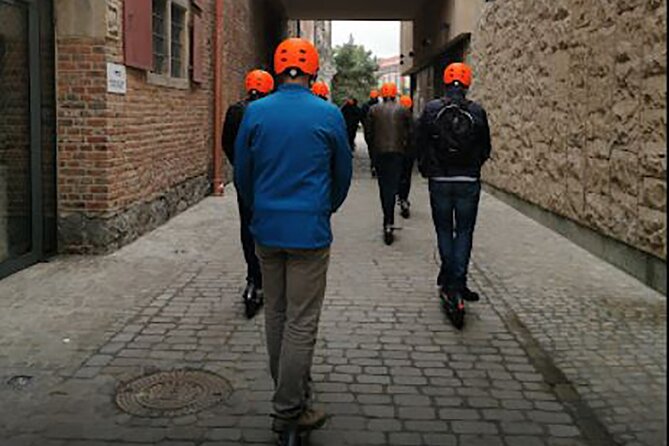
This is not a private car tour. You are exposed to the weather, and you need to pay attention while riding. The reward is a closer view of the city than you get through a vehicle window. You move at street level, stop at monuments, and get a practical sense of how Warsaw’s districts fit together.
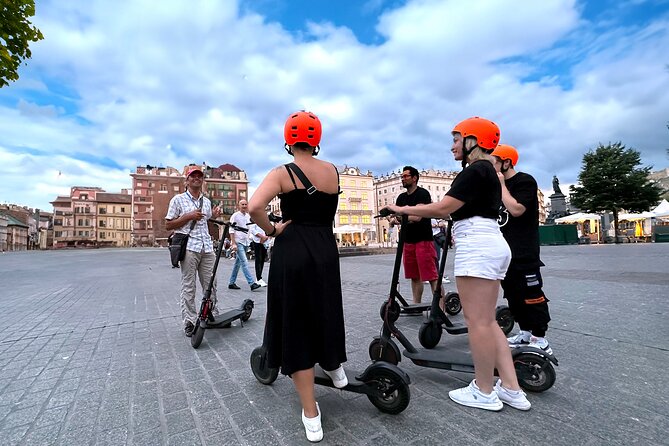
The tour begins with scooter training. That matters. Even if you have ridden an e-scooter before, take the lesson seriously and use it to get comfortable with starting, stopping, steering, and sharing space outdoors. Safety gear is included, as is a raincoat if rain arrives.
More golf cart and segway routes in Warsaw:
- Warsaw Old Town 1.5-Hour or Full 3-Hour Segway Tour
★ 4.9 · 209 reviews - Segway Tour Warsaw: Old Town Tour – 1,5-Hour of Magic!
★ 5.0 · 112 reviews - Warsaw: 3-Hour Guided City Highlights Tour by Segway
★ 4.9 · 102 reviews
Castle Square starts the story
The meeting point is City Segway Tours at Chmielna 2, in central Warsaw. From there, the route heads toward the historic core and Castle Square, one of the city’s best orientation points.
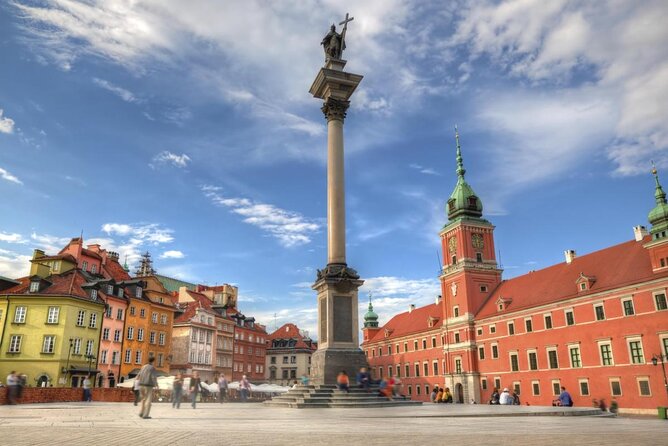
Castle Square gathers several major sights in one place. The Royal Castle recalls Warsaw’s role as a political center, while Sigismund’s Column rises in front of it. The column honors King Sigismund III Vasa, the ruler who moved Poland’s capital from Kraków to Warsaw in the early seventeenth century.
Your guide can give you the basic context here, then help you notice the shape of the rebuilt Old Town. Warsaw’s historic center was destroyed on a huge scale during the Second World War and later reconstructed. That means the square looks old, but much of what you see is the result of determined postwar rebuilding.
The route also passes the cathedral area, including the unusual Goliath Caterpillar sculpture, then Canon Square and its Bell Monument. These stops add smaller details to the main story. Warsaw is not only about grand palaces and famous columns. Its narrow lanes, courtyards, and odd bits of public art reward a slower look.
Old Town details, from the narrowest house to the Mermaid
The Old Town section packs in several sights. You pass Warsaw’s narrowest house, then continue to the Old Town Market Square, where the Warsaw Mermaid is the central symbol.
The Mermaid appears on Warsaw’s coat of arms and is one of the city’s most familiar images. The market square gives you a chance to photograph it, but it is also a useful place to hear how the Old Town changed from a living historic district into a reconstructed center filled with cafés, museums, and public spaces.
The Barbican follows. This fortified gateway once formed part of the city’s defensive system. Today it marks the transition between the Old Town and New Town, and its brick curve makes a strong photo stop.
The electric scooter is handy here, but do not expect to glide carelessly through every narrow lane. Your guide will manage the route, yet you still need to ride with care around pedestrians and crowded sections. The appeal is not speed. It is covering the city efficiently while keeping your eyes open.
New Town and the riverfront memorials
The route continues into New Town, including New Town Market Square and the Multimedia Fountain Park. The fountain area adds a more open, modern public space after the tight Old Town lanes.
You also pass the Old Gunpowder House. Details such as this can be easy to miss if you explore Warsaw alone with only a short checklist of famous sights. A guide helps connect the larger landmarks with the less obvious places along the way.
The tour then reaches the Warsaw Uprising Monument and Krasińskich Square. This is one of the more important pauses on the route. The monument honors the 1944 Warsaw Uprising, when the Polish underground resisted German occupation for 63 days before being defeated.
Nearby Krasińskich Garden gives the route a little breathing room. You move from a weighty memorial setting into a green public garden, which helps break up the sequence of monuments. The contrast is useful: Warsaw’s story includes both remembrance and ordinary city life.
More scooter hire in Warsaw:
- Electric Scooter Tour: Old Town Tour – 1,5-Hour of Magic!
★ 4.9 · 53 reviews - Electric Scooter Tour: Old Town Tour – 1,5-Hour of Magic!
★ 5.0 · 45 reviews - Electric Scooter Tour: Full Tour – 3-Hours of Magic!
★ 5.0 · 3 reviews - Electric Scooter Tours Kraków
★ 5.0 · 228 reviews
The former Jewish Quarter requires attention
The most serious part of the tour comes in the former Jewish Quarter. The route includes the Ghetto Heroes Monument, the POLIN Museum area, Anielewicz Bunker, Umschlagplatz, and the Footbridge of Memory.
These are not just photo stops. They mark the destruction of Warsaw’s Jewish community during the German occupation and the events connected with the Warsaw Ghetto Uprising. The Ghetto Heroes Monument honors those who fought in that uprising. Anielewicz Bunker recalls one of the last resistance sites.
Umschlagplatz marks the place where Jewish residents were assembled before deportation. The Footbridge of Memory refers to the bridge that once crossed a road between two parts of the ghetto. These memorials ask for a quieter mood than the Old Town portion of the ride.
You should not expect a full museum visit during this tour. The route gives you geographic and historical context, but POLIN Museum itself requires separate time if you want a detailed treatment of Jewish life in Poland and the Holocaust. I see the scooter tour as a strong introduction, not a substitute for that visit.
This section is also where a local guide can add real value. A clear explanation helps you understand why the monuments are placed where they are, rather than treating them as isolated objects. If you prefer a light, purely entertaining outing, the emotional weight here may feel different from the rest of the afternoon.
Central Warsaw brings a sharp change of mood

From the former Jewish Quarter, the route heads toward Grzybowski Square and Próżna Street. Grzybowski Square is another place where Warsaw’s Jewish past and present-day center meet.
Próżna Street is known for its four surviving tenement houses. Their façades offer a visual reminder of the prewar city, even as modern Warsaw rises around them. This is the kind of stop that benefits from a guide’s explanation because the meaning is not always obvious from the street itself.
The tour then reaches the Palace of Culture and Science, Warsaw’s most recognizable Communist-era landmark. Its scale is hard to miss. The building was a gift from the Soviet Union and remains one of the city’s most debated symbols. Some people see it as an unwanted reminder of Soviet control. Others treat it as an inseparable part of Warsaw’s skyline.
You will not simply get a list of dates and buildings. The guide can help you read the city through its architecture: royal Poland near the castle, wartime memory in the former Ghetto, postwar rebuilding in the Old Town, and twentieth-century power at the Palace of Culture.
Saski Garden closes the central-city loop
The final sights include Saski Garden, the Tomb of the Unknown Soldier, Hotel Bristol, the European Hotel, and the Presidential Palace.
Saski Garden is one of Warsaw’s oldest public parks and offers another change of pace after the dense memorial and central-city sections. The Tomb of the Unknown Soldier sits in the surviving section of the former Saxon Palace colonnade. It is a concise but important national memorial.
Hotel Bristol and the European Hotel bring in Warsaw’s grand hotel tradition. The Presidential Palace adds another major institutional building along the Royal Route. By this point, you have seen Warsaw from several angles rather than just ticking off the Old Town.
The route is ambitious for three hours. You will pass a long list of places, but not every stop will receive the same amount of time. If you want to enter the Royal Castle, POLIN Museum, or another attraction, plan a separate visit. This outing is about orientation, outside views, and the guide’s running commentary.
What the guide adds
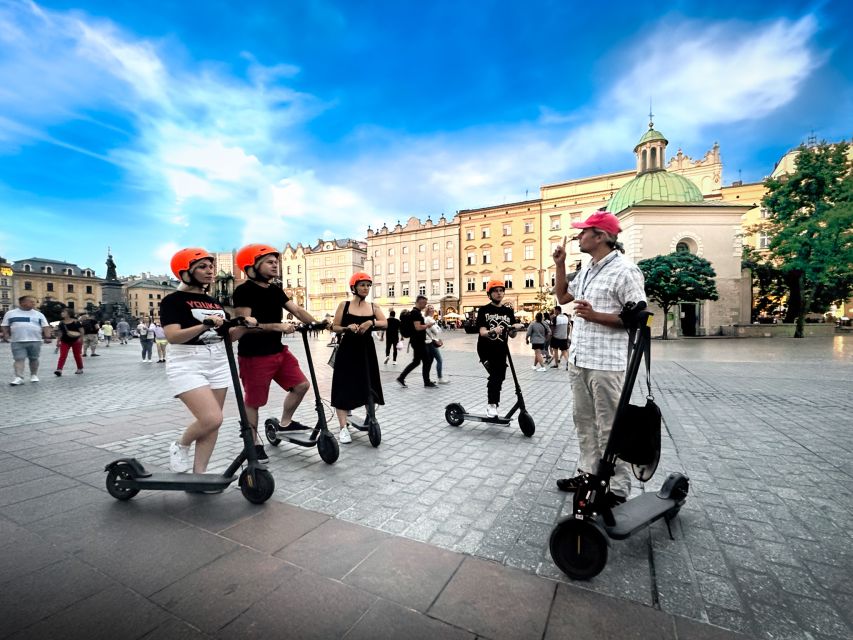
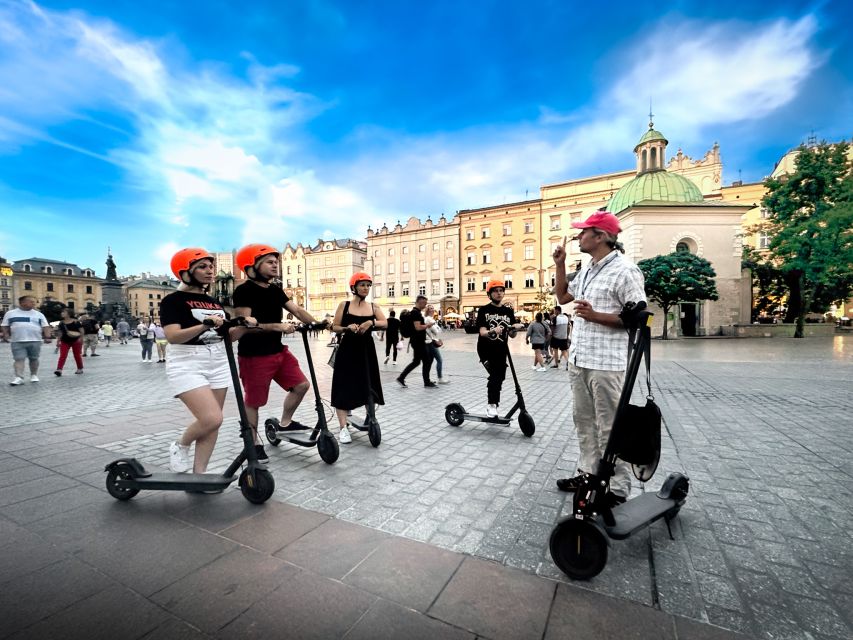
The tour includes live guiding in English or Polish. Your guide explains the main sights and recommends other places to see during your stay. That second part is easy to underestimate. A good first-day guide can help you decide where to return for a museum, meal, evening walk, or longer visit.
Nikita is one guide associated with especially warm feedback. If he leads your tour, expect an easygoing style with humor mixed into the explanations. His approach appears to suit people who want to learn without sitting through a formal lecture.
Still, guide style can vary, and the tour should not be booked on one person’s name alone. The important promise is the combination of local commentary and a route that links the city’s main districts. You can ask questions as you go, and one rating of four stars specifically praised the guide’s patience in answering them.
The group size is not provided, so you should not assume a private or very small outing. The guide will set the pace and direct the route, while you remain responsible for riding safely and staying with the group.
Price, timing, and practical value

At $97 per person, this is not Warsaw’s cheapest sightseeing option. The price includes the guide, electric scooter, training, safety gear, and a raincoat if needed. You are paying for equipment as well as three hours of guided coverage.
I think the value is strongest for a first visit, especially if you want a fast orientation and do not relish long walks. You see the Old Town, New Town, memorial district, central Warsaw, parks, and major government buildings in one outing. A standard walking tour may offer more detail at each stop, but it will not cover this much ground with the same ease.
The value is weaker if you already know Warsaw well or want long visits inside museums. It is also not ideal if you dislike scooters, have trouble riding outdoors, or prefer a slow photographic walk.
The tour runs rain or shine. Wear comfortable clothing and closed-toe shoes, and dress for the weather. A raincoat is supplied if it rains, but an outdoor ride can still feel cold or unpleasant in poor conditions.
Winter timing deserves special thought. One afternoon tour in November finished partly in darkness because Warsaw’s daylight ended around 3:45 p.m. That is not a guide problem, but it can affect the final sights and your photos. Check the available starting time and consider booking earlier in the day during late autumn and winter.
You can cancel up to 24 hours before departure for a full refund, and you can reserve now while paying later. Those terms give you some room to adjust plans, which is useful when weather is uncertain.
Who will enjoy this ride most
I would choose this tour if you are visiting Warsaw for the first time and want the big picture before deciding where to spend more time. It suits active adults, couples, friends, and families with older children who can handle a scooter responsibly.
It also works well for people who like a mix of famous sights and less obvious stops. The route includes the Royal Castle and Palace of Culture, but it also takes you to the narrowest house, Old Gunpowder House, Próżna Street, and the Footbridge of Memory.
You should think twice if you want a deep museum experience, a private guide, or a calm walking pace. The three-hour plan covers a lot, so some stops will be brief. You also need to accept weather exposure and the demands of riding in an urban setting.
Should you book the Warsaw electric scooter tour?
Book it if you want to cover Warsaw efficiently, hear useful local advice, and balance major sights with serious historical places. The broad route is the main strength, and the scooter makes a large city feel more manageable.
Skip it if you want to spend time inside museums or feel uneasy on an electric scooter. For most first-time visitors who are comfortable riding, $97 buys a lively and practical introduction to Warsaw. Try to schedule it early in your stay, choose a daylight starting time in winter, and leave room afterward for the places that deserve a longer visit.
FAQ
Where does the electric scooter tour meet?
Meet at City Segway Tours, Chmielna 2, 00-020 Warszawa, Poland.
How long does the tour last?
The tour lasts three hours.
What languages are available?
The live guide speaks English or Polish.
Is scooter training included?
Yes. A brief scooter training session is included before the route begins.
What equipment is provided?
The tour includes an electric scooter, safety gear, and a raincoat in case of rain.
What should I wear?
Wear comfortable clothes, closed-toe shoes, and clothing suitable for the weather.
Does the tour operate in bad weather?
Yes. The tour takes place fully outdoors and runs rain or shine.
Recently added in Warsaw
- Warsaw Wolf’s Lair with St. Lipka and Mamerki Private Guided★ 4.2 · 3 reviews
- Taste of Poland, food tour and guided walk with 12 tasting★ 5.0 · 3 reviews
- Discover Warsaw’s most Photogenic Spots with a Local★ 5.0 · 3 reviews
- Lodz Small Group Tour from Warsaw with Lunch★ 4.0 · 3 reviews
- Jewish heritage in Warsaw★ 4.5 · 3 reviews
- Warsaw Outdoor Paintball with Transfers (all year round)★ 5.0 · 3 reviews
- Electric Scooter Tour: Full Tour – 3-Hours of Magic!★ 5.0 · 3 reviews
- Skip-the-Line Polin Museum Warsaw Jewish History Tour★ 5.0 · 3 reviews
Golf Cart & Segway Tours, compared.

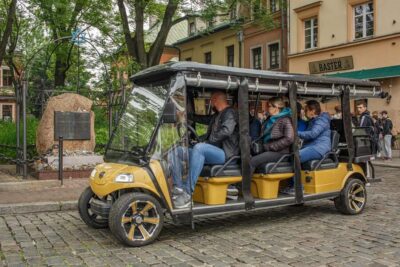
Extended City Sightseeing Tour – Eco Buggy Golf Cart
Read our review →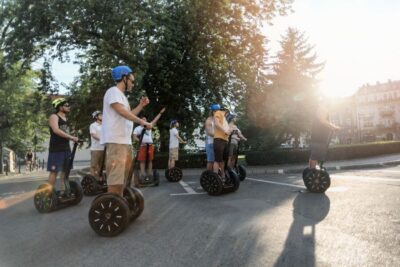
City Sightseeing Tour by Golf Cart/Buggy Guided Tour
Read our review →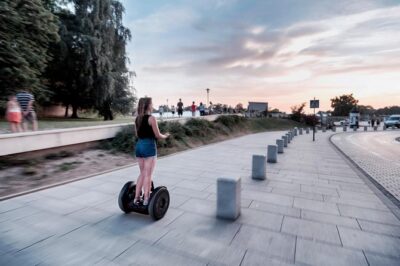
Krakow Old Town Segway Tour 2hr with Training, Safety Gear, Guide
Read our review →
Jewish Quarter and Ghetto Electric Golf Cart Tour
Read our review →
Krakow Grand City Tour by golf cart – All 3 districts
Read our review →
Where else this one turns up