
Reviewed · GOLF CART & SEGWAY TOURS
Gdansk: City Sightseeing Tour by Golf Cart/Buggy Guided Tour
Gdansk’s story is unusually large for a compact old town. In one golf cart ride, you move from the brick bulk of St. Mary’s Basilica to the medieval harbor, then out toward the shipyard and the place where Poland’s Solidarity movement helped crack the socialist system. That mix of church, trade, war, and modern politics is the real strength of this tour.
I like the fast orientation and the chance to hear local detail while moving between districts. I also like the live format: guides such as Michael, Noris, and Maryana have answered questions, shared personal memories, shown old photographs, and offered useful restaurant and museum advice. The main drawback is time. With many stops packed into one to two hours, you will see plenty, but you will not properly visit every site.
Key points at a glance

- The red-brick St. Mary’s Basilica: See one of Gdansk’s defining buildings and hear why it is described as the largest church in the world built in red brick.
- The Motława waterfront: Get a clear look at the old port and the famous medieval Crane, one of the city’s most recognizable sights.
- A route beyond the postcard center: The golf cart reaches the shipyard, European Solidarity Centre, Polish Post Office, and St. Bridget’s Church.
- Strong guide-led storytelling: Michael, Noris, Maryana, and other guides are praised for clear English, local insight, personal stories, and warm service.
- Useful first-day tour: The route helps you decide which churches, museums, and political sites deserve a longer visit later.
- Convenient central pickup: Hotel pickup is available within 2 kilometers of Neptune’s Fountain, and the vehicle is wheelchair accessible.
Why a golf cart works well in Gdansk
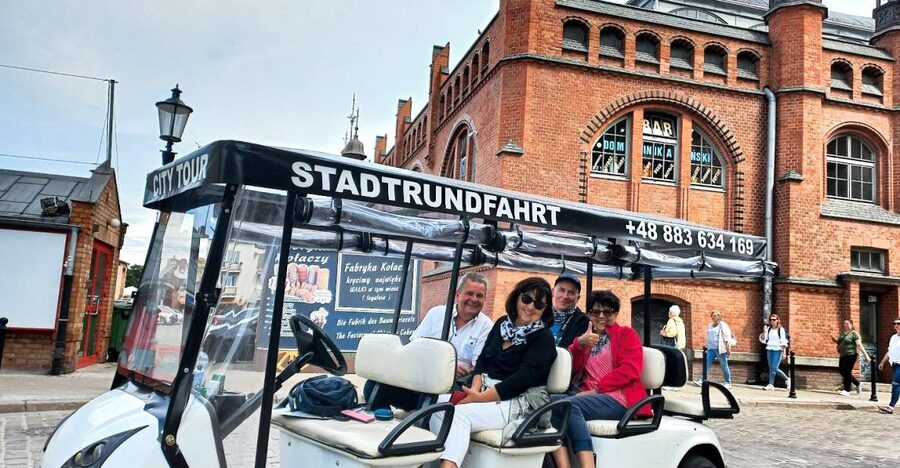
Gdansk’s central sights are close enough to walk, but the city’s story spreads beyond the most polished streets. A golf cart gives you a quick ride between the old center, the waterfront, the shipyard, and the Solidarity sites without asking you to organize public transport or learn the city layout first.
You sit in an open-sided vehicle, so you get a better sense of the streets than you would from a bus. You can look up at church towers, watch the harbor pass by, and ask a question as soon as something catches your eye. The tradeoff is exposure to the weather. The tour runs rain or shine, so bring suitable clothing and do not treat this as a fair-weather-only activity.
The route takes one to two hours, depending on the timing and schedule available when you book. That is enough for a broad introduction, not a museum day. Most stops are listed at around five minutes, with shorter pauses at the carousel and market hall. Think of this as a moving orientation with brief sightseeing stops rather than a series of full guided visits.
More golf cart and segway routes in Gdansk:
- Gdansk: Shared or Private City Tour Sightseeing By Golf Cart
★ 4.8 · 233 reviews - Gdańsk: City Sightseeing Tour by Buggy/Golf Cart LIVE GUIDED 1H
★ 5.0 · 208 reviews - Gdansk: 2H City Sightseeing Tour LIVE GUIDED by Buggy/Golf cart
★ 5.0 · 89 reviews
From the Golden Gate to St. Mary’s Basilica
The tour begins in Śródmieście, the central district, with pickup from a place you choose within 2 kilometers of Neptune’s Fountain. You should be ready 10 minutes before departure. Starting in the center puts you close to Gdansk’s most important architectural sights from the first few minutes.
The Golden Gate is a natural opening scene. It marks the start of the Royal Route and introduces the grand urban style associated with old Gdansk. You get a short guided stop here, enough to place the gate within the city’s layout before moving onward.
St. Mary’s Basilica deserves more than the scheduled few minutes, but even a brief look gives you a sense of its scale. Its red-brick walls dominate the old town, and the church is presented as the largest church in the world built in red brick. The outside alone is impressive, while the interior contains far more than this quick route can cover.
One especially useful detail from the guide service is the attention paid to St. Bridget’s Church later in the route. A guide has taken visitors to see an altar made of amber there, a memorable connection between Gdansk’s religious art and its famous amber trade. If that detail interests you, ask your guide how much time you can spend there or plan a separate visit.
The Motława and the medieval Great Crane
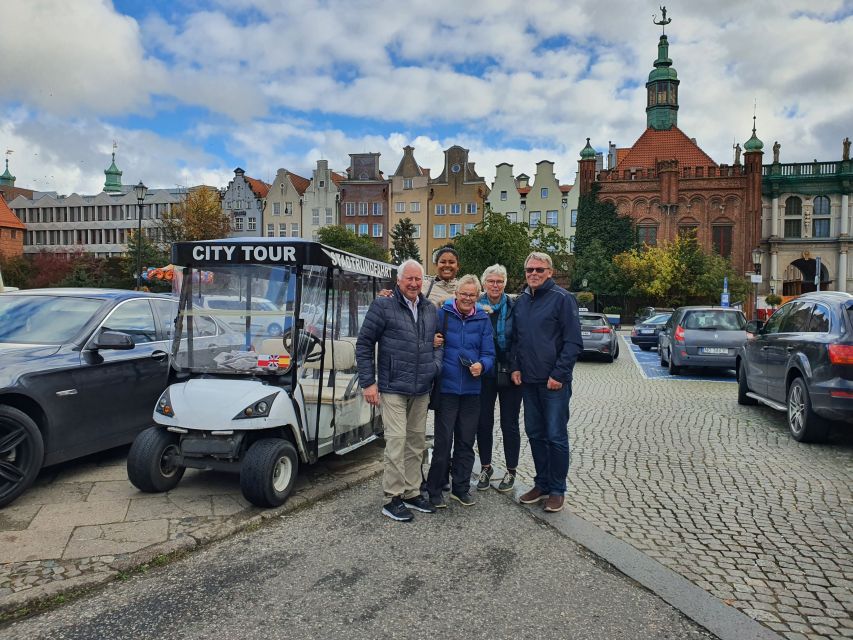
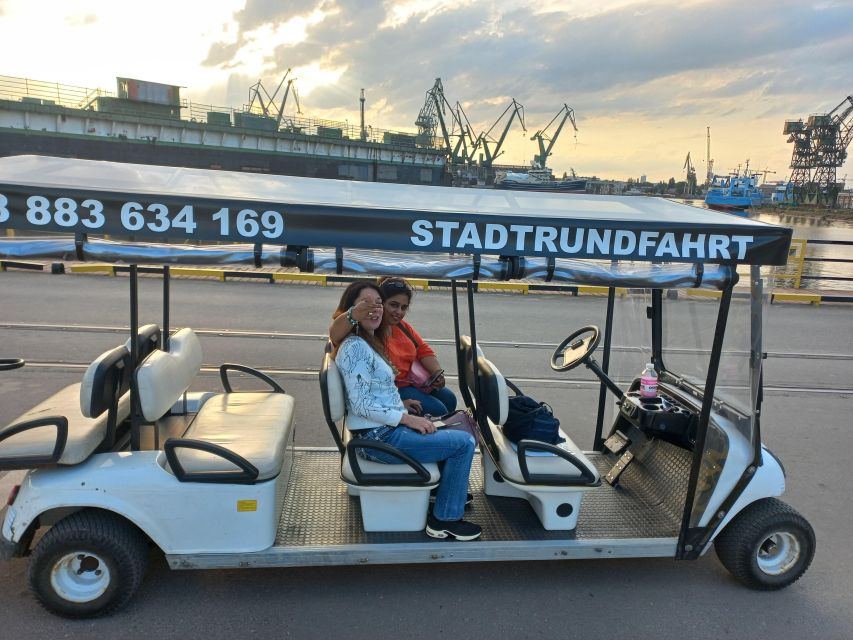
The ride continues to the Motława River and the old port. This is one of the best places to understand Gdansk as a trading city. The water, quays, historic facades, and working harbor history all come together here, and the golf cart lets you take in the scene without spending your whole morning walking from one end of the waterfront to the other.
The Great Harbor Crane is the star of this section. It belongs to the city’s medieval port story and remains one of Gdansk’s clearest visual symbols. From the cart, you can appreciate its heavy timber-and-brick form and its position beside the river. You may not have time to explore the National Maritime Museum inside, so treat this as a preview rather than a substitute for admission.
This part of the route is also a good test of your guide. The architecture is easy to photograph, but the useful explanation is what connects the Crane to trade, ships, lifting cargo, and the city’s wider fortunes. Michael and other guides are praised for giving context rather than simply naming buildings, which matters when you have only a few minutes at each stop.
The shipyard and the birth of Solidarity
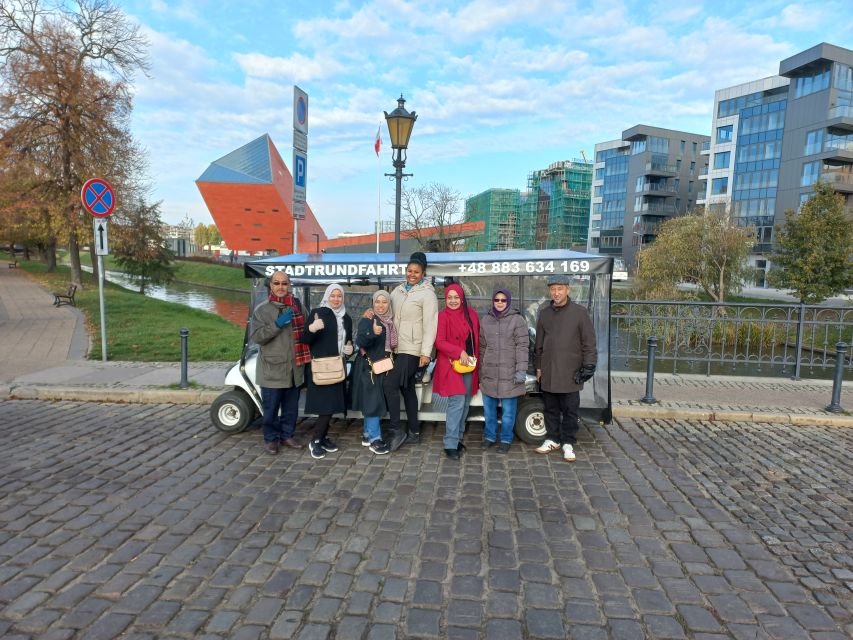
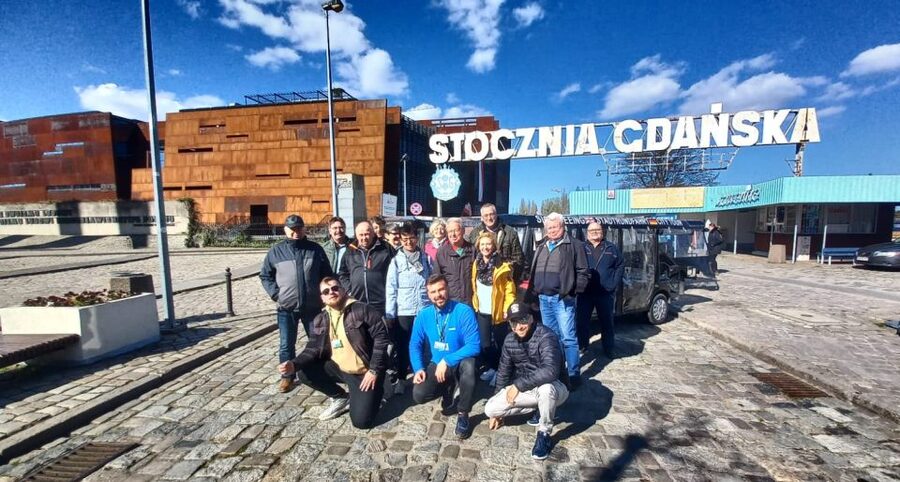
The move from medieval port to Gdansk Shipyard gives the tour its strongest historical contrast. Here you leave the decorative old center and reach the industrial setting tied to the rise of Solidarity. The shipyard is the place the tour identifies as where the fall of the socialist camp began.
That claim refers to the political force that grew around the Polish workers’ movement and Solidarity. For a first-time visitor, seeing the actual shipyard area makes the subject less abstract. You are not only hearing about a political change in a textbook setting. You are being shown the urban setting connected with strikes, workers, and the challenge to communist rule.
The European Solidarity Centre adds another layer. The tour offers a guided sightseeing stop, but the timetable does not allow a full museum visit. I would use the cart ride to learn why the centre matters, then return on foot if modern Polish history is high on your list. One guide helped a visitor plan a later museum visit, which is exactly how this tour works best: let the short stop point you toward the places worth more of your time.
The shipyard section may be less visually tidy than the old town, and that is part of its value. You are seeing a working and political side of Gdansk, not just the restored facades used in postcards. Ask questions here. Guides with personal connections to the city can add a human note that a standard audio guide cannot.
A few more Gdansk half days to consider
- Gdansk: City Cruise on Historical Polish Boat
★ 4.8 · 2,913 reviews - Gdańsk: Sunset Cruise on a Historic Polish Boat
★ 4.9 · 977 reviews - Gdańsk City Sights & History Guided Walking Tour in English
★ 4.8 · 876 reviews - Gdansk: Firearm Shooting Experience with Instructor
★ 4.8 · 866 reviews
St. Bridget’s Church and Gdansk’s amber story
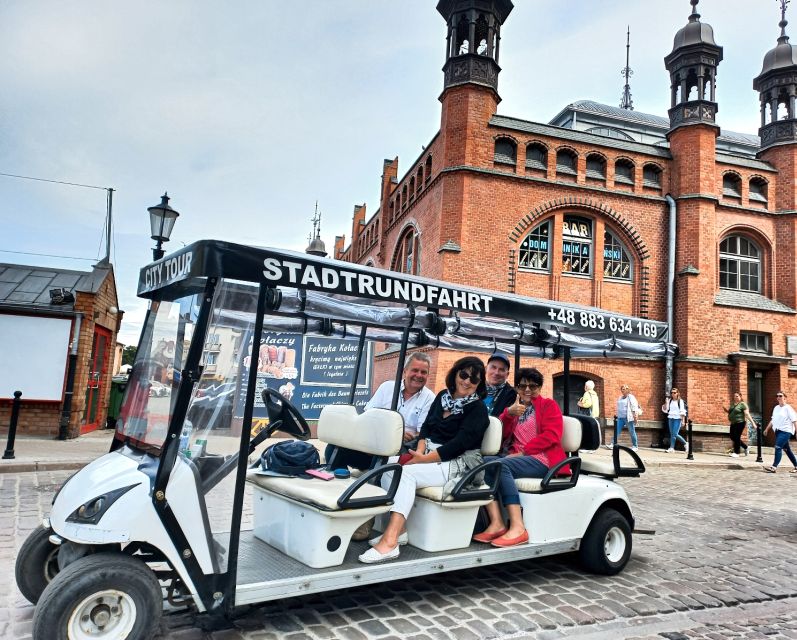
St. Bridget’s Church is a short but worthwhile stop because it links faith, craftsmanship, and local material culture. Gdansk is closely associated with amber, and the church’s amber altar is one of the most distinctive details included in the tour’s storytelling.
You should be realistic about the timing. Five minutes is enough to hear why the church matters and perhaps take a quick look, but not enough for a slow examination of its interior. If your guide, including Maryana, points out the amber altar and you want to study it properly, note the church for a return visit.
The Amber Museum offers another quick connection to the city’s identity. This stop is most useful as an orientation point. The ride can explain why amber appears so often in Gdansk shops, displays, and local history, while a separate museum visit gives you the time to see the material and its uses in detail.
This is where the live guide helps most. You can ask where to find reliable amber shops, how much museum time to allow, or which part of the old center is best for browsing. The tour does not promise a shopping stop or a museum admission, so keep your questions focused on practical next steps.
Smaller stops that fill out the city map
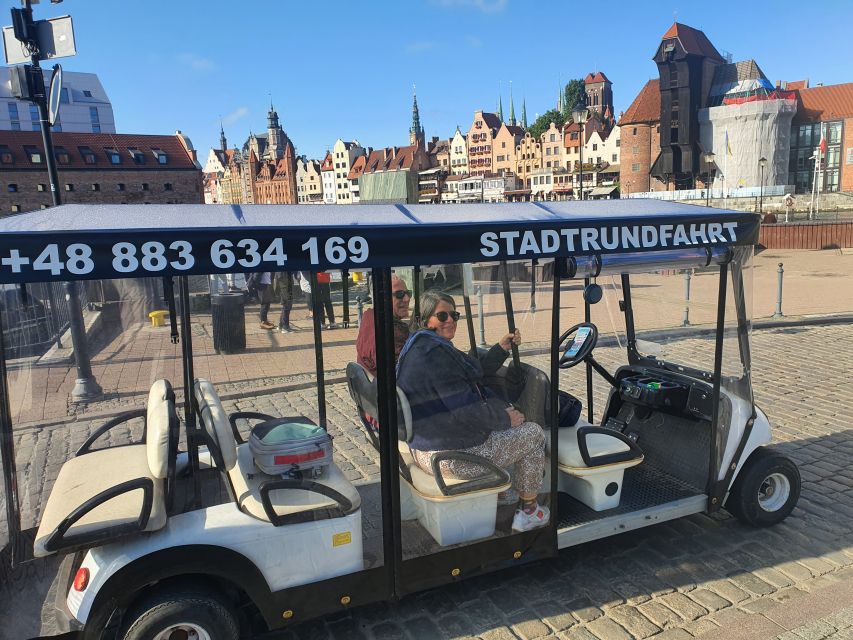
The Gdansk Carousel receives a short sightseeing pause. It is not a major historical monument, but it helps show the city as a place used by residents, not only a collection of preserved buildings. The stop is brief, so do not expect a long break or a ride.
Hala Targowa Kupców Dominikańskich, a market hall, gives you another small glimpse of everyday city life. Again, the value is mainly orientation. You see where a market fits into the central district and can decide if you want to return independently for more time.
The Defenders of the Polish Post Office stop brings the route back to wartime history. The site is tied to the defense of the Polish Post Office during the opening days of the Second World War. It is a sober counterpoint to the ornate gates and waterfront views, and it shows how many different periods are compressed into Gdansk’s center.
The tour finishes at Neptune’s Fountain, one of the city’s signature meeting points. Ending here is practical. You are in the heart of the old town, close to restaurants, walking streets, churches, museums, and further sightseeing. If you prefer, ask your guide about a different drop-off point. The service is described as flexible, and one guide has helped people end near a museum so they could continue their day there.
What the guides add to the ride
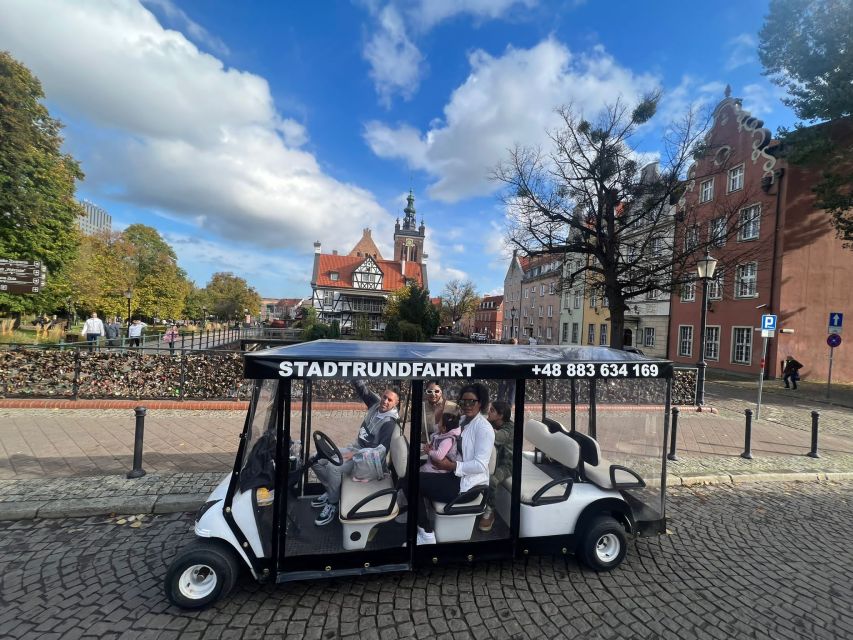
The strongest part of this experience is the person in the driver’s seat. Michael is repeatedly praised for clear English, warmth, and a firm grasp of Polish and Gdansk history. Noris is described as enthusiastic, patient, and good at answering questions, with old photographs used to show how places looked in earlier periods.
Maryana has also been singled out for being efficient, friendly, and attentive. Her local suggestions included a Polish restaurant, and she made the tour more useful by helping with plans after the ride. Other guides have included a history teacher, which can be a real benefit if you want more than dates and building names.
Guide quality can naturally vary from one departure to another, but the consistent pattern is clear: expect a live conversation rather than a recorded script. You can ask about current city life, local government, Polish history beyond the route, restaurants, museums, and places you pass on the way.
The vehicle also creates a relaxed setting for families and small groups. It avoids the physical demand of a long walking tour, and the route covers more ground than you could comfortably manage in a short first look. The ride is described as comfortable, though the open vehicle means wind and rain remain factors.
Price, timing, and practical value
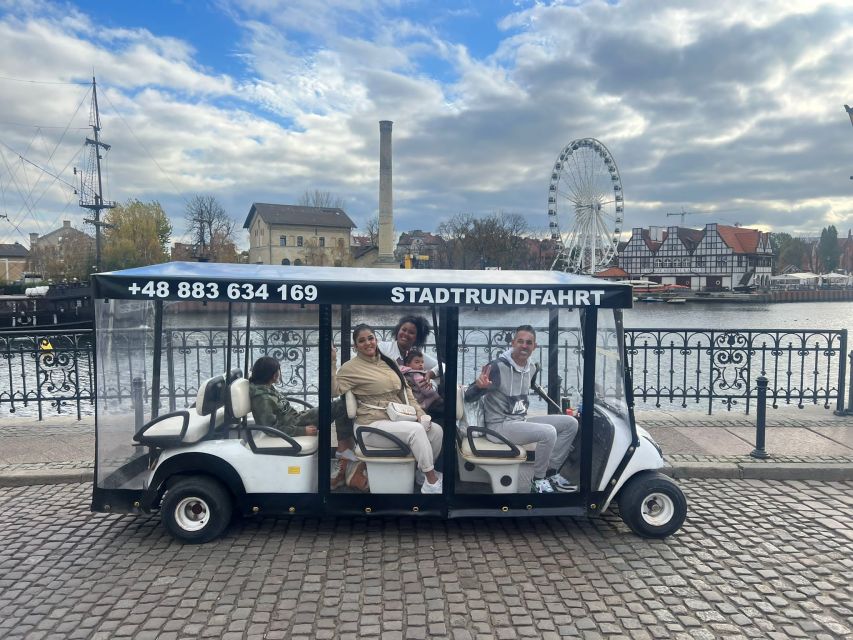
At $40 per person, the tour is not the cheapest way to see central Gdansk. You can walk much of the old town for free. The value comes from the guide, the cross-city route, and the time saved getting to the shipyard and other sites beyond the main pedestrian core.
I consider the price fair if you are in Gdansk for a short stay, arriving by cruise ship, traveling with older family members, or wanting a quick city introduction before choosing your museums. It is less compelling if you already know the city well or want long, quiet visits inside churches and museums.
Hotel pickup and drop-off are included for hotels in the city center, specifically within 2 kilometers of Neptune’s Fountain. The tour is wheelchair accessible, which makes the golf cart a useful choice for people who find a long walking route difficult. Confirm the exact pickup point when booking, and arrive 10 minutes early.
Live guiding is available in English, Polish, Ukrainian, German, and Spanish. Free cancellation is offered up to 24 hours before the tour, and you can reserve now and pay later. The advertised skip-the-ticket-line feature may help where it applies, but the short sightseeing stops should not be confused with full museum entry.
Who should book this Gdansk tour?
I would choose this ride early in a Gdansk visit. It gives you a map in your head, introduces the main historic periods, and helps you mark places for a second look. It is especially useful if you have only a day or two and do not want to spend your first hours working out the city’s geography.
Families may appreciate the short format and the vehicle. So may anyone who wants history without a long walking lecture. The route also suits visitors who care about the Solidarity movement, since it does not stay only in the photogenic old town.
You should choose something else if your main goal is detailed interior time. St. Mary’s Basilica, the European Solidarity Centre, the Amber Museum, the National Maritime Museum, and the Polish Post Office site all deserve more attention than this schedule can provide. Use the tour as a guided preview, then return to your priorities independently.
Weather deserves a final warning. The ride operates in rain or shine, and appropriate clothing is specifically advised. An open golf cart can be delightful on a dry day and less pleasant in cold rain, so check the forecast and dress for exposure rather than for a sheltered bus.
Final verdict: a useful first ride through Gdansk
Book this tour if you want a friendly guide, a quick city overview, and access to both the old center and the shipyard area. The best reasons are the live questions, the local suggestions, and the route’s sweep from medieval trade to modern political change.
Do not book it expecting a full tour of every church and museum. At $40, you are paying for orientation, transport between key districts, and the guide’s explanation. For a first day in Gdansk, that is a solid use of one to two hours, especially if you ask your guide to help shape the rest of your visit.
FAQ
How long does the Gdansk golf cart tour last?
The tour lasts one to two hours. Starting times depend on availability when you book.
Where does the tour begin and end?
Pickup is available in Śródmieście and from locations in the historic city center within 2 kilometers of Neptune’s Fountain. The scheduled finish is at Neptune’s Fountain.
Is hotel pickup included?
Yes. Hotel pickup and drop-off are included for hotels in Gdansk city center within the stated 2-kilometer area around Neptune’s Fountain.
Which languages are available?
Live guiding is available in English, Polish, Ukrainian, German, and Spanish.
Is the golf cart wheelchair accessible?
Yes, the tour is listed as wheelchair accessible.
What happens if it rains?
The tour runs rain or shine. Wear clothing suitable for the weather, since the golf cart is not described as a fully enclosed vehicle.
Recently added in Gdansk
- Szymbark: Kashubian Switzerland 5-Hour Private Tour★ 3.7 · 3 reviews
- Segway Tour Gdańsk: Shipyard Tour – 1,5-Hour of Magic!★ 5.0 · 3 reviews
- Stutthof Concentration Camp and Museum of WWII: Private Tour★ 4.7 · 3 reviews
- Sopot Sunset Cruise with Welcome Drink★ 3.5 · 3 reviews
- Gdansk: Basic Bike Tour★ 4.3 · 3 reviews
- Gdansk: Bubble Football with Hotel Transfers★ 5.0 · 3 reviews
- Artus Court and Gdansk Old Town Private Tour with Tickets★ 4.7 · 3 reviews
- Gdansk: Oliwa Zoo with Tickets and Roundtrip Transportation★ 5.0 · 3 reviews
Golf Cart & Segway Tours, compared.
Extended City Sightseeing Tour – Eco Buggy Golf Cart
Read our review →

Krakow Old Town Segway Tour 2hr with Training, Safety Gear, Guide
Read our review →
Jewish Quarter and Ghetto Electric Golf Cart Tour
Read our review →
Krakow Grand City Tour by golf cart – All 3 districts
Read our review →
Shared or Private City Tour Sightseeing By Golf Cart
Read our review →Where else this one turns up