
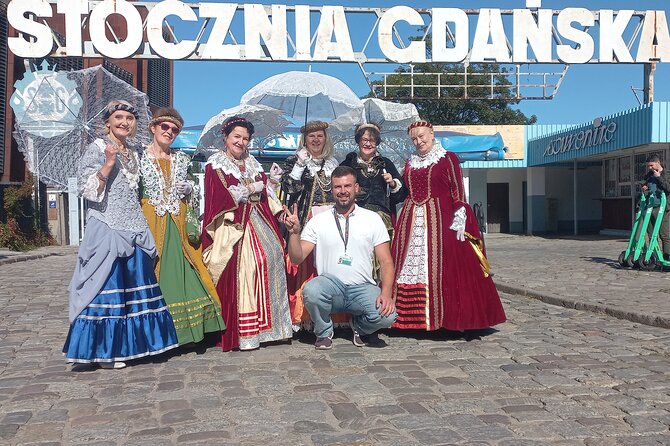
Reviewed · GOLF CART & SEGWAY TOURS
Gdańsk: City Sightseeing Tour by Buggy/Golf Cart LIVE GUIDED 1H
Gdańsk packs a remarkable amount into a compact center, and this golf-cart tour gives you a fast look at medieval gates, grand churches, the Motława waterfront, the Solidarity district, and Second World War sites in about an hour. Guides such as Alex, Michael, Noris, and Maciek bring local stories and personal insight to the route.
I like the central pickup and drop-off, which saves you the hassle of finding the starting point, and I like the private format for a personal group. Blankets and rain screens can make the ride more comfortable in poor weather, though the cart is open to traffic and sightseeing can be harder when the plastic sides are closed.
The main thing to understand is the pace. With roughly two minutes at many stops, this is a city orientation, not a series of museum visits. You’ll see the sights from outside, then return later on foot for the places that catch your eye.
Key points to know before you ride
- Twenty-seven major sights in about one hour: The route covers far more ground than a relaxed walk, from the Golden Gate to the Museum of the Second World War.
- Pickup within 2 kilometers of Neptune’s Fountain: You can usually begin near your hotel or accommodation in the historic center, but port pickup is not offered.
- A live guide makes the difference: Alex, Michael, Noris, and Maciek are among the guides praised for clear explanations, local stories, humor, and historical photographs.
- Best for orientation, not admission tickets: The cart takes you past museums, churches, monuments, and gates, but entrance fees and extended visits are not part of this one-hour outing.
- Weather matters: Plastic side panels and blankets may help in rain or cold, but bring a jacket and expect a delay if road or weather conditions interfere.
- Good value at $29.48: The price is sensible if you want a broad first look, especially if walking is tiring or your time in Gdańsk is short.
Why a golf cart works well in Gdańsk
Gdańsk’s historic center is easy to explore on foot, but the sights are spread across several connected areas. The most famous streets and waterfront monuments sit close together, while the Solidarity Square, Polish Post Office, Great Mill, and Second World War Museum require more time and energy to reach.
A golf cart bridges that gap. You get a seated ride while the guide points out buildings and explains what you are seeing. You do not need to spend the hour checking a map, deciding which lane to take, or worrying about missing a church hidden beyond the main route.
The cart also gives you a useful first look at the city’s shape. You begin near Neptune’s Fountain and the Long Market, pass through the old gates and central streets, then reach the modern areas tied to the Solidarity movement and the war. From there, the route returns toward the churches, Crane, and riverfront.
I would treat the ride as get your bearings fast. Afterward, you can choose between St. Mary’s Church, the European Solidarity Centre, the Museum of the Second World War, the Amber Museum, or the waterfront instead of guessing which places deserve your limited time.
More golf cart and segway routes in Gdansk:
- Gdansk: City Sightseeing Tour by Golf Cart/Buggy Guided Tour
★ 4.9 · 510 reviews - Gdansk: Shared or Private City Tour Sightseeing By Golf Cart
★ 4.8 · 233 reviews - Gdansk: 2H City Sightseeing Tour LIVE GUIDED by Buggy/Golf cart
★ 5.0 · 89 reviews
From the Green Gate to Neptune’s Fountain
The tour starts at the Green Gate, Brama Zielona, the grand entrance to the Long Market from the Motława River side. This is one of the best places to begin because it links the waterfront with the city’s ceremonial center.
The cart then moves past the Museum of Gdańsk and the Main Town Hall. The town hall is especially useful for understanding how civic power shaped the old city. You will not have time to go inside, but the guide can give you the basic story and point out the building’s place along the main route.
The Golden House follows, one of the most ornate residences on the Long Market. Its decorated facade is easy to miss if you are focused on the crowds, traffic, or the next photo stop. The guide’s running commentary helps turn a pretty building into a specific piece of Gdańsk’s architectural story.
Neptune’s Fountain is one of the city’s familiar symbols and a natural reference point for the tour. It is also the official meeting and return point. If you are arranging pickup, the operator can collect you within a 2-kilometer radius of the fountain, subject to street access.
At this stage, you see the classic Gdańsk picture: colorful facades, formal civic buildings, historic gates, and the main pedestrian routes. The downside is that the center can be busy, so the cart may move slowly or pause while navigating restricted streets.
The royal route and the old defenses
The Gdańsk Shakespeare Theatre appears next, near the former city walls. It adds a modern cultural note to a route otherwise filled with medieval and early modern structures. The theatre’s design and location make it a good reminder that Gdańsk is not only a preserved old town.
The Golden Gate, called Langgasser Tor in the tour details, marks the entrance to the main street and the beginning of the Royal Route. The four-minute stop gives the guide slightly more time to explain the ceremonial path that once led toward the Long Market.
You then pass the Prison Tower, part of the old defensive and prison complex. It is a compact stop, but it helps you see that the city’s grand gates were tied to a working system of walls, control, and punishment.
The Highland Gate was once the first entrance to the main city and another starting point for the Royal Route. Seeing the Golden Gate, Prison Tower, and Highland Gate together makes the old approach to Gdańsk easier to understand. On foot, you might notice these structures separately. In the cart, their sequence becomes the point.
Forum Gdańsk comes next, a large modern shopping center. It may be less exciting than the old gates, but it shows how the city has grown beyond its historic core. The stop is brief, about a minute, so expect a passing reference rather than a shopping visit.
The Great Armoury, Millennium Tree, and central churches

The Great Armoury is one of the tour’s strongest architectural stops. Its elaborate facade once served a practical military purpose, yet it looks more like a palace than a storehouse for weapons. You will have only a short exterior visit, so note the details while the guide is speaking.
The Millennium Tree provides a quick civic landmark before the route reaches the Jan III Sobieski Monument. The monument honors the Polish king and gives the guide a chance to connect Gdańsk with wider Polish political history.
The Bread Bridge, Most Chlebowy, also called the Bridge of Love, offers a lighter moment. It is known as a romantic city bridge, and the brief stop breaks up the heavier material about war, imprisonment, and political conflict.
The Baltic Sea Culture Centre and Old Town Hall mark the older part of the city. The tour’s route makes an important distinction between Gdańsk’s Main Town and Old Town, areas that are often casually treated as one place. You may find this explanation especially useful when planning your later walks.
St. Catherine’s Church and St. Bridget’s Church bring the route into a dense cluster of religious buildings. St. Bridget’s is particularly tied to Gdańsk’s modern political story, while St. Catherine’s is one of the city’s key historic churches. The stops are short, but the guide can help you decide which interior deserves your time.
More quick one hour outings in Gdansk:
- Krakow: 1-Hour Evening Vistula River Cruise
★ 4.1 · 952 reviews - #1 Pub Crawl Warsaw with Optional Premium 1 Hour Open Bar
★ 5.0 · 790 reviews - Warsaw: Pub Crawl with Optional 1-Hour Open Bar
★ 4.4 · 651 reviews - Krakow: Pub Crawl with 1 Hour of Unlimited Alcoholic Drinks
★ 4.7 · 651 reviews
Solidarity Square and Gdańsk’s modern story
The Three Crosses Monument is one of the most meaningful stops on the route. At Solidarity Square, the monument and the nearby European Solidarity Centre recall the workers’ movement that helped reshape Poland and Europe in the 1980s.
The tour allows about five minutes here, one of the longer pauses. That matters because this is not just another photo stop. The guide can explain the setting and the political events connected with the shipyard area. Several guides also use historic photographs to show what parts of Gdańsk looked like before the war and after wartime destruction.
If you have an interest in twentieth-century Europe, I would mark the European Solidarity Centre for a return visit. The cart gives you context, but the short stop cannot replace the museum’s full exhibits. The same rule applies to nearly every major museum on the route: use the ride to choose, then go inside later.
The Solidarity section also gives the tour emotional range. You begin among royal gates and ornate merchant houses, then see monuments connected to workers, protest, and national change. That combination is one reason a local guide adds more than a silent sightseeing ride.
The Great Mill, Market Hall, and Polish Post Office
The Great Mill is linked in the route to the Amber Museum. Gdańsk is closely associated with amber, and this stop points you toward one of the city’s main themes. The tour does not include a museum visit, but the exterior view and guide’s explanation can help you decide if amber deserves a closer look.
The Market Hall, Hala Targowa Kupcow Dominikanskich, provides a different view of daily city life. Historic centers can feel like open-air monuments, so a market hall helps restore the sense that Gdańsk is also a living city where people shop and work.
The Museum of the Polish Post Office is an important wartime site. The building is connected with the defense of the Polish Post Office at the start of the Second World War. The tour gives you about four minutes here, enough for an explanation and an exterior look, but not enough for the museum itself.
The Museum of the Second World War follows. The stop is short, only about two minutes, yet its presence on the route is useful. You can see where the museum sits in relation to the old center and decide if you want to return for a longer visit.
I would not try to visit either museum during this tour. The value is in learning where they are and why they matter. Plan a separate block of time if you want displays, documents, and a slower account of the war.
The riverfront, Crane, and grand churches
The Baltic Symphony Hall and the Great Crane bring you back toward the Motława waterfront. The Crane is one of Gdańsk’s most recognizable structures, combining a medieval port function with an unmistakable silhouette over the river.
The cart also passes St. John’s Church and the Royal Chapel. The Royal Chapel’s compact exterior contrasts with the scale of St. Mary’s Church, which comes shortly afterward.
St. Mary’s Church is one of the essential stops. It is a huge brick church and one of the buildings that best expresses Gdańsk’s historic importance. The tour allows around three minutes, enough to hear the main facts and see the building from outside, but not enough to explore its interior or tower.
St. Nicholas Church completes the listed route. It adds another layer to the city’s religious history and gives you a final landmark before returning to Neptune’s Fountain. Since the route includes many churches, the guide’s short explanations are valuable for helping you choose between them.
The waterfront and church section is also where weather can affect the experience most. In rain, the cart may use its clear plastic sides. One account describes them as helpful protection from heavy rain, while another found the panels dirty and obstructive. The practical answer is simple: bring a jacket, and ask the guide if you want the sides adjusted when conditions allow.
What the guide adds to the ride
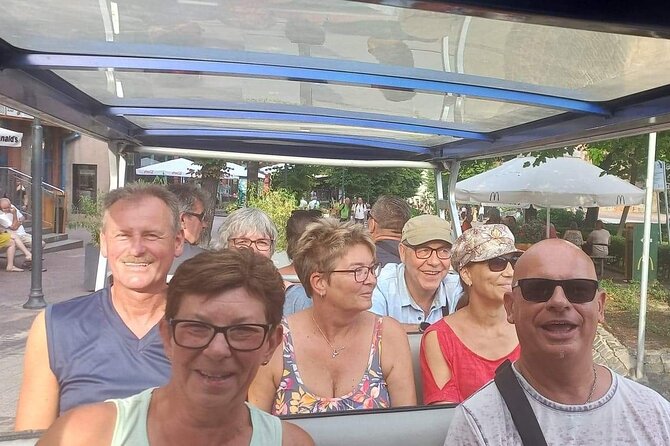
The guide is the heart of this experience. A golf cart can show you buildings, but it cannot explain why a gate matters, how wartime damage changed the city, or why Solidarity Square belongs on any serious Gdańsk route.
Alex is repeatedly praised for clear English, energy, and a willingness to answer questions. Michael is described as a longtime local with a personal connection to the city, and one particularly memorable outing included historic photographs and an extra stop. Noris is noted for mixing humor with history and for adapting the route to the group.
Maciek, sometimes introduced as Magic, is known for humor, warmth, and strong English. The individual guide you receive will depend on the date, but the pattern is clear: this works best when you ask questions. Tell the guide if you want more wartime context, architectural detail, church history, or practical suggestions for the rest of your day.
English is offered, and the guides are not native English speakers. Most communication should be workable, but accents can vary. If you miss a point, ask for it again right away. A one-hour tour moves quickly, and waiting until the end means losing the chance to clarify a key part of the story.
Timing, comfort, and group size
The advertised duration is about one hour to one hour and fifteen minutes. One account describes a longer ride, but you should plan around the stated duration rather than expect extra time. Traffic, restricted streets, weather, and road delays can all affect the exact schedule.
The listed stop times add up to roughly an hour, but these are short viewing pauses, not full visits. Most stops last two minutes. The Golden Gate, Prison Tower, Solidarity Square, Great Mill, St. Bridget’s Church, and Polish Post Office receive slightly more time.
The format is described as private for your personal group, while the activity has a maximum of 30 people. A cart is reported to hold up to nine people, so larger bookings may involve more than one vehicle or a group arrangement set by the operator. If the private setup is important to you, confirm the vehicle arrangement when booking.
The cart is clean and comfortable according to the supplied details, and blankets have been provided on cold days. Service animals are allowed, public transport is nearby, and most people can participate. The information does not promise wheelchair access, so ask the operator directly if that is necessary for your party.
Pickup and drop-off are offered within 2 kilometers of Neptune’s Fountain, including a hotel or accommodation when the street permits vehicle access. Some historic streets restrict traffic even inside the radius, in which case the guide will suggest a nearby meeting point. Wait at the confirmed location 10 minutes early.
Port pickup is not offered. If you are arriving by cruise ship, you will need to make your own way to the central meeting area.
Is $29.48 a fair price?
At $29.48 per person, I consider this a fair price for a short private orientation, especially when central pickup and drop-off save you time. It is less compelling if you already know Gdańsk well or plan to walk the old center at a leisurely pace.
The value comes from coverage. In one ride, you reach the classic Long Market, the old gates, the churches, the market hall, the wartime museums, the riverfront, and the Solidarity district. Reaching all of those places on foot in an hour would be tiring and unrealistic.
You are not paying for museum admissions. You are paying for transport, a live guide, local explanation, and a quick route through the city. Keep that distinction clear and the price makes sense.
The activity is often booked around 20 days ahead, so reserve earlier if your schedule is fixed. Free cancellation is available until 24 hours before the start time. If poor weather cancels the tour, you can receive a different date or a full refund.
Who should book this Gdańsk cart tour?
I would recommend it to you if:
- You have only a short time in Gdańsk.
- You want to see the historic center without a long walk.
- You are visiting with someone whose energy drops quickly, including a person with multiple sclerosis.
- You want a private ride with room to ask questions.
- You prefer a local guide’s stories to a recorded audio tour.
- You want help deciding which museums and churches deserve a later visit.
I would be more cautious if you want deep time inside museums, a quiet walking tour, or a guaranteed all-weather experience. This is road travel in a small cart, so traffic, rain, cold, and street restrictions are part of the deal.
During the Saint Dominic’s Fair, from July 27 through August 25, 2025, some streets and stops may change. The schedule and overall length are expected to remain in place, but the route will be adjusted around fair restrictions.
Should you book it?
Book this tour if you want a well-organized first look at Gdańsk and value comfort over slow exploration. The route covers an unusually broad mix of medieval architecture, churches, wartime sites, the riverfront, and Solidarity history, while the guide supplies the connections that make those places meaningful.
Do not book it expecting a museum tour or a detailed walk at every stop. You will spend more time moving and listening than entering buildings. For a first morning in the city, a short cruise-stop visit, or a group that wants to save its legs, I think the $29.48 price is reasonable. Use the ride to choose your priorities, then return on foot for the places you want to know properly.
FAQ
How long does the Gdańsk golf-cart tour last?
The stated duration is approximately one hour to one hour and fifteen minutes. Road conditions, traffic, restricted streets, and weather can affect the exact timing.
Where does the tour begin and end?
The listed meeting point is Neptune’s Fountain on Długi Targ. The tour returns there, although drop-off can be arranged elsewhere in the historic center within 2 kilometers of the fountain.
Is hotel pickup included?
Pickup is offered from a hotel, accommodation, or another location within 2 kilometers of Neptune’s Fountain when vehicle access is permitted. You should wait at the confirmed location 10 minutes before departure.
Can the tour pick me up at the port?
No. Port pickup is not offered. You will need to reach the central meeting point or arrange a permitted pickup location in the historic center.
Is the tour offered in English?
Yes. A live guide in English is available. The guides are not native English speakers, so accents can vary.
Does the tour enter museums or churches?
The route passes many museums and churches, including the Museum of the Second World War, St. Mary’s Church, and the Great Mill. The short tour is designed for exterior sightseeing and commentary, not extended interior visits.
What happens if the weather is poor?
The experience requires good weather. If the operator cancels because of poor weather, you will be offered another date or a full refund. Plastic side panels and blankets may be used in rain or cold, but you should still bring a jacket.
Recently added in Gdansk
- Szymbark: Kashubian Switzerland 5-Hour Private Tour★ 3.7 · 3 reviews
- Segway Tour Gdańsk: Shipyard Tour – 1,5-Hour of Magic!★ 5.0 · 3 reviews
- Stutthof Concentration Camp and Museum of WWII: Private Tour★ 4.7 · 3 reviews
- Sopot Sunset Cruise with Welcome Drink★ 3.5 · 3 reviews
- Gdansk: Basic Bike Tour★ 4.3 · 3 reviews
- Gdansk: Bubble Football with Hotel Transfers★ 5.0 · 3 reviews
- Artus Court and Gdansk Old Town Private Tour with Tickets★ 4.7 · 3 reviews
- Gdansk: Oliwa Zoo with Tickets and Roundtrip Transportation★ 5.0 · 3 reviews
Golf Cart & Segway Tours, compared.
Extended City Sightseeing Tour – Eco Buggy Golf Cart
Read our review →
City Sightseeing Tour by Golf Cart/Buggy Guided Tour
Read our review →
Krakow Old Town Segway Tour 2hr with Training, Safety Gear, Guide
Read our review →
Jewish Quarter and Ghetto Electric Golf Cart Tour
Read our review →
Krakow Grand City Tour by golf cart – All 3 districts
Read our review →
Where else this one turns up