Reviewed · KRAKOW TOURS
Jewish Krakow in German
Krakow’s Jewish story comes into sharp focus in Kazimierz, where seven old synagogues survived World War II and the Holocaust. This 150-minute German-language walk then connects the former Jewish quarter with Podgórze, the district that held Krakow’s ghetto from 1941 to 1943.
I like the clear historical arc, from Jewish culture before the war to destruction and the small community that lives in Krakow today. I also like the guides’ personal touch: Max is praised for his facts and engaging manner, while another German-speaking guide was noted for excellent interaction with the group.
The main drawback is pace. One recent participant wanted more time at some locations, and that is easy to understand: Kazimierz and Podgórze contain more history than a 150-minute walk can cover.
Key points at a glance
- Seven surviving synagogues: Kazimierz’s historic buildings give the tour a strong visual starting point.
- Two districts, two chapters: You connect the old Jewish quarter with Podgórze, the former wartime ghetto.
- German-language guiding: The tour is led live in German by a local guide.
- A serious but varied story: Expect Jewish culture, World War II, the Holocaust, and present-day renewal.
- A central meeting point: Meet on the stairs in front of the Old Synagogue, on the main street of Kazimierz.
- A reservation-fee format: The $26 price covers the booking fee and guide’s payment within a general pay-as-you-wish setup.
Starting at the Old Synagogue in Kazimierz
Your meeting point is easy to identify: the stairs in front of the Old Synagogue on the main street of Kazimierz. Arrive 10 minutes early. That gives you time to find the correct spot and join the group without cutting into the opening explanation.
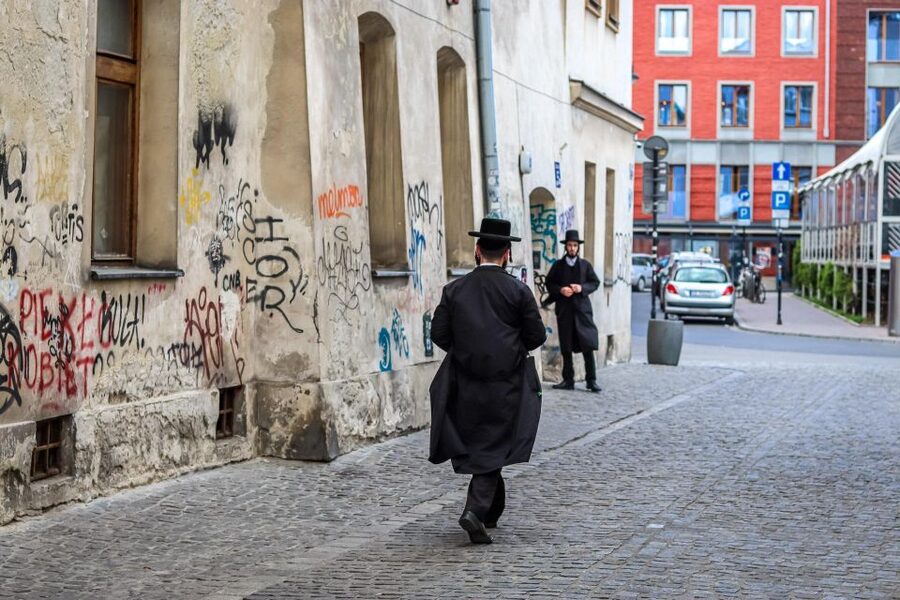
Kazimierz was once a separate town and became the center of Jewish life in Krakow. On this walk, the buildings do much of the teaching. Old synagogues, streets, and former community spaces help you picture a district shaped by religion, family, trade, learning, and daily life.
The setting matters because this is not only a tour of monuments. The guide explains the local Jewish community in its broader context, helping you understand what these buildings meant before the war. You are not simply counting synagogues or photographing façades. You are learning how a neighborhood worked.
The opening at the Old Synagogue also gives you a useful sense of place. Since the tour begins in the middle of Kazimierz, you start with the area’s Jewish identity rather than with a general introduction to Krakow. That focus suits anyone who wants a concentrated look at one of the city’s most important districts.
A few more Krakow half days to consider
- From Krakow: Auschwitz-Birkenau Guided Tour & Hotel Pickup
★ 4.5 · 33,358 reviews - From Krakow: Auschwitz-Birkenau Guided Tour & Hotel Pickup
★ 4.5 · 29,340 reviews - Krakow: Auschwitz Guided Tour with Optional Hotel Pickup
★ 4.5 · 15,280 reviews
Seven synagogues and the survival of Jewish Krakow
A key part of the walk is the group of seven old synagogues that survived the destruction of World War II and the Holocaust. The supplied information does not promise entry into every building, so you should expect the guide to explain and show the sites from the route rather than assume a full interior visit.
That distinction is useful. A walking tour can show you the relationship between the synagogues, the streets, and the wider quarter. The guide’s story adds the missing layer: why these places mattered, what happened to the community, and how the buildings survived when so much else was destroyed.
The strongest part of this section is likely the contrast between architectural survival and human loss. The synagogues remain, but the community that created this district was almost entirely destroyed during the Holocaust. A good guide has to handle that contrast carefully, and German-speaking guides such as Max are well placed to provide a detailed account without reducing the subject to a list of dates.
This is also where the tour’s structured storytelling helps. Rather than receiving disconnected facts, you move from the community’s cultural life to the catastrophe that broke it apart. That structure makes the information easier to follow, especially if you know little about Krakow’s Jewish past.
From Jewish culture to the destruction of World War II
The tour does not present Kazimierz as a frozen museum district. It addresses both the flourishing of Jewish culture and the violence that followed. You will hear about the death and destruction of World War II, including the Holocaust and the places in Krakow connected with it.
This section is serious. If you prefer a light sightseeing walk, this is not the right choice. The subject is difficult, and the route is designed to make you think about what happened to the people who lived in these streets.
At the same time, the tour is not described as unrelentingly bleak. Its story includes the later revival of Jewish culture in Krakow. That balance matters. It allows you to recognize the scale of the loss without treating Jewish life as something that ended in 1945.
The guide’s role is especially important here. One German-speaking guide was praised for being very well informed and for holding the group’s attention. Another guide was described as informative, varied, and excellent at interacting with the group. Those comments suggest a style that combines factual explanation with conversation, rather than a speech delivered over your head.
Walking toward Podgórze, Krakow’s former ghetto
The route also reaches Podgórze, the area of the former Jewish ghetto during World War II. The ghetto existed from 1941 to 1943, and the district still contains buildings connected with that tragic period.
The move from Kazimierz to Podgórze is one of the tour’s most meaningful features. Kazimierz shows the older Jewish quarter and its cultural institutions. Podgórze brings you to the wartime setting, where the story becomes more direct and painful.
Here, the guide points out places tied to the ghetto and the Holocaust. The value is not only in seeing individual buildings. You begin to understand how the city’s geography was involved in the persecution of Krakow’s Jewish population.
The information provided does not name each Podgórze stop, so I would not book this expecting a fixed checklist of famous sites. Instead, think of it as a guided connection between districts and periods. The guide gives the places meaning, which is important because some locations may look ordinary without historical context.
You should also allow for a brisk walk. The tour lasts 150 minutes and covers both Kazimierz and Podgórze. Wear comfortable shoes, and keep your attention on the guide rather than planning a long stop at every site. One participant specifically wished for more time at some locations, a fair warning for anyone who likes to linger over photographs or ask many questions.
A different kind of day in Krakow:
- Krakow–Zakopane: Cable Car, Chocholow Baths, Cheese & Vodka
★ 5.0 · 10,720 reviews - Krakow: Auschwitz-Birkenau Guided Tour with Pickup & Lunch
★ 4.5 · 9,800 reviews - From Krakow: Wieliczka Salt Mine Tour
★ 4.6 · 9,393 reviews - Krakow: Auschwitz-Birkenau Guided Tour Pickup/Lunch Options
★ 4.5 · 9,057 reviews
Today’s Jewish culture in Kazimierz
The final part of the story turns toward modern Krakow. Kazimierz is now a cultural heart of the city and is home to a small but lively Jewish community. The tour explains this revival after discussing the near destruction of Jewish life during the war.
That present-day focus makes the walk more useful than a purely historical account. You see Kazimierz not only as a place marked by loss, but also as a district where Jewish culture has found a renewed presence.
The word revival should not be taken to mean that the prewar community returned unchanged. The tour’s value lies in helping you understand both facts: the old community was devastated, and Jewish life exists in Krakow today in a different form.
I especially like this part because it avoids an easy ending. The story does not stop with wartime destruction, and it does not pretend that revival erases the past. Instead, you leave with a more balanced picture of Kazimierz as a living part of modern Krakow.
What the German-language format adds
If German is your preferred language, this format has a practical advantage. Historical subjects are easier to absorb when you can follow fine distinctions, names, and dates without translating in your head.
The tour has a live guide rather than an audio recording. That means you can respond to the guide and take part in the interaction, although the exact group size is not provided. The strongest available comments focus on clear German, solid facts, an entertaining manner, and good communication with the group.
Max is one guide associated with this experience. He is praised for leading the group to several places and explaining them with strong factual knowledge. Another recent participant highlighted a female guide’s interaction and varied presentation, though her name is not provided.
The tone appears to differ slightly by guide, but the central approach stays the same: a carefully structured story, delivered in German, with room for explanation. If you have questions, ask them when the group pauses. The tight schedule may make it harder to return to a site later.
Is $26 a good value?
At $26 per person, the price is reasonable for a 150-minute guided walk that covers two historically important districts. You are paying for more than directions between buildings. The guide’s historical explanation is the main product, and that matters greatly here because the sites can be difficult to understand without context.
There is one pricing detail to notice. This is part of a general pay-as-you-wish tour system. The amount charged covers the reservation fee and the guide’s payment, so you are not expected to make a separate reward payment after the tour in the usual way.
The value is strongest for you if you want a focused introduction to Jewish Krakow in German. You get a local guide, a planned narrative, and access to places tied to both Jewish culture and the Holocaust. The value is weaker if you want long visits inside buildings, extensive free time, or a private tour.
No snack, hotel pickup, or return transport is included. That is normal for a central walking tour, but you should plan your own way to and from the meeting point and bring something to eat if you need it.
Who should book this walk?
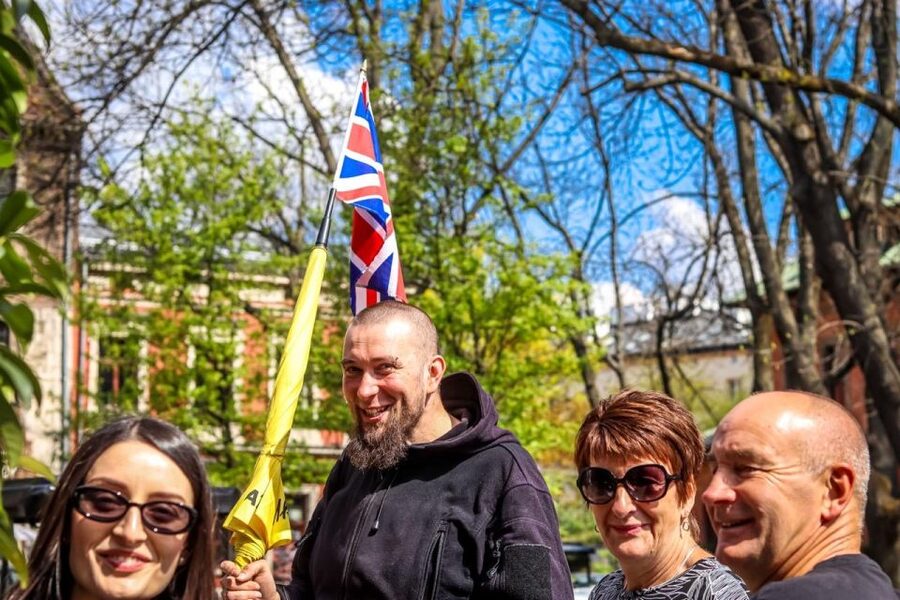
I would recommend it to German-speaking visitors who want more than a quick look at Kazimierz’s cafés and restored façades. It is particularly suitable if you want the Jewish quarter explained in relation to the Holocaust and the modern revival of Jewish culture.
It also suits first-time visitors who need a strong orientation to these districts. The guide connects Kazimierz and Podgórze in one story, so you do not have to work out the historical relationship on your own.
You may want a different format if you dislike emotionally heavy subjects. The tour deals directly with death, destruction, and Holocaust sites. That is an important part of Krakow’s past, but it is not light entertainment.
You should also consider your sightseeing style. If you like a brisk overview with a clear narrative, 150 minutes is useful. If you prefer to stop for a long time at each building, the schedule may feel tight. The comment about wanting more time at some places is worth taking seriously.
Practical details before you go
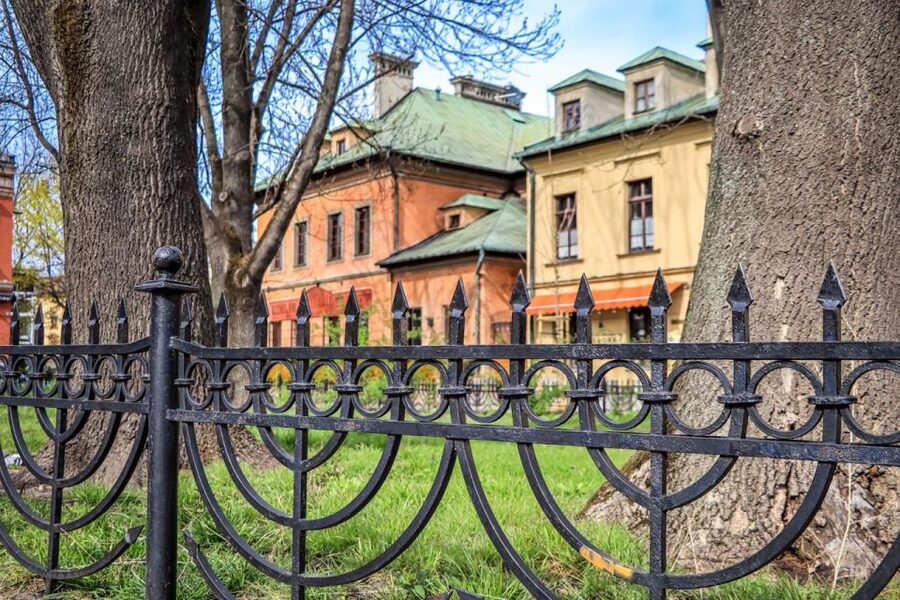
The meeting point is on the stairs in front of the Old Synagogue, on the main street of Kazimierz. Arrive 10 minutes before the start.
The tour lasts 150 minutes. Starting times vary, so check availability for the date you want.
The live guide speaks German. The experience includes a local guide and a structured story. It does not include hotel collection, return transport, or a snack.
You can cancel up to 24 hours before the activity for a full refund. You can also reserve now and pay later, which helps if your Krakow schedule is still changing.
Should you book Jewish Krakow in German?
Book this tour if you want a focused, serious introduction to Krakow’s Jewish past and present, and you prefer to hear the story in German. The combination of Kazimierz’s surviving synagogues, Podgórze’s former ghetto, and the city’s modern Jewish revival gives the walk a strong shape.
Go in knowing that the pace is fairly full and the subject is heavy. You may not have time to linger at every stop, and the information provided does not promise entry to each synagogue. For $26, though, the tour offers solid value if a clear explanation matters more to you than a long, leisurely visit to individual sites.
FAQ
How long does Jewish Krakow in German last?
The tour lasts 150 minutes.
What language is the tour conducted in?
The live tour guide speaks German.
Where does the tour meet?
The group meets on the stairs in front of the Old Synagogue, on the main street of Krakow’s Jewish district, Kazimierz.
How early should I arrive?
You should arrive at the meeting point 10 minutes before the activity begins.
Which parts of Krakow does the tour cover?
The tour covers Kazimierz, the historic Jewish quarter, and Podgórze, the area of the former Jewish ghetto during World War II.
Does the tour discuss the Holocaust?
Yes. The tour discusses the death and destruction of World War II and takes you to places in Krakow connected with the Holocaust.
Is hotel pickup included?
No. Hotel collection and return transport are not included.
Can I cancel for a full refund?
Yes. You can cancel up to 24 hours in advance for a full refund.
Recently added in Krakow
- Auschwitz-Birkenau and Krakow Private Car Trip from Katowice★ 4.3 · 3 reviews
- Wawel Castle, Old Town with St. Mary’s Church Guided Tour★ 5.0 · 3 reviews
- Wawel Castle, Cathedral, Rynek Underground Tour with Lunch★ 5.0 · 3 reviews
- From Krakow: Chocholow Thermal Hot Springs (hotel pick up)★ 5.0 · 3 reviews
- Private tour to Zakopane and Thermal Baths from Krakow★ 5.0 · 3 reviews
- Legends of Cracow ROBOTIC SHOW★ 4.0 · 3 reviews
- From Krakow: Zakopane and Thermal Pools Guided Trip★ 5.0 · 3 reviews
- Guided Beer Tour in Krakow★ 4.5 · 3 reviews
Krakow Tours, compared.
Auschwitz-Birkenau Guided Tour & Hotel Pickup
Read our review →Auschwitz Guided Tour with Optional Hotel Pickup
Read our review →
Zakopane: Cable Car, Chocholow Baths, Cheese & Vodka
Read our review →
Auschwitz-Birkenau Guided Tour with Pickup & Lunch
Read our review →
Krakow to Auschwitz Birkenau Guided Tour with Transfer and Ticket
Read our review →
Wieliczka Salt Mine Guided Tour with Transport
Read our review →