
Reviewed · JEWISH QUARTER & KAZIMIERZ TOURS
Gdansk: Jewish Heritage Guided Private Walking Tour
The most moving part of this tour is the way it connects ordinary city streets with Jewish life before the war, the destruction of the Jewish community, and the few places that remain. You will follow the Trail of Jewish Monuments, visit the old cemetery, hear about the Great Synagogue and Kristallnacht, and see the former ghetto area on Granary Island.
I like the fully private format, since your guide can adjust the pace and explain difficult subjects without rushing a large group. I also like the mix of visible sights and lost places, especially the cemetery and the site of the Great Synagogue. The main consideration is that entrance fees are not included, and some of the most important locations are memorial sites rather than preserved buildings.
Key points to know before booking
- The Great Synagogue is remembered, not visited: Learn where Gdansk’s largest synagogue once stood and how it was destroyed in 1939.
- The Jewish cemetery retains original features: See its walls, entrance gate, and surviving graves.
- The tour reaches beyond the Old Town: Transport takes you to the New Synagogue in Wrzeszcz, built in 1926.
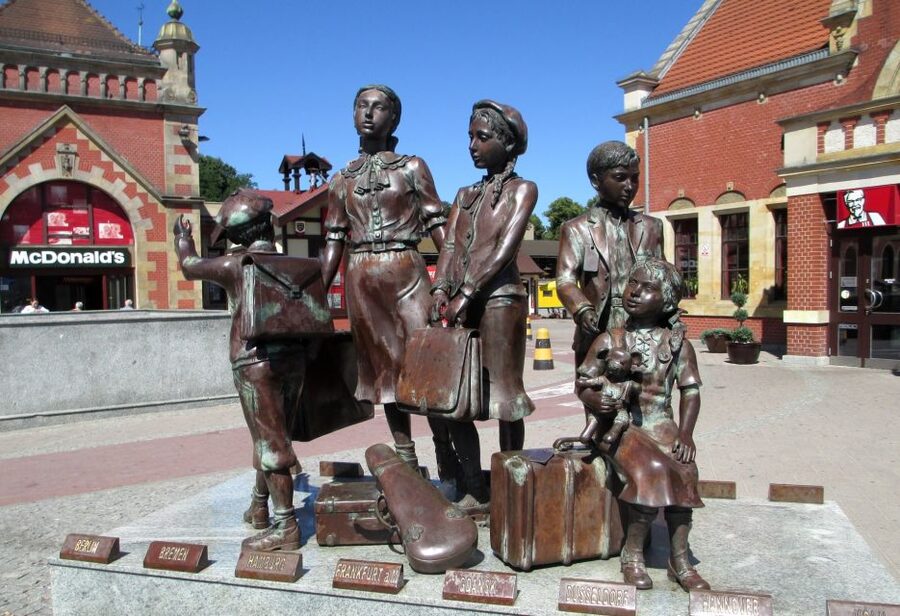
- The Holocaust story is tied to real city spaces: Visit the former ghetto area on Granary Island and the Kindertransports monument.
- Private guiding makes the subject easier to discuss: Beata, Eva, Luis, and other guides are available in several languages.
- Four hours gives the subject room: Hotel pickup, transport, and drop-off are included, but entrance fees are not.
A Jewish story woven into Gdansk’s Old Town
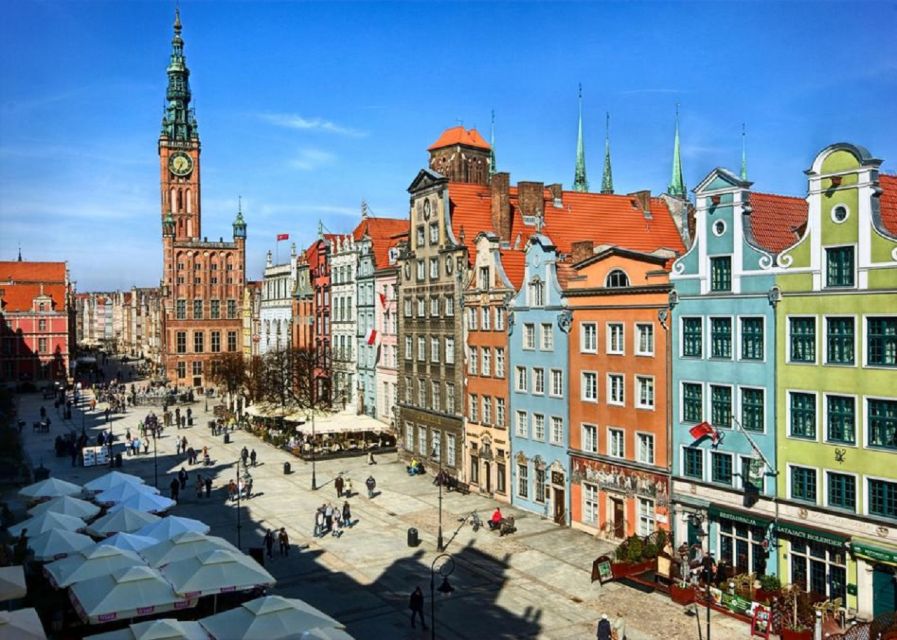
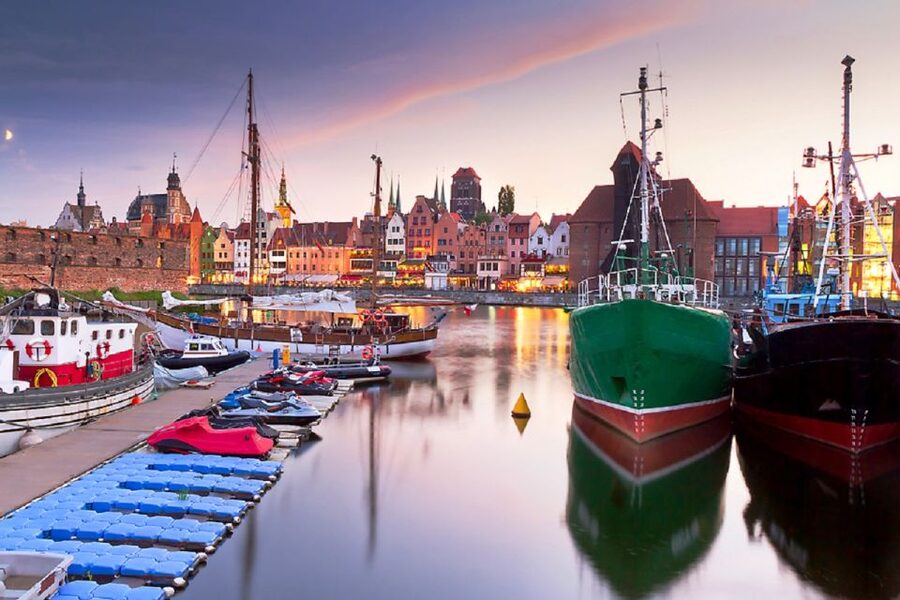
Gdansk can first seem like a city of grand brick churches, merchant houses, gates, and waterfront buildings. This tour asks you to look again. Behind the polished architecture is a long Jewish story that reaches back, possibly, to the 10th century.
As a major seaport, Gdansk grew through trade, industry, and crafts. Jewish merchants were part of that growth, particularly as the city became one of Poland’s most prosperous centers in the 15th and 16th centuries. Your guide explains how Jewish residents contributed to the city’s economic and cultural life, rather than presenting Jewish history only through the lens of wartime tragedy.
That balance matters. You first encounter a community that worked, traded, worshipped, and built a life here. Only then does the tour move toward persecution, displacement, and murder. I find this order more useful than a tour that reduces an entire community to its final years.
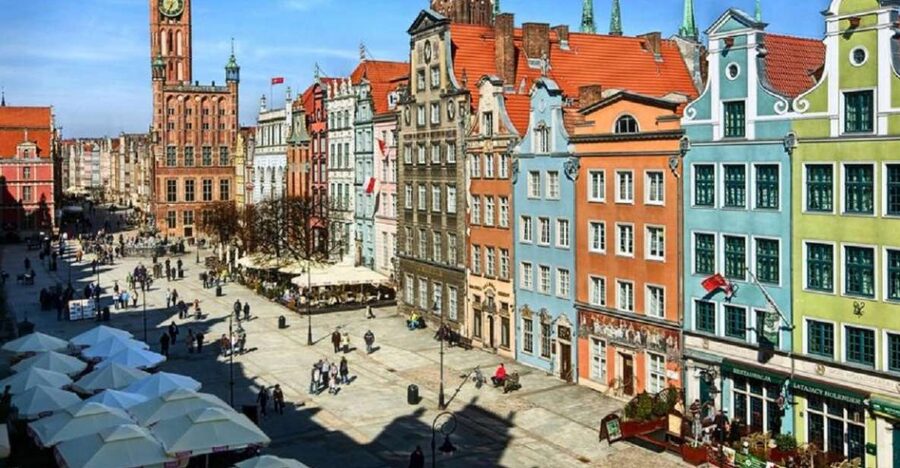
The Old Town portion also gives you plenty of magnificent architecture. You will see buildings and streets shaped by centuries of commerce and civic ambition while your guide points out places connected to Jewish Gdansk. The effect is not a separate Jewish quarter preserved in one neat block. Instead, the story is scattered through the city, and you learn how to read those traces.
More History Tours in Gdansk
- Gdansk: City Cruise on Historical Polish Boat
★ 4.8 · 2,913 reviews - Gdańsk: Sunset Cruise on a Historic Polish Boat
★ 4.9 · 977 reviews - Gdańsk City Sights & History Guided Walking Tour in English
★ 4.8 · 876 reviews
Finding the Great Synagogue that no longer exists
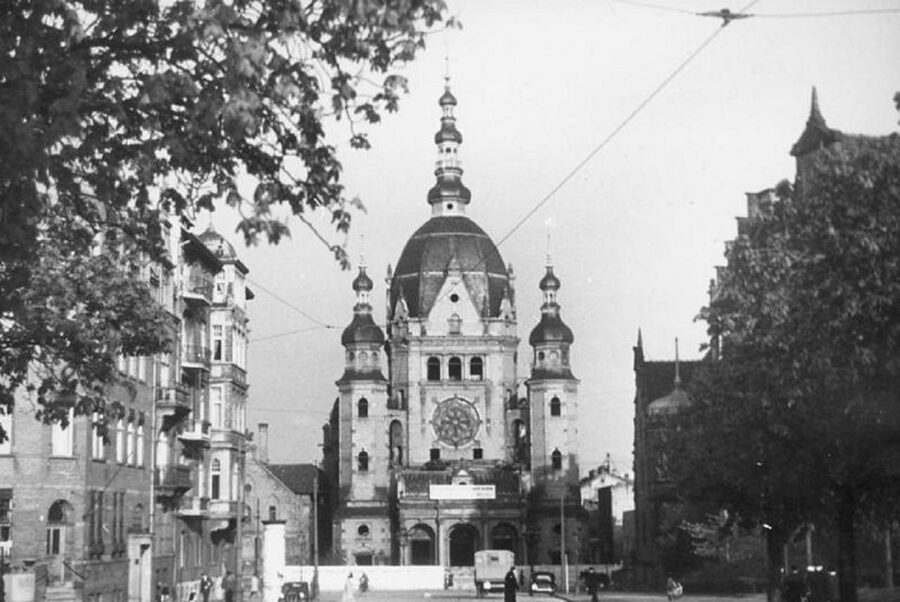
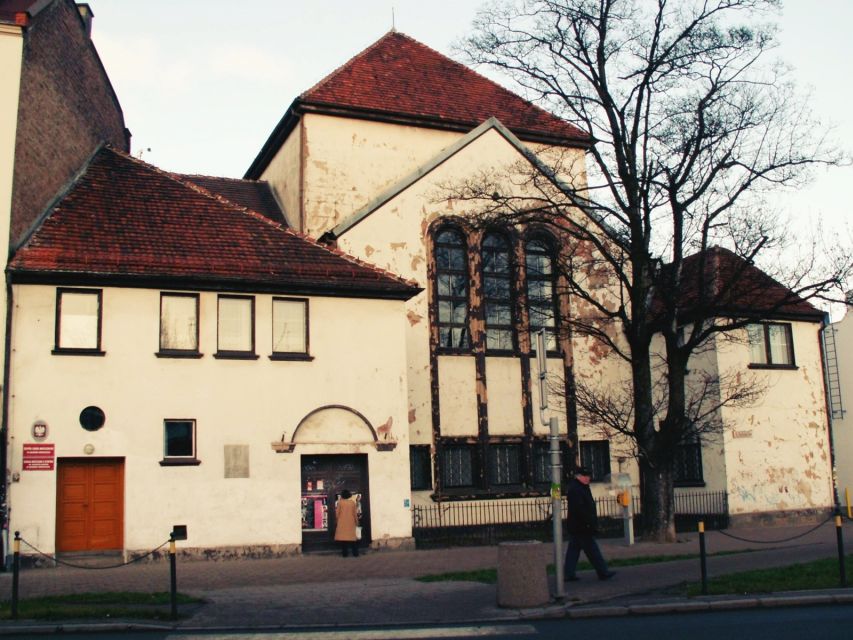
At the end of the 19th century, Gdansk’s Jewish community built the city’s largest synagogue. It represented the unity of local Jewish residents and served as a major religious and civic building.
There is no grand interior to enter today. The synagogue was destroyed by Germans in 1939. Your guide brings you to the place where it stood and explains what its loss meant. This is one of the tour’s most important lessons: in Gdansk, Jewish heritage often survives through location, memory, and fragments rather than intact monuments.
The tour also includes the story of Jewish veterans who saved the Great Synagogue on Kristallnacht. That episode adds a striking human detail to the larger account of destruction. Ask your guide to explain the circumstances carefully, since the tour also covers the synagogue’s later destruction in 1939. The story is best understood as part of the changing conditions faced by Gdansk’s Jewish community during the Nazi period.
For me, a former building site can be more demanding than a preserved monument. You must use your imagination, and the quality of the explanation matters. This is where a private guide earns the fee. Beata, Eva, Luis, or another guide can slow down, answer questions, and help you picture a building that is no longer there.
The cemetery’s walls, gate, and surviving graves
The Jewish cemetery is the clearest physical reminder of the community’s presence. You will see its original walls, entrance gate, and graves. These features give the tour a quiet pause after the busy streets of the Old Town.
Cemeteries are valuable historical records, but they also require respectful attention. The surviving stones and layout can show the age and continuity of Jewish life in Gdansk. Your guide interprets what remains and places the cemetery within the wider story of the city.
This stop may appeal most to you if you prefer a direct connection to the past. A monument can make a broad statement. A cemetery makes the story personal. Names, dates, and worn stones remind you that the people discussed in the tour were families, neighbors, workers, merchants, and community members.
The visit is also one reason to choose a private tour instead of trying to piece the subject together from a map. You can ask about what you are seeing at the exact moment you see it. Since the tour lasts four hours, there is more time for explanation than on a short city walk.
Granary Island and the former ghetto area
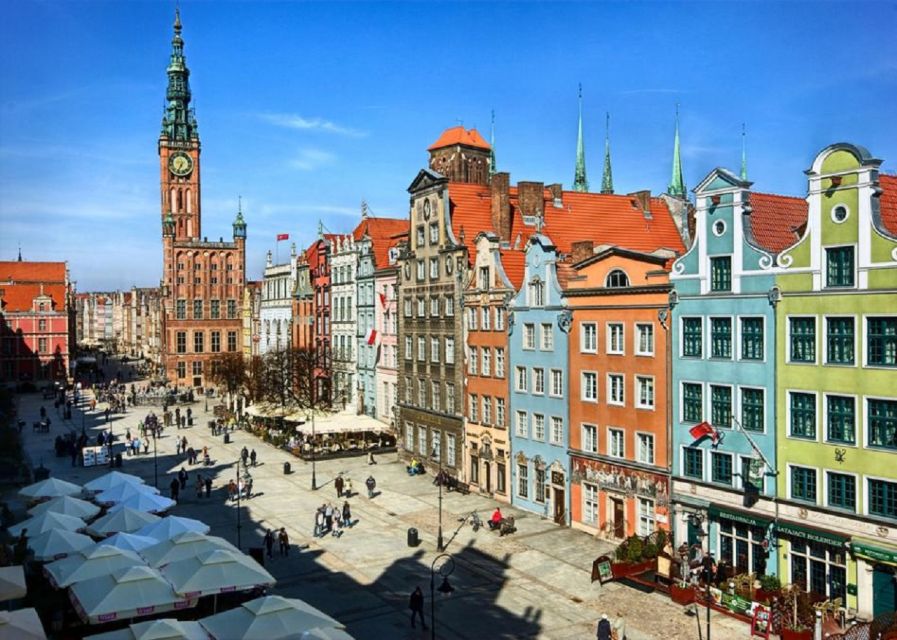
The tour then turns toward Granary Island, where you learn about the former Jewish ghetto area and the Holocaust. This section is not presented as a simple sightseeing stop. It is a place where the city’s physical setting meets the story of forced confinement and persecution.
You should expect the guide to explain what happened here rather than encounter a fully preserved ghetto complex. That distinction is important. Gdansk has been rebuilt and altered over time, so some of the Jewish story must be understood through historical interpretation.
The value of this stop lies in the connection between place and event. You are not only hearing dates and names in a museum room. You are seeing the urban area associated with the ghetto and considering how Jewish residents were stripped of homes, rights, and safety.
The subject is painful, and the four-hour length allows the guide to handle it without turning the experience into a quick list of atrocities. If you are traveling with children, teenagers, or anyone sensitive to Holocaust sites, consider discussing the tour’s focus in advance. The material is serious and central to the experience.
More Walking Tours in Gdansk
- Main Town Gdańsk Walking Tour
★ 5.0 · 644 reviews - Discover Gdansk Walking Tour
★ 5.0 · 495 reviews - Gdańsk: Old Town Private Walking Tour with Legends and Facts
★ 4.9 · 245 reviews - Gdansk Old Town 2-Hour Walking Tour
★ 4.5 · 94 reviews
The Kindertransports monument and a hard lesson in rescue
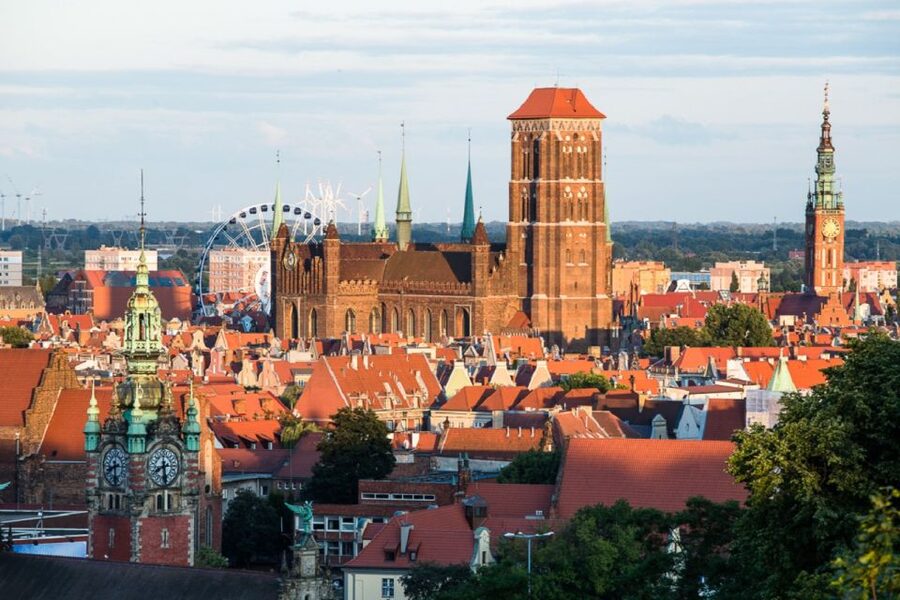
Another stop is the Kindertransports monument. Your guide explains what the Kindertransports were and how they fit into the story of Jewish children during the Nazi period.
This part of the tour broadens the focus beyond Gdansk itself. The Kindertransports are connected to separation, rescue, family loss, and the uncertainty faced by children sent away from danger. A monument can be easy to pass without context. Here, the explanation gives it meaning.
I like this stop because it shows that wartime history is not only about armies and governments. It is also about children, parents, volunteers, and decisions made under terrible pressure. The guide’s role is especially useful here, since a short inscription cannot explain the full human cost.
The tour also covers the famous Jewish Theatre in Gdansk. That detail helps restore some of the community’s cultural life to the story. Jewish Gdansk was not only a religious community or a victim population. It had places of performance, work, worship, and social life.
Reaching the New Synagogue in Wrzeszcz
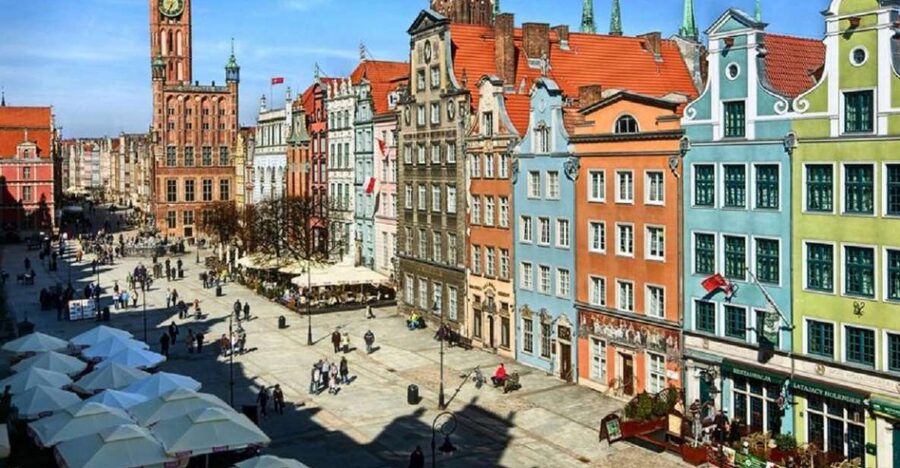
The final major sight is the New Synagogue in Wrzeszcz, built in 1926. It is described as the sole remaining synagogue in Gdansk, making it an essential stop for anyone interested in the city’s Jewish heritage.
This synagogue gives you something the former Great Synagogue site cannot: a surviving building connected to Jewish worship. Its presence creates a useful contrast. Earlier in the tour, you stand where a major synagogue once stood. Here, you see the city’s remaining synagogue and learn about its place in modern Gdansk.
The visit also shows why transport is included. The tour is not limited to a compact Old Town route. After walking through the central sights, you travel to Wrzeszcz and then return to your hotel. That saves you from arranging a separate taxi or public transport connection.
The activity information does not promise an interior visit or include admission fees. I would confirm access arrangements when booking, especially if entering the synagogue is important to you. Even if you view it from outside, the building remains a key part of the route because it represents continuity after so much destruction.
What a private four-hour format changes
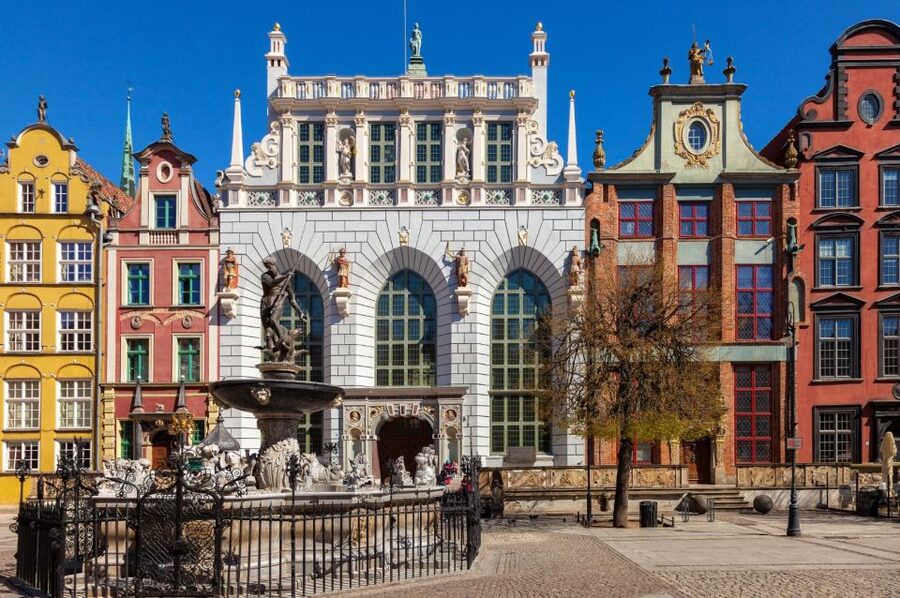
Your guide meets you in the hotel lobby with your name and takes you on a private sightseeing tour. Pickup and drop-off are included, along with transportation. You should be ready on time, since the schedule is built around your group rather than an open-ended city walk.
A private group is useful for this subject. You can ask about family history, religious life, the prewar city, the Holocaust, or the meaning of a particular monument. You can also request a slower pace at the cemetery or spend less time on architecture if your main interest is Jewish history.
The tour lasts four hours, which is long enough to cover both the Old Town and Wrzeszcz without reducing everything to a quick introduction. It is not a casual two-hour stroll. Wear comfortable shoes and expect a mix of walking, standing, and vehicle travel.
The tour is wheelchair accessible, which is helpful, though individual historic surfaces and access conditions can vary. Since no exact route timing is provided, ask the provider about the order of stops and any specific mobility needs before the day of the tour.
Guides are available in English, Polish, French, Italian, Portuguese, Spanish, German, and Russian. The named guides include Beata, Eva, and Luis. Beata has been praised for being informative and engaging, while Eva has been described as patient, clear, and responsive to preferences. Luis has also received a short but positive mention. These details suggest that matching the guide to your language and interests is worth discussing at booking.
Is $60 per person good value?
At $60 per person, the price includes four hours of a private guide, hotel pickup and drop-off, and transportation. That is a fair package if you are traveling with others and want a focused specialist tour instead of a general city walk.
The value is less obvious if you are alone or mainly want to see Gdansk’s architecture. You could explore the Old Town independently, and several of the tour’s most important places are sites to interpret rather than admission-based attractions. You are paying primarily for the guide’s knowledge, route planning, transportation, and ability to connect scattered places.
For two or more people, the private format becomes more attractive. You avoid the stop-and-start pace of a large group and can shape the conversation around your interests. Cruise passengers may also find the hotel pickup and drop-off useful, particularly when port schedules change. One booking was made at short notice after a cruise delay added an extra day in Gdansk, so this can work well when plans shift, subject to availability.
No entrance fees are included. The supplied information does not specify which sites, if any, require paid admission on the day. Ask before booking if you want a clear estimate of extra costs.
You can cancel up to 24 hours in advance for a full refund, and the reserve-now, pay-later option keeps your plans flexible. Those terms are practical for a trip with changing weather, cruise schedules, or train connections.
Who will get the most from this tour?
I would choose this tour if you want Jewish Gdansk explained by a person, not just marked on a map. It suits first-time visitors who want a wider city orientation, as well as people with a family, cultural, or historical interest in Polish Jewish life.
It is also a good choice for:
- Couples or families who want a private pace
- Cruise passengers with limited time in port
- Visitors who need hotel pickup and transport
- People who want the cemetery, former ghetto area, and New Synagogue in one outing
- Anyone who wants to ask detailed questions about the Holocaust and prewar Jewish life
You may want a different activity if you are looking for a light, entertainment-focused city tour. The Holocaust section, destroyed synagogue, cemetery, and ghetto area make this a serious experience. It also may not satisfy you if you expect a large museum collection or long interior visits. The strongest parts are the guide’s explanations and the places connected to the story.
Book it or skip it?
Book this private walking tour if you want to understand how Jewish life shaped Gdansk and how much was lost during the Nazi period. The route works because it combines the Old Town, the cemetery, former Jewish sites, the Kindertransports monument, Granary Island, and the surviving New Synagogue in Wrzeszcz.
I would give it extra weight if you are traveling with family or friends, since the $60 per person price includes private guiding and transport. Ask about synagogue access and any entrance charges before confirming, and request the language and guide fit that suits you best.
Skip it if you only have time for a fast architectural walk or prefer to explore without a serious historical focus. For everyone else, the tour offers a clear, respectful way to find a part of Gdansk that is easy to miss.
FAQ
How long does the Jewish Heritage Guided Private Walking Tour last?
The tour lasts four hours.
What is included in the price?
A four-hour guide, hotel pickup and drop-off, and transportation are included.
Are entrance fees included?
No. Entrance fees are not included.
Where does the guide meet the group?
The guide waits in the hotel lobby with your name. You should be ready on time.
Which languages are available?
Guiding is available in French, Italian, Portuguese, English, Polish, Spanish, German, and Russian.
Can I cancel the booking?
Yes. You can cancel up to 24 hours in advance for a full refund. You can also reserve now and pay later.
Other Jewish Quarter and Kazimierz walks
- Krakow: Jewish Quarter and Former Ghetto Tour
★ 4.9 · 1,441 reviews - Krakow: Bike Tour of Old Town, Jewish Quarter and the Ghetto
★ 4.9 · 1,155 reviews - Krakow: Kazimierz Jewish Quarter Walking Tour
★ 4.8 · 571 reviews - Krakow: Kazimierz, Schindler’s Factory & Ghetto Guided Tour
★ 4.8 · 460 reviews
Recently added in Gdansk
- Szymbark: Kashubian Switzerland 5-Hour Private Tour★ 3.7 · 3 reviews
- Segway Tour Gdańsk: Shipyard Tour – 1,5-Hour of Magic!★ 5.0 · 3 reviews
- Stutthof Concentration Camp and Museum of WWII: Private Tour★ 4.7 · 3 reviews
- Sopot Sunset Cruise with Welcome Drink★ 3.5 · 3 reviews
- Gdansk: Basic Bike Tour★ 4.3 · 3 reviews
- Gdansk: Bubble Football with Hotel Transfers★ 5.0 · 3 reviews
- Artus Court and Gdansk Old Town Private Tour with Tickets★ 4.7 · 3 reviews
- Gdansk: Oliwa Zoo with Tickets and Roundtrip Transportation★ 5.0 · 3 reviews
Jewish Quarter & Kazimierz Tours, compared.

Bike Tour of Old Town, Jewish Quarter and the Ghetto
Read our review →
Kazimierz, Schindler’s Factory & Ghetto Guided Tour
Read our review →
Bike Tour of the Old Town, Kazimierz, and the Ghetto
Read our review →

Jewish Quarter and Ghetto Electric Golf Cart Tour
Read our review →