
Reviewed · AUSCHWITZ-BIRKENAU MEMORIAL TOURS
Auschwitz-Birkenau: Skip-the-Line Ticket and Guided Tour
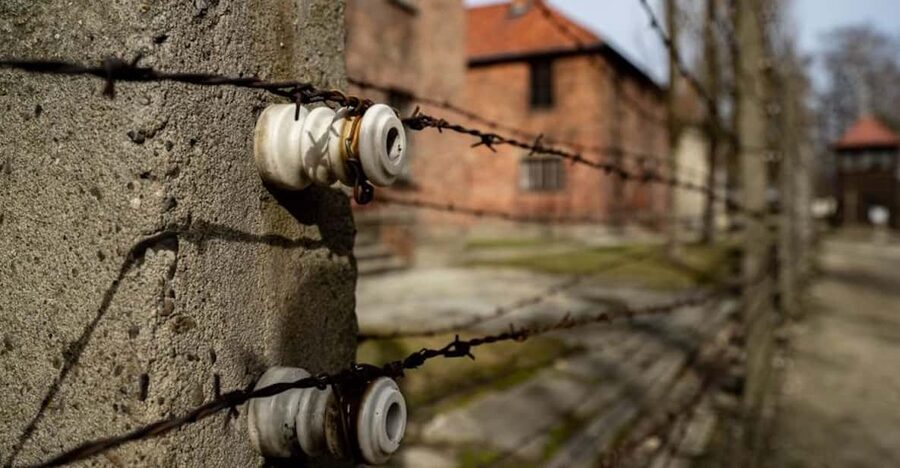
Auschwitz-Birkenau is not a sightseeing stop in the usual sense. It is a place of evidence, memory, and terrible human consequences, and a guided visit helps you understand what you are seeing. The tour covers both Auschwitz I and the enormous Birkenau site, with guides such as Damian, Ziggy, Nicholas, and Paweł praised for clear explanations and the right level of emotion. The personal artifacts inside Auschwitz I are especially difficult to forget.
I like the two-site format, which gives you both the museum buildings at Auschwitz I and the wide scale of Birkenau. I also like the low price of $22, especially since it includes the admission ticket, licensed guide, and headset. The main caution is timing: your preferred start time is not guaranteed, the break is only about 10 minutes, and the promised fast entrance can still involve a wait on busy days.
Key points to know before booking
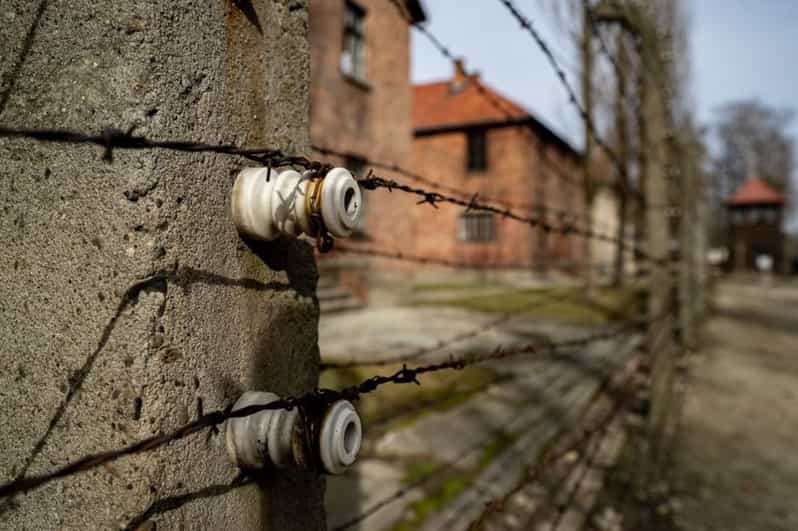
- Both camps are included: You visit Auschwitz I for about 1.5 to 2 hours, then Birkenau for about 1 hour.
- You arrange your own transport: Krakow is roughly 1.5 hours away by bus, train, or car, and fares are not part of the price.
- The guide makes the difference: The strongest part of the experience is the clear, measured commentary from the licensed educators.
- The fast-access ticket is useful but not magic: Security checks and crowd levels can still slow entry.
- Bring a small packed meal: The break is only around 10 minutes, and large bags are not allowed.
- Treat the place as a memorial: Dress respectfully, keep the pace, and allow yourself quiet time after the guided portion.
Why a guide matters at Auschwitz I
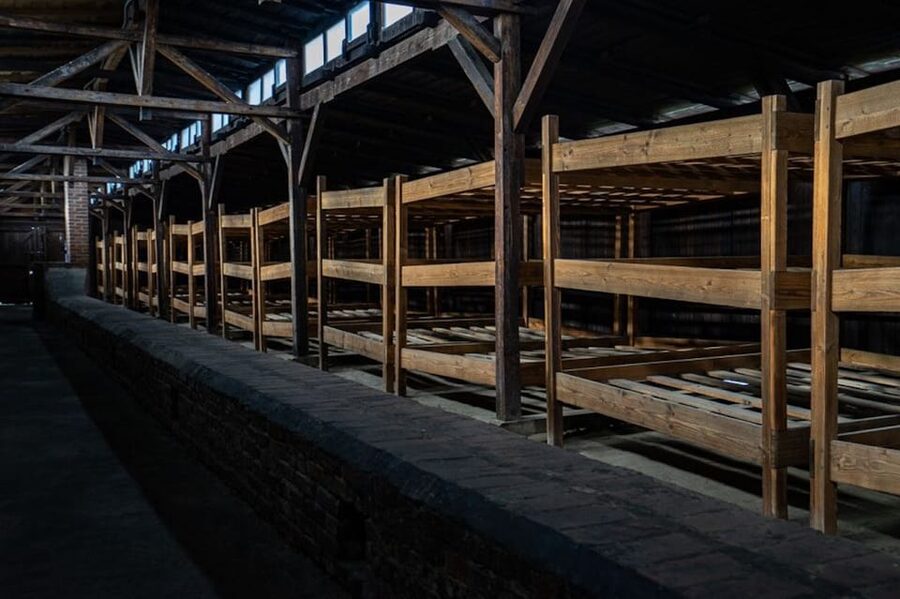
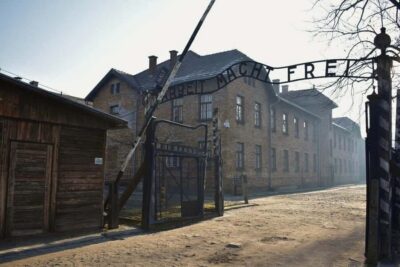
Auschwitz I is the smaller and more structured part of the memorial. Its brick buildings hold museum displays, photographs, documents, and personal belongings taken from people imprisoned and murdered by the Nazi regime. You do not simply walk from room to room looking at objects. The guide gives those objects context and explains how the camp operated.
That context matters. A suitcase, a pair of shoes, or a pile of ordinary household items can be hard to understand without the human story behind it. The displays are haunting precisely because they belonged to real people who expected to live ordinary lives.
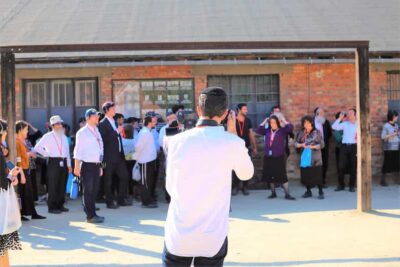
The first guided section lasts about 1.5 to 2 hours. You will walk steadily through the museum and outdoor areas, listening through a headset. Headsets are a practical inclusion here. Groups can become spread out, and the headset lets you hear the guide without crowding around one person.
The best guides use a calm, serious tone rather than turning the visit into a performance. Nicholas was praised for being patient and measured. Damian was described as passionate and well prepared, while Ziggy was remembered for combining facts with personal stories and a strong sense of responsibility. Your guide is not guaranteed to be one of these people, but the experience clearly depends heavily on who leads your group.
Do not expect entertainment. This is a place where silence can be as important as commentary. The strongest guiding gives you enough information to understand the system of persecution while leaving room for the reality of the site to sink in.
Other guided visits to the Auschwitz-Birkenau Memorial:
- From Krakow: Auschwitz-Birkenau Guided Tour & Hotel Pickup
★ 4.5 · 33,358 reviews - From Krakow: Auschwitz-Birkenau Guided Tour & Hotel Pickup
★ 4.5 · 29,340 reviews - Krakow: Auschwitz Guided Tour with Optional Hotel Pickup
★ 4.5 · 15,280 reviews
The artifacts that make the past feel immediate
The museum displays at Auschwitz I can be emotionally overwhelming. You may see personal belongings gathered from victims, including luggage, clothing, shoes, and other everyday items. Their power comes from their plainness. These were not abstract statistics. They were possessions carried by people who had names, families, plans, and private lives.
A guide can also explain how Nazi propaganda and administrative systems turned people into numbers and categories. That is one reason a guided visit is more useful than simply arriving with a map. You receive the historical framework as you move through the buildings, instead of trying to piece it together afterward.
The pace is constant. One visitor described the three-and-a-half-hour schedule as manageable but noted that there was still more to see, especially in the Auschwitz I museum. That is a fair warning. The tour gives you a strong introduction, but it is not designed for a slow, private examination of every display.
You should also prepare yourself emotionally. Several guides have been praised for being compassionate and appropriately serious, and some visitors describe leaving with a heavy heart. That reaction is normal. Plan a quieter evening after the tour if you can, rather than scheduling another demanding attraction immediately afterward.
Birkenau shows the scale of the crime
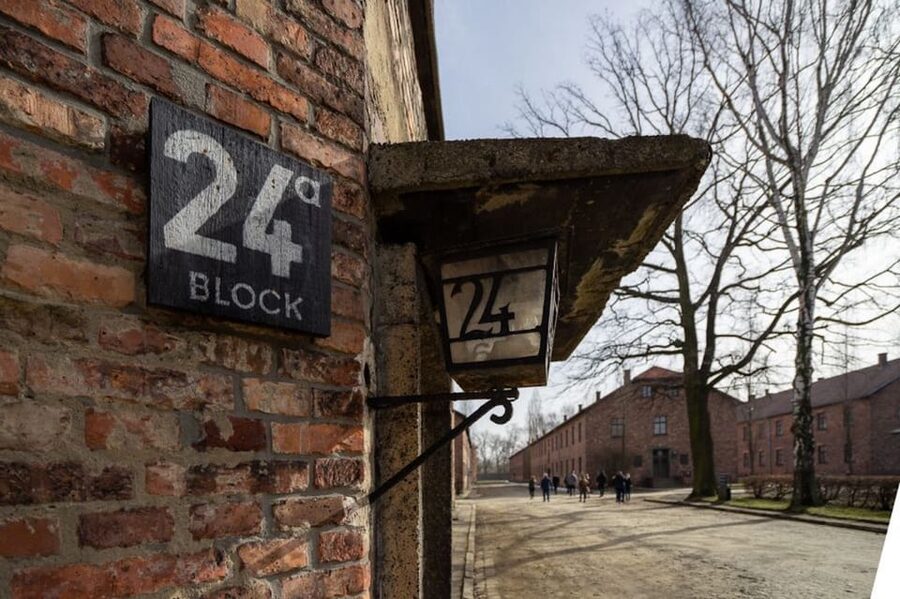
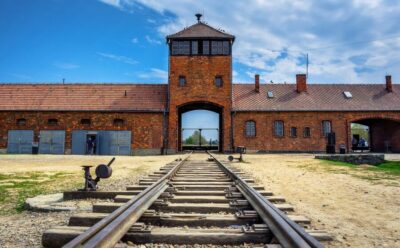
After Auschwitz I, the group continues to Auschwitz II Birkenau. You meet the guide again at the entrance to the Birkenau museum, near the gate and car park. The second guided walk lasts about one hour.
Birkenau feels different from Auschwitz I. The open grounds and long lines of barracks make the scale of the camp easier to grasp. Here, the distance between buildings and the broad spread of the site are part of the evidence. A film or photograph cannot give you the same sense of physical size.
The guide explains the role of the railway entrance, camp buildings, and remaining structures. You will be walking outdoors, so conditions matter. Bring suitable shoes and clothing for the day, and remember that the memorial requires respectful dress. Sleeveless shirts are not allowed.
The movement between the two sites is an important practical detail. A free shuttle bus connects Auschwitz I and Birkenau, according to information from the site. If you are driving, parking arrangements can be confusing, and some car parks are farther from the entrances than expected. Leave extra time, especially if you need to park at both locations.
At Birkenau, you have time to continue on your own after the guided hour. This is one of the most valuable parts of the schedule. You can revisit a place that the guide introduced, sit quietly, or walk a little farther without trying to keep up with the group. The exact amount of free time depends on the schedule and memorial visitor service, so do not assume you can stay indefinitely if your day has a strict return booking.
The 210-minute schedule is useful, but not leisurely
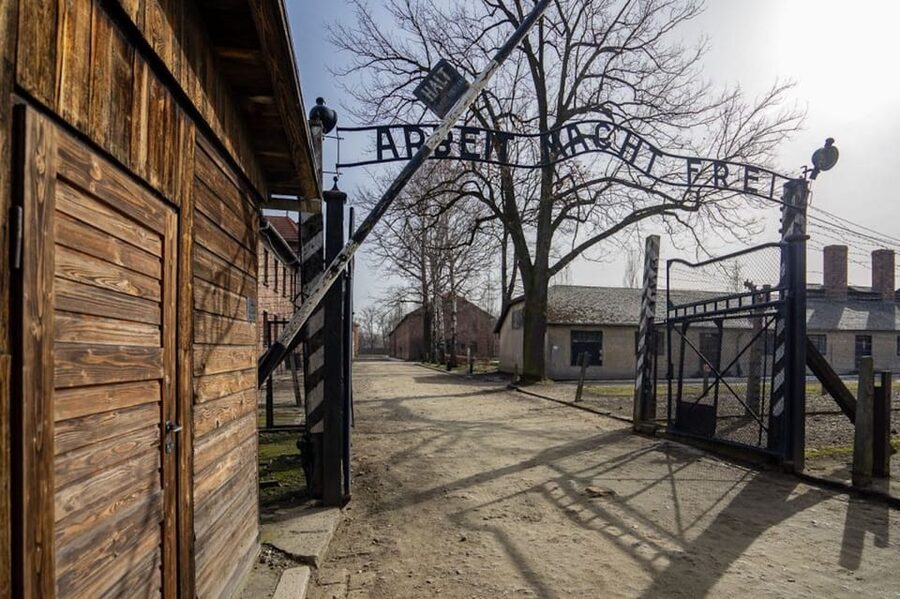
The advertised duration is 210 minutes, or about three and a half hours. That includes approximately 1.5 to 2 hours at Auschwitz I and one hour at Birkenau, followed by some independent time.
This is enough time for a serious first visit. It is also a firm schedule, not a relaxed day out. The pace and break periods are controlled by the memorial’s visitor service, not by the tour company. A break of roughly 10 minutes is all you should expect, so bring a small packed lunch and water if permitted in the format of your visit.
Do not plan a tight connection afterward. Start times can change, sometimes falling anywhere between about 7:30 AM and 3:30 PM. The local partner is expected to confirm the precise time and meeting details by WhatsApp, email, or phone on the day before the visit, but changes can still occur.
This matters most if you are booking buses or trains back to Krakow. One visitor had a start time moved by an hour and then had to wait before the revised meeting time. Another had to buy a new return ticket. I would avoid booking a non-refundable evening activity immediately after Auschwitz-Birkenau.
More skip the line tickets in Krakow:
- From Krakow: Wieliczka Salt Mine Tour & Skip the Line Ticket
★ 4.4 · 3,925 reviews - Auschwitz-Birkenau Skip-the-Line Guided Tour
★ 4.3 · 3,617 reviews - Krakow: Schindler’s Factory Skip-the-Line Ticket
★ 4.4 · 3,105 reviews - Auschwitz-Birkenau: Skip-the-Line Entry Ticket & Guided Tour
★ 4.4 · 3,052 reviews
Getting there from Krakow without included transport
This option is for people who want the guided visit but do not need a package transfer. You make your own way to the Auschwitz I Museum by car or public transport. The journey from Krakow takes about 1.5 hours.
By car, you need to allow time for parking and walking to the correct entrance. Parking fees are separate. The meeting point is at the entrance to Auschwitz I, where the host provides your ticket and introduces you to the group.
By bus or train, you are still responsible for both the outward and return journeys. Check your route carefully and leave a buffer for delays, security, parking, or a changed tour time. The low ticket price is appealing, but it does not cover the part of the day that can require the most planning.
The second meeting point is at Auschwitz II Birkenau, in front of the museum entrance. This is worth understanding before you arrive. Auschwitz I and Birkenau are separate locations, and you should not assume that the first meeting point applies to both parts of the visit.
Does the $22 price offer good value?
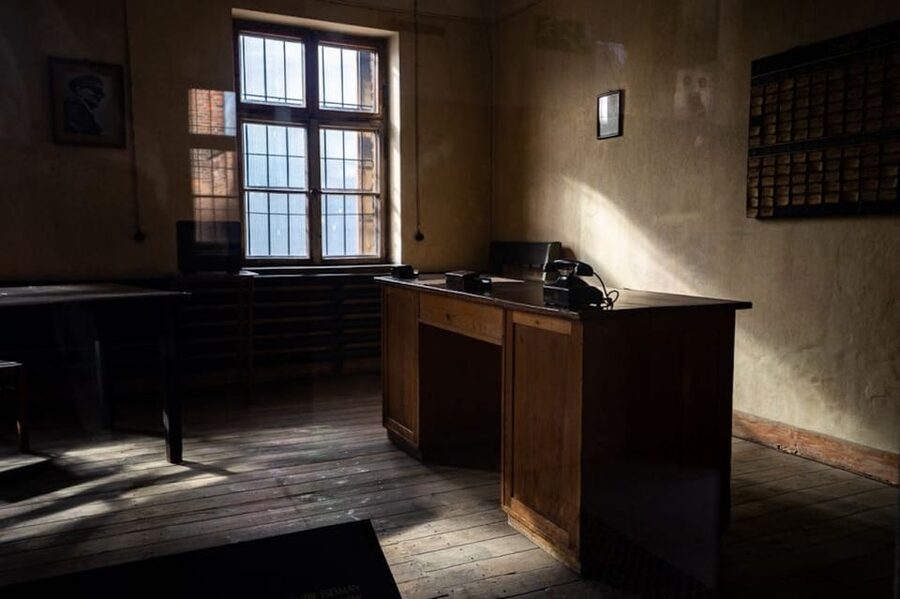
At $22 per person, this is a strong value if you can handle the transport planning yourself. The price includes the Auschwitz-Birkenau entry ticket, local host assistance, a licensed guide, and a headset. Those inclusions cover the main things you need inside the memorial.
The savings come with trade-offs. There is no hotel pickup, no return transfer, no food, and no parking. You also do not receive a flexible private visit. This is a group tour operating within the memorial’s visitor system.
For a first visit, I think the guide is worth paying for. You could walk through parts of the site independently, but the displays and grounds carry complex historical meaning. A good educator helps you connect the objects, buildings, and camp layout without forcing you to rely on a guidebook or phone screen.
The price also makes sense for visitors who are already staying in Krakow and are comfortable arranging a day trip. If you prefer door-to-door convenience, a more expensive transport-inclusive option may suit you better, but that is not what this booking provides.
Language, group experience, and audio quality
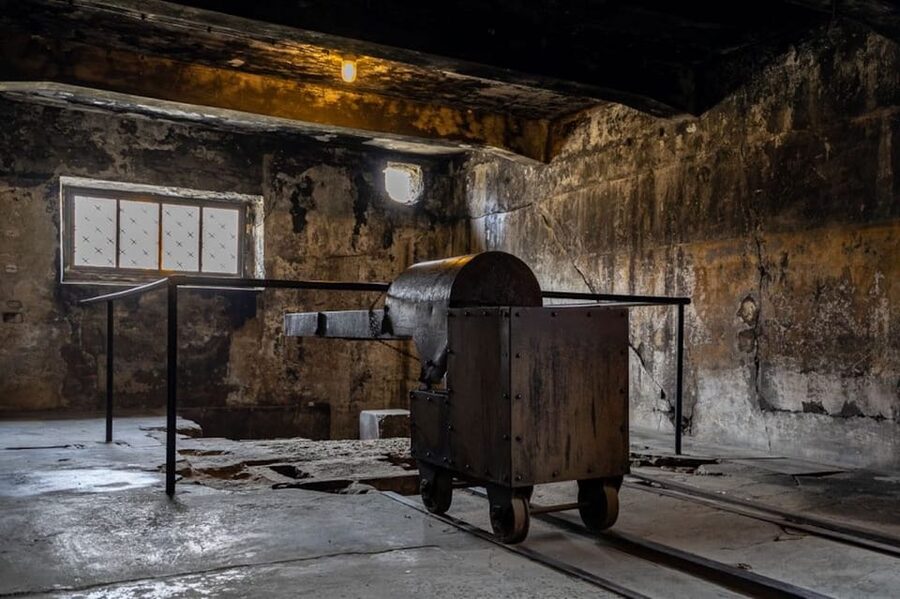
Live guiding is available in English, French, Italian, and Spanish. At Auschwitz, clear delivery matters more than flashy presentation. You need to hear names, dates, explanations, and personal accounts in a language you understand well.
Group sizes can vary. One visit involved roughly 20 people, which is large enough to provide company but small enough for the guide to address questions. The headset helps, although audio quality is not always perfect. One visitor specifically found the sound disappointing.
You may need to keep moving with the group, especially inside the museum. There is time for questions, but this is not a private guide who can stop whenever you wish. If you want to read every panel or spend a long time at a single display, you will need to use the independent time at Birkenau or return on another visit.
The guide is the strongest reason to choose this experience. Past guides have included Nicholas, Damian, Magdalena, Ziggy, George, Paweł, and Michal in host or organizing roles. Their approaches differ, but the most praised qualities are steady communication, historical detail, compassion, and the ability to explain difficult subjects without sensationalism.
What to bring and what to leave behind
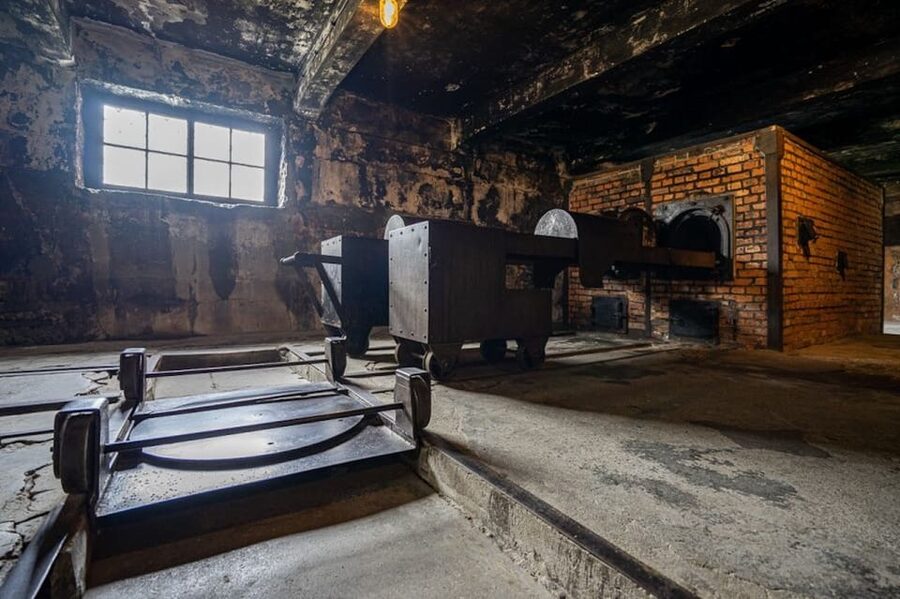
Bring your passport or identity card. The memorial requires participant names and contact details during booking, and identification is listed as a required item.
Pack lightly. Large luggage and large bags are not allowed, so do not arrive with a full suitcase or oversized backpack. Smoking is also prohibited. A small packed lunch is sensible because the break is only about 10 minutes, but you should keep it discreet and respectful.
Wear practical, respectful clothing. Sleeveless shirts are not allowed, and the site reminds visitors that this is a memorial. You will spend part of the tour outdoors and on foot, so dress for the weather and wear comfortable shoes.
Children under 12 are not accepted on this activity, and the tour is not suitable for wheelchair users. The steady walking pace and the nature of the site may also make it a difficult choice for anyone who needs frequent rest, though the supplied information does not specify additional mobility arrangements.
Who will get the most from this visit?
This tour suits you if you are visiting Poland for the first time and want a guided introduction to both Auschwitz I and Birkenau. It is also a good fit if you value historical explanation but do not want to organize a private guide.
It works particularly well for adults, older teenagers who meet the age requirement, students of 20th-century history, and anyone who wants to understand the memorial beyond photographs and statistics. The guides have been praised for telling personal stories and explaining the human cost of the camps in a way that makes the visit more than a checklist of buildings.
It is less suitable if you need guaranteed departure times, a long meal break, hotel pickup, or complete control over how long you spend in each room. It is also not right for children under 12 or wheelchair users under the stated conditions.
My verdict on the Auschwitz-Birkenau guided tour
I would choose this experience if I were comfortable arranging my own transport and wanted a reasonably priced, guided first visit. The combination of Auschwitz I, Birkenau, a licensed educator, and headset support gives you a useful structure for a difficult day.
The main weakness is organization around timing. Preferred hours can change, meeting points can be confusing in crowded conditions, and fast access does not always mean walking straight inside. Confirm the details the day before, keep your phone available, and leave generous time around the tour.
Book this if you want clear historical guidance at a low price and are prepared for a serious, tightly scheduled memorial visit. Skip it only if you need transport included, a flexible timetable, or a slower private experience. For most independent visitors from Krakow, it offers a practical way to see both sites while keeping the focus where it belongs: on remembering the people who suffered there.
FAQ
How long does the Auschwitz-Birkenau tour last?
The activity is valid for 210 minutes, or about three and a half hours. Auschwitz I takes approximately 1.5 to 2 hours, followed by about one hour at Auschwitz II Birkenau and some independent time.
Does the tour visit both Auschwitz I and Auschwitz II Birkenau?
Yes. The itinerary includes a guided walking tour at Auschwitz I and a separate guided walking tour at Auschwitz II Birkenau.
Is transport from Krakow included?
No. You must reach the Auschwitz I meeting point by your own car or public transport. Transport from Krakow or any other city is not included.
How far is Auschwitz from Krakow?
The journey from Krakow takes approximately 1.5 hours by bus or train, according to the activity information.
Where do I meet the guide?
You first meet the host at the entrance to the Auschwitz I Museum. For the second part, you meet the guide in front of the Auschwitz II Birkenau Museum entrance near the Birkenau gate and car park.
Is the ticket really skip-the-line?
The ticket provides pre-booked entry and access to the ticket line, but everyone must still pass through an airport security-style check. Waiting can still occur during busy periods.
What languages are available?
The live tour guide may speak English, French, Italian, or Spanish.
What should I bring?
Bring your passport or identity card. A small packed lunch is also advisable because the break is only about 10 minutes.
Can I bring luggage or a large bag?
No. Luggage and large bags are not allowed. Smoking is also prohibited, and sleeveless shirts are not permitted.
Can children or wheelchair users join?
Children under 12 are not suitable for this activity, and the tour is not suitable for wheelchair users according to the stated conditions.
Recently added in Krakow
- Auschwitz-Birkenau and Krakow Private Car Trip from Katowice★ 4.3 · 3 reviews
- Wawel Castle, Old Town with St. Mary’s Church Guided Tour★ 5.0 · 3 reviews
- Wawel Castle, Cathedral, Rynek Underground Tour with Lunch★ 5.0 · 3 reviews
- From Krakow: Chocholow Thermal Hot Springs (hotel pick up)★ 5.0 · 3 reviews
- Private tour to Zakopane and Thermal Baths from Krakow★ 5.0 · 3 reviews
- Legends of Cracow ROBOTIC SHOW★ 4.0 · 3 reviews
- Guided Beer Tour in Krakow★ 4.5 · 3 reviews
- From Krakow: Zakopane and Thermal Pools Guided Trip★ 5.0 · 3 reviews
Auschwitz-Birkenau Memorial Tours, compared.
Auschwitz-Birkenau Guided Tour & Hotel Pickup
Read our review →Auschwitz Guided Tour with Optional Hotel Pickup
Read our review →
Auschwitz-Birkenau Guided Tour with Pickup & Lunch
Read our review →
Krakow to Auschwitz Birkenau Guided Tour with Transfer and Ticket
Read our review →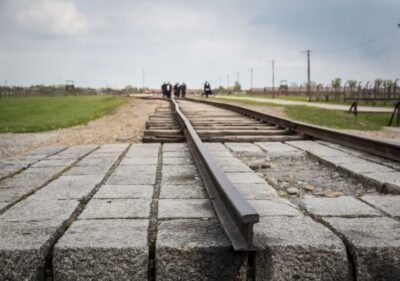
Auschwitz Birkenau Small Group Tour with Pickup
Read our review →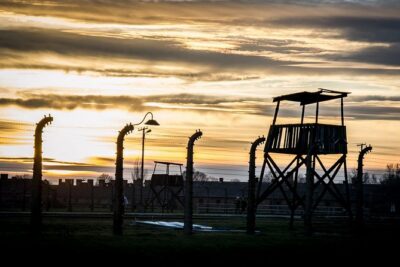
Auschwitz Birkenau Guided Tour with Ticket Hotel Pickup Small Van
Read our review →Where else this one turns up