
Reviewed · AUSCHWITZ-BIRKENAU MEMORIAL TOURS
From Krakow: Auschwitz-Birkenau Tour with Transportation
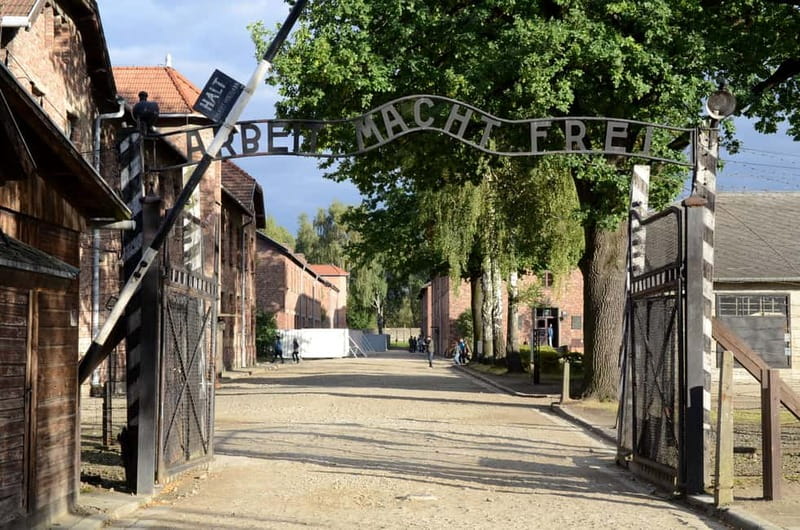
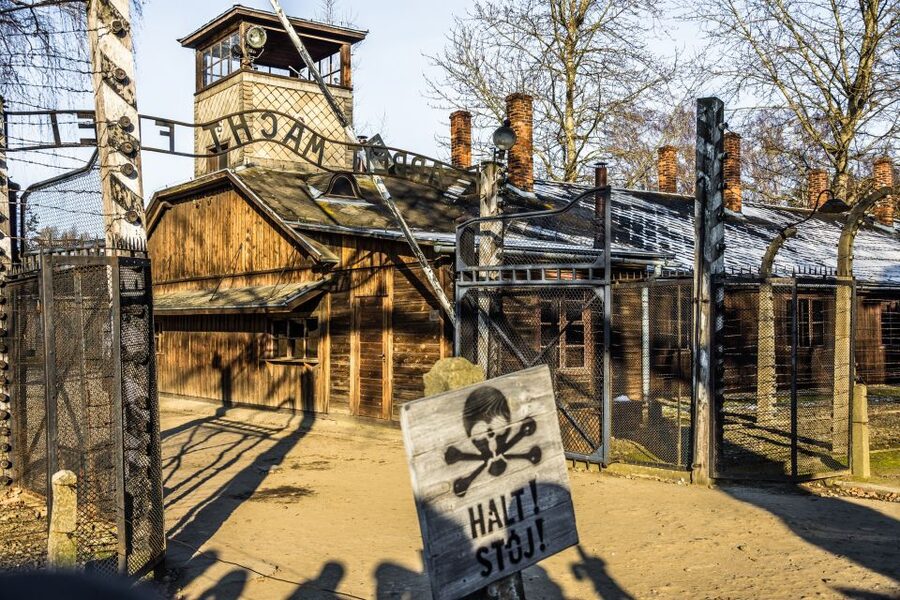
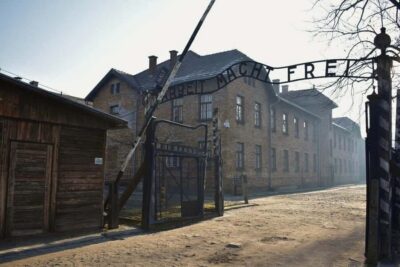
A visit to Auschwitz-Birkenau is not a sightseeing outing in the usual sense. It is a carefully guided encounter with the machinery of Nazi persecution and mass murder, beginning at the famous gate of Auschwitz I and continuing across the huge grounds of Birkenau. The guide’s calm explanations help you understand both the human suffering and the political decisions that made the camps possible.
I like the door-to-door transport from Krakow’s center, including the short transfer between the two museum sites. I also like that you receive a headset and a proper museum guide, so you can hear the explanation even when other groups are nearby. The main drawback is the pace: with a fixed schedule and many visitors, parts of the tour can feel rushed.
Key points
- A full Auschwitz-Birkenau visit in about 7.5 hours, including coach travel from Krakow.
- Both Auschwitz I and Auschwitz II-Birkenau, with the same museum visit covering very different parts of the camp system.
- Entrance tickets and transport included, so you do not need to arrange separate admission or local transfers.
- English and Spanish tour options, with a portable headset supplied for each person.
- A central meeting point at Plac Matejki 2, close to Krakow’s Old Town.
- A serious, emotionally demanding experience best suited to people aged 14 and above.
Why This Visit Matters
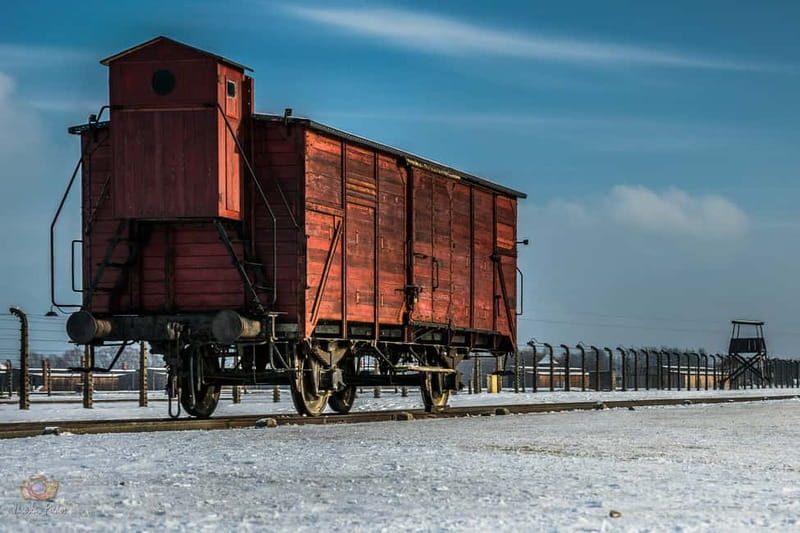
Auschwitz began in 1940 as a Nazi concentration camp near Oświęcim, a Polish town whose German name was Auschwitz. It was first used to imprison large numbers of Poles after mass arrests and pressure on the Nazi prison system.
By 1942, the camp had become a central site in the Nazi plan known as the Final Solution. Auschwitz-Birkenau was used to murder Jews from across Nazi-occupied Europe, as well as to persecute and kill Poles, Roma and Sinti people, Soviet prisoners of war, and many others.
The value of visiting with a guide is that the buildings alone cannot explain the whole system. You need the political setting, the timeline, and the human stories. A guide can connect the surviving blocks, railway tracks, ruins, photographs, documents, and personal belongings into a clearer picture of how persecution became deportation, forced labor, and mass murder.
I find the experience most useful when you treat it as a memorial and museum visit, not as a dramatic attraction. Photography is allowed in many areas, but flash photography is not permitted inside the blocks. The setting calls for quiet attention and respect.
Other guided visits to the Auschwitz-Birkenau Memorial:
- From Krakow: Auschwitz-Birkenau Guided Tour & Hotel Pickup
★ 4.5 · 33,358 reviews - From Krakow: Auschwitz-Birkenau Guided Tour & Hotel Pickup
★ 4.5 · 29,340 reviews - Krakow: Auschwitz Guided Tour with Optional Hotel Pickup
★ 4.5 · 15,280 reviews
Meeting at Plac Matejki 2 in Krakow
The tour begins at Plac Matejki 2, also called Matejki Square 2. From Krakow’s city center, the bus stop and the tour office are on the right-hand side, and the office carries the Cracow City Tours logo.
This is the only meeting point. There is no hotel pickup, so leave extra time to walk there, especially if you are staying outside the Old Town. The meeting area can include several buses or language groups, and the boarding process may not always feel perfectly clear. Check the language and departure details before joining the queue, and ask staff if you are unsure.
The early start can work in your favor. Some departures leave very early, and one reported schedule had visitors back in Krakow around early afternoon. Early departures may help you secure an earlier museum entry time and leave some of the evening free, but you should check the exact start time when booking.
The 100-Minute Coach Ride to Oświęcim
The drive from Krakow to the museum takes about 100 minutes in the stated schedule. Transport is by coach, and the return journey is listed at about 70 minutes, though actual road conditions and museum timing can affect the day.
Some departures have included an introductory film during the ride. This can provide useful background before you arrive, though the small screens and coach noise may make it difficult to catch every word. The film is best treated as preparation, not as a substitute for the museum guide.
The coach removes one major worry: you do not need to find your own way to Oświęcim, arrange a train or taxi, or work out how to reach Birkenau after visiting Auschwitz I. The bus also handles the transfer between the two museum sections.
Food and drinks are not included. Bring something suitable for the breaks if you need it, while remembering that food is not allowed inside the museum areas. There are short pauses during the day for rest, toilets, and, where permitted, buying something from the gift shop.
Auschwitz I: Blocks, Evidence, and the Main Gate
The first guided visit lasts about two hours. Auschwitz I is the older camp complex, with rows of brick blocks and the well-known entrance gate. The setting can look orderly at first, which makes the guide’s explanation especially important. The buildings were part of a controlled system of imprisonment, punishment, forced labor, medical abuse, and killing.
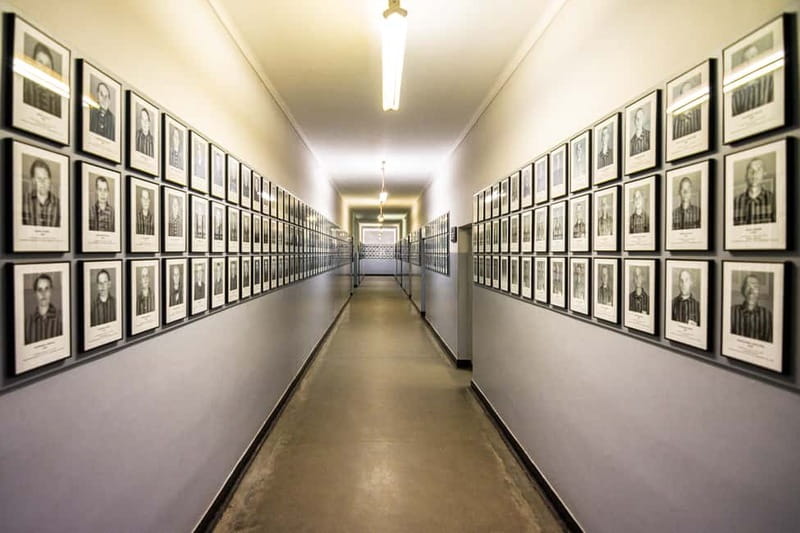
You can expect to visit selected prison blocks and museum displays. These areas contain evidence of the people imprisoned and murdered here, including objects and records that make the scale of the crime personal rather than abstract.
The tour also covers the gas chamber and crematorium associated with Auschwitz I. Your guide explains how these places fitted into the camp system and how the Nazi authorities attempted to conceal their crimes.
The guide-led format is a major advantage here. Guides have included people such as Mateusz and Vlad, and the strongest tours use clear English, careful pacing, and a respectful tone. You receive a portable headset, which helps when several groups are moving through the same building.
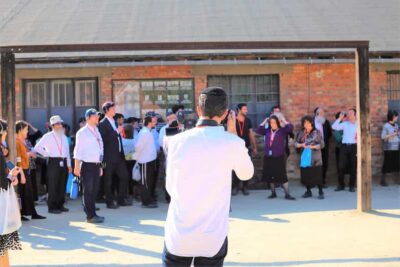
Do not expect unlimited time in every block. The museum controls visitor movement, and different groups are often present at once. You may have only a short period to look after the guide’s explanation, so listen first and photograph only when it feels appropriate.
A few more Krakow half days to consider
- Krakow–Zakopane: Cable Car, Chocholow Baths, Cheese & Vodka
★ 5.0 · 10,720 reviews - Krakow: Auschwitz-Birkenau Guided Tour with Pickup & Lunch
★ 4.5 · 9,800 reviews - From Krakow: Wieliczka Salt Mine Tour
★ 4.6 · 9,393 reviews - Krakow: Auschwitz-Birkenau Guided Tour Pickup/Lunch Options
★ 4.5 · 9,057 reviews
The Transfer Between Auschwitz and Birkenau
After Auschwitz I, the coach takes you to Auschwitz II-Birkenau. The two sites are linked, but they do not feel alike.
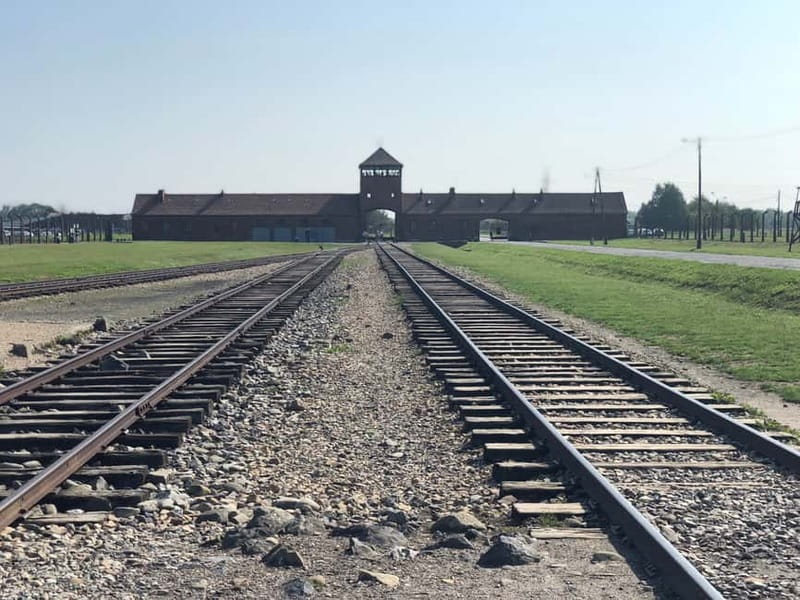
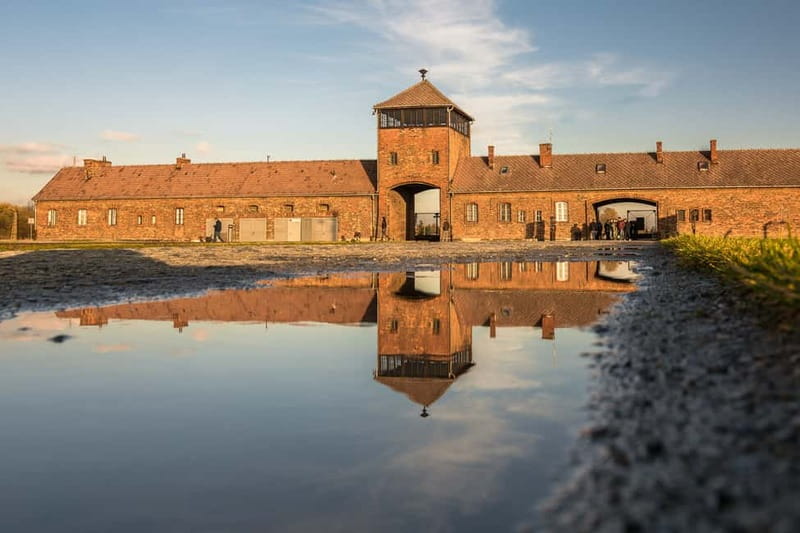
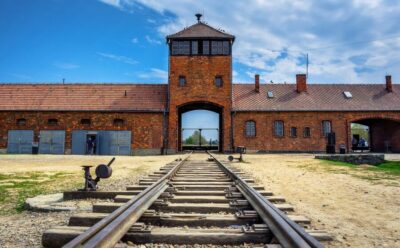
Auschwitz I is a compact camp of brick blocks and museum interiors. Birkenau is far larger and more open, with broad grounds, the railway approach, wooden barracks, guard structures, and ruins. The change in scale helps you understand that Auschwitz was not one single building or isolated prison. It was a vast network built for imprisonment, forced labor, and mass murder.
The transfer is included in the price, which is useful because the sites are not next door to one another. You do not need to leave the group, find another vehicle, or manage a separate ticket.
There is a break between sections. Use it for water, food outside the museum areas, and a short rest. This is also a good moment to prepare for the second visit, since Birkenau involves outdoor walking and can feel more physically exposed.
Auschwitz II-Birkenau: Scale and Silence
The Birkenau visit lasts about 50 minutes in the stated plan. That may sound short for such a large site, and it is one of the main limits of this tour. You will see important areas, but you will not explore every building or corner of the camp.
Your guide connects Birkenau to the process of deportation and mass murder. The railway entrance, barracks, ruins, and open ground show how people were brought into the camp and processed by the Nazi system.
Birkenau can be especially difficult because of its scale. At Auschwitz I, the surviving blocks bring you close to objects and written evidence. At Birkenau, the long distances and empty spaces show the size of the camp and the number of people affected.
Weather matters. The tour runs in all seasons, and the outdoor portion can be cold, wet, hot, or windy. Wear practical shoes and warm clothing in winter. One older booking note specifically advised wrapping up well in cold weather, which is sound advice. You should also expect a lot of walking, even though the coach handles the road travel.
Some people will wish for more time at Birkenau. That is a fair concern, especially if you want to examine the grounds quietly or visit more of the surviving structures. This tour is designed to give you a guided overview of both camps rather than a slow, self-directed study day.
A Fixed Schedule With Helpful Breaks
The complete activity lasts 450 minutes, or about seven and a half hours. The published plan includes:
- About 100 minutes by coach from Krakow
- A 20-minute break at the museum
- Two hours at Auschwitz I
- Another 20-minute break
- About 50 minutes at Birkenau
- A final 15-minute break
- About 70 minutes back to Krakow
The listed activity times do not account for every queue, security step, or transition, so allow the full day rather than planning a tight connection afterward. If you need to catch a train, select an early departure and leave a generous margin. One early schedule returned to Krakow around 1:30 p.m., but your own arrival time can vary.
The short breaks are practical, though some people may find them too brief after the emotional weight of the first site. You can smoke only outside the museum. Large bags, food, and oversize luggage are not allowed in the museum areas.
Transport, Tickets, and the $86 Price
At $86 per person, this is not the cheapest possible way to visit Auschwitz-Birkenau, but the price includes the parts that are easy to underestimate. You receive admission, transport from Krakow to Oświęcim, the transfer between Auschwitz I and Birkenau, the return journey, a tour leader, a headset, and insurance during the activity.
That makes the price reasonable if you value a fixed plan and do not want to coordinate several separate steps. The museum visit is the heart of the expense, and the guided explanation gives you context that a simple bus ticket cannot provide.
The trade-off is flexibility. You cannot set your own pace, stay longer in a favorite exhibition, or decide to skip one section. If you prefer detailed independent study, a self-guided visit may suit you better, assuming you can secure admission and manage transport. If you have one day in Krakow and want both museum sites handled in one booking, this package offers useful convenience.
The overall rating attached to the activity is 4.6 from 745 reviews, which matches the main strengths of the tour: reliable organization, helpful transport, and strong museum guides. The weaker points are also consistent with the format: confusing boarding at times, occasional headset problems, and a sense of hurry.
Headsets, Language, and Guide Quality
The tour is offered in English or Spanish. Check the selected language carefully, since changing groups at the last minute may not be simple.
The portable headset is important. Auschwitz can be crowded, and your guide may need to speak while the group stands outside or moves between buildings. When the equipment works well, you can hear the explanation without everyone standing shoulder to shoulder around the guide.
Technical problems have occurred, including sound cutting out. Tell the tour leader quickly if your headset fails rather than trying to follow silently. A few seconds of lost explanation can matter, especially inside a block where you may not get another chance to hear the same point.
The best guides combine facts with restraint. Mateusz was praised for clear English, strong command of the subject, and a respectful pace. Other guides, including Vlad and Martin, have also been singled out for thoughtful and helpful service. Your guide may be different, but the museum portion is led by a local English or Spanish guide rather than explained only by the coach escort.
Who Should Take This Tour
I would choose this tour if you want a structured first visit and are staying in Krakow. It suits adults, older teenagers, and anyone who wants the practical work handled for them.
The minimum age is 14. That is sensible. The subject includes imprisonment, starvation, torture, gas chambers, cremation, and mass murder. Even adults may find the visit upsetting, and you should not book it as a casual family activity.
You should also be comfortable walking for several hours, standing during explanations, and spending time outdoors. The tour is not suited to anyone seeking entertainment, shopping, or a light day away from Krakow.
I would not pair it with the Wieliczka Salt Mine on the same day. The Auschwitz visit already takes most of the day and involves substantial walking. Give yourself time afterward to rest and process what you have seen.
Practical Details Before You Book
You must provide your full name and contact details when booking. The name on your reservation must match the passport or identification document you show at entry, or admission may be refused.
Bring a passport, identity card, or driver’s license. Children must also have a passport or identity card. Museum bags cannot exceed 30 by 20 by 10 centimeters, so leave large backpacks and luggage at your accommodation, in the vehicle if permitted, or in the available lockers.
Wear shoes you can walk in and clothing suitable for the forecast. Avoid sleeveless shirts, smoking inside the site, food, flash photography, and oversize luggage.
Cancellation information needs careful reading. The activity allows cancellation up to 24 hours before departure for a full refund, but museum tickets are subject to the memorial’s non-refundable requirements. Since the name and ticket details are important, check the terms before paying and enter every passenger’s information accurately.
Should You Book the Auschwitz-Birkenau Tour?
Book it if you want a well-organized, guided day from Krakow with transport, admission, and the transfer between both camp sites included. The strong points are clear: a central meeting place, comfortable coach travel, useful headsets, experienced museum guides, and a plan that covers Auschwitz I and Birkenau without complicated connections.
Do not book it expecting a leisurely visit. The schedule is fixed, breaks are short, and Birkenau receives less time than its size deserves. Still, for a first visit, the tour gives you the essential sites and the historical framework needed to understand them.
I would recommend it to adults and visitors aged 14 or older who want a serious, respectful introduction to Auschwitz-Birkenau. Go prepared for sadness, walking, crowds, and cold weather. The experience is difficult, but the chance to learn directly at this memorial is important.
FAQ
Where does the tour leave from in Krakow?
The meeting point is Plac Matejki 2, also called Matejki Square 2. There is no hotel pickup.
How long does the activity last?
The stated duration is 450 minutes, or about seven and a half hours.
Does the tour visit both Auschwitz I and Auschwitz II-Birkenau?
Yes. The schedule includes a guided visit to Auschwitz I followed by a visit to Auschwitz II-Birkenau.
Is transportation included?
Yes. Transportation is provided from Krakow to Oświęcim, between the two museum sections, and back to Krakow.
Are entrance tickets included?
Yes. Entrance tickets to Auschwitz-Birkenau are included.
Which languages are available?
The activity is available with an English-speaking or Spanish-speaking guide. Check that you book the correct language and day.
Is a headset provided?
Yes. Each visitor receives a portable headset for the guided museum visit.
What identification should I bring?
Bring a passport, identity card, or driver’s license. Children must bring a passport or identity card.
Can I bring a large backpack or suitcase?
No. Bags brought into the museum must not exceed 30 by 20 by 10 centimeters. Oversize luggage and large bags are not allowed.
Is the tour suitable for children?
The tour is not suitable for children under 14. The subject matter is emotionally difficult and includes detailed information about Nazi crimes and mass murder.
Recently added in Krakow
- Auschwitz-Birkenau and Krakow Private Car Trip from Katowice★ 4.3 · 3 reviews
- Wawel Castle, Old Town with St. Mary’s Church Guided Tour★ 5.0 · 3 reviews
- Private tour to Zakopane and Thermal Baths from Krakow★ 5.0 · 3 reviews
- Wawel Castle, Cathedral, Rynek Underground Tour with Lunch★ 5.0 · 3 reviews
- From Krakow: Chocholow Thermal Hot Springs (hotel pick up)★ 5.0 · 3 reviews
- Legends of Cracow ROBOTIC SHOW★ 4.0 · 3 reviews
- From Krakow: Zakopane and Thermal Pools Guided Trip★ 5.0 · 3 reviews
- Guided Beer Tour in Krakow★ 4.5 · 3 reviews
Auschwitz-Birkenau Memorial Tours, compared.
Auschwitz-Birkenau Guided Tour & Hotel Pickup
Read our review →Auschwitz Guided Tour with Optional Hotel Pickup
Read our review →
Auschwitz-Birkenau Guided Tour with Pickup & Lunch
Read our review →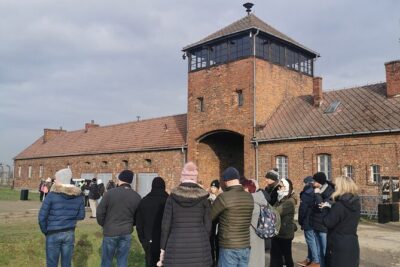
Krakow to Auschwitz Birkenau Guided Tour with Transfer and Ticket
Read our review →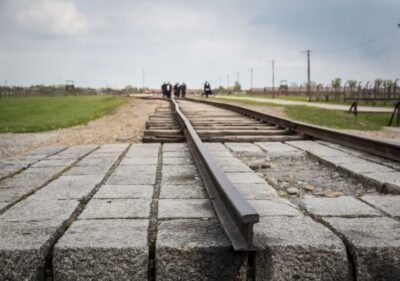
Auschwitz Birkenau Small Group Tour with Pickup
Read our review →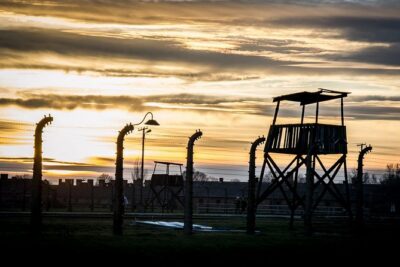
Auschwitz Birkenau Guided Tour with Ticket Hotel Pickup Small Van
Read our review →Where else this one turns up