
Reviewed · SCHINDLER'S FACTORY TOURS
Krakow: Schindler’s Factory & Ghetto & Plaszow Camp Guided Tour
Krakow’s wartime story becomes far more personal when you move from Schindler’s Factory to the old ghetto and then out to the remains of Plaszow Camp. This tour links those places in one half-day, with a guide explaining what happened and pointing out details you could easily miss alone.
I like the unusual route and the chance to visit places beyond the standard Auschwitz and Wieliczka circuit. I also like that the museum ticket is included and that the small group, capped at 25 people, can skip the long line for individual visitors. The main drawback is the amount of walking, including hilly and sometimes muddy ground at Plaszow.
Key points to know before booking
- Schindler’s Factory covers occupied Krakow, not just Oskar Schindler’s personal story.
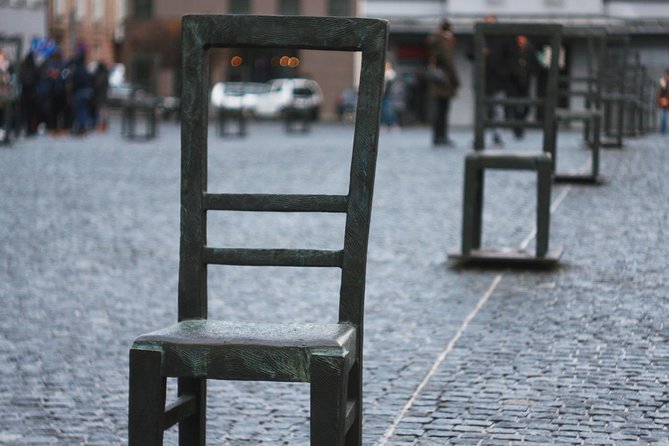
- Ghetto Heroes Square has 70 large metal chairs, a stark memorial to belongings left behind after the ghetto was cleared.
- Plaszow is quiet and rough underfoot, with few obvious remains, so the guide matters greatly.
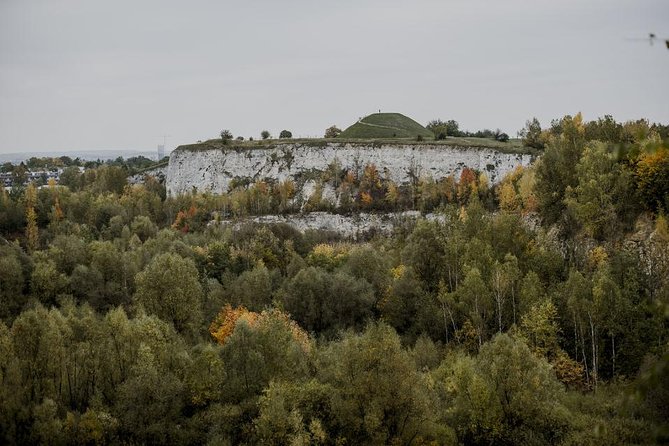
- Liban Quarry and Krakus Mound add striking views and wartime context to the outdoor portion.
- Guides such as Dominika and Matthew bring local knowledge, though the exact guide is not guaranteed.
- The $76.33 price includes the guide and museum admission, but not the tram ticket.
Why this five-hour tour tells Krakow’s wartime story well
This is not a simple museum visit followed by a quick photo stop. It is a connected walk through several parts of Krakow that reveal how Nazi occupation changed daily life, separated families, and turned familiar streets into places of fear.
You begin at Lipowa 4 in the Podgórze district, then move through the former ghetto area before reaching Plaszow in the southern suburbs. The route helps you connect the indoor displays with the streets and open ground where those events took place.
I find that useful because the subject can feel abstract inside a museum. Here, the sequence gives it a physical shape. You see the factory, the former ghetto boundary, the square where people were gathered before deportation, and the camp area that followed.
The tour lasts about five hours. That is long enough to give each stop proper attention, but it is also a serious block of time in a city break. You will want sturdy shoes, weather protection, and the energy for a fair amount of walking.
Other visits to Schindler's Factory:
- Krakow: Oskar Schindler’s Factory Entry Ticket & Guided Tour
★ 4.2 · 3,793 reviews - Krakow: Schindler’s Factory Tour with Entrance Ticket
★ 4.5 · 3,182 reviews - Krakow: Schindler’s Factory Skip-the-Line Ticket
★ 4.4 · 3,105 reviews
Schindler’s Factory: much more than one famous man
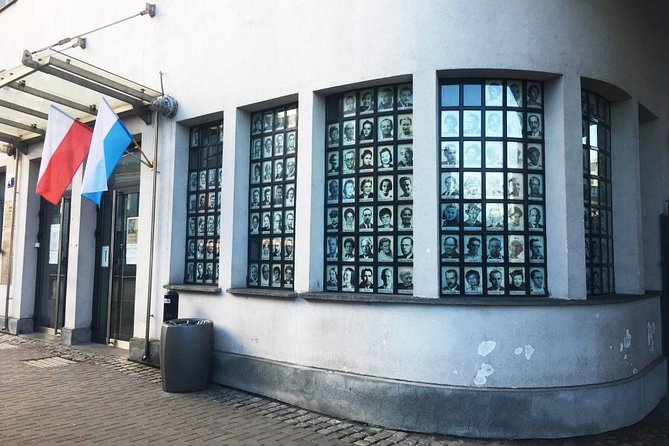
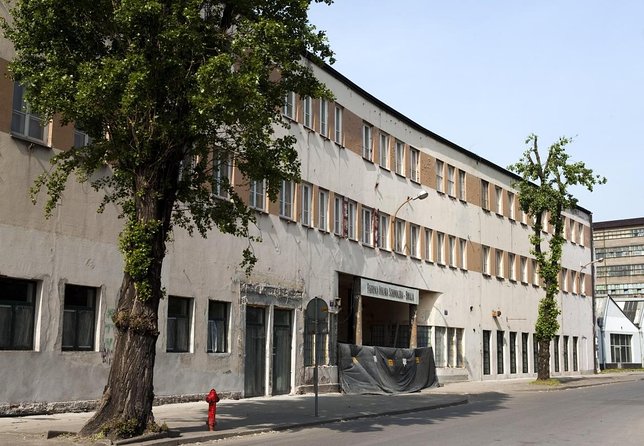
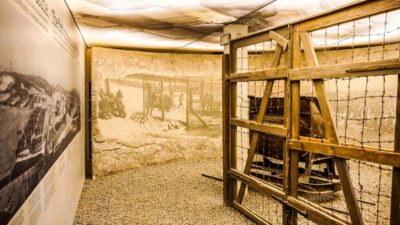
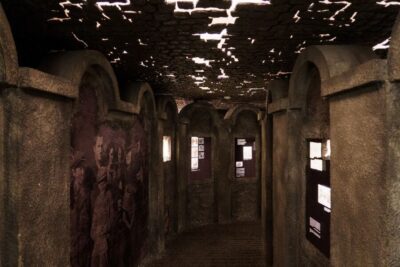
The first stop is Oskar Schindler’s Enamel Factory, now home to the Historical Museum of Krakow exhibition titled Krakow under Nazi Occupation 1939 to 1945. Admission is included, and you have about 90 minutes inside.
The name can set up the wrong expectation. This is not mainly a biographical museum about Schindler. His life and courage form part of the story, but the exhibition focuses on occupied Krakow and the many ways Nazi rule affected its residents.
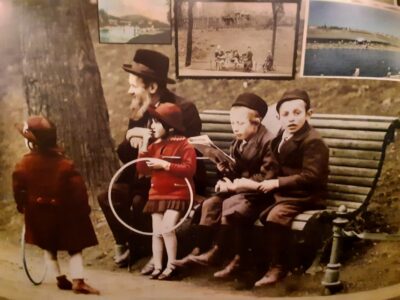
That wider focus is one of the museum’s strengths. You are not asked to view the war only through the actions of one industrialist. Instead, the exhibition places Schindler within the larger experience of a city under occupation, including the treatment of Krakow’s Jewish population and the machinery of persecution.
I would allow yourself time to read and look closely. The museum can be emotionally demanding, and the 90-minute visit may feel short if you try to take in every display. The tour gives you a useful framework, but the museum portion is still substantial.
You also visit at your own pace rather than being hurried from one case to the next. That matters here. Some people will want to focus on the occupation of Krakow, while others will be especially interested in Schindler’s actions and the story later made famous by film.
One caution: if you book this expecting a small, personal Schindler memorial, you may be disappointed. If you want a broader account of Krakow during World War II, the museum makes much more sense.
The surviving ghetto wall on Lwowska Street
After the museum, the tour moves outdoors to a 12-meter fragment of the original Krakow ghetto wall. The stop lasts about 15 minutes, and admission is not listed as included, although this is an outdoor memorial point rather than a conventional attraction.
The wall fragment is modest in size, but its message is powerful. A plaque in Hebrew and Polish recalls the people who lived, suffered, and died under German persecution, and the final journey that began from here toward the death camps.
You should not expect a grand monument or a long visit. The value is in seeing a physical piece of the boundary that confined the Jewish population of Krakow between 1941 and 1943.
This is also where a guide can add needed context. A wall fragment alone cannot explain the full structure of the ghetto or the lives forced into it. A strong guide helps you understand why this short stretch of masonry matters and how it relates to the nearby square and the wider Podgórze district.
Ghetto Heroes Square and its 70 empty chairs
The next stop is Plac Bohaterów Getta, known in English as Ghetto Heroes Square. You have about 15 minutes here, and again, there is no separate admission listed.
The square served as a place where Krakow’s Jewish population was concentrated before transport to camps. Today, its memorial consists of 70 large cast-iron chairs spaced across the square.
The design is simple and unsettling. The chairs represent furniture and personal belongings left scattered after the ghetto was liquidated. Rather than filling the space with a single statue, the memorial makes absence visible.
I like this stop because it gives you time to pause without needing a long explanation. The chairs are easy to understand at first glance, but the guide’s account helps connect them to the forced removal of people from their homes.
Fifteen minutes is enough for an introduction, though some people may want to stay longer. If the group moves on quickly, take a moment to look across the square and consider how different the place feels as a present-day public space compared with its wartime role.
A few more Krakow half days to consider
- From Krakow: Auschwitz-Birkenau Guided Tour & Hotel Pickup
★ 4.5 · 33,358 reviews - From Krakow: Auschwitz-Birkenau Guided Tour & Hotel Pickup
★ 4.5 · 29,340 reviews - Krakow: Auschwitz Guided Tour with Optional Hotel Pickup
★ 4.5 · 15,280 reviews - Krakow–Zakopane: Cable Car, Chocholow Baths, Cheese & Vodka
★ 5.0 · 10,720 reviews
Plaszow Camp: why the guide matters here
The final major section is Plaszow, a former Nazi concentration camp in Krakow’s southern suburbs. The outdoor visit lasts about 90 minutes and admission is free.
Plaszow began in 1940 as a forced labor camp. It expanded in 1941 and became a concentration camp. From October 28, 1942, deportations of Jews from the Krakow ghetto began arriving there. The camp supplied labor to military factories and to a quarry.
Unlike Schindler’s Factory, Plaszow does not offer a polished indoor exhibition to carry the story. The site has few obvious remains, and that can make it difficult to understand what you are seeing without guidance. You might encounter open ground, rough paths, and traces that are easy to overlook.
That is exactly why this part can be the most rewarding and the most demanding. A guide such as Dominika or Matthew can point out what the area was used for and explain how the camp fitted into the occupation of Krakow.
I would not judge Plaszow by how many buildings remain. The absence is part of the experience, but it can also frustrate visitors who expect preserved barracks or a clearly marked museum route. This is a place for listening, looking, and accepting that the physical evidence is incomplete.
One poor experience can happen if the guide rushes or gives only a general account. The best version of this tour depends heavily on the guide’s ability to explain the ghetto and camp with care. The strongest feedback about the experience centers on guides who spoke clearly, knew the area well, and made sense of places that are hard to read on your own.
Liban Quarry and the climb toward Krakus Mound
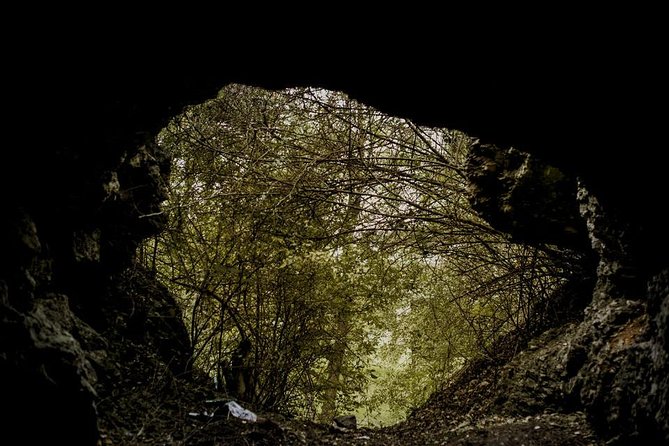
The Plaszow section also includes Liban Quarry and a climb toward Krakus Mound. These additions make the outdoor portion more than a visit to a former camp site.
The quarry connects to the forced labor system and gives you another way to understand the work imposed on prisoners. It also changes the feel of the route. Instead of moving only between formal memorials, you pass through an area where the terrain itself forms part of the story.
The climb toward Krakus Mound brings panoramic views over Krakow. That shift in outlook can be useful after several heavy stops. It does not make the subject lighter, but it helps you place the former camp within the wider city and its southern suburbs.
You should take the climb seriously if your footwear is poor or the weather is wet. The ground at Plaszow can be hilly and muddy, and the route involves plenty of walking. Comfortable shoes are not a nice extra here. They are the sensible choice.
The outdoor section is also less polished and less tourist-oriented than Auschwitz. Some people will value that quieter, less packaged setting. Others may prefer a site with clearer remains and more formal interpretation.
The guide can make or break the experience
The tour provider is Hello Cracow, and the guide is central to the value. Guides named in the feedback include Dominika and Matthew, although you should not assume one of them will lead your departure.
Dominika is described as friendly, clear, and highly informed, even in poor weather. Matthew is noted for connecting the World War II story with local community life and the modern city. Those qualities matter because the route includes places that do not explain themselves.
I would pay close attention to the guide’s treatment of the ghetto. One weak experience reported a hurried presentation with too much general information and too little appreciation of the ghetto itself. That is a fair warning. The subject needs more than dates and labels.
At its best, the guide explains how the sites connect. You learn not only what happened at the factory, wall, square, and camp, but why each place belongs in the same story. A group of up to 25 people is not tiny, so your ability to ask questions may depend on the group’s pace and the guide’s habits.
The tour is offered in a way that most people can join, and the starting point is near public transportation. Still, the walking conditions mean this is not the right choice if you need a smooth, low-effort outing.
Is $76.33 a fair price?
At $76.33 per person, this is not the cheapest way to spend a morning or afternoon in Krakow. The value depends on how much structure and explanation you want.
The price includes a professional guide and the entrance ticket to Schindler’s Factory. It also saves you from working out how to connect the museum, former ghetto sites, and Plaszow by yourself. The skip-the-line arrangement at the museum can be useful, especially when individual visitors face a long wait.
The tram ticket is not included, so allow a little extra for public transportation. The meeting point is at Lipowa 4, and the tour ends at Henryka Kamieńskiego 57, so you should not expect to finish where you started.
I think the price is reasonable for someone who wants one organized half-day focused on Krakow under Nazi occupation. It is less attractive if you plan to visit only Schindler’s Factory, have already studied the area, or prefer to move slowly and independently.
The tour is often booked about 55 days ahead. That suggests you should reserve early if your Krakow dates are fixed, especially since the group has a maximum of 25 people. Free cancellation is available up to 24 hours before the start time. If the minimum group size is not reached and the tour is canceled, you are offered another date or experience, or a full refund.
Who should book this Krakow history tour?
I would recommend it to you if you want a serious look at Krakow’s wartime past but do not want to spend a full day at Auschwitz. It suits visitors who value local interpretation, unusual sites, and a clear route between places that can be confusing on a map.
It is also a good fit if Schindler’s Factory is high on your list and you want to add the ghetto and Plaszow rather than treating the museum as an isolated attraction.
You may want to skip it if you dislike emotionally heavy history, long walks, uneven ground, or outdoor touring in bad weather. It is not a gentle sightseeing loop. The material is grim, and Plaszow can feel stark because so little remains.
I would also consider your preferred museum style. If you want a focused biography of Schindler, this exhibition may not meet that expectation. If you want to understand Krakow as a city under Nazi occupation, it is the stronger choice.
Should you book it?
Book this tour if you want to connect Schindler’s Factory, the former ghetto, and Plaszow Camp in one carefully organized half-day. Its best feature is not a single monument. It is the way the route turns separate places into one understandable story.
Go prepared for walking, mud, hills, and difficult subject matter. Wear comfortable shoes, keep your expectations realistic about the limited remains at Plaszow, and remember that the guide’s quality is especially important here.
At $76.33, it offers solid value for the museum admission, five-hour route, transport planning, and local explanation. I would choose it for a first serious look at Krakow’s World War II history, particularly if you want something more local and less predictable than the city’s biggest day trips.
FAQ
How long does the tour last?
The tour lasts approximately five hours.
Where does the tour begin?
It begins at Lipowa 4, 32-051 Krakow, Poland.
Where does the tour end?
It ends at Henryka Kamieńskiego 57, 30-644 Krakow, Poland.
Is admission to Schindler’s Factory included?
Yes. The entrance ticket to Schindler’s Factory Museum is included.
Is this a biography museum about Oskar Schindler?
No. The exhibition focuses on Krakow under Nazi occupation from 1939 to 1945 and covers wider aspects of life under Nazi rule.
Does the tour visit the former Krakow ghetto?
Yes. It stops at a surviving 12-meter fragment of the ghetto wall and at Ghetto Heroes Square.
What is special about Ghetto Heroes Square?
The square has 70 large, individually placed metal chairs. They symbolize the belongings left behind after the ghetto was liquidated.
Is Plaszow Camp difficult to walk through?
The outdoor area includes hills and can be muddy in places. Comfortable shoes are recommended.
Is public transportation included?
No. The tram ticket is not included in the tour price.
What is the cancellation policy?
You can cancel up to 24 hours before the start time for a full refund. Changes or cancellations made less than 24 hours before the start time are not accepted for a refund.
Recently added in Krakow
- Auschwitz-Birkenau and Krakow Private Car Trip from Katowice★ 4.3 · 3 reviews
- Wawel Castle, Old Town with St. Mary’s Church Guided Tour★ 5.0 · 3 reviews
- Private tour to Zakopane and Thermal Baths from Krakow★ 5.0 · 3 reviews
- Wawel Castle, Cathedral, Rynek Underground Tour with Lunch★ 5.0 · 3 reviews
- From Krakow: Chocholow Thermal Hot Springs (hotel pick up)★ 5.0 · 3 reviews
- Legends of Cracow ROBOTIC SHOW★ 4.0 · 3 reviews
- From Krakow: Zakopane and Thermal Pools Guided Trip★ 5.0 · 3 reviews
- Guided Beer Tour in Krakow★ 4.5 · 3 reviews
Schindler's Factory Tours, compared.
Oskar Schindler’s Factory Entry Ticket & Guided Tour
Read our review →
Schindler’s Factory Tour with Entrance Ticket
Read our review →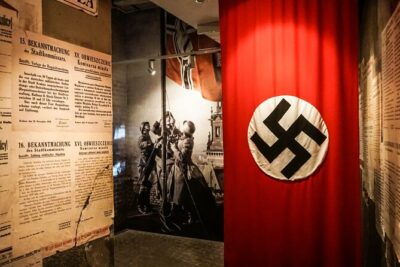
Schindler’s Factory in Krakow: Guided Tour & Skip the Line Ticket
Read our review →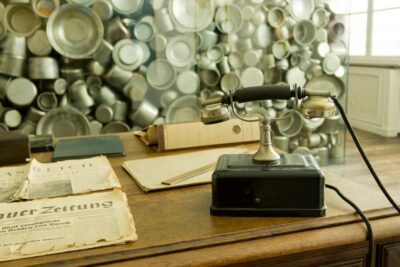
Schindler’s Factory Ticket with Guided Tour Option
Read our review →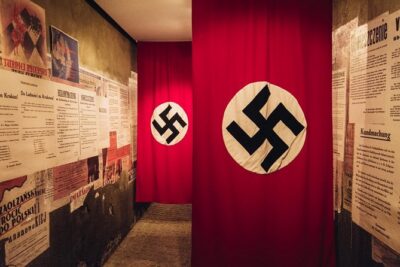
Krakow Schindler’s Factory Guided Tour with Admission Ticket
Read our review →
Krakow Schindler’s Factory Museum Guided Tour in English
Read our review →Where else this one turns up