Reviewed · KRAKOW TOURS
Nikiszowiec Industrial District Private Tour
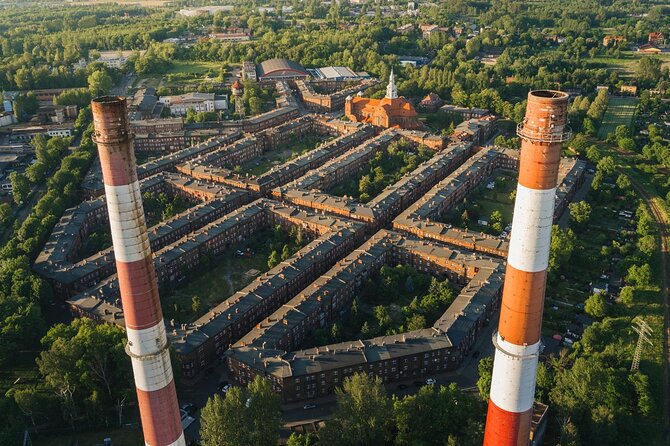
Nikiszowiec is not just a pretty old neighborhood. It is a planned mining district where red-brick homes, shared courtyards, a school, a church, and a former coal mine still show how Silesian workers lived. This private walk brings that working life into focus, with Malwina’s lively storytelling connecting buildings to people and events.
I like two things here: the tour moves beyond façades into an original flat at the Museum of Katowice History, and it treats Silesia as its own culture, not just a footnote to Poland. You’ll also see Janów artists, Silesian legends, and the old railway that linked the industrial estates.
The main consideration is location. The experience is sold in connection with Krakow, but it starts and ends in Katowice, at Plac Wyzwolenia 21. You must arrange your own journey to Katowice, and the visit includes a fair amount of walking outdoors.
Key points about the Nikiszowiec tour
- A private walk for your group only: You get the guide’s attention rather than joining a large mixed party.
- Nearly three hours on foot: The pace includes ten stops, with plenty of time for stories, photographs, and the museum.
- A real workers’ district: You see housing courts, shared portals, gardens, a school, church, and mine buildings together.
- Silesian history takes center stage: The tour covers the Silesian Uprisings, both world wars, the interwar autonomous region, and communism.
- Art is part of the story: Murals, Janów Group paintings, Silesian mythical creatures, and modern watercolors add a local voice.
- Good value for history-minded visitors: At $93.45 per person, the price is easiest to justify for a small private group that wants a focused guide and museum entry.
Why Nikiszowiec feels different from central Poland
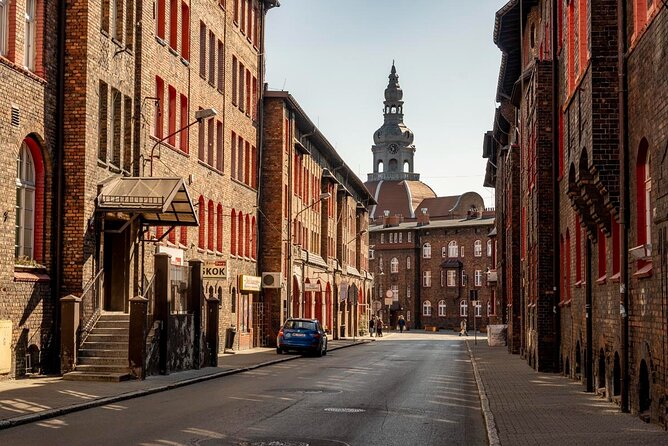
Nikiszowiec grew around coal mining, and its design makes that clear. This was not an old market town that slowly expanded. It was planned as a residential district for mine workers and their families, with homes, religious life, education, and work placed close together.
That layout is one of the best reasons to take a guided walk. On your own, you might notice the repeated red-brick buildings and attractive windows. With an explanation of the quarters, portals, courtyards, and work patterns, you begin to see the district as a complete social system.
The tour also gives you a useful regional contrast. Silesia has a strong identity shaped by industry, Polish and German influence, local speech, family ties, and political change. The experience makes clear why Nikiszowiec can feel unlike Warsaw, Krakow, or Poznan.
A few more Krakow half days to consider
- From Krakow: Auschwitz-Birkenau Guided Tour & Hotel Pickup
★ 4.5 · 33,358 reviews - From Krakow: Auschwitz-Birkenau Guided Tour & Hotel Pickup
★ 4.5 · 29,340 reviews - Krakow: Auschwitz Guided Tour with Optional Hotel Pickup
★ 4.5 · 15,280 reviews
Starting at St. Anne’s Church in Katowice
Meet at Kościół pw. św. Anny w Katowicach, at Plac Wyzwolenia 21. The church is the opening point, and the first stop is brief, only about three minutes, so you should arrive ready to walk rather than plan on a long church visit.
This opening helps place Nikiszowiec in its local setting. It also gives the group a clear meeting point in the district. Since the tour ends here, you do not need to work out a second pickup location at the end.
The total duration is about 2 hours 45 minutes, though the timed stops add up to roughly 2 hours 30 minutes. That small difference likely allows for walking between places, pauses, and normal tour timing. Wear shoes suited to city sidewalks and shared courtyards.
The Zillmanns’ plan for a mining community
At the Emil and Georg Zillmann Square, the guide introduces the architects who shaped Nikiszowiec. You learn the general plan for the district and the purpose behind its arrangement, including nearby areas connected to the settlement.
This is where the buildings begin to make sense as design rather than decoration. The Zillmanns created a district with repeated housing blocks and organized quarters. The plan reflects practical needs: workers needed homes near the mine, and families needed a school, church, courtyards, and daily services close at hand.
The stop lasts about ten minutes. It is short, but it gives you a useful map in your head before the walk enters the residential sections.
Liberation Square and the shared portals
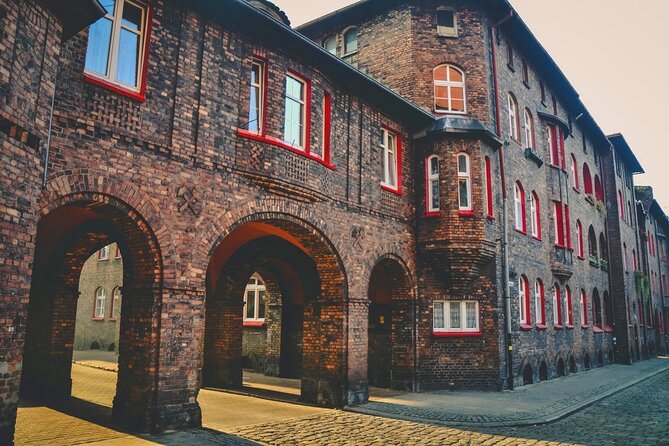
The next stop moves through the common portals at Liberation Square. The guide explains the urban plan in more detail, including the division into quarters, the purpose of each quarter, and the structure of the buildings.
You also begin hearing about daily routines. That is a valuable shift. Industrial architecture can look grand from the outside, but the real story is how residents used these spaces: entering through shared passages, gathering in interior areas, and organizing family life around mine work.
The fifteen-minute stop should appeal to anyone who likes architecture with a human scale. It is less about famous monuments and more about understanding how ordinary people moved through their neighborhood.
A different kind of day in Krakow:
- Krakow–Zakopane: Cable Car, Chocholow Baths, Cheese & Vodka
★ 5.0 · 10,720 reviews - Krakow: Auschwitz-Birkenau Guided Tour with Pickup & Lunch
★ 4.5 · 9,800 reviews - From Krakow: Wieliczka Salt Mine Tour
★ 4.6 · 9,393 reviews - Krakow: Auschwitz-Birkenau Guided Tour Pickup/Lunch Options
★ 4.5 · 9,057 reviews
Inside the residential quarters
The longest outdoor section lasts about thirty minutes. You pass into residential areas, several quarters, and interior gardens while the guide explains how life once worked and how the district functions today.
Nikiszowiec is especially effective here because its courtyards and repeated blocks let you compare public and private space. The district was built for workers, but it was not simply a row of isolated houses. Its shared design encouraged a close neighborhood structure.
The guide also covers World War I and the Silesian Uprisings. These subjects matter because they show the district caught up in larger political struggles, not sealed off from them. Silesia’s future and identity were contested, and residents experienced those changes in the place where they lived and worked.
You should expect this section to be one of the most satisfying parts of the walk, but it is also the part where weather matters most. The tour requires good weather, and poor conditions can lead to a new date or a full refund.
The Silesian Embassy and years of political change
The stop connected with the Silesian Embassy lasts about fifteen minutes. Here, the focus turns to the interwar period and the Autonomous Region of Silesia.
That period is important for understanding local identity. The tour presents Silesia as a region with a distinct political and cultural position, rather than treating it as a generic industrial corner of Poland. You also learn about World War II and the changes communism brought to Nikiszowiec.
This part adds needed balance to the attractive brick streets. Nikiszowiec is visually appealing, but its story includes political pressure, war, industrial change, and shifting ideas about regional identity. The guide’s job here is to connect those broad events to the neighborhood you are standing in.
The Pułaski Shaft and the world of coal
At the Pułaski Shaft Complex, you reach the former coal mine where many Nikiszowiec residents worked. The stop lasts about twenty minutes.
This is a key piece of the district’s story. Without the mine, the housing quarters have no clear purpose. The shaft complex shows the connection between home and employment, and it helps you picture the industrial system that shaped family life across Silesia.
You also see the historic railway that once carried industrial materials and people between Silesian industrial estates. That detail gives the tour a wider reach. Nikiszowiec was not an isolated settlement. It was part of a network of mines, rail lines, workers, and industrial communities.
The tour does not list admission fees for this stop, and the route is primarily an exterior walking experience at this point. You should think of it as a guided look at the former mining setting, not a full underground mine visit.
Silesian legends in watercolor
The visit to Grzegorz Chudy’s watercolor atelier lasts about ten minutes. You see contemporary paintings of Nikiszowiec, Katowice, and the Silesian region, along with images of Silesian legends and mythical creatures.
This stop changes the tone in a useful way. The district is not presented only as a preserved industrial relic. It also inspires current artists who interpret its buildings, stories, and regional imagination.
The paintings give you another way to read the area. Instead of seeing only brick, windows, and mine structures, you see how local artists turn Silesian places and legends into symbols. For anyone interested in regional art, this is more than a quick shop stop.
The old school and Janów Group murals
The historical Nikiszowiec school appears as a brief two-minute pass-by. It is not a long visit, but its place on the route reinforces the district’s original design. Housing, worship, work, and education were all part of the same community.
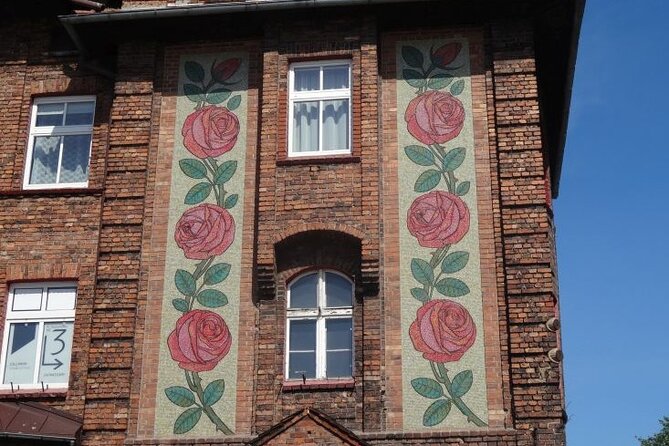
The following fifteen-minute stop at the Janów District Artists Square brings color into the walk. You can admire murals that reproduce works by leading artists from Nikiszowiec.
The Janów Group is central to the tour’s art story. Their work depicts everyday and festive life, giving you a local record of people, customs, and surroundings. The murals make those ideas visible outdoors, where you can compare the painted scenes with the district itself.
This is a good place for photographs, though the value is not only visual. The art helps explain how residents and artists understood their own world.
An original flat at the Museum of Katowice History
The final major stop is the City Ethnology Department of the Museum of Katowice History. You spend about thirty minutes seeing the interior of a typical Nikiszowiec flat.
For me, this is one of the strongest parts of the experience. Exterior architecture can suggest how people lived, but an original apartment shows the scale and feel of domestic life much more clearly. The museum also displays original works by Janów Group artists, including scenes of ordinary and festive life.
You will see another side of Silesian art here, too: surrealistic works by an artist described as the Silesian Salvador Dali. That gives the museum visit an unusual finish. The tour moves from practical workers’ housing to regional art, legends, and surreal imagery without losing its focus on local life.
Admission to this museum stop is included. The other listed stops are free, so the museum is the main included interior attraction named in the route.
What the $93.45 price gets you
The price is $93.45 per person. That is not a cheap quick walk, but it is a reasonable figure for a private tour lasting about 2 hours 45 minutes, especially if you are sharing the guide with family or friends and value a focused explanation.
The private format matters. Only your group takes part, so you can ask about the subjects that interest you most, such as mining, architecture, Silesian politics, art, or family life. A private guide can also make the pace more comfortable, though the supplied schedule still includes many stops in a limited time.
You are paying for interpretation, not a long list of paid admissions. Most stops are free, and the museum entry is included. The strongest value comes from having one person connect the district’s buildings, mine, railway, art, and political story into a single account.
Group discounts are available, which could improve the price for a larger party. If you are alone or traveling as a couple, compare the total cost with other Katowice options before booking. If you have a small group and want a personal English tour, the price makes more sense.
Who should book this walk
I would point this tour toward you if you enjoy industrial heritage, local art, architecture, or modern European history. It also suits families. The route mixes courtyards, murals, a mine setting, stories, and a museum apartment, so it is not a nonstop lecture.
It is a particularly good choice if you are staying in Krakow but want to see a part of Poland that feels very different from the country’s best-known historic centers. Just plan the Katowice connection carefully, since the meeting point is not in central Krakow.
You should be comfortable walking outdoors for most of the experience. The information says most people can participate, service animals are allowed, and the meeting point is near public transportation. No special physical restrictions are listed, but the tour is not designed as a seated museum visit.
The English option is useful for international visitors. Malwina is described as cheerful and informative, and the tour’s range gives her plenty to work with. Ask questions as you go. The private format is best used as a conversation, not just a guided march from stop to stop.
Booking details that matter
Confirmation arrives within 48 hours of booking, subject to availability. Since the tour requires a minimum number of participants, the operator can cancel if that number is not reached and offer another date, another experience, or a full refund.
You can cancel for a full refund up to 24 hours before the local start time. Changes or cancellations made inside that 24-hour window are not accepted for a refund.
Good weather is required. If poor weather forces cancellation, you will be offered another date or a full refund. Keep this in mind when building the tour into a short Katowice visit.
Should you book the Nikiszowiec tour?
Book it if you want context, not just photographs. Nikiszowiec is attractive enough to explore on your own, but the mine, railway, political history, apartment interior, and Janów art form a much stronger experience when someone explains how they fit together.
I would skip it only if your schedule cannot spare nearly three hours in Katowice, or if you are looking for a short, low-cost stroll with few planned stops. For a small group that wants an English-speaking guide and a close look at Silesian identity, this is a thoughtful and distinctive use of your time.
FAQ
Where does the Nikiszowiec tour start?
The tour starts at Kościół pw. św. Anny w Katowicach, Plac Wyzwolenia 21, 40-423 Katowice, Poland.
Where does the tour end?
The activity ends back at the same meeting point.
How long does the tour last?
The approximate duration is 2 hours 45 minutes.
Is this a private tour?
Yes. Only your group participates in the activity.
Is the tour offered in English?
Yes. English is the listed language.
What is included in the price?
The price is $93.45 per person, with group discounts available. Admission to the Museum of Katowice History stop is included. The other listed stops have no admission fee.
Can I cancel for a full refund?
Yes. You can cancel at least 24 hours before the experience’s local start time for a full refund. Cancellations or changes made less than 24 hours before the start are not refunded.
What happens if the weather is poor or the minimum group size is not met?
If poor weather or an insufficient number of participants causes cancellation, you will be offered a different date or experience, or a full refund.
Recently added in Krakow
- Auschwitz-Birkenau and Krakow Private Car Trip from Katowice★ 4.3 · 3 reviews
- Wawel Castle, Old Town with St. Mary’s Church Guided Tour★ 5.0 · 3 reviews
- Private tour to Zakopane and Thermal Baths from Krakow★ 5.0 · 3 reviews
- Wawel Castle, Cathedral, Rynek Underground Tour with Lunch★ 5.0 · 3 reviews
- From Krakow: Chocholow Thermal Hot Springs (hotel pick up)★ 5.0 · 3 reviews
- Legends of Cracow ROBOTIC SHOW★ 4.0 · 3 reviews
- From Krakow: Zakopane and Thermal Pools Guided Trip★ 5.0 · 3 reviews
- Guided Beer Tour in Krakow★ 4.5 · 3 reviews
Krakow Tours, compared.
Auschwitz-Birkenau Guided Tour & Hotel Pickup
Read our review →Auschwitz Guided Tour with Optional Hotel Pickup
Read our review →
Zakopane: Cable Car, Chocholow Baths, Cheese & Vodka
Read our review →
Auschwitz-Birkenau Guided Tour with Pickup & Lunch
Read our review →
Krakow to Auschwitz Birkenau Guided Tour with Transfer and Ticket
Read our review →
Wieliczka Salt Mine Guided Tour with Transport
Read our review →