Reviewed · KRAKOW TOURS
Guided Tour in Kraków-Płaszów Former Concentration Camp
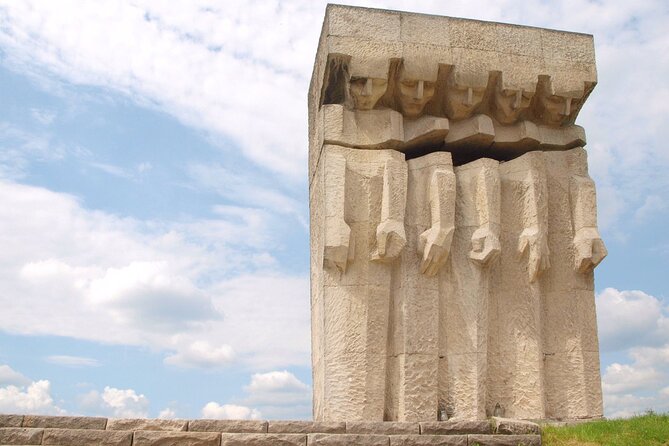
Kraków-Płaszów is a former Nazi concentration camp hidden in plain sight, close to shopping centers, busy roads, and Krakus Mound. This two-hour walk connects the site to Ghetto Heroes Square and a surviving section of the ghetto wall, giving you a clearer picture of what happened in Kraków during the Holocaust.
I like the route’s strong sense of place and its small, focused scope. I also like that a guide such as Olga can add useful help beyond the history, including assistance with tram tickets. The main drawback is the site itself: Płaszów is broad, uneven, and lightly marked, so this is a sober walking visit, not a polished museum experience.
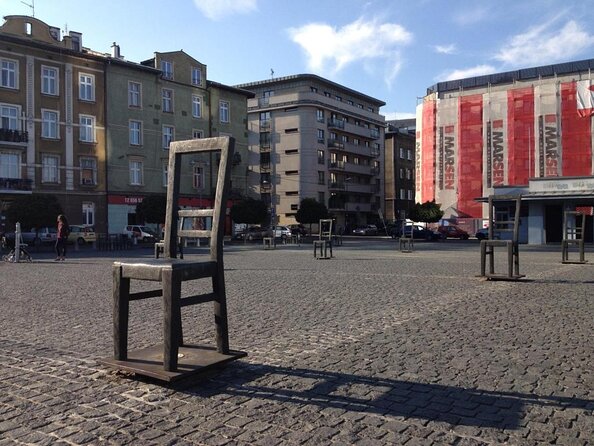
- Ghetto Heroes Square: See the 70 metal chairs that represent people sent away and the absence left behind.
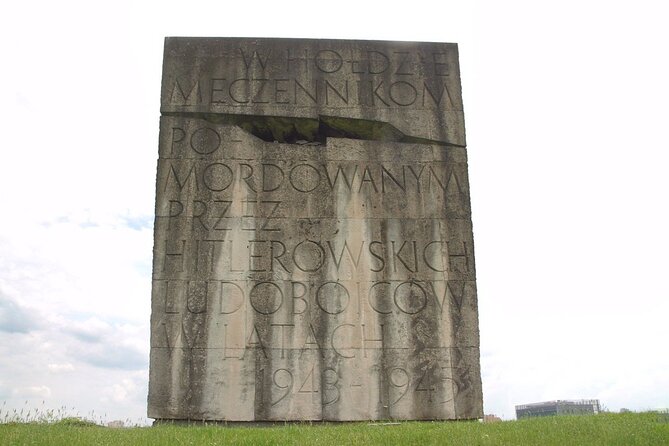
- Płaszów camp grounds: Walk through the former camp area in Kraków’s Podgórze district, where little on the surface explains the site’s wartime role.
- Surviving ghetto wall: Visit a 12-meter fragment carrying a memorial plaque in Hebrew and Polish.
- English guidance: A guide explains the events and connects the separate locations into one story.
- Two-hour format: The length gives you a serious introduction without taking an entire day from your Kraków plans.
- Small-group potential: Groups can reach 25 people, though a smaller outing may allow more direct conversation.
Why Płaszów Belongs in Your Kraków Plans
Many people use Kraków as a base for Auschwitz, yet the city itself contains an important former camp site. Płaszów sits across the river in Podgórze, near Wielicka Street and opposite the Bonarka shopping center. Its location makes the site especially striking: ordinary city life carries on around a place that once had a very different purpose.
I find that contrast valuable. You do not approach Płaszów through a grand gate or a formal museum complex. Instead, you move through a large, uneven area that until recently gave few clear signs of what happened there. The lack of obvious memorial structures can make the visit feel difficult at first, but it also shows why a guide matters.
Without context, you might see open ground and paths used for walking. With an English-speaking guide, you can begin to understand the site’s place in Kraków’s wartime story and the connection between the ghetto, forced removal, and the camp at Płaszów. The guide turns scattered locations into a sequence you can follow.
This is not a light sightseeing stop. You should expect a serious visit focused on persecution, suffering, death, and remembrance. I would not squeeze it between a café breakfast and a rushed museum visit. Give yourself time to listen and think.
Starting at Ghetto Heroes Square
The walk begins at Apteka pod Orłem, at Plac Bohaterów Getta 18. The square is known today as Ghetto Heroes Square, but its former name was Plac Zgody. That earlier name belongs to the square’s wartime and postwar story, which your guide will explain as you begin.
The memorial design is hard to miss. Seventy large metal chairs are spaced across the square. They represent departure and the absence left after people were removed from the Kraków Ghetto. The chairs make the open space feel deliberately unsettled. This is not a monument you simply glance at and pass.
The square’s modern appearance also has a complicated background. After the war, the area was neglected and used at different times as a public toilet and parking area. It was renovated in 2005, and the new design caused debate. That context helps you see the memorial as part of an ongoing discussion about how Kraków remembers the ghetto.
I like beginning here because the square gives you a clear emotional and visual starting point. You are not yet at Płaszów, but you are introduced to the people and community whose forced displacement forms part of the route’s story. The metal chairs create a strong image that stays with you as you continue.
The meeting point is near public transportation, which is useful if you are staying elsewhere in Kraków. Check your route before setting out, since the experience starts in one part of Podgórze and finishes on Henryka Kamieńskiego Street.
A few more Krakow half days to consider
- From Krakow: Auschwitz-Birkenau Guided Tour & Hotel Pickup
★ 4.5 · 33,358 reviews - From Krakow: Auschwitz-Birkenau Guided Tour & Hotel Pickup
★ 4.5 · 29,340 reviews - Krakow: Auschwitz Guided Tour with Optional Hotel Pickup
★ 4.5 · 15,280 reviews
Walking Through the Former Płaszów Camp
From Ghetto Heroes Square, the visit continues to the former Płaszów concentration camp. This is the main part of the walk and lasts about one hour according to the scheduled route. Admission to the site is included, so the price is paying for the guided interpretation rather than an additional entrance ticket.
Płaszów occupies a large area in a part of Kraków that is now surrounded by modern development. Wielicka Street is nearby, Bonarka shopping center is opposite the area, and Krakus Mound is not far away. The location makes the site feel startlingly close to daily city life.
The ground is described as wild and uneven, with little visible infrastructure explaining its past. That creates both the power and the limitation of the visit. You gain a strong sense of how easily a place can be overlooked, but you will not find a neatly arranged sequence of rooms, displays, or signs guiding you from one point to the next.
Wear practical shoes. The information provided does not promise a smooth route, and the uneven ground is one of the few physical details clearly associated with the site. You should also be ready to walk outdoors for much of the experience. The tour is approximately two hours overall, so comfort matters.
Your guide’s job is particularly important here. A well-prepared explanation can help you understand what the area represented during the Holocaust and why Płaszów mattered in Kraków’s wartime history. The guide will show you around and provide the needed context rather than leaving you to interpret an undeveloped area on your own.
One guide named Olga has been praised for explaining the camp carefully and for helping with tram tickets. That small practical detail says something useful about the style of this experience: the guide can be a source of local help as well as historical information. Still, guide assignments can vary, so I would treat Olga’s presence as a possibility rather than a guarantee.
Why the Uneven Site Requires a Guide
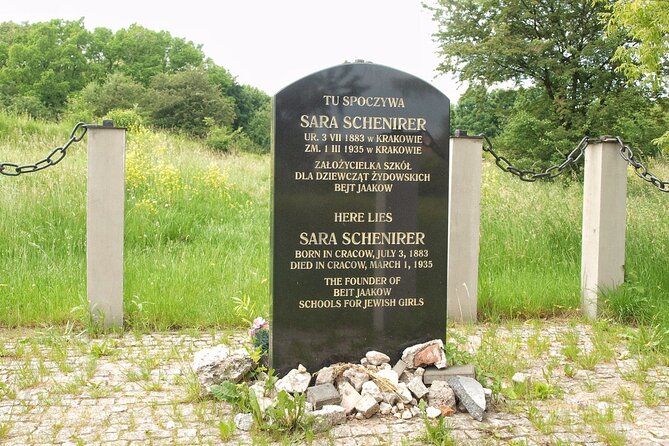
Płaszów is not the kind of place where every important point announces itself. The area’s limited development means you may need a guide to understand where you are, what you are looking at, and how the site relates to the rest of Kraków.
That makes the guided format worth considering. You are not just walking through open ground. You are learning how the camp fits into the city’s wartime geography and how the nearby ghetto locations connect to it. The route gives you a more complete picture than visiting only a single memorial.
At the same time, you should keep your expectations realistic. If you prefer a formal museum with indoor displays, extensive labels, and a carefully designed visitor path, this outing may feel spare. Its value comes from the guide’s explanation and the physical setting, not from a large collection of objects.
The group can include up to 25 people. That is a reasonable maximum for a walking tour, but it is not an intimate private visit. If the group reaches its limit, you may need to stay close to the guide to hear everything clearly. A smaller group can make it easier to ask questions and follow the explanation.
The experience has been offered in English. That makes the historical material accessible to English-speaking visitors who want more than a quick look at a memorial. Since the subject is serious and the site is not heavily labeled, listening carefully is a central part of the visit.
The Surviving Ghetto Wall Fragment
After the main visit, the route passes the Fragment of the Ghetto Wall. This is one of Kraków’s clearest physical reminders of the ghetto: a 12-meter section of the original wall.
The fragment carries a commemorative plaque in Hebrew and Polish. Its message recalls the people who lived, suffered, and died under German persecution, and it marks the place from which many began their final journey to the death camps. Even without reproducing the full inscription, its purpose is clear: this is a memorial to lives disrupted and destroyed, not simply an old piece of masonry.
The wall works well as the final historical marker because it gives you something tangible after the broad, open area of Płaszów. At the camp, the setting can feel diffuse. Here, the surviving structure is compact and direct. You can see the physical barrier and consider what it meant to those confined behind it.
The route ends at a bus stop at 57 Kamieńskiego Street. That is practical, but it also means the walk is not a round trip returning you to Ghetto Heroes Square. Plan your next move from the end point rather than assuming you will finish where you started.
A different kind of day in Krakow:
- Krakow–Zakopane: Cable Car, Chocholow Baths, Cheese & Vodka
★ 5.0 · 10,720 reviews - Krakow: Auschwitz-Birkenau Guided Tour with Pickup & Lunch
★ 4.5 · 9,800 reviews - From Krakow: Wieliczka Salt Mine Tour
★ 4.6 · 9,393 reviews - Krakow: Auschwitz-Birkenau Guided Tour Pickup/Lunch Options
★ 4.5 · 9,057 reviews
What $30.01 Buys You
At $30.01 per person, this is not the cheapest way to spend two hours in Kraków, especially since the camp admission itself is free. The value rests in the guide’s time, route planning, historical explanation, and ability to connect three separate places into one understandable visit.
I think the cost makes sense if you would otherwise arrive at Płaszów without knowing what you were seeing. The site’s low-key appearance is precisely why independent visitors can miss its significance. Paying for interpretation can turn an uncertain walk into a meaningful historical visit.
The price is less compelling if you already know Kraków’s Holocaust history well or plan to spend several days studying the subject through museums and other guided programs. You may prefer to visit the wall fragment and square on your own, then decide if a separate guided walk is necessary.
The two-hour duration helps with planning. You can fit the experience into a day that includes other Kraków sights, but you should not treat it as a quick photo stop. The subject requires attention, and the walk across uneven ground may take more energy than the clock suggests.
The tour is booked about 29 days ahead on average. That does not mean you must reserve a month out, but it does suggest that planning ahead is sensible if your Kraków dates are fixed. Confirmation is provided when you book, and free cancellation is available up to 24 hours before the start time. Canceling later or changing the booking within that final 24-hour period does not qualify for a refund.
Who Will Get the Most From This Walk
I would recommend this tour to you if you want to understand Kraków’s wartime history in the places where it unfolded. It is a good fit if you prefer a guide who explains context rather than a quick visit focused only on photographs.
The route also suits people who have already seen Kraków’s central sights and want to spend part of a day in Podgórze. The nearby city setting makes the visit easy to add to a Kraków itinerary, while the subject gives the day more weight than another routine attraction.
This experience may be especially useful before or after a visit to Auschwitz, since it shows that Kraków’s Holocaust story was not confined to a distant memorial complex. Płaszów and the ghetto sites are part of the city itself.
I would think twice if you dislike outdoor walks, uneven ground, or solemn historical sites. The information provided does not describe extensive accessibility features, though most people can take part and public transportation is nearby. Ask the provider directly if you have specific mobility needs.
Families should also consider the subject and the age of the children. The tour deals with persecution and death in a direct historical setting. It is best for people ready to listen respectfully rather than for anyone seeking a casual family outing.
Practical Details Before You Book
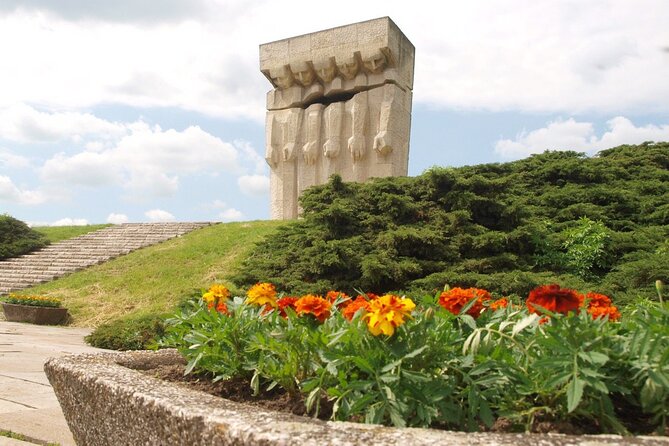
The meeting point is Apteka pod Orłem, Plac Bohaterów Getta 18, 33-332 Kraków. The end point is the bus stop at 57 Kamieńskiego Street, 30-644 Kraków. Since the route starts and ends in different places, keep your onward plans flexible.
The tour is conducted in English and uses a mobile ticket. The maximum group size is 25 people. Confirmation arrives at booking, and the activity is near public transportation.
Plan for outdoor conditions and uneven surfaces at Płaszów. Comfortable walking shoes are the sensible choice. I would also leave room in your schedule after the tour, since you may want a quiet pause before moving on to another busy Kraków sight.
The subject deserves respectful behavior. This is a place of remembrance, not a backdrop for playful photos or hurried sightseeing. Listen to the guide, stay with the group, and give the memorial sites the attention they call for.
Should You Book the Płaszów Tour?
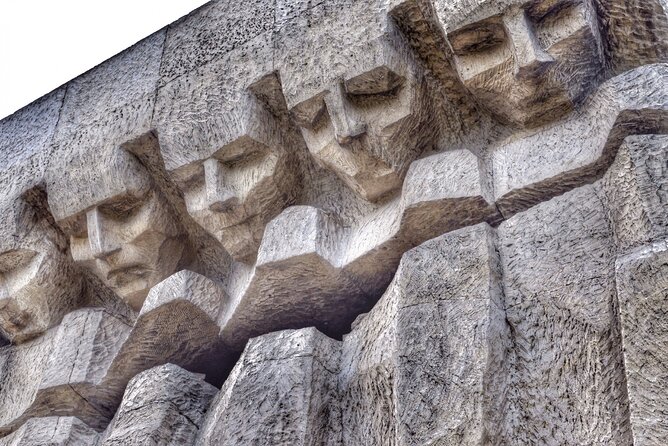
Book it if you want a clear, guided connection between Ghetto Heroes Square, the former Płaszów camp, and the surviving ghetto wall. The route is short enough for a half-day plan, but serious enough to add real understanding to your time in Kraków.
The strongest reasons to go are the guide’s historical explanation, the unusual chance to visit a former camp within the city, and the powerful contrast between the memorial sites and the modern neighborhoods around them. The main caution is that Płaszów is not a polished museum. Its open, uneven setting can feel understated, and you need a guide to make sense of what is not immediately visible.
At $30.01, I see this as a worthwhile purchase for visitors who value context and want to look beyond Kraków’s postcard center. If you are prepared for a sober outdoor walk and can manage the one-way route, this is a thoughtful way to confront an important part of the city’s past.
FAQ
How long does the Guided Tour in Kraków-Płaszów Former Concentration Camp last?
The experience lasts approximately two hours.
What language is the tour offered in?
The tour is offered in English.
Where does the tour begin?
It begins at Apteka pod Orłem, Plac Bohaterów Getta 18, 33-332 Kraków, Poland.
Where does the tour end?
It ends at the bus stop at 57 Kamieńskiego Street, Kraków.
How many people can join the tour?
The activity accepts a maximum of 25 people.
Can I cancel for a full refund?
Yes. You can cancel up to 24 hours before the experience begins for a full refund. Cancellations or changes made less than 24 hours before the start time are not accepted for a refund.
Recently added in Krakow
- Auschwitz-Birkenau and Krakow Private Car Trip from Katowice★ 4.3 · 3 reviews
- Wawel Castle, Old Town with St. Mary’s Church Guided Tour★ 5.0 · 3 reviews
- Private tour to Zakopane and Thermal Baths from Krakow★ 5.0 · 3 reviews
- Wawel Castle, Cathedral, Rynek Underground Tour with Lunch★ 5.0 · 3 reviews
- From Krakow: Chocholow Thermal Hot Springs (hotel pick up)★ 5.0 · 3 reviews
- Legends of Cracow ROBOTIC SHOW★ 4.0 · 3 reviews
- From Krakow: Zakopane and Thermal Pools Guided Trip★ 5.0 · 3 reviews
- Guided Beer Tour in Krakow★ 4.5 · 3 reviews
Krakow Tours, compared.
Auschwitz-Birkenau Guided Tour & Hotel Pickup
Read our review →Auschwitz Guided Tour with Optional Hotel Pickup
Read our review →
Zakopane: Cable Car, Chocholow Baths, Cheese & Vodka
Read our review →
Auschwitz-Birkenau Guided Tour with Pickup & Lunch
Read our review →
Krakow to Auschwitz Birkenau Guided Tour with Transfer and Ticket
Read our review →
Wieliczka Salt Mine Guided Tour with Transport
Read our review →