Reviewed · KRAKOW TOURS
Krakow Christmas Market Immersive Tour
Krakow’s Christmas market is more than wooden stalls and ornaments. This two-hour walk connects today’s festive square with old photographs, local food, Christmas Eve customs, and the everyday markets where Krakow residents still shop. The best moments come when the guide shows you how the city looked a century ago, then points out what remains.
I like the way the tour mixes tastings with local history, so you are not simply walking from stall to stall. I also like the stop at Stary Kleparz, where the focus shifts from holiday display to ordinary shopping for bread, meat, and farm goods. The main consideration is time: two hours goes quickly, and the tour covers several streets and markets rather than giving you a long, leisurely visit at any one place.
Key points to know before booking
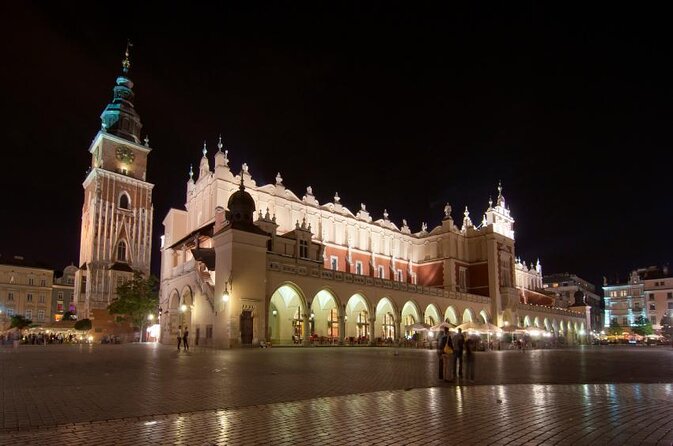
- Old photographs bring the Main Square to life: You compare modern Krakow with market scenes from about 100 years ago.
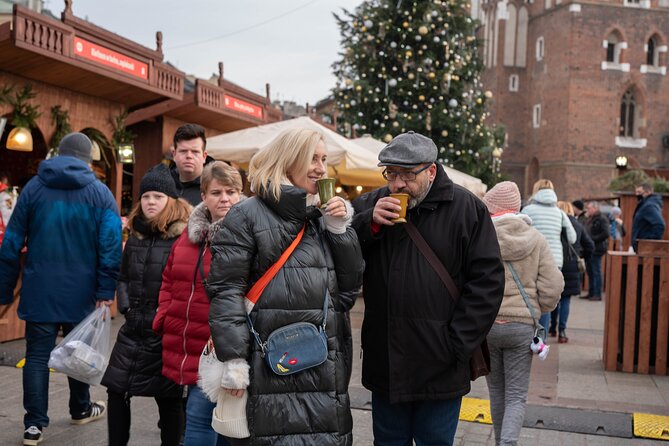
- Food is part of the lesson: Expect samples at the Christmas market, Stary Kleparz, and a Polish chocolate shop.
- Stary Kleparz adds a local angle: You see where Krakow residents shop for goods from farmers, butchers, and bakers.
- The walk covers more than the central square: The route includes Ulica Florianska, a royal exit from the Old Town, a winter park, and local shops.
- Suzanna receives special praise: Her storytelling, food knowledge, and willingness to shape the experience around interests such as bread baking are major strengths.
- The small group keeps it personal: A maximum of 15 people is allowed, and the activity is offered in English.
Why this Christmas walk feels different
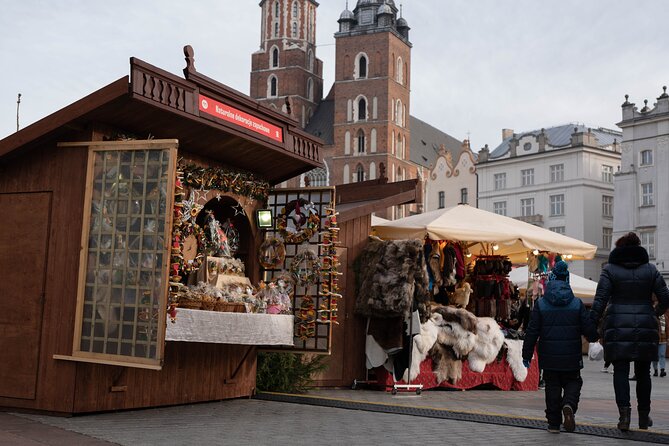
Many Christmas market visits are built around free time. You arrive, look at the stalls, buy something warm, and move on. This Krakow experience gives you a reason to look closer. The guide asks which goods are genuinely local, explains older shopping habits, and uses photographs to show how the market once worked.
That historical comparison is useful because Krakow’s Main Square can feel polished and heavily visited during December. The tour helps you see it as a working market with a long commercial life, not just a pretty setting for holiday lights.
I especially like the link between food and memory. You are not only told what Krakow people bought for Christmas or prepared for Christmas Eve. You get to taste some of the foods connected with the city’s market culture. The samples are part of the experience, not an optional add-on you must arrange yourself.
The guide can also respond to your interests. One highly praised outing was shaped partly around bread baking, with food choices and explanations adjusted to that subject. If you care about cooking, ingredients, or traditional food, mention it early. You may get more from the walk than someone who treats it as a simple sightseeing loop.
More markets in Krakow:
- Pierogi Cooking Class with Market Shopping and Local Snacks
★ 5.0 · 343 reviews - Krakow Pierogi Cooking Class with Market Visit & Home-Cooked Meal
★ 5.0 · 212 reviews
Starting at Plac Mariacki and the Main Square
The meeting point is Plac Mariacki 7, close to Krakow’s Main Square. This is a practical place to begin because the first stop is Rynek Glowny, the city’s central square and the heart of the Christmas market.
The opening section lasts about 40 minutes. That gives the guide enough time to explain why this space really was a market for centuries, rather than simply presenting the square as a scenic backdrop. You look at images of the market from roughly 100 years ago and compare them with what you see around you.
I find this kind of visual comparison especially helpful in Krakow. Old photographs give you something concrete to look for: the shape of the square, the style of stalls, the types of goods, and the way people used the space. Instead of receiving a list of dates, you get a practical way to read the setting.
The Christmas market itself is also treated with some care. You learn which products are considered authentic, which matters if you want to spend your money on something tied to Poland rather than a generic seasonal souvenir. The available information does not name individual products, so you should ask the guide directly about anything you are considering buying.
Food samples are included here. The exact menu can vary, but the experience is designed to introduce you to local tastes while explaining their place in Krakow’s seasonal traditions. I would come with enough appetite to sample food, but not assume this replaces lunch or dinner.
Ulica Florianska and old-fashioned Christmas shopping
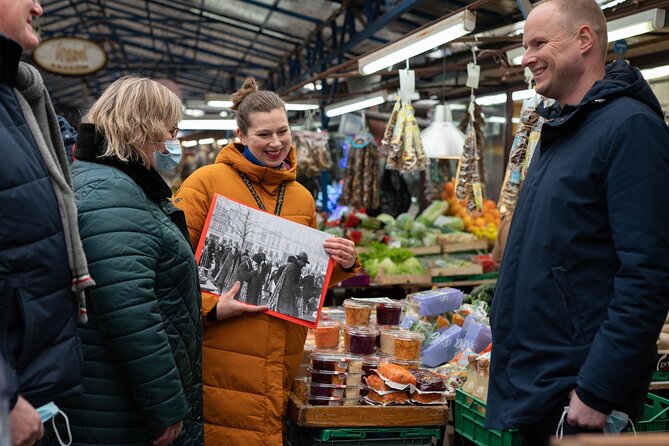
From the square, the walk continues along Ulica Florianska for about 20 minutes. This section shifts from the broad public market to a historic shopping street, with the guide recreating what it may have looked like a century ago.
The questions here are wonderfully specific. What did Krakow families buy as Christmas presents? What foods did they prepare for Christmas Eve? Which butcher’s shop had the best reputation, and which toy shop made parents dread the cost?
Those details give the tour a human scale. You begin to think about Christmas not as a modern event of lights and retail displays, but as a season shaped by household budgets, food preparation, children’s wishes, and neighborhood reputation.
I like that the tour does not limit Christmas history to churches and grand buildings. Shopping streets tell another story. A butcher, baker, or toy seller could be just as important to family life as a landmark. The guide’s job here is to connect those ordinary choices with the street beneath your feet.
The walk is short, so you should not expect a full shopping tour of every business on Florianska. Instead, this is a focused storytelling stop. It works best if you enjoy details about daily life and old shops more than a long block of independent browsing.
Leaving the Old Town through a royal route
The route then takes you out of the Old Town in royal fashion. The supplied details do not assign a separate duration to this part, but it forms one of the walk’s connecting sections.
The architectural point is tied to Krakow’s Christmas nativity tradition. You look at how the city’s gates and buildings appear in Krakow’s famous Christmas nativities, known locally as szopki. The guide uses these miniature scenes to show how recognizable Krakow architecture becomes part of a distinctly local holiday art.
This is a smart addition because it connects the physical city with a tradition you might otherwise miss. The nativities are not treated as isolated craft objects. They reflect the buildings, gates, and visual symbols of Krakow, so the city itself becomes part of the Christmas display.
You should expect a walking transition rather than a long formal visit inside a single attraction. Wear shoes that can handle several streets and outdoor stops, especially if the weather is cold or damp.
A different kind of day in Krakow:
- From Krakow: Auschwitz-Birkenau Guided Tour & Hotel Pickup
★ 4.5 · 33,358 reviews - From Krakow: Auschwitz-Birkenau Guided Tour & Hotel Pickup
★ 4.5 · 29,340 reviews - Krakow: Auschwitz Guided Tour with Optional Hotel Pickup
★ 4.5 · 15,280 reviews - Krakow–Zakopane: Cable Car, Chocholow Baths, Cheese & Vodka
★ 5.0 · 10,720 reviews
A winter park between city stops
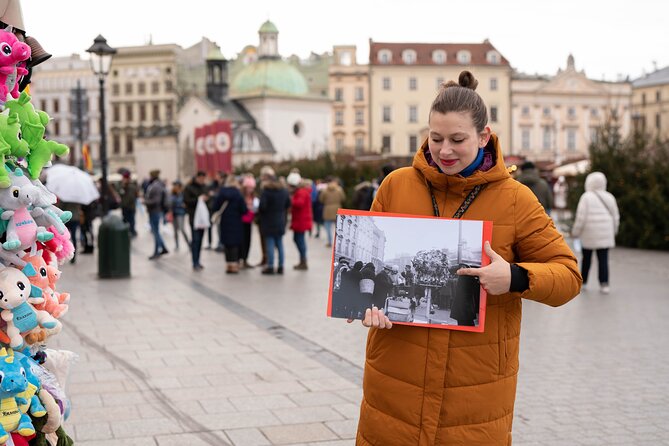
The route includes a stroll through a wintery park. The information provided does not name the park or give it a separate time slot, so I would treat this as a pleasant breathing space between the Old Town and the next market.
That pause matters. Christmas markets can become crowded and visually noisy, and a short walk through a park gives the group a change of pace. You still remain on foot, but the experience is not one uninterrupted run of stalls and storefronts.
Do not book this tour expecting a long nature walk. The park is one element in a compact city route. Its value is in the contrast: historic streets, holiday stands, local market activity, and a quieter outdoor stretch within one outing.
Stary Kleparz, where Krakow shops for daily life
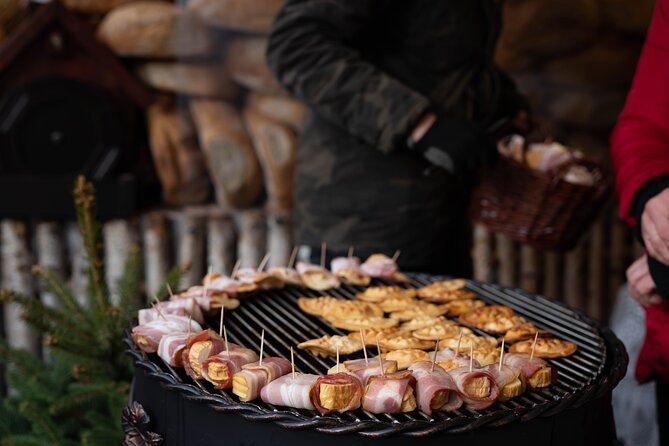
Stary Kleparz is the tour’s strongest departure from the usual Christmas market circuit. It is a local market beside the Old Town, visited by people from districts across Krakow who come to buy from farmers, butchers, and bakers.
The stop lasts about 30 minutes, making it one of the longer sections of the walk. That is enough time to watch how the market works and sample more food, though not enough for a full independent shopping trip.
This is where I see the tour’s best value. The Main Square shows Krakow in its festive public face. Stary Kleparz shows a more practical side of the city, where people buy ingredients and everyday goods. The contrast helps you understand that local food culture is not confined to a Christmas display set up for visitors.
You learn what people buy and how the market connects farmers, butchers, and bakers with households in the city. The available details do not specify every food sample, so you should ask what is being offered on your date if you have allergies or strong dietary limits.
The stop also gives you a chance to ask better questions. You can find out which products are seasonal, how local goods differ from tourist souvenirs, and what ingredients matter at Christmas. A guide who responds well to food interests can make this section particularly rewarding.
There is one practical trade-off. Stary Kleparz is a real working market, not a staged historical display. That means it may feel less tidy or predictable than the central Christmas stalls. For me, that is part of its appeal, but you should choose this tour for local context rather than polished holiday scenery alone.
Shops selling locally produced goods
The route also includes shops selling genuinely local products. The information does not identify the individual businesses or give a fixed time for this part, so I would expect brief visits or passing recommendations rather than a dedicated shopping session.
This section fits the tour’s main question: how can you tell whether a Krakow Christmas purchase feels authentic? You can ask the guide for help before buying. That is more useful than wandering through stalls and hoping the label tells the whole story.
If you are shopping for gifts, keep your priorities clear. You may prefer something edible, something made locally, or something connected to Krakow’s Christmas traditions. The guide can help explain the difference, but the tour does not promise a shopping bag full of included souvenirs.
Because the group is limited to 15 people, asking questions should be easier than on a large coach excursion. Still, time is limited. Make a note of shops or products you want to revisit later rather than assuming you can stop for a long purchase during the walk.
Polish chocolate on the return to Rynek Glowny
The final stop returns to the Main Square for about 15 minutes. Here, the guide tells the stories of two Polish chocolate companies and visits their original shops.
This is a fun finish because it brings together history, local business, and a small edible reward. You learn about Polish chocolate companies in the places where their original shops began, then receive a chocolate sample.
The chocolate stop also gives the tour a clear ending. After the larger themes of markets, family food, old shopping streets, and local goods, you get one focused example of how a Polish product became part of the city’s commercial identity.
You should not mistake the sample for a chocolate tasting workshop. The supplied information promises a sample and stories about two companies, not a long tasting menu or a chance to visit a production kitchen. I see it as a pleasant final taste, especially after the broader food stops earlier in the route.
Since the activity ends back at the meeting point, you are well placed to continue exploring the Main Square afterward. You can return to a stall, revisit a chocolate shop, or find your own meal without having to arrange transport back across the city.
Price, timing, and group size
At $40.51 per person, this is not the cheapest way to walk around Krakow’s Christmas market. You can enter the Main Square and Stary Kleparz without an admission charge, and you could explore both areas independently.
The price makes more sense if you value interpretation and food samples. You are paying for an English-speaking guide, a planned route, old market images, historical context, samples at several points, and a local market visit that might be easy to overlook on your own.
The two-hour length is another part of the value calculation. It is short enough to fit into a busy Krakow schedule, perhaps before dinner or alongside a museum visit. It is also long enough to cover several distinct settings, but you should not expect a slow, detailed exploration of each one.
A maximum of 15 people is a useful limit. It does not guarantee a private feel, but it should be more manageable than a large group moving through narrow streets and crowded seasonal stalls. If the guide is as responsive as Suzanna was on the food-focused outing, the group size should allow for questions and some personal attention.
The activity is offered in English. Most people can take part, service animals are allowed, and the meeting point is near public transportation. Those details make the tour fairly easy to fit into a normal city visit, though the route itself involves walking outdoors.
What to wear and how to use the tour well
Krakow in December can be cold, so dress for an outdoor walk rather than an indoor tasting. Warm layers, comfortable shoes, and protection from wet weather will make the experience easier. The tour includes a park and several street sections, and the time outside matters more than the compact two-hour length suggests.
Arrive ready to listen and taste. You will get more from the walk if you ask about products, food traditions, Christmas Eve cooking, and the shops that interest you. If you have a special food interest, such as bread baking, mention it to the guide because the experience can be shaped around those interests.
I would also avoid scheduling this immediately before a fixed reservation across town. The tour is approximately two hours, and street conditions or group movement can affect the finish. Since it ends where it begins, plan your next activity from the Main Square rather than adding a long transfer.
Booking is flexible if your plans change. You can cancel for a full refund up to 24 hours before the local start time. Changes or cancellations made less than 24 hours before the start are not accepted for a refund.
Who should book this Krakow experience
I would choose this tour if you want more than photographs of decorated stalls. It suits you if you enjoy food, old photographs, traditional shopping, and stories about ordinary city life.
It is also a good match for a first visit to Krakow during the Christmas season. The route gives you an introduction to the Main Square, Florianska Street, Stary Kleparz, local shops, and Polish chocolate without requiring you to plan each stop yourself.
Food-focused visitors should pay special attention. The samples, the stop at the local market, and the guide’s ability to adjust explanations around bread baking make this more useful than a standard sightseeing walk.
I would be less likely to recommend it if you want a long period of free shopping, a formal museum visit, or an extensive food tour with a published tasting menu. The tour is compact and story-led. Its strength is the connection between places, history, and samples.
Final call: Is it worth $40.51?
Yes, if you want context and local food more than independent browsing. The tour’s strongest features are the old market photographs, the contrast between Rynek Glowny and Stary Kleparz, and the guide’s personal storytelling. Suzanna’s praised approach, especially her ability to tailor the food discussion, is a strong reason to book when she is leading your outing.
The main limitation is the short schedule. You will cover a lot in about two hours, so the experience offers a lively introduction rather than a complete study of Krakow’s Christmas traditions.
For $40.51, I think the value is fair when you count the samples, the English guidance, the small maximum group, and the time saved planning a route. Book it if you want to understand what you are seeing and eating. Skip it if your main goal is simply to browse the stalls at your own pace.
FAQ
How long does the Krakow Christmas Market Immersive Tour last?
The tour lasts approximately two hours.
Where does the tour begin?
It begins at Plac Mariacki 7, 33-332 Kraków, Poland.
Where does the activity end?
The tour ends back at the meeting point.
What language is the tour offered in?
The tour is offered in English.
How many people can join the tour?
The activity has a maximum of 15 participants.
Can I cancel for a full refund?
Yes. You can cancel at least 24 hours before the experience start time for a full refund. Cancellations or changes made less than 24 hours before the start are not accepted for a refund.
More Christmas outings in Krakow
- Krakow: Christmas Music Concert With Wine
★ 4.2 · 243 reviews - Flavours of Polish Christmas: 4 course dinner + cooking class
★ 5.0 · 22 reviews
Recently added in Krakow
- Auschwitz-Birkenau and Krakow Private Car Trip from Katowice★ 4.3 · 3 reviews
- Wawel Castle, Old Town with St. Mary’s Church Guided Tour★ 5.0 · 3 reviews
- Private tour to Zakopane and Thermal Baths from Krakow★ 5.0 · 3 reviews
- Wawel Castle, Cathedral, Rynek Underground Tour with Lunch★ 5.0 · 3 reviews
- From Krakow: Chocholow Thermal Hot Springs (hotel pick up)★ 5.0 · 3 reviews
- Legends of Cracow ROBOTIC SHOW★ 4.0 · 3 reviews
- From Krakow: Zakopane and Thermal Pools Guided Trip★ 5.0 · 3 reviews
- Guided Beer Tour in Krakow★ 4.5 · 3 reviews
Krakow Tours, compared.
Auschwitz-Birkenau Guided Tour & Hotel Pickup
Read our review →Auschwitz Guided Tour with Optional Hotel Pickup
Read our review →
Zakopane: Cable Car, Chocholow Baths, Cheese & Vodka
Read our review →
Auschwitz-Birkenau Guided Tour with Pickup & Lunch
Read our review →
Krakow to Auschwitz Birkenau Guided Tour with Transfer and Ticket
Read our review →
Wieliczka Salt Mine Guided Tour with Transport
Read our review →