
Reviewed · AUSCHWITZ-BIRKENAU MEMORIAL TOURS
From Cracow: Auschwitz- Birkenau Tour with transportation
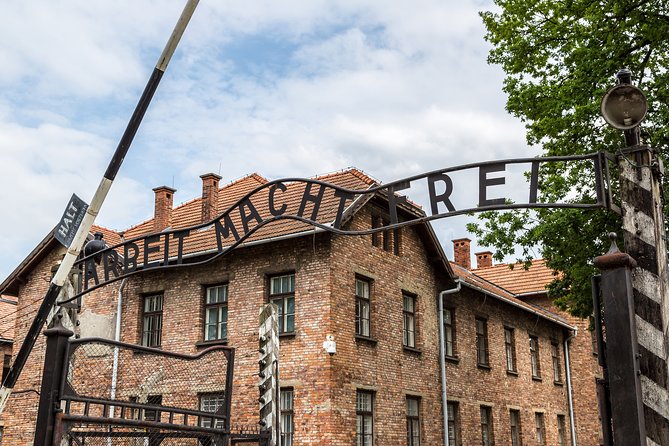
Auschwitz-Birkenau is not a quick sightseeing stop. It is a solemn memorial spread across two separate former camps, and this $36 trip gives you transport from Krakow, admission, and time to walk through both sites without being tied to a tour group. The visit is self-guided, so you set your own pace, but you also carry more responsibility for understanding what you are seeing.
I like the simple round-trip transport from Pawia 18a, especially since the drive to Oświęcim takes about 90 minutes each way. I also like the freedom of exploring on your own, with a guidebook in your requested language rather than a guide talking continuously beside you. Drivers such as Martin and Pavel have been praised for being friendly and helpful.
The weak point is ticket handling and timing. Admission is included, but that does not always mean you walk straight inside. Some departures have involved long waits to redeem tickets, changed pickup times, or insufficient time at Auschwitz I. Treat the advertised seven to eight hours as an estimate, not a promise.
Key points before you book
- Two camps in one day: Visit the brick buildings and exhibitions at Auschwitz I, then travel to the much larger Auschwitz II-Birkenau site.
- Self-guided rather than guided: You receive practical information and a guidebook, but no live guide or formal historical commentary.
- Central Krakow pickup: The meeting point is Pawia 18a, close to the city center and easy to find.
- Ticket queues can reshape the day: Some departures have involved waits of one to three hours before entry.
- Plan for substantial walking: The visit lasts at least three and a half hours on site, often with long walks between buildings.
- Good basic value at $36: The price is attractive if transport is your main need, but less so if you expect a fully organized museum tour.
What this $36 Auschwitz trip really provides
This is best understood as a transport and access package, not a full historical tour. You meet at Pawia 18a in Krakow, board an air-conditioned vehicle, and ride to Oświęcim with an English-speaking host or driver.
Admission to the museum is included, along with a guidebook in your requested language. The driver gives practical instructions and some information about the camps, but there is no live guide walking through the exhibitions with you.
That difference matters. At Auschwitz I, you will see a series of exhibitions inside former barracks. There are signs, displays, and material to read, but you must manage your own time and attention. If you want a clear, carefully paced explanation of the site, book a tour that specifically includes a live museum guide.
At $36, the trip can be good value for a visitor who wants a direct ride and does not mind exploring independently. It is less satisfying for anyone expecting a smooth, tightly managed museum visit from start to finish.
Other guided visits to the Auschwitz-Birkenau Memorial:
- From Krakow: Auschwitz-Birkenau Guided Tour & Hotel Pickup
★ 4.5 · 33,358 reviews - From Krakow: Auschwitz-Birkenau Guided Tour & Hotel Pickup
★ 4.5 · 29,340 reviews - Krakow: Auschwitz Guided Tour with Optional Hotel Pickup
★ 4.5 · 15,280 reviews
Leaving Krakow for Oświęcim
The listed meeting point is Pawia 18a, 31-154 Kraków, and the stated departure time is 2:00 pm. In practice, departure times have sometimes been changed, with some people notified of a much earlier start such as 7:30 am or 9:20 am.
You should check your messages carefully before the day of the trip and keep your schedule flexible. A changed start time can affect restaurant bookings, evening plans, or a second activity in Krakow.
The road journey usually takes about 90 minutes, though some return trips have taken closer to two hours. Traffic, queues at the site, and the number of passengers being managed can stretch the day. The vehicle is advertised as air-conditioned, but one poor experience described an uncomfortably hot bus, so do not assume perfect conditions on every departure.
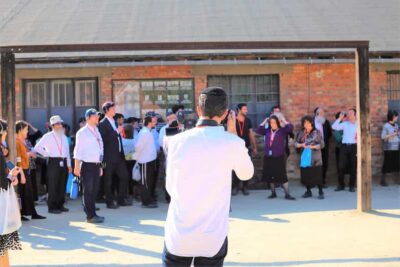
The group can be as large as 55 people. That is a sizable crowd for ticket collection and transfers between the two camps. A smaller group or private trip should offer more personal attention, but this option keeps the price low.
Auschwitz I, the first camp visit
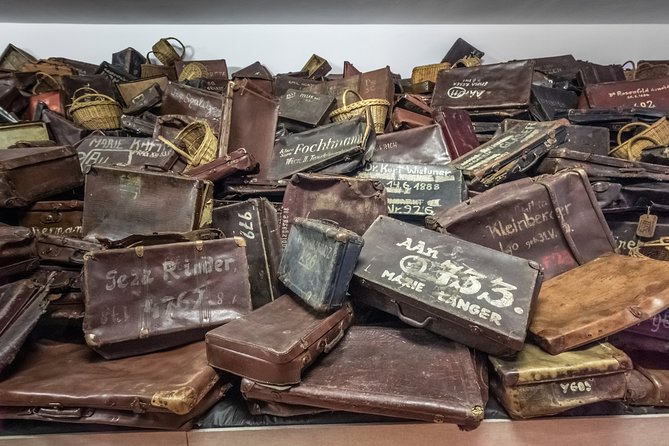
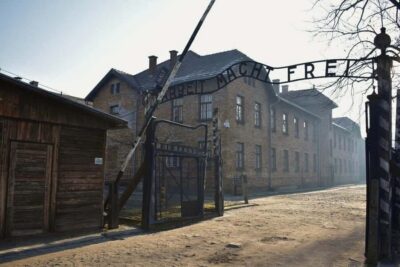
Auschwitz I is the more compact of the two sites. This is where you spend time in former prisoner blocks, now used for exhibitions. The buildings contain displays that require concentration, and the experience can feel demanding even before you reach the second camp.
The planned visit here is about two hours. That may sound generous, but it can feel short if you read the panels, stop at the exhibits, and take time to process what you are seeing. One detailed account described having only about an hour and a half at Auschwitz I after delays, which was not enough to see the blocks carefully.
This is the part of the day where queue delays hurt most. If you lose an hour before entry, you cannot easily make it back. You may find yourself moving quickly through rooms that deserve quiet attention.
The self-guided format has one clear benefit: you can pause when you need to. You are not required to keep pace with a speaker or a group. The drawback is that you must decide what to read, what to skip, and how to make sense of the site with limited time.
The guidebook should help, but confirm how it works before leaving the vehicle. The tour information says guidebooks are supplied in the requested language. Some people have had to return them at the end or were given a copy only to consult during the day, rather than keep as a souvenir.
Birkenau and the long walk across the grounds
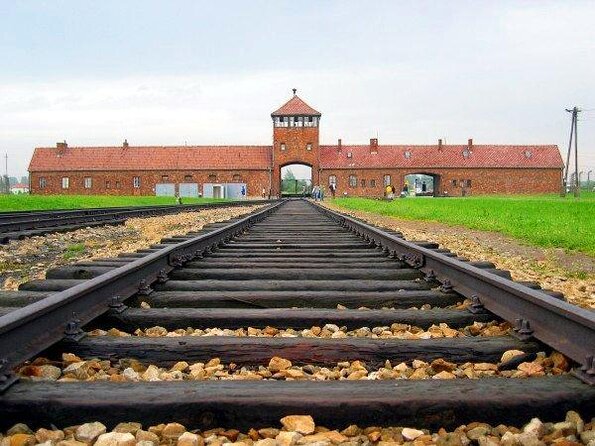
A driver transfers you from Auschwitz I to Auschwitz II-Birkenau. The second camp is much more open and spread out, with long distances between the entrance, barracks, memorial areas, and remains of the gas chambers and crematoria.
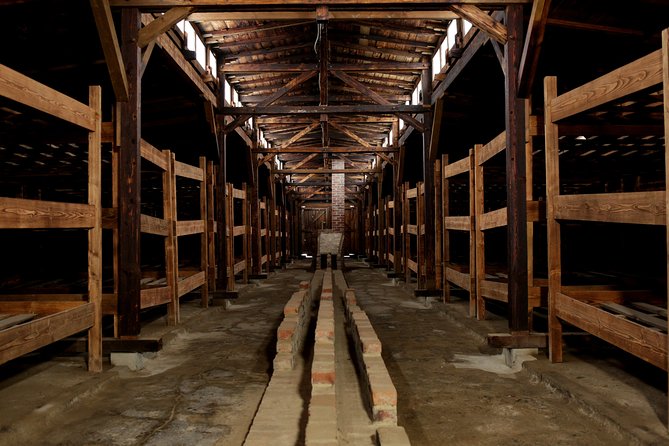
The itinerary allows at least one and a half hours at Birkenau. That is often a more workable amount of time than the same visit would be at Auschwitz I, although the site is physically demanding. You will walk over broad outdoor areas and see the remains of wooden and brick prisoner barracks.
The scale is part of what makes Birkenau so difficult to absorb. You are not moving from one exhibition room to the next. You are crossing a large former camp, seeing structures and ruins at different points across the grounds.
Some departures have allocated much longer at Birkenau, including roughly three and a half hours. That can be useful if you want to walk farther and spend time in reflection, but it can also leave too little time for Auschwitz I if the schedule is poorly balanced.
Wear comfortable shoes and prepare for an exhausting day. The tour requires a moderate level of physical fitness, and the walking is not optional if you want to see both camps properly.
A few more Krakow half days to consider
- Krakow–Zakopane: Cable Car, Chocholow Baths, Cheese & Vodka
★ 5.0 · 10,720 reviews - Krakow: Auschwitz-Birkenau Guided Tour with Pickup & Lunch
★ 4.5 · 9,800 reviews - From Krakow: Wieliczka Salt Mine Tour
★ 4.6 · 9,393 reviews - Krakow: Auschwitz-Birkenau Guided Tour Pickup/Lunch Options
★ 4.5 · 9,057 reviews
The ticket queue is the main risk
The most important thing to understand is that included admission does not always mean immediate entry. Several accounts describe joining a queue at the museum, waiting around an hour, and in some cases waiting two or three hours to redeem or collect the actual entry ticket.
One especially difficult pattern involved a long wait to obtain a ticket, followed by another wait before the assigned entry time. In a few cases, people were unable to enter at all because tickets were not available. That appears to be an operational risk rather than the intended experience, but it cannot be ignored when judging this trip.
The process can also be confusing in a large group. Instructions may be given quickly, and transfers between the ticket counter, bus, Auschwitz I, and Birkenau create several chances for people to lose track of the group. Friendly drivers have been praised, but organization has not been consistent.
I would not book this option if missing the memorial would ruin a tightly planned trip. A tour with guaranteed timed entry, or a full guided museum visit, may cost more but can reduce this risk.
Food, toilets, and what to carry
The day can run longer than the seven to eight hours shown in the basic description. Some departures have lasted eight or nine hours, while others have stretched to 11 or 13 hours because of queues and changed arrangements.
Take food and water with you. There is a restaurant at the main museum, with takeaway and sit-down options, and there may be food stalls near the Birkenau parking area. Still, your break may not line up neatly with the opening hours or the vehicle schedule.
Toilets are available outside the main museum and in at least one of the blocks. Birkenau also has toilets around the grounds. These facilities can be busy, so use them when you have a reasonable chance rather than waiting until the last minute.
You should also bring:
- Comfortable walking shoes
- Warm clothing in winter, especially for the ticket queue
- Water and a packed lunch
- Your booking confirmation
- A phone with the operator’s contact details
- A small amount of patience for changing instructions
The visit is outdoors as well as indoors. The tour requires good weather, and poor conditions can lead to a different date or a refund if the operator cancels.
Why the self-guided format works, and where it falls short
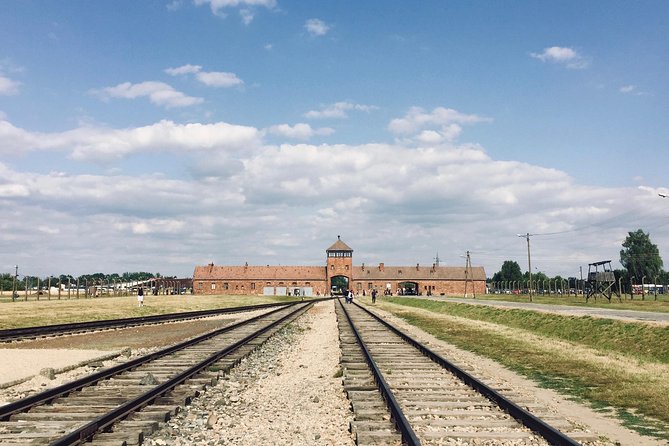
I understand the appeal of going without a live guide. Auschwitz-Birkenau is emotionally heavy, and you may prefer silence while reading or looking at the grounds. A guidebook lets you stop, reflect, and move on when you are ready.
This format also suits people who already know the basic history and mainly need dependable transport. The driver can explain practical steps, point you in the right direction, and get you back to Krakow without requiring you to arrange buses or connections.
But the guidebook format asks more from you than a guided visit. You need to watch the clock, keep track of transfers, and decide how much detail you can take in. If you are visiting for the first time and want the story explained in a clear sequence, the lack of a live guide will be noticeable.
Some drivers provide useful background on the journey. Pavel has been praised for respectful explanations, and Martin has been described as informative and professional. That help can improve the day, but it is not the same as having a museum guide inside the exhibitions.
How the $36 price compares with the experience
At $36, this is an inexpensive way to connect Krakow with Auschwitz-Birkenau. You are paying for an air-conditioned vehicle, round-trip transport, museum admission, a guidebook, and an English-speaking host.
The strongest value comes from convenience. You do not need to work out the trip to Oświęcim or arrange the transfer between Auschwitz I and Birkenau yourself. For a modest price, you get the essential transport framework.
The price becomes less attractive if you spend hours waiting or lose much of your allocated museum time. You may end up paying mainly for a ride and basic help with the entry process. That is still useful, but it is not the same as receiving a fully planned educational visit.
My practical view is simple: book this if your budget is tight and you are comfortable with uncertainty. Pay more for timed admission and a live guide if your priority is a calm, well-explained day with balanced time at both camps.
Who should choose this Krakow departure
This option suits you if:
- You want a low-cost ride from central Krakow.
- You prefer exploring independently.
- You can handle several hours of walking.
- You have flexibility if the start time changes.
- You are prepared for a possible queue.
- You mainly need transport and entry rather than a formal lesson.
It is a poor match if you need guaranteed timing, dislike large groups, or have evening plans that cannot move. It is also not ideal if you want to keep a guidebook as a souvenir, since copies may be collected at the end.
The subject itself is emotionally serious. You should allow quiet time afterward rather than planning a rushed dinner reservation or another major attraction immediately after returning.
Booking, cancellation, and meeting details
The activity starts and ends at Pawia 18a in Krakow. Confirmation is provided at booking, and the maximum group size is 55 people.
You can cancel for a full refund up to 24 hours before the start time. Cancellations or changes made within 24 hours are not refunded or accepted. If poor weather or an insufficient number of bookings causes cancellation, you are offered another date, another experience, or a full refund.
Should you book this Auschwitz-Birkenau tour?
Book it if you see the trip as affordable transport with museum admission and a self-guided visit. The central pickup, friendly English-speaking drivers, and freedom to explore make it practical, and several departures have delivered a memorable, moving day at a fair price.
Do not book it expecting a polished guided tour or guaranteed instant entry. The ticket queue, schedule changes, group size, and uneven time between Auschwitz I and Birkenau are real concerns.
Before paying, decide which matters more: saving money or reducing uncertainty. If you choose this $36 option, keep your whole day open, bring food and warm layers, and confirm the departure time and guidebook arrangements. That preparation gives you the best chance of focusing on the memorial itself rather than the logistics around it.
FAQ
Where does the tour start and finish?
It starts at Pawia 18a, 31-154 Kraków, Poland, and returns to the same meeting point.
What time does the tour begin?
The listed start time is 2:00 pm. Departure times have sometimes been changed, so check the operator’s communication before the day of the visit.
How long does the whole experience last?
The stated duration is about seven to eight hours. Some departures have lasted eight to nine hours, while queues and schedule changes have extended others to 11 or 13 hours.
How long is the drive from Krakow?
The journey to Oświęcim is usually about 90 minutes. Some return journeys have taken around two hours.
Are Auschwitz-Birkenau admission tickets included?
Yes, admission to the museum is included. However, you may still need to queue to redeem or collect the entry ticket before entering.
Is this a guided tour?
No. It is a self-guided visit with a guidebook and an English-speaking host or driver. A live guide is not included.
How much time do you spend at the camps?
The planned visit includes about two hours at Auschwitz I and at least one and a half hours at Auschwitz II-Birkenau. Actual time can change because of queues and transfers.
Can I cancel for a full refund?
Yes, if you cancel at least 24 hours before the scheduled start time. Cancellations within 24 hours are not refunded.
Recently added in Krakow
- Auschwitz-Birkenau and Krakow Private Car Trip from Katowice★ 4.3 · 3 reviews
- Wawel Castle, Old Town with St. Mary’s Church Guided Tour★ 5.0 · 3 reviews
- From Krakow: Chocholow Thermal Hot Springs (hotel pick up)★ 5.0 · 3 reviews
- Private tour to Zakopane and Thermal Baths from Krakow★ 5.0 · 3 reviews
- Wawel Castle, Cathedral, Rynek Underground Tour with Lunch★ 5.0 · 3 reviews
- Legends of Cracow ROBOTIC SHOW★ 4.0 · 3 reviews
- From Krakow: Zakopane and Thermal Pools Guided Trip★ 5.0 · 3 reviews
- Guided Beer Tour in Krakow★ 4.5 · 3 reviews
Auschwitz-Birkenau Memorial Tours, compared.
Auschwitz-Birkenau Guided Tour & Hotel Pickup
Read our review →Auschwitz Guided Tour with Optional Hotel Pickup
Read our review →
Auschwitz-Birkenau Guided Tour with Pickup & Lunch
Read our review →
Krakow to Auschwitz Birkenau Guided Tour with Transfer and Ticket
Read our review →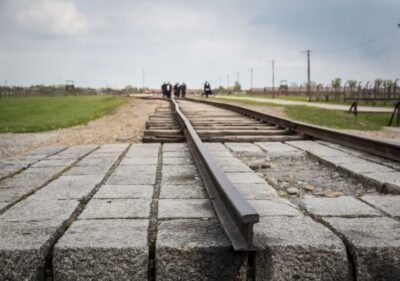
Auschwitz Birkenau Small Group Tour with Pickup
Read our review →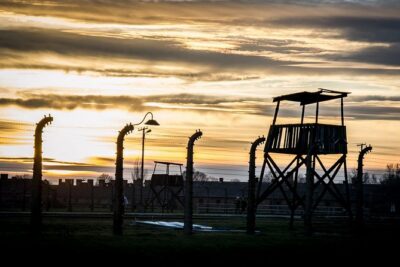
Auschwitz Birkenau Guided Tour with Ticket Hotel Pickup Small Van
Read our review →Where else this one turns up