
Reviewed · CYCLING TOURS
Sopot Private City Walking or Bike Tour with a local architect
Sopot’s best stories are written into its villas, parks, and seaside buildings, and this private tour gives those details a voice. Local architect Agnieszka Lasota leads you from Monte Cassino Street through old resort neighborhoods, the beach, Grand Hotel, pier, and lighthouse, using historical pictures to show how the town changed.
I like the small private format, which lets you ask questions and adjust the pace. I also like the focus on overlooked architecture, including quiet streets once nicknamed Poland’s Montmartre and the curious Alpine-style Tower Villa. The main consideration is time: 90 minutes to two hours is enough for an excellent introduction, but not enough to enter museums or explore every building at leisure.
Key points at a glance
- Architect-led storytelling: Agnieszka Lasota explains Sopot through its buildings, urban design, residents, and resort history.
- A private group of up to nine: You get a more personal experience than on a large group walk.
- Old photographs bring the town to life: Images show how central Sopot and its seaside district changed across the centuries.
- A broad route: The tour links Monte Cassino Street, historic villas, spa architecture, the Grand Hotel, beach plaza, pier, and lighthouse.
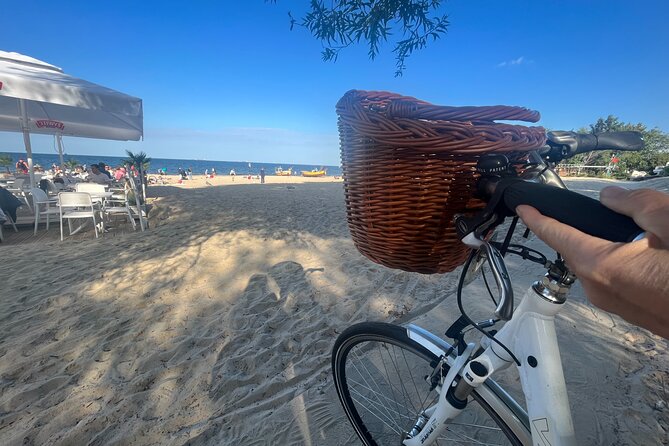
- Walking or biking: You can choose the style that suits your group, with pickup offered.
- Optional lighthouse climb: The stairs take effort, but the view may make the climb worthwhile.
Why Sopot makes a good architecture walk
Sopot is often treated as a quick beach stop between Gdańsk and Gdynia. That misses much of the town’s appeal. Its identity comes from several layers: a small fishing settlement, an 18th-century spa, a fashionable European resort, and a modern Baltic seaside town.
This tour is built around those changes. Instead of moving from one famous photo stop to another, you look at how the town grew and why its buildings look the way they do. The guide’s architectural training helps explain details that are easy to pass without noticing, while her local connection adds stories about the people who lived here.
The old photographs are especially useful. A building can look attractive on its own, but a historical image shows what surrounded it, how streets were used, and how Sopot’s resort life developed. I find that approach more useful than a long list of dates.
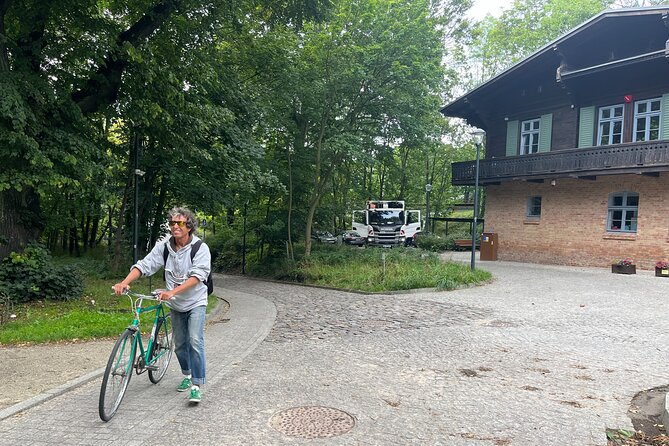
The tour is offered in English and lasts about 1 hour 30 minutes to two hours. Since it is private, your group can ask for more architecture, more local stories, or a gentler pace. A bike option is also available, though the published route includes many stops where you will want to pause and look closely.
More Bike Tours in Gdansk
- Gdańsk: Highlights Bike Tour
★ 4.9 · 173 reviews - Gdansk Private Bike Tour
★ 5.0 · 36 reviews - Gdansk Private Bike Tour
★ 5.0 · 21 reviews
Monte Cassino Street and Sierakowski Manor
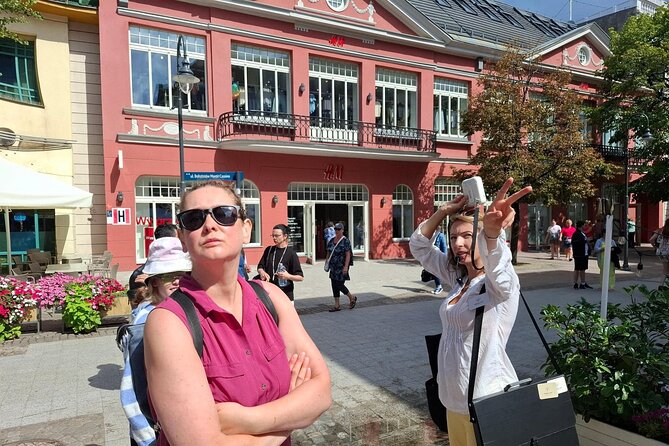
The meeting point is at McDonald’s on Bohaterów Monte Cassino 21. This puts you directly on Sopot’s famous pedestrian street, an easy place to find near public transportation.
Bohaterów Monte Cassino was once the main route from the village to the sea. Fishermen used it to reach the shore, long before cafés, shops, and holiday crowds made it Sopot’s central promenade. The guide uses old photographs here to show how the road and center changed over the centuries.
That contrast gives the opening real purpose. You are not simply walking along a shopping street. You are tracing the route between Sopot’s original settlement and the sea, then seeing how the road became the town’s social center.
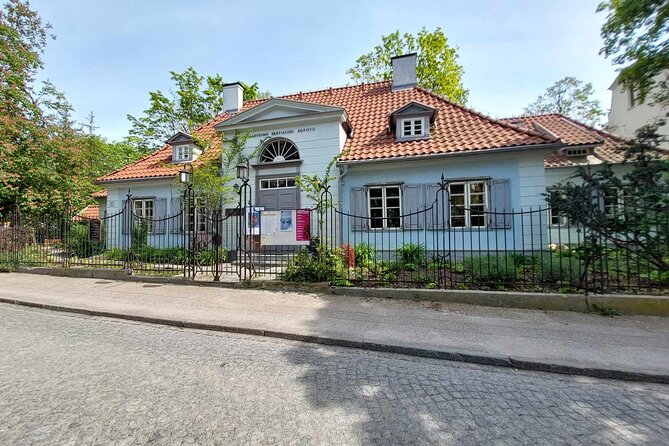
Next comes Dworek Sierakowskich, an 18th-century building that once served as a guest house for a large manor. It has a garden and a quieter setting away from the main pedestrian flow. The stop is brief, but it offers a useful change of mood after Monte Cassino Street.
Inside, you may see a bust of Fryderyk Chopin. He very probably stayed here while on holiday and played the piano. The wording matters: this is a local association, not a grand claim that requires a full museum visit. Still, it gives the building a human connection and helps explain why Sopot attracted artists and holidaymakers.
Villas Street and Sopot’s unusual residential streets
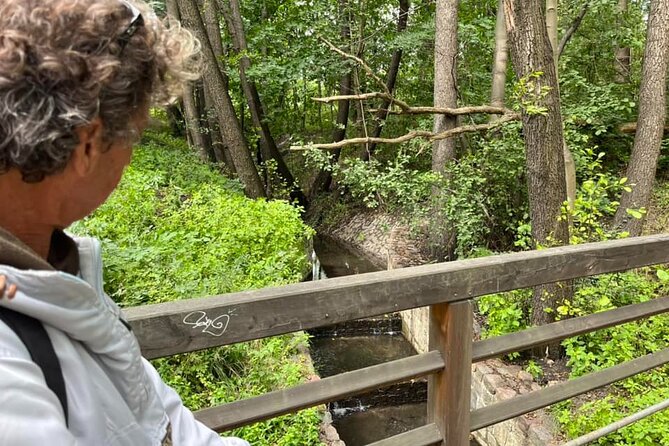
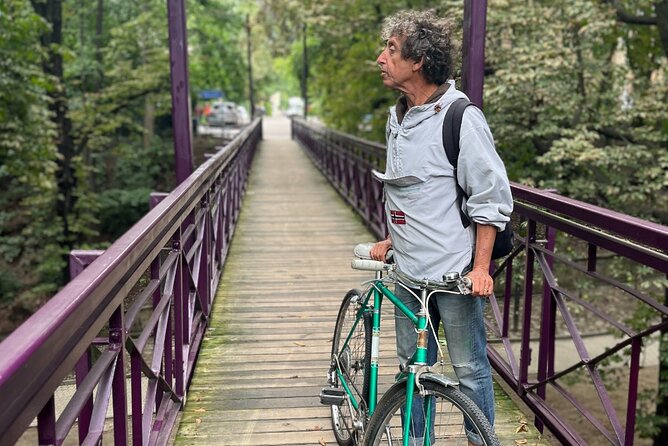
The route then crosses a picturesque bridge over a deep ravine before reaching a street first known as Villas Street. The oldest house here dates from 1881, and the area is valued for its classical architecture.
This section is one of the strongest reasons to book the tour with an architect. You will look at several houses rather than only one headline building, and the guide can explain how the façades, settings, and resort planning fit together. The stories behind the walls are part of the appeal.
In the second half of the 20th century, the street gained the nickname Poland’s Montmartre. That comparison hints at its artistic character, but you should not expect a replica of Paris. The value is in seeing a Sopot neighborhood that many short visits skip.
The route also shows how Sopot’s famous spa architecture is spread through the town. This is not one isolated monument. It includes villas, hotels, public buildings, parks, promenades, and seaside facilities built to support resort life.
Tower Villa and Goyki 3 Art Inkubator
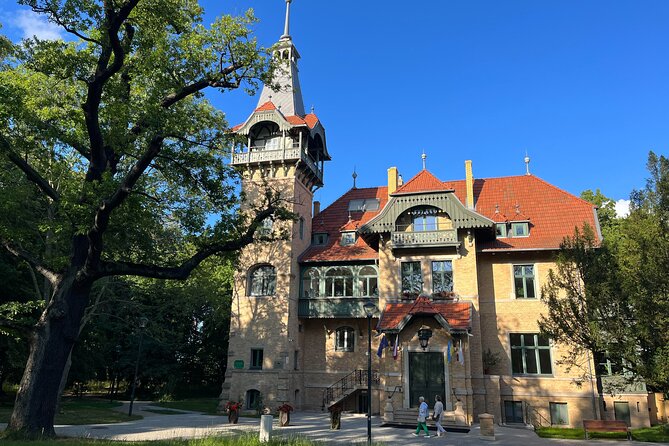
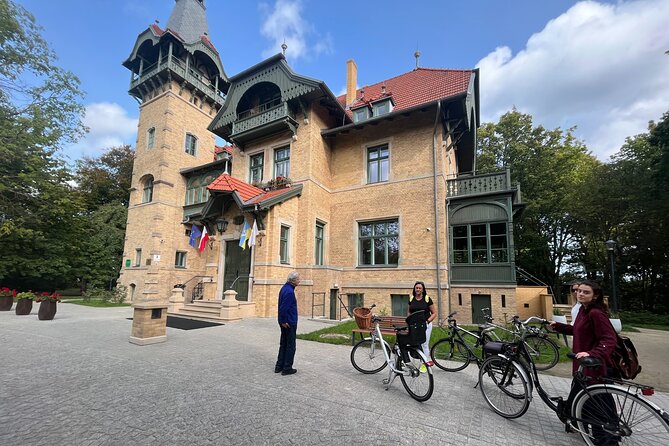
Goyki 3 Art Inkubator occupies one of Sopot’s notable late 19th-century villas. Known as the Tower Villa, it was built by a merchant for his family and has a long, rather sad story connected with music.
The building’s Alpine Resort style may seem odd in a Baltic seaside town. Here the guide places the villa in a wider European trend that began in the 18th century, when spa resorts borrowed visual ideas from mountain retreats. The surrounding park helps explain the connection.
This is a good example of the tour’s method. Instead of saying only that a building is pretty, Agnieszka Lasota explains why a seaside house might resemble an Alpine resort. You get a practical way to read architecture, not just another name to remember.
The art connection continues nearby. Swedish artist Per Oscar Gustav Dahlberg lives and works in Sopot, having moved there in 1996 after falling in love with the town. If arranged in advance, you may be able to stop by his house and studio and purchase graphics or an album about Sopot and Gdańsk architecture.
That meeting is not guaranteed, so treat it as a possible addition rather than a core part of the tour. The same artist’s drawings inspired the design of Sopot’s well-known Crooked House, giving you another link between local art and the town’s modern image.
More Walking Tours in Gdansk
- Gdańsk City Sights & History Guided Walking Tour in English
★ 4.8 · 876 reviews - Main Town Gdańsk Walking Tour
★ 5.0 · 644 reviews - Discover Gdansk Walking Tour
★ 5.0 · 495 reviews - Gdańsk: Old Town Private Walking Tour with Legends and Facts
★ 4.9 · 245 reviews
Jan Jerzy Haffner and the resort that followed
At the monument to Jan Jerzy Haffner, the story shifts from buildings to the person credited as Sopot’s early godfather. Haffner had been a surgeon in Napoleon’s army before choosing Sopot as a place to live, at a time when few people outside the area had heard of it.
The stop is short, but it helps explain why Sopot developed as a resort. Its appeal was never only the beach. Large parks, sandy shorelines, tennis courts, and spa facilities made it a place for health, leisure, and social life.
I like this pause because it puts a face to the town’s early development. You see how one person’s choice to settle here connected with the wider growth of Sopot as a fashionable destination.
The tour’s architecture theme also becomes clearer at this point. Resort towns are designed for movement and display. Parks provide space, villas create prestige, and public buildings give visitors places to meet, bathe, change, and be seen.
Grand Hotel and the Riviera of the North
Sofitel Grand Sopot is one of the route’s grandest sights. The hotel sits directly by the beach, a remarkable position that reflects Sopot’s ambition in the 1920s.
The town itself decided to make this investment. That detail changes how you see the building. It was not simply a private hotel placed on a convenient plot. It formed part of a civic effort to make Sopot a major resort.
At the hotel, you hear stories about the place’s splendor and look at how its position shaped the seafront. You will not be touring the hotel as a museum, and the stop is mainly about the exterior and its role in Sopot’s resort identity.
From here, the route continues to Skwer Kuracyjny, the spa square created in 1925. Historical photographs show the area during the period when Sopot was known across Europe as the Riviera of the North.
The phrase may sound grand, but the square’s design and attractions help explain it. This was a planned public space tied to seaside entertainment, spa culture, and resort life. The old pictures are particularly helpful because they reveal attractions and activity that are no longer obvious from the modern plaza.
For me, this is where the tour connects architecture with daily life. Buildings are not isolated objects. They were created for promenading, bathing, meeting friends, attending events, and spending money during a holiday.
The pier, changing rooms, and fishermen’s houses
At some point, the route passes Sopot’s famous pier. The guide explains its story so you can return afterward and visit it independently.
That arrangement works well. The tour gives you context without using the whole experience on the pier itself. You can decide later how much time to spend at the water, and the guide can point out why the structure matters to Sopot’s resort identity.
The walk ends near the southern changing rooms built in 1905, where the guide shares the amusing stories connected with the building. These facilities may sound ordinary, but changing rooms were essential to seaside resort culture. They show how public beaches were organized before modern beach facilities became standard.
Another possible ending is a plaza surrounded by small fishermen’s houses. The houses were gently moved from their original location in 1905. Their presence recalls the older fishing village beneath the polished resort town.
That contrast is one of Sopot’s most interesting features. Grand hotels and villas tell one story, while modest fishermen’s houses tell another. Seeing both helps you understand that the resort did not appear on empty ground.
Climbing Sopot Lighthouse
The Sopot Lighthouse is the final listed stop. You can choose whether to climb its stairs. The climb may be tiring, but the view is considered worth the effort.
This optional choice is useful for a private tour. If your group wants the view, you can include it. If you have limited energy or prefer to keep the walk focused on architecture, you can skip the stairs.
The tour includes admission to the lighthouse. Other museums are not included, and the guide suggests visiting any museum separately. You may enter a few buildings during the route at no extra cost, but this is primarily an outdoor tour with selected interior access rather than a museum program.
Allow a little flexibility for weather. Sopot’s seaside setting means wind and cold can affect comfort, even when the walk itself is not strenuous. One person described staying engaged despite cold and wind, but you should still bring suitable clothing and comfortable shoes.
Price, group size, and practical value
The cost is $204.04 per group of up to nine people. That price makes the most sense when shared by several people. For a full group, the per-person cost is modest for a private, licensed guide. For one or two people, it is a bigger purchase, but you are paying for personal attention rather than a seat on a standard group walk.
The private format is the key value. You can ask why a villa uses a certain style, pause for photographs, discuss a neighborhood, or request a slower pace. The guide can also listen for practical needs, such as a coffee or refreshment break, instead of following a fixed group schedule.
Pickup is offered, and the activity begins at the Monte Cassino Street meeting point if you use the stated start location. The tour ends somewhere different, near the southern changing rooms, fishermen’s houses, or another specified endpoint. Check the exact end details when booking so you can plan your next move.
Most people can take part, and service animals are allowed. The tour is offered in English. One account describes a Polish-language tour that remained understandable with translation help, but you should rely on the stated English option when making your reservation.
Free cancellation is available if you cancel at least 24 hours before the local start time. Changes or cancellations made later are not accepted for a refund.
Who will enjoy this Sopot tour most
I would choose this tour if you have already seen Sopot’s pier and beach but want to understand the town behind the postcard view. It is especially well suited to people interested in architecture, urban design, spa culture, local artists, and the social history of seaside resorts.
It also works for a first visit. The route gives you a clear orientation to central Sopot, then introduces quieter villa streets and the beach district. Afterward, you can return to the pier, explore Monte Cassino Street, or visit a museum on your own.
Families and mixed-age groups may appreciate the private format because the pace can be adjusted. The lighthouse climb is optional, and the route includes enough variety to keep a short walk from feeling like a lecture.
I would think twice if you want a long museum visit, extended time inside historic buildings, or a very slow photography walk. The tour covers a lot in under two hours, and several stops are short. It is best understood as a guided introduction with strong local context, not a full-day Sopot study.
Should you book it?
Book this private Sopot tour if you want more than a beach stroll and prefer buildings explained by someone with architectural training. Agnieszka Lasota’s route brings together Monte Cassino Street, old villas, the Tower Villa, Grand Hotel, spa square, pier, fishermen’s houses, and lighthouse in a compact visit.
The strongest reason to choose it is the personal storytelling. The historical photographs, local characters, artistic connections, and unusual architectural details give you a better sense of how Sopot became the Riviera of the North.
The main limit is its short length. If you want to see every museum or spend time inside each building, plan those visits separately. For a focused introduction to Sopot’s architecture and resort past, especially with a group sharing the cost, this is a smart and distinctive choice.
FAQ
Where does the Sopot private tour start?
The stated meeting point is McDonald’s at Bohaterów Monte Cassino 21, 81-706 Sopot, Poland.
Where does the tour end?
The activity ends in a different location from the start. The route may finish near the southern changing rooms, the plaza surrounded by relocated fishermen’s houses, or another endpoint provided with the booking details.
How long does the tour last?
The tour lasts approximately 1 hour 30 minutes to two hours.
Is this a private tour?
Yes. Only your group participates, with a maximum group size of nine people.
Is the tour available in English?
Yes. English is the stated language offered for the experience.
Is the lighthouse climb required?
No. The lighthouse stairs are optional, so you can decide with the guide whether to make the climb.
Recently added in Gdansk
- Szymbark: Kashubian Switzerland 5-Hour Private Tour★ 3.7 · 3 reviews
- Segway Tour Gdańsk: Shipyard Tour – 1,5-Hour of Magic!★ 5.0 · 3 reviews
- Stutthof Concentration Camp and Museum of WWII: Private Tour★ 4.7 · 3 reviews
- Sopot Sunset Cruise with Welcome Drink★ 3.5 · 3 reviews
- Gdansk: Basic Bike Tour★ 4.3 · 3 reviews
- Gdansk: Bubble Football with Hotel Transfers★ 5.0 · 3 reviews
- Artus Court and Gdansk Old Town Private Tour with Tickets★ 4.7 · 3 reviews
- Gdansk: Oliwa Zoo with Tickets and Roundtrip Transportation★ 5.0 · 3 reviews
Cycling Tours, compared.
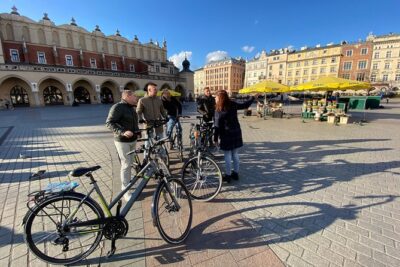
Complete Cracow Bike Tour (small group of maximum 15 people!)
Read our review →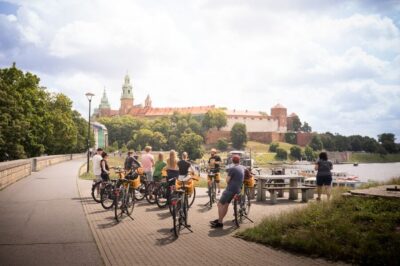
Bike Tour of Old Town, Jewish Quarter and the Ghetto
Read our review →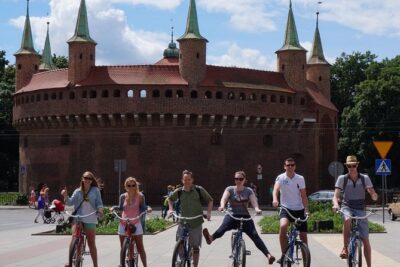
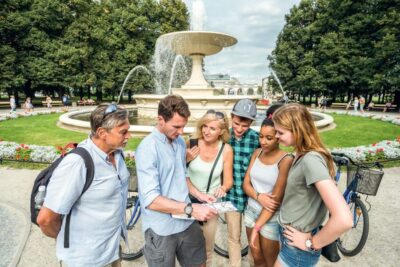
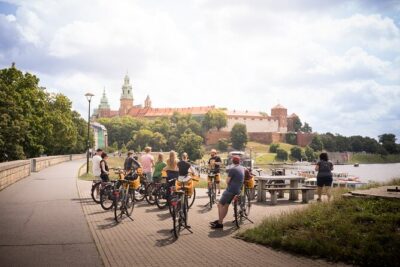
Full Bike Tour – the Old Town, Jewish Qtr & the Ghetto NEW BIKES
Read our review →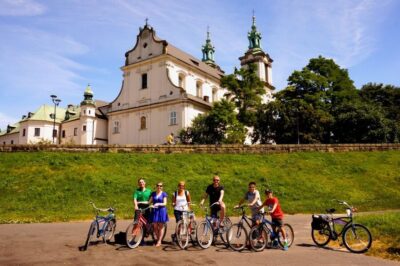
Bike Tour of the Old Town, Kazimierz, and the Ghetto
Read our review →
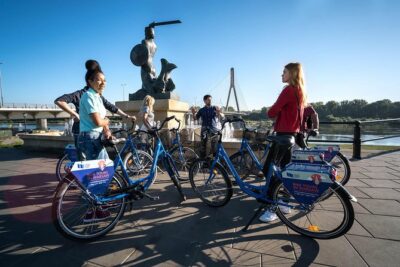
Half-Day Warsaw City Sightseeing Bike Tour for Small Group
Read our review →Where else this one turns up