
Reviewed · CYCLING TOURS
3-Hour Guided Cycling Tour of Warsaw
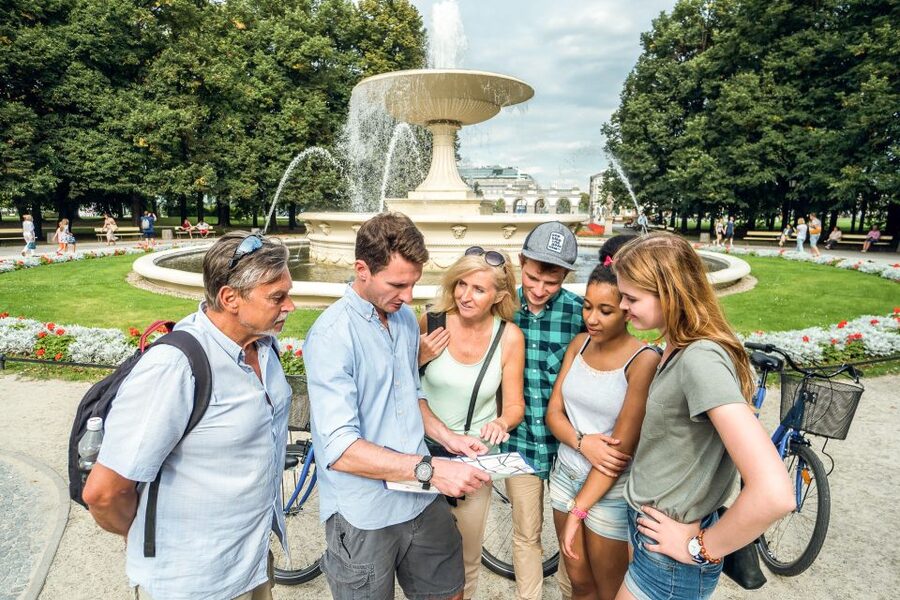
Warsaw is spread out, and that is exactly why this three-hour bike tour makes sense. In one relaxed ride, you move from the Warsaw Uprising Monument and Old Town to the Palace of Culture, the Vistula River, and several places that are awkward to reach on foot. Guides such as Marcin, Jakub, Maria, and Michal bring the city’s difficult past to life with clear explanations, photos, jokes, and plenty of local detail.
I like the way the tour covers both famous sights and less obvious corners, and I like the easy pace, which leaves room to look around rather than race from stop to stop. The tradeoff is that you only get a short introduction at most places, and cobblestones, pedestrians, traffic, and one or two hills can make the ride less smooth than a park cycle.
Key points to know before you book
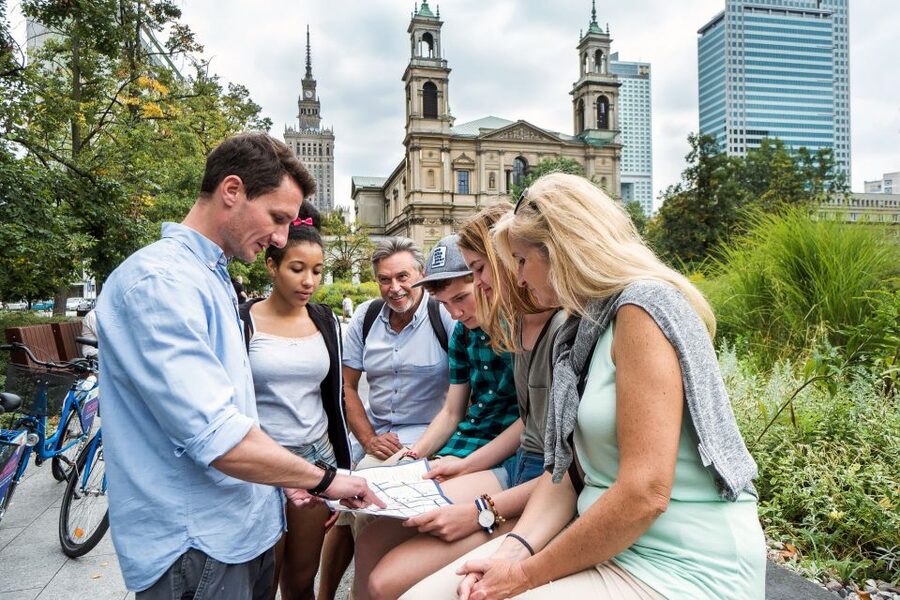
- About 8 miles at a gentle pace: You cover a large part of central Warsaw without turning the tour into a fitness test.
- A useful city overview: The route links Old Town, the Royal Route, central Warsaw, Powiśle, and the Vistula.
- History comes with the scenery: Expect context on the Warsaw Uprising, wartime destruction, Polish culture, politics, and famous figures.
- A 30-minute café stop: The break gives you time to rest and buy refreshments, which are not included.
- Comfortable city bikes: The bikes are described as easy to ride, though they do not appear to have suspension.
- Best for first-time visitors: You will leave with a practical sense of which sights deserve a longer visit.
Why a bicycle works so well in spread-out Warsaw
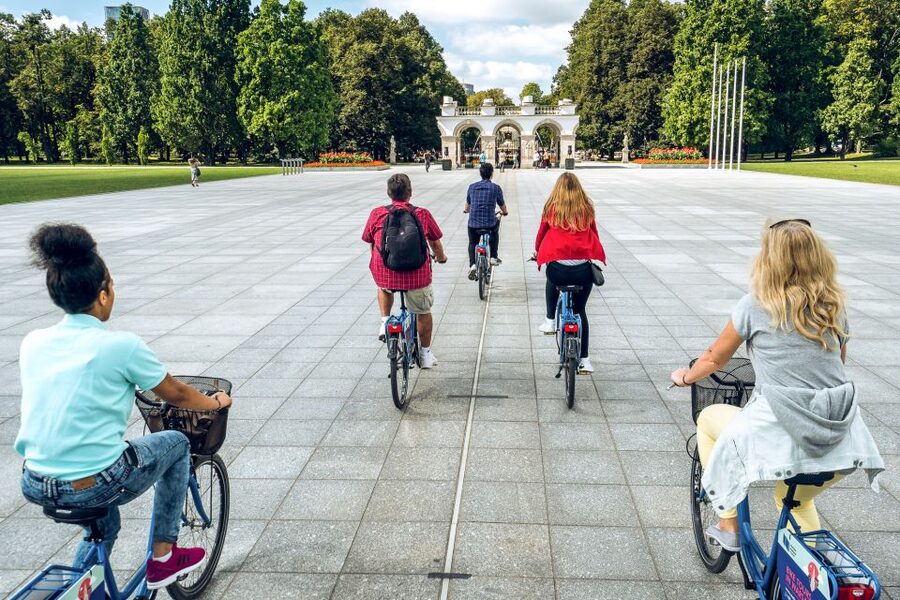
Warsaw rewards visitors who can cover ground. Old Town is compact, but the city’s major sights stretch well beyond it. The Palace of Culture and Science, Saxon Garden, Grzybowski Square, Powiśle, and the riverfront are all part of the central story, yet walking between them can eat up much of a day.
A bicycle fills the gap nicely. You get the close-up feel of walking, but you can move between districts in minutes. I especially like that this route does not treat Warsaw as only a pretty Old Town. It shows the rebuilt historic center, monumental postwar architecture, memorials, churches, parks, and the river.
The pace is described as easy and relaxed, with roughly 10 minutes of cycling between listed stops. That does not mean every leg takes exactly 10 minutes, but it gives you a sense of the format: ride, pause, hear the story, then move on. You are getting a broad first look, not extended time inside museums or monuments.
More Bike Tours in Warsaw:
- Half-Day Warsaw City Sightseeing Bike Tour for Small Group
★ 5.0 · 240 reviews - Warsaw Highlights by Bike with Breathtaking Sceneries
★ 5.0 · 28 reviews - Secrets of Warsaw 4-hour Bike Tour
★ 5.0 · 25 reviews
Starting near Old Town and the Warsaw Uprising Monument
The meeting point is Eat Polska at 16/18 Koźla Street, about 1 kilometer from Sigismund’s Column in Castle Square. This puts you close to Old Town but not directly in the busiest part of the square. The nearest metro station is Metro Ratusz Arsenał, about 1.2 kilometers away.
The first major stop is the Warsaw Uprising Monument. This is a strong opening because it introduces one of the central events in modern Polish history. Your guide can explain the 1944 uprising and place the monument within the wider story of wartime Warsaw.
Starting here also gives the tour a serious tone before moving into the colorful streets of the Old Town. Bring your attention, not just your camera. The value of this stop comes from the explanation around it.
Old Town, Castle Square, and the Royal Route
You then cycle through Old Town and stop at Castle Square. Warsaw’s Old Town looks centuries old, but much of it was rebuilt after World War II. That contrast is one of the city’s most important lessons: the historic appearance is real in style and detail, but the physical fabric was painstakingly recreated.
Castle Square is a natural place to pause. Sigismund’s Column and the Royal Castle frame one of Warsaw’s best-known views, and the square is a useful orientation point for the rest of your visit. You will have time to see the setting, though not to tour the castle interiors during this ride.
From here, the route follows the Royal Route. This historic line through the city connects major public buildings, churches, palaces, and monuments. You should expect a moving tour rather than a long architectural lecture at every address. That is useful when you want to understand how Warsaw fits together, but less useful if you hope to study each building in detail.
Presidential Palace, the Tomb of the Unknown Soldier, and Saxon Garden
The Presidential Palace adds a look at modern Polish public life. It is one of the formal buildings along the Royal Route, and your guide may connect it to Poland’s political past and present.
Next comes the Tomb of the Unknown Soldier, located beside Saxon Garden. The monument honors unidentified Polish soldiers and carries a quiet weight that can be easy to miss if you are simply passing through Warsaw’s center. Saxon Garden provides a change of mood, with open green space after the formal avenues and government buildings.
This stretch is one reason the bike format works. You are not confined to the Old Town tourist circuit, and you can see how monuments, gardens, official buildings, and ordinary city streets sit close together.
More three hour outings in Warsaw:
- Warsaw Old Town 1.5-Hour or Full 3-Hour Segway Tour
★ 4.9 · 209 reviews - Warsaw: 3-Hour Panoramic City Bus Tour with Pickup
★ 4.5 · 169 reviews - Warsaw: 3-Hour Guided City Highlights Tour by Segway
★ 4.9 · 102 reviews - Warsaw: Private 3-Hour Sightseeing Tour by Car with Pickup
★ 5.0 · 71 reviews
Grzybowski Square and the Palace of Culture and Science
Grzybowski Square brings you into another layer of Warsaw. The area connects to the city’s Jewish past, wartime destruction, and postwar rebuilding. The square itself is not a grand sightseeing stop in the same way as Castle Square, but that is part of its value. It helps you see central Warsaw as a lived-in place rather than a chain of postcard views.
The Palace of Culture and Science is one of the city’s most recognizable landmarks. Its huge scale and Soviet-era design make it impossible to ignore, and it remains a building that sparks strong reactions. The tour lets you get close enough to appreciate its size and setting. You will not be taking the elevator to an observation deck as part of this activity, so plan a separate visit if you want the high view.
This is also a good point to understand the value of the route. A taxi or public transport could get you here, but the bike lets you connect the Palace with the older parts of the city in one continuous story.
The café break gives the ride a sensible rhythm
A 30-minute stop at a local café comes around the midpoint. Refreshments are not included, so bring money for a drink or snack. The break matters more than it may sound. It gives you time to get off the saddle, ask your guide questions, and reset before the riverfront portion.
At $41 per person, the tour includes the bike and guide, but not a basket, poncho, or café purchases. A bike basket costs 10 PLN, and a rain poncho costs 10 PLN. If you need to carry a water bottle, camera, or small layer, decide in advance how you will manage it.
Holy Cross Church and Chopin’s Warsaw
After the break, the route returns to the Royal Route and Holy Cross Church. The church is closely associated with Frederic Chopin because his heart is kept there. That detail gives the stop a personal link to Warsaw’s most famous composer.
The tour also includes a connection to Chopin more broadly, helping you see how Polish culture appears in the city’s streets and monuments. The stop is brief, so treat it as an introduction. If Chopin is a main interest, note the location and return later for a quieter look.
Nearby, the Copernicus Monument honors Nicolaus Copernicus, the Polish astronomer who changed how people understood the universe. Together, the church and monument show two sides of the city’s identity: music and science, faith and inquiry, tradition and change.
Powiśle Mermaid and the Vistula Boulevards
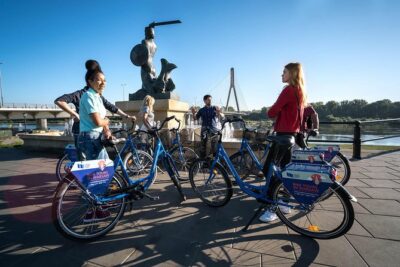
The Powiśle Mermaid Monument brings in one of Warsaw’s most beloved symbols. The Warsaw Mermaid appears throughout the city, and seeing one beside the river makes the legend feel tied to place rather than simply printed on souvenirs.
From there, you reach the Vistula Boulevards. This is one of the tour’s most pleasant shifts. After the formal center, memorials, and traffic, the river gives you more open views and a chance to see Warsaw from a different angle. The panoramic outlook is one of the better photo opportunities on the route.
Cycling beside the river also helps explain why Warsaw can feel like several cities at once. The center is dense with institutions and monuments, while the riverfront offers breathing room. The route does not promise a long leisurely riverside cruise, but it gives you enough time to understand the setting.
Royal Castle Gardens, fountains, and Maria Skłodowska Curie
The Warsaw Royal Castle Gardens provide another view toward the castle complex. Gardens are often where a city’s grand architecture becomes easier to appreciate, since you can step back from the walls and see the relationship between buildings, open space, and the river area.
Multimedia Fountain Park follows. The attraction is best known for its water and light shows at selected times, but this cycling tour should be understood as a stop in the area, not a guaranteed evening performance. The guide can place the park within the riverfront part of the city, though you should check separately if you want to attend a show.
The final listed stop is the Maria Skłodowska Curie Monument. Curie, born in Warsaw, is one of the city’s major scientific figures. Ending with her monument gives the route a fitting final note: the tour has moved through war, politics, art, religion, science, and the river that ties the city together.
What the ride feels like on the street
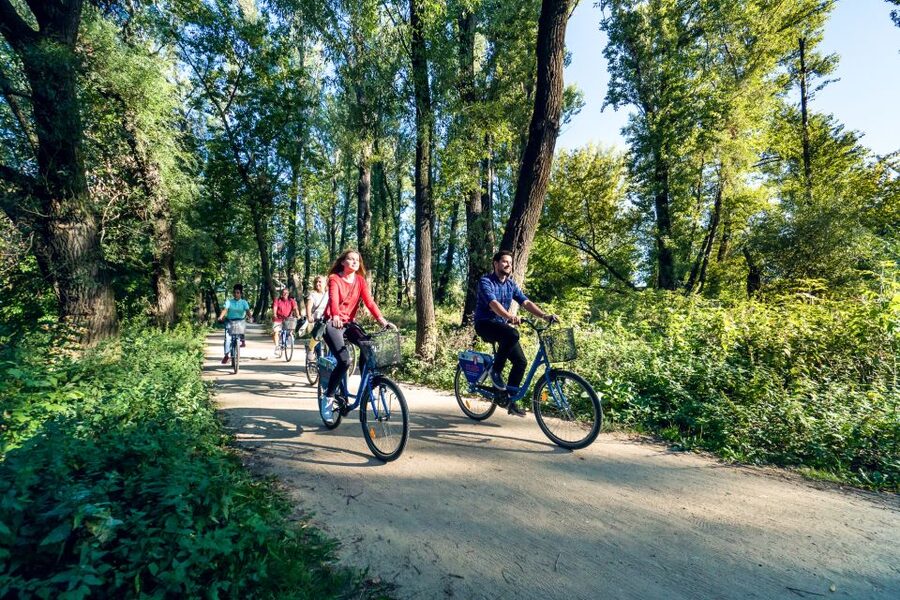
The bikes are comfortable city bikes, and many riders find them easy to handle. The route uses footpaths and cycle paths in places, but you should also be ready for European streets, cars, pedestrians, cobblestones, and crowded areas.
Cobblestones are the main practical caution. One rider found them manageable but unfamiliar, while another pointed out a final cobblestone hill. A few sections are gently hilly, though the overall ride is not difficult for people who already cycle. One useful suggestion from the experience is to avoid expecting a mountain bike: the bikes do not have shock absorbers, and an electric-bike option is not listed.
You must be able to ride a bicycle and understand Polish road rules for cyclists. Alcohol before or during the tour is forbidden. A guide may refuse participation if someone appears drunk, unfit, or unreliable, and that refusal does not qualify for a refund.
The activity is not suitable for anyone under 150 centimeters, or 4 feet 9 inches. There are no child seats or trailers, and you should contact the provider before bringing children. You may bring your own bicycle instead of using the provided rental.
How much value do you get for $41?
The price is fair if you want a broad introduction to Warsaw in a single morning or afternoon. The bike rental alone saves you the trouble of arranging transport, while the guide links the sights into a story. You also reach places beyond the Old Town that would otherwise require walking, a taxi, or public transport.
I would not choose this tour if your main goal is detailed time inside museums, churches, or the Royal Castle. You are paying for movement, orientation, and commentary across many parts of the city. The 30-minute café break is useful, but refreshments cost extra.
The strongest value comes at the beginning of a short stay. You can use the route to mark places for later visits. Several guides, including Marcin, Jakub, Maria, and Michal, have been singled out for clear English, humor, patience, and strong knowledge of Warsaw’s past. The exact guide is not guaranteed, but the repeated strength of the guiding is an important part of what you are buying.
Free cancellation is available up to 24 hours before the start, and you can reserve now and pay later. Check the available start times when booking, since the information provided does not specify one fixed departure.
Who should take this Warsaw bike tour?
I would recommend it to first-time visitors, anyone staying only a couple of days, and people who want history delivered in manageable pieces. It also suits families with older children who can ride independently, provided they meet the height requirement and the provider confirms they can join.
It is a good match for casual cyclists, not for people seeking a hard workout. You should be comfortable riding around pedestrians and city traffic, even though parts of the route use safer cycle paths and footpaths.
If rain threatens, bring suitable clothing. A poncho is available for 10 PLN, but the tour still runs in wet conditions unless the provider says otherwise. In colder months, dress warmly. One late-autumn rider specifically advised doing so, and winter cycling in Warsaw will feel very different from a mild summer ride.
Should you book it?
Book this tour if you want to get your bearings fast and see how Warsaw’s major districts connect. The route covers a lot without demanding athletic fitness, and the guides add the historical context that turns a list of monuments into a city story.
Skip it if you dislike cycling on cobblestones or need long, quiet visits at each sight. For most first visits, though, $41 buys a useful overview, a pleasant ride, and a practical list of places to explore more deeply afterward.
FAQ
How long is the Warsaw cycling tour?
The tour lasts three hours, including a planned 30-minute break at a local café.
How far do you cycle?
The route covers about 8 miles at an easy, relaxed pace.
What language is the tour in?
The live guided tour is conducted in English.
What is included in the price?
Bike rental and a guide are included.
Are refreshments included?
No. Refreshments at the café and along the route are not included.
Where does the tour meet?
You meet at Eat Polska, 16/18 Koźla Street. It is about 1 kilometer from Sigismund’s Column in Old Town’s Royal Castle Square. Metro Ratusz Arsenał is about 1.2 kilometers away.
Can I bring my own bicycle?
Yes. You can bring your own bike instead of using the provided rental.
Is the tour suitable for children?
Participants must be at least 150 centimeters tall. There are no child seats or trailers, and you should contact the activity provider before bringing children.
Recently added in Warsaw
- Warsaw Wolf’s Lair with St. Lipka and Mamerki Private Guided★ 4.2 · 3 reviews
- Taste of Poland, food tour and guided walk with 12 tasting★ 5.0 · 3 reviews
- Discover Warsaw’s most Photogenic Spots with a Local★ 5.0 · 3 reviews
- Lodz Small Group Tour from Warsaw with Lunch★ 4.0 · 3 reviews
- Jewish heritage in Warsaw★ 4.5 · 3 reviews
- Warsaw Outdoor Paintball with Transfers (all year round)★ 5.0 · 3 reviews
- Electric Scooter Tour: Full Tour – 3-Hours of Magic!★ 5.0 · 3 reviews
- Skip-the-Line Polin Museum Warsaw Jewish History Tour★ 5.0 · 3 reviews
Cycling Tours, compared.
Complete Cracow Bike Tour (small group of maximum 15 people!)
Read our review →
Bike Tour of Old Town, Jewish Quarter and the Ghetto
Read our review →
Full Bike Tour – the Old Town, Jewish Qtr & the Ghetto NEW BIKES
Read our review →
Bike Tour of the Old Town, Kazimierz, and the Ghetto
Read our review →
Half-Day Warsaw City Sightseeing Bike Tour for Small Group
Read our review →
Where else this one turns up