
Reviewed · MUSEUMS
Gdansk Private Communism Tour with Solidarity Center Museum
Gdansk’s shipyards are where Poland’s fight against communist rule became a force felt across Eastern Europe. This private tour connects the monuments, work sites, and documents of that struggle, then brings the story into focus at the European Solidarity Centre. I like the private format and the chance to ask direct questions, especially when your guide can explain the story in your chosen language. I also like that the longer option includes Sala BHP, the room where the 1980 Gdańsk Agreement was signed.
The main point to consider is time. The shorter tour gives you a useful introduction, but the four-hour version makes more sense if you want to understand the movement rather than simply see its landmarks. One reported problem was a late guide and a four-hour visit that ended after about three hours, so confirm the starting arrangements and allow enough time for the museum.
Key points to know before booking
- The tour follows the birthplace of Solidarity: You walk from the Monument to the Fallen Shipyard Workers of 1970 through the old shipyard area.
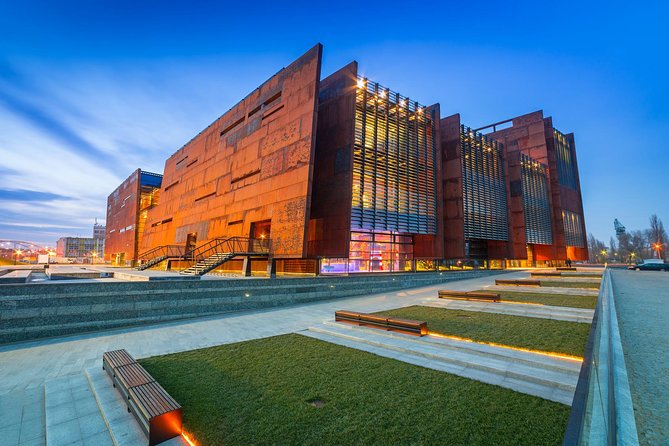
- The European Solidarity Centre is the main payoff: Its displays cover the strikes, the 21 Postulates, the 1989 Round Table talks, and Poland’s first pluralistic election since 1947.
- The four-hour option adds important places: You enter Sala BHP and Gdansk Shipyard, with a traditional Polish vodka tasting included.
- You get a private licensed guide: The tour is offered in nine European languages, and your group has the guide to itself.
- Hotel pickup has a tight boundary: Pickup is available only from Gdansk Old Town addresses within about 1.5 kilometers of the meeting point.
- Weekend planning matters: Gdansk Shipyard is closed on Saturdays and Sundays, so check the available route before choosing your date.
Why Gdansk’s shipyards matter
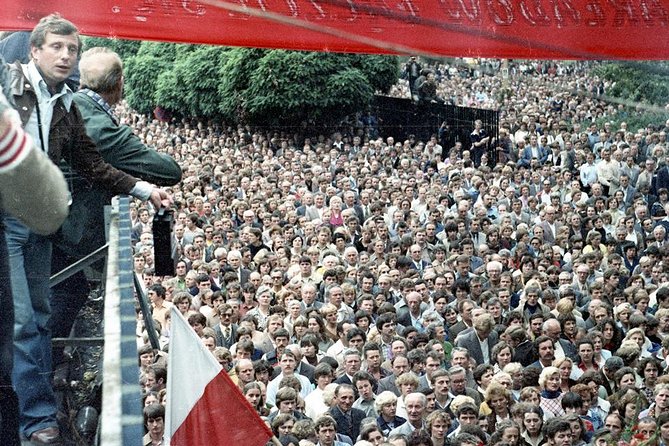
The story here begins in the grim years after World War II, when Poland fell under a communist government backed by the Soviet Union. The country had factories, shipyards, and workers, but political power rested with the state. Independent unions and open opposition were not part of normal life.
In Gdansk, the shipyard became a place where workers challenged that system in public. The Solidarity movement began with labor demands, yet it soon became a nationwide call for civil rights, independent organization, and political change. Its influence reached far beyond the shipyard gates and helped weaken communist rule across Eastern Europe.
You do not need a detailed background in Polish politics to follow this tour. A good guide can link the names, dates, and locations in a way that makes the events easier to grasp. The local connection matters here. One especially praised guide, Aneta, was described as warm and passionate about sharing Poland’s story. Other feedback points to guides who could explain events through personal accounts and answer many questions.
That is a major advantage of booking privately. If you already know about Lech Wałęsa, you can ask about his role in the strikes and later political career. If the subject is new to you, you can pause over basic questions without holding up a larger group.
More Museum Tours in Gdansk:
- Gdansk: Private Communism Tour with Solidarity Center Museum
★ 5.0 · 28 reviews - Museum of the Second World War Gdansk Private Tour & Tickets
★ 5.0 · 24 reviews - Gdansk Private WWII Tour with Museum of the Second World War
★ 4.9 · 22 reviews
Beginning at the 1970 workers’ monument
The tour starts beneath the Monument to the Fallen Shipyard Workers of 1970 at Plac Solidarności. The three tall steel crosses are among Gdansk’s most important modern landmarks. They honor workers killed during protests against food price increases and government policy in December 1970.
The location gives the opening of the tour real weight. You are not starting with a general city walk or a detached museum display. You begin at a memorial linked to the workers whose deaths helped shape later opposition.
Your guide spends about ten minutes here, setting out the basic political and social background. The monument is free to visit, and the open square makes it an easy meeting point. If your hotel is in the Old Town and within the stated pickup area, the guide can meet you at your accommodation instead.
Bring a moment of patience at this first stop. The monument is visually simple, but its meaning depends on the explanation. The crosses, anchors, and inscriptions refer to faith, the sea, shipbuilding, and sacrifice. You will get more from the site if you listen to the dates and names rather than treating it as a quick photo stop.
Anna Walentynowicz, Lech Wałęsa, and the people behind Solidarity
The next stop is the monument to Anna Walentynowicz, one of the key figures in the Gdansk strikes. Her dismissal from the shipyard in 1980 helped trigger the action that brought workers together. Lech Wałęsa became the movement’s best-known leader, but the tour makes clear that Solidarity was not the work of one man alone.
That balance is useful. Political history often shrinks into a few famous names, while ordinary workers and organizers disappear. Here, your guide places Walentynowicz and other figures beside Wałęsa, helping you understand how a workplace dispute became a mass movement.
Expect roughly twenty minutes around this part of the route. The pace should leave room for questions, though the shorter option may feel brisk if your group wants a long discussion at every stop. A private guide gives you the best chance of shaping the conversation to your interests.
The political context is not always tidy. Strikes, negotiations, repression, and compromise all played a role. A good explanation should avoid turning the period into a simple tale of heroes and villains. The strongest feedback about the guiding focused on clear, nuanced explanations and the ability to connect museum material with lived experience.
Sala BHP and the agreement signed in 1980
The four-hour option includes Sala BHP, a particularly important stop for anyone who wants more than a quick look at shipyard monuments. This was the historic site where the Gdańsk Agreement was signed on August 31, 1980.
The agreement followed the shipyard strikes and recognized several worker demands. Its importance lies in what it represented: a communist government accepting negotiations with an independent labor movement. The agreement did not end communist rule at once, but it gave Solidarity legal recognition and created a new source of public power.
You also hear more about the Polish People’s Republic, commonly called PRL. The term covers the communist-era state and the daily political conditions that shaped work, travel, speech, and public life. The tour uses the shipyard setting to make that period concrete.
Sala BHP is included in the four-hour version, not the shorter one. That difference is easy to overlook when comparing options. If you care about the mechanics of the strikes and negotiations, I would choose the longer route. The extra time is not just more walking. It adds the room connected to the agreement itself.
A few more Gdansk half days to consider
- Gdansk: City Cruise on Historical Polish Boat
★ 4.8 · 2,913 reviews - Gdańsk: Sunset Cruise on a Historic Polish Boat
★ 4.9 · 977 reviews - Gdańsk City Sights & History Guided Walking Tour in English
★ 4.8 · 876 reviews - Gdansk: Firearm Shooting Experience with Instructor
★ 4.8 · 866 reviews
Walking through Stocznia Gdańska
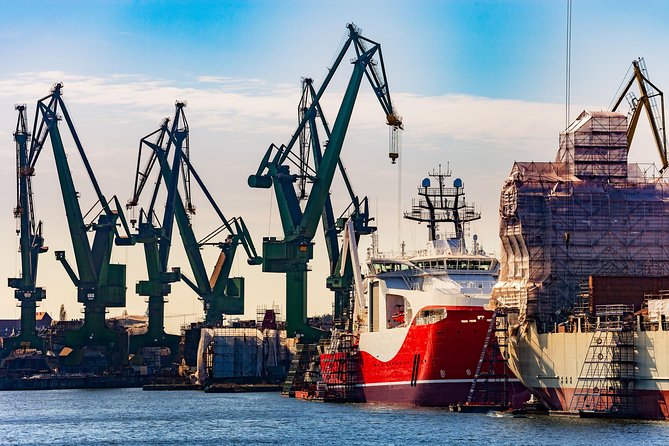
The route continues into the Gdansk Shipyard, or Stocznia Gdańska. This is where about 17,000 shipbuilders took part in civil resistance against the communist regime in 1980. The shipyard is not simply a backdrop. It is the workplace that gave the movement its organization, numbers, and public force.
You can expect about an hour here on the longer tour. The guide explains how the industrial setting connects to the strikes and to the wider Solidarity campaign. Because this is a private walk, you can ask about the buildings and spaces that catch your attention, though the exact access and route may depend on the day.
There is also a shot of traditional Polish vodka on the four-hour option. It is a small, informal touch rather than a reason to book the tour by itself. In this setting, it reflects the social tone of the old PRL period and gives the walking portion a brief pause.
The practical issue is opening days. Gdansk Shipyard is closed on Saturdays and Sundays. Check your date carefully, especially if you are visiting for a short weekend and want the full route. If access changes, the itinerary may be adjusted.
The European Solidarity Centre in one focused hour
The European Solidarity Centre is the tour’s most substantial indoor stop. The modern museum takes you through the rise of Solidarity and the political changes that followed, with displays arranged around the movement’s key stages.
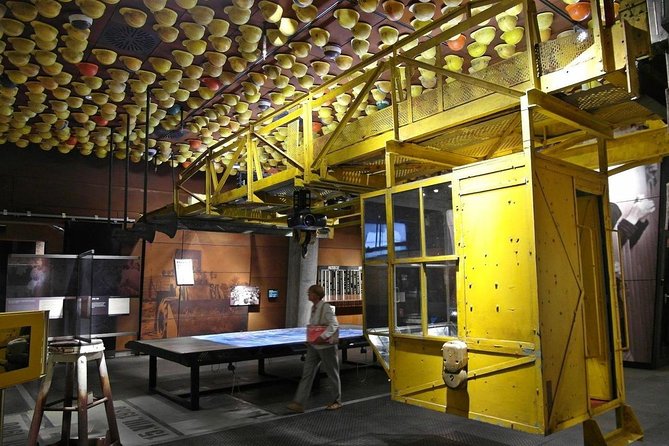
The original Tables of the 21 Postulates are among the most important objects on display. These were the written demands made by the strikers at the Lenin Shipyard, now Gdansk Shipyard, in 1980. Seeing the actual document helps explain how practical workplace complaints grew into a broader program for public freedoms.
The museum also covers the strikes, the negotiations, the 1989 Round Table talks, and Poland’s first pluralistic election since 1947. These events show the movement as a long process, not one dramatic day. You can follow the shift from labor protest to political reform and then to the wider collapse of communist power in the region.
The tour provides skip-the-line admission for the two-hour and four-hour options. That can save useful time, particularly if the museum is busy. Still, skip-the-line access does not mean you should rush. One criticism of the experience was that the museum portion felt too short and that the full visit ended early. I would protect the museum hour in your schedule and tell the guide if you want time to read the displays.
A guide can be especially helpful here. Museum exhibits often contain more documents and dates than you can absorb alone. Your guide can point out the items that best answer your questions and explain how they fit together. At the same time, you should not expect a private tour to replace hours of independent museum time. If you like reading every panel, add extra time after the guided visit if possible.
Choosing between two and four hours
The shorter tour works best if you have limited time or want an introduction before visiting the museum on your own. You still get a private guide, the shipyard setting, and the European Solidarity Centre with skip-the-line entry.
The four-hour version is the better choice for most history-minded visitors. It adds Sala BHP and more time at Gdansk Shipyard, along with the Polish vodka tasting. Those additions connect the political story to the places where workers met, negotiated, and organized.
The published duration is about two to four hours, depending on the option. Since one experience reportedly finished after three hours despite being booked as a four-hour tour, I would treat the timing as an estimate rather than a guarantee. Ask at the start how much time is planned for the museum and shipyard, particularly if you have a train, cruise departure, or restaurant reservation afterward.
The private format also changes the value calculation. At $139.10 per person, this is not a cheap museum ticket. You are paying for a licensed guide, private attention, hotel pickup in the Old Town area, and admission to the European Solidarity Centre. For a couple or small family that wants historical context and the freedom to ask questions, the price can be reasonable. For a solo visitor on a tight budget, a self-guided museum visit and public transport will cost less.
Group discounts are available, so the per-person value may improve as your party grows. Since only your group participates, you are not sharing the guide’s attention with strangers. That is most useful when your group has mixed knowledge of Polish history or prefers a slower, question-led pace.
Language, pickup, and meeting details
The tour is offered in nine European languages. Select your language when booking so the guide can explain the political and personal sides of the story clearly. The guide is described as a history expert with an official Gdansk license.
Pickup is available only from accommodations in Gdansk Old Town, within about 1.5 kilometers of the meeting point. If you provide your address, the guide can meet you there. If not, meet under the Monument to the Fallen Shipyard Workers of 1970 at Plac Solidarności.
The tour ends at Stocznia Gdańska on Doki 1. That matters for your next move. You do not finish back at your hotel, so plan your onward route from the shipyard area. The meeting point is near public transportation, and most people can take part, but the experience is a walking tour across an active historical district. Wear practical shoes and check your email the day before for any updated instructions.
The activity is private, which gives your group control over questions and pace. It does not mean every site can be treated as a private room or that the schedule cannot change. Shipyard access and opening hours still matter.
Who will get the most from this tour
I would recommend this experience to you if you want to understand why Gdansk matters in the story of the end of communism. It suits first-time visitors who need the basic timeline, as well as history fans who want to connect documents with actual places.
It is also a good choice for families or friends who learn better through conversation than through a museum audio guide. A private licensed guide can adjust the explanation to your group and answer questions as they arise. Aneta’s warm, personal style, noted in feedback, is the kind of guiding that can make a serious subject feel approachable.
You may want a different plan if you prefer to spend several unhurried hours reading museum panels. The tour gives you about an hour inside the European Solidarity Centre on the longer option, and some people will find that too brief. You may also be disappointed if you expect a fully fixed four-hour program, since the route can finish sooner.
Free cancellation is available until 24 hours before the start time. Changes or cancellations within 24 hours are not refunded, so keep that cutoff in mind when arranging a short Gdansk visit.
Should you book the Gdansk Communism Tour?
Book it if you want the shipyards explained by a private local guide rather than visited as isolated monuments. The strongest parts are the connection between the 1970 memorial, Anna Walentynowicz and Lech Wałęsa, Sala BHP, and the European Solidarity Centre. The four-hour option gives you the fullest picture and the best value for the higher price.
Choose the two-hour option only when your schedule is tight or you mainly want an introduction. For the most complete experience, book a weekday, confirm Old Town pickup, and protect enough time for the museum. This tour is worth choosing for its human and political context, but it rewards readers who arrive ready to ask questions and not simply collect photos.
FAQ
Where does the tour start?
The meeting point is under the Monument to the Fallen Shipyard Workers of 1970 at Plac Solidarności in Gdansk.
Is hotel pickup available?
Pickup is available from accommodations in Gdansk Old Town located within about 1.5 kilometers of the meeting point. You need to provide your accommodation address when booking.
Where does the tour finish?
The tour ends at Stocznia Gdańska, Doki 1, in the Gdansk Shipyard area.
How long does the experience last?
The tour lasts approximately two to four hours, depending on the option you select.
Is the tour private?
Yes. Only your group participates in the private activity.
What language can the guide speak?
The tour is available in nine different European languages. You choose the language when booking.
Is entry to the European Solidarity Centre included?
Yes. Skip-the-line tickets to the European Solidarity Centre are included in the two-hour and four-hour options.
Is Sala BHP included?
Free entry to Sala BHP is included in the four-hour option.
Is the Polish vodka tasting included?
A shot of traditional Polish vodka is included in the four-hour option.
Can I take the tour on a weekend?
Gdansk Shipyard is closed on Saturdays and Sundays. Check the available schedule and route before booking a weekend date.
Recently added in Gdansk
- Szymbark: Kashubian Switzerland 5-Hour Private Tour★ 3.7 · 3 reviews
- Segway Tour Gdańsk: Shipyard Tour – 1,5-Hour of Magic!★ 5.0 · 3 reviews
- Stutthof Concentration Camp and Museum of WWII: Private Tour★ 4.7 · 3 reviews
- Sopot Sunset Cruise with Welcome Drink★ 3.5 · 3 reviews
- Gdansk: Basic Bike Tour★ 4.3 · 3 reviews
- Gdansk: Bubble Football with Hotel Transfers★ 5.0 · 3 reviews
- Artus Court and Gdansk Old Town Private Tour with Tickets★ 4.7 · 3 reviews
- Gdansk: Oliwa Zoo with Tickets and Roundtrip Transportation★ 5.0 · 3 reviews
Museums, compared.

Auschwitz-Birkenau Museum and Memorial Guided Tour from Krakow
Read our review →POLIN Museum of the History of Polish Jews Ticket
Read our review →


Krakow Schindler’s Factory Museum Guided Tour in English
Read our review →
Auschwitz Birkenau Museum Guided Tour with Pickup
Read our review →
Where else this one turns up