
Reviewed · MUSEUMS
Museum of the Second World War Gdansk Private Tour & Tickets
Gdansk’s story comes into sharp focus at the Museum of the Second World War, where Poland’s wartime experience is placed alongside the wider conflict. A private guide then connects the exhibits to streets, memorials, shipyards, and the city’s Jewish community.
I like the one-guide attention, especially for a museum this large and serious. I also like the timed museum admission, the chance to avoid the ticket-office queue, and the longer route’s link between Nazi occupation and Poland’s later struggle against communism.
The main consideration is pace. The 4-hour option includes a moderate walk over uneven surfaces and steps, while the 2-hour visit leaves out the extended postwar section. The museum ticket skips the ticket line, but not the entrance line.
Key points to know before booking
- Museum focus: Spend about two hours with a licensed private guide in one of Gdansk’s major historical museums.
- Two tour lengths: Pick the 2-hour version for the museum and nearby wartime sites, or 4 hours for the wider postwar and Solidarity route.
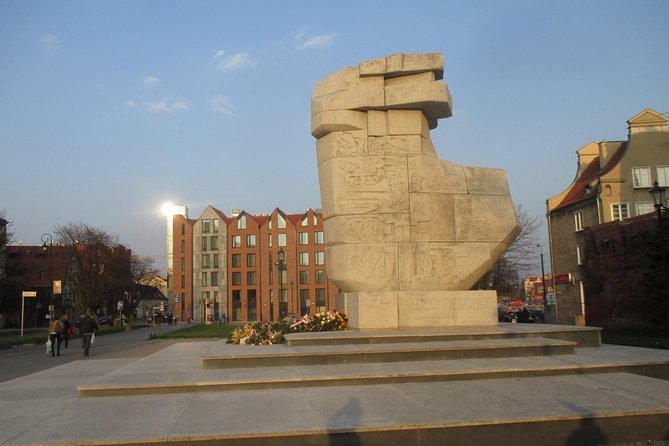
- Important meeting point: Meet at the Witold Pilecki Monument in front of the museum, at plac Władysława Bartoszewskiego 1.
- Strong guide service: Małgorzata is specifically praised for her clear explanations, punctuality, and willingness to answer questions.
- Private format: Only your group takes part, so you can ask questions and request a pace that suits you.
- Walking demands: The extended version includes outdoor walking, steps, and uneven ground. Comfortable shoes are essential.
Why this Gdansk history tour works
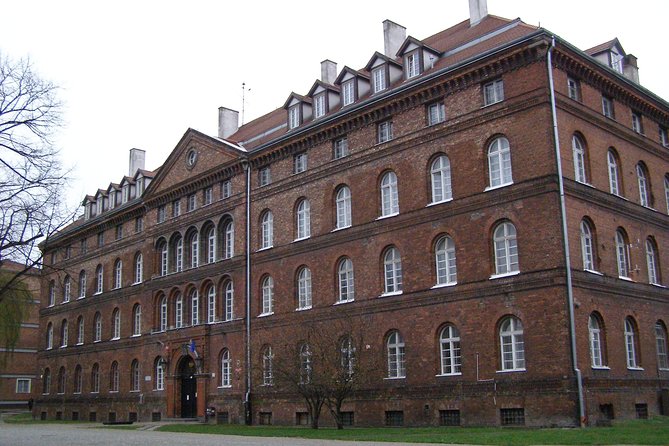
Gdansk can be confusing if you try to connect its wartime landmarks on your own. The museum sits away from the most familiar Old Town sights, and the story stretches from the opening battles of September 1939 through Nazi occupation, the destruction of Jewish life, postwar Soviet control, and the Solidarity movement.
This tour gives you a guide to make those links. You begin at the museum, then move outward into the city. That structure matters. Instead of treating World War II as a sealed museum topic, the tour shows how the conflict shaped Gdansk’s people, buildings, political life, and later resistance.
I especially like the private setup for this subject. A large public tour can leave you trying to hear the guide while moving through crowded galleries. Here, you can pause, ask for a clearer explanation, or spend more time on a topic that matters to you. The guide’s role is not just to point out objects. It is to help you understand why they matter.
The tour is offered in English, with a 5-star licensed guide. The available feedback gives Małgorzata particular praise for being educated, professional, punctual, and generous with her time. Another assessment highlights clear explanations and a strong grasp of the museum displays. Those details are useful because this is not a light sightseeing stroll. You want someone who can explain difficult material without making it hard to follow.
More Museum Tours in Gdansk:
- Gdansk: Private Communism Tour with Solidarity Center Museum
★ 5.0 · 28 reviews - Gdansk Private WWII Tour with Museum of the Second World War
★ 4.9 · 22 reviews - Gdansk Private Communism Tour with Solidarity Center Museum
★ 5.0 · 14 reviews
Meeting at the Pilecki Monument
The tour begins at the Witold Pilecki Monument in front of the Museum of the Second World War. Allow time to find plac Władysława Bartoszewskiego 1, especially if you are coming from Gdansk’s central tourist streets.
The first meeting portion is listed as about 10 minutes and has no separate admission cost. Your guide should confirm the group, check the timed entry, and prepare you for the museum visit.
If you stay in Gdansk Old Town, pickup may be available for the extended option. The stated pickup area is limited, with accommodation within about 1.5 kilometers of the meeting point eligible. Pickup is not included for hotels outside the Old Town area, so check this before assuming a vehicle will collect you.
Public transport is nearby, and the activity ends back at the meeting point. That makes the tour easy to fit into a day of sightseeing, although you should not plan an appointment immediately afterward if you choose the 4-hour version. Outdoor walking and museum timing can take the full allotted period.
Two hours inside the Museum of the Second World War
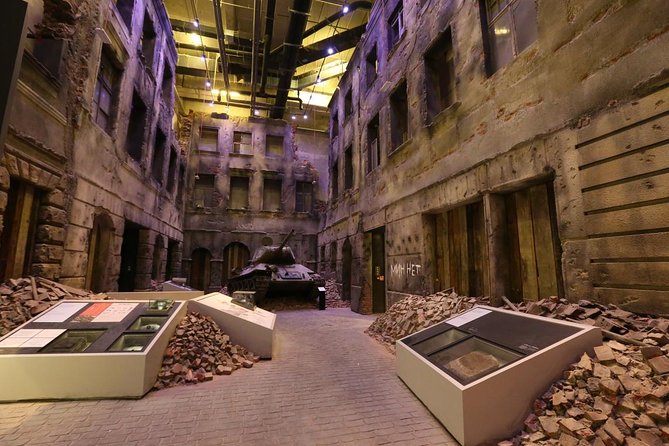
The central portion lasts about two hours. You enter the permanent exhibition with a pre-booked admission time and a licensed private guide.
The museum covers the global impact of World War II, while giving special weight to Poland’s tragic and courageous experience. You can expect artifacts, documents, photographs, and interactive displays. The subject matter includes the outbreak of the war, occupation, persecution, civilian suffering, military action, resistance, and the conflict’s aftermath.
This is a serious museum, not a quick stop for a few dramatic photographs. The displays ask you to consider how ordinary people experienced war, not just how armies moved across maps. That makes a guide especially useful. A private explanation can help you place individual objects and personal stories within the larger course of events.
The museum also helps explain Gdansk’s special position. The city was one of the key places where the war began, and its later history cannot be separated from German occupation, the destruction of Jewish communities, population changes, and Soviet influence after 1945.
Your guide can also address the city’s Jewish history, one of the listed themes of the tour. That is important because Gdansk’s wartime story is not only about military events. It is also about communities targeted and destroyed, families caught between political powers, and the long consequences of occupation.
The admission arrangement needs a little care. The ticket lets you bypass the line at the ticket office, but it does not guarantee instant passage through the museum entrance. Your ticket is valid for a specific date and time, so arrive promptly. A late arrival could create a problem, particularly on a busy day.
The ticket covers the permanent exhibition. If you are hoping to see a temporary display, ask the operator before booking rather than assuming it is included.
The Polish Post Office and the first days of war
After the museum, the route continues to the Defenders of the Polish Post Office memorial. This stop takes about 50 minutes as part of the walking section and has no separate admission charge.
The site honors the Polish postal workers who fought in one of the first battles of World War II. That detail gives the war a human scale. You are not looking only at generals and national borders. You are considering workers who became part of the first armed resistance when the conflict reached Gdansk.
A guide adds value here by connecting the memorial to the museum material you have just seen. The exhibits explain the broad forces and suffering of the war. The outdoor stop brings the story back to a particular building, a particular group, and a particular moment.
This is also where the tour’s city-walking element becomes useful. You are not simply transported between attractions. You follow a sequence of places linked to Gdansk’s wartime and political past.
The route includes the Church of St. James, where the guide discusses resistance against Nazi occupation and the continuing fight for freedom. The supplied details do not promise entry into every building, so treat this as a sightseeing and explanation stop unless your guide confirms otherwise.
A few more Gdansk half days to consider
- Gdansk: City Cruise on Historical Polish Boat
★ 4.8 · 2,913 reviews - Gdańsk: Sunset Cruise on a Historic Polish Boat
★ 4.9 · 977 reviews - Gdańsk City Sights & History Guided Walking Tour in English
★ 4.8 · 876 reviews - Gdansk: Firearm Shooting Experience with Instructor
★ 4.8 · 866 reviews
From Nazi occupation to communist rule
One of the best reasons to choose the longer option is that it does not stop in 1945. Poland’s political struggle continued after the war, and Gdansk became central to the fight against communist rule.
The route takes you to the Monument to the Fallen Shipyard Workers. This memorial recalls workers killed during protests and gives you a way to understand the pressure that later produced the Solidarity movement. The tour presents the site as part of a longer story of resistance, first against Nazi occupation and later against communist control.
That connection is valuable. A short World War II tour can leave you with the impression that Poland’s story ended when the fighting stopped. Here, the guide shows that liberation from one occupying power did not mean full political freedom for Poland.
The 4-hour version adds about an hour of extended walking and includes more postwar Communist history. If modern European politics interests you, that extra time is likely the better use of your afternoon. If your main goal is the museum, the war itself, and the nearby memorials, the 2-hour version may be enough.
European Solidarity Centre and BHP Hall
The longer tour continues to the European Solidarity Centre, a major site dedicated to Poland’s route toward independence. The centre is connected to the shipyard and to the Solidarity movement, which grew from workers’ demands into a national political force.
The visit also includes the historic BHP Hall, where the August Agreements were signed. That location gives the postwar story a clear physical setting. You are seeing where an important political agreement took place, rather than hearing about it only as an abstract event.
The route includes the Obrońca mural, described as a tribute to those who defended Poland. You will also see a preserved World War II air raid shelter. These details broaden the experience beyond the main museum. One stop deals with international war, another with local defense, another with air raids, and later sites with workers’ resistance and national independence.
The exact number of attractions depends on the option you select. That matters when comparing the 2-hour and 4-hour bookings. The shorter option does not include the extended walking tour with postwar Communist history, while the longer option does.
The Imperial Shipyard finish
The tour ends at the Imperial Shipyard, where the industrial setting adds another layer to Gdansk’s story. The shipyard connects wartime production, postwar labor, and the later struggle for political change.
This final stop helps tie the route together. The museum explains the war’s global and national impact. The postal workers and church connect you with resistance. The shipyard and worker memorials show how the fight for freedom continued under a different political system.
The tour returns to the meeting point, so you will need to walk back or arrange your next transport from there. Since the route includes outdoor sites, check the weather and wear shoes that can handle uneven surfaces. The tour operates in rain or shine, and the guide can adjust the walking pace for the group.
Is $153.49 per person good value?
At $153.49 per person, this is not a bargain-priced museum visit. It is a private, guide-led experience, and the price should be judged against what that format gives you.
You are paying for a licensed private guide, skip-the-line ticket-office access, a timed museum admission, and the chance to ask questions throughout the visit. The 4-hour option adds a substantial outdoor route covering postwar history, Solidarity sites, the BHP Hall, the mural, the air raid shelter, and the Imperial Shipyard.
For one person or a couple, the cost may feel high compared with entering the museum independently. The value improves for a small group, since this is a private activity and group discounts may be available. A family or group of friends can share the guide’s attention without being placed with strangers.
I would also compare the price with your interests. If you only want to see the museum’s galleries, a self-guided visit may cost less. If you want the museum interpreted and the city’s wartime and postwar sites linked into one route, the private format has a clearer purpose.
The strongest value comes from choosing the right duration. Book the 2-hour option if you have limited time or want to avoid a long walk. Choose 4 hours if you want Gdansk’s WWII story connected to the communist period and Solidarity. Do not pay for the extended version if you already know that you will be tired after two hours indoors.
Who should book this experience?
I would recommend this tour to anyone with a serious interest in World War II, Poland’s political history, Jewish history in Gdansk, or the Solidarity movement. The subject is difficult, but the route gives you a clear way to understand it.
It also suits first-time visitors who want help finding significant places without spending time planning connections between them. The private format is useful if your group has many questions or if you prefer a slower explanation rather than a fixed public-tour script.
Families with older children and teenagers may also find the private format helpful, since the guide can explain the material at an appropriate level. The tour is not described as child-focused, so parents should consider how their children respond to serious wartime subjects.
You should think twice if you dislike museums, have limited walking ability, or want a relaxed sightseeing outing with little emotional weight. The 4-hour option is moderately demanding, with steps and uneven surfaces. Accessibility requests may be accommodated when possible, but you need to contact Rosotravel Tours Gdansk ahead of time.
For the best experience, arrive on time, wear comfortable shoes, dress for the weather, and read the operator’s message the day before. Special requests should also be sent in advance.
Should you book the Gdansk WWII private tour?
Book it if you want more than a museum ticket. The strongest part of this experience is the connection between the permanent exhibition and real Gdansk sites, from the Polish Post Office memorial to the shipyards and the Monument to the Fallen Shipyard Workers.
Choose the 2-hour version for a focused museum visit with nearby wartime context. Choose 4 hours if you want the fuller story, including postwar communism, the European Solidarity Centre, BHP Hall, the air raid shelter, and the Imperial Shipyard.
The price is easiest to justify for a small group that will use the guide’s attention and ask plenty of questions. If that sounds like your kind of sightseeing, this is a thoughtful and well-organized way to understand why Gdansk matters in both World War II and modern Polish history.
FAQ
How long does the Museum of the Second World War private tour last?
You can choose an option lasting about 2 hours or an extended option lasting about 4 hours. The longer version includes the additional walking route focused on postwar Communist history.
Where does the tour begin?
The meeting point is the Witold Pilecki Monument in front of the Museum of the Second World War, at plac Władysława Bartoszewskiego 1, 80-862 Gdansk.
Is hotel pickup available?
Pickup is available only for accommodation in Gdansk Old Town and only with the extended option. The stated pickup area is within about 1.5 kilometers of the meeting point. Pickup is not included for accommodation outside Gdansk Old Town.
Does the ticket skip the entire museum entrance line?
The pre-booked ticket lets you skip the line at the ticket office, but not the line at the museum entrance. It is valid for a specific date and time, so arrive promptly.
What does the 4-hour option include?
The extended option includes the museum and a walking route with postwar Communist history. Stops include the Defenders of the Polish Post Office memorial, Church of St. James, Monument to the Fallen Shipyard Workers, European Solidarity Centre, BHP Hall, the Obrońca mural, a preserved WWII air raid shelter, and the Imperial Shipyard.
Can the tour accommodate people with disabilities?
The operator says it can accommodate individuals with disabilities when possible. Contact Rosotravel Tours Gdansk in advance with your needs so the route and pace can be discussed.
Recently added in Gdansk
- Szymbark: Kashubian Switzerland 5-Hour Private Tour★ 3.7 · 3 reviews
- Segway Tour Gdańsk: Shipyard Tour – 1,5-Hour of Magic!★ 5.0 · 3 reviews
- Stutthof Concentration Camp and Museum of WWII: Private Tour★ 4.7 · 3 reviews
- Sopot Sunset Cruise with Welcome Drink★ 3.5 · 3 reviews
- Gdansk: Basic Bike Tour★ 4.3 · 3 reviews
- Gdansk: Bubble Football with Hotel Transfers★ 5.0 · 3 reviews
- Artus Court and Gdansk Old Town Private Tour with Tickets★ 4.7 · 3 reviews
- Gdansk: Oliwa Zoo with Tickets and Roundtrip Transportation★ 5.0 · 3 reviews
Museums, compared.

Auschwitz-Birkenau Museum and Memorial Guided Tour from Krakow
Read our review →POLIN Museum of the History of Polish Jews Ticket
Read our review →


Krakow Schindler’s Factory Museum Guided Tour in English
Read our review →
Auschwitz Birkenau Museum Guided Tour with Pickup
Read our review →
Where else this one turns up