
Reviewed · OLD TOWN TOURS
Gdańsk Old Town Private Walking Tour with Legends and Facts
Gdańsk’s story comes at you in layers: medieval trade, grand merchant houses, wartime rebuilding, and the Solidarity movement that helped change Europe. This private walk links those chapters through the city’s best-known streets, with guides such as Marek, Kaja, Elwira, Thomas, and Marta bringing in local stories, political context, and the occasional joke.
I like the private format, since you can stop to ask about Hanseatic trade, amber, the Teutonic Knights, architecture, or modern Poland without waiting for a large group. I also like the route’s range: Neptune’s Fountain and St. Mary’s Basilica lead naturally toward the Motława River and, on the longer version, the European Solidarity Centre.
The main thing to watch is the tour length. It can run from about two to six hours, and the longer route covers much more than the central Old Town. Pickup is limited to accommodations within 1.5 kilometers of the meeting point, so confirm the plan the day before.
Key points to know before booking
- Start at the Highland Gate: The walk begins at Brama Wyżynna, the old entrance to Gdańsk’s medieval city.
- See the classic Main Town sights: The Golden Gate, Long Street, Town Hall, Golden House, Neptune’s Fountain, and Arthur’s Court form the core route.
- Ask for the history you care about: Private guides can adjust the pace and explain subjects such as the Hanseatic League, the Teutonic Knights, politics, architecture, or local food.
- Choose the longer route for Solidarity: The extended option reaches St. Bridget’s Church, the Fallen Shipyard Workers Monument, and the European Solidarity Centre.
- Expect a walking-heavy outing: The central route takes about two to four hours, while the full version can last up to six.
- Check pickup details carefully: Hotel pickup applies only within 1.5 kilometers of Highland Gate, otherwise you meet at Wały Jagiellońskie 2A.
Starting at Brama Wyżynna, Gdańsk’s old front door
Your guide meets you at Highland Gate, or Brama Wyżynna, at Wały Jagiellońskie 2A. This is a useful starting place because it marks the entrance to the historic city and gives you an immediate sense of Gdańsk as a fortified trading center.
The opening stop is brief, about ten minutes, but it sets up the rest of the walk. You are not simply entering a pretty collection of façades. You are following the route once used by merchants, officials, and visiting rulers as they approached the main town.
This is also a practical place to begin. If you are staying in central Gdańsk, you may qualify for pickup at your accommodation. The guide can meet you there only if it is within 1.5 kilometers of the meeting point. Otherwise, go directly to Highland Gate. Check your email the day before, since the meeting details and any changes are important.
More Old Town Tours in Gdansk
- Gdańsk: Sightseeing EcoCruise around the Old Town of Gdansk
★ 4.6 · 719 reviews - Gdańsk: Old Town Private Walking Tour with Legends and Facts
★ 4.9 · 245 reviews - Gdansk Old Town 2-Hour Walking Tour
★ 4.5 · 94 reviews
Along Long Street to Neptune’s Fountain
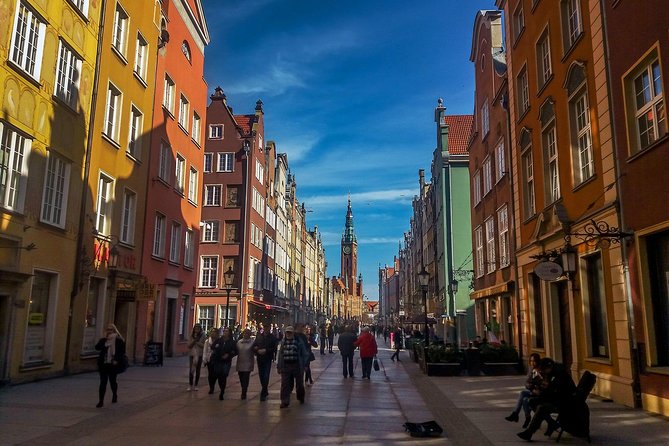
From Highland Gate, the route passes through the Golden Gate and continues along Długa, or Long Street, toward the Long Market. This is the visual center of the classic Gdańsk visit, with tall, narrow houses in bright colors and elaborate details above the doors and windows.
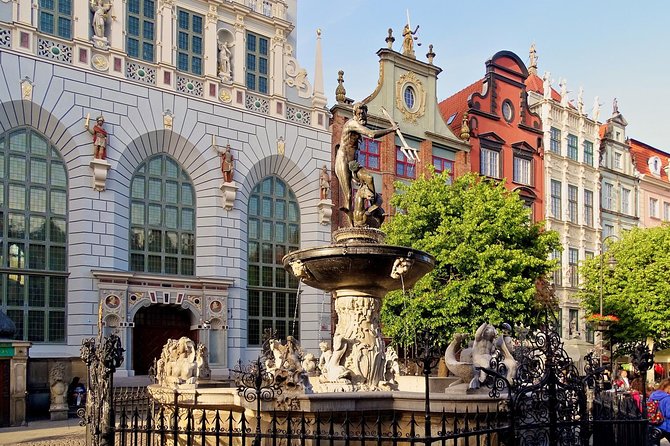
The walk here takes about an hour, giving your guide room to explain what you are seeing instead of rushing from one photo stop to the next. You will pass Gdańsk Town Hall, the Golden House, and Neptune’s Fountain, a seventeenth-century landmark linked to the city’s maritime identity.
I would pay close attention to the building fronts. The narrow façades reflect the value of street frontage in a wealthy merchant city, while the ornament tells you something about the ambitions of the people who lived behind them. A good guide helps connect those details to trade and civic life.
The private setup works especially well here. You can ask why a building looks the way it does, how much of the old city survived, or how Gdańsk fits into the wider history of Poland and the Baltic. Guides have also added personal observations and unusual facts, which can make a familiar postcard view more useful.
Arthur’s Court and the world of merchants
Arthur’s Court, or Dwór Artusa, was once a meeting place for the city’s merchants. Today it operates as part of the Gdańsk History Museum, with displays connected to local art and history.
The scheduled visit lasts about twenty minutes. Admission is listed as free for this tour, though you should follow any instructions from your guide about entry conditions on the day.
This stop matters because it gives context to the grand streets outside. Long Market can feel like an open-air stage, but Arthur’s Court shows how commerce, status, and civic power operated indoors. If you are interested in the Hanseatic League or the trading networks of northern Europe, tell your guide early. One private group used the tour to focus more closely on the Hanseatic period and the Teutonic Knights, and the route was adjusted to fit those interests.
The Green Gate and the Motława waterfront
The walk then heads toward the Green Gate and the Długie Pobrzeże embankment along the Motława River. The stop is short, around ten minutes, but the river view changes the mood of the tour.
Here you can see why Gdańsk became an important port. The waterfront connects the city’s elegant center with its working past, when goods moved through the river and warehouses. You will have a chance to look across the water and take photographs, but admission to any attraction at this stop is not included.
If your time is limited, this waterfront section is one reason to keep the central route. It adds space and perspective after the dense streets around Long Market. If you want a slower photo stop, say so. The private format gives you more control than a fixed group walk.
More Walking Tours in Gdansk
- Gdańsk City Sights & History Guided Walking Tour in English
★ 4.8 · 876 reviews - Main Town Gdańsk Walking Tour
★ 5.0 · 644 reviews - Discover Gdansk Walking Tour
★ 5.0 · 495 reviews - Gdansk Old Town Half-Day Private Walking Tour
★ 4.9 · 62 reviews
St. Mary’s Basilica and the Great Armoury
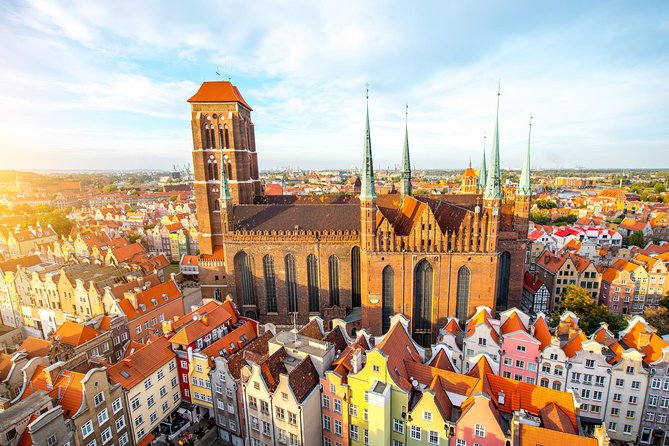
St. Mary’s Basilica is one of the largest brick churches in the world, and the interior is a major part of this experience. The guide points out the large hall church, ornate altar, organ, and royal chapel before the walk continues toward the Great Armoury.
The church stop lasts about twenty minutes and admission is listed as free. It is worth keeping your expectations practical: this is a guided introduction, not an extended church study visit. If you want extra time inside for quiet viewing or photographs, ask whether the schedule allows it.
One useful detail from the guiding experience is timing. A guide named Margaret made sure her group reached the basilica in time for the clock show. If that matters to you, mention it when booking or at the start. The exact timing may depend on the day’s schedule, but private touring gives you a better chance of planning around a feature you want to see.
The walk ends at the Great Armoury on the standard route. Its Renaissance design makes a fitting final stop for the central Old Town section, especially if you want architecture without adding the longer Solidarity route.
Wyspa Spichrzów and Ołowianka on the extended route
The longer version crosses toward Wyspa Spichrzów, the Granary Island. Redeveloped parts of the island sit beside old brick structures and warehouse ruins, offering a clear look at the commercial side of Gdańsk.
This section takes about an hour and admission is included. The value here is not just another river view. The island helps you picture the storage and shipping systems that supported the city’s wealth. Your guide can explain how trade shaped Gdańsk and why these old industrial remains matter.
The extended route also reaches Ołowianka, where you will see the red-brick Baltic Symphony Hall. This adds a different architectural note to the tour and gives you more time beside the water.
You should choose this version only if you are comfortable with a longer walk. The full plan can last up to six hours, and the listed stops vary from short viewpoints to much longer visits. Ask your guide how much time will be spent outdoors and inside before setting out.
St. Bridget’s Church and its Solidarity connection
St. Bridget’s Church is one of the most distinctive stops on the extended route. It served as a sanctuary for Solidarity leaders during martial law, linking the building to the political struggles of the 1980s.
Inside, look for the large amber altar. Amber is strongly associated with the Baltic region, and this work gives the local material a major religious setting. The church also contains religious objects and doors showing scenes from the Solidarity period, from the August 1980 strikes to the imposition of martial law in December 1981.
The scheduled stop is listed at two hours, making it one of the most substantial parts of the full outing. If modern Polish politics interests you, this is a strong reason to book the extended version. If your main goal is old façades and medieval architecture, the shorter route may suit you better.
This stop also shows why a private guide can be useful. The subject is complex, and you may want to ask about the role of the church, the shipyards, martial law, or the people involved. A fixed sightseeing script would give you less room for that conversation.
The Fallen Shipyard Workers Monument and the European Solidarity Centre
The route can continue from the Old Town toward the Monument to the Fallen Shipyard Workers of 1970. The monument commemorates workers killed during anti-communist riots, and its location connects directly to Gdańsk’s shipyard story.
From there, you visit the European Solidarity Centre. The museum explains the Solidarity strikes, the trade union movement, and the political changes that helped bring communist government to an end in Poland. Admission is included, and the visit is listed at about thirty minutes.
I would not treat this as a minor add-on. The museum gives you the modern key to Gdańsk. Without it, you may see the city as a medieval and maritime showpiece. With it, you understand why Gdańsk also matters in the story of twentieth-century Europe.
The museum stop is particularly useful for first-time visitors who know little about Solidarity. It is also a good match for anyone interested in politics, labor movements, or recent Polish history. The guide can introduce the subject, then help you place the exhibits in the wider city.
What the guides do best
The strongest part of this experience is the guide-to-group connection. The tour is private, so only your party participates, and guides can respond to your interests rather than delivering a one-size-fits-all speech.
Marek has been especially flexible with timing and route changes, and he has helped groups find less touristy places for food and drinks. Thomas mixed Polish politics, architecture, and lighter facts while allowing a group to set its own pace. Kaja was praised for humor and careful preparation, while Elwira brought personal experience into the history of Gdańsk.
Other guides named in the feedback include Marta, Joanna, Krzysztof, Karina, Michal, Aneta, Magda, Eva, and Marek. The experience is offered in English, but the guide assigned to you can make a large difference. One poor experience involved weak English, a confused meeting point, and an unscheduled shop stop. Confirm your guide’s language and the pickup arrangement if either is important to you.
A private guide may also suggest a reputable amber shop, a local restaurant, or a bar. That can be useful, but you should never feel pressured to shop. One group enjoyed learning how to tell real amber from a fake, while another appreciated recommendations for local food and seasonal beer. Treat these extras as optional.
Time, price, and who gets good value
The listed price is $107.89 per person. That is not a cheap casual walk, especially for a solo visitor, but the value improves for a group that wants a private guide and a flexible pace.
You are paying for direct attention, local explanation, and the ability to shape the route. The core walk covers the major Old Town sights in roughly two to four hours, while the longer plan adds the river islands, St. Bridget’s Church, the shipyard monument, and the European Solidarity Centre.
Admission is free at several central stops. The extended route includes entry to Wyspa Spichrzów and the European Solidarity Centre, while no admission is included at the Motława waterfront. The price therefore makes most sense when you use the guide’s time and ask questions, rather than treating the experience as a quick escort between photo stops.
The tour is often booked well ahead, about 85 days in advance on average. That suggests you should plan early if you have a fixed port, hotel, or museum schedule. Free cancellation is available up to 24 hours before the start time. After that point, the price is not refunded, and late changes are not accepted.
Practical advice for the walk
Wear shoes suited to several hours on foot. The route moves through streets, riverfront areas, churches, and museum spaces, and the longer version adds more distance.
If you are arriving by car, allow extra time. One group lost time parking in rainy weather and found that the guide waited, but depending on that kind of flexibility is not wise. Public transportation is near the meeting point, and taking the train may be simpler than driving into central Gdańsk.
Tell the guide at the start if you need a slower pace, want more time inside St. Mary’s, or prefer architecture over twentieth-century politics. Previous groups have adjusted the walk for interests ranging from the Hanseatic League to shopping, food, and local history.
The tour ends back at the meeting point. Pickup is available only from Old Town accommodations within the stated 1.5-kilometer range. If your address falls outside it, the itinerary may change, so provide the accommodation address when booking.
Should you book the Gdańsk Old Town private walk?
Book it if you are visiting Gdańsk for the first time and want a clear introduction without joining a large group. It is also a good choice for families, staff groups, couples, and history-minded visitors who want to ask detailed questions.
Choose the two to four-hour version if you want the classic center: Highland Gate, Long Street, Neptune’s Fountain, Arthur’s Court, the Motława, St. Mary’s Basilica, and the Great Armoury. Choose the longer route if the Solidarity movement, shipyards, amber, and Gdańsk’s trading past matter as much as the postcard architecture.
I would be cautious only if you need a perfectly fixed itinerary, dislike walking, or cannot confirm the meeting details. The guide quality can vary, and one reported experience had communication problems. For everyone else, the private format, strong 4.8 rating, 97 percent recommendation rate, and repeated praise for flexibility make this a useful first-day orientation to Gdańsk.
FAQ
Where does the Gdańsk Old Town tour start?
The tour starts at Highland Gate, also called Brama Wyżynna, at Wały Jagiellońskie 2A, 80-887 Gdańsk, Poland.
Does the tour include hotel pickup?
Pickup is available only from accommodations in Gdańsk Old Town within 1.5 kilometers of the meeting point. You should provide your accommodation address when booking. If it is outside that area, you meet at Highland Gate and the itinerary may be changed.
How long does the walking tour last?
The experience lasts approximately two to six hours, depending on the route selected. The shorter walk focuses on the central Old Town, while the extended route adds the river islands, St. Bridget’s Church, the shipyard monument, and the European Solidarity Centre.
Is this a private tour?
Yes. Only your group participates, so you can ask questions and request adjustments to the pace or focus.
Is the tour offered in English?
Yes, English is listed as an available language.
Are entrance fees included?
Several stops are free, including Highland Gate, the Golden Gate area, Long Street, and St. Mary’s Basilica. Admission is included for Wyspa Spichrzów and the European Solidarity Centre. Admission at the Motława River Embankment is not included.
What is the cancellation policy?
You can cancel up to 24 hours before the start time for a full refund. Cancellations or changes made less than 24 hours before the experience are not accepted for a refund.
Recently added in Gdansk
- Szymbark: Kashubian Switzerland 5-Hour Private Tour★ 3.7 · 3 reviews
- Segway Tour Gdańsk: Shipyard Tour – 1,5-Hour of Magic!★ 5.0 · 3 reviews
- Stutthof Concentration Camp and Museum of WWII: Private Tour★ 4.7 · 3 reviews
- Sopot Sunset Cruise with Welcome Drink★ 3.5 · 3 reviews
- Gdansk: Basic Bike Tour★ 4.3 · 3 reviews
- Gdansk: Bubble Football with Hotel Transfers★ 5.0 · 3 reviews
- Artus Court and Gdansk Old Town Private Tour with Tickets★ 4.7 · 3 reviews
- Gdansk: Oliwa Zoo with Tickets and Roundtrip Transportation★ 5.0 · 3 reviews
Old Town Tours, compared.




Bike Tour of Old Town, Jewish Quarter and the Ghetto
Read our review →

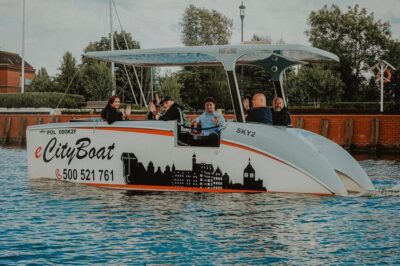
Sightseeing EcoCruise around the Old Town of Gdansk
Read our review →
Where else this one turns up