Reviewed · KRAKOW TOURS
Nowa Huta: Steelworks Administration Buildings/Shelters Tour
The most unusual part of this Nowa Huta tour is not the district’s broad avenues or monumental socialist design. It is the chance to enter the former steelworks administration buildings, then follow a tunnel into Cold War bomb shelters and an underground command center. These are working remnants of a tense period, not polished museum displays.
I like the contrast between the grand interiors and the grim shelter below. I also like the guides’ local touch, especially Mateusz, who has been praised for mixing family stories, sharp historical detail, and humor. The main drawback is that you do not enter the operating part of the steelworks, and the tour is not suitable for wheelchair users or people with mobility impairments.
Key points
- Walk through twin 1950s administration buildings: Compare two nearly identical structures and spot their differences.
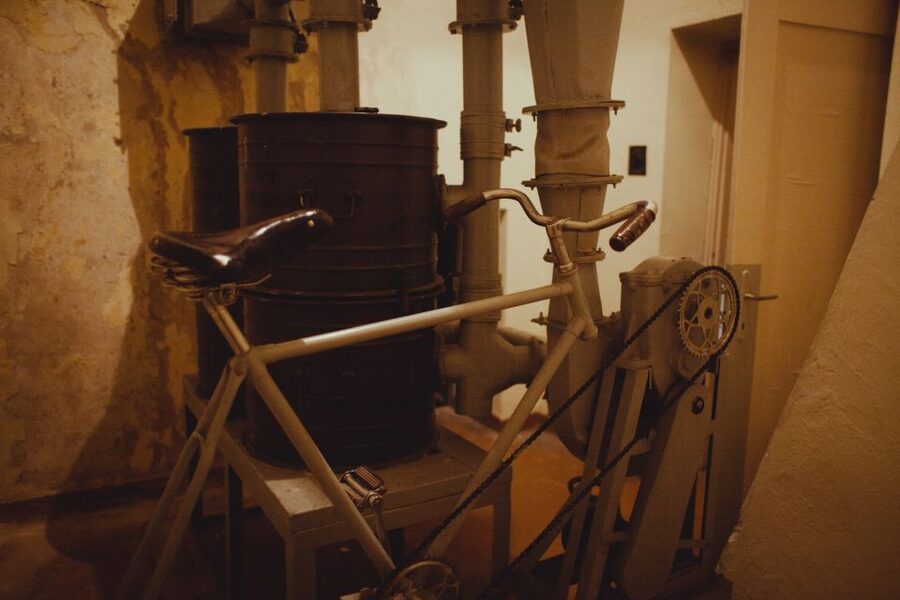
- Go underground through a connecting tunnel: See shelters, communication rooms, and the command center below the offices.
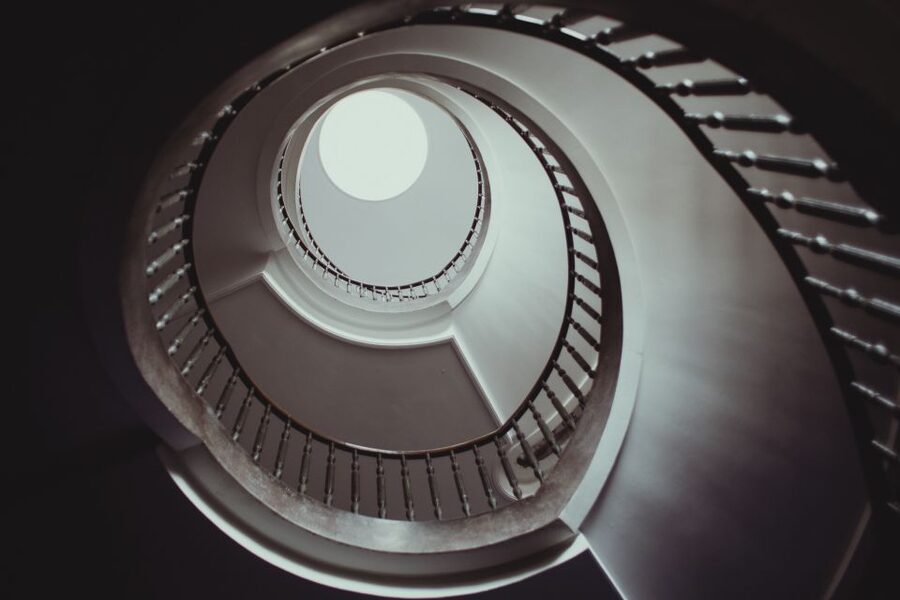
- Look up at polished socialist grandeur: The entrance hall, ornamental stone, directors’ offices, and oval staircases reveal how the plant’s leadership lived and worked.
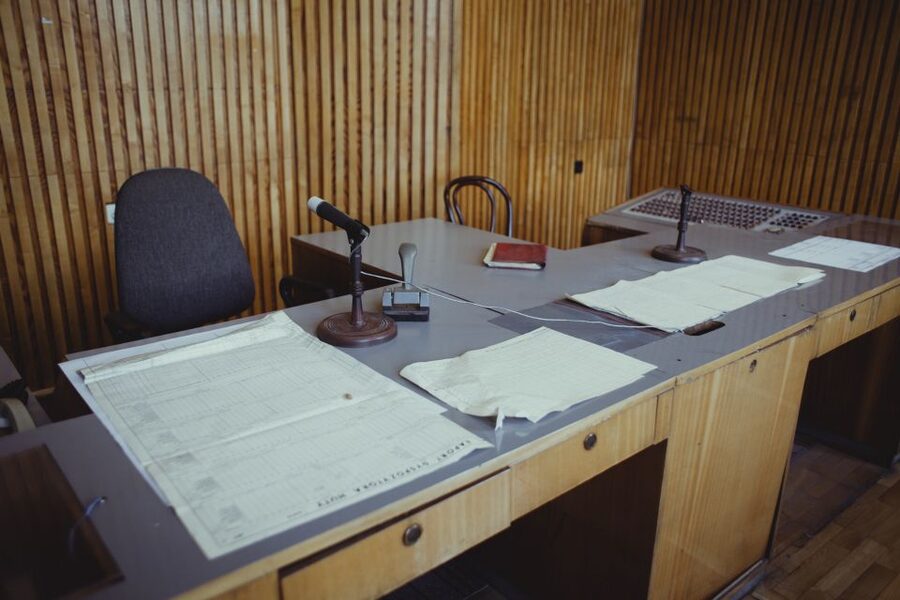
- Hear the past in the radio rooms: Examine the old control spaces and listen to authentic recordings made there.
- Add a vintage communist-era car: Choose the optional car experience for a distinctive photo opportunity and a different way to see the area.
- Spend 90 focused minutes away from Krakow’s Old Town: The visit is short enough to fit into a busy Krakow schedule, but substantial enough to give Nowa Huta a proper look.
Why these steelworks offices matter
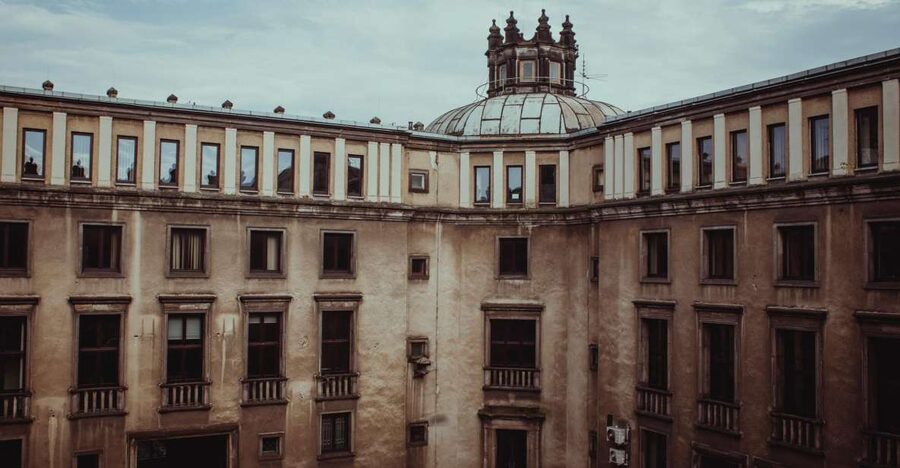
Nowa Huta was built in the 1950s as an ideal socialist city, shaped by the political influence of the Soviet Union. Its steelworks formed the industrial heart of the district, and the administration buildings reveal how much care went into presenting power, order, and progress.
From the outside, the buildings may look like institutional offices. Inside, the tone changes. You see a formal entrance hall compared with a Renaissance staircase, solid decorative stone, executive rooms, engineers’ corner offices, and carefully designed staircases. The message was clear: this was not simply a factory. It was a major symbol of the state and its industrial ambitions.
I find that contrast more revealing than a standard display of political slogans. The building’s design shows how officials wanted the workplace to feel. The polished rooms were made to impress directors and important visitors, while the steelworks itself depended on large numbers of workers operating in a very different setting.
The tour takes you into two almost twin buildings. Part of the fun is looking closely and comparing them rather than simply walking from room to room. Their similarities reflect a planned, controlled style, while their differences give the guide a chance to point out how the complex functioned.
A few more Krakow half days to consider
- From Krakow: Auschwitz-Birkenau Guided Tour & Hotel Pickup
★ 4.5 · 33,358 reviews - From Krakow: Auschwitz-Birkenau Guided Tour & Hotel Pickup
★ 4.5 · 29,340 reviews - Krakow: Auschwitz Guided Tour with Optional Hotel Pickup
★ 4.5 · 15,280 reviews
The grand entrance and the directors’ rooms
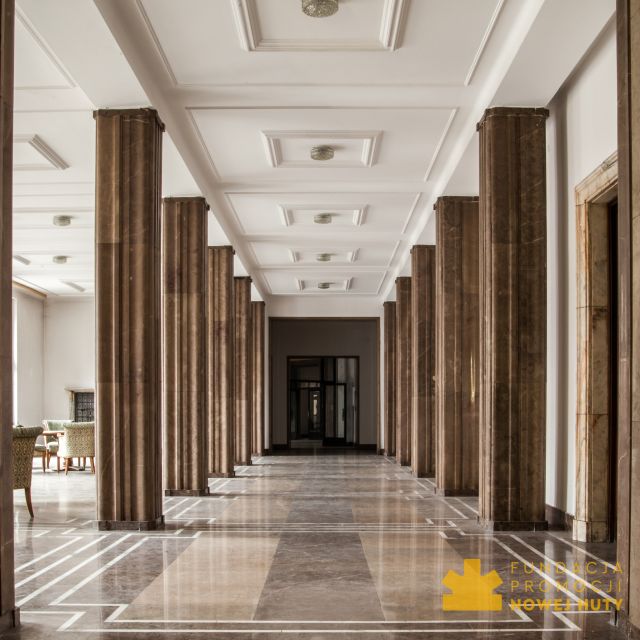
Your first indoor impressions come from the public-facing side of the complex. The entrance hall has a formal, almost ceremonial quality, with architectural details that feel surprisingly refined for an industrial office. Ornamental stone was used generously, giving the space a sense of authority and permanence.
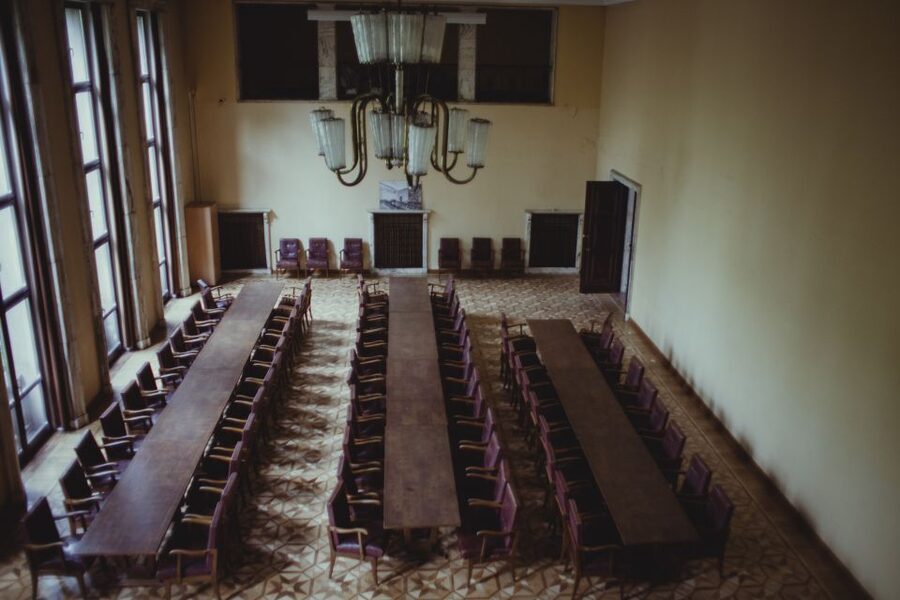
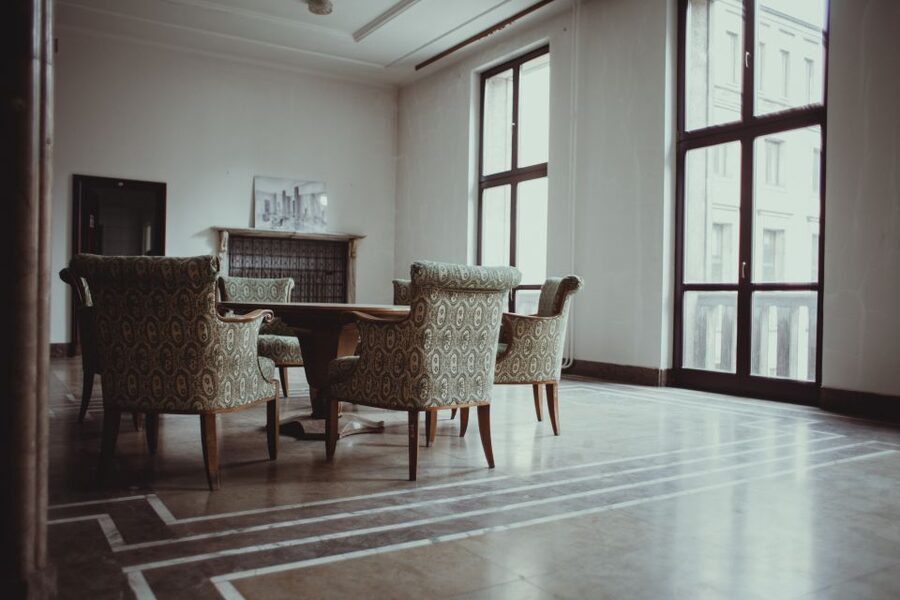
You then move into rooms once used by the plant’s directors. These are among the best places to understand the gap between the official image of socialism and everyday life under the system. The offices were practical workplaces, but they also carried the visual language of status: solid materials, careful decoration, and rooms designed for senior staff.
The engineers’ corner offices offer a useful counterpoint. They help you see that the complex was not only a political headquarters. It was also a place where technical decisions, production plans, and industrial management were handled.
Do not rush these interiors. The appeal is in the details left behind: the layout, the worn surfaces, the old fittings, and the way the rooms still feel like offices rather than reconstructed sets. Photography is part of the experience, and the guide allows time for pictures and questions.
Two buildings, one tunnel, and a shelter below
The tour’s strongest shift comes when you leave the formal offices and head underground. A tunnel connects the two buildings, linking the polished administrative world above with the defensive system below.
The shelter reflects the fears of the second half of the 1950s. This was the early Cold War, when major industrial plants were seen as important strategic targets. The underground rooms were built to protect people and preserve communication in a crisis.
You may see living areas, communication rooms, and parts of the command setup. The underground command center is especially useful for understanding how the site was meant to function during an emergency. It gives the tour a practical edge: instead of hearing only about Cold War anxiety, you can see the spaces designed around it.
The shelter is not presented as a glossy attraction. That is part of its value. The plain, enclosed rooms and low-key atmosphere make the place feel more like a preserved workplace than a theatrical reconstruction. If you dislike confined spaces or have difficulty with stairs and uneven access, take the physical demands seriously before booking.
Radio rooms and authentic recordings
The radio control room and radio station add an unusual layer to the visit. Industrial history often gets reduced to machines, output figures, and political decisions. Here, communication becomes part of the story.
The guide explains how the radio spaces worked and plays authentic tapes recorded there. Hearing those recordings gives the rooms a human and operational quality. You are not just looking at equipment behind a rope. You are being shown how messages moved through the plant and how the site stayed connected.
This is also where a good guide matters most. Mateusz, one of the guides associated with the tour, is known for clear English, humor, and stories connected to life in Nowa Huta. Other guides may lead your departure, but you should expect an English-speaking local guide who can explain the buildings in context rather than simply identify each room.
The humor helps. Communist-era history can become heavy quickly, especially when the subject turns to military planning and political control. A guide who can add a joke or a family anecdote keeps the visit human without making light of the period.
A different kind of day in Krakow:
- Krakow–Zakopane: Cable Car, Chocholow Baths, Cheese & Vodka
★ 5.0 · 10,720 reviews - Krakow: Auschwitz-Birkenau Guided Tour with Pickup & Lunch
★ 4.5 · 9,800 reviews - From Krakow: Wieliczka Salt Mine Tour
★ 4.6 · 9,393 reviews - Krakow: Auschwitz-Birkenau Guided Tour Pickup/Lunch Options
★ 4.5 · 9,057 reviews
The workers’ theater and the oval staircases
The complex also includes a theater hall in the workers’ building. It is still used today, which gives the place a rare link to the present. You are not walking through a site that has been entirely frozen in time. Some spaces continue to serve a purpose.
That detail matters because it shows how the steelworks functioned as more than a production site. Workplaces in the socialist system often included cultural and social spaces, and a theater hall points to the wider role such institutions were expected to play.
One of the eight oval corner staircases in the two buildings is included in the visit. It may sound like a small architectural detail, but it helps you read the buildings as designed spaces. The staircases, entrance hall, stonework, and offices all show that the complex was planned with visual impact in mind.
I would pay attention to how the guide moves between these smaller features and the larger political story. That balance is what keeps the tour from becoming either a dry architecture lesson or a string of Cold War anecdotes.
What the vintage car adds
You can choose an option that includes a vintage car experience. The car is presented as a communist-era vehicle and makes a memorable backdrop for photos. Some departures have also included a ride or pickup in an original retro car, but you should check the exact option when booking rather than assume every ticket includes transport.
The car is not the reason to choose this tour. The buildings and shelter are the main event. Still, it adds character and gives you a tangible object from the period to examine, especially if you enjoy historic vehicles or want photographs that feel different from the usual Krakow sightseeing pictures.
If you are comparing ticket options, treat the car as a bonus rather than a substitute for the walking tour. The standard experience already includes the guided visit to the administration buildings and shelter. The vintage option makes sense if the extra cost fits your interests and you want a more distinctive keepsake.
How the 90 minutes fit into a Krakow day
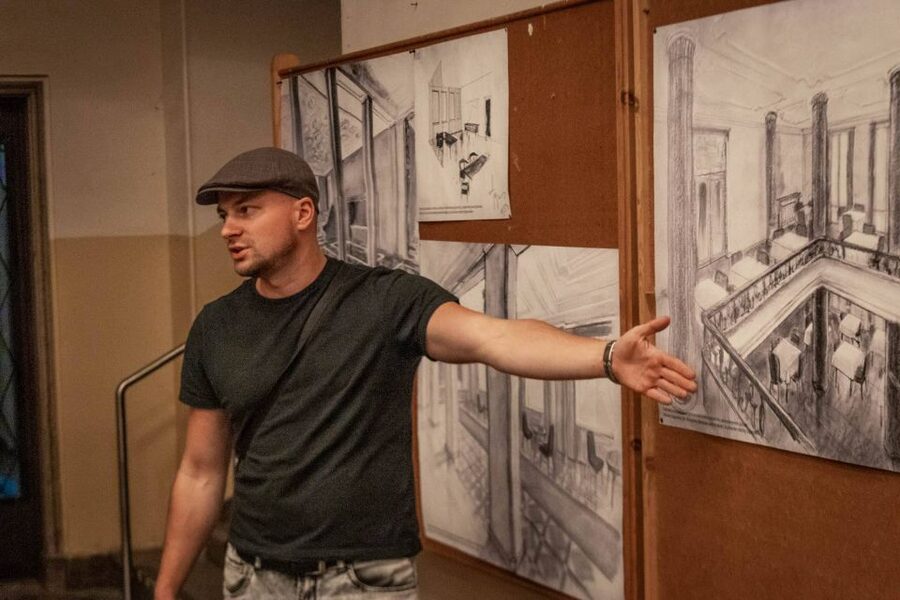
The tour lasts about 1.5 hours and ends at the same meeting point. That short format is useful. You can combine it with other Nowa Huta sights, or return toward central Krakow afterward without giving up an entire day.
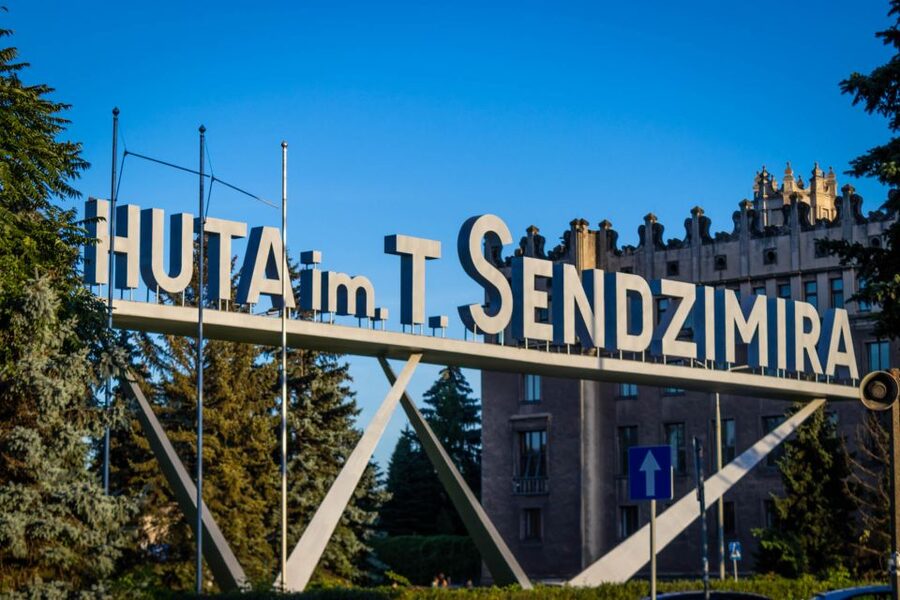
You meet the guide at the main gate of the steel mill, at the building on the left with the information point. From central Krakow, take a tram or bus and get off at the Kombinat stop. Leave enough time to find the correct gate, since the steelworks area is not the sort of place where you want to arrive at the last minute.
Starting times vary, so check availability for the day you want. Booking at least one day ahead is recommended. The tour is offered in English, and the price is $24 per person. For that fee, you get access to spaces that are not normally open to the public, an English-speaking guide, and the shelter visit. I consider that good value for anyone interested in 20th-century Poland, architecture, industry, or the Cold War.
The value is less obvious if your only goal is classic Krakow sightseeing. Nowa Huta is away from the Old Town, and the tour does not include entry to the operating part of the steelworks. You are paying for access to the administration buildings and their preserved interiors, not for a full industrial plant tour.
What you will and will not see
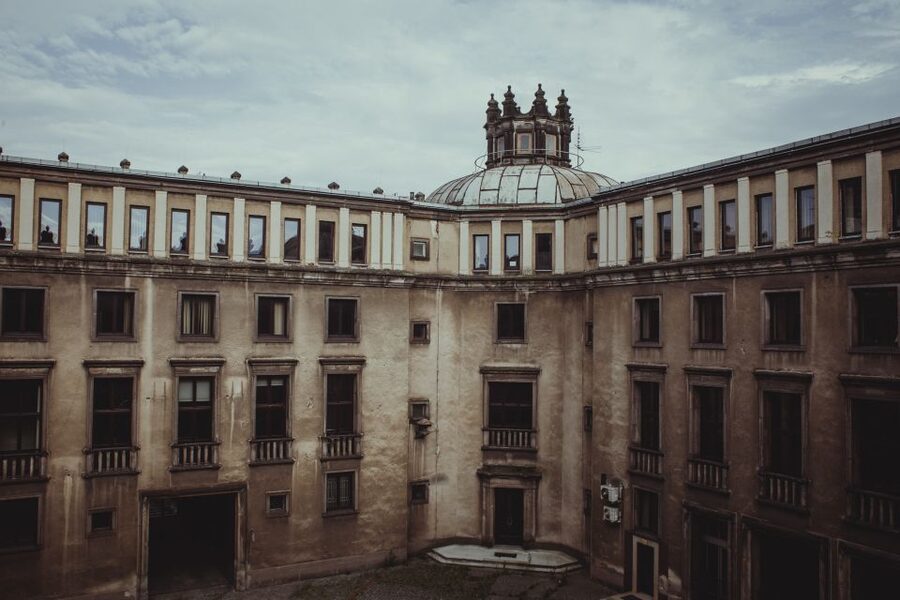
It helps to set your expectations correctly. You will see:
- Former steelworks administration buildings
- Two nearly twin structures and their architectural differences
- A connecting underground tunnel
- Cold War-era bomb shelters
- An underground command center
- Directors’ offices and engineers’ offices
- A grand entrance hall with decorative stone
- A radio control room and radio station
- Authentic tapes recorded at the site
- A workers’ theater hall
- One of the oval corner staircases
- A communist-era car presentation if that option is selected
You will not enter the operating part of the steelworks. That distinction is important, especially if you expect a factory-floor visit with active machinery. The experience is about administration, protection, design, and memory.
The buildings are partially abandoned, while the steelworks itself still operates. That combination gives the tour its unusual mood. You see the remains of a former administrative world beside an industrial operation that has not entirely disappeared.
Who will enjoy this Nowa Huta tour
I would recommend it most strongly if you have an interest in:
- Cold War Poland and socialist-era Europe
- Industrial history and steel production
- Architecture from the 1950s
- Bomb shelters and civil defense
- Places that feel less polished than standard tourist sites
- Local stories and personal connections to Nowa Huta
- Photography in unusual historic interiors
It also works well for someone who has already seen Krakow’s Old Town and wants a different side of the city. The district offers a sharp contrast to medieval streets, churches, and royal buildings.
You do not need to be an expert in Polish history. A good guide can explain the setting as you go, and the combination of rooms, tunnels, recordings, and stories makes the subject easier to follow than a long lecture.
I would think twice if you have limited mobility. The activity is specifically not suitable for wheelchair users or people with mobility impairments, and the underground sections and staircases make that restriction understandable. Ask the provider directly if you have a condition that is not obvious from the general description.
Is $24 a fair price?
At $24, this is a fairly priced specialist tour. You get 90 minutes of guided access to buildings you could not normally enter on your own, including the shelter and command center. The English guide is central to the value, since the meaning of the offices and radio rooms is not always obvious from simply looking around.
The price is especially fair for a small piece of living local history that has not yet been turned into a full museum. You can still see the spaces with relatively little polish and, depending on the departure, hear personal stories about the district and the communist period.
The optional vintage car costs extra, though the supplied information does not state the additional amount. I would add it only if you care about the vehicle and photos. If your budget is tight, book the standard buildings and shelter tour first.
My advice before you go
Wear shoes that are comfortable for walking and stairs. The tour is short, but it moves through offices, tunnels, shelters, and stairways rather than one level ground-floor gallery.
Keep a little time for questions. Guides such as Mateusz have been praised for explaining how the steelworks and Nowa Huta changed over time, and for adding family stories from the communist era. The more you ask, the more likely you are to connect the physical rooms with daily life beyond the official architecture.
Bring a camera if you enjoy architectural details, but do not let photography make you rush. The ornate entrance, old offices, radio equipment, shelters, and staircases all tell different parts of the story.
Should you book it?
Book this tour if you want a grounded look at Cold War Krakow, not another polished city-center attraction. The preserved offices, underground shelter, radio rooms, and local guiding create a clear picture of how industry, politics, and civil defense met in Nowa Huta.
Skip it if you need step-free access, want to enter the active steelworks, or have little interest in recent European history. For everyone else, especially visitors who have already explored central Krakow, the $24 price and 90-minute length make this an easy addition to your schedule. Choose the vintage car option only if that extra touch appeals to you.
FAQ
Where does the Nowa Huta steelworks tour start?
Meet your guide at the main gate of the steel mill, at the building on the left with the information point. The nearest stated public transport stop is Kombinat.
How long does the tour last?
The experience lasts 1.5 hours, or about 90 minutes. It ends back at the meeting point.
What language is the tour offered in?
The tour is conducted in English with a live English-speaking guide.
Does the tour enter the operating part of the steelworks?
No. Entry to the operating part of the steelworks is not included. The visit focuses on the administration buildings and their shelter.
What is included in the standard tour?
The standard experience includes a guided tour of the steelworks administration buildings and shelter, an English-speaking guide, and a presentation of a communist-era car for photos.
Can I choose a vintage car tour?
Yes. A vintage car tour is available as an option when booking. The car experience is not included with every ticket, so select the appropriate option if you want it.
Is the tour suitable for wheelchair users?
No. The activity is not suitable for wheelchair users or people with mobility impairments.
Recently added in Krakow
- Auschwitz-Birkenau and Krakow Private Car Trip from Katowice★ 4.3 · 3 reviews
- Wawel Castle, Old Town with St. Mary’s Church Guided Tour★ 5.0 · 3 reviews
- Wawel Castle, Cathedral, Rynek Underground Tour with Lunch★ 5.0 · 3 reviews
- From Krakow: Chocholow Thermal Hot Springs (hotel pick up)★ 5.0 · 3 reviews
- Private tour to Zakopane and Thermal Baths from Krakow★ 5.0 · 3 reviews
- Legends of Cracow ROBOTIC SHOW★ 4.0 · 3 reviews
- From Krakow: Zakopane and Thermal Pools Guided Trip★ 5.0 · 3 reviews
- Guided Beer Tour in Krakow★ 4.5 · 3 reviews
Krakow Tours, compared.
Auschwitz-Birkenau Guided Tour & Hotel Pickup
Read our review →Auschwitz Guided Tour with Optional Hotel Pickup
Read our review →
Zakopane: Cable Car, Chocholow Baths, Cheese & Vodka
Read our review →
Auschwitz-Birkenau Guided Tour with Pickup & Lunch
Read our review →
Krakow to Auschwitz Birkenau Guided Tour with Transfer and Ticket
Read our review →
Wieliczka Salt Mine Guided Tour with Transport
Read our review →