
Reviewed · WIELICZKA SALT MINE TOURS
Krakow: Schindler’s Factory, Jewish Ghetto & Salt Mine Tour
Krakow’s wartime story and its underground salt-mining world make an unusual pair. This tour takes you from Schindler’s Factory and the former Jewish Ghetto in Podgórze to the enormous Wieliczka Salt Mine, giving you two very different ways to understand the region.
I like the small group of up to 15 people, which should make the museum portion easier to follow, and I like the efficient transport between Krakow and Wieliczka. The English-speaking guide adds context where it matters most. The main drawback is the tight schedule: Schindler’s Factory does not admit late arrivals, and seven hours leaves little room for wandering or a relaxed meal.
Key points to know before booking
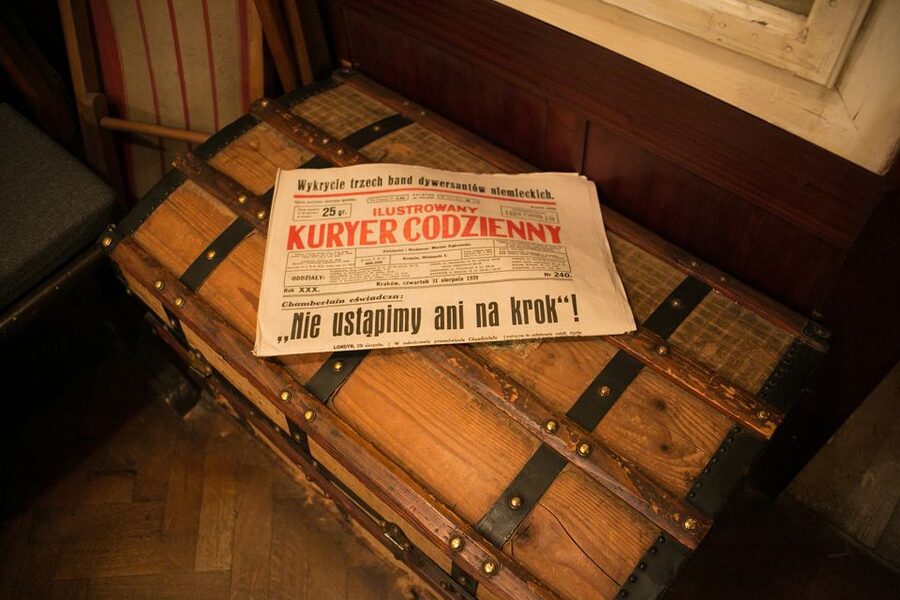
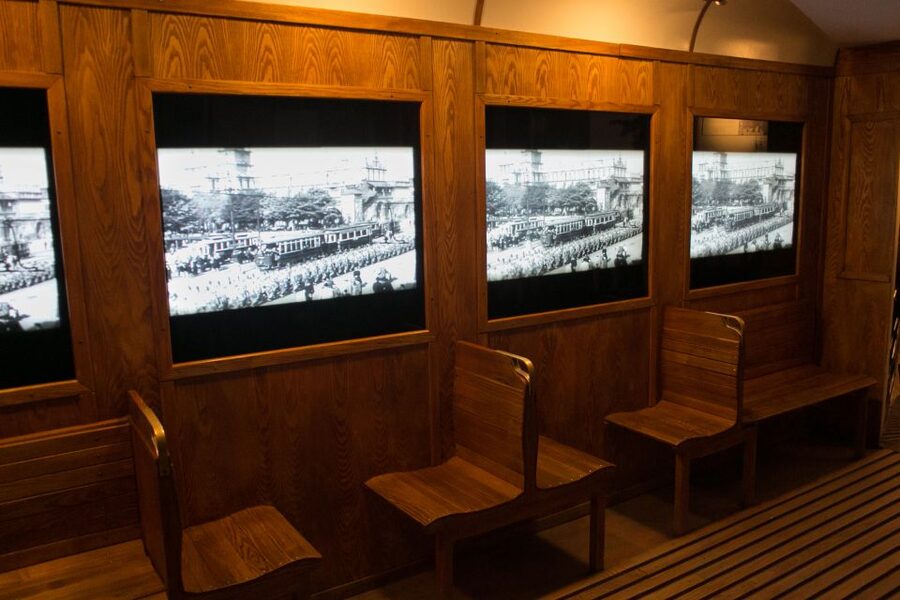
- Schindler’s Factory comes first, with a museum guide explaining the German industrialist who helped many Jewish people during the war.
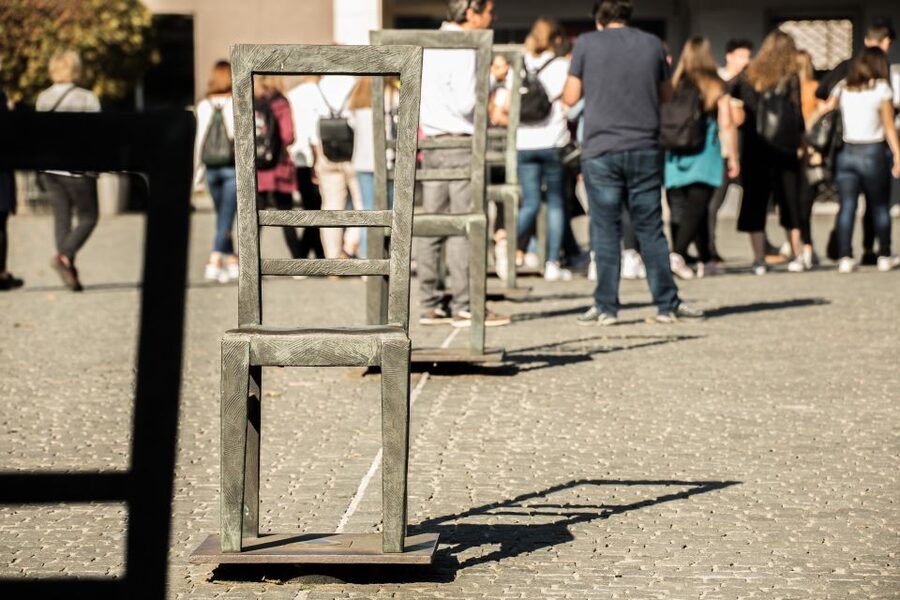
- Podgórze adds real-world context, including part of the former ghetto wall, the Under the Eagle Pharmacy, and the Empty Chair Monument with 68 chairs.
- Wieliczka Salt Mine reaches 340 meters underground, though the public route covers about 3 kilometers rather than the full mine.
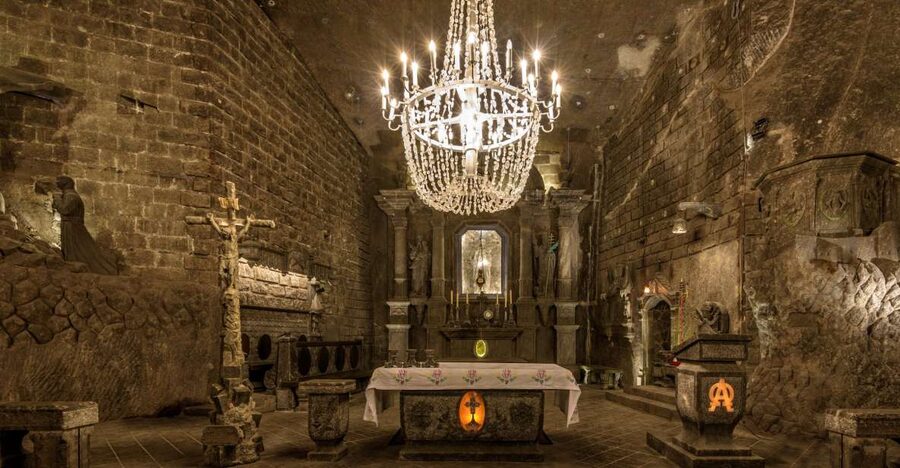
- St. Kinga’s Church is the visual highlight, with salt chandeliers and sculptures carved by miners.
- Transport and admission are included, making the $136 price easier to justify than arranging both visits separately.
- Punctuality matters, since late arrivals are not admitted to Schindler’s Factory and refunds are not available for missed entry.
Why this Krakow combination works
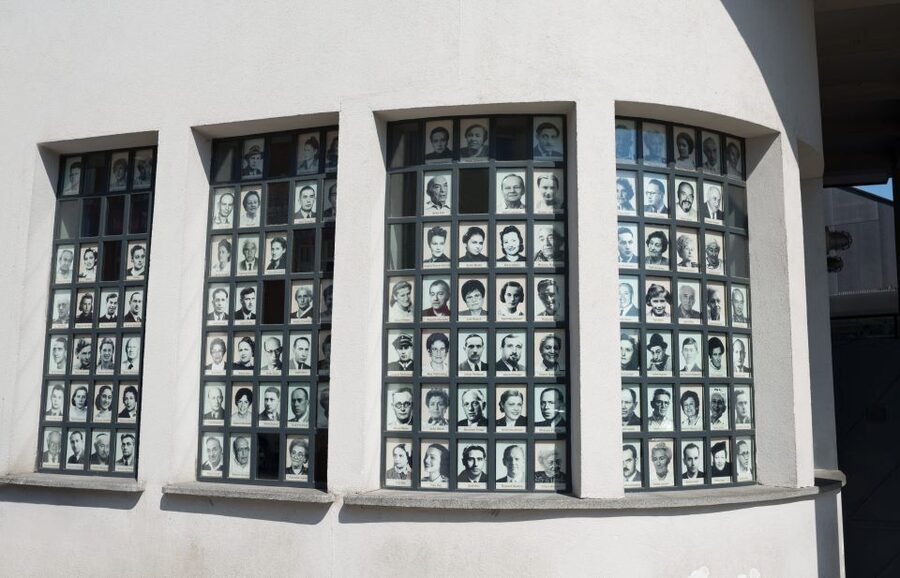
Many Krakow excursions focus on one major attraction. This one connects three sites that explain different parts of the city’s past: wartime persecution, Jewish life before and during the occupation, and centuries of industrial labor beneath the ground.
The contrast is the tour’s greatest strength. At Schindler’s Factory, you deal with documents, photographs, exhibits, and the story of Oskar Schindler, the German entrepreneur made famous by Steven Spielberg’s film Schindler’s List. In Podgórze, you see physical traces of the former Jewish Ghetto. Later, at Wieliczka, the subject changes completely as you walk through chambers cut from salt.
You should book this if you want a full historical day without spending time piecing together tickets, directions, and transport. You should skip it if you prefer a slow museum visit, long breaks, or the freedom to choose your own pace at every stop.
More Wieliczka salt mine visits:
- Krakow: Wieliczka Salt Mine Skip-the-Line Live Guided Tour
★ 4.5 · 462 reviews - From Krakow: Wieliczka Salt Mine Guided Tour
★ 4.4 · 323 reviews - From Krakow: Wieliczka Salt Mine Half-Day Trip with Pickup
★ 4.5 · 140 reviews
Schindler’s Factory and the wartime story
The tour begins at Oskar Schindler’s Enamel Factory Museum. A museum guide leads this part of the experience, so you are not left to make sense of the displays on your own.
The museum is connected to Schindler’s wartime work and to the Jewish people he helped protect. That story has become widely known through Schindler’s List, but the museum visit is meant to place it within the wider experience of Krakow during the Second World War.
You can expect a serious, information-heavy opening. This is not a quick photo stop. The guide’s role is important because the subject involves more than one famous individual. You are also learning about the city, the occupation, and the treatment of Jewish residents during the war.
The group size helps here. With no more than 15 participants, it should be easier to hear the English guide and ask a question when the schedule allows. Still, museum entry is fixed and punctual. Arrive early enough to find the entrance and your guide, who will be holding an excursions.city sign.
The meeting point is directly in front of the museum entrance. This detail matters because the museum does not accept late arrivals. If you miss the assigned entry, you cannot simply join the group later, and the tour cost will not be returned.
Walking through Podgórze’s former Jewish Ghetto
After the museum, the tour moves into Podgórze, the district where the former Jewish Ghetto was located. This is where the history becomes more tangible. Instead of seeing only displays behind glass, you walk through streets connected to the events being discussed.
The route includes a surviving section of the wall that once surrounded the ghetto. You also see houses where thousands of displaced Jewish residents were forced to live. These details can be easy to pass without context, which is why the guided explanation adds real value.
The Under the Eagle Pharmacy is another important stop. During the war, the pharmacy was connected with the Jewish population of the ghetto and is remembered as a place linked to aid and witness. The tour information does not promise a separate extended interior visit, so think of it primarily as a significant site along the walking route.
The Empty Chair Monument on Heroes’ Square is likely to be the most striking outdoor memorial. Its 68 empty chairs represent the Jewish residents who were removed from the ghetto. The image is plain and powerful: a familiar household object placed in a public square, repeated again and again until the absence becomes impossible to ignore.
You will want comfortable shoes for this portion. The walk is not described as a long hike, but it takes place on city streets and forms part of a tightly timed group itinerary. Stay with the guide and keep an eye on the schedule, especially if you like stopping to take photographs.
The transfer from Krakow to Wieliczka
The second half begins with transport to Wieliczka, a small town about 10 kilometers from Krakow. Round-trip transportation is included, which is one of the practical reasons to consider this package.
Without organized transport, you would need to coordinate the salt mine with the museum visit and allow time for the journey there and back. Here, the transfer is built into the seven-hour plan. One useful touch is that the person handling transport may be able to drop you at another location in central Krakow afterward, although you should treat that as a possibility rather than a guaranteed part of the service.
The ride also gives you a reset after the concentration of the ghetto visit. The day changes tone from war memorials and forced displacement to the labor, engineering, and religious art of a centuries-old mine.
The schedule remains the key concern. You are fitting a museum, a walking route, transportation, and an underground attraction into one day. This is efficient, but it is not leisurely. Food and drinks are not included, so plan around the timetable rather than assuming you will have a long restaurant stop.
Other visits to Schindler's Factory:
- Krakow: Schindler’s Factory, Jewish Ghetto & Salt Mine Tour
★ 5.0 · 3 reviews - Krakow: Oskar Schindler’s Factory Entry Ticket & Guided Tour
★ 4.2 · 3,793 reviews - Krakow: Schindler’s Factory Tour with Entrance Ticket
★ 4.5 · 3,182 reviews - Krakow: Schindler’s Factory Skip-the-Line Ticket
★ 4.4 · 3,105 reviews
Going underground at Wieliczka Salt Mine
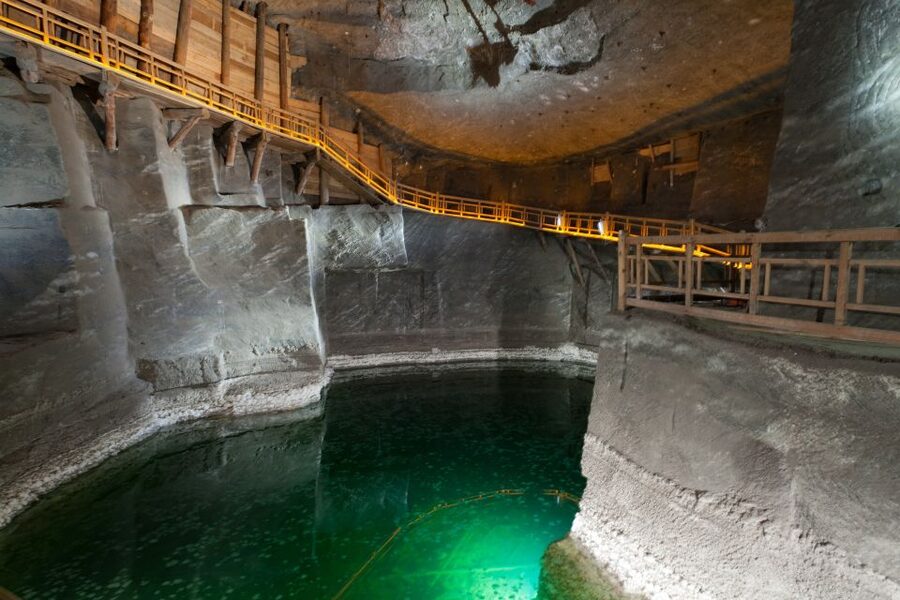
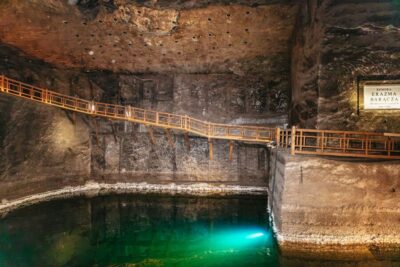
Wieliczka is one of Europe’s largest old salt mines, and its scale is hard to grasp from a surface visit. The mine reaches 340 meters deep, while its entire network of corridors and tunnels stretches for more than 245 kilometers.
You will not walk all of that. The public route covers more than 3 kilometers and includes 20 halls. That is still a substantial visit, so expect plenty of walking and a setting very different from the streets of Krakow.
The route is presented at your own pace without a guide accompanying you through every step. This gives you some freedom after the more structured museum portion, but it also means you should pay attention to the route and keep moving at a reasonable pace. The included salt mine museum guide refers to the organized entry and visit arrangement, while the supplied itinerary specifically describes the underground route as unguided.
The mine’s special appeal comes from the way practical industry and religious devotion meet underground. Salt was not just extracted and hauled away. Miners also carved chapels, sculptures, and decorative features into the salt rock.
St. Kinga’s Church and the carved salt interiors
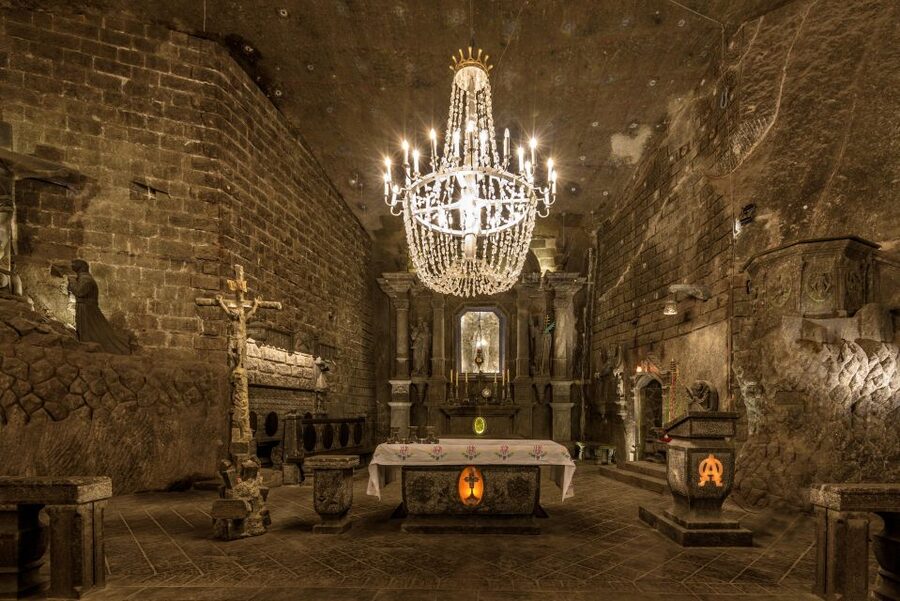
The largest chamber is St. Kinga’s Church, named for the patroness of miners. This is the place where the mine becomes more than an engineering site.
Inside, you can see chandeliers and sculptures of saints carved from salt. The decoration is remarkable because it was made in a working mine, far below the surface, rather than in a conventional church designed from the beginning for public worship.
The details are best appreciated slowly. Look at the surfaces, the carved figures, and the way the chamber’s size changes your sense of scale. The tour gives you access to this major hall as part of the route, but the overall timing means you may not be able to linger as long as you would on a separate salt mine visit.
The underground setting also brings a distinctive microclimate. The mine is known for its curative atmosphere, and a sanatorium is located 135 meters below ground. The tour does not include a treatment or an overnight stay, but the sanatorium helps explain why the underground air is considered notable.
Is $136 a fair price?
At $136 per person, this is not Krakow’s cheapest half-day outing. The value depends on how much you want done in one day.
The price includes admission to Schindler’s Factory Museum and Wieliczka Salt Mine, museum guide services, and round-trip transportation between Krakow and Wieliczka. You are also paying for a fixed schedule that links sites in different parts of the region.
That makes the cost reasonable for visitors who would otherwise need to arrange two admissions, find their way to Wieliczka, and manage the timing themselves. It is especially useful if your stay in Krakow is short and you want both the city’s wartime sites and the salt mine.
The value is less convincing if you already have transport, prefer independent visits, or want to spend a full morning at Schindler’s Factory alone. Food and drinks are extra, and the compact itinerary gives you efficiency rather than spare time.
The strongest service feature is the transport flexibility at the end. If available, a central Krakow drop-off can save you a separate ride after a long day, though you should confirm the arrangement with the transport staff rather than count on a specific address.
Timing, group size, and practical planning
The total duration is seven hours, with starting times depending on the date you select. Since the group follows a strict schedule, build in extra time before the start.
The meeting point is in front of the entrance to Oskar Schindler’s Enamel Factory Museum. Look for the guide holding an excursions.city sign. The group is limited to 15 participants, and the tour operates in English.
A few practical points will make the day easier:
- Arrive early at Schindler’s Factory. Late entry is not allowed.
- Wear shoes suitable for several kilometers of walking.
- Keep food and drink plans simple because neither is included.
- Allow for a change in atmosphere and activity level between the city walk and the mine.
- If your plans are uncertain, free cancellation is available up to 24 hours before the activity for a full refund.
- You can reserve now and pay later, which helps if you are still arranging the rest of your Krakow schedule.
The tour returns to the original meeting point. The possible central Krakow drop-off after Wieliczka is a useful bonus, but the stated end point remains the museum meeting location.
Who should choose this tour?
I would recommend it to a first-time Krakow visitor who wants a strong introduction to two major attractions without handling the details alone. It also suits anyone with only a few days in the city and a clear interest in wartime history, memorials, and unusual historic sites.
The English guide is most valuable at Schindler’s Factory and in Podgórze, where context changes a collection of places into a connected story. The salt mine then supplies a completely different experience, with underground chambers and carved salt art.
Families with older children may appreciate the variety, though the war subject is serious and the walking day is long. The tour is less suited to anyone who dislikes fixed schedules, needs frequent breaks, or wants to explore each museum at length.
You should also think about the emotional balance of the day. The former ghetto and Empty Chair Monument deal with persecution and loss. Wieliczka is visually impressive, but its appeal is based on labor, faith, and geology rather than light entertainment. That mix is meaningful, but it is not a carefree sightseeing loop.
Should you book the Schindler’s Factory and Salt Mine tour?
Book this tour if you want efficient coverage of Krakow’s wartime sites and Wieliczka Salt Mine in one organized day. The included admissions, transport, English guide, and small group make the $136 price easier to defend, particularly for a short visit.
Skip it if your priority is freedom and a slow pace. Schindler’s Factory requires punctual entry, the day runs on a strict timetable, and the salt mine route adds more walking than the headline seven-hour duration might suggest.
For the right visitor, this is a useful pairing: difficult history in Podgórze, followed by the extraordinary underground spaces of Wieliczka. Just arrive on time, wear good shoes, and leave room in your attention for a serious day.
FAQ
How long does the tour last?
The activity lasts seven hours. Starting times vary, so check availability for the date you want.
What language is the tour conducted in?
The tour is conducted in English with a live English-speaking guide.
What is included in the price?
Admission to Schindler’s Factory Museum and Wieliczka Salt Mine is included, along with museum guide services and round-trip transportation between Krakow and Wieliczka.
Where does the tour start?
It starts in front of the entrance to Oskar Schindler’s Enamel Factory Museum. The guide will hold an excursions.city sign.
Can I arrive late at Schindler’s Factory?
No. The museum does not admit late arrivals to the group entry. If you miss the appointed time, you cannot join later and the payment is not refunded.
Is food included?
No. Food and drinks are not included in the activity.
How far does the salt mine route go?
The route covers more than 3 kilometers and includes 20 halls. The mine itself reaches 340 meters deep and has more than 245 kilometers of corridors and tunnels in total.
Other Jewish Quarter and Kazimierz walks
- Kraków: Jewish Quarter, Auschwitz, And Salt Mine 3-Day Tour
★ 4.8 · 5 reviews - Krakow: Jewish Quarter and Former Ghetto Tour
★ 4.9 · 1,441 reviews - Krakow: Bike Tour of Old Town, Jewish Quarter and the Ghetto
★ 4.9 · 1,155 reviews - Krakow: Kazimierz Jewish Quarter Walking Tour
★ 4.8 · 571 reviews
Recently added in Wieliczka
- Kraków: Street Food and Historical Adventure★ 4.8 · 3 reviews
- Krakow: Schindler’s Factory, Jewish Ghetto & Salt Mine Tour★ 5.0 · 3 reviews
- From Krakow: Wine Tasting at Vineyard★ 3.6 · 3 reviews
- Krakow: Vistula River Cruise and Wieliczka Salt Mine Tour★ 4.6 · 3 reviews
- Winnica Wieliczka: Wine Tasting and Tour★ 5.0 · 4 reviews
- Kraków: Jewish Quarter, Auschwitz, And Salt Mine 3-Day Tour★ 4.8 · 5 reviews
- Krakow: River Cruise and Wieliczka Salt Mine Group Tour★ 3.9 · 5 reviews
- Krakow: Wieliczka Salt Mine Tour with Private Transfers★ 4.7 · 6 reviews
Wieliczka Salt Mine Tours, compared.
Wieliczka Salt Mine Guided Tour with Transport
Read our review →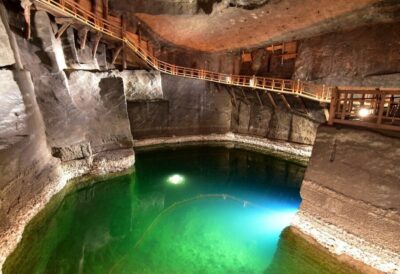
Wieliczka Salt Mine Fast-Track Ticket & Guided Tour
Read our review →
Day Trip: Auschwitz-Birkenau and Wieliczka Salt Mine from Krakow
Read our review →
Wieliczka Salt Mine Tour & Skip the Line Ticket
Read our review →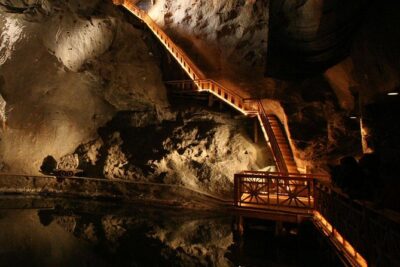
Krakow to Wieliczka: Salt Mine Guided Tour with Ticket & Transfer
Read our review →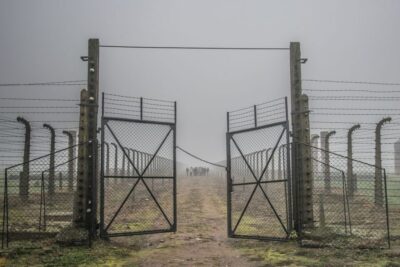
Auschwitz-Birkenau & Salt Mine Full-Day Guided Tour
Read our review →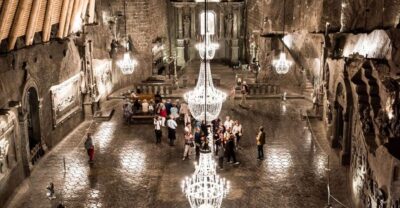
Wieliczka Salt Mine Tour Including Hotel Pick-Up
Read our review →Where else this one turns up