
Reviewed · SCHINDLER'S FACTORY TOURS
Krakow: Oskar Schindler’s Factory Entry and Guided Tour
Krakow’s wartime story becomes personal inside Oskar Schindler’s Enamel Factory, where photographs, films, objects, and recreated streets show how Nazi occupation changed daily life from 1939 to 1945. The museum covers Polish, Jewish, and German experiences rather than reducing the story to the film alone.
I like the preserved office and the striking Survivor’s Ark made from enamel pots. I also like the skip-the-line entry and the chance to hear the displays explained in English, French, German, Italian, Spanish, or Polish. The main concern is crowding: narrow passages can make it hard to see or hear the guide when the group is large.
Key points
- Schindler’s preserved office gives the museum a direct link to the factory’s past.
- The Survivor’s Ark uses thousands of enamel pots to create a powerful memorial image.
- A recreated tram ride shows everyday life in Krakow during the occupation.
- Plaszow camp artifacts and the Hall of Choices move the visit beyond film history.
- The 1.5-hour guided format works well for a first visit, but leaves little time to study every display afterward.
- Skip-the-line entry adds value during busy museum periods.
What This Krakow tour really covers
This is not simply a visit to a movie location. The museum uses Oskar Schindler’s former enamel factory as the setting for a much wider account of Krakow under Nazi rule.
You follow the city’s story from the beginning of the occupation through the destruction of Jewish life, the forced movement of people, the camp system, and the difficult choices faced by Poles, Jews, and German occupiers. The exhibition also places the war within Krakow’s long Polish-Jewish past, helping you see what was lost rather than treating the occupation as an isolated event.
That wider focus matters. Steven Spielberg’s Schindler’s List brought the factory and Schindler’s rescue efforts to worldwide attention, but the museum does not make the entire visit about one man. You get a picture of a city and its people, including the ordinary routines that continued under terrible pressure.
The guided tour lasts about 90 minutes. That is long enough to create a clear narrative, but short enough to fit into a busy day in Krakow. You should expect a serious visit rather than a casual attraction. The subject is painful, and the museum asks you to pay attention.
Other visits to Schindler's Factory:
- Krakow: Oskar Schindler’s Factory Entry Ticket & Guided Tour
★ 4.2 · 3,793 reviews - Krakow: Schindler’s Factory Tour with Entrance Ticket
★ 4.5 · 3,182 reviews - Krakow: Schindler’s Factory Skip-the-Line Ticket
★ 4.4 · 3,105 reviews
Meeting at Lipowa 4
The tour begins at Lipowa 4, at the main entrance of the museum. You wait there for a guide holding an excursions.city sign.
This detail is worth taking seriously. A museum entrance can be busy, and the factory complex is not the sort of place where you want to wander around guessing which group is yours. Arrive with enough time to find the main entrance and watch for the sign.
The activity ends back at the same meeting point. There is no transport between stops because the entire experience takes place at the factory museum. That keeps the visit simple and gives you a fixed starting point for planning the rest of your day.
The guide may lead the tour in English, French, German, Italian, Spanish, or Polish. Choose the language carefully when booking, since the value of this visit depends heavily on understanding the explanations. A guide can connect an object or photograph to the wider story in a way that a quick walk through the rooms cannot.
Entering Oskar Schindler’s former factory
The first major reward is the setting itself. You enter the former administrative building of Schindler’s enamel factory, now home to the historical museum.
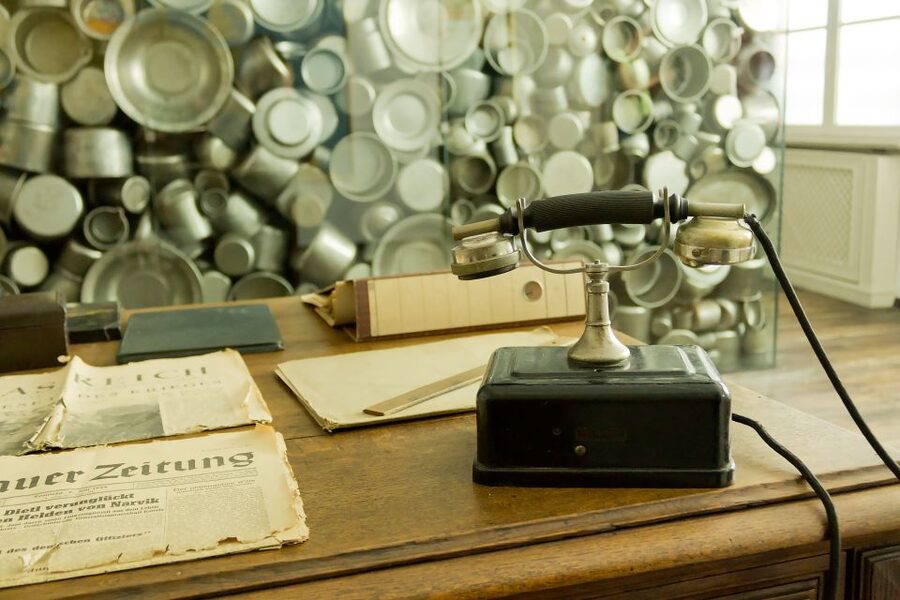
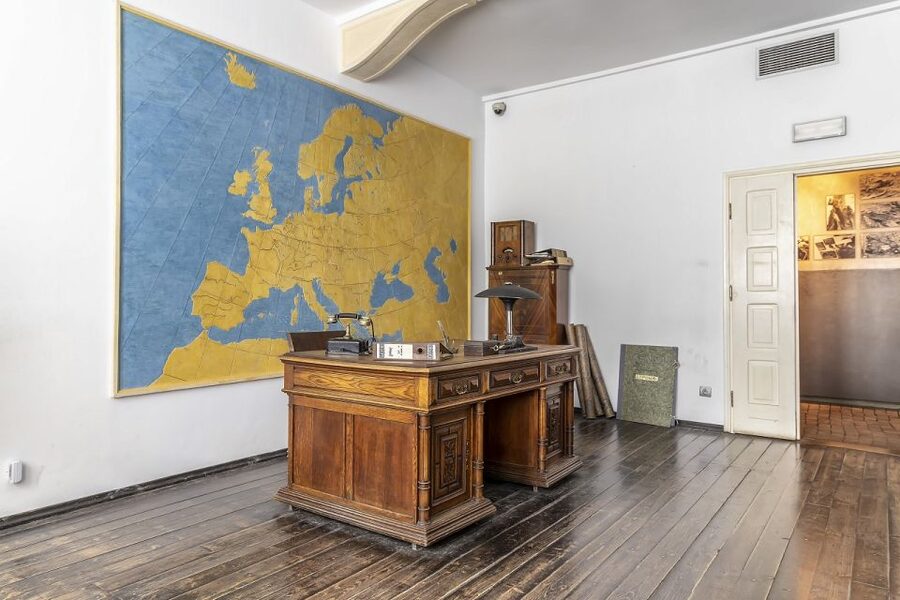
Schindler’s office has been preserved inside the building. For anyone familiar with Schindler’s List, this is the moment when the film connection becomes tangible. Yet the room is not presented as a movie set. It functions as part of a real historical site, linking the factory’s work, its employees, and Schindler’s actions to the wider occupation.
The museum also includes the Survivor’s Ark, a large sculptural installation made from thousands of enamel pots. The pots recall the kind of goods produced in the factory, while the form of the installation suggests survival and memory. It is one of the museum’s most memorable visual elements because it turns an industrial product into a symbol of human lives saved and lost.
I would not rush through this section. The office and the ark provide the strongest physical connection to the factory. They also help you understand why this particular building became such an important place for telling Krakow’s wartime story.
Krakow between 1939 and 1945
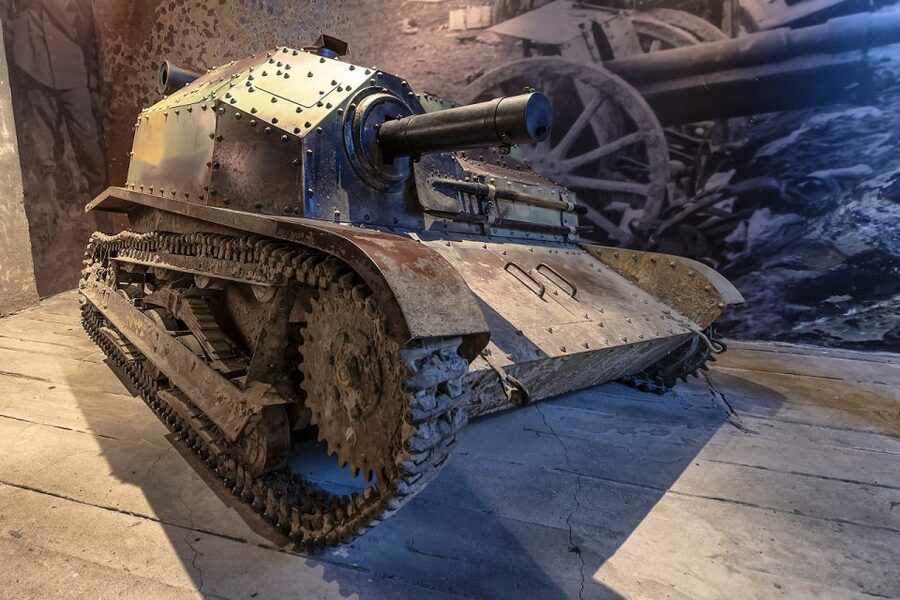
The permanent collection combines documentary photographs, eyewitness accounts, film documentaries, and multimedia presentations. These materials show both major events and the texture of ordinary life.
You might see how streets, homes, work, and public life changed as Nazi control tightened. The museum’s strength is the way it places personal accounts beside visual evidence. A photograph gives you a face or a street. An eyewitness account adds a human voice. A film or multimedia display can show how the city itself was altered.
The exhibition follows both Polish and Jewish experiences. That balance is important because the occupation did not affect every group in the same way, and the museum does not flatten those differences. Jewish life faced systematic persecution and destruction. Poles also lived under violent occupation, with their own restrictions, dangers, and moral choices. German occupiers controlled the city and carried out the policies that shattered its social order.
A guide is particularly useful here. You may understand what a display shows, but the explanation can clarify how one event affected several communities at once. The historical links are dense, and a short spoken introduction can save you from reading every panel in detail.
A few more Krakow half days to consider
- From Krakow: Auschwitz-Birkenau Guided Tour & Hotel Pickup
★ 4.5 · 33,358 reviews - From Krakow: Auschwitz-Birkenau Guided Tour & Hotel Pickup
★ 4.5 · 29,340 reviews - Krakow: Auschwitz Guided Tour with Optional Hotel Pickup
★ 4.5 · 15,280 reviews - Krakow–Zakopane: Cable Car, Chocholow Baths, Cheese & Vodka
★ 5.0 · 10,720 reviews
A city recreated inside the museum
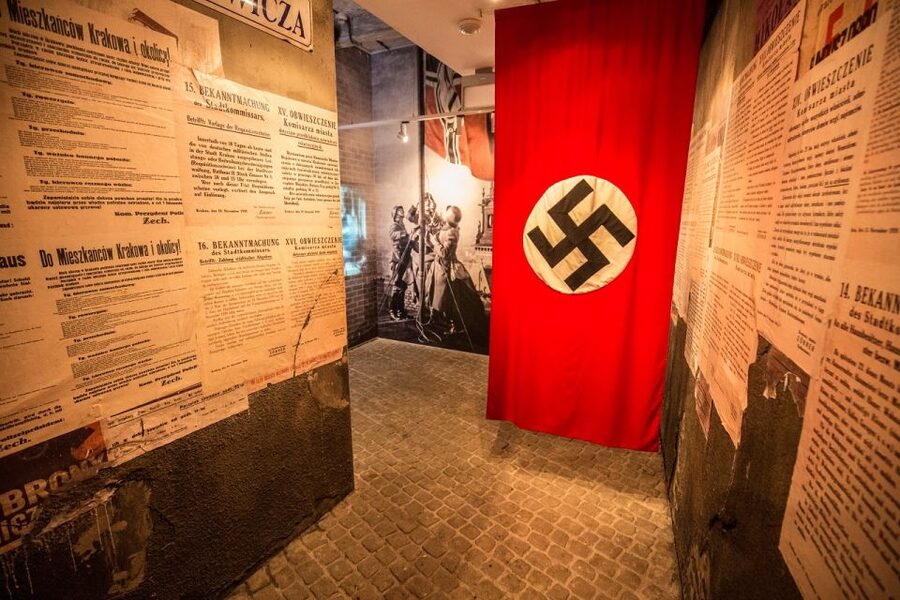
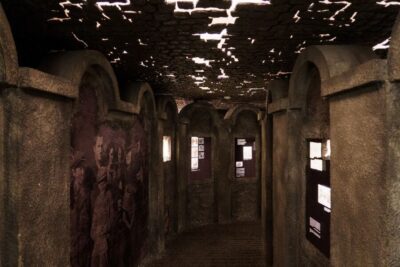
One of the more unusual parts of the visit is a theatrical recreation of Krakow’s historical city space. Instead of moving only through conventional display cases, you pass through a version of the city as it appeared before and during the war.
You also board a tram and watch a documentary about everyday life in Krakow. This gives the exhibition movement and sound. It is an effective way to shift the focus from individual artifacts to the city as a living place.
The tram section should appeal to you if you like museums that use settings and film rather than labels alone. It can also help younger visitors follow the story. At the same time, multimedia displays are best treated as part of the larger narrative, not the whole reason to come. The real value comes from how the guide ties these scenes to the occupation and the people who lived through it.
The recreated city space helps make one point clear: war did not happen somewhere abstract. It changed familiar streets, homes, workplaces, and public transport. The museum keeps returning you to that everyday scale.
The Jewish apartment and Plaszow camp artifacts
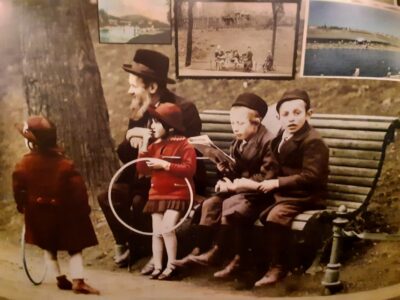
The tour continues into a typical Jewish apartment. This is a small-scale setting, but it carries considerable weight. A home tells you about family life, privacy, and routine before those things were disrupted.
The apartment also helps balance the larger political story. You are not only looking at orders, uniforms, and public events. You are being asked to think about people inside their homes, surrounded by the objects and spaces of normal life.
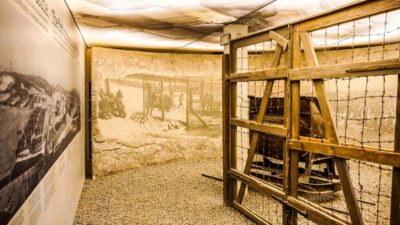
Later, you see artifacts connected with the Plaszow camp. These objects bring the machinery of persecution closer to the people who experienced it. The transition from a domestic interior to camp-related material is deliberately difficult. It shows how quickly ordinary life could be stripped away.
You should expect the subject matter to be distressing. The tour is educational, but it is not light entertainment, and the museum’s scenes and accounts can be emotionally demanding. Plan a little quiet time afterward if you know you prefer not to hurry straight into another activity.
The Hall of Choices
The Hall of Choices is a sculptural installation about the moral dilemmas people faced during the war. It shifts the visit from what happened to how people responded.
This is a useful closing idea for the museum because occupation forced decisions on nearly everyone. Some choices involved fear, self-protection, cooperation, resistance, or help for others. The installation does not turn those questions into an easy lesson with simple answers.
I appreciate this kind of ending because it encourages you to think rather than simply collect facts. You leave with questions about responsibility and courage, not just dates and names.
Your guide can help provide context, but the installation also benefits from a few quiet moments. If the group moves quickly, take in the main form first, then listen for the explanation. The space is meant to be considered, and crowding can make that harder.
Why the guided format is useful
A guide gives structure to a museum that covers a lot in a short time. Without guidance, you could spend too long on one display and miss how the parts connect. With a 90-minute tour, you get a planned route through the factory, the city recreation, the Jewish apartment, the camp artifacts, and the Hall of Choices.
The strongest benefit is context. The guide can explain why Schindler’s office matters, how the enamel pots relate to the factory, and where each display fits into the history of Krakow’s occupation.
The tradeoff is pace. A guided group cannot stop for every photograph or read every account at length. One useful piece of advice is to stay close enough to hear the explanation, then return to displays that catch your attention if time permits.
The tour format may not give you much extra time afterward. A Swedish-speaking participant specifically wished there had been more opportunity to study the cases after the guided portion. That is a fair concern. If you like reading every label, you may want to ask at the end if you can continue exploring, but the supplied tour details do not promise a separate unguided period.
Crowding and the narrow passages
The museum’s rooms and passageways can feel tight when several groups are moving through at once. A French-language participant found the group too large and sometimes stood too far away to follow the guide’s explanation.
This is the main practical weakness of the experience. A crowded room affects both sightlines and sound. You may understand the guide perfectly at the beginning, then lose part of the explanation when the group spreads around a display.
You can reduce the problem by staying near the guide without blocking other people. If you need a better view of a photograph or installation, wait until the group shifts rather than trying to push forward. The guide’s language ability matters less if you cannot hear the words.
The 4.7 out of 5 rating from 30 reviews suggests that the format works well for many people, but the crowding concern is specific and reasonable. A private tour would likely offer more control, but this activity is a shared guided visit, not a private museum experience.
Is the $45 price good value?
At $45 per person, the price includes museum admission and a professional guide. You also get skip-the-line entry, which can save time at a popular historical site.
I consider that fair value if you want the museum explained in a set amount of time. The factory is not just a small memorial room. It contains multiple rooms, installations, films, photographs, and historical settings. A guide helps you build a coherent picture without spending hours working out the sequence alone.
The value is lower if you prefer a very slow museum visit. The 1.5-hour schedule gives you a strong overview, but it may not suit you if you want to read every account or linger over each artifact. In that case, the included guide still provides useful orientation, but the pace may feel brisk.
The skip-the-line feature adds practical value, especially when you have a tight Krakow schedule. It does not make the visit private or uncrowded, however. You are paying mainly for admission, organization, and historical interpretation.
Who should book this experience?
I would choose this tour if you want a focused introduction to Krakow during World War II, especially if Schindler’s List sparked your interest but you want more than film locations.
It suits first-time museum visitors who appreciate a clear route and spoken explanation. It also works well for you if you want to see the preserved office, the Survivor’s Ark, the tram documentary, and the Plaszow-related artifacts without planning a self-guided visit.
Families with older children may find the recreated spaces and tram section helpful, but the subject is serious. The museum deals with occupation, persecution, and moral choices, so consider your group’s ability to handle difficult material.
You may prefer another format if you dislike groups, have trouble hearing in crowded rooms, or want to spend long stretches with individual displays. In that case, the large-group limitation could overshadow the benefits.
Practical details before you go
The tour begins and ends at the museum’s main entrance at Lipowa 4. Look for a guide carrying an excursions.city sign.
The duration is 1.5 hours, and available starting times vary. Check the schedule before booking so the visit fits around other plans.
English, French, German, Italian, Spanish, and Polish are available. The activity includes entrance fees and a professional guide.
You can cancel up to 24 hours before the activity for a full refund, and the reserve-now, pay-later option lets you hold a place without paying immediately. These policies are useful if your Krakow schedule is still changing.
Should you book Oskar Schindler’s Factory tour?
Book it if you want a serious, well-organized account of Krakow under Nazi occupation, with the factory setting, Schindler’s preserved office, strong visual installations, and a guide to connect the pieces. The $45 price makes sense when you value skip-the-line entry and clear historical context.
Think twice if you need a quiet, highly flexible museum visit. Narrow corridors and large groups can make it hard to hear or study every display, and the 90-minute route may leave you wanting more time.
For most first-time visitors who want to understand why this factory matters, the guided format is a solid choice. Go in expecting a museum about Krakow’s people and wartime choices, not only a tribute to a famous film.
FAQ
Where does the tour start?
The tour starts at the main entrance of Oskar Schindler’s Factory, at Lipowa 4.
How do I find the guide?
Wait at the main museum entrance for a guide holding an excursions.city sign.
How long does the tour last?
The guided tour lasts 1.5 hours.
Where does the activity end?
The activity ends back at the meeting point at Lipowa 4.
What does the price include?
The price includes entrance fees and a professional guide.
What languages are available?
The tour is available in English, French, German, Italian, Spanish, and Polish.
Does the tour include skip-the-line entry?
Yes. Skip-the-ticket-line entry is included.
Can I cancel for a refund?
You can cancel up to 24 hours in advance for a full refund.
Recently added in Krakow
- Auschwitz-Birkenau and Krakow Private Car Trip from Katowice★ 4.3 · 3 reviews
- Wawel Castle, Old Town with St. Mary’s Church Guided Tour★ 5.0 · 3 reviews
- Wawel Castle, Cathedral, Rynek Underground Tour with Lunch★ 5.0 · 3 reviews
- From Krakow: Chocholow Thermal Hot Springs (hotel pick up)★ 5.0 · 3 reviews
- Private tour to Zakopane and Thermal Baths from Krakow★ 5.0 · 3 reviews
- Legends of Cracow ROBOTIC SHOW★ 4.0 · 3 reviews
- From Krakow: Zakopane and Thermal Pools Guided Trip★ 5.0 · 3 reviews
- Guided Beer Tour in Krakow★ 4.5 · 3 reviews
Schindler's Factory Tours, compared.
Oskar Schindler’s Factory Entry Ticket & Guided Tour
Read our review →
Schindler’s Factory Tour with Entrance Ticket
Read our review →
Schindler’s Factory in Krakow: Guided Tour & Skip the Line Ticket
Read our review →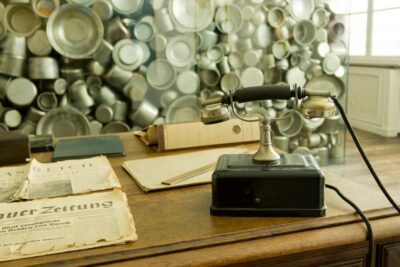
Schindler’s Factory Ticket with Guided Tour Option
Read our review →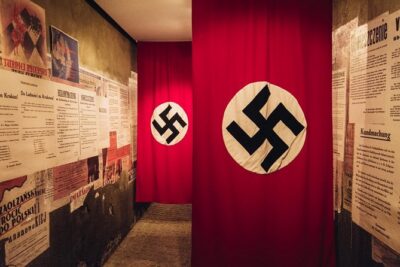
Krakow Schindler’s Factory Guided Tour with Admission Ticket
Read our review →
Krakow Schindler’s Factory Museum Guided Tour in English
Read our review →Where else this one turns up