

Reviewed · OLD TOWN TOURS
Krakow: Old Town Private Guided Walking Tour
Krakow’s best sights fit into one remarkable walk, from the old city gate to royal tombs, a dragon’s cave, and Europe’s largest medieval market square. The tour gives you the city’s main story in a single private four-hour outing, with time for questions and local tales rather than a rushed checklist.
I like the clear route through Krakow’s historic center, and I like the chance to ask your own questions as you go. Guides such as Jadwiga, Enrique, Agnesz, and Ranadaa have been praised for clear explanations, good pacing, humor, and help with practical matters such as restaurant advice and arranging another tour.
The main drawback is that admission tickets are not included. You will see the castle, cathedral, churches, and museums from the route, but entering some interiors may require extra time and money. Four hours also gives you a strong introduction, not a complete study of Krakow.
Key points at a glance
- A private route from Florian’s Gate to Wawel Hill: Begin at one of Krakow’s most recognizable medieval entrances and walk through the historic core.
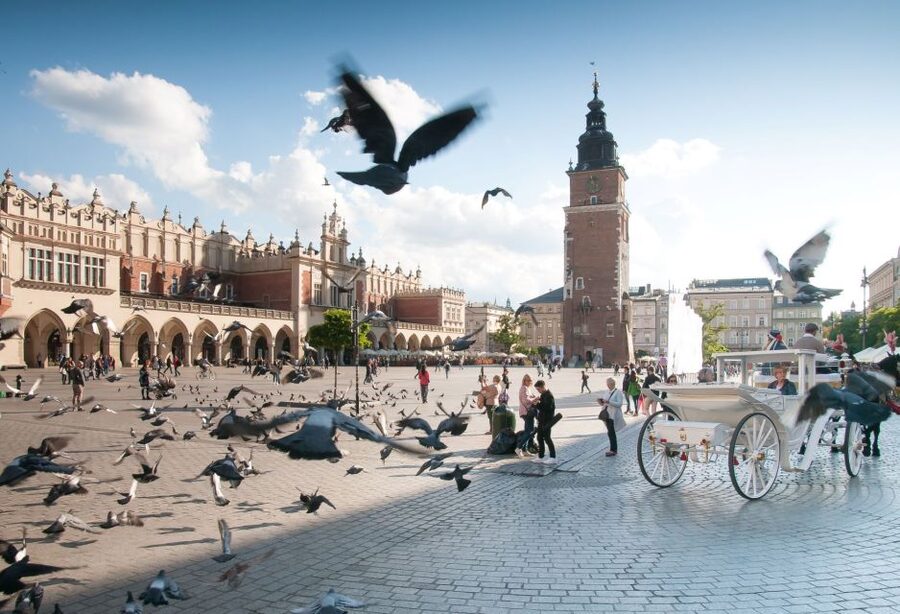
- The Main Market Square is the tour’s grand centerpiece: See Sukiennice, St. Mary’s Basilica, and the civic space once used for royal processions.
- Wawel combines legend and Polish royal history: Visit the castle hill, cathedral area, monarchs’ tombs, dragon statue, and riverside cave.
- Jagiellonian University adds a scholarly side to Krakow: Stop at Collegium Maius and one of Poland’s oldest seats of learning.
- The guide speaks your language: English, Spanish, Italian, Portuguese, German, Russian, and Polish are offered.
- The price is low for a private tour: At $16 per person, the value is strong, though entrance fees are extra.
Starting at Florian’s Gate in Krakow
Your guide waits by Florian’s Gate on Florian Street, holding your name. Arrive on time, since the tour is built around a four-hour walking route and a late start could cut into the final stops.
Florian’s Gate is a fitting place to begin. It formed part of Krakow’s old defensive system and opens toward the historic center. From here, you head along Florianska, one of the city’s best-known streets.
Florianska leads straight toward the Main Market Square. Today, you will find shops, restaurants, and clubs along the route. In earlier centuries, the street carried formal coronation and funeral processions for Polish monarchs. That contrast gives the walk a useful sense of time: Krakow is not a museum frozen behind glass. It is a working city built around an old ceremonial core.
A private guide makes this opening stretch more useful than simply following a map. You can ask about the street’s buildings, the people who lived here, and the changes that shaped Krakow. The strongest guide accounts describe an easy pace and lively storytelling, so this should suit you if you prefer conversation over a memorized speech.
More Old Town Tours in Krakow
- Old Town Krakow & Wawel Castle Walking Tour
★ 5.0 · 1,508 reviews - Krakow: Bike Tour of Old Town, Jewish Quarter and the Ghetto
★ 4.9 · 1,155 reviews - Krakow: The Old Town Walking Tour
★ 4.8 · 794 reviews
The Main Market Square and Sukiennice
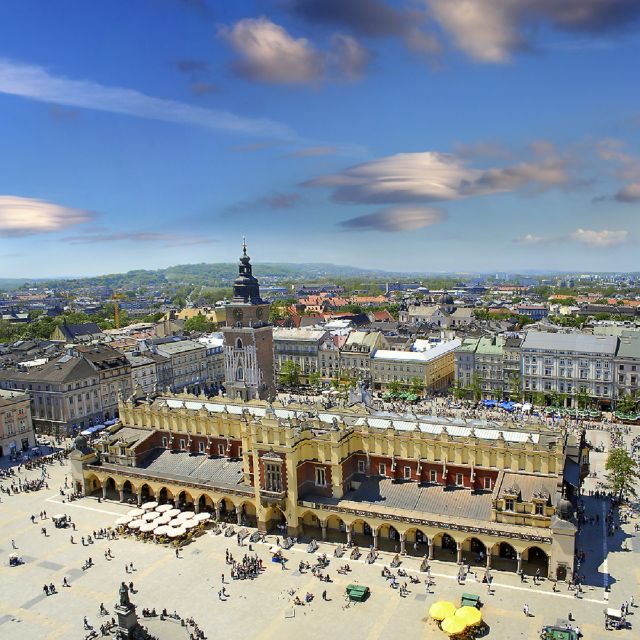
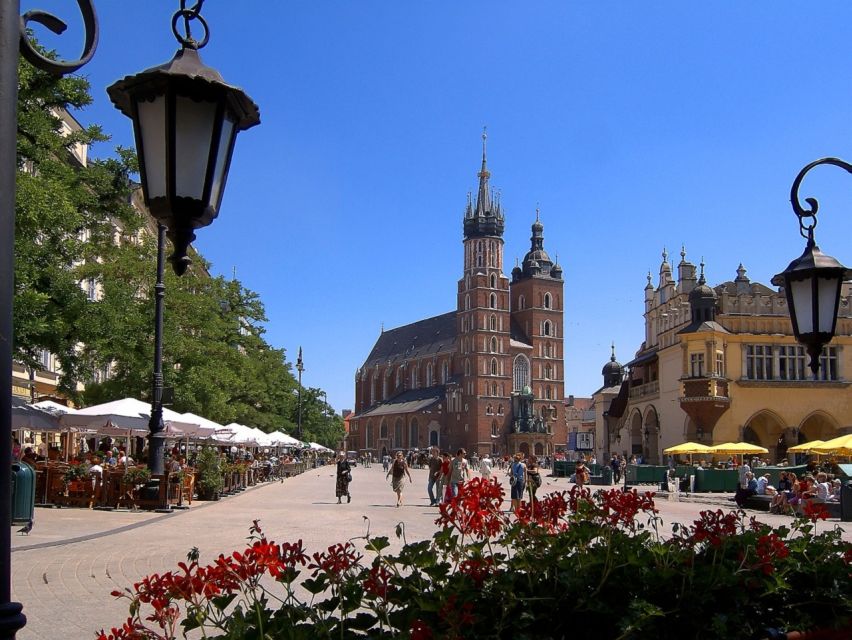
The Main Market Square is the visual and historical heart of the route. It is described as the largest medieval market square in Europe, and its broad open space helps you understand Krakow’s old commercial power.
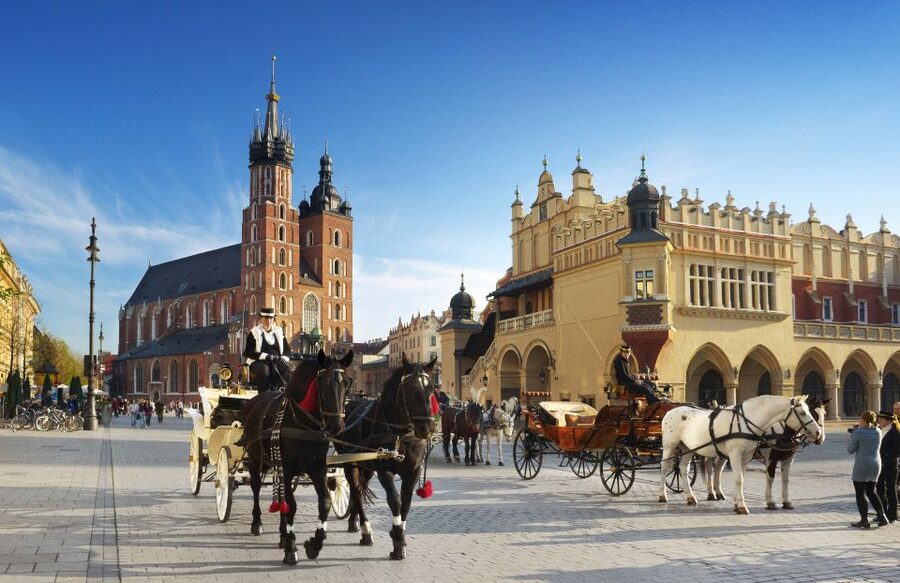
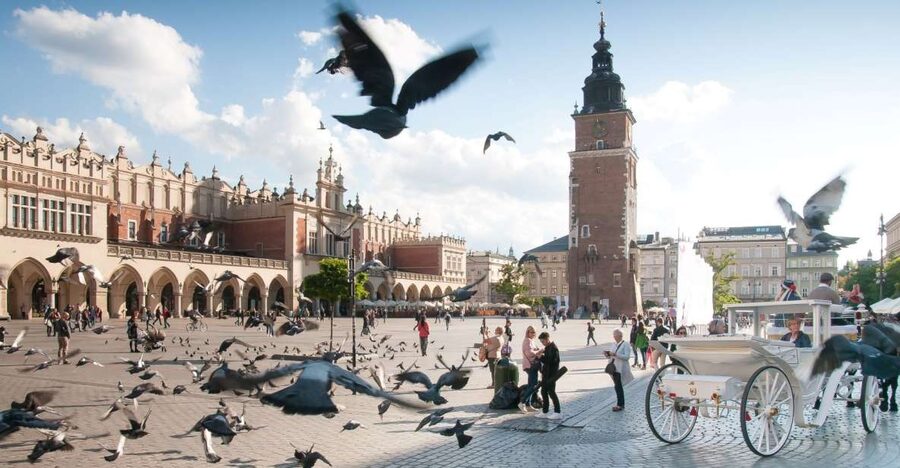
This is not just a place to take a quick photo. The square gathers many of the city’s key landmarks in one view, including St. Mary’s Basilica and Sukiennice, also called the Cloth Hall. The square still acts as a meeting point, but its earlier role was more formal and political. Royal processions passed through here, and trade shaped the city’s daily life.
Sukiennice is one of Krakow’s most recognizable symbols. The long building remains a commercial center, now filled with stalls selling typical Krakow souvenirs. You can stop for a photograph, browse amber and other local goods, or save your shopping for after the walking portion.
I would avoid buying anything large during the tour. You still have several stops ahead, and the four-hour route is better enjoyed with free hands. If you want souvenirs, ask your guide what is worth considering and what is simply a tourist trinket.
The square can also be the busiest part of the walk. Your guide can help you focus on the architecture and history instead of simply moving through the crowds. This is one place where a private format has a practical benefit: you can pause for a question or a photograph without waiting for a large group.
Collegium Maius and Poland’s oldest university
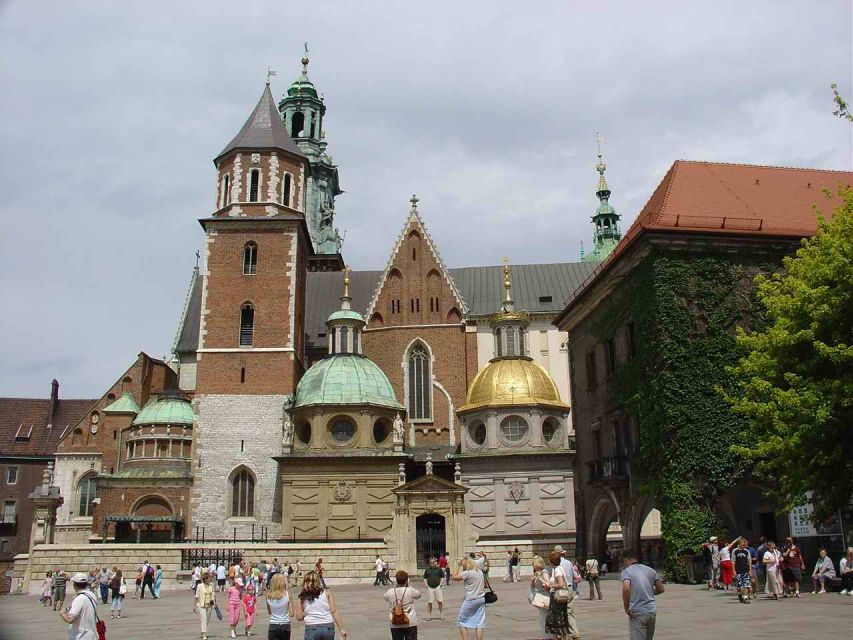
The walk continues to Collegium Maius and the Jagiellonian University. The university is the oldest in Poland and one of the oldest in this part of Europe, giving Krakow a strong academic character alongside its royal and religious past.
Collegium Maius is especially useful as a stop because it adds a different chapter to the city. Krakow was not only a royal capital and trading center. It was also a place of study, debate, and scholarship. Your guide explains the setting as part of the wider Old Town rather than treating it as an isolated building.
The tour does not include entrance fees, so you should not assume that an interior visit is covered. If you want to spend serious time inside Collegium Maius, ask the guide how that would affect the route and budget for any ticket separately.
This is also a good point to ask for details that interest you. A guide may focus on architecture, university life, Polish politics, or famous figures depending on your questions. That flexibility is one of the best reasons to choose a private walk rather than a fixed group excursion.
Wawel Hill, royal tombs, and the cathedral
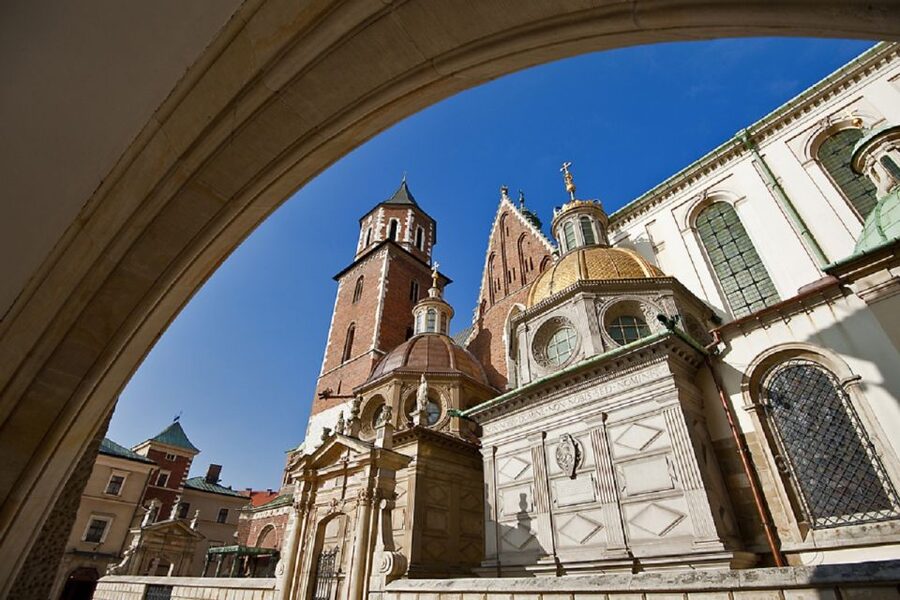
Wawel Hill is the tour’s most important historical stop. It was an ancient center of power connected first to the legendary founder Krak, or Krakus, and later to dukes, princes, church leaders, and Polish kings.
The hill gives you a concentrated lesson in Poland’s past. The castle represents royal authority, while the cathedral links that authority to religion and national ceremony. In the cathedral area, you can see the bell tower and the catacombs where many Polish monarchs are buried.
Do not treat this as a quick castle photo stop. Wawel is one of those places where your understanding improves when a guide explains how legend and documented history overlap. The route presents both sides: the old stories that helped shape Krakow’s identity and the real rulers who governed from this hill.
Entrance fees are separate, and four hours cannot cover every room, exhibit, and religious interior in detail. You will need to decide what matters most. If you want a full castle visit, cathedral interior, and catacombs, ask about tickets before the walk begins. Otherwise, use the guided stop to understand the setting, then return later for a longer visit.
The hill may also be the point where you notice the physical demands of the route. The tour is wheelchair accessible, but the experience still involves an extended walk through historic streets and around a hilltop complex. Wear comfortable shoes, and plan for uneven medieval paving.
More Walking Tours in Krakow
- Creepy Krakow: 2-Hour City Walking Tour
★ 4.7 · 1,131 reviews - Krakow: Kazimierz Jewish Quarter Walking Tour
★ 4.8 · 571 reviews - Kraków: Old Town & Wawel Castle Walking Tour in English
★ 4.8 · 532 reviews - Krakow: Evening Walking Tour with Spooky Stories
★ 4.7 · 500 reviews
Krakow’s dragon beside the Vistula
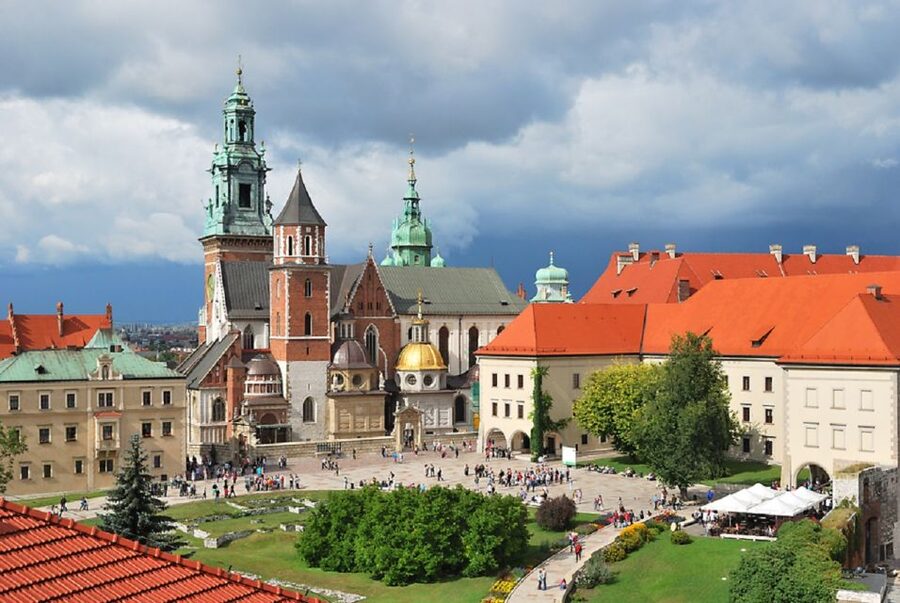
Near Wawel, you will see the six-meter Wawel Dragon statue and the cave beside the Vistula River where the creature was said to live.
The legend tells of a dragon that terrorized local people and demanded cattle as offerings. In another version, the price was young women. The story is a useful reminder that Krakow’s identity is not built only from kings and church leaders. Folklore remains part of the city’s public life, and the dragon is one of its most playful symbols.
The statue and cave also give the route a change of mood. After royal burials and centuries of political history, you get a simple local tale that works for children and adults. If you are walking with family, this is likely to be one of the easiest stories to remember.
The cave itself is part of the guided sightseeing route, but the supplied details do not promise a separate cave entry. If going inside matters to you, confirm what is possible on the day and allow for any additional ticket or time.
St. Mary’s Basilica and the bugle call
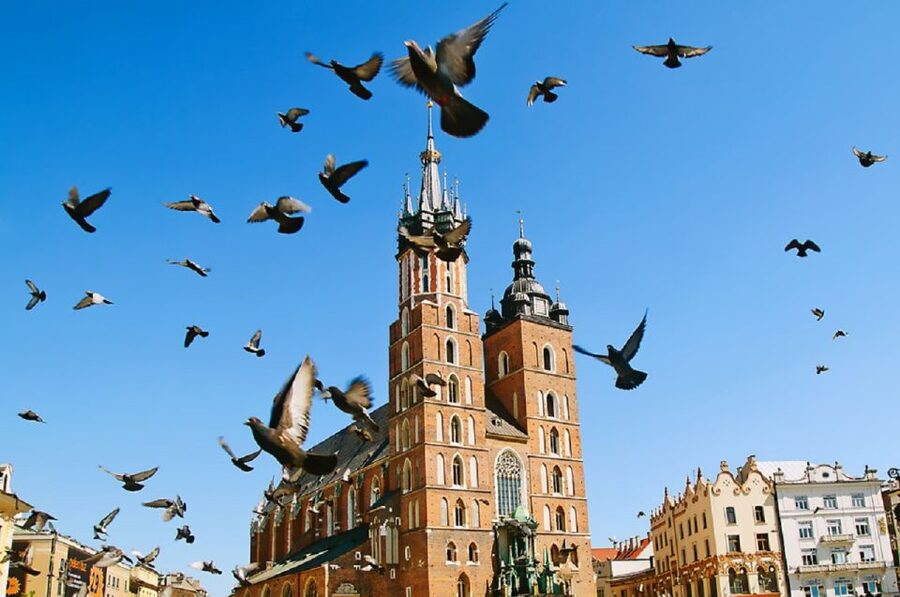
Back in the Old Town, the route leads to St. Mary’s Basilica. Its high altar was created by Veit Stoss, known in Polish as Wit Stwosz, and the church is also noted for its bugle call and star-covered murals by Jan Matejko.
This is a stop where a guide’s explanation can make a real difference. The church’s exterior is easy to photograph, but the details inside require context. Ask about the altar, the mural-covered vaulting, and the tradition behind the bugle call.
Again, entrance is not included. The tour may show you the basilica as part of the walking route, but you should check whether an interior visit is planned and budget for a ticket if needed. Religious sites may also have their own visiting rules, so follow your guide’s advice.
The basilica is close to the Main Market Square, making it easy to revisit after the tour. I would note the location during the walk, then return later if you want a quiet look at the interior without feeling pressed by the schedule.
The Barbican and Krakow’s old defenses
The final major sight is the Barbican, the imposing fortress that formed part of the city’s defensive system. Together with the surviving walls and Florian’s Gate, it helps you picture the medieval city as a protected settlement rather than a collection of attractive streets.
This is a strong ending because it brings the route back to its starting point. You begin at Florian’s Gate, pass through the old center and royal hill, then finish with the walls and Barbican before parting from your guide.
The Barbican is especially valuable if you want a sense of Krakow’s scale. The Main Market Square shows the city’s civic and commercial life. Wawel shows royal power. The defensive walls explain how the city protected both.
After the guide leaves, you can continue exploring on your own. That flexibility matters. You may want to return to Sukiennice, enter St. Mary’s Basilica, spend more time around Wawel, or settle into a restaurant near the square.
What the private format adds
This is a private group tour, not a large shared walk. That means the route can be more responsive to your interests, within the limits of the four-hour schedule.
The guide can answer questions as they come up, adjust the pace, and explain less familiar parts of Krakow’s past. Past guide assignments have included Jadwiga, who guided in Italian, Enrique, Agnesz, and Ranadaa. The strongest accounts describe guides who were personable, thorough, clear in several languages, and willing to offer practical help beyond the basic route.
One Italian-language guide helped answer questions and translated into Polish while arranging another afternoon tour. Another gave restaurant advice for the evening. Those details matter because a good city guide can help you use the rest of your time in Krakow, not only the hours spent walking.
Language choice is broad: English, Spanish, Italian, Portuguese, German, Russian, and Polish are available. Confirm your preferred language when booking, especially if your group has limited English.
The private format does not mean you receive unlimited sightseeing time. The tour lasts four hours, and there are many major stops. You should think of it as a well-organized introduction, not a substitute for every museum and interior in Krakow.
Is $16 per person good value?
At $16 per person, this is a low price for a private four-hour introduction to Krakow. The value is strongest if you are visiting for the first time, want a clear route, and plan to explore selected interiors on your own afterward.
The price does not include entrances. That is the main cost point to watch. Wawel’s castle and cathedral areas, St. Mary’s Basilica, Collegium Maius, and other sites may require separate tickets or have separate visiting arrangements. The tour still saves you the work of connecting the sights and understanding their place in the city.
For a small group, the price is particularly appealing. You receive a personal guide without paying for transportation, since the experience is entirely on foot. If your priority is a deep museum visit, this may be less useful than spending four hours inside one or two major sites.
The tour also offers free cancellation up to 24 hours before the start and lets you reserve now and pay later. Those terms help if your Krakow plans are still shifting, but the key decision remains simple: do you want a broad city introduction or detailed access to interiors?
Who should book this Krakow walk?
I would recommend it to first-time visitors who want to understand Krakow’s layout quickly. It also suits families, couples, and small groups who prefer asking questions without sharing a guide with a crowd.
It is a good fit if you enjoy stories that move from medieval trade to university life, royal power, church art, military defenses, and local folklore. The dragon statue and cave make the route accessible for younger walkers, while Wawel and the Jagiellonian University give adults plenty of historical material.
You should think twice if four hours of walking sounds tiring or if your main goal is a detailed visit to Wawel’s interiors. You can still use the tour as an orientation, but plan extra time and entrance fees afterward.
The tour is wheelchair accessible, though historic streets and hilltop areas can still require careful pacing. Ask about the exact route if someone in your group has mobility concerns, and allow time for breaks.
FAQ
Where does the tour begin?
The meeting point is Florian’s Gate on Florian Street. Your guide waits there with your name, and you should arrive on time.
How long does the Krakow Old Town tour last?
The tour lasts four hours, or about half a day.
Is this a private tour?
Yes. It is offered for a private group rather than as a shared group experience.
Which languages are available?
Guiding is available in English, Spanish, Italian, Portuguese, German, Russian, and Polish.
Are entrance tickets included?
No. The guide is included, but entrances are not. You should allow extra money and time if you want to enter sites along the route.
Is the tour wheelchair accessible?
Yes, the activity is listed as wheelchair accessible.
Should you book it?
Book this tour if you want a low-cost private introduction to Krakow’s main historic sights. The route covers an impressive range: Florian’s Gate, Florianska, the Main Market Square, Sukiennice, Jagiellonian University, Wawel Hill, royal tombs, the dragon, St. Mary’s Basilica, and the Barbican.
Choose it with the understanding that the guide provides the route and context, not admission to every interior. If you use the walk to get your bearings, then return to Wawel, the basilica, or Collegium Maius on your own, $16 buys a useful start to your Krakow visit.
Recently added in Krakow
- Auschwitz-Birkenau and Krakow Private Car Trip from Katowice★ 4.3 · 3 reviews
- Wawel Castle, Old Town with St. Mary’s Church Guided Tour★ 5.0 · 3 reviews
- Private tour to Zakopane and Thermal Baths from Krakow★ 5.0 · 3 reviews
- Wawel Castle, Cathedral, Rynek Underground Tour with Lunch★ 5.0 · 3 reviews
- From Krakow: Chocholow Thermal Hot Springs (hotel pick up)★ 5.0 · 3 reviews
- Legends of Cracow ROBOTIC SHOW★ 4.0 · 3 reviews
- From Krakow: Zakopane and Thermal Pools Guided Trip★ 5.0 · 3 reviews
- Guided Beer Tour in Krakow★ 4.5 · 3 reviews
Old Town Tours, compared.




Bike Tour of Old Town, Jewish Quarter and the Ghetto
Read our review →

Sightseeing EcoCruise around the Old Town of Gdansk
Read our review →
Where else this one turns up