
Reviewed · CITY TOURS
Wrocław: World War II and the non-existent city of Breslau
Wrocław’s wartime story is not tucked away in a distant museum. It runs through the Market Square, past the Monopol Hotel, along Świdnicka Street, and toward the cathedral island. This two-hour walk follows the city once known as Breslau, from its close ties to the Nazi regime to the destruction that began when it became Festung Breslau in 1945.
I like the route’s clear before-and-after structure, and I like that it ends at Ostrów Tumski, where the restored city gives you a sharp view of what survived. The main caution is important: one booking produced almost a standard city tour with very little wartime detail, so make sure your guide understands that World War II history is your priority.
Key points to know before you book
- The route links Nazi-era sites with 1945 battle locations, rather than treating the war as an abstract subject.
- Partisan Hill includes wartime bunkers and offers a modern city view from a former command area.
- The Market Square survived much of the destruction, giving the tour a useful starting point for comparing old and new Wrocław.
- The walk ends at Ostrów Tumski, close to the cathedral and the city’s fiercest 1945 fighting.
- You receive a private guide for up to 14 people, with Polish or German available.
- The tour costs $209 per group, which makes the value strongest when several people share the fee.
Starting at Piwnica Świdnicka in the Market Square
The meeting point is the entrance to Restauracja Piwnica Świdnicka beside Wrocław’s Old Town Hall. That puts you in the middle of the Market Square, an ideal place to begin because the square miraculously survived the war and the city’s later destruction.
You will spend about 30 minutes around Rynek. This is not just a quick orientation stop. The guide uses the square to explain how Breslau functioned before 1945 and how its public identity was tied to German rule and the Nazi movement from the early 1930s.
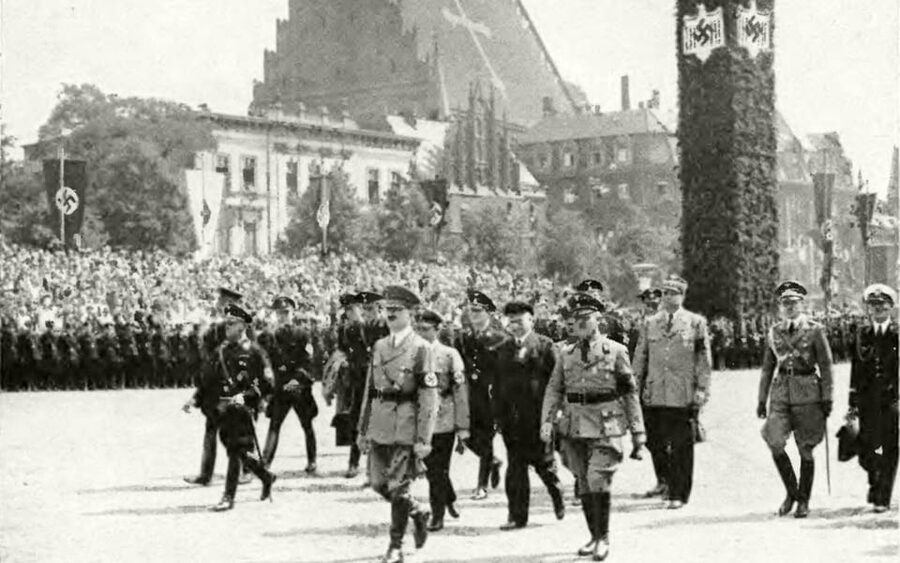
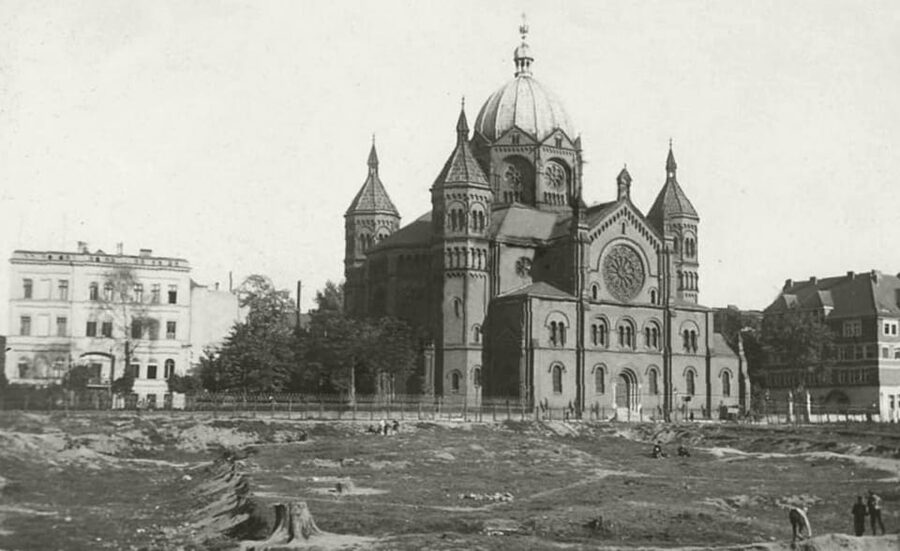
The setting also helps you grasp the scale of the change. You are looking at a polished historic center, yet the tour asks you to picture the same streets during the final months of the war. Old photographs from 1933 to 1945 are part of the experience, so you can compare the buildings in front of you with their earlier appearance.
Give yourself a few minutes before the start to find the entrance. The stated meeting point is specific, but a busy square can still slow you down.
A few more Wroclaw half days to consider
- Wroclaw: E-Car Tour and Audio Guide
★ 4.6 · 1,738 reviews - Wroclaw: 2-Hour Private Guided Tour by Electric Car
★ 4.8 · 805 reviews - Wrocław: Old Town and Ostrów Tumski Walking Tour in English
★ 4.8 · 311 reviews
Solny Square and the first civil-defense bunkers
The next stop is Plac Solny, a short walk from the Market Square. You spend around 10 minutes here, hearing about the first bunkers built in Wrocław to protect local people.
This is one of the useful parts of the route because it shifts the story away from leaders and military commands. Wartime history also means ordinary residents trying to live with air raids, fear, propaganda, and the steady conversion of a city into a defensive position.
The guide explains what traces of those early bunkers remain today. Do not expect a long underground visit. The itinerary describes a guided pass-by, so the value comes from the explanation and the location rather than from exploring a large bunker complex.
Plac Wolności, the Monopol Hotel, and Nazi ceremony
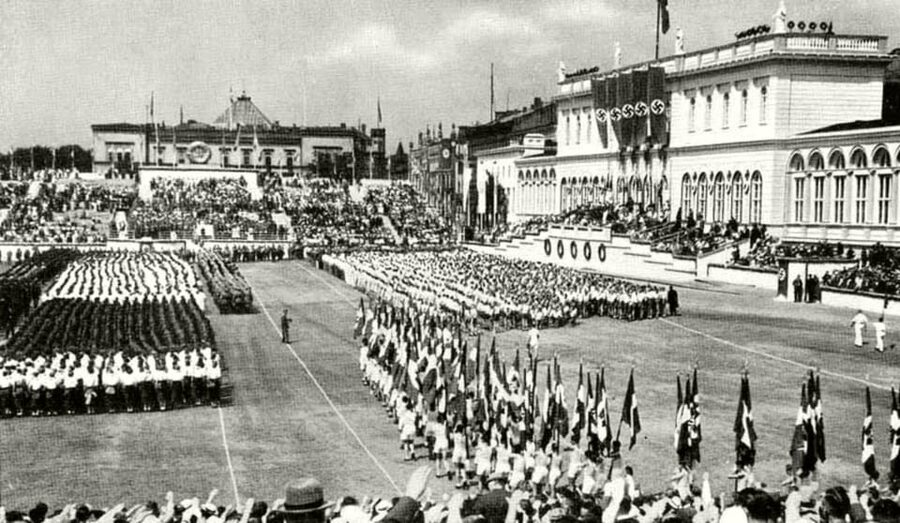
From Solny Square, the route continues toward Plac Wolności, formerly Castle Square. Allow about 10 minutes here for the wartime story.
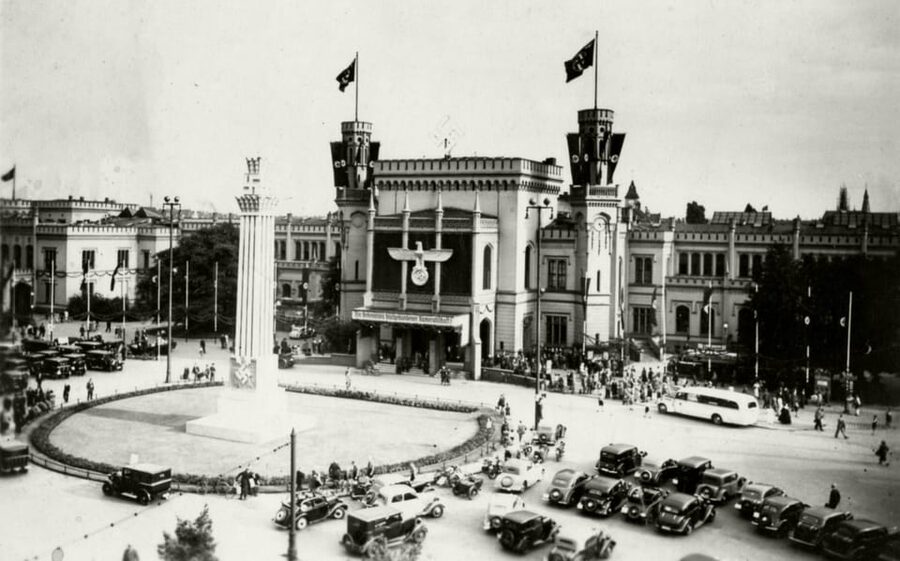
Until 1945, this area hosted Nazi parades and torchlight processions, known in German as Fackelzüge. The setting shows how public spaces were used for ceremony and political display. You are not only hearing about military events. You are seeing where the regime presented itself to the people of Breslau.
The walk then passes Hotel Monopol, another 10-minute stop. Hitler visited Breslau several times and greeted supporters from the hotel balcony. That detail gives the building a specific place in the city’s political past, rather than leaving it as a vague address connected to the period.
You can also consider the contrast here. A hotel balcony and a parade route may look ordinary now, but in the 1930s they helped turn politics into public theater. The guide’s old photographs should make that contrast easier to see.
Świdnicka Street, from Nazi welcome to Soviet arrival
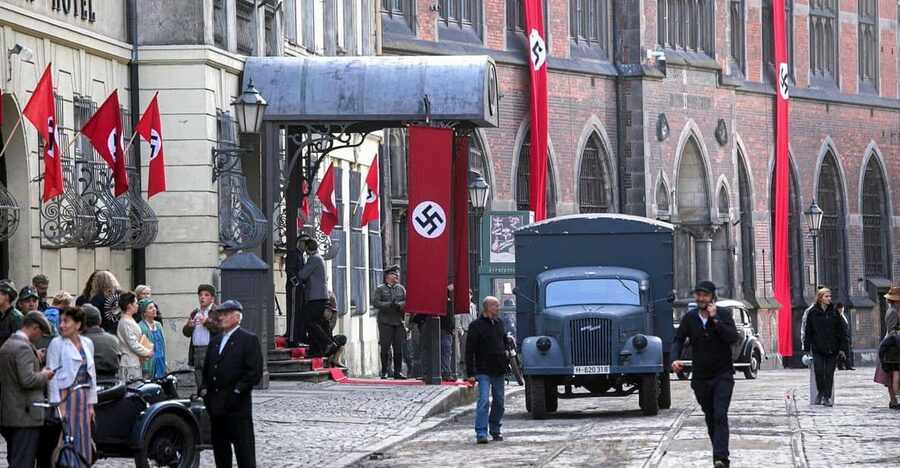
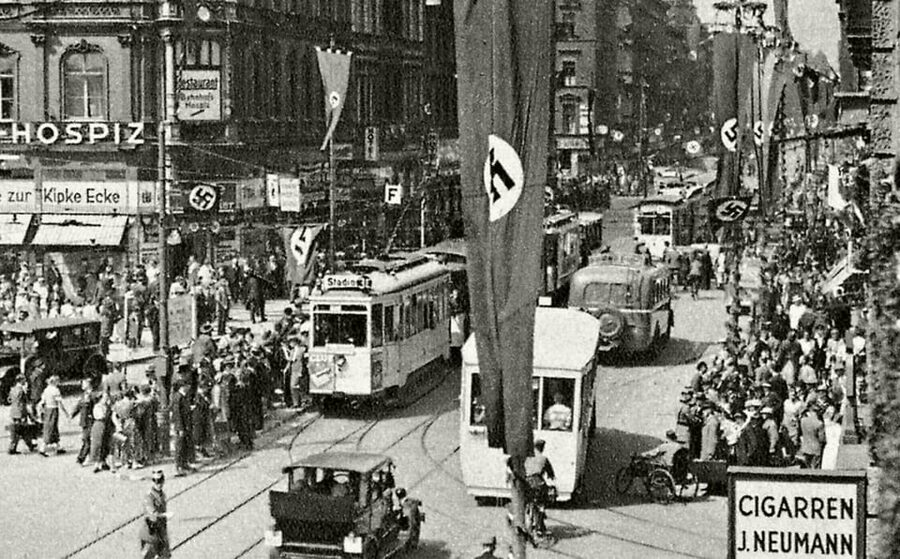
Świdnicka Street was one of Breslau’s representative streets. It was used to welcome Hitler during visits, and in 1945 the victorious Soviet Army entered the city along this route.
That change in meaning is one of the strongest ideas in the tour. The same street moved from staged loyalty to military defeat. A short walk can connect the city’s Nazi years with the collapse of German Breslau at the end of the war.
The itinerary lists Hotel Monopol separately, but Świdnicka Street forms the link between these locations. You will spend roughly 10 minutes on the street itself, so the guide’s storytelling matters. This is also where the tour can either feel sharply focused or drift into a general city walk.
The warning from one booking is worth taking seriously. A customer specifically expected a focused account of the period and instead received almost no wartime content. At the start, tell your guide plainly that you booked this for Breslau’s Nazi era, the fortress battle, and the destruction of 1945. If Norbert is leading your group, his excellent personal rating suggests a strong possibility of a lively explanation, but no guide is named as guaranteed for every departure.
A different kind of day in Wroclaw:
- Wroclaw: Private Old Town Guided Walking Tour (2 hours)
★ 4.8 · 275 reviews - Old Town Wrocław Walking Tour
★ 5.0 · 249 reviews - Wroclaw: City Tour Sightseeing By Golf Cart Shared Or Privat
★ 4.8 · 189 reviews - Auschwitz-Birkenau Tour from Wrocław
★ 5.0 · 129 reviews
Partisan Hill and the command of Festung Breslau
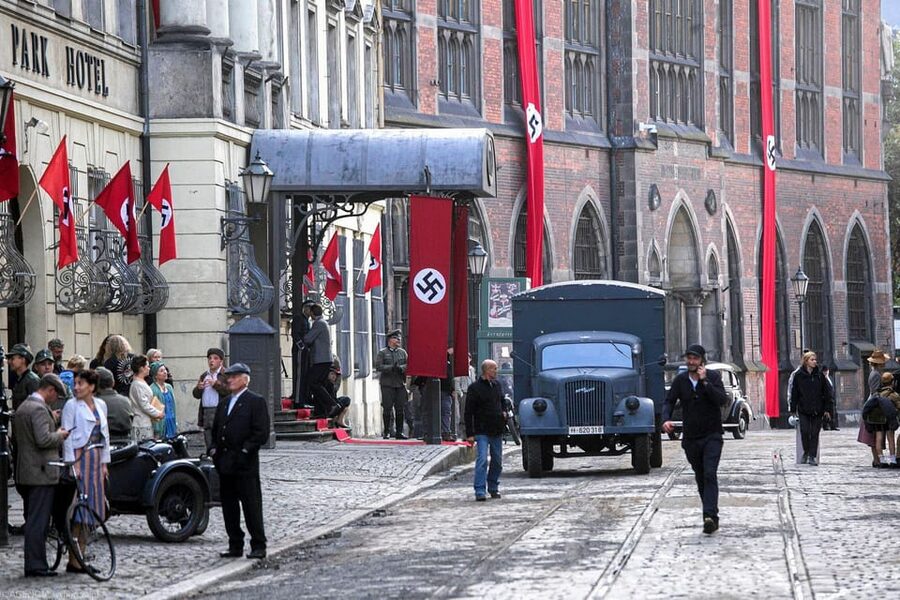
Wzgórze Partyzantów, or Partisan Hill, is the longest stop after the Market Square, at about 30 minutes. Its former German name was Lieblichs Höhe. During the final battle, the command of the Breslau Fortress was located here, with underground bunkers beneath the hill.
This is the point where the story turns fully toward 1945. When Breslau was declared Festung Breslau, or Fortress Breslau, the city was ordered to resist. That decision brought intense fighting and widespread destruction. The tour uses Partisan Hill to explain the military side of the city’s last stand.
The bunkers remain, although the tour description does not promise that you will enter them. Expect to see and discuss the site, not a full bunker expedition. That distinction matters if underground military structures are your main reason for booking.
Today, Partisan Hill is a pleasant public place with cafes and beer gardens. You can look across Wrocław from a spot once tied to the city’s defense. I like that contrast because it shows how a place can change function without losing its historical weight.
This is also a good photo stop. Bring a phone or camera, but listen first. The view helps you understand the city’s layout, especially the direction toward the older cathedral district.
Along Dunikowski Boulevard toward the cathedral island
The route continues along Bulwar Xawerego Dunikowskiego for about 20 minutes. This section leads you toward Ostrów Tumski, the oldest part of Wrocław.
The walk gives the tour some breathing room after the political and military stops. You are still moving through a wartime story, but the focus shifts toward the final battles and the physical changes made after 1945.
Ostrów Tumski was the site of some of the fiercest fighting for the city. Today, the cathedral and surrounding buildings have been beautifully restored. That restoration can make the wartime damage hard to imagine, which is exactly why the old photographs matter.
From the route, you reach Ceglarskie Hill, formerly Holtei Höhe, for a view of the cathedral district. The stated photo stop lasts about five minutes at Ostrów Tumski, but you finish the tour in front of the former NSDAP headquarters and can then explore the island on your own.
Ending at the former NSDAP headquarters
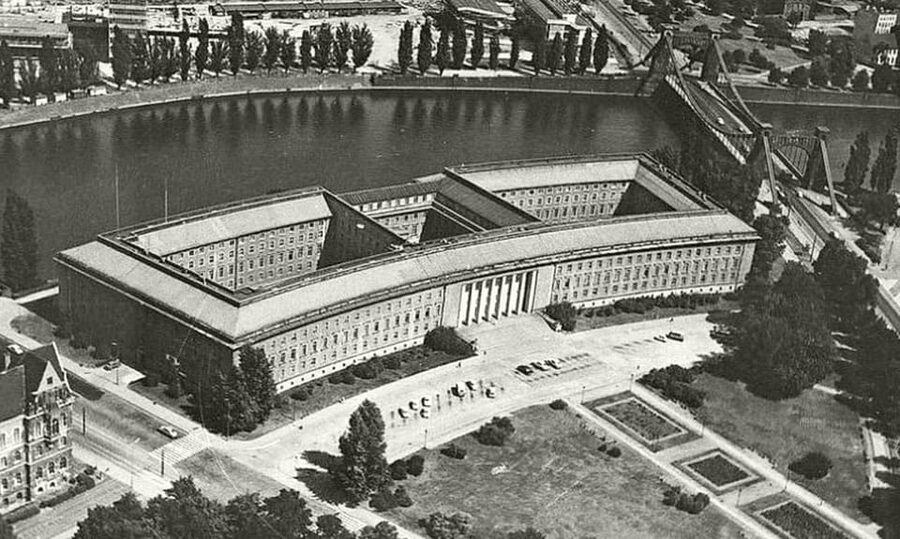
The final point is in front of the former headquarters of the NSDAP authorities in Breslau. This is a fitting end because the tour begins with the public center of the city and finishes at a building tied to the political machinery that shaped Breslau before the war.
The headquarters was the largest NSDAP authority center in Eastern Germany, according to the historical account used for the tour. Seeing the building after tracing parade routes, Hitler’s visits, civil-defense bunkers, and the fortress command gives the story a clear progression.
You will not finish at the Market Square, so plan your next stop around Ostrów Tumski. The cathedral and other monuments can be visited independently after the guide leaves. That is a benefit if you want to continue at your own pace, but it also means the tour does not include a full guided visit inside the cathedral or its monuments.
What the two-hour format really gives you
Two hours is enough for a focused introduction, not a complete study of Breslau during the war. The route covers many locations, and several stops last only 10 minutes. You will get a connected account of the city’s political setting, public ceremonies, bunkers, final defense, and rebuilding.
The pace should suit you if you prefer walking and short explanations at real locations. It may feel too brief if you want detailed military maps, extended photograph analysis, or an interior bunker visit.
The private format helps. Your group can include up to 14 people, and the guide is reserved for your party rather than shared with a large crowd. You can ask follow-up questions and request more time on a subject, although the total duration remains two hours.
The tour is offered in Polish or German. No English option is stated, so English-speaking visitors should confirm the language before paying. It is wheelchair accessible, a useful point for anyone concerned about access, though the route includes city streets, hills, and outdoor stops.
Is $209 a fair price for a private Wrocław walk?
At $209 per group, the cost is easier to justify with several people. A full group of 14 pays about $15 each before any currency conversion or booking charges. For two people, the same tour costs roughly $104.50 per person, so the value depends heavily on group size.
You are paying for a professionally licensed guide and a private experience, not admission to a museum or an underground bunker. The price makes sense if you want the guide’s interpretation and the ability to ask questions. It is less attractive if you mainly want to see the sights without much explanation.
The strongest value comes when your party has a real interest in the wartime period. You are covering a wide route from Rynek to Ostrów Tumski, with several politically important locations along the way. A general city walk would not necessarily connect these places through the story of Breslau’s Nazi years and 1945 destruction.
Flexible booking adds practical value. You can cancel up to 24 hours before the start for a full refund, and you can reserve now while paying later. Those terms help if your Wrocław schedule is still changing.
Who will get the most from this experience?
I would choose this tour if you want a private introduction to Wrocław’s World War II story and prefer standing in the places where events happened. The route suits history-minded couples, families with older children, and small groups who can share the fixed price.
It is also a good choice if you want to understand why modern Wrocław looks so different from German Breslau. The photographs and the walk between surviving and rebuilt areas help make that change visible.
I would hesitate if you want a museum-style presentation with extensive documents, military detail, or long indoor visits. The tour is mainly outdoors, and the itinerary does not promise entry into the bunkers or the former headquarters.
Most important, confirm the historical focus at the beginning. The experience depends on the guide giving enough attention to the Nazi period and the 1945 fortress battle. One disappointing booking shows that the title alone does not guarantee the depth you expect.
Should you book the Breslau wartime walk?
Book it if you want a private, location-based history walk and your group can share the $209 cost. The route is well chosen, moving from the Market Square to Nazi parade spaces, Partisan Hill, the riverside, and Ostrów Tumski.
I would book with one condition: make your subject clear before the walk starts. Ask for the focus to remain on Breslau between 1933 and 1945, the local Nazi administration, the city’s residents, the declaration of Festung Breslau, and the destruction that followed.
If your guide is Norbert, you may be in particularly good hands. If not, the private format still gives you a chance to steer the conversation. This is not a complete wartime course, but it can give you a clear framework for exploring Wrocław’s difficult past on your own afterward.
FAQ
Where does the tour start?
It starts at the entrance to Restauracja Piwnica Świdnicka in Wrocław’s Market Square, beside the Old Town Hall.
Where does the tour finish?
The tour finishes at Ostrów Tumski, in front of the former headquarters of the NSDAP authorities in Breslau.
How long does the tour last?
The tour lasts two hours.
What languages are available?
A live guide is available in Polish or German.
Is this a private tour?
Yes. The guide is reserved for your group, with up to 14 people allowed.
Can I cancel the booking?
You can cancel up to 24 hours in advance for a full refund. You can also reserve now and pay later.
Recently added in Wroclaw
- CITY QUEST WROCLAW: unlock the mysteries of this city!★ 5.0 · 3 reviews
- Wroclaw: Old City Walk and Cruise with Small Gondola★ 4.7 · 3 reviews
- Private Transfer from Wroclaw (WRO) Airport to Wroclaw city centre★ 5.0 · 3 reviews
- Wroclaw : Walking Custom Tour with a Local Guide★ 4.8 · 3 reviews
- Wrocław: Ostrów Tumski and Old Town Highlights Private Tour★ 5.0 · 3 reviews
- Wroclaw Jewish Quarter Private Guided Tour★ 5.0 · 3 reviews
- Electric Scooter Tour: Full Tour (Old Town + Ostrów Tumski)★ 5.0 · 3 reviews
- Segway Tour Wroclaw: Ostrów Tumski Tour – 1,5-Hours of Magic!★ 5.0 · 3 reviews
City Tours, compared.


Gdańsk City Sights & History Guided Walking Tour in English
Read our review →
Extended City Sightseeing Tour – Eco Buggy Golf Cart
Read our review →
Private Tour: Warsaw City Sightseeing by Retro Fiat
Read our review →Where else this one turns up