
Reviewed · CITY TOURS
Wrocław: Guided City Tour with a Local
Wrocław’s best feature is its variety: Gothic churches, a grand market square, Baroque interiors, a striking railway station, UNESCO-listed Centennial Hall, leafy parks, and hundreds of small dwarf statues. This three-hour walk with Dariusz Wojciechowski gives you a local view of that mix, with routes adjusted to your interests rather than one fixed script.
I like the chance to see both famous sights and less obvious corners, including quiet courtyards and unusual entrances. I also like the small-group format and Dariusz’s gift for explaining architecture and Polish, Silesian, and Wrocław history in a lively way. The main limitation is time: three hours cannot properly cover every major sight, and entry tickets are not included.
Key points to know before booking
- A flexible route: Choose a focus on major sights, themed subjects, or lesser-known parts of Wrocław.
- A strong local guide: Dariusz Wojciechowski leads in English or Polish and has written maps and guidebooks.
- Wrocław’s essential center: See Market Square, the Gothic Town Hall, the University, and Cathedral Island.
- More than a standard old-town walk: The route can include the historic railway station, Centennial Hall, parks, and dwarf figurines.
- Useful for first-day orientation: You receive personal suggestions for places to visit after the walk.
- Plan for outdoor walking: Wear comfortable shoes and clothing suited to the weather. The activity is not suitable for wheelchair users.
Wrocław in three hours, with room to choose
This tour works best as an introduction to Wrocław rather than a complete survey of the city. You meet at the gate marked Zaułek Solny, a practical central starting point, then set out on a route shaped by your interests and the guide’s judgment.
That flexibility matters in Wrocław. You may want the main medieval sights, a closer look at architecture, a history-focused walk, or a route through corners you would never find alone. The tour description allows for all of these approaches, so it is worth telling Dariusz what interests you before the walk begins.
The pace is intended for sightseeing on foot. You should expect time outdoors, frequent stops, and plenty of explanation rather than a quick march from one photo stop to the next. Comfortable shoes are essential, especially if your chosen route links several parts of the city.
The small-group setting should also make it easier to ask questions. Dariusz guides in English and Polish, and his work as an author of maps and guidebooks suggests a practical approach to showing a city, not just reciting dates.
A few more Wroclaw half days to consider
- Wroclaw: E-Car Tour and Audio Guide
★ 4.6 · 1,738 reviews - Wroclaw: 2-Hour Private Guided Tour by Electric Car
★ 4.8 · 805 reviews - Wrocław: Old Town and Ostrów Tumski Walking Tour in English
★ 4.8 · 311 reviews
Market Square and the Gothic Town Hall
Wrocław’s Market Square is the natural heart of a first visit. Its scale, colorful buildings, and mix of architectural periods give you a fast lesson in the city’s changing fortunes.
The Gothic Town Hall is the star of the square. Its detailed stonework and tall, intricate form are the kind of features that can blur together when you explore alone. A guide can point out what you are looking at and connect the building to the wider story of Wrocław and Silesia.
This is also where a local guide can add value beyond basic sightseeing. The square is easy to photograph, but it is harder to understand without context. You want to know why the city developed around this space, how Polish and Silesian history overlap, and how architecture reflects different periods of rule and rebuilding.
Do not expect an extended museum visit here. The tour fee covers the guide, not entry tickets for museums or monuments. If a particular interior matters to you, ask about it early and confirm whether admission can fit the route and schedule.
Ostrów Tumski and the city’s cathedral quarter
Ostrów Tumski, also called Cathedral Island, offers a different mood from the commercial center. Its churches and historic streets give the walk a more solemn feel, and the area helps explain the religious and civic importance of Wrocław.
The word island can be slightly misleading in modern terms, but the name points to the area’s position among the Oder River channels. For a visitor, the key value is the contrast: after the open energy of Market Square, you get a quieter setting shaped by churches and older buildings.
A guide-led visit is useful here because the significance of the buildings is not always obvious from the outside. Dariusz can place the cathedral quarter within the story of Poland and Silesia, helping you see Wrocław as a city influenced by several cultures and political periods.
Because the route is flexible, you should not assume that every church interior or monument will be visited. The supplied information names Ostrów Tumski as a major stop, but the exact order and depth depend on your chosen route, starting time, and interests.
Baroque splendor at the University
Wrocław University brings a burst of theatrical Baroque design into the walk. The building is noted for its decorated interiors and grand style, offering a strong contrast with the Gothic Town Hall and the religious architecture of Ostrów Tumski.
This is a good stop if you care about art and architecture. Baroque spaces are designed to impress, and a guide can help you read the details instead of treating the room as a pretty backdrop. The stop also opens a discussion about education, power, and the changing cultural identity of the city.
Keep in mind that admission to monuments is not included. The tour can show you the University and explain its importance, but any interior access that requires a ticket may cost extra. If the Baroque rooms are a priority, ask Dariusz how the route handles entry before you book or at the meeting point.
A different kind of day in Wroclaw:
- Wroclaw: Private Old Town Guided Walking Tour (2 hours)
★ 4.8 · 275 reviews - Old Town Wrocław Walking Tour
★ 5.0 · 249 reviews - Wroclaw: City Tour Sightseeing By Golf Cart Shared Or Privat
★ 4.8 · 189 reviews - Auschwitz-Birkenau Tour from Wrocław
★ 5.0 · 129 reviews
Wrocław’s historic railway station
The tour also highlights what is described as Poland’s most beautiful train station. That is a matter of taste, but the station’s inclusion is useful because it widens the story beyond churches and old-town façades.
Railway stations often reveal how a city connected itself to a larger region, and this stop gives Wrocław a more modern historical setting. You get another architectural style and a reminder that the city’s importance was never limited to its medieval center.
The station may be especially valuable if you arrive in Wrocław by train. Instead of treating it as a place you simply pass through with luggage, you can look at it as part of the city’s built story. The available information does not specify how much time is spent inside or which features are covered, so consider it a featured stop rather than a guaranteed long visit.
Centennial Hall and Wrocław’s modern side
Centennial Hall, listed by UNESCO, adds a major twentieth-century landmark to the route. Its design represents a sharp change from the Gothic and Baroque buildings in the center, making it an important part of a fuller picture of Wrocław.
The hall is also a reason to clarify your preferred route. It is not the same kind of stop as Market Square or Ostrów Tumski, and fitting it into a three-hour walking tour may affect how much time remains for the central sights. The tour offers several route options, but it does not promise that every named attraction appears in one outing.
If modern architecture and UNESCO sites interest you most, say so when arranging the tour. If this is your first time in Wrocław and you want the old town, Cathedral Island, University, station, and Centennial Hall in one compact walk, you may find the schedule too tight.
Dwarf figurines and the pleasure of looking down
Wrocław’s small dwarf figurines are one of the city’s most playful details. They appear around the streets in different poses and settings, turning an ordinary walk into a gentle treasure hunt.
The dwarfs are not a substitute for the major monuments, but they give the city a lighter character. They also reward attention. You may be looking up at a church tower one moment and scanning the pavement the next.
A guide can make this more enjoyable by pointing out figures you would otherwise miss. The information provided does not promise a set number of dwarfs or a dedicated dwarf route, so think of them as part of the city walk rather than a formal collection tour.
This is one of the details that suits families and first-time visitors, though the tour is still primarily a history and culture walk. If your main goal is to photograph as many dwarfs as possible, ask for a route with that emphasis.
Courtyards, side streets, and less familiar Wrocław
The tour’s most personal feature may be its attention to places beyond the standard checklist. Routes can include unusual sightseeing, little-known corners, mysterious entrances, and atmospheric courtyards.
That promise should be understood in practical terms. You are not signing up for a fixed list of secret locations, and the exact choices depend on the guide and your interests. But the flexible format gives you a better chance of seeing how the city works between its headline monuments.
This is where Dariusz’s local knowledge matters most. A standard guidebook can tell you where Market Square is. A local guide can decide when it is worth turning into a side passage, pausing at an overlooked building, or connecting a small detail to the wider story of Wrocław.
The personal approach also makes this useful for repeat visitors. If you have already seen the main square, ask for a thematic or unconventional route instead of repeating the most familiar stops.
How Dariusz’s guiding style shapes the walk
The strongest praise centers on Dariusz’s ability to explain a large amount of history in an interesting, friendly way. He is described as passionate, open, and attentive, with a talent for making three hours pass quickly.
That matters because Wrocław’s story can become complicated. The city sits in Silesia, and its past involves changes in culture, borders, political control, and national identity. A guide who can organize those subjects clearly helps you understand the city without turning the walk into a lecture.
You should still be comfortable with a talkative, information-heavy tour. Dariusz is praised for the volume of detail, so this will likely suit you if you enjoy history, architecture, and historical curiosities. If you prefer a short introduction with little explanation, the amount of information may feel like a lot.
The language choice is straightforward: live guiding is available in English or Polish. The experience is small-group, but the exact group size is not stated, so do not assume it is a private tour unless your booking says so.
What the $41 price delivers
At $41 per person, this is not the cheapest way to see a city center. The value depends on how much you use the local planning and interpretation.
You are paying for three hours with a local guide, a small-group experience, route flexibility, and personal recommendations. You also get help connecting famous sights to the history of Wrocław, Silesia, and Poland. For a first visit, that can save time and help you choose what to explore on your own afterward.
The price does not include museum or monument entry tickets. That is important if you want to go inside the University, a church, or another paid site. Your total cost may rise if the route includes admissions, so budget separately.
I see the strongest value here for people who want more than a basic old-town stroll. If you only need directions to Market Square and a few quick facts, you could explore independently. If you want a flexible route, detailed explanation, and recommendations shaped around your interests, the price is easier to justify.
Practical points before you meet
The meeting point is the gate with the name Zaułek Solny. Check the exact starting time when you book, since the tour runs for three hours and available start times vary.
Wear shoes suitable for extended walking and dress for the weather. The route includes outdoor city streets, parks, and several districts or areas depending on the chosen plan.
The experience is not suitable for wheelchair users. The provided information does not describe a specific alternative route, so accessibility needs should be considered before booking.
You can cancel up to 24 hours in advance for a full refund. The reserve-now, pay-later option also lets you hold a place without paying on the day of booking, which is useful when your Wrocław schedule is still shifting.
Who should book this Wrocław walk?
I would choose this tour early in a Wrocław visit if I wanted a clear sense of the city before exploring alone. The combination of Market Square, Ostrów Tumski, the University, the railway station, and the dwarf figurines gives you several ways into Wrocław’s identity.
It is especially well suited to:
- First-time visitors who want a broad introduction
- History and architecture enthusiasts
- Repeat visitors seeking courtyards and less familiar corners
- Small groups wanting a route shaped around their interests
- English or Polish speakers who prefer a live local guide
- Visitors who value recommendations for the rest of their stay
I would hesitate if you need a fully fixed itinerary, guaranteed interior admissions, step-free access, or a tour focused only on one attraction. The freedom to change the route is useful, but it also means you should communicate your priorities clearly.
Should you book it?
Book this walk if you want Wrocław explained as a living city rather than reduced to a list of monuments. Dariusz’s strength is the combination of local detail, historical context, and personal guidance, with enough flexibility to include major sights or quieter corners.
Skip it if you prefer to wander alone, avoid long explanations, or need every admission included in the price. For most visitors who enjoy history and architecture, the three hours should give you a useful foundation, as long as you accept that Wrocław’s many attractions cannot all receive equal time.
FAQ
How long does the Wrocław guided city tour last?
The tour lasts three hours. Starting times depend on availability when you book.
What languages are available?
The live tour guide speaks English or Polish.
Where is the meeting point?
Meet at the gate marked Zaułek Solny.
Is the tour private?
The experience is described as a small-group tour. The exact group size is not provided.
What sights can the tour include?
Possible sights include Ostrów Tumski, Market Square and its Gothic Town Hall, Wrocław University, the historic railway station, Centennial Hall, parks, and dwarf figurines. The route can be adjusted to your interests.
Are museum and monument tickets included?
No. Entry tickets for museums and monuments are not included.
What should I bring?
Bring comfortable shoes and clothing suited to the weather.
Can wheelchair users join?
The activity is not suitable for wheelchair users.
Recently added in Wroclaw
- CITY QUEST WROCLAW: unlock the mysteries of this city!★ 5.0 · 3 reviews
- Wroclaw: Old City Walk and Cruise with Small Gondola★ 4.7 · 3 reviews
- Private Transfer from Wroclaw (WRO) Airport to Wroclaw city centre★ 5.0 · 3 reviews
- Wroclaw : Walking Custom Tour with a Local Guide★ 4.8 · 3 reviews
- Wrocław: Ostrów Tumski and Old Town Highlights Private Tour★ 5.0 · 3 reviews
- Wroclaw Jewish Quarter Private Guided Tour★ 5.0 · 3 reviews
- Electric Scooter Tour: Full Tour (Old Town + Ostrów Tumski)★ 5.0 · 3 reviews
- Segway Tour Wroclaw: Ostrów Tumski Tour – 1,5-Hours of Magic!★ 5.0 · 3 reviews
City Tours, compared.
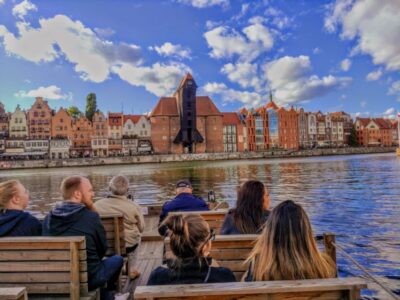


Gdańsk City Sights & History Guided Walking Tour in English
Read our review →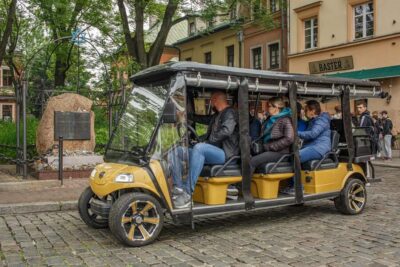
Extended City Sightseeing Tour – Eco Buggy Golf Cart
Read our review →
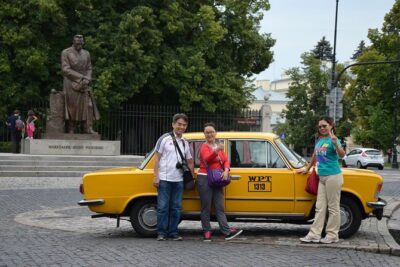
Private Tour: Warsaw City Sightseeing by Retro Fiat
Read our review →Where else this one turns up