
Reviewed · CITY TOURS
Wrocław: Following the dwarfs’. See the city differently! 2h
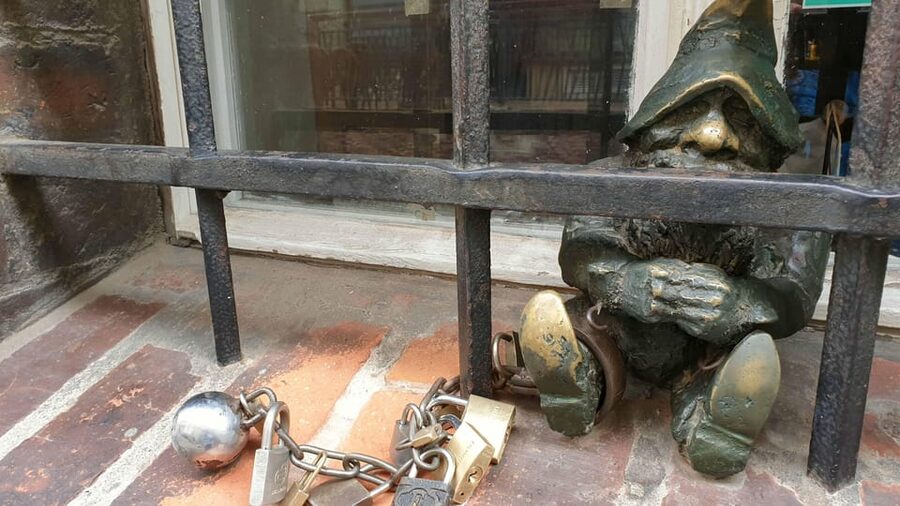
Wrocław’s most unusual city tour follows its smallest residents. Bronze dwarves hide around the Old Town, and each one points to a place, person, event, or local story. You begin beside Moczymorda, the drinking student outside Piwnica Świdnicka, then hunt for figures linked to the city’s past.
I like the way this tour turns a standard walk into a game, especially for children. I also like the private format, since your guide can keep the pace suited to your group and explain the jokes behind each dwarf. The main consideration is that this is a story-led walk, not an inside visit to Wrocław’s monuments, and the separate dwarf map costs €6 per person if you want one.
Key points at a glance
- Moczymorda starts the story at Piwnica Świdnicka, connecting the tour to old student customs and the city’s famous restaurant.
- Papa Dwarf recalls the Orange Alternative, a playful anti-communist movement that used dwarf imagery and street happenings.
- The Swordsman near the University of Wrocław has a comic student legend, including pawned clothes and saber duels.
- The route covers the main Old Town sights, including Market Square, Plac Solny, the Bridge of Penitents, and the university.
- A private guide leads your group in Polish or German, with the walk lasting two hours.
- The tour works well for mixed ages, though adults should expect plenty of anecdotes rather than a formal monument-by-monument lecture.
Why Wrocław’s dwarves make a good city introduction
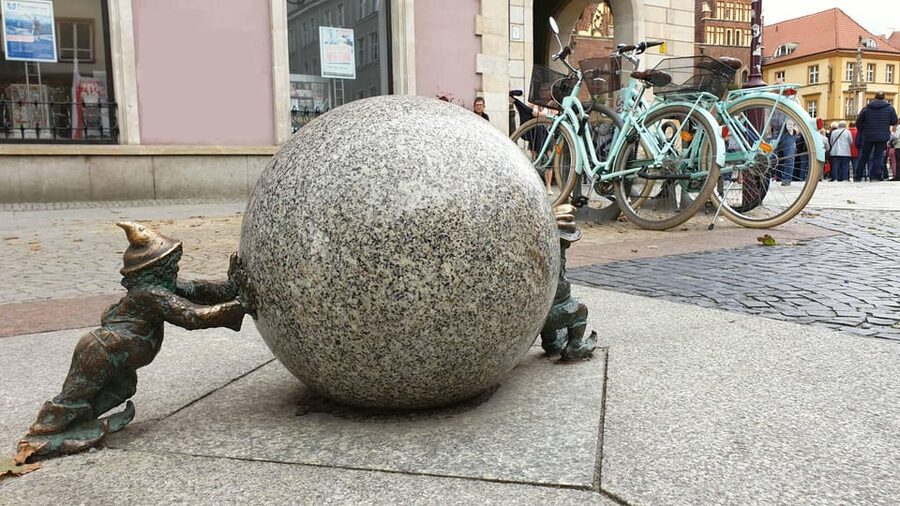
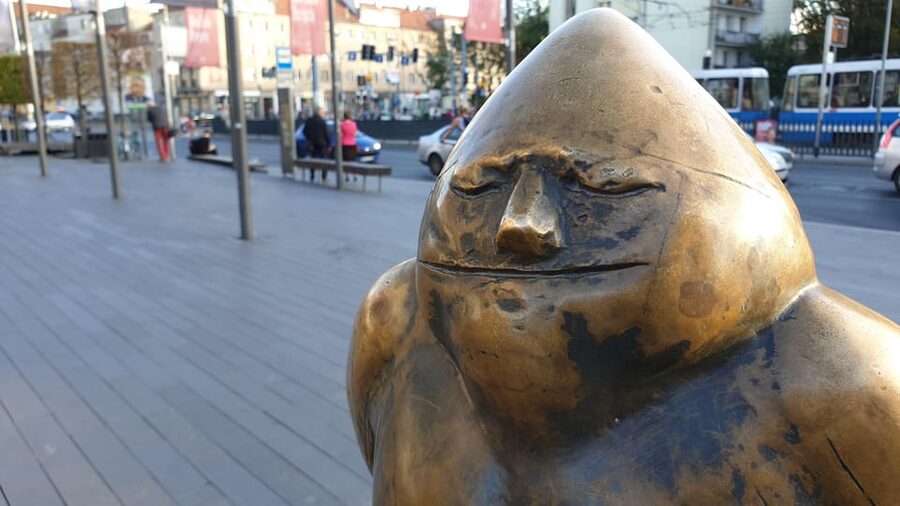
Wrocław has plenty of grand architecture, but its dwarves give you a more playful way to read the city. Instead of simply passing a square or building, you look for a small bronze character and hear why that particular figure belongs there.
That approach helps you notice details at street level. You may be looking at a monument, a restaurant, or a university building, yet the dwarf nearby adds a short local story. The more figures you meet, the more connections you make between Wrocław’s places and its people.
The dwarves also carry a political story. Their roots reach back to the communist period, when the Orange Alternative used humor to challenge the authorities. Participants dressed as dwarves, painted dwarf images on city streets, and staged illegal happenings. The joke was simple, public, and difficult to suppress without making the authorities look even more foolish.
That history gives the tour more weight than a basic scavenger hunt. You are not only taking pictures of tiny statues. You are learning how satire became part of Wrocław’s public life.
The available information describes the tour as interesting for adults and children, and I can see why. Children have something concrete to search for, while adults get the political, social, and student stories that sit behind the bronze figures.
More two hour outings in Wroclaw:
- Wroclaw: 2-Hour Private Guided Tour by Electric Car
★ 4.8 · 805 reviews - Wroclaw: Private Old Town Guided Walking Tour (2 hours)
★ 4.8 · 275 reviews - Wroclaw: 2-Hour Tour by Electric Car with a driver-guide
★ 4.8 · 66 reviews
Meeting Moczymorda outside Piwnica Świdnicka
The tour starts at the large entrance doors of Restauracja Piwnica Świdnicka on the Market Square. Your guide waits there, beside Moczymorda, a dwarf whose name suggests someone who has stayed too long at the bar.
Moczymorda represents a Wrocław student who spent too much time drinking Biały Aries in Piwnica Świdnicka. The story connects the dwarf to the restaurant’s pre-war student clientele, who gathered there to talk, arrange duels, and spend their free time.
This is a smart opening because it gives you a local character right away. You are standing at the starting point of the tour, looking at a tiny statue, while the guide explains how the restaurant once served as a social center for students.
The meeting point is easy to identify, but pay attention to the wording: use the large entrance door to Piwnica Świdnicka. The experience returns to this same restaurant at the end, so the route forms a loop rather than leaving you in another part of the city.
Market Square and Plac Solny in about 40 minutes
The first major part of the walk takes place around Wrocław’s Market Square. The planned stop here lasts about 30 minutes, followed by about 10 minutes at Plac Solny.
The Market Square gives you the broadest view of the Old Town’s character. Your guide uses the surrounding buildings and dwarves to introduce Wrocław, rather than starting with a long list of dates. That makes this a useful first orientation if you have just arrived in the city.
You should expect to pass by the sights rather than enter them. The experience is designed as a walking tour, so the focus remains on stories, street details, and dwarf hunting. If you want detailed interiors or extended architectural commentary, you may need a separate museum or building visit afterward.
Plac Solny adds another central square to the route. The short stop keeps the walk moving and gives you another chance to see how the dwarves fit into Wrocław’s public spaces. Since the guide is showing you several locations in sequence, this part is best viewed as an introduction to the Old Town rather than a deep treatment of one square.
The benefit is variety. Within the opening section, you see a major square, a smaller nearby square, and the first dwarf stories. The tradeoff is that each place receives limited time.
Papa Dwarf and the Orange Alternative
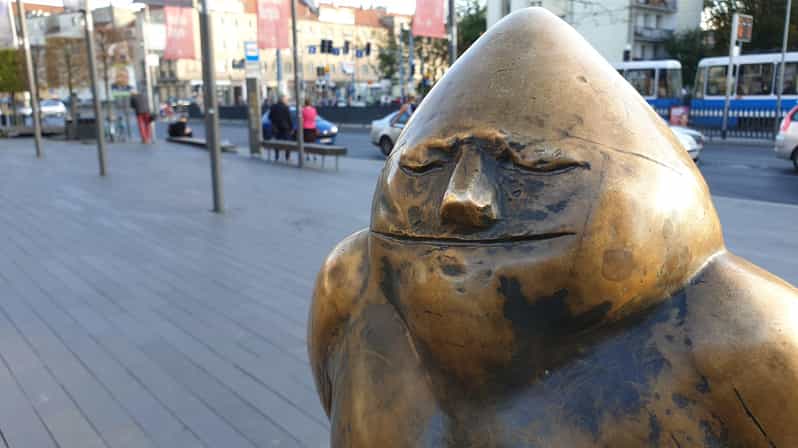
One of the most important figures on the route is Papa Dwarf, described as the greatest of the Wrocław dwarves. His story leads to Major Waldemar Fydrych, the artist and happener associated with the Orange Alternative.
This is the point where the tour’s comic side connects clearly with twentieth-century politics. Fydrych helped create a student movement that opposed the communist regime through humor. Its members dressed as dwarves, painted dwarf figures, and organized happenings that challenged official control in an absurd, public way.
Papa Dwarf is valuable because he gives you a simple symbol for that movement. Instead of hearing only about a political group in the abstract, you meet a character that still sits in the city and draws people into the story.
The guide’s job matters here. A dwarf can be amusing on its own, but the historical setting explains why these figures became such a powerful part of Wrocław’s identity. If the guide tells the story well, this stop should be one of the clearest reasons to choose the tour over a standard sightseeing walk.
The planned visit lasts about 10 minutes. That is enough for a focused explanation, but not for a full study of the Orange Alternative. Think of it as a memorable introduction that may encourage you to read more about Fydrych and the movement later.
A few more Wroclaw half days to consider
- Wroclaw: E-Car Tour and Audio Guide
★ 4.6 · 1,738 reviews - Wrocław: Old Town and Ostrów Tumski Walking Tour in English
★ 4.8 · 311 reviews - Old Town Wrocław Walking Tour
★ 5.0 · 249 reviews - Wroclaw: City Tour Sightseeing By Golf Cart Shared Or Privat
★ 4.8 · 189 reviews
The Bridge of Penitents and a change of pace
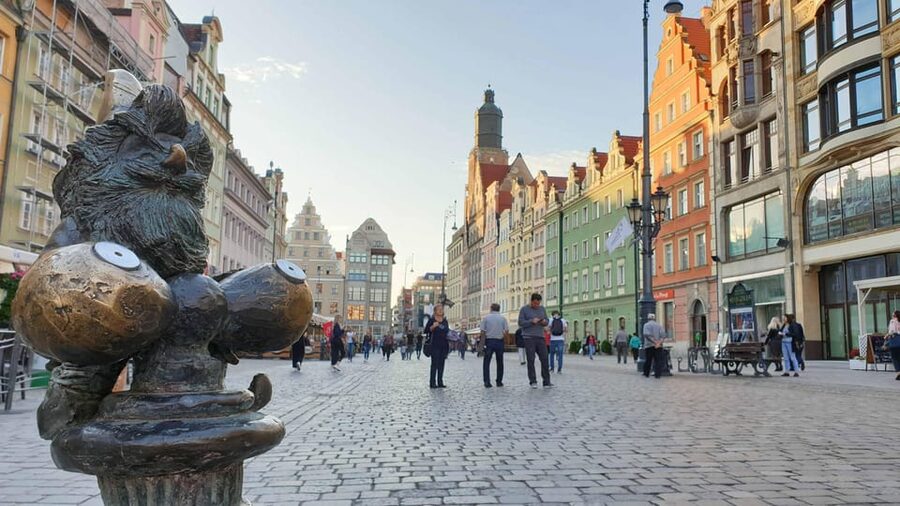
The route continues to the Bridge of Penitents, with about 10 minutes set aside for guided commentary and passing through the area.
This stop keeps the tour from becoming only a Market Square and restaurant story. You continue seeing Wrocław through small figures and local tales, while the guide links the route’s places together. The bridge also changes the feel of the walk, giving the group a new point from which to view the Old Town.
The supplied details do not name a specific dwarf at this stop, so you should not expect one particular character to define the visit. The guide may use the area to point out another figure or explain a local detail, but the exact presentation can depend on the guide and the day.
That uncertainty is worth noting. The named stops, such as Papa Dwarf and the Swordsman, give you clear anchors. The shorter passing stops add movement and variety, but they may feel less substantial if you prefer long explanations at every location.
The University of Wrocław and the Swordsman
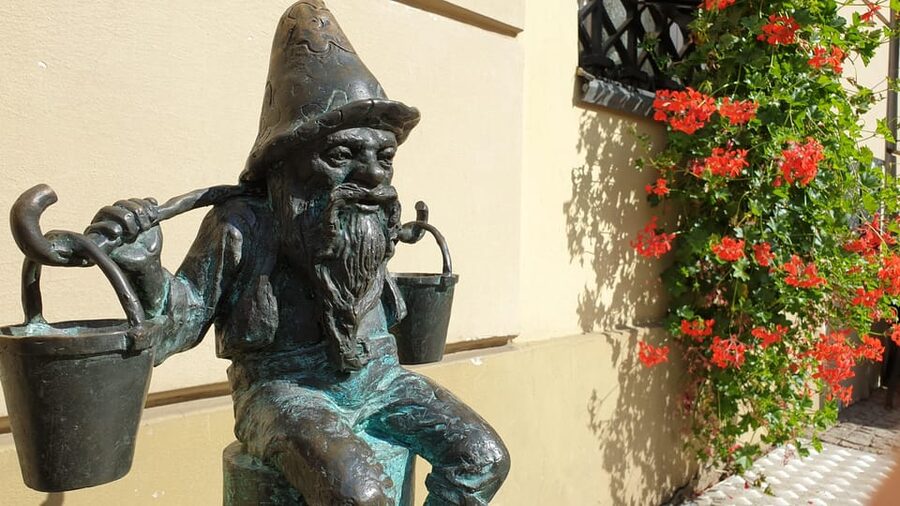
The walk then heads toward the University of Wrocław. About 10 minutes is planned here, followed by another 10 minutes at the Fencer Fountain.
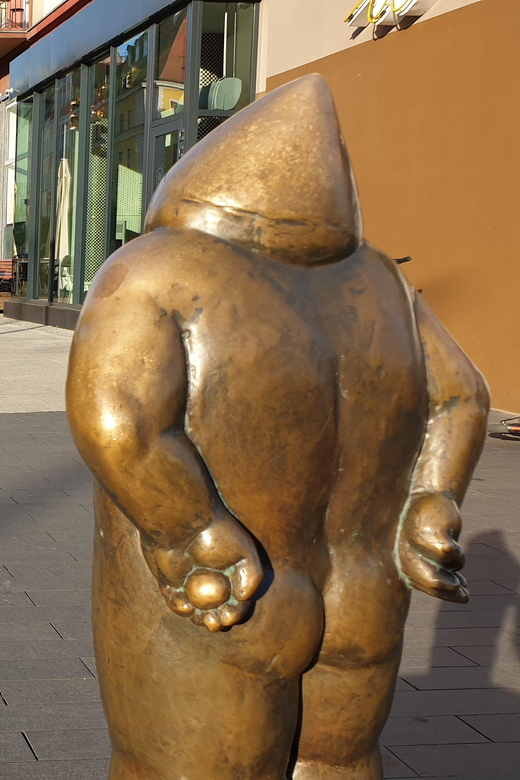
The University stop brings back the student theme introduced at Piwnica Świdnicka. Nearby, the Dwarf Swordsman is naked and holds a sword. The story explains that students sometimes pawned their clothing at Piwnica Świdnicka to get money for beer. They could return home without their clothes, but they would not give up their swords.
The tale is deliberately silly, and that is the point. It turns student bravado into a small street joke that children can understand while adults catch the darker humor about drinking, debt, and university life.
The Swordsman also connects to the claim that students enjoyed saber duels. You get a vivid picture of the character from only a few details: no clothes, sword in hand, and complete commitment to student priorities.
The University section is another example of how the tour differs from a formal history walk. You are not simply told when the building was constructed or who studied there. Instead, you get a human story that makes the area easier to remember.
Fencer Fountain and the return to Piwnica Świdnicka
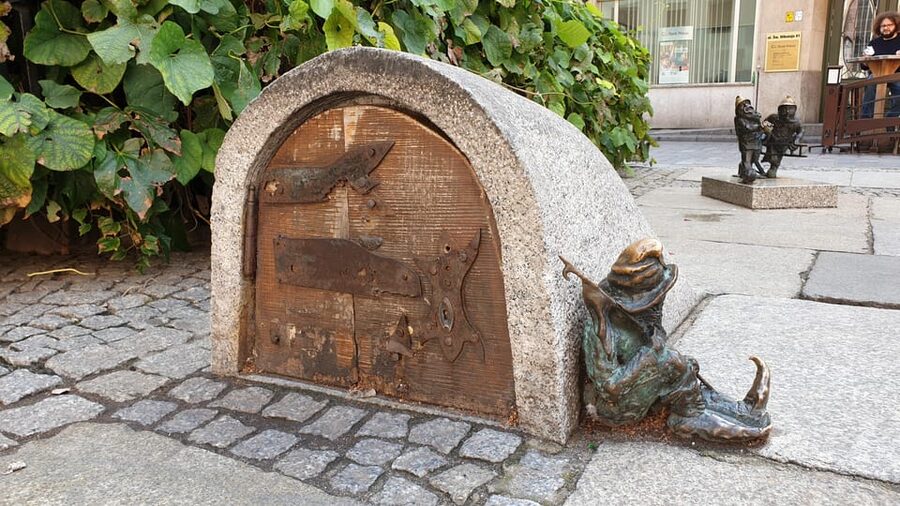
The Fencer Fountain is the final named sightseeing stop before the group returns to the restaurant. The planned commentary lasts about 10 minutes, followed by another 10 minutes back at Piwnica Świdnicka.
The fountain continues the student and sword theme, giving the route a sense of connection. It also brings you back toward the starting point without ending abruptly after the university.
Because the tour begins and ends at the same restaurant, you can plan the rest of your visit easily. You might continue exploring the Old Town, return for a meal, or use the central location as a meeting point for another activity.
The full experience lasts two hours. The listed stop times add up to less than two hours, which likely leaves room for walking between locations, searching for the dwarves, and listening to the guide along the way. Do not treat the stop times as separate full lectures. This is a moving city walk with short, focused pauses.
What the private format means for you
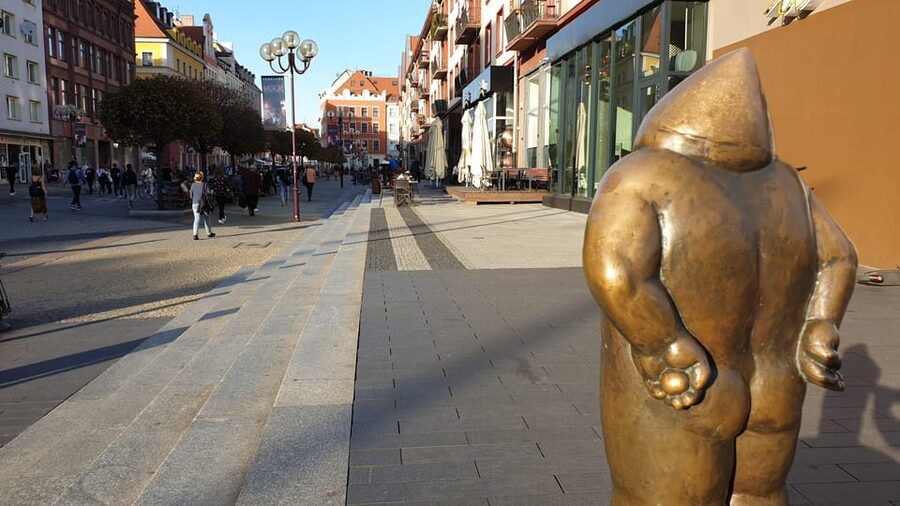
This is a private group experience, not a large shared tour. That matters most when children are involved or when members of your group have different walking speeds and levels of interest.
A private guide can spend more time on the stories your group enjoys. You may want extra explanation about the communist period, the Orange Alternative, student customs, or the meaning behind a particular dwarf. The information does not promise that every stop can be extended, but the format gives you a more personal setting than a large public group.
The guide speaks Polish or German. If you need English, the supplied details do not confirm it, so check the available language before booking.
The tour is wheelchair accessible. You still follow an outdoor Old Town route, so it is sensible to confirm any specific mobility needs when arranging the experience, but the activity itself is marked as accessible.
Is $41 a fair price?
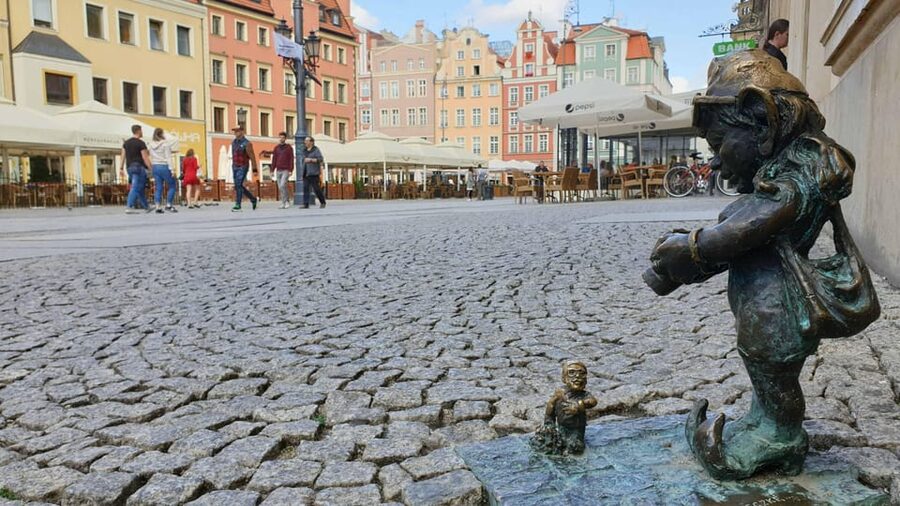
At $41 per person, the price is not the cheapest way to see Wrocław’s Old Town. You are paying for a private two-hour guide rather than simply downloading a map and hunting for statues alone.
The value depends on your group size and priorities. For a family or small private group, the guide adds structure, context, and a shared activity. Children get a search game, while adults get stories about communist-era resistance, old student habits, and Wrocław’s public spaces.
The separate dwarf map costs €6 per person on request. You do not need to add it to enjoy the guided walk, but it could be useful if you want to continue searching after the tour. Since the map is an extra charge, include it in your budget only if extending the hunt matters to you.
The tour makes less financial sense if you want only a quick list of dwarf locations. You can spend two hours walking the same central streets without a private guide. Its real value comes from the explanations and the way the guide ties each figure to Wrocław’s past.
Who should book this dwarf hunt?
I would choose this for families, first-time visitors, and anyone who likes local stories with a touch of absurd humor. It also suits adults who want an introduction to the Orange Alternative without signing up for a formal political history lecture.
The route can work well near the start of a Wrocław stay. It covers several central places and gives you a working sense of the Old Town, while the dwarves help you remember where you have been.
I would be more cautious if you want extensive architecture, museum access, or a long historical lecture at each stop. The tour passes by the listed sights, and its strength is the short story, not prolonged examination of a single building.
The small amount of published feedback includes a German booking from August 20, 2025, which praised the large amount of information and described the experience as a first impression of the city. That matches the tour’s strongest use: getting your bearings while learning memorable stories. It should not be your only history experience in Wrocław, but it can give the city a friendly first shape.
Should you book it?
Book this tour if you want Wrocław to feel like a city of characters rather than a row of monuments. The bronze dwarves provide a simple reason to keep looking, while Papa Dwarf, Moczymorda, and the Swordsman open the door to stories about student life and resistance under communism.
Skip it if you prefer a highly detailed architectural tour or want to enter major buildings. At $41 per person, you should be happy paying for a private guide and a playful historical approach. For families and curious first-time visitors, that combination makes the price easier to justify.
FAQ
How long does the Wrocław dwarf tour last?
The tour lasts two hours.
Where does the tour begin?
It begins at the large entrance door to Restauracja Piwnica Świdnicka in Wrocław.
Where does the tour finish?
The walk returns to Restauracja Piwnica Świdnicka.
What languages are available?
The live guide speaks Polish or German.
Is this a private tour?
Yes. The activity is organized for a private group, with a professional city guide assigned only to your group.
Is the tour wheelchair accessible?
Yes, the activity is listed as wheelchair accessible.
Is a dwarf map included?
No. A dwarf map is available on request for €6 per person.
Recently added in Wroclaw
- CITY QUEST WROCLAW: unlock the mysteries of this city!★ 5.0 · 3 reviews
- Wroclaw: Old City Walk and Cruise with Small Gondola★ 4.7 · 3 reviews
- Private Transfer from Wroclaw (WRO) Airport to Wroclaw city centre★ 5.0 · 3 reviews
- Wroclaw : Walking Custom Tour with a Local Guide★ 4.8 · 3 reviews
- Wrocław: Ostrów Tumski and Old Town Highlights Private Tour★ 5.0 · 3 reviews
- Wroclaw Jewish Quarter Private Guided Tour★ 5.0 · 3 reviews
- Electric Scooter Tour: Full Tour (Old Town + Ostrów Tumski)★ 5.0 · 3 reviews
- Segway Tour Wroclaw: Ostrów Tumski Tour – 1,5-Hours of Magic!★ 5.0 · 3 reviews
City Tours, compared.


Gdańsk City Sights & History Guided Walking Tour in English
Read our review →
Extended City Sightseeing Tour – Eco Buggy Golf Cart
Read our review →
Private Tour: Warsaw City Sightseeing by Retro Fiat
Read our review →Where else this one turns up