
Reviewed · OLD TOWN TOURS
Old Town Poznan: Guided Walking Tour in English
Poznań’s Old Town tells a particularly interesting Polish story: this was a wealthy trading center, later ruled by Prussia, where people often answered pressure through education, business, and social progress rather than armed revolt. I like the way this tour connects grand buildings with that practical local spirit. I also like the central route, which takes in the Royal Castle, Old Market Square, the Old City Hall, and the Parish Church in just two hours.
The meeting point at Plac Wolności is easy to find, and guides such as Susan, Jenna, Margret, and Svetlana have earned praise for clear explanations, friendly manner, and useful suggestions for the rest of your stay. The main consideration is the general pay-as-you-wish format: the $26 booking price covers the reservation and guide payment, but you should understand how that arrangement works before reserving.
Key points at a glance
- Poznań’s trading past: See how the city’s position on major trade routes shaped its wealth and architecture.
- A compact two-hour route: Cover the main Old Town sights without giving up a full day of sightseeing.
- Plac Wolności meeting point: Find the guide beside the fountain by looking for a yellow umbrella.
- Polish and Prussian history: Learn how the city responded to Germanization through education, social work, and business.
- Friendly English-speaking guides: Guides including Susan, Jenna, Margret, and Svetlana are praised for clear, lively presentations.
- Useful follow-up advice: The guide may provide a Google Maps list of places to eat, visit, and explore afterward.
Why Poznań makes a good walking-tour city
Poznań is often introduced as the cradle of Polish statehood, but that label alone does not explain its personality. The city also grew through commerce. Its position at the meeting point of trade routes brought money, visitors, and new ideas, and the Old Town still shows the results in its public buildings and decorated town houses.
I find this useful context because Poznań can otherwise seem like a collection of attractive squares and churches. The walk gives those buildings a reason for being there. You learn to read the city as a place shaped by merchants, civic pride, political pressure, and a long habit of getting things done.
The tour also covers a difficult chapter. At the end of the 18th century, Poznań became part of Prussia. During the partitions of Poland, Polish people faced persecution and efforts to replace their language and culture with German customs. The local response was not limited to military resistance. Education, economic activity, community groups, and social organization became important ways to protect Polish identity.
That background helps explain the city’s grounded character. This is not only a tour of old façades. It is a look at how a city kept its character through practical effort.
More Walking Tours in Poznan
- Poznań Experience 2-Hours Guided Walking Tour
★ 5.0 · 155 reviews - Poznan Old Town and Top Attractions Private Walking Tour
★ 4.8 · 24 reviews - Poznan Private City Walking Tour from Cathedral Island
★ 4.5 · 24 reviews
Starting at Plac Wolności beside the fountain
Your meeting point is Plac Wolności, or Freedom Square, beside the fountain. Arrive about 10 minutes early and look for the guide carrying a yellow umbrella. This is a simple arrangement, but it matters in a busy city square, especially if you are arriving straight from the railway station or another part of central Poznań.
Plac Wolności is a fitting place to begin. Its name brings political and civic themes into the tour from the first minutes, while its open layout gives the guide space to gather the group. You do not need hotel transport, since pick-up and drop-off are not included.
The guides speak English, and the strongest part of the experience appears to be the human delivery. Susan is described as generous with facts and suggestions. Jenna is praised for a good walking pace and a meeting point that was easy to find. Margret has led groups in two sections when attendance was high, a sensible way to avoid crowding. Svetlana is noted for mixing Polish history and culture with local stories in a funny, interactive way.
Guide quality can vary from one departure to another, of course. Still, the repeated pattern is clear: you should expect a talkative guide who enjoys the subject and is willing to offer ideas for the rest of your time in town.
Liberty Square and the city’s civic life
From Plac Wolności, the walk begins with the civic side of Poznań. Liberty Square helps frame the city as more than a preserved medieval center. It connects the old trading town with the political and social life that followed.
This is where the tour’s broader story becomes useful. Poznań developed as money flowed through the city, but its identity was tested under Prussian rule. The guide explains how people placed energy into schools, associations, social projects, and commerce. For you, this adds a local angle that a quick photo stop cannot provide.
Do not expect a long museum-style lecture. The tour lasts two hours, so the guide must keep the story moving while walking between sights. That is a strength if you want a clear introduction before exploring alone. It is less suitable if you want long, detailed stops inside each building.
The Royal Castle and a changing city
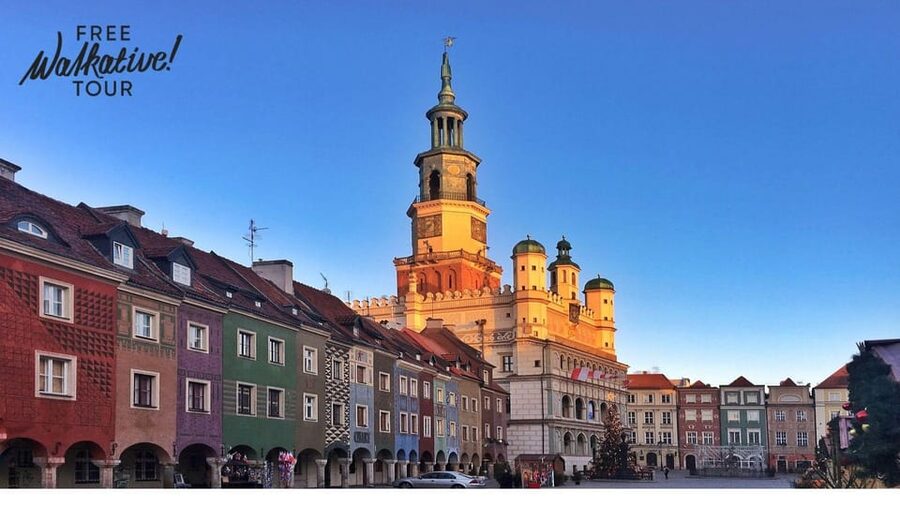
The Royal Castle is one of the key landmarks on the route. Its presence points to Poznań’s importance long before it became a modern university and trade-fair city. The castle helps shift your view from commercial wealth to royal and political power.
The value of seeing it with a guide is the link between place and purpose. Rather than simply noting an old royal building, you can ask how it fits into Poznań’s development and why this city mattered in the history of Greater Poland.
The supplied details do not promise interior admission, so treat the stop as an exterior sightseeing point unless your guide says otherwise. That keeps expectations realistic. You will be walking through the historic center, not taking a full castle tour.
More Old Town Tours in Poznan:
- Old Town Poznan Walking Tour
★ 4.0 · 16 reviews - Poznan: Old Town, Srodka District, & Cathedral Private Tour
★ 5.0 · 10 reviews - Private 3-hour Poznan Old Town Tour
★ 5.0 · 5 reviews - Poznan Old Town and Croissant Museum Private Walking Tour
★ 5.0 · 3 reviews
Old Market Square and its colorful façades
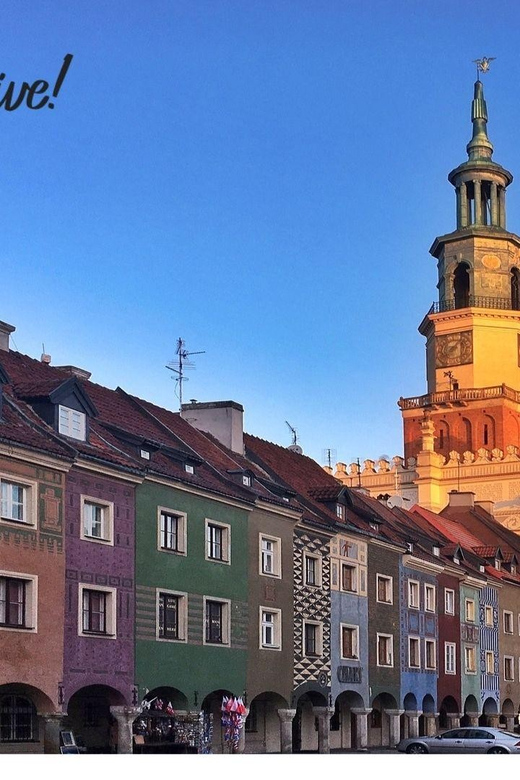
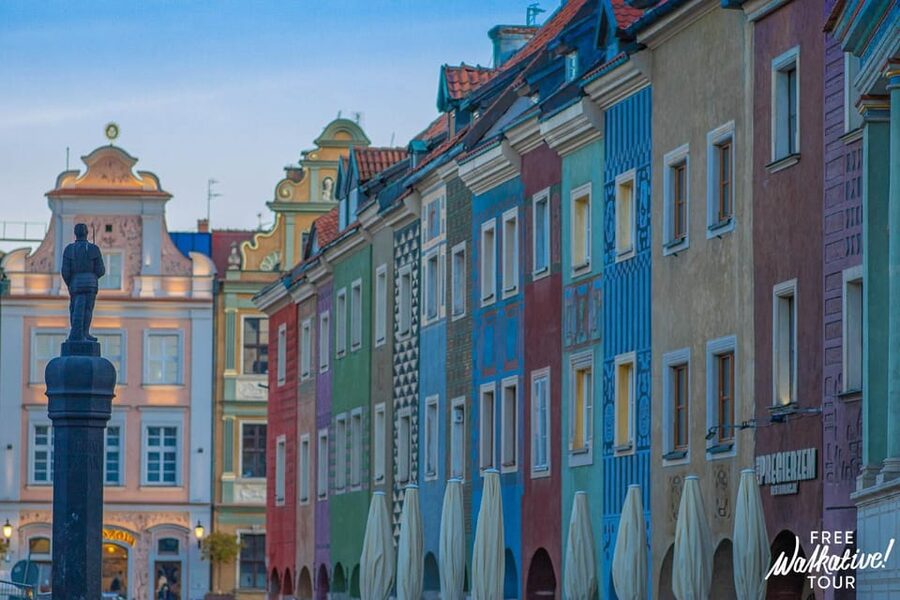
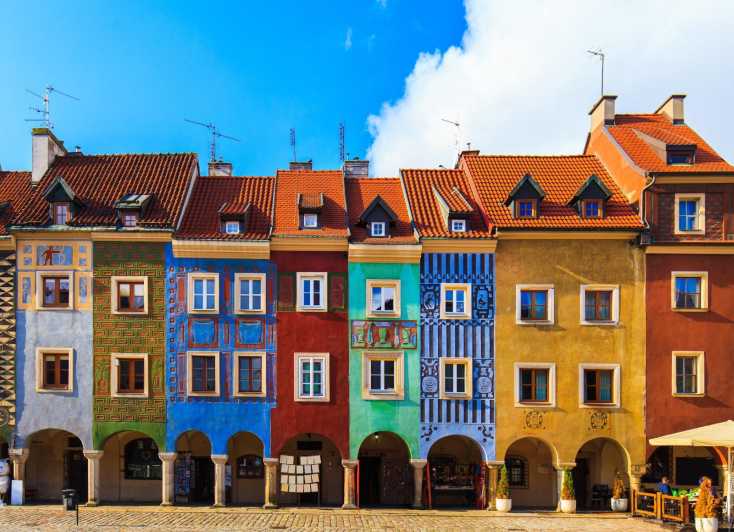
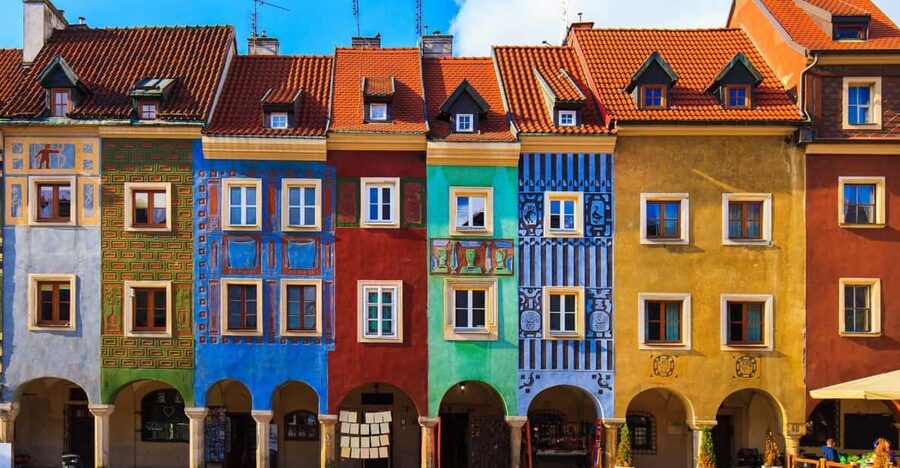
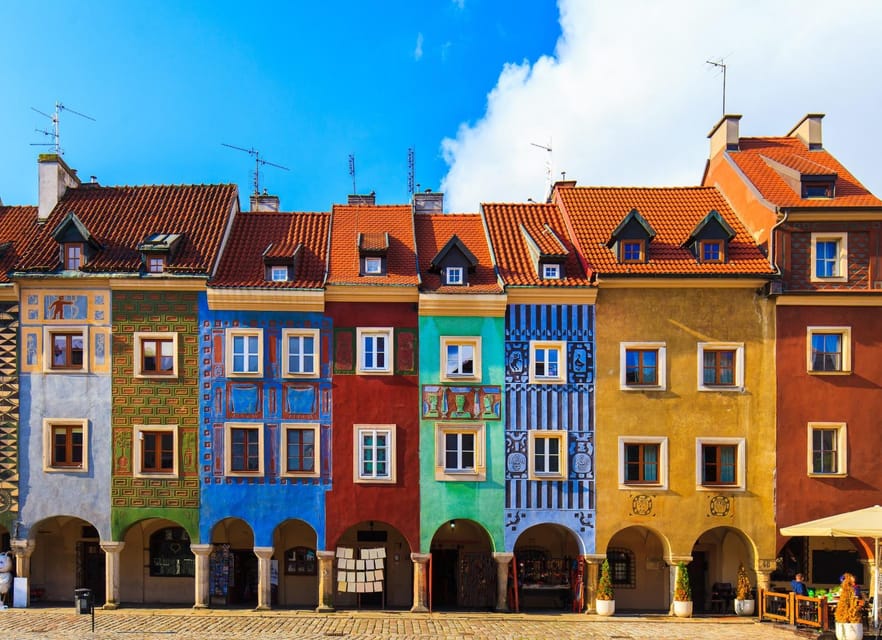
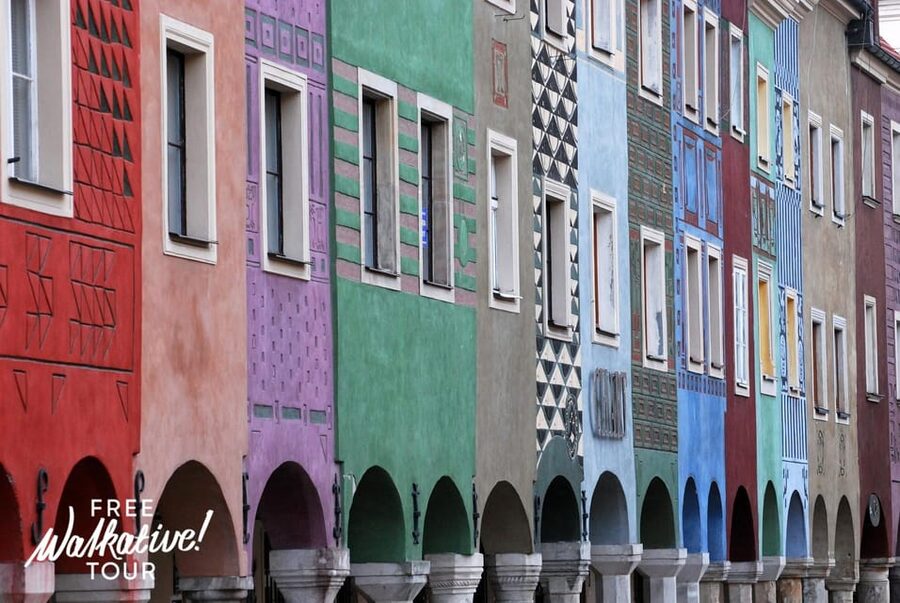
Old Market Square is likely the visual center of the walk. Poznań’s trading wealth is especially easy to grasp here, where the square is lined with decorated tenement houses and major civic buildings. The colorful façades give the area a lighter, more playful feel than the political history might suggest.
The Pranger is another important detail. This stone column, associated with public punishment, adds a sharper edge to the square’s beauty. It reminds you that historic town centers were not only places for trade and festivals. They were also places where city authority was made visible.
I like this stop because it brings several themes together. Merchants needed a central market. The city needed rules and public institutions. Wealthy citizens wanted attractive homes and a proud civic setting. The result is a square that works as both a beautiful photo stop and a lesson in how urban power operated.
Give yourself time to look above street level. The tenement houses reward a slow glance, and the guide can point out details that are easy to miss when you are focused only on the square’s center.
The Old City Hall and tenement houses
The Old City Hall is one of the main architectural highlights. It represents the authority of the city itself, while the surrounding tenement houses show the prosperity of the people who lived and worked nearby.
This is where Poznań’s entrepreneurial character becomes concrete. A trading city needs a place to manage civic affairs, collect money, settle disputes, and welcome commerce. Its merchants and officials also wanted buildings that showed status. You can see that relationship between business and architecture in the square.
The guide’s role is important here because façades do not explain themselves. A good explanation can turn decorative details into evidence of wealth, civic rivalry, and urban ambition. The English-language presentation also makes this a practical first stop for anyone who wants historical context without working through Polish-language signs.
The tradeoff is pace. You will not have time to examine every carved detail or take long architectural notes. If the Old City Hall becomes your favorite sight, plan to return after the walk.
The Parish Church and the weight of the past
The Parish Church provides a different mood from the open market square. Its religious importance brings another layer to Poznań’s story, one connected with Polish culture and the long history of the city.
A stop here helps balance the commercial and civic landmarks. The tour is not only about merchants, royal buildings, and colorful homes. It also shows how faith and community life fit into the old city.
The supplied details do not promise a full interior visit or a religious service explanation, so you should think of this as a guided landmark stop. Ask the guide questions if you want more detail. The tour’s friendly, interactive style should make that easy, particularly with guides such as Svetlana, who has been praised for mixing historical facts with local stories.
Two hours at a sensible walking pace
Two hours is a useful length for a first look at Poznań. You get a clear route through the center, but you still have most of the day for museums, food, shopping, or independent exploration.
The pace has been described as comfortable, which matters on a walking tour. You need enough time to listen, take photographs, and keep up without turning the experience into exercise. At busy times, the group may be divided into two sections. That can make the explanations easier to hear and the stops less crowded.
The tour is wheelchair accessible, but historic city centers can still involve busy pavements and changing street conditions. If you need a particular arrangement, confirm details when booking. The route itself is designed for walking and does not include transport.
You should also arrive early. Ten minutes gives you time to find the yellow umbrella, settle in, and avoid a rushed start.
What the $26 price means
At $26 per person, the tour is reasonably priced if you want a structured introduction to Poznań and prefer to learn from a local English-speaking guide rather than walk with a printed map.
The value comes from the connections. You are not paying only to be led from Plac Wolności to the Old Market Square. You are paying for an explanation of why Poznań became wealthy, how Prussian rule changed the city, and how local people protected Polish identity through education and economic work.
The payment model deserves a close look. This is a general pay-as-you-wish tour, but the booking amount covers the reservation fee and the guide’s payment in this arrangement. The wording can be confusing, so read the payment terms carefully before you reserve. The price is not the same as a completely unpaid walk where you decide the guide’s full reward at the end.
Food, drinks, and hotel transfers are not included. That is no problem for most visitors because the route is short and central, but you should budget separately for lunch, coffee, or later sightseeing.
The practical booking details that matter
You can cancel up to 24 hours before the start for a full refund. You can also reserve now and pay later, which helps if your Poznań schedule is still shifting.
Departure times vary, so check availability for the day you want. English is the stated tour language, and a live guide leads the walk rather than an audio system or app.
The experience suits solo visitors, couples, families with older children, and anyone arriving in Poznań for a short stay. It is especially useful on your first day, when you want to understand the center before choosing where to spend more time.
It may not suit you if you dislike group walks, want extended indoor visits, or already know Poznań’s history well. The tour is an orientation with depth, not a specialist architectural course.
Use the tour as your Poznań launch point
One of the most useful extras is the practical advice at the end. Guides have shared Google Maps recommendations for places to visit and eat, giving you a ready-made starting point for the rest of your stay.
That advice can save time, but use it as a set of suggestions rather than a fixed plan. The best follow-up is to return to the sights that caught your attention, then choose your own cafés, museums, and neighborhoods.
I would also keep a note of questions during the walk. Poznań’s story includes Polish statehood, trade, royal power, Prussian rule, Germanization, and modern university life. A short question at the right stop can make the history feel much more connected.
Should you book the Poznań Old Town walk?
I would book this tour if you want a friendly, efficient introduction to central Poznań, especially if you are visiting for the first time or staying only a few days. The route covers the city’s essential landmarks, while the historical thread gives the architecture meaning.
The best reasons to choose it are the clear two-hour format, the easy Freedom Square meeting point, the English-speaking guides, and the practical suggestions for later sightseeing. Guides such as Susan, Jenna, Margret, and Svetlana have been especially well received for their warmth, facts, pace, and local advice.
Think twice if you want extensive time inside monuments or a private tour with a fixed specialist. Also make sure you understand the pay-as-you-wish structure and what the $26 booking payment covers. For most first-time visitors, though, this is a useful and fairly priced way to get your bearings in Poznań before setting off on your own.
FAQ
Where does the walking tour meet?
The tour meets at Plac Wolności, or Freedom Square, next to the fountain. Look for the guide with a yellow umbrella.
How long does the tour last?
The walking tour lasts two hours. Starting times vary, so check availability for your chosen date.
What language is the tour in?
The live tour is conducted in English.
What sights are included?
The route includes Liberty Square, the Royal Castle, Old Market Square with the Pranger, the Old City Hall and surrounding tenement houses, and the Parish Church.
Is hotel transportation included?
No. Hotel pick-up and drop-off are not included.
Is the tour wheelchair accessible?
Yes, the activity is listed as wheelchair accessible.
Can I cancel or pay later?
You can cancel up to 24 hours before the activity for a full refund. You can also reserve your place and pay later.
Recently added in Poznan
- Poznan Private Vodka Tasting Tour★ 5.0 · 3 reviews
- Poznan: Private Polish Beer Tasting Tour★ 4.6 · 3 reviews
- Poznan Old Town and Croissant Museum Private Walking Tour★ 5.0 · 3 reviews
- Palace, Castle and Ancient Oaks – Rogalin and Kórnik guided tour from Poznan★ 5.0 · 4 reviews
- Discover Poznan: Walk, Take a tram and have a traditional snack★ 5.0 · 4 reviews
- Private 3-hour Poznan Old Town Tour★ 5.0 · 5 reviews
- Poznan: City and Brewery Private Walking Tour with Beer★ 4.6 · 5 reviews
- Poznan: Private Jewish Heritage Tour★ 5.0 · 5 reviews
Old Town Tours, compared.
Bike Tour of Old Town, Jewish Quarter and the Ghetto
Read our review →

Sightseeing EcoCruise around the Old Town of Gdansk
Read our review →
Where else this one turns up