
Reviewed · EVENING EXPERIENCES
Night tour through Wroclaw
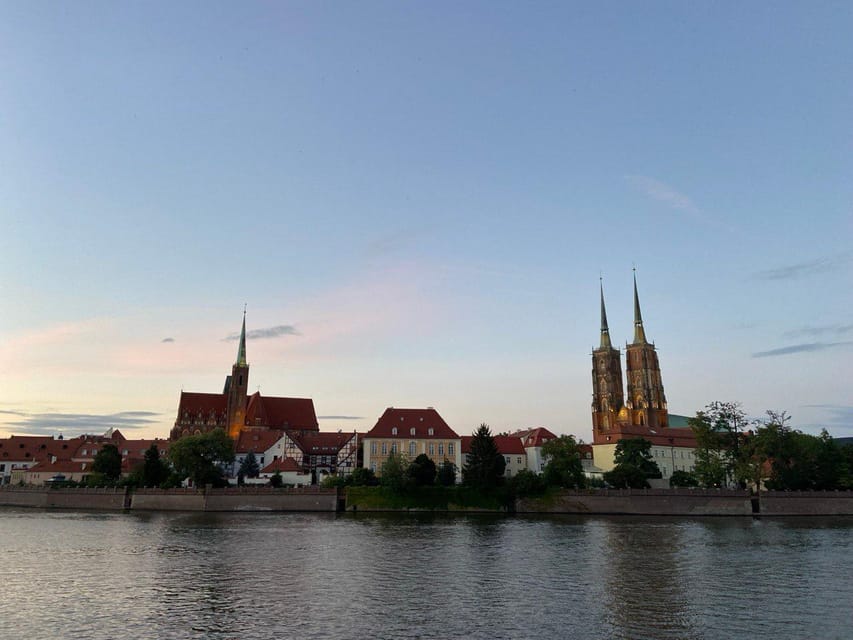
Wroclaw changes character after sunset. The Town Hall glows over the Market Square, church towers rise out of the darkness, and Cathedral Island takes on a quiet, almost theatrical mood. This two-hour walking tour links the city center with its most atmospheric evening sights.
I like the route for two clear reasons: it joins famous landmarks with smaller details such as the Fencer Fountain and Wroclaw’s gnomes, and it gives you a useful sweep of the old city without taking up an entire evening. Guides such as Roman add plenty of history, anecdotes, and old photographs.
The main consideration is the tour’s format. This is a guided city walk, not a costumed night-watchman performance. If you expect actors, legends, or a dramatic nighttime show, you may find the experience more straightforward than expected. It is also conducted in German, so you need to follow that language comfortably.
Key points to know before you book
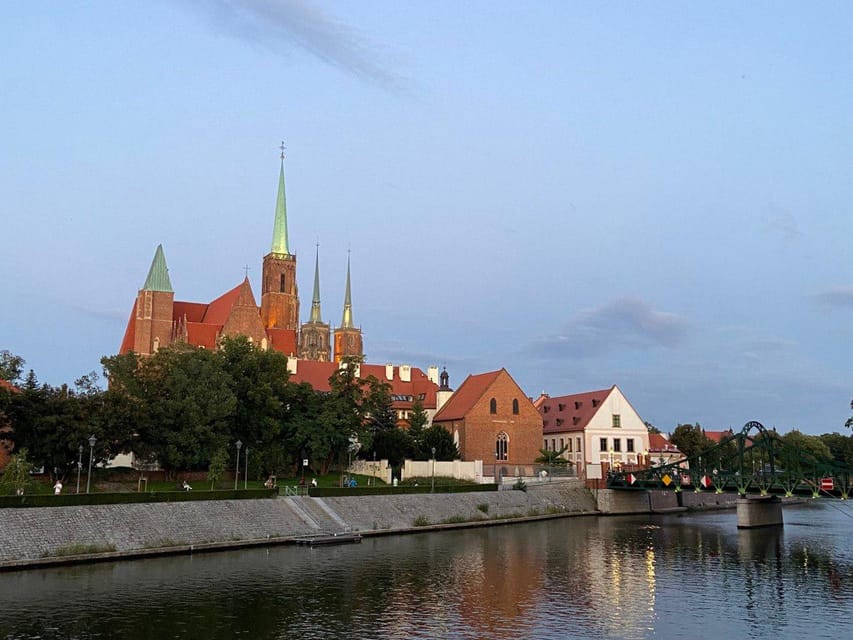
- The route runs from the Pillory to Wroclaw Cathedral, covering the Market Square, University, Market Hall, islands, and bridges.
- Roman is a praised guide, known for friendly, witty, clear explanations about Wroclaw and Poland.
- The evening light is the main attraction, especially around the Town Hall, St. Elisabeth’s Church, Hansel and Gretel Houses, and Cathedral Island.
- The tour costs $50 per person and lasts about two hours, a reasonable fit if you want a broad first look at central Wroclaw.
- The tour is in German, with some content presented in its original language.
- Wheelchair access and free cancellation up to 24 hours ahead make the booking fairly flexible.
Starting beneath the Pillory in the Market Square
The walk begins at the Pillory, a historic marker in Wroclaw’s Market Square. This is a practical starting point because the square puts you among the city’s grandest buildings from the first minute.
At night, the square is less about daytime activity and more about architecture. The illuminated facades frame the open space, while the Town Hall gives the center its unmistakable focal point. Your guide sets the scene here, explaining how the square fits into Wroclaw’s past and pointing out details that are easy to miss when you simply cross it on your way to dinner.
I like beginning here because you get your bearings quickly. You are not led straight into an obscure side street. Instead, you start with the city’s most recognizable public space, then move outward through a series of connected landmarks.
More evening outings in Wroclaw:
- Wroclaw: Guided City Night Tour (2 hours)
★ 4.6 · 21 reviews - Wroclaw: 2-Hour Mysterious Walking Night Tour
★ 4.9 · 16 reviews - Wroclaw: Multimedia Fountain Evening Show
★ 4.0 · 9 reviews
Wroclaw Town Hall and the first look at the city at night
The Wroclaw Town Hall is one of the strongest visual moments early in the walk. Its Gothic and later architectural details become more dramatic under evening lighting, when shadows bring out the stonework and turrets.
This is also where a good guide matters. The building can be admired on its own, but the tour adds dates, stories, and a sense of how the Town Hall served the city. The stop is a guided look from outside, not a museum visit, so do not expect interior rooms or an extended architectural tour.
The short format works well here. You get enough context to appreciate the building, then continue before the pace slows.
St. Elisabeth’s Church and the Hansel and Gretel Houses
St. Elisabeth’s Church is especially effective at night. Its Gothic form looks taller and more solemn after dark, and the lighting gives the surrounding area a calmer feel than you may notice during the day.
From there, the route reaches the Hansel and Gretel Houses, two small connected buildings beside the church. Their name gives them an instant storybook quality, and they make one of the better photo stops on the walk. At night, the contrast between the charming houses and the larger church behind them is particularly appealing.
I would keep your camera ready here, but do not expect a long photography session. The tour has several stops to cover, and the guide’s explanation is part of the point. You can take a few pictures, listen, and keep moving with the group.
The University of Wroclaw and the Fencer Fountain
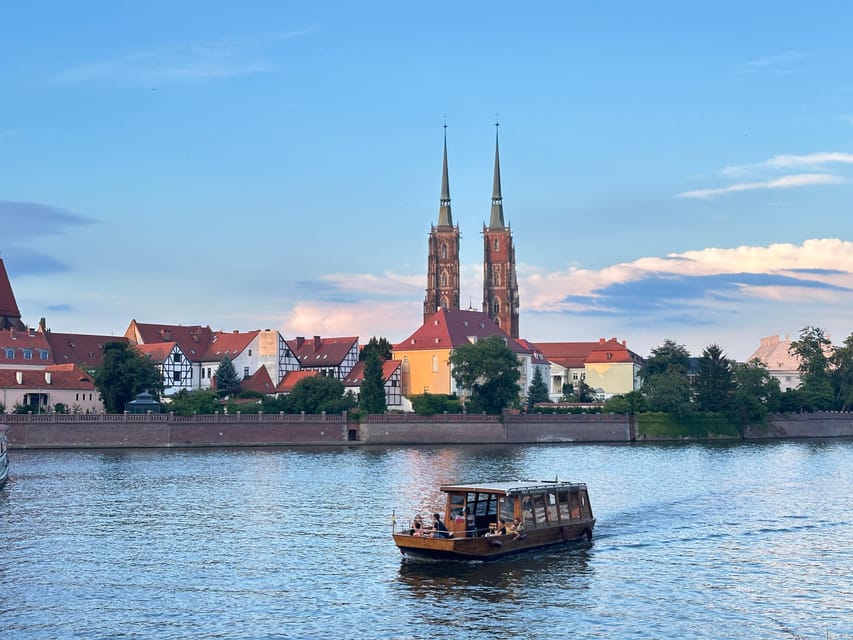
The University of Wroclaw brings a different subject into the tour. Instead of focusing only on churches and medieval civic buildings, the guide explains the place of education in the city and the importance of this historic institution.
The route then reaches the Fencer Fountain, a more playful public feature. It gives the walk a welcome change of pace after the heavier architecture. Small details such as this help keep the tour from becoming a simple procession of imposing facades.
This section is useful if you want more than postcard views. The guide connects buildings and public spaces to Wroclaw’s wider story, including Poland and the city’s changing identity. Roman has been particularly well regarded for this kind of explanation, with a friendly manner and a good command of German.
A few more Wroclaw half days to consider
- Wroclaw: E-Car Tour and Audio Guide
★ 4.6 · 1,738 reviews - Wroclaw: 2-Hour Private Guided Tour by Electric Car
★ 4.8 · 805 reviews - Wrocław: Old Town and Ostrów Tumski Walking Tour in English
★ 4.8 · 311 reviews - Wroclaw: Private Old Town Guided Walking Tour (2 hours)
★ 4.8 · 275 reviews
Market Hall after dark
Wroclaw Market Hall is another change in mood. By day, it is a lively working place, but the night tour presents it from the outside in a quieter setting.
The stop gives you a chance to consider how the city functions beyond its showpiece square. The Market Hall is not included simply because it is pretty at night. It adds a more everyday part of Wroclaw to a route otherwise filled with churches, monuments, and historic institutions.
The drawback is simple: depending on the timing, you may not experience the hall as an active market interior. The value here comes from the guide’s explanation and the building’s place in the city, not from shopping or food tasting.
Sand Island and the crossing to Cathedral Island
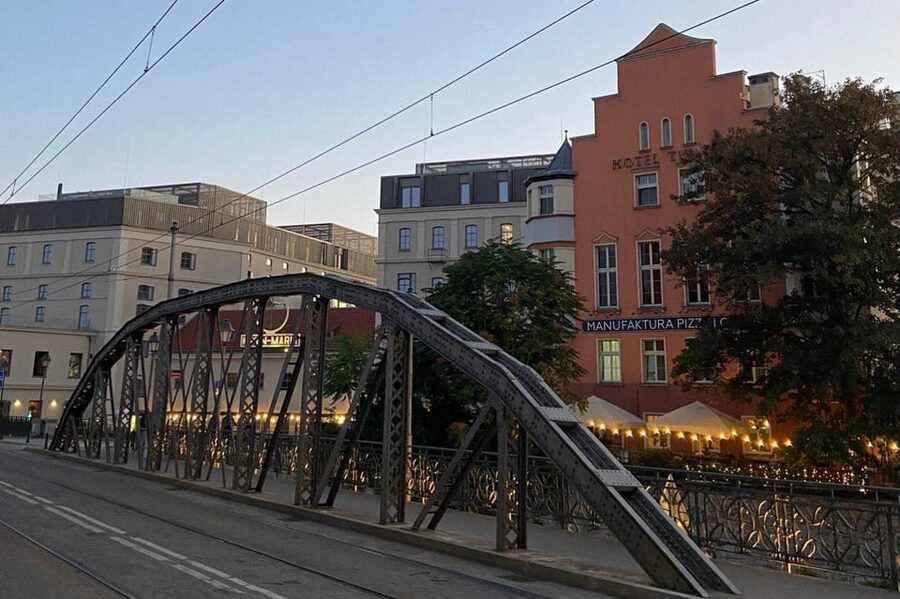
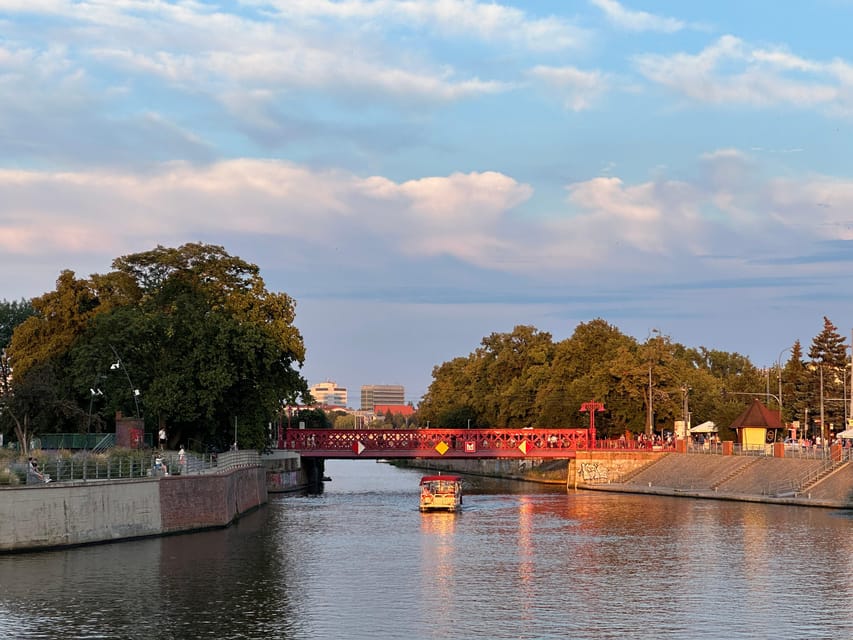
After the Market Hall, the route moves toward Sand Island and Tumski Bridge. This is one of the most atmospheric portions of the evening because the walk shifts from the dense city center toward the river and the historic church district.
The bridges and islands are central to Wroclaw’s character. From Sand Island, the city begins to feel more open, and the water adds space between the buildings. Tumski Bridge then acts as a natural transition to Cathedral Island.
You should expect a continuous walk rather than a series of vehicle transfers. The tour lasts around two hours, and the stops are close enough to form one connected route. Wear shoes suitable for walking and dress for the forecast. The tour generally runs in all weather, though extreme conditions can lead to a cancellation or postponement.
Cathedral Island, the spiritual center of Wroclaw
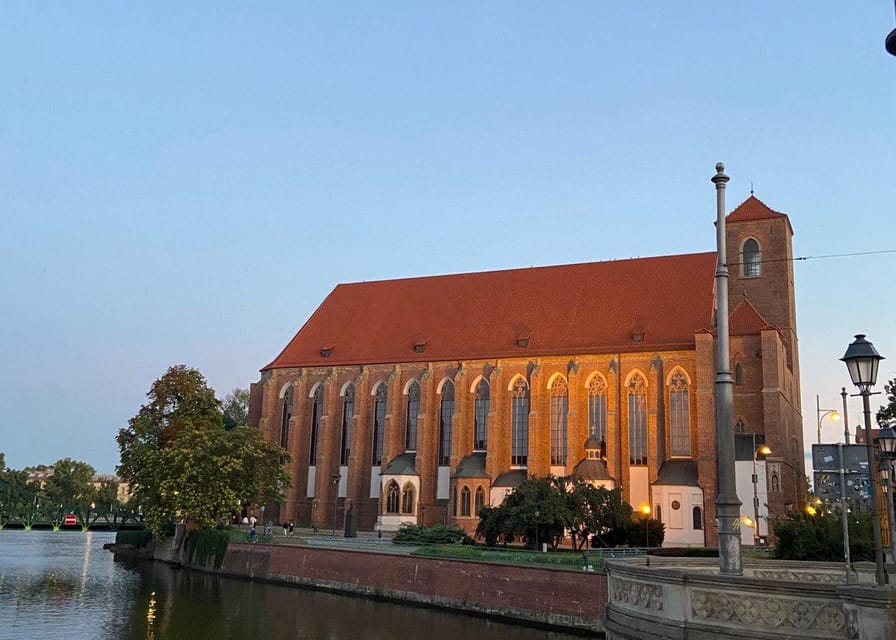
Cathedral Island is the emotional center of the tour. It is described as the nucleus of Wroclaw, and the evening setting explains why. The religious buildings, open spaces, and subdued light create a very different feeling from the busy Market Square.
The guide gives you context for the island and its importance, rather than asking you to admire it without explanation. This is where the walk feels most distinct from an ordinary daytime orientation tour. The city lights fade into the background, the architecture becomes more imposing, and the route slows into a more reflective final section.
The experience is still a city tour, not a religious service or an interior visit. The emphasis is on the buildings, the setting, and the stories attached to the area.
Wroclaw’s gnomes add a lighter final detail
Wroclaw’s gnomes appear as part of the Cathedral Island section. These small figures are one of the city’s most recognizable modern traditions, and they offer a humorous counterpoint to the cathedral towers and historic churches.
You will not be given a full gnome-hunting program during this two-hour walk. Instead, the gnomes are one of the details folded into the larger tour. That is a good balance for a first visit: you get a taste of the city’s playful side without losing the main route.
If you are traveling with children, this detail may help hold their attention during the more serious history sections. Adults will also appreciate the change of tone.
Ending at Wroclaw Cathedral
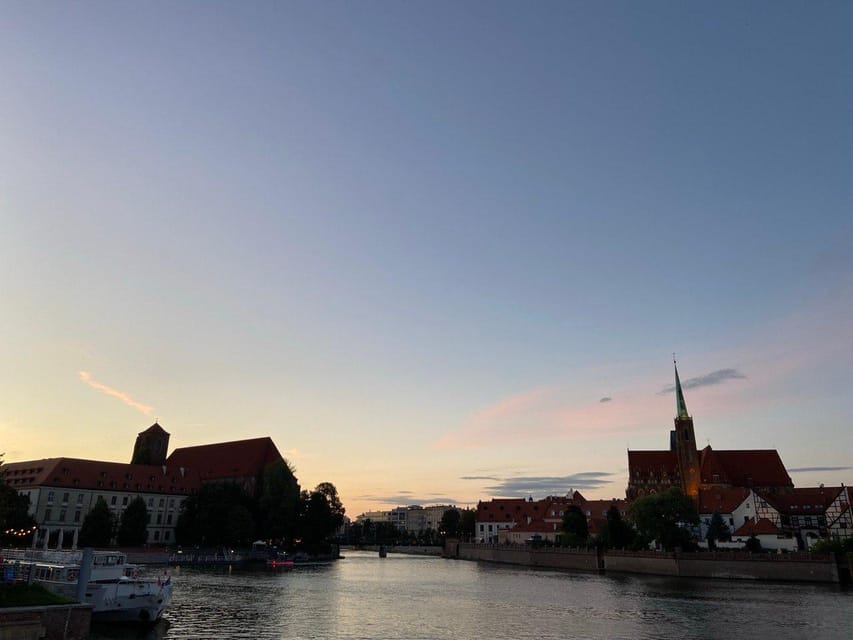
The tour finishes at Wroclaw Cathedral, whose illuminated towers can be seen from a distance. It is a strong ending because the final view feels larger and more dramatic than the earlier stops.
The cathedral’s exterior is the focus. The tour does not promise an interior visit, religious ceremony, or tower climb. Instead, your guide closes the walk with the cathedral as a visual endpoint and a final piece of Wroclaw’s story.
By the end, you have crossed a useful part of central Wroclaw on foot, from the civic heart of the Market Square to the church district on Cathedral Island. You also have enough landmarks in mind to return during daylight if you want a closer look.
What the guides add to the walk
The strongest part of this experience is the guiding. The tour is built around explanations, stories, and anecdotes, so the personality of the guide matters more than it would on a simple self-guided stroll.
Roman is specifically noted for being friendly, witty, and well informed about Wroclaw and Poland. His approach appears to favor clear storytelling rather than a dry list of dates. Historical photographs are also used during the walk, giving you a way to compare Wroclaw’s past with what you see around you at night.
The German delivery is worth taking seriously. The tour is listed with a live German-speaking guide, and some content is shown in its original language. If your German is limited, you may miss the value of the stories even though the route itself is easy to follow.
One early participant expected a traditional night-watchman tour instead and found this experience more like a standard guided city walk. That is useful advance notice. Book it for history, architecture, evening views, and a personable guide, not for costumes or theatrical role-play.
Is $50 a fair price for two hours?
At $50 per person, this is not the cheapest way to see Wroclaw’s center. The value depends on how much you want interpretation rather than simple sightseeing.
You are paying for a compact route through many major landmarks, a live German-speaking guide, and the atmosphere of the city after dark. The tour also covers ground efficiently: the Market Square, Town Hall, St. Elisabeth’s Church, University, Market Hall, islands, bridge, gnomes, and cathedral all fit into one evening.
I think the price makes the most sense early in your stay. You can use the walk to learn the city’s layout, hear the main historical threads, and decide which buildings deserve a return visit. If you already know Wroclaw well, or if you prefer wandering alone, $50 may feel high for a two-hour outdoor walk.
Photos can be sent by email after the tour on request. Treat this as a useful extra, not the main reason to book.
Who will enjoy this night tour most?
I would recommend it to you if you want a guided introduction to Wroclaw and prefer evening sightseeing to daytime crowds. It suits visitors who enjoy architecture, local history, urban stories, and a steady walking route.
It also works well for:
- First-time visitors who want a quick orientation
- German-speaking visitors who prefer a live guide
- Couples looking for an atmospheric evening walk
- Families who like mixing grand buildings with gnome spotting
- Anyone who wants a guided experience without spending half a day on a tour
You may want something else if you are looking for nightlife, food, entry inside major buildings, or a theatrical night-watchman act. The tour is informative and atmospheric, but it is not a bar crawl, tasting tour, or performance.
The route is listed as wheelchair accessible, though it remains an outdoor walking experience across city streets, bridges, and public spaces. Check the conditions that matter to you when booking.
Weather, timing, and a few practical tips
The tour generally operates in all weather. Wear a warm layer in cooler months, bring rain protection when needed, and use comfortable shoes. Extreme weather can cause the tour to be postponed or canceled, with an alternative solution offered.
Starting times vary, so check availability for your date. The walk is approximately two hours, which is long enough to cover the major route but short enough to fit before or after dinner.
I would avoid treating this as a photo-only outing. The night lighting is attractive, but the guide’s stories are the core of the experience. Listen first, then take pictures at the most useful stops, especially around the Town Hall, Hansel and Gretel Houses, Tumski Bridge, and the cathedral.
Free cancellation is available up to 24 hours before the tour, and you can reserve now and pay later. Those terms are helpful if your Wroclaw plans are still shifting.
Should you book the Wroclaw night tour?
Book this tour if you want Wroclaw explained as you walk from its grand central square to its quiet cathedral district. The route is well chosen, the evening light adds real atmosphere, and Roman’s warm, witty style can make two hours pass quickly.
Skip it if you expect a costumed night watchman, interior access, or a dramatic show. For a German-speaking visitor who values history, photographs, and a compact introduction to Wroclaw, the tour offers solid value at $50. For everyone else, the language requirement is the deciding factor.
FAQ
How long does the Wroclaw night tour last?
The tour lasts approximately two hours.
Where does the tour begin?
It begins at the Pillory in Wroclaw’s Market Square.
Where does the tour finish?
The walk finishes at Wroclaw Cathedral, also known as the Cathedral of St. John the Baptist.
Which landmarks are included?
The route includes the Market Square, Wroclaw Town Hall, St. Elisabeth’s Church, the Hansel and Gretel Houses, University of Wroclaw, Fencer Fountain, Market Hall, Sand Island, Tumski Bridge, Cathedral Island, Wroclaw’s gnomes, and Wroclaw Cathedral.
What language is the tour conducted in?
The live tour guide language is German. Some content is shown in its original language.
Is the tour wheelchair accessible?
Yes. The activity is listed as wheelchair accessible.
What happens if the weather is bad?
The tour generally operates in all weather, so you should dress accordingly. In extreme weather, it may be canceled or postponed, and an alternative solution will be offered.
Recently added in Wroclaw
- CITY QUEST WROCLAW: unlock the mysteries of this city!★ 5.0 · 3 reviews
- Wroclaw: Old City Walk and Cruise with Small Gondola★ 4.7 · 3 reviews
- Private Transfer from Wroclaw (WRO) Airport to Wroclaw city centre★ 5.0 · 3 reviews
- Wroclaw : Walking Custom Tour with a Local Guide★ 4.8 · 3 reviews
- Wrocław: Ostrów Tumski and Old Town Highlights Private Tour★ 5.0 · 3 reviews
- Wroclaw Jewish Quarter Private Guided Tour★ 5.0 · 3 reviews
- Electric Scooter Tour: Full Tour (Old Town + Ostrów Tumski)★ 5.0 · 3 reviews
- Segway Tour Wroclaw: Ostrów Tumski Tour – 1,5-Hours of Magic!★ 5.0 · 3 reviews
Evening Experiences, compared.


Krakow Night Tour: Ghosts, Vampires and Legends of the Old Town
Read our review →Where else this one turns up