
Reviewed · WALKING TOURS
Krakow: Plaszow Concentration Camp Guided Walking Tour
Plaszow is not a preserved camp with rows of barracks and a clear entrance gate. It is a quiet, open area where fragments, memorials, photographs, and your guide’s words must rebuild what the Nazis created here. That makes this a serious, thought-provoking walk, not a quick sightseeing stop.
I like the way the tour begins at Ghetto Heroes Square, where the Krakow ghetto’s deportations were organized, then follows the story toward Plaszow. I also like the use of old photographs to show features that no longer survive. The drawback is simple: much of the camp has disappeared, so you need to listen closely and be ready for uneven walking, open ground, and painful subject matter.
Key details before you book
- The route begins at Ghetto Heroes Square: Meet beside Apteka pod Orłem, at Plac Bohaterów Getta 18.
- Plaszow requires imagination: The Grey House, cemetery traces, memorials, and ruins remain, but the camp is not preserved as a complete museum.
- The guide does the heavy lifting: Bartholomew, Barbara, and Phil have been praised for clear explanations, photographs, and thoughtful answers.
- The walk takes about two hours: The main Plaszow visit lasts around an hour, with another 45 minutes focused on the site and its memorials.
- Comfortable shoes matter: The tour involves a fair amount of walking and requires moderate physical fitness.
- The group is capped at 25 people: That keeps the visit more manageable, though it is still a group experience rather than a private tour.
Why Plaszow needs a guided visit
Plaszow is one of those places where a map alone cannot tell you enough. The former camp was created in October 1942 on the grounds of two Jewish cemeteries. It first held Jewish prisoners forced out of the liquidated Krakow ghetto, then also included a penal-labor section for Poles from July 1943.
In January 1944, the camp became a concentration camp. Later, it also served as a transit camp for Hungarian Jews sent onward to Auschwitz. More than 35,000 people were imprisoned at Plaszow during its existence, and around 6,000 were murdered.
Those figures are difficult to grasp when you arrive. You may see open ground, scattered remnants, and memorials rather than an obvious camp complex. Your guide’s job is to connect the remaining features to the camp’s former organization: living areas, hospital facilities, administrative sections, industrial work areas, and the roll-call square.
That is where this tour earns its price. You are not simply walking through a field and reading a plaque. You are being shown how the camp worked, what has vanished, and why the remaining traces matter.
More Walking Tours in Krakow
- Old Town Krakow & Wawel Castle Walking Tour
★ 5.0 · 1,508 reviews - Creepy Krakow: 2-Hour City Walking Tour
★ 4.7 · 1,131 reviews - Krakow: The Old Town Walking Tour
★ 4.8 · 794 reviews
Starting at Ghetto Heroes Square
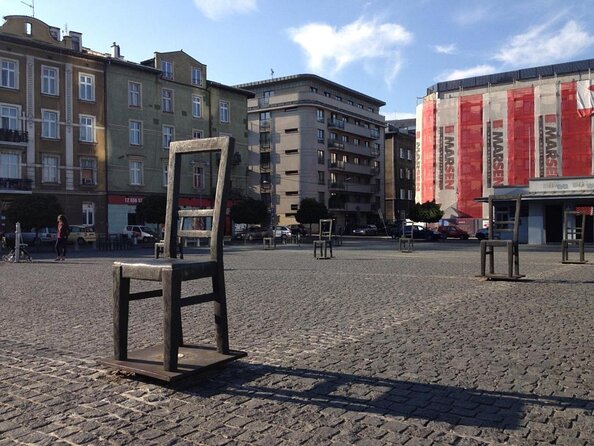
The tour begins at Ghetto Heroes Square, known during the occupation as Plac Zgody. This was the logistical center of the Krakow ghetto, used for control, registration, and departures during deportations.
The square was not just a public place in the ordinary sense. For Jews trapped in the ghetto, it became linked with orders, sorting, waiting, and forced removal. After the war, it was renamed to honor the ghetto’s victims and those who resisted Nazi persecution.
I like beginning here because it gives you the human setting before the camp itself. Plaszow did not exist in isolation. It was connected to the destruction of the Krakow ghetto, and many prisoners reached the camp after being removed from their homes and transferred through this very area.
The meeting point is outside Apteka pod Orłem at Plac Bohaterów Getta 18. You should arrive 10 minutes early. Once the group leaves, latecomers cannot join, and the ticket is not refundable.
From the square to Plaszow
The walk from the square toward Plaszow is part of the historical explanation, not just a way to get from one stop to another. One tour guide used a tram for the journey from Heroes Square to Plaszow, so you should follow the exact meeting instructions provided when booking and allow enough time to remain with the group.
This transition helps you understand how the ghetto and camp were connected. You move from a central urban place of deportation and administration to a much more open site where the physical remains are harder to read.
That change can be jarring. In the city, it is easier to picture streets, buildings, and daily routines. At Plaszow, the absence of buildings is part of the story. Your guide may show photographs of the camp as it appeared when it was operating, then point out what survives today.
The tour is offered in English, and group tours operate in one language only. The maximum group size is 25 people. That is small enough for a guide to answer questions, but you should not expect a private pace or a fully individual discussion.
Seeing the former Plaszow camp
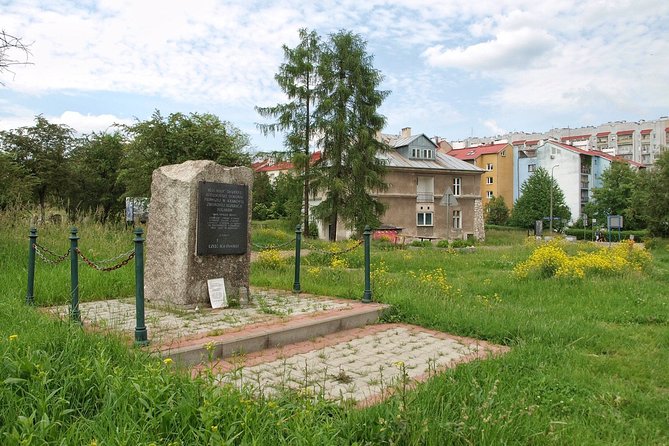
The camp was built on the grounds of two Jewish cemeteries, a fact that gives the site an added layer of cruelty. Cemetery material was destroyed, displaced, and used in the camp. Fragments of gravestones were even used to pave roads.
Your guide points out traces of the former Jewish cemeteries and explains how the area was altered. This is one of the details that makes the visit more than a general lesson about Nazi camps. You are looking at a particular place, with a particular layout and a particular pattern of destruction.
The Grey House is among the surviving features discussed during the walk. The ruins of the pre-burial hall also help you understand how the site was changed and used. You will also see or discuss the roll-call square and paths connected with the camp’s internal organization.
Do not expect a neatly preserved sequence of rooms. The value comes from matching the physical traces with the guide’s explanation. Photographs are especially useful here. A guide can place an image beside what you see now, helping you understand the scale and function of structures that are gone.
A different kind of day in Krakow:
- From Krakow: Auschwitz-Birkenau Guided Tour & Hotel Pickup
★ 4.5 · 33,358 reviews - From Krakow: Auschwitz-Birkenau Guided Tour & Hotel Pickup
★ 4.5 · 29,340 reviews - Krakow: Auschwitz Guided Tour with Optional Hotel Pickup
★ 4.5 · 15,280 reviews - Krakow–Zakopane: Cable Car, Chocholow Baths, Cheese & Vodka
★ 5.0 · 10,720 reviews
Memorials, mass graves, and difficult stories
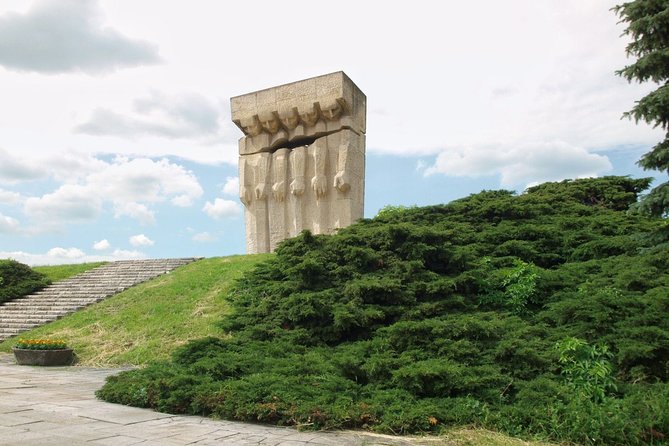
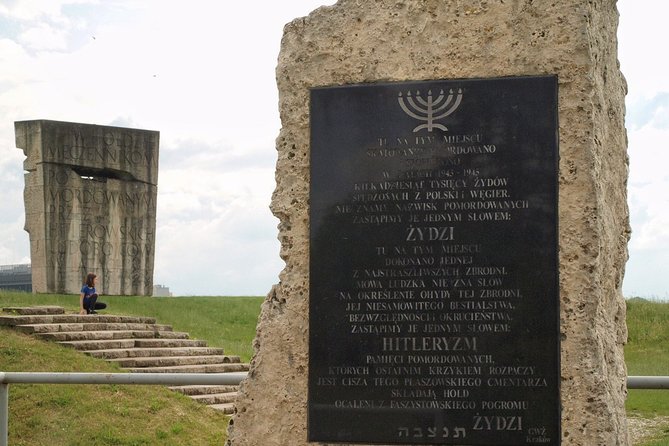
Executions took place at several places within Plaszow. Mass graves and memorials now mark parts of the former camp, and the tour pauses at major commemorative sites.
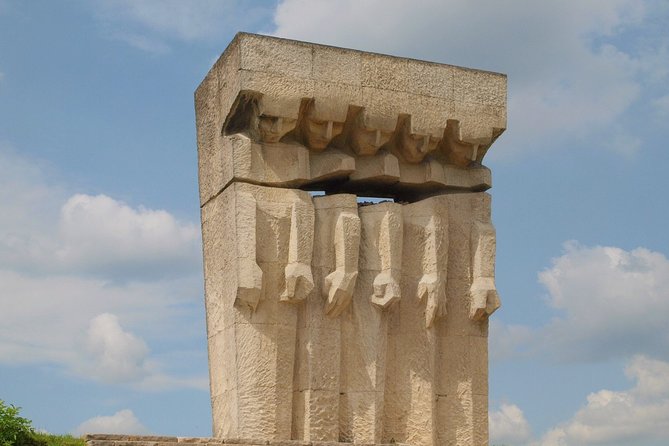
The Monument of Torn-Out Hearts is a central point for reflection. It is not simply a place to take a photograph and move on. The guide explains its meaning and places it within the wider story of prisoners, forced labor, deportation, and murder.
This part of the walk can be emotionally heavy. The subject is not treated as a theatrical attraction, and you should not expect entertainment or a light afternoon outing. The tone is educational and respectful, but the facts are grim.
I would set aside time after the tour rather than scheduling something rushed immediately afterward. Two hours may sound short, yet the material can stay with you. A thoughtful guide, such as Barbara or Phil, can make the visit easier to follow by answering questions and showing images as the walk progresses.
Plaszow and Oskar Schindler
Plaszow is closely connected with Oskar Schindler, whose story was brought to a worldwide audience through Schindler’s List. His enamelware enterprise employed Jewish prisoners whose work permits were registered through Plaszow.
The guide explains how Schindler used those permits to protect prisoners from further transports. Later, he arranged their transfer to his wartime plant in Brunnlitz. More than 1,000 people were saved through these efforts.
The connection to the film is useful, but it should not become the whole reason for visiting. Schindler’s List helps many people recognize names and events, yet Plaszow was not a film set designed for a tidy story. The real site was a forced-labor and concentration camp in which tens of thousands of people were imprisoned and thousands were murdered.
One guide used the film as a bridge into the real events, showing how the movie followed parts of the story while adding necessary context. That is the right balance. You can come with an interest in the film, but you will leave with a much broader understanding of the camp and its victims.
What makes the guides important
At Plaszow, the guide is the key part of the experience. Bartholomew has been praised for clear, detailed explanations. Barbara has been described as friendly, well prepared, and willing to answer questions throughout the route. Phil has taken time to show the main sites and explain what happened at each one.
Those details matter because the camp’s remains do not always announce themselves. A guide must tell you where to look, explain why a feature matters, and show how the pieces fit together.
You should expect a history-focused walk rather than a performance. The strongest part of the guiding is the combination of spoken explanation and old photographs. This gives you two views of Plaszow: the physical site today and the functioning camp during the occupation.
Since the experience is offered in English, you should select English when booking. Group tours use one language, so you will not be switching between languages during the walk.
Walking conditions and what to wear
The tour requires moderate physical fitness. You will be walking for much of the two-hour experience, and one past participant specifically advised wearing comfortable shoes.
That advice is practical. Plaszow is not a polished indoor museum route with benches and climate control. You should be ready for open-air walking and ground that may feel uneven. The information provided does not specify the exact surface or weather arrangements, so sensible footwear and suitable clothing are your safest choices.
If you have mobility concerns, consider the physical demands before booking. The tour information calls for moderate fitness, but it does not provide detailed accessibility information. You can ask the provider before reserving if you need specific guidance.
The tour ends at the bus stop at 57 Kamieńskiego Street, rather than returning to the original meeting point. That matters when planning the rest of your day. You will finish in a different part of Krakow, so check your onward route before setting off.
Is $30.04 a fair price?
At $30.04 per person, this is not the cheapest way to spend two hours in Krakow, especially since admission to the sites themselves is free. But the ticket pays for the guide, the structure of the walk, the historical explanation, and the link between the ghetto and camp.
I consider it good value if you want to understand Plaszow rather than simply locate it. Without guidance, you might see a memorial, a remnant, or a patch of open ground without knowing its role. The old photographs and the explanation of the camp’s living, hospital, administrative, and industrial sections add real value.
It is less compelling if you prefer to explore quietly on your own or want a large indoor exhibition filled with original objects. This tour is built around place, memory, and interpretation. The free admission does not mean the experience is free of effort. You pay for a guide who helps make a difficult site readable.
The tour is commonly reserved well ahead of time, with an average booking lead time of about 39 days. That does not guarantee every date will sell out, but it is a useful sign that you should not leave the decision until the last morning of your Krakow stay.
Who should choose this walk?
I would recommend it to you if you want a focused introduction to Plaszow, have an interest in Krakow during the Nazi occupation, or have seen Schindler’s List and want to understand the real setting behind the film.
It also suits visitors who prefer learning through a guided walk rather than spending hours in a museum. The route gives you context in motion, with the guide pointing out traces and showing photographs as you go.
I would think twice if you want a light excursion, have limited walking ability, or find outdoor memorial sites especially difficult. The camp’s story includes forced labor, deportation, executions, and mass murder. This is a place for attention and respect.
Families with older teenagers may find the tour valuable, but the provided information does not set a minimum age. You should use your own judgment about how younger children would handle the subject.
Booking, timing, and cancellation advice
The tour lasts approximately two hours. The listed portions include about 15 minutes at Ghetto Heroes Square, one hour at Plaszow, and another 45 minutes examining the camp’s remains, memorials, organization, and connection with Schindler.
Your confirmation arrives when you book. The activity is available with a mobile ticket and is offered in English. Arrive 10 minutes early at Apteka pod Orłem, since late arrivals cannot join after the group departs.
You can cancel for a full refund up to 24 hours before the start time. Cancellations or changes made less than 24 hours before the start are not accepted for a refund, and the cut-off uses local Krakow time.
Should you book the Plaszow tour?
Book it if you want a serious, well-guided account of a difficult Krakow site and value explanation more than preserved buildings. The route from Ghetto Heroes Square to Plaszow gives the story a clear shape, while the photographs, memorials, cemetery traces, and Schindler connection make the two hours worthwhile.
Skip it if you want a conventional museum or an easy sightseeing walk. Plaszow requires concentration, walking, and emotional readiness. For the right visitor, that is precisely its value: the tour helps you see what remains, understand what was destroyed, and remember the people behind the place.
FAQ
Where does the Plaszow tour begin?
The tour begins at Apteka pod Orłem, Plac Bohaterów Getta 18, Krakow, at Ghetto Heroes Square.
Where does the tour end?
The tour ends at the bus stop at 57 Kamieńskiego Street in Krakow.
How long does the experience last?
The walking tour lasts approximately two hours. The planned stops include about 15 minutes at Ghetto Heroes Square, one hour at Plaszow, and 45 minutes focused on the camp’s remains and memorials.
Is the tour offered in English?
Yes. The experience is offered in English. Group tours operate in one language, so you should select your preferred language when booking.
How much walking is involved?
The tour requires a moderate level of physical fitness and includes a fair amount of walking. Comfortable shoes are recommended.
Can I cancel for a refund?
Yes. You can cancel up to 24 hours before the experience begins for a full refund. Cancellations or changes made less than 24 hours before the start time are not accepted for a refund.
Recently added in Krakow
- Auschwitz-Birkenau and Krakow Private Car Trip from Katowice★ 4.3 · 3 reviews
- Wawel Castle, Old Town with St. Mary’s Church Guided Tour★ 5.0 · 3 reviews
- Wawel Castle, Cathedral, Rynek Underground Tour with Lunch★ 5.0 · 3 reviews
- From Krakow: Chocholow Thermal Hot Springs (hotel pick up)★ 5.0 · 3 reviews
- Private tour to Zakopane and Thermal Baths from Krakow★ 5.0 · 3 reviews
- Legends of Cracow ROBOTIC SHOW★ 4.0 · 3 reviews
- From Krakow: Zakopane and Thermal Pools Guided Trip★ 5.0 · 3 reviews
- Guided Beer Tour in Krakow★ 4.5 · 3 reviews
Walking Tours, compared.




Gdańsk City Sights & History Guided Walking Tour in English
Read our review →


Where else this one turns up