
Reviewed · OLD TOWN TOURS
Krakow: Old Town Rynek Underground Entry and Guided Tour
Krakow’s Main Market Square looks grand above ground, but its most revealing stories sit below it. This guided visit leads you beneath the Cloth Hall into the Rynek Underground Museum, where real archaeological finds share space with projections, models, and reconstructed scenes from medieval Krakow. I like the way the tour connects the famous square outside with the buried streets and daily life beneath it. I also like that a guide explains the displays, since some exhibits would lose their meaning without context.
The guide’s storytelling is a major part of the value. Pauline, one English-speaking guide praised for clear explanations and humor, was especially good at making medieval life feel close and human. The main caution is timing: although the advertised duration is 1.5 hours, one English tour lasted about 55 minutes, and the museum may not let you stay afterward to browse on your own.
Key points to know before you book
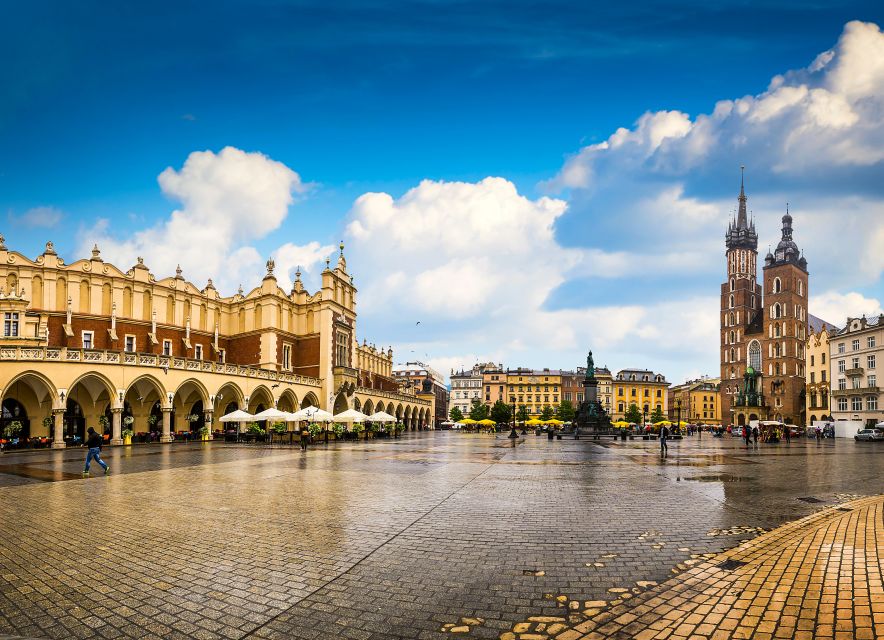
- The tour begins under Krakow’s Main Market Square, with entry through the Cloth Hall on the St. Mary’s Church side.
- Archaeology and multimedia work together, using real objects, city models, displays, and reconstructions to explain medieval Krakow.
- You will see reconstructed 11th-century burials, trading scenes, and tools linked to the city executioner.
- A live guide adds the missing context, explaining how ordinary people lived, worked, suffered, and worshipped.
- The advertised visit lasts 1.5 hours, but the actual guided portion may be shorter.
- The $33 price includes the museum ticket and guide, with free cancellation up to 24 hours before the start time.
Start beside the Cloth Hall, at Krakow’s busiest square
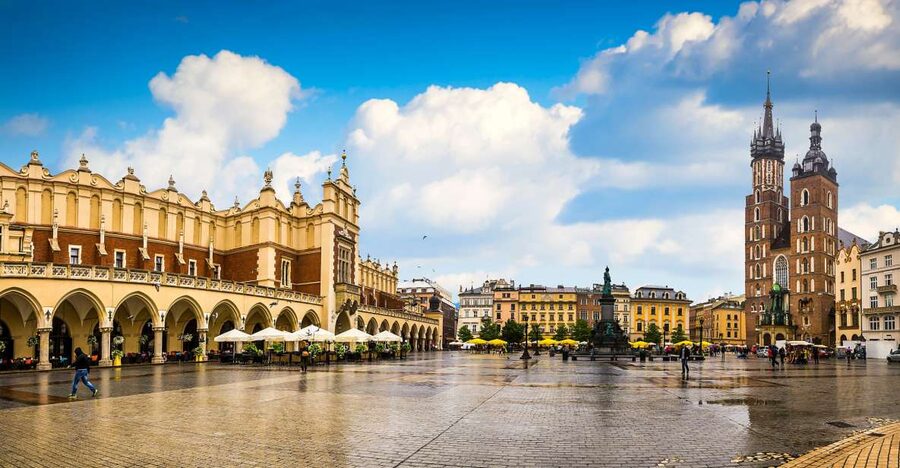
Your meeting point is easy to locate once you know what to look for. The guide meets you at the entrance to the Rynek Underground Museum, reached through the Cloth Hall, or Sukiennice, from the side facing St. Mary’s Church. Look for a guide holding a sign marked excursions.city.
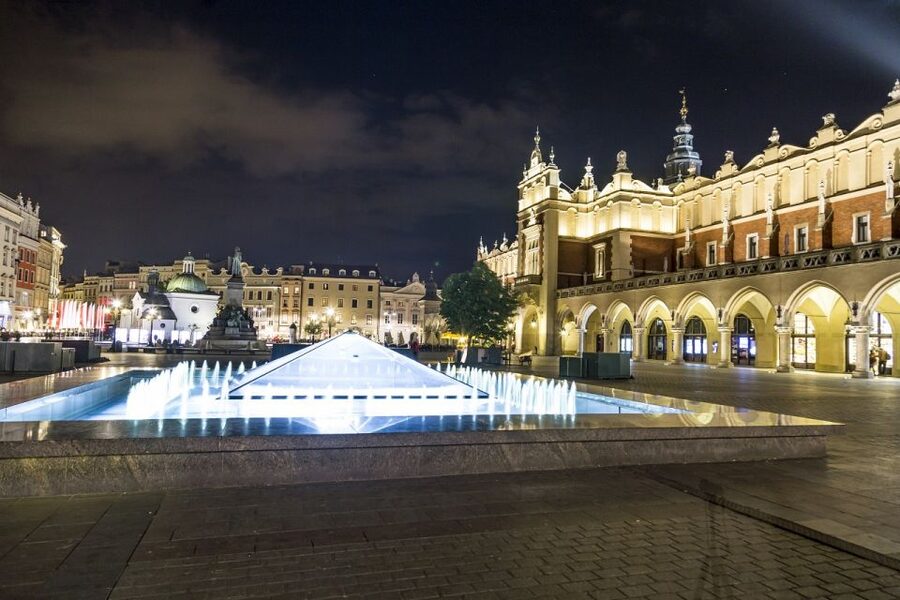
That location puts you right at the center of Krakow’s Old Town. The Main Market Square is not just a place to gather before a museum visit. It is the physical setting for the stories you are about to hear below ground. The Cloth Hall, St. Mary’s Basilica, and the broad open square help you picture Krakow as a royal trading city before you descend.
I recommend arriving with enough time to identify the entrance without rushing. The museum is popular, and the guided option helps you secure admission in advance. The activity includes a ticket and allows you to skip the ticket line, but you still need to reach the meeting point at the stated starting time.
The tour ends back at the same place. That makes it easy to continue around the Old Town afterward, visit St. Mary’s Basilica, stop for a meal, or simply take another look at the square with its underground story in mind.
More Old Town Tours in Krakow
- Old Town Krakow & Wawel Castle Walking Tour
★ 5.0 · 1,508 reviews - Krakow: Bike Tour of Old Town, Jewish Quarter and the Ghetto
★ 4.9 · 1,155 reviews - Krakow: The Old Town Walking Tour
★ 4.8 · 794 reviews
Descend beneath the Main Market Square
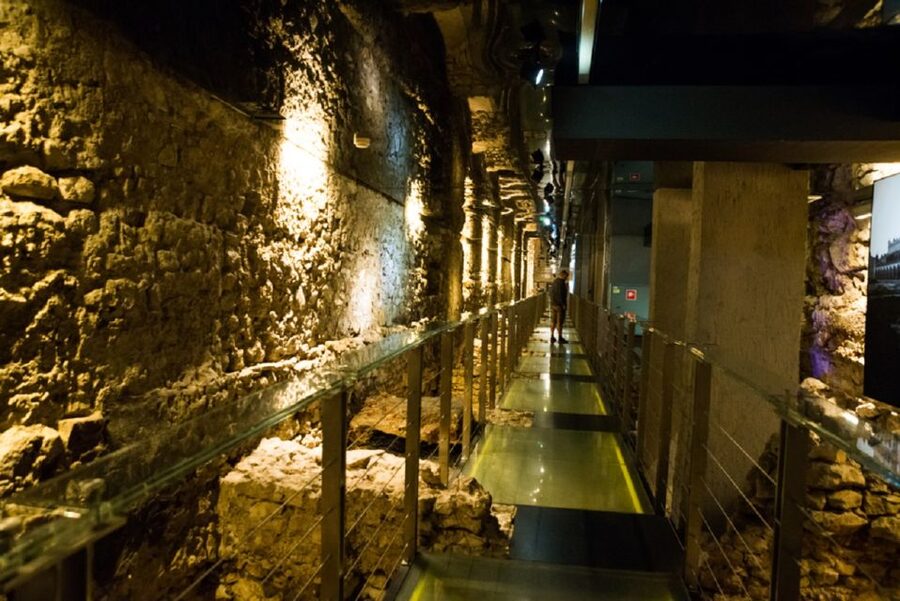
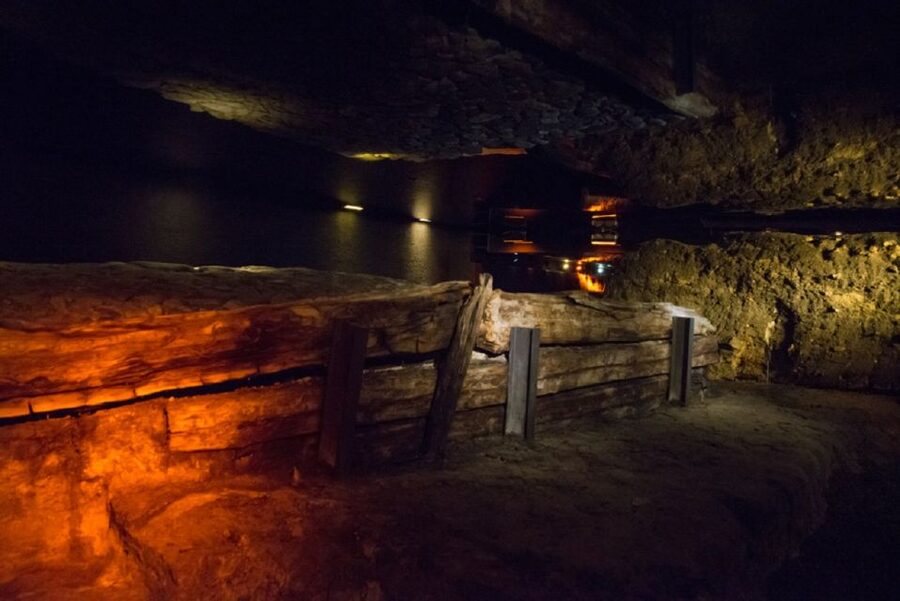
The Rynek Underground is an archaeological reserve beneath Krakow’s central square. Instead of viewing the city’s past only through paintings or church interiors, you walk through a museum built around physical traces found below the modern surface.
That change in viewpoint matters. Above ground, Krakow’s Main Market Square can seem polished and complete. Below it, you encounter the layers created by centuries of building, trade, burial, and everyday work. The museum helps you understand that the square was never just an empty public space. It was a working part of city life.
A guide is useful here because the museum uses several kinds of presentation at once. You may see a stone or metal object, then a multimedia display showing how it might have fit into medieval life. A model may explain the shape of the city, while a guide fills in the human story behind it.
Without that explanation, it would be easy to admire the objects and miss the point. With a good guide, the visit becomes less about isolated artifacts and more about how Krakow developed as a royal city.
Follow the archaeological displays and medieval remains
The museum mixes original objects found by archaeologists with modern ways of showing what the Main Square looked like centuries ago. This is one of the strongest parts of the visit. You are not asked to imagine the past from labels alone. Models, images, and staged scenes help make the old city easier to picture.
The displays address both architecture and daily life. You learn about the shape of the city, the way people used the square, and the activities that made Krakow an important center. The focus is not limited to kings and grand buildings. The tour also considers traders, workers, officials, and people facing the harsh realities of medieval society.
The trading scenes are particularly useful because they connect the museum to the Cloth Hall above. The building remains a symbol of Krakow’s commercial life, but the underground displays help you think about what trade meant in practice. Goods changed hands, merchants gathered, and the square served as a place of business as well as ceremony.
I like this balance. The museum gives you a royal-city setting, but it also asks you to consider the ordinary people who made that city function.
See the 11th-century burials
The reconstructed 11th-century burials add a more serious tone to the visit. They show that the area beneath the square was not simply a forgotten market level. It also contains evidence of people who lived and died in the early period of Krakow’s development.
These reconstructions can be striking, especially if you prefer museums that show physical evidence rather than only polished objects. They also remind you that urban growth often covers earlier communities. The modern square sits above layers of lives that came before it.
Your guide helps explain what the burials reveal and places them within the story of the city. This is where the visit moves beyond architecture and commerce. Medieval Krakow becomes a place of families, faith, illness, work, and death, not just a backdrop for royal events.
Some visitors may find this section more solemn than entertaining. That is part of its value, but it is worth knowing that the tour does not present only cheerful scenes of markets and city life.
More Rynek Underground visits:
- Krakow: Rynek Underground Museum Guided Tour
★ 4.6 · 1,122 reviews - Krakow: Guided Tour of Rynek Underground
★ 4.6 · 113 reviews - Krakow: Rynek Underground Museum Skip-the-line Guided Tour
★ 4.5 · 101 reviews - Krakow: Rynek Underground Guided Tour with Skip-the-Line
★ 4.4 · 55 reviews
Watch the traders and learn about the executioner
The museum also explores the less comfortable side of medieval society. Displays about the city executioner and his tools offer a glimpse into how punishment was handled and how public authority worked.
This is an unusual detail, and it gives the tour an edge. Many Old Town visits focus on beautiful churches, royal connections, and handsome facades. Here, you also encounter the machinery of law and punishment. The executioner’s role and tools help show how medieval cities dealt with crime, judgment, and fear.
The trading displays offer a very different mood. Together, these sections create a more balanced picture of the period. Medieval life included business, faith, celebration, hard labor, public order, and suffering. You do not get a cleaned-up version of the past.
A guide can make these exhibits more meaningful by explaining why such work mattered within the city. The objects alone may seem grim or unfamiliar. The surrounding stories show how they fitted into the social structure of Krakow.
Let the guide connect stone, metal, and story
The best reason to choose a guided visit rather than simply enter alone is interpretation. The museum’s objects and multimedia displays are interesting, but a live guide can point out links you might otherwise miss.
A strong guide explains not only what you are looking at, but why it matters. The most praised part of this experience is the combination of clear facts, enthusiasm, and storytelling. Pauline, who led an English-language visit, was described as adding humor while explaining the museum in clear English. That kind of delivery helps during a museum visit filled with unfamiliar names, dates, and objects.
The tour is also available in Polish, German, French, Italian, and English. You should select your preferred language when checking times, since the quality of your visit depends heavily on being able to follow the explanations.
The guide’s role is especially important for the multimedia sections. Modern screens and projections can show what the Main Square may have looked like, but they do not automatically explain how reliable each reconstruction is or how it connects to the archaeological evidence. A good guide gives the displays a clear thread.
How much time will you really get?
The stated duration is 1.5 hours, which is a reasonable length for a focused museum visit. It gives you enough time to move through the main sections without turning the experience into an all-day commitment.
Still, build in a little flexibility. One English-language visit lasted closer to 55 minutes. That is a notable difference, particularly if you are paying $33 and expect a full 90-minute tour. The pace may depend on the guide, the group, the language, and the museum’s operating arrangements.
Another practical point is that you may not be allowed to remain inside after the guided portion ends. One visitor wanted to return to several exhibits for a closer look but was told by museum staff that this was not permitted. Do not assume that a guided ticket automatically gives you free time afterward.
If you like to read every label, photograph every display, or linger over archaeological details, this limitation matters. You may prefer a separate self-guided visit if the museum allows it under its own admission rules, but this activity itself should be treated mainly as a guided experience.
Is $33 a fair price for the Rynek Underground?
At $33 per person, the cost is not just for museum admission. It includes the entrance ticket, a live guide, and the convenience of arranged entry at a highly visited attraction. The real question is how much value you place on explanation.
If you already know Krakow’s medieval story and enjoy reading museum displays alone, the guide may feel less essential. You also need to consider the possibility that the guided portion could be shorter than 1.5 hours.
For most first-time visitors, I think the price can make sense because the museum’s value depends heavily on context. The displays cover archaeology, urban growth, trade, burials, and punishment. A guide helps you connect those subjects rather than treating them as separate stops.
The ability to reserve now and pay later also helps if your Old Town plans are still changing. You can hold a place without paying at once, and cancellation is free up to 24 hours before the activity. Those terms are useful for a short city break, when weather and museum plans can shift.
Food and drinks are not included. That is no problem in practical terms, since the tour is only around 1.5 hours and ends in the center of Krakow, where you have many choices afterward. Just do not expect refreshments as part of the visit.
Who will get the most from this museum tour?
I would choose this activity if you want a clear introduction to Krakow’s medieval past and prefer listening to a person rather than decoding museum labels. It works well for first-time visitors who plan to spend time around the Main Market Square anyway.
It is also a good choice on a wet day. The visit keeps you indoors while still giving you a strong sense of place. The underground setting adds variety to the usual Old Town walk, and the museum offers more than another view of a church facade.
Families with older children may appreciate the models, reconstructions, traders, and executioner’s tools, though the more serious burial and punishment displays may not suit very young children. The available languages make the visit practical for international groups.
You might skip it if your schedule is extremely tight, if you dislike guided pacing, or if you want a long period to explore exhibits independently. You should also think twice if a short guided visit would leave you disappointed, since the actual duration can vary.
A practical way to fit it into your Krakow day
Place this visit near the start of your Old Town time if you want the underground displays to shape what you see above ground. Afterward, you can look at the Cloth Hall and Main Market Square with a better sense of their older purpose.
You can also schedule it after a walk through the square. In that order, the museum works like a second layer of explanation. You first see the modern city, then discover the buried remains beneath it.
Because the meeting point is central and the activity ends there, no transport is involved. That keeps the plan simple, but you still need to allow time to find the correct entrance through the Cloth Hall from the St. Mary’s Church side.
Book ahead if your Krakow dates are fixed. The museum is popular, and the included admission helps avoid arriving at the square only to find that your preferred time is unavailable.
Should you book the Rynek Underground guided tour?
I would book this tour if you want a compact, story-led look at medieval Krakow and value a guide who can explain why the archaeological remains matter. The museum’s mix of real finds, city models, multimedia scenes, burials, trade, and punishment gives you a fuller picture than a simple walk around the square.
Go in with realistic expectations about timing. The advertised visit is 1.5 hours, but one English tour was much shorter, and you may not be able to stay afterward for extra browsing. If that tradeoff is acceptable, the $33 price offers a useful introduction to the city beneath Krakow’s most famous square.
FAQ
Where does the Rynek Underground tour start?
The guide meets you at the entrance to the Rynek Underground Museum. Enter through the Cloth Hall from the side of St. Mary’s Church and look for a sign marked excursions.city.
Where does the activity end?
The tour ends back at the meeting point beside the Rynek Underground Museum.
How long does the tour last?
The stated duration is 1.5 hours. The actual guided portion may be shorter, with one English-language tour lasting about 55 minutes.
What is included in the price?
The $33 price includes a professional guide and the museum entrance ticket.
Are food and drinks included?
No. Food and drinks are not included.
Which languages are available?
Live tours are available in Polish, German, French, Italian, and English.
Can I skip the ticket line?
Yes. The activity includes skip-the-ticket-line entry.
Can I cancel for a full refund?
Yes. You can cancel up to 24 hours in advance for a full refund.
Do I have to pay when I reserve?
No. The reserve-now, pay-later option allows you to book your place and pay later.
Recently added in Krakow
- Auschwitz-Birkenau and Krakow Private Car Trip from Katowice★ 4.3 · 3 reviews
- Wawel Castle, Old Town with St. Mary’s Church Guided Tour★ 5.0 · 3 reviews
- Wawel Castle, Cathedral, Rynek Underground Tour with Lunch★ 5.0 · 3 reviews
- From Krakow: Chocholow Thermal Hot Springs (hotel pick up)★ 5.0 · 3 reviews
- Private tour to Zakopane and Thermal Baths from Krakow★ 5.0 · 3 reviews
- Legends of Cracow ROBOTIC SHOW★ 4.0 · 3 reviews
- From Krakow: Zakopane and Thermal Pools Guided Trip★ 5.0 · 3 reviews
- Guided Beer Tour in Krakow★ 4.5 · 3 reviews
Old Town Tours, compared.




Bike Tour of Old Town, Jewish Quarter and the Ghetto
Read our review →

Sightseeing EcoCruise around the Old Town of Gdansk
Read our review →
Where else this one turns up