
Reviewed · JEWISH QUARTER & KAZIMIERZ TOURS
Krakow: Old Town, Jewish Kazimierz and Ghetto Sightseeing by Electric Golf Cart
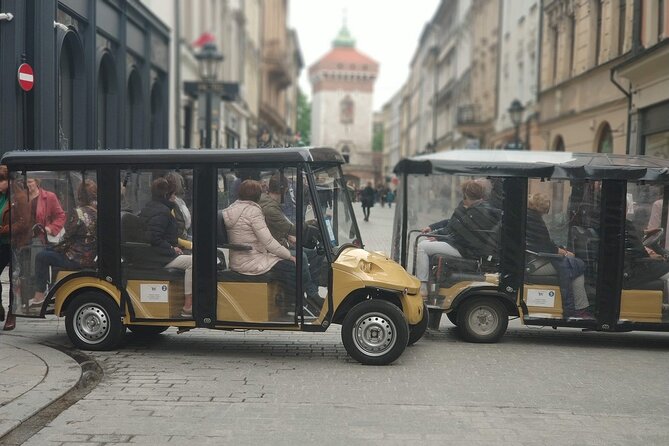
Krakow’s story comes in several powerful chapters, and this electric cart tour links them in one short ride: the medieval Old Town, Jewish Kazimierz, and Podgórze, the district that became the Krakow Ghetto during Nazi occupation. I like the route because you cover a lot without wearing out your feet, and the small group keeps the experience more personal than a large coach tour.
I also like the mix of famous landmarks and difficult history, from St. Mary’s Basilica and the Cloth Hall to the Ghetto wall, Concord Square, and Tadeusz Pankiewicz’s pharmacy. The trade-off is time. You see many places from the cart, but stops can be brief, and the crowded Old Town may limit your view or photo opportunities.
Key points at a glance
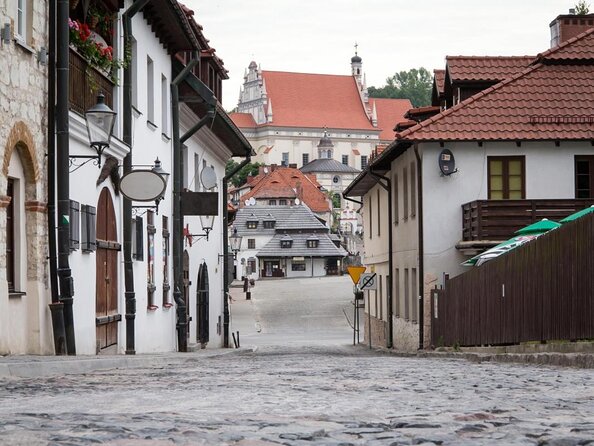
- Three very different Krakow districts: See the Old Town, Jewish Kazimierz, and former Ghetto in one route.
- A small electric vehicle: The cart carries no more than eight people and includes an audio system.
- Useful for limited time: The tour lasts about 2 hours and 30 minutes, making it a strong first look at the city.
- Some walking stops are possible: At selected sites, you may have around 10 minutes to look around or take photos.
- Guides add personality: Guides named Filip W, Michael, Peter, Tom, and Radic have been praised for clear explanations and friendly service.
- Plan for crowds: Earlier departures are a smart choice, especially around the Main Market Square.
What this Krakow cart tour is really trying to do
This is not a slow, museum-style tour. It is a moving introduction to Krakow, designed to show you the city’s main sights and explain how its districts connect.
The electric cart is especially useful in the Old Town, where a compact vehicle can cover ground while you listen to the audio system and guide. You are not simply circling the same square. The route continues toward Kazimierz and then across to Podgórze, giving you a sense of how Krakow changes from royal and medieval center to Jewish neighborhood, then to a place marked by wartime persecution.
The tour is offered in English and accepts mobile tickets. The group limit is eight people, though the final size depends on bookings. Some departures may feel almost private, while others will include a full small group.
I would use this ride to get your bearings early in a Krakow stay. Then return on foot to the places that deserve more time.
More Old Town Tours in Krakow
- Old Town Krakow & Wawel Castle Walking Tour
★ 5.0 · 1,508 reviews - Krakow: Bike Tour of Old Town, Jewish Quarter and the Ghetto
★ 4.9 · 1,155 reviews - Krakow: The Old Town Walking Tour
★ 4.8 · 794 reviews
Starting among Krakow’s medieval landmarks
The meeting point is at Mikołaja Zyblikiewicza 2, close to central Krakow and public transportation. Be there on time. This is a shared tour with a fixed start, not a private ride that can wait for late arrivals.
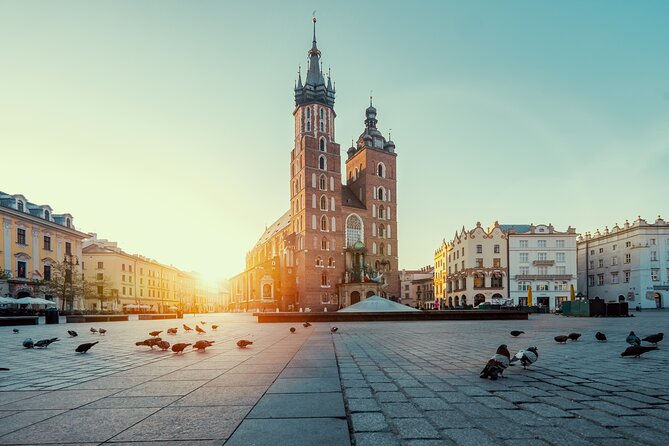
The first major stop is the Main Market Square, or Rynek Główny. It is Krakow’s great public space and the center of the Old Town. The square gathers several of the city’s most recognizable buildings, so it is an efficient place to begin.
The cart gives you a broad introduction, but the square can be crowded. Other sightseeing carts may stop nearby, and people on foot can make it hard to see every building clearly. If you want photographs without a crowd blocking the view, schedule your own return at another time.
The Cloth Hall and the Town Hall Tower
The Cloth Hall, known in Polish as Sukiennice, sits at the center of the Main Market Square. It began as a place for trade and remains one of Krakow’s key architectural symbols. From the cart, you can appreciate its long Renaissance facade and central position, but the ride is not a substitute for walking through the building.
The Town Hall Tower is another Old Town landmark. It rises about 70 meters and is the remaining piece of Krakow’s original town hall complex. Its 110 stone steps and old executioner’s dungeons give it a darker edge than its elegant exterior suggests.
The tower is best understood as part of the square’s long civic story. You may hear about it during the ride, but the tour does not promise a tower climb. Treat this stop as an introduction, then decide if you want to return independently.
St. Mary’s Basilica
St. Mary’s Basilica brings together several Krakow traditions in one building. It has served the city for more than eight centuries, contains the famous high altar by Veit Stoss, and is linked with the bugle call heard from its tower.
The interior is also known for murals by Jan Matejko, including starry decoration across the vaulting. A short stop can give you the basic story and perhaps a chance to enter, but the time may not be enough to study the altar and artwork properly.
One useful detail comes from the way the tour operates: you should tell the guide if you want to step inside a church. The cart does not automatically turn every stop into a full visit.
Other Jewish Quarter and Kazimierz walks:
- Krakow: Jewish Quarter and Former Ghetto Tour
★ 4.9 · 1,441 reviews - Krakow: Kazimierz Jewish Quarter Walking Tour
★ 4.8 · 571 reviews - Krakow: Kazimierz, Schindler’s Factory & Ghetto Guided Tour
★ 4.8 · 460 reviews - Krakow: Bike Tour of the Old Town, Kazimierz, and the Ghetto
★ 4.9 · 350 reviews
The Słowacki Theatre and Barbican
The Juliusz Słowacki Theatre has operated continuously since 1893. Its building is one of Europe’s notable examples of theatre architecture, and it adds a cultural note to a route otherwise filled with churches, walls, and market buildings.
The Barbican introduces Krakow’s defensive past. This rounded medieval fortification once formed part of the city’s outer defenses and was never captured in a siege. Its famous story includes a successful defense involving a single shot, a small detail that helps make the stone structure memorable.
These are good examples of what the cart does well. You can connect several landmarks quickly and hear why each matters. The limitation is equally clear: unless your guide stops for a walk, you will mainly view them from outside.
Moving from the Old Town to Jewish Kazimierz
Kazimierz was once an independent town south of Wawel and later became the center of Jewish life in Krakow. Today, it is one of the city’s busiest sightseeing areas, but its importance is not just about cafes and attractive streets.
The cart helps you understand Kazimierz as a district with layers. You see the streets connected with Jewish life, learn about the synagogues, and pass through Szeroka Street, the neighborhood’s historic heart.
The route includes the Tempel Synagogue, known for its preserved stained-glass windows and its non-Orthodox character. Even if you do not enter, the exterior and the guide’s explanation help place it within the wider story of Jewish Krakow.
Szeroka Street is especially important. Four synagogues once stood along this one street, an unusual concentration in Europe. It also hosts the final concert of the Jewish Culture Festival, adding a modern cultural role to its older religious one.
The Old Synagogue and Remuh Synagogue
The Old Synagogue on Szeroka Street is among Poland’s oldest preserved synagogues. Its location makes sense only when you understand Szeroka as the center of Jewish Kazimierz, not simply another attractive street.
The route also includes the Remuh Synagogue, the smallest of Krakow’s seven synagogues. Its decoration is more restrained than that of the other synagogues, and after renovation completed in April 2016 it became the main prayer site for Krakow’s Jewish community.
These stops carry more weight than a quick photo opportunity suggests. You are seeing religious buildings tied to a community that was largely destroyed during the Second World War. The cart’s audio and guide commentary provide the basic context, but you will want additional time if you hope to study the buildings or enter them.
Podgórze and the former Krakow Ghetto
The final major section moves to Podgórze, the district that became the Krakow Ghetto in 1941. This part of the route is less decorative than the Old Town, but it may be the most emotionally serious.
The parish church of St. Joseph dominates Podgórze Market Square. It is a recognizable landmark in the district and gives you a visual anchor before the route turns toward the remains of the Ghetto.
A small fragment of the original Ghetto wall survives, with a plaque recalling the fate of the people imprisoned there. It is a modest physical remnant, but that is part of its force. You are not looking at a grand monument. You are looking at a remaining section of an enclosure built to confine people.
The former Plac Zgody, now associated with the Ghetto Heroes Square, served as an Umschlagplatz under Nazi occupation. Jews were forced to gather there before deportation. The square’s meaning can be difficult to absorb from a moving vehicle, so listen closely and consider returning on foot afterward.
Tadeusz Pankiewicz’s pharmacy
The route also reaches the pharmacy taken over by Tadeusz Pankiewicz. He inherited the business from his father and could not have known that it would place him inside one of the most important civilian stories of the Ghetto.
This stop connects the large events of the war with ordinary work and private decisions. A pharmacy was still a pharmacy, but its position during the occupation made it part of a much larger human story.
The final wartime stop is described as a place where global conflict meets daily life and personal tragedy. That wording points to the value of this part of the ride: you are not seeing only monuments. You are being asked to connect streets, businesses, homes, and public squares with the people who lived through the occupation.
How much time do you get at each place?
The full experience lasts about 2 hours and 30 minutes. That sounds generous for a cart ride, but the route covers a lot of Krakow.
Some stops are viewed from the vehicle. At selected locations, you may be able to get out and walk around for roughly 10 minutes. One guide may encourage more stops than another, and you should clearly say when you want time for photographs or a church visit.
That flexibility matters. One guide, Tom, was praised for answering questions and stopping for photos. Other guides, including Michael and Peter, were praised for explaining the city at a comfortable pace. Still, you should not assume every stop will become a long break.
I see this as a survey tour, not a deep visit to each landmark. You will see far more than you could comfortably cover on foot in the same period, but you will not fully explore every synagogue, church, tower, or square.
The guide can make or break the ride
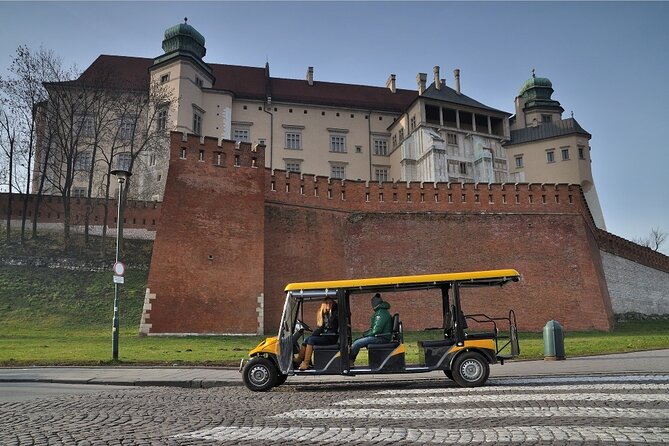
The cart includes an audio system, which helps provide steady background information as you move. The guide is still important, especially when you have a question, want a photo stop, or need help understanding a sensitive site.
Several guides have received especially strong praise. Filip W was described as professional and engaging, adding useful explanations beyond the audio. Michael was praised for taking time with the route and explaining different parts of the city. Peter was noted for a friendly manner and entertaining presentation.
Tom’s English was described as excellent, and he was willing to answer questions and stop for photographs. Radic was praised for being attentive and informative during a short stay. These names are useful indicators of the kind of guiding the operator can provide, but you cannot select a particular guide from the information available.
The best approach is to treat the audio as the foundation and use the live guide for questions. If a site matters to you, speak up politely. The difference between simply passing a church and getting a short look inside can be significant.
Price, group size, and comfort
At $56.47 per person, the tour is not the cheapest way to see Krakow. Its value depends on how much time you have and how easily you walk.
You are paying for a 2.5-hour route, an electric vehicle, an audio system, and access to a small group capped at eight people. For a first day in town, or for a one-day stay, that can be fair value. You cover the Old Town, Kazimierz, and the former Ghetto without arranging separate transport.
The small cart is also useful for anyone who cannot walk long distances. One person specifically found the experience helpful for limited mobility. Still, the provided information does not promise wheelchair access, so you should confirm your own requirements before booking.
Do not bring large luggage. The vehicle has room for seated passengers, not big bags. The ride is offered in English, and confirmation arrives at booking.
The best time to take the tour
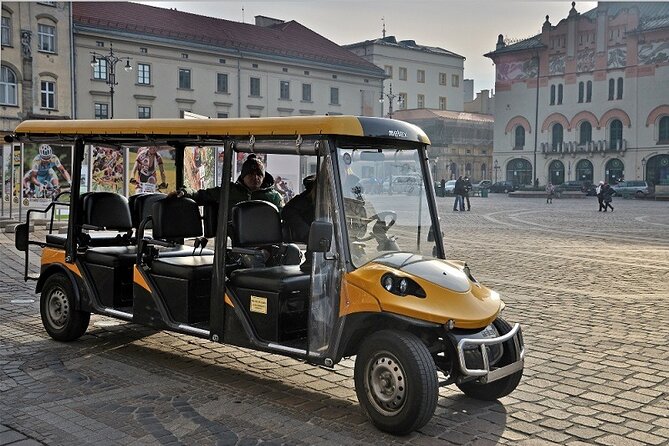
Earlier departure times are the safer choice. The Main Market Square becomes more congested later in the day, with pedestrians and other sightseeing carts competing for space.
Crowds can affect both what you hear and what you see. A nearby cart may block a landmark, and it can be harder to take a clean photograph. You may still enjoy the ride, but early timing gives the guide a better chance to pause without holding up other vehicles.
The tour starts at Mikołaja Zyblikiewicza 2 and ends at Mikołaja Kopernika 3. The end point is still central, making it practical for continuing your day, though you should check your own plans against that location.
Who should book this experience?
I would recommend it most strongly to:
- First-time visitors with only one day in Krakow
- People who want context before exploring on foot
- Anyone who finds long walking days tiring
- Families or small groups that prefer a compact ride
- History-minded visitors who want both Jewish Kazimierz and the former Ghetto included
- People who like live explanations but do not need a full museum visit at every stop
I would be more cautious if your main goal is photography, extended church visits, or detailed synagogue interiors. You may find the stops too short, especially when the Old Town is crowded.
The tour is also a useful choice for a last day in Poland. A booking made at short notice can still work, as one account of the experience shows, but earlier booking is sensible because the tour is often reserved well ahead, around 33 days in advance on average.
Should you book the Krakow electric cart tour?
Book it if you want a fast, well-organized overview of Krakow’s central districts and do not want to walk every connecting street. The route is unusually useful because it includes both the postcard landmarks of the Old Town and the harder wartime sites in Kazimierz and Podgórze.
At this price, I would not book it as your only Krakow experience. Use it to learn the city’s shape, hear the key stories, and mark the places you want to revisit. Choose an early time, arrive promptly, pack light, and tell the guide when you want a photo or short walk.
You can cancel for a full refund if you do so at least 24 hours before the start time. Within 24 hours, the fare is not refunded, and changes are not accepted.
FAQ
How long does the Krakow electric cart tour last?
The tour lasts approximately 2 hours and 30 minutes.
How much does the tour cost?
The listed price is $56.47 per person.
What language is the tour offered in?
The experience is offered in English.
How many people can join the tour?
The vehicle has a maximum group size of eight travelers.
What areas of Krakow are included?
The route includes Krakow’s Old Town, Jewish Kazimierz, and Podgórze, including sites connected with the former Krakow Ghetto.
Does the tour include an audio system?
Yes. Sightseeing takes place in an electric vehicle with an audio system.
Can I bring large luggage?
No. The vehicle has enough room for passengers to sit but does not have space for large baggage.
Where does the tour start and finish?
It starts at Mikołaja Zyblikiewicza 2, Krakow, and ends at Mikołaja Kopernika 3, Krakow.
Can I cancel for a refund?
Yes. You can receive a full refund if you cancel at least 24 hours before the experience start time. Cancellations made within 24 hours are not refunded.
More golf cart and segway routes in Krakow
- Krakow: City Sightseeing Tour by Electric Golf Cart
★ 4.5 · 3,264 reviews - Krakow: City Sightseeing Tour Eco Electric Buggy Golf Cart
★ 4.7 · 3,143 reviews - Krakow: Extended City Sightseeing Tour – Eco Buggy Golf Cart
★ 4.7 · 794 reviews - Krakow: Old Town Guided Segway Tour
★ 4.7 · 756 reviews
Recently added in Krakow
- Auschwitz-Birkenau and Krakow Private Car Trip from Katowice★ 4.3 · 3 reviews
- Wawel Castle, Old Town with St. Mary’s Church Guided Tour★ 5.0 · 3 reviews
- Wawel Castle, Cathedral, Rynek Underground Tour with Lunch★ 5.0 · 3 reviews
- From Krakow: Chocholow Thermal Hot Springs (hotel pick up)★ 5.0 · 3 reviews
- Private tour to Zakopane and Thermal Baths from Krakow★ 5.0 · 3 reviews
- Legends of Cracow ROBOTIC SHOW★ 4.0 · 3 reviews
- From Krakow: Zakopane and Thermal Pools Guided Trip★ 5.0 · 3 reviews
- Guided Beer Tour in Krakow★ 4.5 · 3 reviews
Jewish Quarter & Kazimierz Tours, compared.

Bike Tour of Old Town, Jewish Quarter and the Ghetto
Read our review →
Kazimierz, Schindler’s Factory & Ghetto Guided Tour
Read our review →
Bike Tour of the Old Town, Kazimierz, and the Ghetto
Read our review →

Jewish Quarter and Ghetto Electric Golf Cart Tour
Read our review →
Where else this one turns up