
Reviewed · JEWISH QUARTER & KAZIMIERZ TOURS
Krakow: Jewish Ghetto Guided Tour
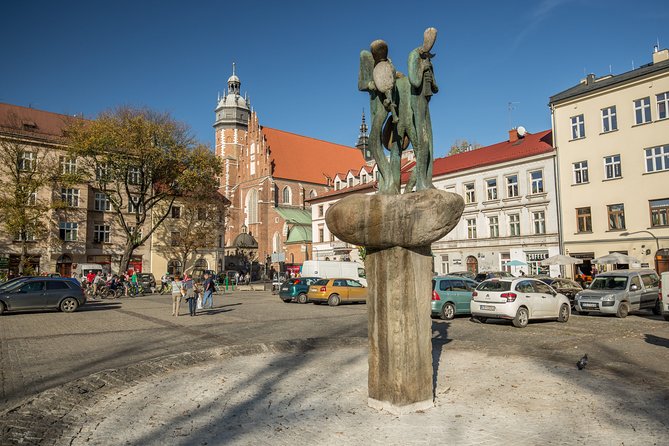
Krakow’s former Jewish Ghetto is easiest to understand on foot, where a surviving piece of wall, an ordinary city square, and a pharmacy museum reveal how wartime persecution reshaped daily life. This short Podgórze tour connects those places in a clear order, with guides such as Olga, Phil, Phillip, and Anna praised for calm, engaging explanations.
I like the small time commitment: about one hour gives you a focused introduction without taking over your day. I also like the route’s human scale, especially the wall fragment and the chairs at Ghetto Heroes Square, details you could easily miss while walking alone. The main drawback is that the modern neighborhood looks very different from the wartime ghetto, so you need the guide’s explanations to picture what once stood here.
Key points at a glance
- A surviving ghetto wall fragment gives you a direct, physical link to the forced confinement of Jewish residents.
- Ghetto Heroes Square explains the deportations and uses empty chairs to represent lives lost.
- Under the Eagle Pharmacy adds a personal story of aid, medicine, and courage during the occupation.
- The one-hour walking route fits well before or after other Krakow sights, including Schindler’s Factory.
- English-only group tours have a maximum of 20 people, with guides praised for clear and sensitive storytelling.
- Comfortable shoes matter, and you should arrive 10 minutes early because late arrivals cannot join.
Why this short Podgórze walk matters
This is not a tour of grand buildings or preserved streets. It is a walk through a part of Krakow that has changed greatly since World War II. That fact is important. You will not see the ghetto exactly as it looked during the occupation, and one guide plainly prepares you for that difference.
The value comes from learning how to read the present-day streets. A wall fragment may look modest at first. A square may seem like an ordinary public space. A pharmacy may appear to be just another museum entrance. Together, these places explain the machinery of confinement, deportation, and survival.
I would treat this as a history-focused introduction rather than a full museum visit. The tour is about one hour, and admission to the pharmacy museum is not included. That keeps the price down, but it also means you need extra time and a separate ticket if you want to explore the interior.
At $15.60 per person, the cost is reasonable for a guided walking experience in Krakow. You are paying for navigation, a planned route, and a guide who can place each stop in context. The strongest value comes if you have not researched Podgórze beforehand or if you want a clear starting point before visiting other World War II sites.
Other Jewish Quarter and Kazimierz walks:
- Krakow: Jewish Quarter and Former Ghetto Tour
★ 4.9 · 1,441 reviews - Krakow: Bike Tour of Old Town, Jewish Quarter and the Ghetto
★ 4.9 · 1,155 reviews - Krakow: Kazimierz Jewish Quarter Walking Tour
★ 4.8 · 571 reviews
From Lipowa 4 to the former ghetto
The meeting point is at Lipowa 4 in Krakow, close to public transportation. You should arrive 10 minutes before departure. This is not a suggestion to ignore: once the group has left, late arrivals cannot join and the ticket cannot be refunded.
The route ends at Apteka pod Orłem, at Plac Bohaterów Getta 18. That point-to-point design is useful because you do not finish where you started. You can continue with the pharmacy museum, spend time around the square, or make your way onward through Podgórze.
The group can include up to 20 people, though some departures may be much smaller. One booking described a group of only eight, while another family had what was almost a private walk with four people. A smaller group usually makes it easier to ask questions and hear the guide clearly.
The experience is offered in English, and group tours operate in one language only. Select English when booking if that is the language you need.
The wall fragment: a powerful first stop
The first stop is a remaining fragment of the Krakow Ghetto wall. You receive about 20 minutes here, which is enough time for the guide to explain the purpose of the wall and the conditions it represented.
This is one of the tour’s most useful stops because it gives the history a physical edge. Written accounts can describe forced separation, but a surviving section of wall shows how that separation was built into the city itself. It helps you grasp that the ghetto was not simply an area where people happened to live. It was a confined space controlled by authorities.
Do not expect a large fortress or a fully preserved boundary. The appeal is precisely that the fragment is limited. You need the guide to explain what it meant and how the surrounding area once functioned.
This is also the place where a walking tour earns its keep. A coach could take you near the area, but it would not help you notice the small remnant or understand its position in relation to the rest of the neighborhood. Comfortable footwear will make the route easier, especially in poor weather.
Ghetto Heroes Square and the chair memorial
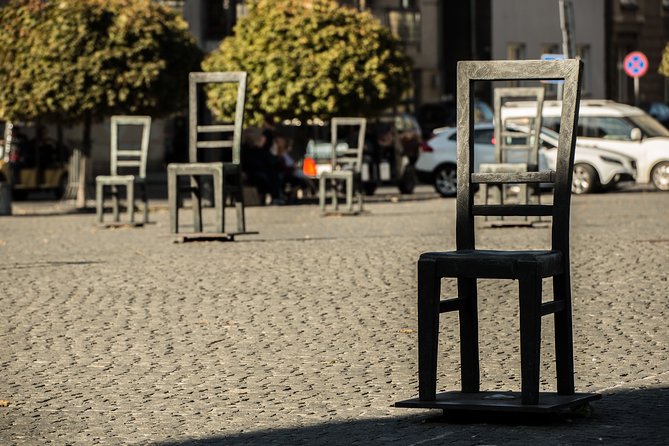
The walk continues to Ghetto Heroes Square, the central emotional point of the route. The square was connected with deportations to extermination camps. Today, rows of empty chairs form the Chair Memorial, with each chair representing lives lost.
You should allow the guide’s explanation to set the pace here. The memorial is simple, but its meaning is not. Empty furniture suggests homes suddenly emptied, families torn apart, and personal belongings left behind. It makes the square easier to understand as a place of forced departure rather than just another urban plaza.
The square is also a useful pause between the wall and the pharmacy. At the wall, you learn about confinement. Here, you confront deportation and loss. The route’s order gives the hour a clear shape.
One practical point: this is an open public space, not a contained museum room. Weather can affect how comfortable you feel while listening. The tour runs in rain or sunshine, so bring suitable clothing and footwear. A wet, cold day will not change the route, but it can make a serious subject harder to absorb.
A few more Krakow half days to consider
- From Krakow: Auschwitz-Birkenau Guided Tour & Hotel Pickup
★ 4.5 · 33,358 reviews - From Krakow: Auschwitz-Birkenau Guided Tour & Hotel Pickup
★ 4.5 · 29,340 reviews - Krakow: Auschwitz Guided Tour with Optional Hotel Pickup
★ 4.5 · 15,280 reviews - Krakow–Zakopane: Cable Car, Chocholow Baths, Cheese & Vodka
★ 5.0 · 10,720 reviews
Under the Eagle Pharmacy and Tadeusz Pankiewicz
The final stop is Under the Eagle Pharmacy, across from the square. The pharmacy is associated with Tadeusz Pankiewicz and his staff, who helped ghetto residents with medicine and other forms of support.
This stop adds a personal and practical side to the story. The wall explains control. The square explains deportation. The pharmacy introduces people who worked to preserve help and hope under terrible conditions.
Admission to the museum is not included in the tour price. The guided stop may explain the pharmacy’s role from outside, but you should not assume that the ticket includes an interior visit. If you want to see the museum itself, check its arrangements separately and allow additional time after the walking tour.
Ending here is convenient. You do not need to retrace the entire route to continue your historical sightseeing. The final location is also a natural place to pause and consider the connections among all three stops.
Guides and the quality of the storytelling
The strongest part of this experience is the guiding. The guides named in the supplied material include Olga, Phil, Phillip, and Anna. Their styles may differ, but the consistent strength is clear explanation delivered with care.
Olga was described as passionate and engaging. Phil was praised for setting a good walking pace while explaining the ghetto and its wider wartime context. Phillip was noted for politeness and strong command of the subject. Anna was valued for a calm tone, approachable manner, and detailed explanations.
You should expect history told aloud, not a formal lecture. The guides answer questions and adjust their explanations to the group. One guide brought printed images to help participants picture places as they once appeared. That can be especially useful here because the current neighborhood does not look much like the wartime ghetto.
The subject calls for sensitivity, and the guiding appears to take that seriously. This is not a tour built around spectacle. The best moments come from the links between places, dates, people, and decisions.
One small timing issue is worth noting. A departure began late while the group waited for people coming from Schindler’s Factory. That may not happen on every outing, but it shows why the schedule can have a little flexibility. If you book another activity immediately afterward, leave some breathing room.
What the one-hour length means
One hour is both the tour’s strength and its limit. You can fit it into a busy Krakow day, perhaps before lunch or alongside a visit to Schindler’s Factory. You get the main sites and a useful framework without committing to a half-day program.
The trade-off is that the explanations cannot cover every part of the ghetto’s history. The tour concentrates on three stops, and some of your understanding will come from listening carefully as you walk between them.
I would choose this format if you want a concise introduction, have limited time, or prefer learning in the places where events happened. If you already know the subject well and want lengthy museum interpretation, you may find the hour too brief.
The pace has been described as comfortable and easy to follow. That matters because the subject is heavy. You are given time to look, listen, and ask questions rather than being rushed from one point to the next.
Price, group size, and practical value
At $15.60 per person, this is one of the more affordable ways to add structure to your visit. The price includes the guided walk but not entry to Under the Eagle Pharmacy. It also does not turn the tour into a private experience, since the group may reach 20 people.
The value is best measured against the time you save. You could find the wall fragment and square yourself, but you might not connect them to the forced movement of people, the deportations, or the pharmacy’s role. The guide’s route gives you those links in a compact format.
The walk is near public transportation, and most people can take part. Since the route is outdoors and continues in all weather, wear shoes you can comfortably walk in and dress for the forecast. One especially practical tip is to arrive early. A $15.60 ticket is not a bargain if a late arrival means missing the tour entirely.
Free cancellation is available if you cancel at least 24 hours before the start time. Cancellations made less than 24 hours ahead, along with late changes, are not refunded.
Who should book this tour
I would recommend it to you if you want a straightforward introduction to Krakow’s Jewish Ghetto and prefer a guide to organize the story. It suits first-time visitors, people with only an hour to spare, and anyone who wants to connect a visit to Schindler’s Factory with the surrounding Podgórze sites.
It is also a good fit if you value local explanation over independent reading. A guide can point out what is easy to miss, explain why the wall fragment matters, and help you understand the Chair Memorial without reducing it to a quick photo stop.
You may want something longer if you need extensive museum time, more locations, or a detailed study of wartime Krakow. The modern appearance of the neighborhood can also disappoint anyone expecting a preserved historical district. Come ready to use your imagination, supported by the guide’s words and any images they may bring.
My booking advice
Book this tour if you want a focused, affordable history walk with a human guide and three meaningful stops. The wall fragment, Ghetto Heroes Square, and Under the Eagle Pharmacy form a strong introduction, and the short duration leaves room for other Krakow plans.
I would book it early if your schedule is fixed, since it is often reserved about 18 days ahead. Pick a departure that leaves time afterward for the pharmacy museum or Schindler’s Factory, and do not cut it close at the meeting point.
Skip it only if you want a longer museum-based experience or have already explored these sites with a guide. For most visitors who want to understand this part of Krakow without spending half a day, the price, route, and careful storytelling make it a sound choice.
FAQ
Where does the Krakow Jewish Ghetto tour begin?
The tour begins at Lipowa 4, 32-051 Kraków, Poland. The meeting point is near public transportation.
Where does the tour end?
The walk ends at Apteka pod Orłem, Plac Bohaterów Getta 18, 33-332 Kraków, Poland.
How long does the tour last?
The tour lasts approximately one hour.
What language is the tour offered in?
The tour is offered in English. Group tours operate in one language, so select your preferred language when booking.
Is admission to Under the Eagle Pharmacy included?
No. Admission to the pharmacy museum is not included in the tour price.
How many people can join the group?
The tour has a maximum of 20 participants.
What happens if I arrive late?
You should arrive 10 minutes before the scheduled start. Once the group has departed, latecomers cannot join and their tickets cannot be refunded.
Does the tour run in bad weather?
Yes. The tour operates in all weather, including rain. Check the forecast and bring suitable clothing and comfortable footwear.
Recently added in Krakow
- Auschwitz-Birkenau and Krakow Private Car Trip from Katowice★ 4.3 · 3 reviews
- Wawel Castle, Old Town with St. Mary’s Church Guided Tour★ 5.0 · 3 reviews
- Private tour to Zakopane and Thermal Baths from Krakow★ 5.0 · 3 reviews
- Wawel Castle, Cathedral, Rynek Underground Tour with Lunch★ 5.0 · 3 reviews
- From Krakow: Chocholow Thermal Hot Springs (hotel pick up)★ 5.0 · 3 reviews
- Legends of Cracow ROBOTIC SHOW★ 4.0 · 3 reviews
- Guided Beer Tour in Krakow★ 4.5 · 3 reviews
- From Krakow: Zakopane and Thermal Pools Guided Trip★ 5.0 · 3 reviews
Jewish Quarter & Kazimierz Tours, compared.

Bike Tour of Old Town, Jewish Quarter and the Ghetto
Read our review →
Kazimierz, Schindler’s Factory & Ghetto Guided Tour
Read our review →
Bike Tour of the Old Town, Kazimierz, and the Ghetto
Read our review →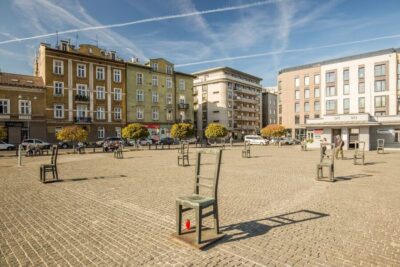

Jewish Quarter and Ghetto Electric Golf Cart Tour
Read our review →
Where else this one turns up