
Reviewed · WROCLAW TOURS
III Reich & WW2 in Wroclaw. Monday, Wendsday, Friday regular tour
Wrocław’s WWII story unfolds in the streets, not behind museum glass. This walking tour links the destroyed New Synagogue, the Gestapo site, Jewish landmarks, university buildings, and the ruins of wartime memory with the city’s final defense as Festung Breslau.
I like the strong Jewish heritage focus, including the White Stork Synagogue and Edith Stein. I also like the route’s attention to ordinary life, education, German opposition, and the first months after the war, not just Hitler and military events. The main drawback is its brisk pace: with about 1.7 miles of walking and many short stops, some subjects receive only a few minutes.
Michael, the Polish guide often leading this tour, is the key to the experience. He explains local details that are easy to miss, answers questions, and brings a personal Polish perspective to a dark period. Just dress for the weather, since this is an outdoor walk and poor conditions can lead to cancellation.
Key points at a glance
- The route crosses Wrocław’s wartime center: Start at Hotel Monopol and finish on Cathedral Island.
- The White Stork Synagogue anchors the Jewish story: Hear about local Jewish life and the Holocaust at one of the city’s surviving synagogues.
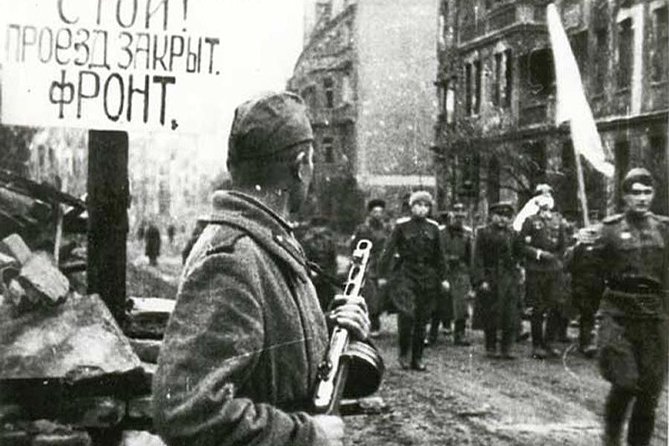
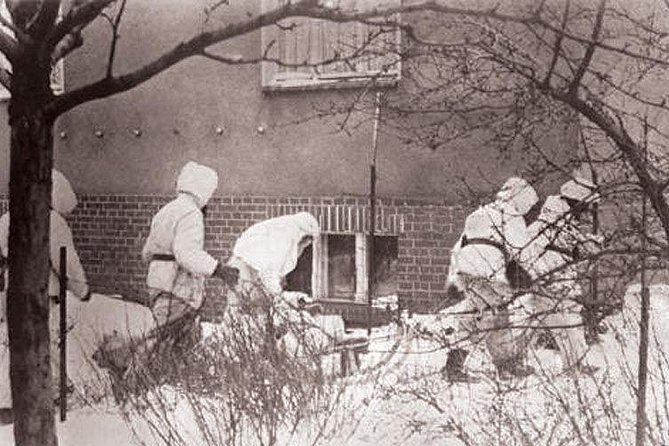
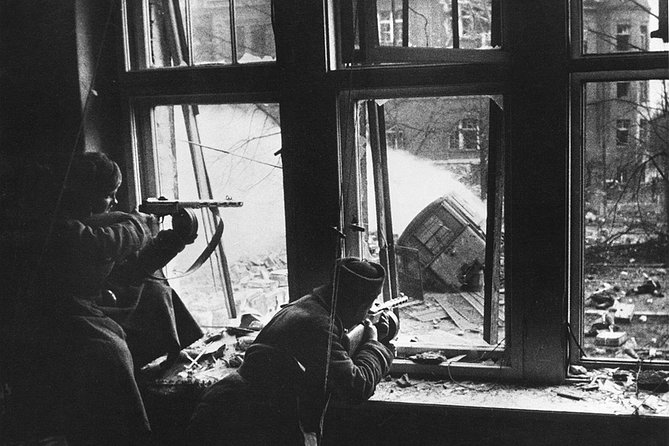
- Festung Breslau gets proper attention: The tour explains the siege, the destruction of the city, and daily life during its final months.
- The German opposition is included: The Dietrich Bonhoeffer Memorial adds a look beyond Nazi power and propaganda.
- Small groups keep the walk manageable: The maximum group size is 20 people.
- It is a focused, fast-moving tour: Expect two to two-and-a-half hours, with several brief stops rather than long indoor visits.
From Hotel Monopol to the destroyed New Synagogue
The meeting point is Hotel Monopol on Ulica Heleny Modrzejewskiej, close to the center of Wrocław. From there, the walk heads toward the former New Synagogue, destroyed in 1938. That opening stop immediately sets the tone: this is not only a military tour, but also a story about the destruction of a Jewish community before the war had even begun.
You will also see the former Gestapo building. The stop is brief, about five minutes, and there is no admission charge. That timing matters. You will get the setting and the basic story, but not an extended architectural or archival visit.
I like beginning here because it places Nazi persecution in a real city street. The sequence also helps you understand that the Holocaust did not arrive as an isolated wartime event. It grew out of discrimination, intimidation, and the destruction of institutions.
A few more Wroclaw half days to consider
- Wroclaw: E-Car Tour and Audio Guide
★ 4.6 · 1,738 reviews - Wroclaw: 2-Hour Private Guided Tour by Electric Car
★ 4.8 · 805 reviews - Wrocław: Old Town and Ostrów Tumski Walking Tour in English
★ 4.8 · 311 reviews
Wolności Square and the beginning of the Nazi era
At Wolności Square, the guide turns to the early Nazi era in Germany. This is a short stop, but it gives the rest of the walk its political frame.
You will not spend a long time studying a single monument here. Instead, expect a compact explanation of how the Nazi period began and how that change affected the city. This part works best if you already have a basic grasp of the rise of Hitler, since the guide must keep the whole route moving.
The tour’s strength is its local scale. Rather than treating the Third Reich as a distant chapter in German history, it connects national events to Wrocław, then known as Breslau. That makes the subject easier to follow as you walk from one location to the next.
The White Stork Synagogue and Wrocław’s Jewish heritage
The White Stork Synagogue is one of the most important stops. It survived the war and sits in the heart of the former Jewish district. Here, the guide discusses local Jewish heritage and the Holocaust.
Allow about ten minutes. Admission is listed as free, but this is primarily a street-based stop rather than a long interior visit. You should not expect a full museum tour or a detailed examination of every part of the building.
Still, the location carries weight. After hearing about the New Synagogue’s destruction, seeing a surviving synagogue gives you a clear sense of what was lost and what endured. The contrast between the two buildings is one of the tour’s most effective threads.
This is also a good place to ask questions. Michael is often praised for explaining local details and pointing out things you could otherwise walk past without noticing. If Jewish history is your main interest, listen closely here and ask for clarification before the group moves on.
Rynek, daily life, and the destruction of Festung Breslau
Wrocław’s main square, Rynek, shifts the focus from institutions to ordinary life under Nazi rule. The guide discusses what daily life was like and then moves toward Festung Breslau, the fortified city defense during the final stage of the war.
You will hear about the siege and the destruction of Wrocław. The stop lasts about ten minutes, with no admission charge. Because Rynek is a major public space, it also helps you picture how wartime orders, fear, shortages, and military control shaped daily routines in the center of the city.
The subject is especially useful for anyone who knows the Warsaw Uprising but has not studied Wrocław’s wartime experience. This tour makes clear that Polish resistance and wartime suffering were not limited to Warsaw. It also examines a city with a complicated German and Polish identity, a subject that demands care and context.
Expect a serious tone here. The tour does not treat the square simply as a pleasant place to admire old buildings. It uses the setting to explain how the city was damaged and how its final defense affected civilians.
A different kind of day in Wroclaw:
- Wroclaw: Private Old Town Guided Walking Tour (2 hours)
★ 4.8 · 275 reviews - Old Town Wrocław Walking Tour
★ 5.0 · 249 reviews - Wroclaw: City Tour Sightseeing By Golf Cart Shared Or Privat
★ 4.8 · 189 reviews - Auschwitz-Birkenau Tour from Wrocław
★ 5.0 · 129 reviews
The Dietrich Bonhoeffer Memorial and German opposition
At the Dietrich Bonhoeffer Memorial, you hear about German opposition to the Nazi regime. This is a useful counterpoint to the earlier stops, since it shows that the story was not simply Nazi leaders on one side and everyone else on the other.
The stop lasts about five minutes. That is enough for a short introduction, but not enough for a full biography or detailed study of German resistance networks.
I value this addition because it broadens the tour. You learn about persecution and military collapse, but also about people who opposed the system from within Germany. The memorial gives the guide a natural place to discuss moral choices under dictatorship without turning the walk into a general lecture on resistance movements across Europe.
Wrocław University and education under the Third Reich
Wrocław University brings the tour into the world of education and science. The guide explains how education functioned under the Third Reich and discusses Jewish scientists connected with the institution.
This stop lasts around ten minutes. Admission is not included, so the experience should be understood as an exterior visit unless you arrange entry separately. The tour price does not cover an indoor university visit.
The university stop is valuable because it shows how ideology reaches beyond political rallies and military offices. Schools and universities can be used to shape public thought, restrict careers, remove Jewish academics, and control what students learn. You get a short, local example of that process.
If you prefer architecture or university history over wartime politics, this stop may feel too brief. The guide is fitting several themes into a compact route, so the emphasis remains on the Nazi period rather than on the university’s full story.
The Parish of the Most Holy Name of Jesus
The Parish of the Most Holy Name of Jesus is used to explain everyday life during the siege and the first months after the war. This is one of the route’s most human stops because it turns from broad events to what people faced as the city was under attack and then trying to recover.
Plan on about ten minutes. Admission is not included. The stop is about the historical setting and stories connected with wartime life, not a full church tour.
The transition from siege to postwar life matters. Wrocław’s story did not end when the fighting stopped. The first months after the war brought another period of uncertainty and change, and the guide uses this location to connect the final battles with what followed.
Ossolineum and the control of learning
At the Ossolineum, the guide returns to education under the Third Reich. The stop lasts about ten minutes and does not include admission.
Placed after the university, this stop gives the education theme a second angle. The university introduces academic life and Jewish scientists, while Ossolineum helps you think about books, scholarship, and institutions as parts of political control.
This portion may appeal most to readers interested in how dictatorships shape culture and public knowledge. It is less dramatic than a battlefield story, but it helps explain how the regime tried to control ideas as well as territory.
Market Hall and the siege of Wrocław
The Market Hall, or Hala Targowa, brings the siege story back into a practical city setting. The guide discusses the fighting and pauses for a short break. The stop takes about ten minutes and is free.
That break is welcome. The walk is not extreme, but it covers about 1.7 miles and includes many stops. In cold weather, the pace and exposure can become tiring. One person described completing the walk in frigid conditions, so gloves, warm shoes, and a coat are sensible choices in winter.
The Market Hall also fits the tour’s interest in everyday experience. A market is a place tied to food and supplies, which makes it a natural setting for discussing how a city functions during a siege. The tour does not promise a long pause or refreshments, so plan your own needs before setting out.
Sand Island, Edith Stein, and the siege
On Sand Island, the guide discusses Edith Stein and returns to the siege. This short five-minute stop adds a personal and religious dimension to the wider story.
Edith Stein, a Jewish-born philosopher who became a Catholic nun, is one of the most distinctive figures connected with the tour’s themes. Her story links Jewish identity, Christian faith, scholarship, and Nazi persecution. The stop is brief, but it gives you another way to understand the human cost of the period.
The island setting also helps break up the urban sequence. You are still in central Wrocław, but the route moves through a different part of the city before reaching its final stop.
Cathedral Island and the final stories
The tour ends on Ostrow Tumski, or Cathedral Island. The guide closes with a few extra stories, and the walk finishes here rather than returning to Hotel Monopol.
That ending is useful for your plans. Cathedral Island is a different place from the starting point, so you should allow time to continue sightseeing or find your way onward. The route’s one-way design also means you see more of central Wrocław without retracing your steps.
The final stop lasts about ten minutes and is free. It is a gentle finish after the heavier subjects of persecution, siege, and destruction. You leave with the wartime story connected to the city you are still walking through, rather than ending at a shop or transport stop.
What the two-hour pace feels like
The advertised duration is about two to two-and-a-half hours. The itinerary includes 11 stops, but most last only five or ten minutes. That tells you exactly what kind of tour this is: a moving overview with many locations, not a long seminar at two or three sites.
I like this format for a first visit to Wrocław. It gives you a map of the city’s WWII story and identifies places to revisit later. If you want archival detail, long discussions, or indoor exhibits, you may find the pace too quick.
The group can contain up to 20 people. That is still a manageable size for a walking tour, though your position in the group may affect how easily you hear. Staying near the guide is wise, especially at busy city locations.
The tour is offered in English on Mondays, Wednesdays, and Fridays. It is listed as requiring good weather, so check conditions before you go. If the minimum group size is not met or poor weather cancels the walk, you can receive a different date or a full refund.
Is $32.20 a fair price?
At $32.20 per person, the tour is priced as a focused guided walk rather than a full museum program. You are paying for the guide’s route, local context, and the time saved finding and connecting sites on your own. There are no major admission fees included, and some stops list admission as not included.
The value is strongest if you want local WWII context that is hard to assemble from a standard city walk. The White Stork Synagogue, the former New Synagogue site, the Gestapo building, the university, Edith Stein, and Festung Breslau create a specific chain of places.
The value is weaker if you want extensive time inside buildings. This is mostly an outdoor experience, and the short stops mean you receive a broad account rather than a specialist lecture at each site.
Free cancellation is available up to 24 hours before the start time for a full refund. Changes or cancellations within 24 hours are not refunded, so keep the local cut-off time in mind.
Who should book this Wrocław walk?
I would choose this tour if you have a serious interest in WWII, the Third Reich, Jewish history, German resistance, or the siege of Breslau. It also suits you if you want to understand Wrocław beyond its handsome square and postwar Polish identity.
The walk is a good fit for an afternoon when you want history with movement. It works particularly well early in a stay, since the route introduces parts of the center you may later explore on your own.
You may want another option if you dislike cold-weather walking, need frequent indoor breaks, or prefer one subject examined at length. One rating described the guide as giving surface-level information, so depth can depend on the guide and on how actively you ask questions.
The overall rating is 4.6 from 32 ratings, with repeated praise for Michael’s explanations, the small-group feel, and the unusual local material. That matches the tour’s basic promise: a fast, serious walk through places that reveal how Wrocław changed before, during, and after WWII.
Should you book it?
Book it if you want a compact and place-based WWII tour with a strong Jewish heritage thread and a clear focus on Wrocław. Michael’s role matters, and the tour is at its best when you ask questions and stay engaged.
Skip it if you want a museum visit, a relaxed stroll, or a long military history lecture. For most history-minded visitors, the $32.20 price is reasonable because the route connects many scattered subjects in one walk, even if no single stop receives much time.
FAQ
Where does the tour start?
The tour starts at Hotel Monopol, Ulica Heleny Modrzejewskiej 2, 50-071 Wrocław, Poland.
Where does the tour end?
The tour ends on Cathedral Island, also called Ostrow Tumski, in Wrocław.
How long does the tour last?
The tour lasts approximately two to two-and-a-half hours.
On which days is the regular tour offered?
The regular English tour is offered on Mondays, Wednesdays, and Fridays.
How large can the group be?
The maximum group size is 20 travelers.
Is the tour offered in English?
Yes. The tour is offered in English, and confirmation is received at the time of booking.
Can I cancel for a full refund?
Yes. You can cancel at least 24 hours before the experience start time for a full refund. Cancellations or changes made less than 24 hours before the start time are not refunded.
Recently added in Wroclaw
- CITY QUEST WROCLAW: unlock the mysteries of this city!★ 5.0 · 3 reviews
- Wroclaw: Old City Walk and Cruise with Small Gondola★ 4.7 · 3 reviews
- Private Transfer from Wroclaw (WRO) Airport to Wroclaw city centre★ 5.0 · 3 reviews
- Wroclaw : Walking Custom Tour with a Local Guide★ 4.8 · 3 reviews
- Wrocław: Ostrów Tumski and Old Town Highlights Private Tour★ 5.0 · 3 reviews
- Wroclaw Jewish Quarter Private Guided Tour★ 5.0 · 3 reviews
- Electric Scooter Tour: Full Tour (Old Town + Ostrów Tumski)★ 5.0 · 3 reviews
- Segway Tour Wroclaw: Ostrów Tumski Tour – 1,5-Hours of Magic!★ 5.0 · 3 reviews
Wroclaw Tours, compared.
Old Town and Ostrów Tumski Walking Tour in English
Read our review →
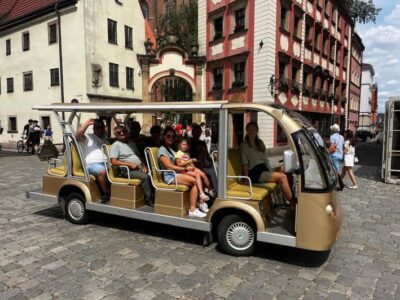
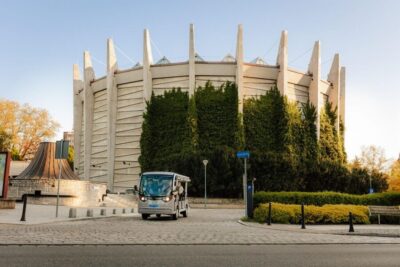
City Tour Sightseeing By Golf Cart Shared Or Privat
Read our review →

Where else this one turns up