
Reviewed · JEWISH QUARTER & KAZIMIERZ TOURS
Discover the Jewish Quarter with a Bike Tour
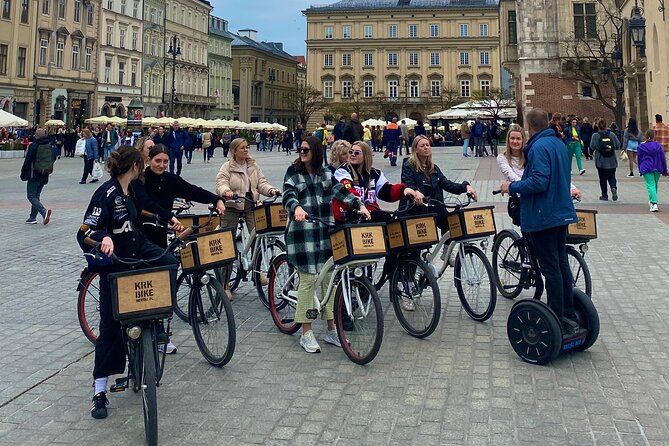
Krakow’s Jewish Quarter is best understood street by street, and this two-hour bike tour covers a lot of ground without turning the visit into a rushed march. You ride from the Old Town toward Kazimierz, stopping at synagogues, film locations, cafés, churches, and the lively New Square.
I like the efficient route and the way the tour links Jewish life before the war with the neighborhood you see today. I also like the human touch: guide Arthur has been praised for his engaging style, while another guide was especially good at stopping every few minutes to explain what you were seeing.
The main catch is that synagogue admission is not included, and the tour depends on good weather. A two-hour visit gives you a strong introduction, but not enough time to explore each building properly.
Key points at a glance
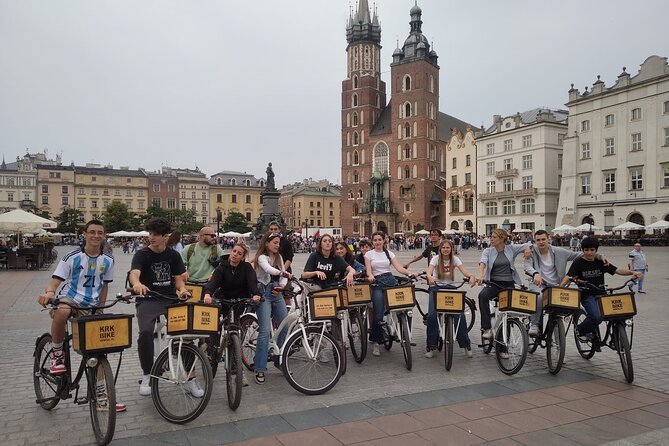
- A useful 10-minute ride from Wiślna 4: You leave Krakow’s Old Town and reach Kazimierz by bike, making the distance between the two areas easy to understand.
- Nine Jewish Quarter stops: The route includes Tempel, Old, Popper, Remuh, and Kupa synagogues, along with the Jewish Community Centre.
- Schindler’s List connections: You hear about the film, related documentaries, and facts tied to the passage used in the story.
- A taste of New Square: The guide introduces zapiekanki, Poland’s famous open-faced fast food, in the heart of Kazimierz.
- Jewish and Christian landmarks together: Corpus Christi Church gives the tour a wider view of the district’s religious and urban past.
- Small enough to stay personal, but not tiny: The maximum group size is 30, so the experience can feel lively rather than private.
From Wiślna 4 to Kazimierz by bicycle
The tour begins at Wiślna 4 in central Krakow and finishes back at the same meeting point. That makes planning simple, especially if you are staying near the Old Town or using public transportation to reach the start.
The first part is a ride of about 10 minutes toward the Jewish Quarter. This transfer matters because Kazimierz is close to the Old Town but has a very different feel and story. On foot, you might treat the two districts as separate outings. By bike, you see how naturally they connect.
You should expect frequent stops rather than a long, uninterrupted ride. The tour is built around short stretches of cycling followed by explanations at places of interest. That format works well in Kazimierz, where a plain-looking corner can carry more meaning than its appearance suggests.
The maximum group size is 30 people. That is not a private tour, and you should not expect a custom route for your own interests. Still, cycling allows the group to move between stops faster than a walking party, which leaves more of the neighborhood within reach during the two-hour time limit.
More Bike Tours in Krakow
- Complete Cracow Bike Tour (small group of maximum 15 people!)
★ 5.0 · 1,322 reviews - Krakow: Bike Tour of Old Town, Jewish Quarter and the Ghetto
★ 4.9 · 1,155 reviews - Highlights of Krakow Bike Tour – Small group
★ 5.0 · 662 reviews
Tempel Synagogue and the Jewish community before the war
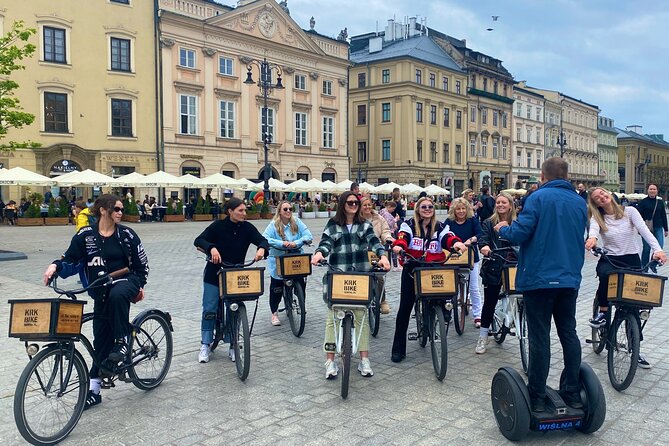
Tempel Synagogue is an early stop and sets the tone for the rest of the ride. The guide explains the synagogue and uses it to introduce the thriving Jewish community that lived in Krakow before the war.
This context is essential. Kazimierz is not simply a district filled with old religious buildings. It was a working neighborhood shaped by Jewish families, institutions, worship, business, and daily life. Hearing that broader story before moving among the later stops helps you see the synagogues as part of a living community, not as isolated monuments.
Admission to Tempel Synagogue is not included. The tour provides the outside explanation, but you should be prepared to pay separately if you want to go inside. Since the stop lasts about 10 minutes, the main value here is the guide’s setting and interpretation rather than an extended interior visit.
JCC Krakow and the neighborhood today
At the Jewish Community Centre of Krakow, you get a look at the present-day Jewish community and the role of the center in the neighborhood. The guide also explains its connection with Prince Charles and why the JCC matters.
This is one of the most useful stops because it prevents the tour from becoming only a memorial to the past. You hear about a Jewish community that exists in Krakow today, along with the institutions that support it.
The JCC stop lasts about 10 minutes and does not require an admission fee. I would pay close attention here, since this part adds present-day meaning to the earlier discussion of prewar life. It also helps you understand why Kazimierz remains an important place for Jewish culture and public life.
New Square, local food, and zapiekanki
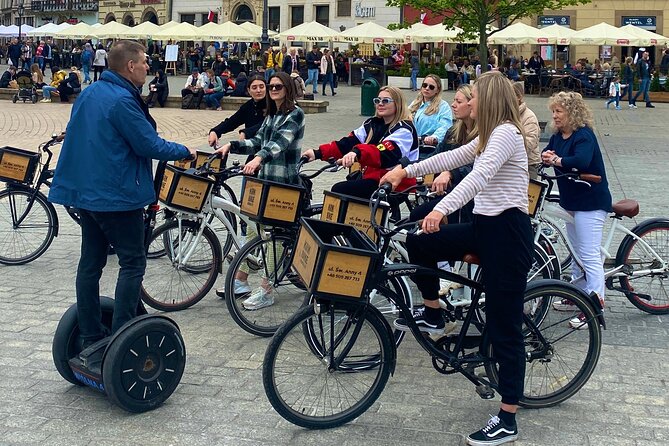
The stop called Market Square refers to New Square, or Plac Nowy, in Kazimierz. This is where the tour shifts from formal landmarks to everyday neighborhood life.
The guide introduces you to the square, local residents, and zapiekanki, Poland’s famous open-faced fast food. A zapiekanka is a simple baked bread snack, and trying one is specifically encouraged during the visit. The tour price does not appear to include food, so plan to buy it separately if you want a taste.
You get about 20 minutes here, the longest stop on the route. That gives you more breathing room than the synagogue stops. You can listen to local stories, take in the square, and decide if you want to try the food.
I like this pause because it makes the tour feel less like a string of solemn sites. Kazimierz is a neighborhood, not just a history lesson. New Square gives you a chance to see how people use the area now, while still keeping the district’s past in view.
Other Jewish Quarter and Kazimierz walks:
- Krakow: Jewish Quarter and Former Ghetto Tour
★ 4.9 · 1,441 reviews - Krakow: Kazimierz Jewish Quarter Walking Tour
★ 4.8 · 571 reviews - Krakow: Kazimierz, Schindler’s Factory & Ghetto Guided Tour
★ 4.8 · 460 reviews - Krakow: Bike Tour of the Old Town, Kazimierz, and the Ghetto
★ 4.9 · 350 reviews
Schindler’s List Passage and the power of film
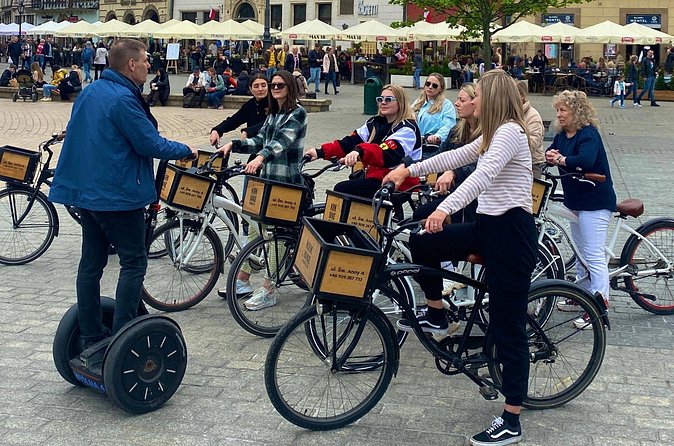
The Schindler’s List Passage adds a familiar cinematic connection to the tour. The guide discusses the film, documentaries, and related facts, showing how Krakow and Kazimierz have been presented on screen.
This stop is useful if you have seen the film, but it still has value if you have not. The key is to treat the movie as one way into the subject, not as the whole story. The guide’s role is to connect the passage and the film to real places and real events.
The stop lasts about 15 minutes and is free. You should expect an outdoor explanation rather than a museum visit. It is a good moment to ask questions if you want to separate film scenes from documented history.
Singer bar and the meaning behind the name
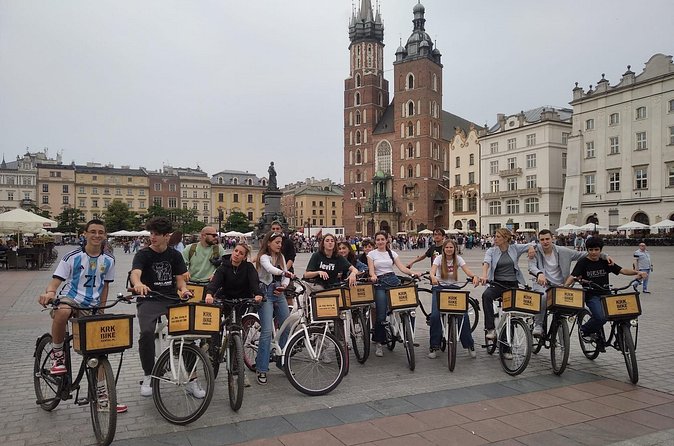
The Singer stop is brief, about five minutes, but it has an unusual detail. You hear about the bar, its meaning in Kazimierz, and why it is called Singer.
The name refers to Singer sewing machines, a detail that gives the place its character and links its appearance to an older era. The stop shows how Kazimierz’s cafés and bars often use objects, names, and interiors to keep a connection with the district’s past.
Because this is a short explanation, do not expect time for a drink during the organized tour. You can note the location and return later if it appeals to you. That is one advantage of ending back at the original meeting point and having a route that gives you a clear list of places to revisit.
Old, Popper, Remuh, and Kupa synagogues
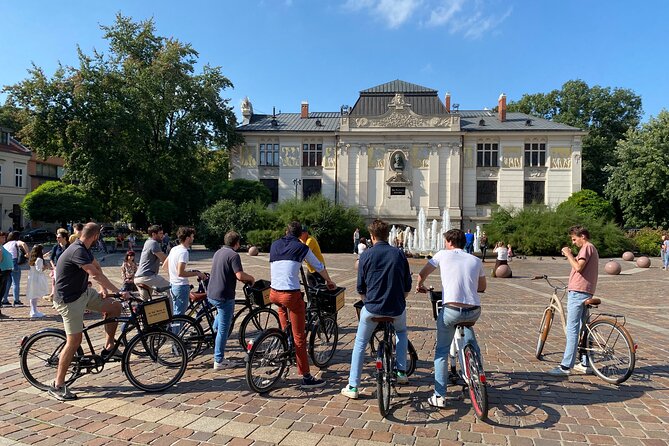
Several synagogue stops form the heart of the tour. Each one receives a short introduction, so the guide can compare their stories without spending the whole two hours inside one building.
At the Old Synagogue, you hear about its history. Admission is not included, and the stop lasts about 10 minutes. The explanation helps you decide if you want to return for a longer visit after the bike tour.
Popper Synagogue comes with details about Wolf Popper, its name, and the bookshop next to it. This is a good example of how the route combines a building with the surrounding neighborhood. You are not only hearing about a synagogue, but also noticing the small businesses and cultural spaces nearby.
Remuh Synagogue receives a fuller mention because the guide explains its history and points out the adjacent cemetery. If you wish, you can visit the synagogue and cemetery, but admission is not included. This is a place where you may want to return with more time and a quieter pace.
Kupa Synagogue is another stop for a historical explanation. There is no admission fee listed for this part of the tour. Together, these synagogue visits give you a useful comparison of names, functions, and stories, even though the short format cannot replace a dedicated museum visit.
The practical point is simple: bring some extra money if you want to enter the synagogues. The tour price covers the guided bike experience, but not the listed synagogue admissions.
Corpus Christi Church and Plac Wolnica
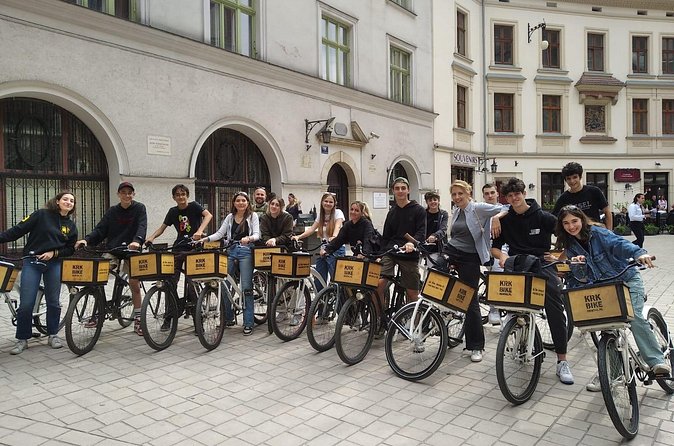
Corpus Christi Church widens the story beyond Jewish Kazimierz. The guide explains the origin of the church’s name and gives a detailed account of the place. You can also visit the church.
That stop matters because Kazimierz has long been shaped by both Jewish and Christian communities. Seeing the church alongside the synagogues gives you a more complete picture of the district’s religious geography. It also keeps the tour from presenting the neighborhood through only one lens.
Admission is listed as free, though the tour itself does not appear to include a separate guided interior visit. If you want to look inside, follow the guide’s timing and be respectful of any religious activity taking place.
The final stop is Plac Wolnica, where you hear local facts and legends. This five-minute stop is a compact finish before the ride back to Wiślna 4. It gives you a final sense of the square and the stories that have gathered around it.
What the two-hour format does well
The strongest feature is coverage. In roughly two hours, you reach a wide range of sites that would take longer to connect on foot. The bike does not turn the tour into a race, but it does make the route more efficient.
The stop pattern also suits people who learn best through place. You hear a short explanation, look at the building or street, then move on before the information becomes heavy. One guide’s approach included stopping every couple of minutes at points of interest, which is exactly the sort of rhythm that helps you notice more.
The limitation is depth. Ten minutes at a synagogue can introduce its story, but it cannot provide a full architectural visit, detailed exhibition time, and quiet reflection. I would use this tour as an orientation, then return to one or two favorite sites on your own.
The tour is offered in English. Most people can participate, and the activity runs near public transportation. Since it depends on good weather, check conditions before setting out and dress for cycling rather than only for sightseeing.
Is $30.23 a fair price?
At $30.23 per person, the tour offers a reasonable way to cover both central Krakow and Kazimierz with a guide. The value comes from the combination of transport, route planning, and interpretation. You are paying to connect the stops and understand them, not simply to rent a bicycle.
The price looks better if you have limited time in Krakow. In two hours, you get introductions to five synagogues, the JCC, New Square, the Schindler’s List Passage, Singer, Corpus Christi Church, and Plac Wolnica. Paying for synagogue entry, food, or a later museum visit will add to the day’s cost, but those extras are optional.
It is less suitable if you want a slow, private, highly detailed study of each building. A private guide or separate museum visits would offer more depth, but likely at a higher total cost. For a first look at Kazimierz, the bike tour gives you a practical middle ground.
Who should book this bike tour?
I would choose this experience if you want a clear introduction to Kazimierz and prefer moving through a neighborhood rather than sitting in a museum. It also fits well after a visit to Auschwitz, since one guide specifically framed the Krakow Jewish Quarter as a useful companion to that difficult experience.
It suits first-time visitors, people with only a few days in Krakow, and anyone who likes a mix of history, food, film, and local streets. The stop at New Square is especially useful for balancing the solemn synagogue visits.
You should think twice if cycling in a group is uncomfortable for you, if you need a weather-proof plan, or if you want long interior visits. The group can reach 30 people, and the schedule is designed for movement.
The guides are a major part of the experience. Arthur has been singled out for being engaging and well informed, and another guide was praised for making the route interesting through frequent stops. Since guide assignments can vary, you may not have Arthur, but the tour is clearly built around live explanation rather than a recorded commentary.
Final advice before you book
Book this tour if you want to get your bearings in Kazimierz quickly, hear the district’s Jewish and Christian stories together, and leave with a practical list of places to revisit. Plan to buy your own zapiekanka and pay separately for any synagogue or cemetery admission you choose.
The tour has a maximum of 30 participants, accepts mobile tickets, and returns to Wiślna 4. Free cancellation is available up to 24 hours before the start time. Inside 24 hours, you do not receive a refund, and poor weather can lead to a new date or a full refund.
My choice would be to take it early in your Krakow stay. The route gives you enough background to make later walks through Kazimierz more meaningful, while the bicycle saves your feet for the Old Synagogue, Remuh cemetery, or another museum visit afterward.
FAQ
Where does the Jewish Quarter bike tour start and finish?
It starts at Wiślna 4, 33-332 Kraków, Poland, and ends back at the same meeting point.
How long does the tour last?
The tour lasts approximately two hours.
Is the tour offered in English?
Yes. English is the stated tour language.
Are synagogue admission fees included?
No. Admission to Tempel Synagogue, the Old Synagogue, and Remuh Synagogue is not included. You may visit Remuh Synagogue and its cemetery if you wish, with admission handled separately.
Does the tour include food at New Square?
No food inclusion is stated. The guide introduces you to zapiekanki at New Square, and you can try one separately.
What happens if the weather is poor?
The experience requires good weather. If it is canceled because of poor weather, you are offered a different date or a full refund. You can also cancel for a full refund if you do so at least 24 hours before the start time.
Recently added in Krakow
- Auschwitz-Birkenau and Krakow Private Car Trip from Katowice★ 4.3 · 3 reviews
- Wawel Castle, Old Town with St. Mary’s Church Guided Tour★ 5.0 · 3 reviews
- Private tour to Zakopane and Thermal Baths from Krakow★ 5.0 · 3 reviews
- Wawel Castle, Cathedral, Rynek Underground Tour with Lunch★ 5.0 · 3 reviews
- From Krakow: Chocholow Thermal Hot Springs (hotel pick up)★ 5.0 · 3 reviews
- Legends of Cracow ROBOTIC SHOW★ 4.0 · 3 reviews
- From Krakow: Zakopane and Thermal Pools Guided Trip★ 5.0 · 3 reviews
- Guided Beer Tour in Krakow★ 4.5 · 3 reviews
Jewish Quarter & Kazimierz Tours, compared.
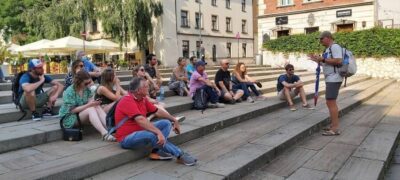

Bike Tour of Old Town, Jewish Quarter and the Ghetto
Read our review →
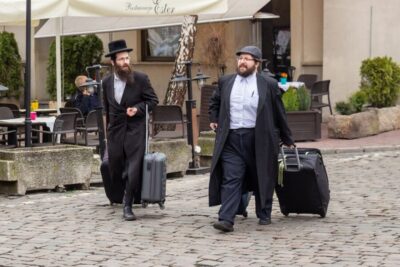
Kazimierz, Schindler’s Factory & Ghetto Guided Tour
Read our review →
Bike Tour of the Old Town, Kazimierz, and the Ghetto
Read our review →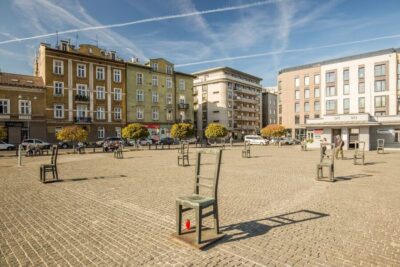

Jewish Quarter and Ghetto Electric Golf Cart Tour
Read our review →
Where else this one turns up