
Reviewed · JEWISH QUARTER & KAZIMIERZ TOURS
Cracow – Guided Tour of the Jewish Ghetto
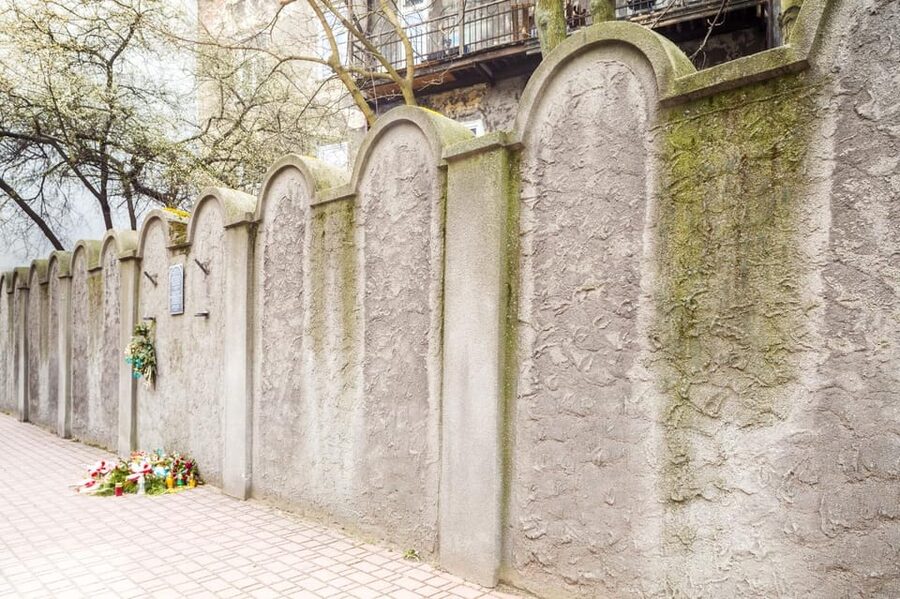
Krakow’s former Jewish Ghetto is not a museum set apart from city life. It is a real neighborhood, where ordinary buildings carry the memory of forced removal, overcrowding, deportation, and survival. This one-hour walk brings that difficult past into focus through Ghetto Heroes’ Square, a surviving piece of the ghetto wall, and the historic Under the Eagle pharmacy.
I like two things here: the route is short and focused, and it places the story in the streets where it happened. I also like the chance to visit Under the Eagle, a powerful final stop rather than a quick photo break. The main drawback is clear: one hour is tight for a subject this serious, and the quality of the experience depends heavily on how much your guide explains.
Key points
- Ghetto Heroes’ Square marks the place where Krakow’s Jewish residents were identified and deported to concentration camps.
- A surviving section of the ghetto wall gives you a direct physical link to the wartime district.
- Podgórze’s ordinary buildings help you understand how thousands of displaced people were forced into cramped living conditions.
- Under the Eagle pharmacy provides a memorable ending focused on survival and courage during the war.
- Five tour languages are available: English, German, French, Spanish, and Italian.
- The $15 price makes this a low-cost way to add historical context to a visit near the Schindler Factory Museum.
Why Podgórze tells this story so well
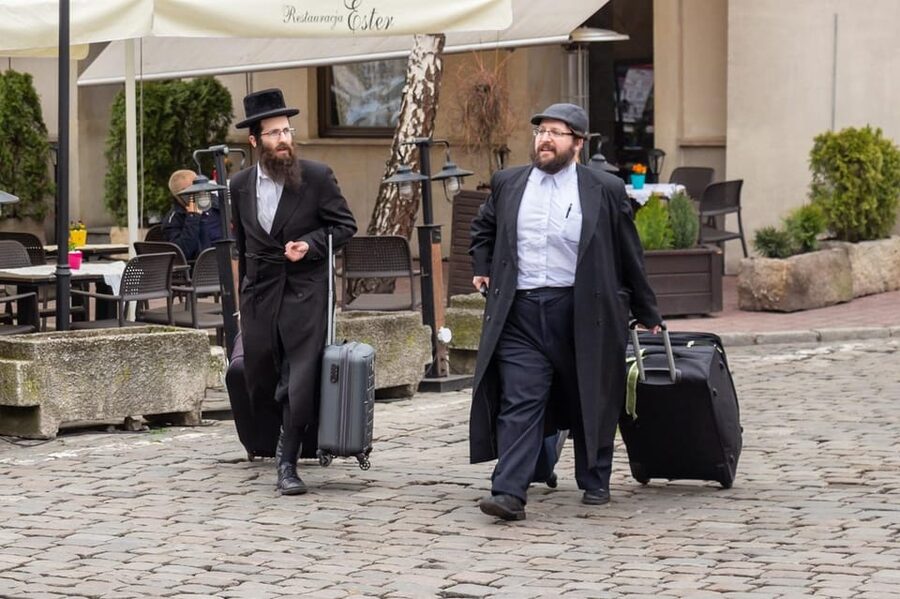
The tour takes place in Podgórze, the district used as Krakow’s Jewish Ghetto during World War II. That setting matters. You are not simply hearing a timeline inside a gallery. You are walking past buildings connected to the forced relocation of thousands of Jewish residents.
The area preserves a painful contrast. Streets and buildings continue to serve everyday city life, yet the same places recall a period when people were stripped of their homes, confined, and later deported. A good guide helps you hold both ideas at once: Podgórze is a living district, and it is also a place of remembrance.
This is especially useful if you have already visited Krakow’s Old Town and want to understand another part of the city. The walk shifts your attention away from medieval architecture and royal Poland. Here, the focus is on the Jewish community of Krakow and the Nazi occupation that destroyed so much of it.
You should approach the tour with a quiet, respectful mindset. This is not a light sightseeing walk, and the subject includes deportation and concentration camps. The route is short, but the history is not easy.
Other Jewish Quarter and Kazimierz walks:
- Krakow: Jewish Quarter and Former Ghetto Tour
★ 4.9 · 1,441 reviews - Krakow: Bike Tour of Old Town, Jewish Quarter and the Ghetto
★ 4.9 · 1,155 reviews - Krakow: Kazimierz Jewish Quarter Walking Tour
★ 4.8 · 571 reviews
Meeting at the Schindler Factory Museum
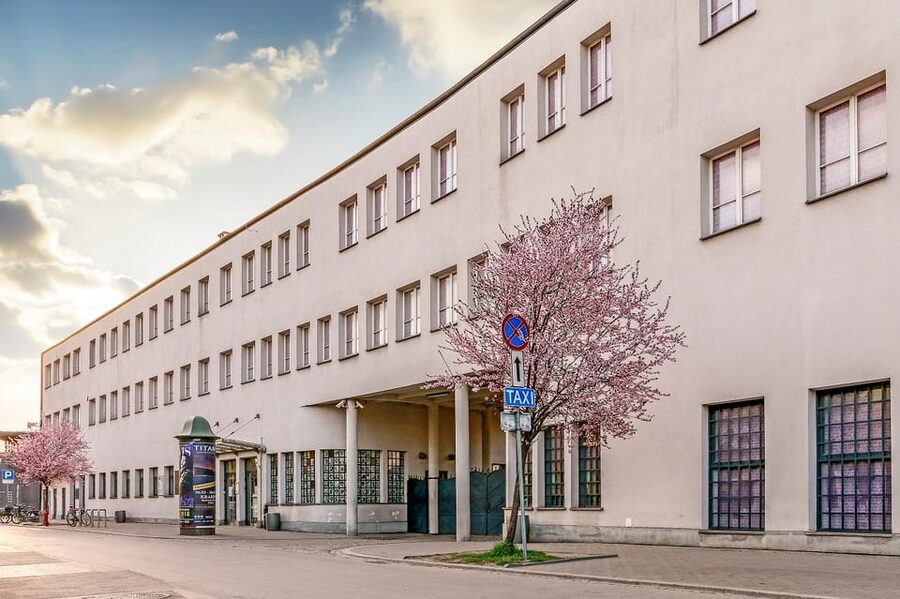
The meeting point is at the entrance to the Schindler Factory Museum. Look for a guide carrying an excursions.city sign. This is a practical starting point because the museum is already closely tied to Krakow’s wartime story.
The tour does not mean that museum admission is included. The supplied details identify the professional guide as included, while food and drinks are not. If you want to visit the museum too, treat that as a separate plan and check its arrangements independently.
Meeting at the museum entrance also lets you combine two related experiences. You can schedule the walking tour before or after your museum visit, but keep enough time between them for finding the meeting point and moving through the district without rushing.
Ghetto Heroes’ Square and the meaning of the empty chairs
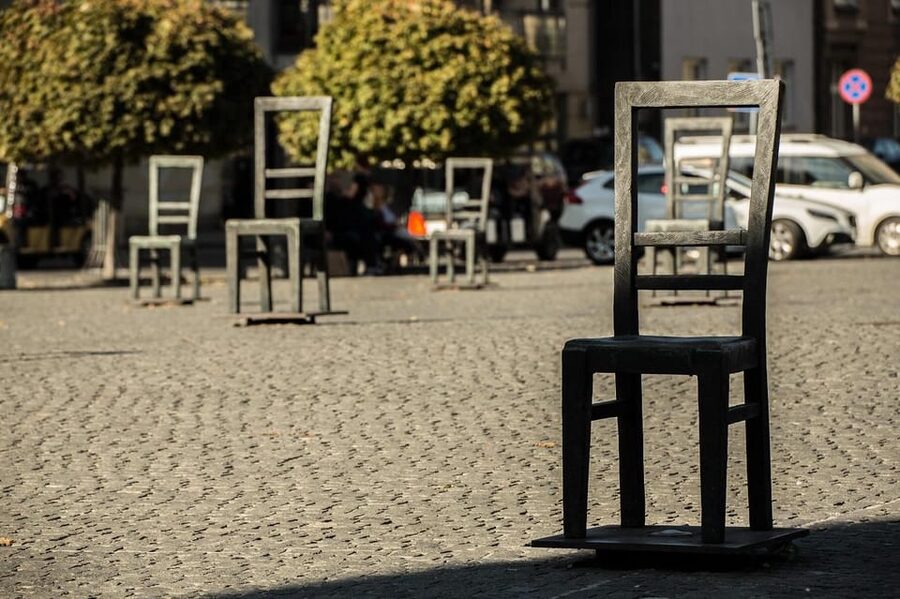
A major stop is Plac Bohaterów Getta, known in English as Ghetto Heroes’ Square. This is one of the most important places on the route because it marks where Jewish residents of Krakow were identified and deported to concentration camps.
The square is not just a location to photograph. Its meaning comes from the events tied to it, and your guide’s explanation is central. Listen for the human scale of the story: people were gathered, sorted, and forced away from their homes. The square gives that process a physical setting.
I would spend a little extra time here rather than treating it as a quick stop. One hour does not allow for long pauses at every location, so the square is a good place to focus on the guide and ask a brief question if time permits.
The emotional weight of this stop can surprise you. The experience is not built around dramatic effects. It relies on place, memory, and spoken context. That restraint is part of its value, but it also means a quiet or overly brief explanation would leave the visit feeling thin.
Walking past the former ghetto buildings
The route continues through buildings where thousands of displaced Jews were forced to live in cramped conditions. You will see the structures as part of the present-day district, but the guide connects them to their wartime use.
This is where the walk becomes especially useful for anyone who finds historical dates hard to picture. A sentence about overcrowding can feel abstract. Standing beside the buildings makes the restriction of space easier to grasp, even though the tour cannot recreate what residents endured.
Do not expect every building to look like a preserved memorial. That is part of the point. Much of the district has an everyday appearance, and you need the guide’s words to understand what happened there. The strongest part of the experience will come when the commentary explains how these ordinary places became part of a system of forced confinement.
The tour’s short length is both an advantage and a limit here. You get a concentrated introduction without giving up half a day. At the same time, you will not have room for long discussions at each building. If you want a broad introduction, the pace should work. If you want detailed family histories, archival material, or a full study of wartime Krakow, you will need more time elsewhere.
A few more Krakow half days to consider
- From Krakow: Auschwitz-Birkenau Guided Tour & Hotel Pickup
★ 4.5 · 33,358 reviews - From Krakow: Auschwitz-Birkenau Guided Tour & Hotel Pickup
★ 4.5 · 29,340 reviews - Krakow: Auschwitz Guided Tour with Optional Hotel Pickup
★ 4.5 · 15,280 reviews - Krakow–Zakopane: Cable Car, Chocholow Baths, Cheese & Vodka
★ 5.0 · 10,720 reviews
The remaining ghetto wall
Another important stop is a surviving fragment of the wall that surrounded the Jewish Ghetto. It is a small physical remnant, but its meaning is large. The wall marked the forced separation of the ghetto’s residents from the rest of the city.
Seeing an original fragment gives the story a firm point of reference. You are looking at part of the structure that helped enforce confinement, not at a later reconstruction designed only for display. The site is also described as a monument and a place visited by Jewish people from around the world.
Treat this stop with care. It is not a ruin to rush past, and it is not simply another item on a checklist. The guide’s explanation should help you understand why this modest section of wall has become an important place of remembrance.
The wall also shows why a walking tour works better here than a purely indoor presentation. Movement between the square, the buildings, and the wall creates a chain of physical locations. Each stop adds another part of the story.
Ending at Under the Eagle pharmacy
The tour concludes at the historic Under the Eagle pharmacy. This is a strong choice for the final stop because the pharmacy represents resilience and survival during the war.
The ending changes the focus slightly. Earlier stops help you understand confinement, removal, and deportation. The pharmacy brings attention to people who continued to act with courage under terrible conditions. It gives the tour a human conclusion without turning the subject into a feel-good story.
The supplied details say you will visit the pharmacy, but they do not specify how much time is spent inside or whether separate admission is required. Ask your guide what the visit includes on the day. The pharmacy is one reason I would not dismiss this as a simple neighborhood walk. It provides a clear final point and helps tie the route together.
If you are planning a full day around wartime Krakow, place this tour near your visit to the Schindler Factory Museum. The meeting point makes that pairing convenient, though you should allow enough time for each activity rather than trying to squeeze both into a narrow schedule.
How much history fits into one hour
The tour lasts one hour. That is enough for a structured introduction to Podgórze’s Jewish Ghetto, but not enough for a full account of Krakow’s Jewish history.
One hour works well if you want to:
- Understand the purpose and location of the ghetto
- See key memorial sites in Podgórze
- Hear the basic wartime story from a guide
- Add context before or after visiting the Schindler Factory Museum
You may find it too short if you want detailed answers about individual families, prewar Jewish life, resistance, postwar memory, or the wider history of Krakow. One recent booking described the hour as too brief to follow the guide through this important subject in greater depth. That is a fair criticism, even when the route itself is worthwhile.
The short format also makes this an easy addition to a busy Krakow itinerary. You do not need to give up a full morning or afternoon. The tradeoff is that you should arrive ready to listen, since every few minutes matter.
The guide makes or breaks the experience
A professional guide is included, and tours are offered in English, German, French, Spanish, and Italian. That range is useful if you understand one of those languages better than English, especially on a subject where small details and careful wording matter.
The strongest feedback points to guides who explain the history with compassion and extensive knowledge. An Italian-language guide was also praised for speaking very well, which suggests that choosing your preferred language can make a real difference.
But the experience is not automatically excellent just because a guide is present. One very poor assessment described a tour with only a few words spoken at each building and little explanation beyond the basic stops. That warning is important. On a historical walk, the guide is not an extra feature. The guide is the main source of meaning.
You can help the experience by reading a short introduction to Krakow’s wartime history before you arrive. You should also ask a focused question if the commentary feels too brief. Since the tour is only an hour, do not wait until the final minutes to ask for clarification.
No guide names are provided for this activity, so I would not book it expecting a particular person. Choose the language that suits you best and keep your expectations realistic: this is a concise guided introduction, not a private research session.
Is $15 a fair price?
At $15 per person, this is priced as an accessible historical walk rather than a long specialist tour. I consider that good value if you want the key sites explained by a live guide and you are already planning to be near the Schindler Factory Museum.
The price covers the professional guide. Food and drinks are not included, but that should not matter much for a one-hour walk. You are paying mainly for the route and the context, not for transport, meals, or a large package of attractions.
Value depends on the quality of the commentary. A detailed, compassionate explanation can make a short walk feel worthwhile. A guide who says very little can make even $15 feel like too much. That is the central risk with this experience.
The free cancellation policy, available up to 24 hours before the tour, adds useful flexibility. You can also reserve now and pay later, which helps if your Krakow schedule is still changing. These terms are practical, but they do not change the main buying decision: book this for focused historical context, not for a long itinerary packed with sights.
Who should book this Krakow ghetto walk?
I would recommend it to first-time visitors who want an understandable introduction to Podgórze and the Jewish Ghetto. It also suits anyone visiting the Schindler Factory Museum and looking for a short outdoor experience to connect the museum story with real places.
This tour is a good fit for you if:
- You have only an hour available
- You prefer learning from a guide while walking
- You want to see the ghetto wall and Ghetto Heroes’ Square
- You value a serious, respectful presentation
- You need a tour in English, German, French, Spanish, or Italian
- You want a low-cost way to add historical context to your Krakow plans
I would hesitate if you want extensive detail or a slower pace. The tour cannot cover every part of Krakow’s Jewish past in 60 minutes. You may also be disappointed if you expect a museum-style presentation at every stop.
Should you book the one-hour tour?
Book it if you want a concise, place-based introduction to Krakow’s former Jewish Ghetto. The route connects Ghetto Heroes’ Square, the remaining wall, the former residential buildings, and Under the Eagle pharmacy in a way that gives the district meaning.
Go in knowing that the guide matters enormously and that one hour passes quickly. The best outcome is a focused walk with clear explanation and a respectful tone. If you want much more than that, use this as a starting point and leave time for the Schindler Factory Museum or further historical study.
At $15, the risk is modest. For many visitors, the chance to understand these sites rather than simply pass them is worth the cost. Just do not confuse a strong introduction with a complete history of wartime Krakow.
FAQ
Where does the tour meet?
Meet at the entrance to the Schindler Factory Museum. Look for a guide holding an excursions.city sign.
How long does the guided tour last?
The tour lasts one hour.
How much does the tour cost?
The listed price is $15 per person.
Which district does the tour visit?
The tour explores Podgórze, the district that served as Krakow’s Jewish Ghetto during World War II.
Which key sites are included?
The route includes Ghetto Heroes’ Square, a remaining fragment of the ghetto wall, buildings where displaced Jews lived, and the historic Under the Eagle pharmacy.
Is a professional guide included?
Yes. A professional live tour guide is included.
Which languages are available?
Guided tours are available in English, German, French, Spanish, and Italian.
Are food and drinks included?
No. Food and drinks are not included.
Can I cancel the booking?
Yes. You can cancel up to 24 hours in advance for a full refund. You can also reserve now and pay later.
Recently added in Krakow
- Auschwitz-Birkenau and Krakow Private Car Trip from Katowice★ 4.3 · 3 reviews
- Wawel Castle, Old Town with St. Mary’s Church Guided Tour★ 5.0 · 3 reviews
- Private tour to Zakopane and Thermal Baths from Krakow★ 5.0 · 3 reviews
- Wawel Castle, Cathedral, Rynek Underground Tour with Lunch★ 5.0 · 3 reviews
- From Krakow: Chocholow Thermal Hot Springs (hotel pick up)★ 5.0 · 3 reviews
- Legends of Cracow ROBOTIC SHOW★ 4.0 · 3 reviews
- From Krakow: Zakopane and Thermal Pools Guided Trip★ 5.0 · 3 reviews
- Guided Beer Tour in Krakow★ 4.5 · 3 reviews
Jewish Quarter & Kazimierz Tours, compared.

Bike Tour of Old Town, Jewish Quarter and the Ghetto
Read our review →
Kazimierz, Schindler’s Factory & Ghetto Guided Tour
Read our review →
Bike Tour of the Old Town, Kazimierz, and the Ghetto
Read our review →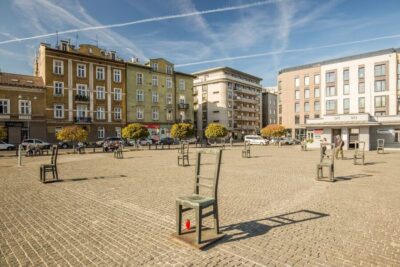

Jewish Quarter and Ghetto Electric Golf Cart Tour
Read our review →
Where else this one turns up