
Reviewed · CYCLING TOURS
Bike Tour Gdansk – Standard
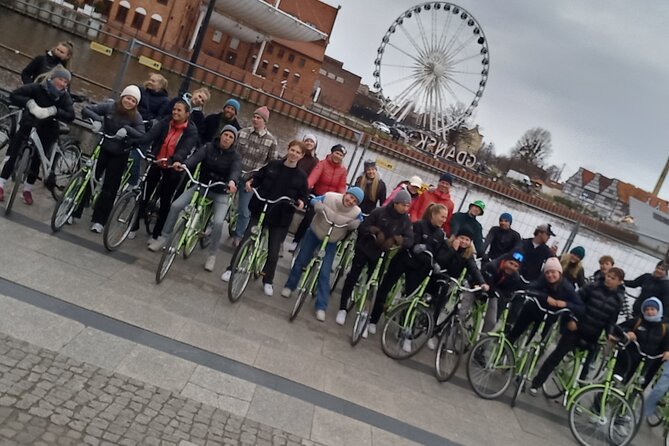
Gdańsk’s story is easier to grasp from a bicycle seat. In about two hours, this private ride links the postcard sights of Dluga Street with the places that shaped modern Poland, including the Solidarity movement, the shipyard, and the World War II Museum. The guide was born in Gdańsk, so the tour aims to include local customs, Polish traditions, and everyday ways of thinking, not just dates and monuments.
I like the personal format, since only your group takes part and the route can be adjusted to your interests. I also like the slow, practical pace: you cover far more ground than on foot without turning the city into a blur. The main consideration is timing. Ten stops in two hours means short visits, and some locations are viewed from outside rather than explored at length.
Key points to know before booking
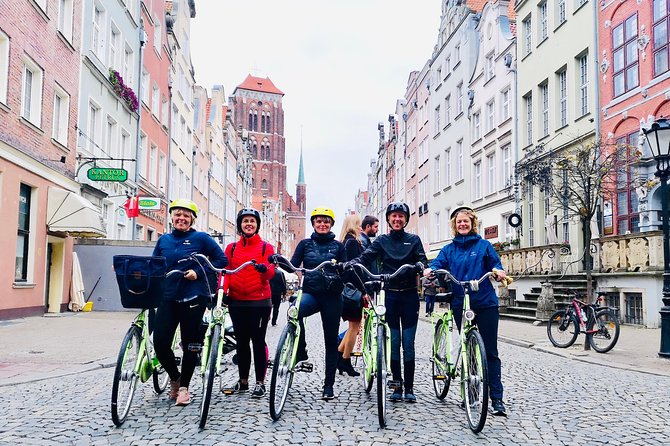
- A local-born guide leads the ride, with attention to Polish traditions and life in Gdańsk.
- The private format suits couples, families, and small groups that want some say in the route.
- The route connects two sides of the city, from grand Old Town monuments to the Solidarity shipyard.
- St. Mary’s Church and the Solidarity sites add real substance, moving the tour beyond a standard sightseeing loop.
- Ten stops fit into roughly two hours, so expect an overview rather than extended museum visits.
- The tour depends on good weather, but cancellation for poor conditions brings a choice of another date or a full refund.
Why a bicycle works well in Gdańsk
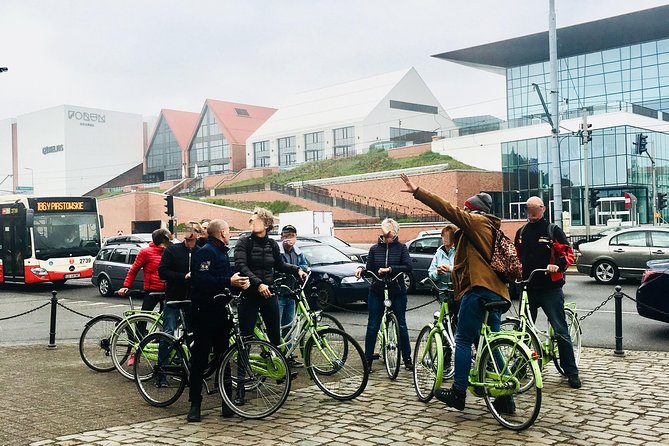
Gdańsk rewards an overview before you settle into its streets and museums. Its best-known sights are spread between the historic center, the Motława waterfront, the former shipyard, and the modern Solidarity complex. Walking between every point would take more time, while a car would leave you disconnected from the city.
A bicycle gives you a useful middle ground. You move at a relaxed pace, stop often, and see how the grand center connects with the working and political parts of Gdańsk. The route also lets the guide tell a larger story: medieval trade, church art, wartime destruction, postwar rebuilding, and the peaceful challenge to communist rule.
This is not a fitness ride. The listed duration is about two hours, and the stop times are short. You should think of it as a moving introduction, not a long-distance outing or a day spent pedaling.
The guide’s local background matters here. Someone born in Gdańsk can explain the city as a home rather than only as a collection of monuments. The experience is designed to include local habits, Polish traditions, and the local way of thinking. Since the tour is private, you can also ask for more attention to the subjects that interest you most, within the time available.
More Bike Tours in Gdansk
- Gdańsk: Highlights Bike Tour
★ 4.9 · 173 reviews - Gdansk Private Bike Tour
★ 5.0 · 36 reviews - Gdansk Private Bike Tour
★ 5.0 · 21 reviews
Dluga Street begins with Gdańsk’s grand facade
The first stop is Dluga Street, one of the city’s signature historic streets. It brings together the Town Hall, Neptune’s Fountain, and the ornate architecture that most people picture when they think of central Gdańsk.
The guide spends about ten minutes here, enough to orient you and explain the main symbols. Neptune’s Fountain is especially useful as a meeting point between the city’s maritime identity and its polished urban center. The Town Hall helps frame Gdańsk as a place of civic power and commerce.
There is no admission included for this stop, but the point is mainly to see the street and its landmarks. If you want detailed interiors or a longer look at the Town Hall, you would need extra time beyond this ride.
St. Mary’s Church packs in centuries of art
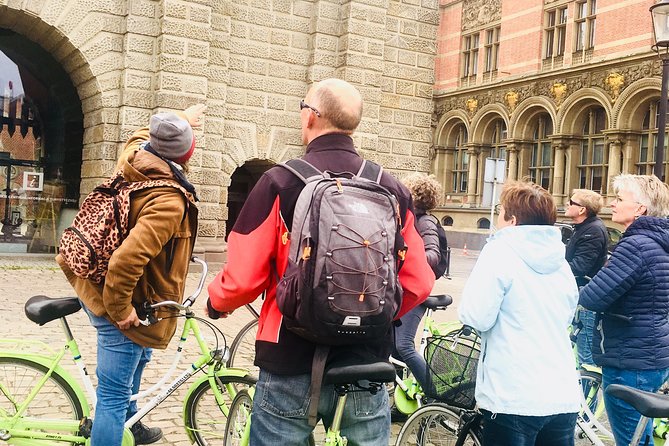
St. Mary’s Church receives another ten minutes, yet it is one of the stops where the time may feel tight. The church contains Memling’s triptych, The Last Judgment, the Beautiful Madonna sculpture, a basket chandelier dating from 1490, and the famous astronomical clock.
That list gives you a sense of the church’s appeal. It is not only a large religious building to photograph from the outside. Its interior holds important works of art and remarkable objects, each of which could easily support a much longer visit.
Admission is included for this stop. I would pay close attention to the guide’s explanation here, since a short visit can otherwise become a quick look at a large room. If church art, medieval objects, or the astronomical clock are high on your list, consider returning independently after the bike tour.
Solidarity explains modern Poland
The Europejskie Centrum Solidarności, or European Solidarity Centre, is one of the most valuable stops on the route. You spend about ten minutes learning why this place matters so much to Polish people.
The center is tied to the Solidarity movement, which became a major force in the challenge to communist rule. The experience gives you political and social context that the decorative Old Town cannot provide. It also prepares you for the next stop, the Gdańsk Shipyard, where the story took shape in a real workplace rather than only in a museum setting.
Admission is included here. Still, ten minutes is an introduction, not enough for a full visit to the center. You should book this ride if you want the guide to explain the importance of Solidarity, then return later if you plan to examine the displays in detail.
A French-speaking review praised the historical commentary, especially the explanation of Solidarity in the 1980s. That focus is worth noting. The tour is not limited to pretty streets, and the recent political story receives a clear place in the route.
A different kind of day in Gdansk:
- Gdansk: City Cruise on Historical Polish Boat
★ 4.8 · 2,913 reviews - Gdańsk: Sunset Cruise on a Historic Polish Boat
★ 4.9 · 977 reviews - Gdańsk City Sights & History Guided Walking Tour in English
★ 4.8 · 876 reviews - Gdansk: Firearm Shooting Experience with Instructor
★ 4.8 · 866 reviews
The Gdańsk Shipyard gives the story a physical setting
At the Gdańsk Shipyard, the guide connects the city to the Solidarity movement and the collapse of the communist system. The shipyard gained international fame for those events, and seeing the setting helps turn an abstract political chapter into something easier to place.
The allotted time is about ten minutes. That is enough for an explanation and an overview, but not for a long industrial history lesson. The value comes from the connection between the European Solidarity Centre and the shipyard. One tells you why the movement mattered. The other shows where the struggle was rooted.
If modern European history interests you, this is likely one of the strongest parts of the ride. If you are mainly seeking architecture and waterfront views, it may feel like a change of subject, but that change is exactly what makes the tour more complete.
The World War II Museum gets a brief stop
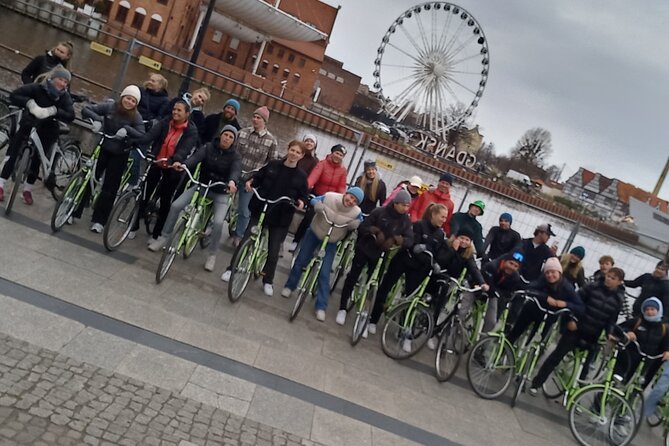
The route includes the Museum of the Second World War, with about five minutes allotted. The direction to visit it is emphatic, but admission is not included.
Five minutes cannot cover the museum itself. Treat this as a useful orientation point and a reminder to return on your own if you want to see the exhibitions. The museum adds another essential layer to Gdańsk’s story, especially after the tour has already introduced the city’s medieval center and twentieth-century political history.
This stop also shows the limits of the standard route. You will see many important places, but you will not have time to explore each one fully. The bike tour works best as a first look that helps you decide where to spend the rest of your time in Gdańsk.
Golden Gate introduces the city’s symbolic language
The Golden Gate, or Zlota Brama, gets about five minutes. Its allegorical statues represent Peace, Freedom, Wealth, Fame, Piety, Justice, and Concord.
That symbolism gives the stop more meaning than a simple photo opportunity. The gate is part of the city’s ceremonial approach to the historic center, and its decoration presents the values that civic leaders wanted to display.
Admission is not included. The short stop is enough to hear the explanation and study the statues before continuing. Since it is a compact visit, you should not expect a guided interior experience.
Granary Island shows wartime loss and renewal
Wyspa Spichrzów, or Granary Island, is described as the historic heart of Gdańsk. It was destroyed during World War II, so this section of the route adds a direct reminder that the city’s old appearance has not survived untouched.
The stop lasts about five minutes, with admission included. The key point is the contrast between historical importance and wartime destruction. It helps you read the waterfront with more care instead of assuming every old-looking building has survived from the past.
This is also a good place to appreciate the bike format. You can cross into the island area, take in the waterfront setting, and continue without losing the relaxed flow of the tour.
The Motława crossing depends on conditions
The footbridge over the Motława River to Ołowianka is included if it is open. The stop lasts about five minutes, and admission is included.
The conditional wording matters. You should not assume this crossing will be available on every departure. If it is open, it adds a pleasant change of viewpoint and lets you see the river connections from a pedestrian bridge. If it is closed, the guide will need to adjust the route.
This is one reason the private format is useful. A fixed large-group outing can feel less flexible when access changes. Here, the guide can explain the situation and keep the ride moving.
The Crane is Gdańsk’s waterfront emblem
The Crane is one of the city’s defining symbols. It recalls Gdańsk’s long relationship with river trade and maritime work, and its heavy wooden form gives the Motława waterfront much of its character.
The stop is about five minutes, and admission is not included. You will have time to see the exterior and hear why it matters, but not to tour the interior as part of the standard ride.
The Crane works especially well after the shipyard and Granary Island. Together, these stops show different periods of Gdańsk’s working waterfront: historic trade, wartime destruction, and modern industrial history.
Green Gate closes the loop by the river
The final listed stop is Green Gate, or Brama Zielona. It leads toward Green Bridge and brings the route back into the ceremonial center of Gdańsk.
The visit lasts about five minutes, with no admission included. It is a fitting final landmark because it links the riverfront with the city’s main historic streets. After the political and wartime chapters, you end among the grand architectural symbols that make Gdańsk so photogenic.
The activity ends back at the meeting point on Kołodziejska Street. That return makes the tour easy to combine with your own plans in the center.
What the two-hour schedule really means
The schedule is tightly arranged. Ten stops in approximately two hours work out to brief pauses, with riding time between them and explanations along the way. You will see a broad range of places, but you should not expect extended time inside St. Mary’s Church, the European Solidarity Centre, or the World War II Museum.
I see that as a strength if you are new to Gdańsk. The route helps you get your bearings fast and shows you which places deserve a longer return visit. It is less suitable if you want a slow museum tour, long photography sessions, or detailed architectural study at every stop.
The private setup gives the experience more flexibility than a standard large group ride. The tour is customizable to your interests and preferences, although the time limit still matters. Ask for emphasis on Solidarity, church art, the waterfront, or local life when you book or at the start of the ride.
Price, group value, and practical details
At $43.05 per person, the price is reasonable for a private, local-led introduction, especially if you are sharing it with family or friends. Group discounts may improve the value further. The key question is not whether this is the cheapest way to see Gdańsk, but whether you want a guide, bicycles, and a route that ties together sights spread across the city.
The mobile ticket is convenient, and confirmation arrives at booking. Most people can participate, and only your own group takes part. The meeting point is Kołodziejska 7, 80-836 Gdańsk, Poland, and the ride finishes there.
Plan around the weather. The experience requires good conditions, and poor weather can lead to a different date or a full refund. For a bicycle outing, that policy is sensible, but do not leave it until the last day if the forecast looks uncertain.
The tour is booked on average 21 days ahead, so advance planning is wise if your dates are fixed. Free cancellation applies up to 24 hours before the start time. Inside that 24-hour window, you receive no refund and changes are not accepted.
Who should book this Gdańsk bike tour
I would choose this ride if you have one day in Gdańsk and want a broad introduction without spending the whole day on foot. It suits couples, families, and small groups who prefer a private guide and want to ask questions as they go.
It is also a good match if you care about the connection between Gdańsk’s attractive center and its modern Polish identity. The Solidarity Centre and shipyard are not optional decoration here. They are central parts of the story.
I would hesitate if you dislike bicycles, need long indoor visits, or want a slow, highly detailed tour of one museum. The standard route is brisk, and several stops are only five minutes long. You will get the map in your head, then need to return independently for deeper visits.
Should you book it?
Book this tour if you want a private orientation to Gdańsk that mixes famous monuments with the Solidarity movement, the shipyard, and the wartime story. The local-born guide, flexible format, and relaxed cycling pace give the experience more personality than a simple list of Old Town sights.
Go in with the right expectations. You are buying a well-spread introduction, not ten full sightseeing visits. If you value context and want to decide where to spend more time later, the $43.05 price is fair. If your priority is extended museum access, skip the bike tour and devote your time to individual sites instead.
FAQ
Where does the bike tour start?
The tour starts at Kołodziejska 7, 80-836 Gdańsk, Poland.
Where does the tour finish?
The activity ends back at the meeting point.
How long does the tour last?
The tour lasts approximately two hours.
How much does the tour cost?
The listed price is $43.05 per person.
Is this a private tour?
Yes. Only your group participates in the activity.
Is the route customizable?
Yes. The tour can be adjusted to your interests and preferences.
Is the guide local?
The guide is described as someone born in Gdańsk who shares local experiences, Polish traditions, and local ways of thinking.
Is admission included at every stop?
No. Admission is included at St. Mary’s Church, the European Solidarity Centre, Wyspa Spichrzów, and the Motława footbridge if it is open. Admission is not included at Dluga Street, the World War II Museum, the Golden Gate, the Crane, or Green Gate.
What happens if the Motława footbridge is closed?
The bridge is visited if it is open. The supplied tour details do not specify the alternate route if it is closed.
Can I cancel for a full refund?
Yes, if you cancel at least 24 hours before the experience starts. Cancellations or changes made less than 24 hours before the start time are not refunded or accepted. If poor weather causes the tour to be canceled, you are offered another date or a full refund.
Recently added in Gdansk
- Szymbark: Kashubian Switzerland 5-Hour Private Tour★ 3.7 · 3 reviews
- Segway Tour Gdańsk: Shipyard Tour – 1,5-Hour of Magic!★ 5.0 · 3 reviews
- Stutthof Concentration Camp and Museum of WWII: Private Tour★ 4.7 · 3 reviews
- Sopot Sunset Cruise with Welcome Drink★ 3.5 · 3 reviews
- Gdansk: Basic Bike Tour★ 4.3 · 3 reviews
- Gdansk: Bubble Football with Hotel Transfers★ 5.0 · 3 reviews
- Artus Court and Gdansk Old Town Private Tour with Tickets★ 4.7 · 3 reviews
- Gdansk: Oliwa Zoo with Tickets and Roundtrip Transportation★ 5.0 · 3 reviews
Cycling Tours, compared.
Complete Cracow Bike Tour (small group of maximum 15 people!)
Read our review →
Bike Tour of Old Town, Jewish Quarter and the Ghetto
Read our review →
Full Bike Tour – the Old Town, Jewish Qtr & the Ghetto NEW BIKES
Read our review →
Bike Tour of the Old Town, Kazimierz, and the Ghetto
Read our review →
Half-Day Warsaw City Sightseeing Bike Tour for Small Group
Read our review →Where else this one turns up