
Reviewed · AUSCHWITZ-BIRKENAU MEMORIAL TOURS
Auschwitz Birkenau Tour from Krakow: Private Transfer + Ticket
Auschwitz Birkenau is not a sightseeing stop you squeeze between lunch and shopping. It is a place of murder, grief, and remembrance. This tour makes the difficult visit easier by collecting you at your Krakow hotel, driving you directly to Oświęcim, and arranging your entry to both camp sites.
I like the door-to-door private transport, especially because Auschwitz I and Birkenau are about three kilometers apart. I also like that admission and the museum guide are included, so you do not have to sort out separate tickets or local connections. The catch is important: the ride is private, but the camp visit is a shared group tour, and the advertised seven to eight hours includes the road time.
Key points at a glance
- Private Krakow transfer: Your own car or minivan takes your group directly to Auschwitz, without collecting other passengers.
- Two historic sites: Visit Auschwitz I, with its preserved barracks and exhibitions, then Birkenau, with its railway ramp, barracks, watchtowers, and ruined gas chambers.
- Shared museum guide: You join a guided group at the visitor center, rather than having a private guide for your party.
- Long travel day: Allow roughly 90 minutes each way, plus about 2.5 to 3 hours inside the camps.
- Emotionally and physically demanding: Expect uneven ground, stairs, and a serious subject that can stay with you long after the visit.
- Small-bag rule: Bags brought into the museum must not exceed 30 by 20 by 10 centimeters.
Why this Auschwitz tour matters
Auschwitz began in 1940 in former Polish army barracks. The Nazis first used it for Polish political prisoners, then expanded the complex to include Birkenau, also called Auschwitz II. Birkenau became a major extermination site for European Jews, along with a concentration camp for people of several nationalities.
By the camp’s liberation in 1945, an estimated 1.1 million people had been murdered at Auschwitz, most of them Jews. Polish, Roma, Soviet, Italian, French, and other prisoners were also held there. The scale is hard to grasp from books alone. Walking through the gates, seeing the fences and barracks, and standing beside the railway ramp gives the history a physical setting.
That is the value of taking a guided visit. A guide can explain how the camp operated, identify buildings that would otherwise look like simple brick or wooden structures, and place the exhibits in their historical setting. The subject is handled in a restrained way, but there is no softening what happened here.
I would not plan this as a light half-day outing. It is a memorial visit first and a tour second. Give yourself quiet time afterward, and do not schedule a packed evening.
More Private Drivers in Krakow
- Krakow to Auschwitz Birkenau Guided Tour with Transfer and Ticket
★ 5.0 · 8,197 reviews - From Krakow: Auschwitz Birkenau Tour with Transfer
★ 4.0 · 6,134 reviews - Krakow: Auschwitz-Birkenau Guided Tour with Ticket and Transfer
★ 4.5 · 3,784 reviews
The private ride from Krakow
The day starts with pickup at your hotel or accommodation in Krakow. You are asked to confirm the precise departure time the day before. If your accommodation lies on a street closed to vehicles, you may need to walk to a nearby pickup point.
The drive takes about 90 minutes in each direction, though traffic can affect the timing. Your party travels in a private car or minivan, rather than on a coach that stops at several hotels. This is the strongest practical feature of the package. You avoid finding a bus pickup point, waiting for other groups, or arranging the connection between Krakow and Oświęcim yourself.
The driver is a transport provider, not necessarily the museum guide. That distinction matters. Some drivers have spoken excellent English and shared background information or a documentary during the ride. Michael, Dominic, Pieter, Conrad, and Thomas are among the drivers praised for being punctual, courteous, helpful, and safe. Other bookings have involved drivers with little or no English, and one account described uncomfortable hard braking and fast driving.
In other words, the transfer quality can vary. You are paying for a private ride, not a guaranteed Polish history talk on the way there. If your driver is quiet, that does not mean the camp tour itself lacks a guide.
Auschwitz I: barracks, exhibits, and the camp gate
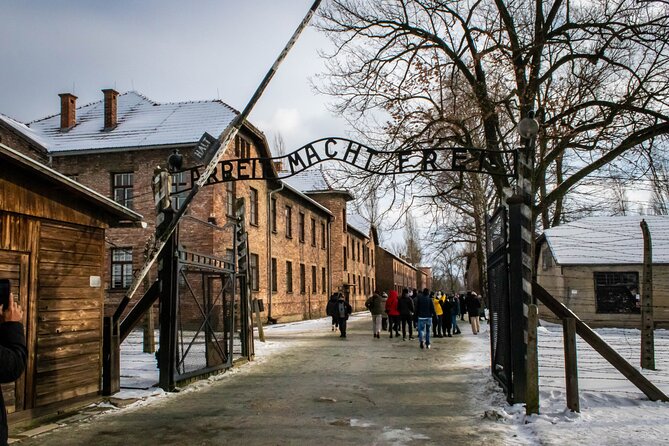
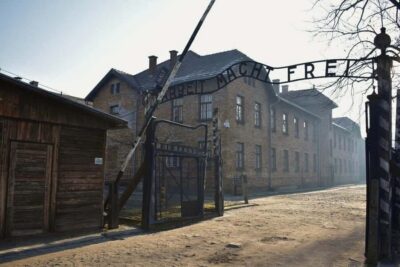
At the Auschwitz visitor center, you meet the museum guide and enter the Auschwitz I section. The gate carries the infamous German inscription Arbeit macht frei, translated as Work sets you free. It is a chilling entrance, but the gate itself is only the beginning.
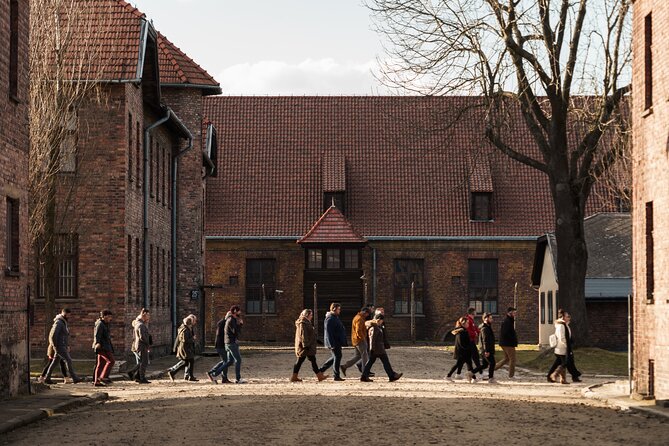
Auschwitz I is the more compact and built-up part of the complex. Original roads, fences, watchtowers, and brick barracks remain. Several barracks now hold museum displays with documents, photographs, prisoners’ belongings, and objects taken from people when they arrived.
The displays are difficult. They are also why a guide helps. Without context, it is easy to focus only on the buildings. Inside, the exhibits show the human cost of the Nazi system and the way prisoners were stripped of their identities and possessions.
The standard visit lasts about 1 hour and 45 minutes in the stated schedule, though the actual guided portion can be closer to 90 minutes depending on the day’s operation. You may see only a selection of the blocks and exhibitions. One common frustration is that the pace leaves little time to read every plaque or enter every available room.
This is a basic guided route, not an open-ended museum day. That is useful if you want a clear introduction and a fixed structure. It is less suitable if you want to study every document, read all the panels, or spend extended time in individual exhibitions.
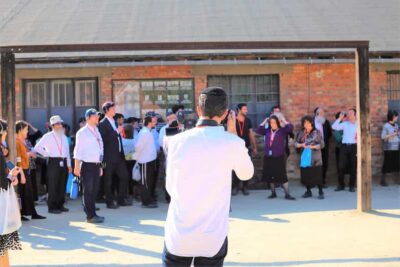
Headsets are normally used so you can hear the guide while moving through the buildings. They worked well for some groups, particularly when the group size was moderate. In crowded corridors, however, people can block the sound, and it is possible to lose contact with the group. Keep an eye on the guide and do not wander off while stopping to read.
Birkenau: the railway ramp and the scale of the crime
After Auschwitz I, you travel a short distance to Brzezinka, the village beside Birkenau. This second site is much more open and physically expansive. It was built from 1941 onward and was intended to hold about 125,000 prisoners at one time.
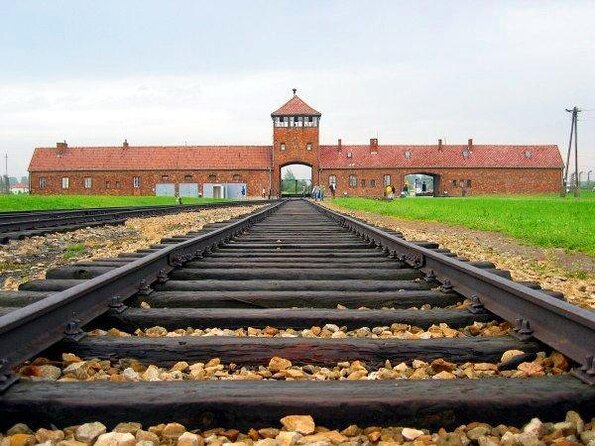
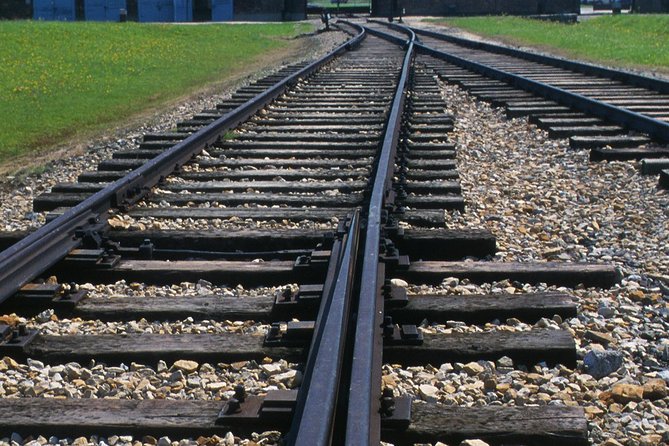
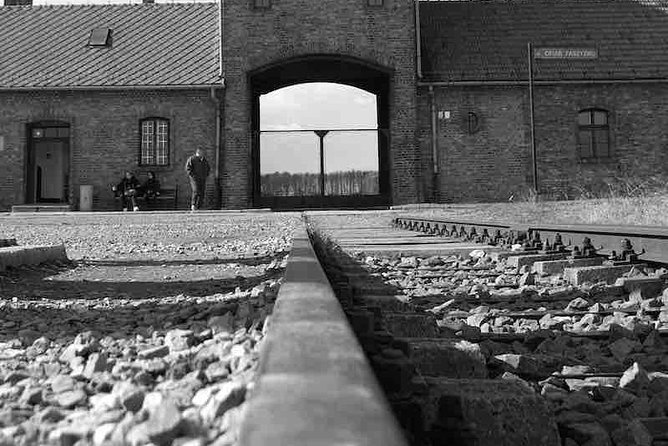
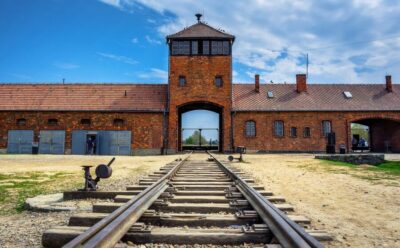
Birkenau’s scale is its defining feature. You see the railway ramp where newly arrived prisoners were selected, often within moments, for forced labor or death. The gas chambers and crematoria were nearby. The surviving ruins and foundations make clear how large the killing operation was.
You can walk along the camp road, past watchtowers and fences, and enter preserved barracks. The living conditions were deliberately brutal. Cold, hunger, disease, exhaustion, and forced labor were part of the camp system. The wooden buildings and rough interiors are not theatrical displays. Their plainness is part of what makes them so hard to face.
The schedule allows about 1 hour and 30 minutes at Birkenau, though guided time may be nearer to an hour. That can feel short. Birkenau is large, and you may want to pause at the railway ramp, walk farther along the fence, or spend more time at the memorial. A group tour keeps everyone moving, so you will not have unlimited time at each location.
The memorial area provides a place for quiet reflection. I would treat it as the emotional center of the day. You do not need to fill every moment with facts. Standing still, looking across the remains, and remembering the people who were murdered is part of the visit.
Other guided visits to the Auschwitz-Birkenau Memorial:
- From Krakow: Auschwitz-Birkenau Guided Tour & Hotel Pickup
★ 4.5 · 33,358 reviews - From Krakow: Auschwitz-Birkenau Guided Tour & Hotel Pickup
★ 4.5 · 29,340 reviews - Krakow: Auschwitz Guided Tour with Optional Hotel Pickup
★ 4.5 · 15,280 reviews - Krakow: Auschwitz-Birkenau Guided Tour with Pickup & Lunch
★ 4.5 · 9,800 reviews
Time, walking, and the real shape of the day
The full experience is advertised at about seven to eight hours. The journey itself accounts for roughly three hours, leaving approximately 2.5 to 3 hours at Auschwitz and Birkenau, with a short break between the two sites.
That distinction helps set expectations. You are not receiving seven or eight hours inside the museum. You are receiving a full-day transfer and guided visit from Krakow.
There is a lot of walking. Paths can be uneven, and the route includes stairs. Birkenau is especially exposed and spread out, so comfortable shoes are essential. The tour is workable for most people, but the schedule is not built around long rest periods.
Food arrangements are not entirely consistent in people’s experience. Cafes and places to buy drinks, ice cream, and food are available near both Auschwitz I and Birkenau, but queues may be long. The interval between camp sections can be short, so I would carry water and a small snack if allowed under the museum’s bag rules.
Your bag must be no larger than 30 by 20 by 10 centimeters. A small handbag or compact daypack is the safest choice. Large backpacks may not be admitted.
What the price buys you
At $214.32 per person, this is not the cheapest way to reach Auschwitz. The value rests mainly in convenience and coordination.
You get hotel pickup and drop-off, a private vehicle for your group, admission, and an English guided visit at the memorial. The driver also takes you between Auschwitz I and Birkenau, which saves you from working out that connection on your own.
For two people or a small group, the private transfer can feel worth the extra cost. You leave from your own accommodation, avoid a large coach, and return directly to Krakow. It is especially useful if you value predictable transport or do not want to manage a serious day trip by public transport.
The price does not buy a private guide inside the camps. You join a museum group, and the group may be medium or large. It also does not buy extra time to explore every block. If your main priority is a slow, highly detailed museum visit, a longer format or independent visit with an audio guide may suit you better.
The tour is often booked well ahead, around 53 days in advance on average. That suggests you should not leave it until the last moment, especially if your Krakow dates are fixed.
Who should choose this format
I would recommend this tour to you if you want the practical work handled for you. It suits first-time visitors, small parties, families who want a direct ride, and anyone who prefers not to navigate an unfamiliar regional connection after an emotional day.
It is also a good fit if you want a professional introduction rather than a self-guided visit. Guides such as Krzysztof have been praised for clear, respectful explanations, and several guides have helped people understand how the camps were built and operated without turning the visit into a lecture detached from the site.
I would hesitate if you want a private museum experience. The private label can mislead you unless you read the details closely. Your transport is private, but the guided tour at Auschwitz and Birkenau is shared.
I would also think twice if you dislike fixed schedules. The group route moves at a set pace, and you may not have enough time to read every sign or visit every exhibition. Finally, this is not a suitable choice for a day when you need to stay emotionally fresh. The subject is severe, and the physical walking adds to the strain.
Booking details worth knowing
Confirmation is provided when you book, but you need to contact the operator the day before to confirm the exact pickup time. That is worth doing because some people have found the pickup information less precise than expected.
The tour is offered in English, and the guided visit can be arranged in the language selected at booking. The driver may not be your guide, so do not expect the transport portion to include a full commentary.
This is a non-refundable experience. Cancellation or amendment does not result in a refund, so check your Krakow dates carefully before paying. The activity is private only in its transport arrangement, with your own group in the vehicle.
Should you book the Auschwitz Birkenau private transfer tour?
Book it if you want a reliable framework for a solemn day and place a high value on hotel pickup, direct transport, included tickets, and a museum guide. The private ride removes much of the hassle, and the guided route gives you essential context at both Auschwitz I and Birkenau.
Do not book it assuming you will receive a private guide or spend seven to eight hours inside the camps. You will likely have about 2.5 to 3 hours at the sites, much of it walking with a group.
For most first-time visitors from Krakow, I think the convenience is worthwhile. Just bring a small bag, wear sturdy shoes, confirm the pickup time, and approach the day as a memorial visit rather than a normal attraction.
FAQ
How long does the tour take?
The total experience lasts approximately seven to eight hours. The drive from Krakow takes about 1.5 hours each way, with approximately 2.5 to 3 hours spent at Auschwitz and Birkenau.
Is hotel pickup included?
Yes. Pickup and drop-off at your Krakow hotel or accommodation are included. If vehicles cannot reach your accommodation because of access restrictions, you may need to walk to a nearby pickup point.
Is the transport private?
Yes. Your group receives private transportation directly from Krakow to Auschwitz and back. The guided museum visit is shared with other people.
Is admission to Auschwitz Birkenau included?
Yes. Admission to the Auschwitz Birkenau Memorial and Museum is included in the tour price.
Is the camp guide private?
No. You join a group tour at Auschwitz and Birkenau. The private part of the experience is the vehicle and transfer service.
What language is the tour offered in?
The experience is offered in English. The guided tour can be arranged in the language selected at booking.
How much walking is involved?
Expect substantial walking across both sites, including uneven ground and stairs. Birkenau is especially spread out, so comfortable shoes are important.
Can I bring a large backpack?
No. Bags brought into the museum must not exceed 30 by 20 by 10 centimeters. Bring a small handbag or compact bag.
Can I choose the departure time?
You can request your preferred departure time, but you should contact the operator the day before to confirm the exact start time.
Can I cancel for a refund?
No. The experience is non-refundable and cannot be changed for any reason. Any cancellation or amendment results in no refund.
Recently added in Krakow
- Auschwitz-Birkenau and Krakow Private Car Trip from Katowice★ 4.3 · 3 reviews
- Wawel Castle, Old Town with St. Mary’s Church Guided Tour★ 5.0 · 3 reviews
- From Krakow: Chocholow Thermal Hot Springs (hotel pick up)★ 5.0 · 3 reviews
- Private tour to Zakopane and Thermal Baths from Krakow★ 5.0 · 3 reviews
- Wawel Castle, Cathedral, Rynek Underground Tour with Lunch★ 5.0 · 3 reviews
- Legends of Cracow ROBOTIC SHOW★ 4.0 · 3 reviews
- From Krakow: Zakopane and Thermal Pools Guided Trip★ 5.0 · 3 reviews
- Guided Beer Tour in Krakow★ 4.5 · 3 reviews
Auschwitz-Birkenau Memorial Tours, compared.
Auschwitz-Birkenau Guided Tour & Hotel Pickup
Read our review →Auschwitz Guided Tour with Optional Hotel Pickup
Read our review →
Auschwitz-Birkenau Guided Tour with Pickup & Lunch
Read our review →
Krakow to Auschwitz Birkenau Guided Tour with Transfer and Ticket
Read our review →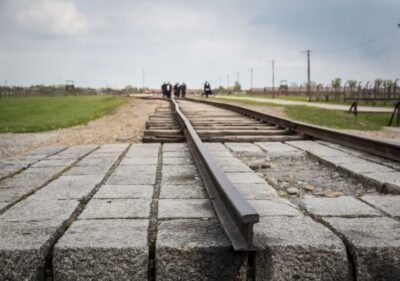
Auschwitz Birkenau Small Group Tour with Pickup
Read our review →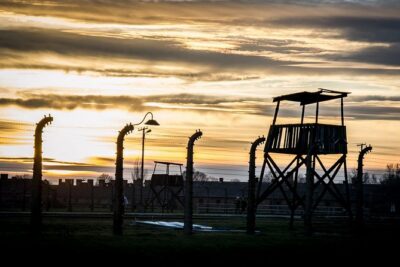
Auschwitz Birkenau Guided Tour with Ticket Hotel Pickup Small Van
Read our review →Where else this one turns up