
Reviewed · JEWISH QUARTER & KAZIMIERZ TOURS
Krakow: Jewish Ghetto Guided Walking Tour
Krakow’s former Jewish Ghetto can look like an ordinary city neighborhood until someone explains what happened here. This one-hour walk brings those wartime events into focus through the Ghetto Wall and the empty chairs of Ghetto Heroes Square, then links them to personal stories of courage and survival.
I like the route’s compact length and its use of real places rather than a long classroom-style talk. I also like the clear, patient guiding praised in the feedback, including Elena’s friendly approach and Renata’s careful explanations. The trade-off is simple: one hour gives you a strong introduction, but only a few sites and no attraction admissions.
Key points to know before you book
- Start at Schindler’s Factory: Meet at the main entrance, on the right-hand side, where your guide carries an excursions.city sign.
- See surviving Ghetto Wall fragments: These physical remains make the forced boundaries of the wartime district easier to grasp.
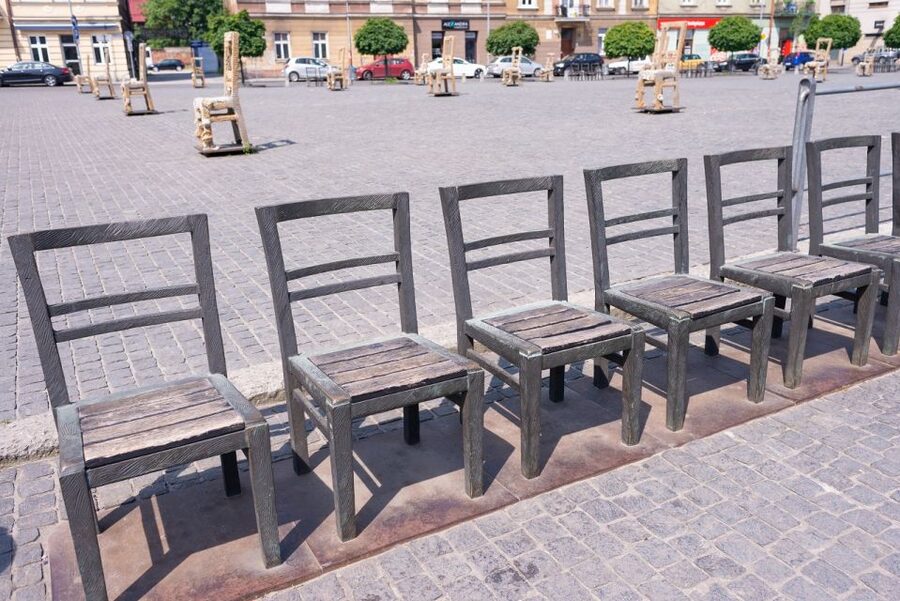
- Pause at Ghetto Heroes Square: Empty metal chairs mark this former center of the ghetto and its connection with deportations.
- Learn about Under the Eagle Pharmacy: Hear how Tadeusz Pankiewicz and his staff helped people inside the ghetto.
- Choose from five languages: Tours are offered in English, German, Italian, French, and Spanish.
- Allow for weather: The walk runs in all conditions, so wear suitable shoes and arrive 10 minutes early.
Why this short walk matters in Podgórze
I find this tour valuable because it changes the way you read the streets of Podgórze. Without context, you may simply see roads, apartment buildings, a square, and a few fragments of old masonry. With a guide, those same places become evidence of how occupation reshaped daily life.
The walk focuses on the former Nazi Jewish Ghetto during World War II. Its subject is serious, and the experience is intended to help you think about fear, forced separation, deportations, moral choices, and survival. This is not a sightseeing circuit built around pretty views. Its value comes from connecting ordinary locations with the people who lived through what happened there.
The route is also useful if you have limited time in Krakow. At $15 per person, it costs less than many museum visits and gives you a guided foundation for seeing the district. You will not receive a full study of Krakow under Nazi occupation in 60 minutes, but you can leave with a clearer sense of why Podgórze matters.
More Walking Tours in Krakow
- Old Town Krakow & Wawel Castle Walking Tour
★ 5.0 · 1,508 reviews - Creepy Krakow: 2-Hour City Walking Tour
★ 4.7 · 1,131 reviews - Krakow: The Old Town Walking Tour
★ 4.8 · 794 reviews
Meeting at Schindler’s Factory
The tour begins in the area of Schindler’s Factory, at the main entrance to the museum. Look for the guide on the right-hand side, carrying an excursions.city sign.
This starting point provides an immediate introduction to the occupation and to the way industry, forced labor, and daily life became connected in this part of Krakow. The factory setting helps your guide establish the wider story before the walk moves into the former ghetto itself.
The meeting instructions are precise, which is useful in an unfamiliar neighborhood. I would arrive at least 10 minutes early, not merely walk up at the scheduled time. Once the group has left, late arrivals cannot join and the ticket cannot be refunded.
One point to keep in mind: the activity is an outdoor walking tour, not a visit inside Schindler’s Factory Museum. Entrance fees to attractions are not included. If you also want to see the museum, treat that as a separate plan and allow additional time.
The surviving Ghetto Wall
The remains of the former Ghetto Wall are among the most important stops because they give you something physical to look at. A spoken explanation can describe confinement, but a surviving section of wall shows how a neighborhood was bounded and separated from the rest of the city.
Your guide explains what these fragments meant for the Jewish population living under occupation. The wall was not simply a boundary on a map. It represented restriction, loss of freedom, and the reshaping of familiar streets into a controlled district.
This is where a guide adds real value. On your own, you might walk past the masonry without knowing its purpose or its connection to the ghetto. The stop is brief, but it helps turn an abstract date in a history book into a place you can see.
Do not expect a large preserved complex or a museum display at this point. The appeal is the remaining fragment and the explanation around it. If you prefer extensive indoor exhibits, documents, or objects, this walk will feel more like an introduction than a complete historical visit.
Ghetto Heroes Square and the empty chairs
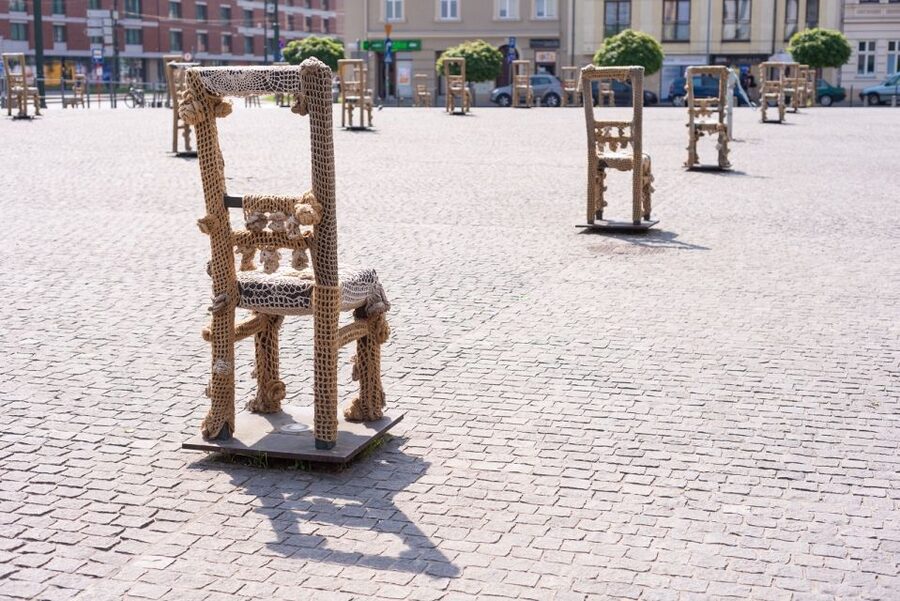
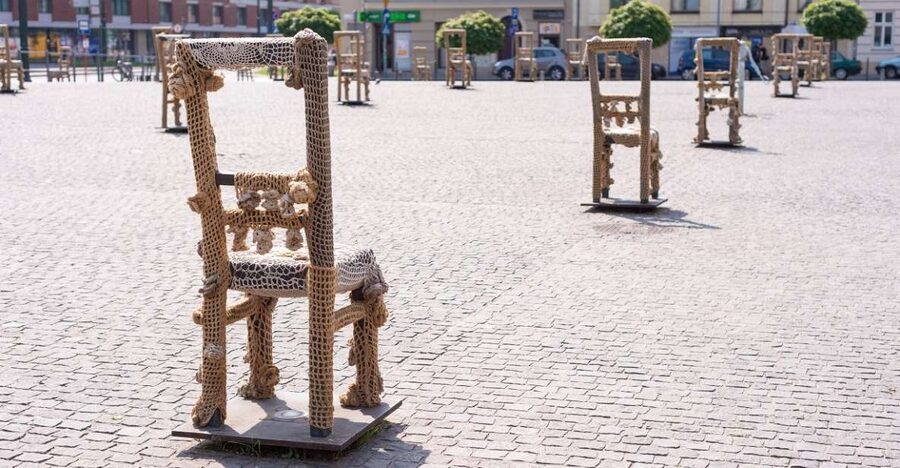
The route continues to Ghetto Heroes Square, the former center of the Krakow Ghetto and a place connected with deportations. The square is now marked by a memorial of empty metal chairs.
The chairs are a strong visual symbol. They suggest absence and the lives lost during this period without requiring a long display of words. Your guide gives the square its context, explaining why this location became so important and how the deportations fit into the story of the ghetto.
I like this part of the route because it allows time for reflection. The memorial is not just another stop to photograph and leave behind. It asks you to notice what is missing. A careful guide can help you approach the site with respect while keeping the history understandable.
The square is also a useful midpoint in the walk. By this stage, you have seen the physical boundary of the ghetto and heard about the conditions created by occupation. The chairs then give a human shape to the consequences.
Because the whole activity lasts one hour, the time at each location is limited. If you want a long period for quiet reflection or detailed discussion, you may wish to return to the square later on your own. The guided visit gives you the essential setting and meaning, rather than an extended seminar.
Other Jewish Quarter and Kazimierz walks:
- Krakow: Jewish Quarter and Former Ghetto Tour
★ 4.9 · 1,441 reviews - Krakow: Bike Tour of Old Town, Jewish Quarter and the Ghetto
★ 4.9 · 1,155 reviews - Krakow: Kazimierz Jewish Quarter Walking Tour
★ 4.8 · 571 reviews - Krakow: Kazimierz, Schindler’s Factory & Ghetto Guided Tour
★ 4.8 · 460 reviews
Under the Eagle Pharmacy and moral choices
Across the square, you will see the historic Under the Eagle Pharmacy. The guide explains the role of Tadeusz Pankiewicz and his staff, who provided vital assistance to people inside the ghetto.
This stop adds an important human layer to the tour. The history is not presented only through walls, boundaries, and deportations. It also includes decisions made by individuals who offered help in a dangerous time.
I find this part especially worthwhile because it raises questions about courage and moral choice. Your guide can connect the pharmacy to the daily experience of people trying to survive, making the wartime story more personal and less distant.
The pharmacy is included as a historical location on the walking route, but entrance fees are not part of the $15 price. If you want to go inside any attraction, check the arrangements separately rather than assuming the guided walk includes admission.
Preserved streets and wartime buildings
Between the main stops, the guide leads you through preserved streets and buildings in Podgórze. These sections matter because they show how the former ghetto is woven into a living city.
You are not walking through a set built for visitors. You are moving through a real neighborhood where present-day life continues alongside wartime reminders. That contrast can feel unsettling, but it is also what makes the route meaningful. The past is not isolated behind museum walls.
The guide’s narration helps you imagine how ordinary streets became scenes of fear, control, courage, and survival. You may find that these in-between sections are just as useful as the named memorials because they connect the individual sites into one district.
There is no promise of a large number of stops. The itinerary is focused, and one four-star assessment specifically noted that there are only a few sites, though they were well explained for the low price. That is a fair description. You pay for a concise, guided interpretation of key locations, not an exhaustive tour of every wartime site in Krakow.
The guide makes the difference
This experience depends heavily on the person leading it. The guide must explain painful history clearly, keep the group moving, and leave room for questions without turning the hour into a rushed list of dates.
The feedback points to two useful qualities. Elena was praised for being friendly and for helping people understand what the ghetto was really like. Renata was noted for clear explanations and a helpful manner. You may not receive either guide on your particular departure, but those comments identify what to value: speech at a pace you can follow, clear storytelling, and willingness to answer questions.
Language choice is another practical strength. The tour is offered in English, German, Italian, French, and Spanish. If you book a language other than English, confirm the available start time before building the rest of your day around it.
I would also use the short tour to ask focused questions. With only an hour, broad requests can eat up time. Ask about a particular memorial, the wall fragments, the pharmacy, or how daily life changed in the district. A good question can help you get more from a compact route.
Is $15 a fair price?
At $15 per person, this is a good-value introduction if you want a guide but do not want to commit to a long tour. The price covers a professional licensed guide and the walk through the former ghetto. It does not cover attraction admissions.
The value comes from interpretation. You can walk around Podgórze for free, but you may miss the meaning of the wall, the role of the square, or the story linked to the pharmacy. Paying for an hour of clear context can make the rest of your time in Krakow more rewarding.
The low price also tells you what not to expect. This is not a private tour, a full-day history program, or a ticket bundle. The route is short, the number of sites is limited, and the focus is on outdoor locations.
For many visitors, that balance works well. You can use the tour as an introduction, then decide if you want to visit a museum or return to one of the sites independently. If you already know the history well and want detailed archival discussion, this may feel too basic.
Timing, weather, and what to wear
The tour lasts one hour, with starting times depending on availability. That makes it easy to fit into a day that includes other Krakow sights, but do not schedule it too tightly. You need time to find the meeting point and arrive 10 minutes early.
The walk operates in all weather conditions. Check the forecast and dress for the conditions rather than assuming a short tour does not require preparation. Suitable footwear matters because the experience takes place on city streets, and rain or cold can affect your comfort.
There is no special indoor refuge built into the tour description, so weather is a genuine consideration. In poor conditions, the history remains worthwhile, but the walk may feel less comfortable and you may have less time to pause.
Free cancellation is available up to 24 hours before the start for a full refund. You can also reserve now and pay later, which helps if your Krakow plans are still shifting.
Who will get the most from this tour?
I would recommend it to a first-time visitor who wants a clear introduction to Krakow’s wartime history. It also suits anyone who prefers places and stories over a long museum visit.
The tour works well for you if:
- You have only an hour available.
- You want a licensed guide to explain memorials and surviving structures.
- You are comfortable with serious historical subject matter.
- You want to walk through Podgórze rather than only read about it.
- You need a tour in English, German, Italian, French, or Spanish.
- You want a low-cost starting point before choosing further visits.
It may not suit you if you want extensive museum time, admission to attractions, or a full account of every wartime site in Krakow. It is also not ideal if you dislike fixed departure times, outdoor walking, or emotionally difficult subjects.
Should you book the Jewish Ghetto walking tour?
Book it if you want a short, affordable, guided explanation of Podgórze’s former Jewish Ghetto. The Ghetto Wall, empty chairs of Ghetto Heroes Square, and Under the Eagle Pharmacy give the hour a clear shape, while the preserved streets help connect those places to everyday life during the occupation.
I would especially choose it early in a Krakow visit. The tour can give you the context to look at the district more thoughtfully afterward. Just arrive early, dress for the weather, and remember that attraction admissions are separate.
Skip it if you need a long, detailed historical course or prefer to explore entirely on your own. For most visitors seeking a meaningful one-hour introduction at $15, it offers a sensible balance of cost, time, and human context.
FAQ
Where does the Jewish Ghetto walking tour begin?
Meet your guide in front of the main entrance to Schindler’s Factory Museum, on the right-hand side. The guide will hold an excursions.city sign.
How long does the tour last?
The walking tour lasts one hour.
How much does the tour cost?
The listed price is $15 per person.
What locations are included?
The route includes the area around Schindler’s Factory, remnants of the former Ghetto Wall, Ghetto Heroes Square, Under the Eagle Pharmacy, and preserved streets and buildings in Podgórze.
Is admission to Schindler’s Factory included?
No. Entrance fees to attractions are not included in the walking tour price.
Is admission to Under the Eagle Pharmacy included?
No. Attraction entrance fees are not included.
Which languages are available?
The live tour guide service is available in English, German, Italian, French, and Spanish.
How early should I arrive?
Arrive 10 minutes before the scheduled start. Latecomers cannot join after the group has departed, and their tickets cannot be refunded.
Does the tour run in bad weather?
Yes. The tour takes place as planned in all weather conditions. Check the forecast and wear suitable clothing and footwear.
Can I cancel for a full refund?
You can cancel up to 24 hours in advance for a full refund. The reserve-now, pay-later option is also available.
Recently added in Krakow
- Auschwitz-Birkenau and Krakow Private Car Trip from Katowice★ 4.3 · 3 reviews
- Wawel Castle, Old Town with St. Mary’s Church Guided Tour★ 5.0 · 3 reviews
- Wawel Castle, Cathedral, Rynek Underground Tour with Lunch★ 5.0 · 3 reviews
- From Krakow: Chocholow Thermal Hot Springs (hotel pick up)★ 5.0 · 3 reviews
- Private tour to Zakopane and Thermal Baths from Krakow★ 5.0 · 3 reviews
- Legends of Cracow ROBOTIC SHOW★ 4.0 · 3 reviews
- From Krakow: Zakopane and Thermal Pools Guided Trip★ 5.0 · 3 reviews
- Guided Beer Tour in Krakow★ 4.5 · 3 reviews
Jewish Quarter & Kazimierz Tours, compared.

Bike Tour of Old Town, Jewish Quarter and the Ghetto
Read our review →
Kazimierz, Schindler’s Factory & Ghetto Guided Tour
Read our review →
Bike Tour of the Old Town, Kazimierz, and the Ghetto
Read our review →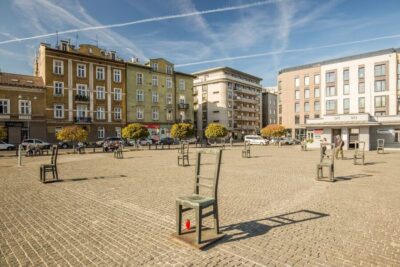

Jewish Quarter and Ghetto Electric Golf Cart Tour
Read our review →
Where else this one turns up