
Reviewed · JEWISH QUARTER & KAZIMIERZ TOURS
Krakow: Guided Tour of the Jewish Ghetto
The most powerful part of this one-hour walk is its setting. Podgórze still has the street plan, buildings, square, and a fragment of the wall that shaped daily life for more than 15,000 people during the German occupation. You are not hearing about the ghetto from a distant museum room. You are walking through the places where these events unfolded.
I like the visit to Ghetto Heroes Square, where empty metal chairs recall the people removed from their homes. I also like the story of Tadeusz Pankiewicz and the staff of Under the Eagle Pharmacy, who offered medicine and shelter at great personal risk. The main consideration is the short length: one hour gives you a focused introduction, not a full study of Krakow’s wartime history.
Key points
- The surviving ghetto wall gives you a direct, physical link to the enclosure that held more than 15,000 people.
- Ghetto Heroes Square uses empty metal chairs as a quiet memorial to lives lost during the Holocaust.
- Under the Eagle Pharmacy brings the story down to individual acts of courage, medicine, and shelter.
- Podgórze’s authentic streets and buildings help you picture daily life behind the ghetto boundaries.
- The $15 price makes this a low-cost way to add historical context to a Krakow visit.
- Five tour languages are offered: English, German, Italian, French, and Spanish.
Walking Through Krakow’s Former Jewish Ghetto
Podgórze can feel quiet today. That calm is part of what makes the walk difficult and important. Your guide leads you through ordinary-looking streets and points out the places where fear, forced movement, family separation, and small acts of help shaped everyday life during World War II.
The tour focuses on the former Krakow Ghetto, which was created in Podgórze and enclosed more than 15,000 people within only a few city blocks. The streets are not reconstructed for effect. You see the actual district, its buildings, and its old street layout. That physical setting helps you understand how tightly controlled life became.
I find this kind of walking tour more useful than a list of dates. A guide can connect each location to the people who lived there, the rules they faced, and the choices made by those who tried to help. You should expect a serious tone. This is a memorial visit, not a casual sightseeing stroll.
The tour begins at the entrance to the Schindler Factory Museum. Look for the guide holding an excursions.city sign. The meeting point is practical, especially if you are already visiting the museum, but the tour itself is a separate experience. The museum entrance is used as the meeting point, so make sure you are looking for the sign rather than assuming the guide will meet you inside.
Other Jewish Quarter and Kazimierz walks:
- Krakow: Jewish Quarter and Former Ghetto Tour
★ 4.9 · 1,441 reviews - Krakow: Bike Tour of Old Town, Jewish Quarter and the Ghetto
★ 4.9 · 1,155 reviews - Krakow: Kazimierz Jewish Quarter Walking Tour
★ 4.8 · 571 reviews
The Surviving Wall Fragment in Podgórze
One of the first important stops is a remaining section of the original ghetto wall. Only a few fragments survive, which gives this stop a strong sense of place. The wall was not simply a boundary on a map. It marked the line between forced confinement and the rest of Krakow.
Your guide explains what life behind that boundary meant. More than 15,000 people were pressed into a small area, with daily life shaped by shortages, fear, restrictions, and uncertainty. The wall helps you picture the scale of the enclosure better than a written description alone.
This is also where the tour can add useful context about solidarity and survival. The visit is not limited to suffering. You hear about people trying to help one another under extreme conditions, even when food, medicine, movement, and communication were all restricted.
The stop is brief, so do not expect a long examination of every surviving section or a detailed architectural study. Its value comes from the guide’s explanation and from seeing the fragment in its real setting. If you want a slower visit, you can note the location and return later, but the organized walk keeps the story moving.
Ghetto Heroes Square and the Empty Chairs
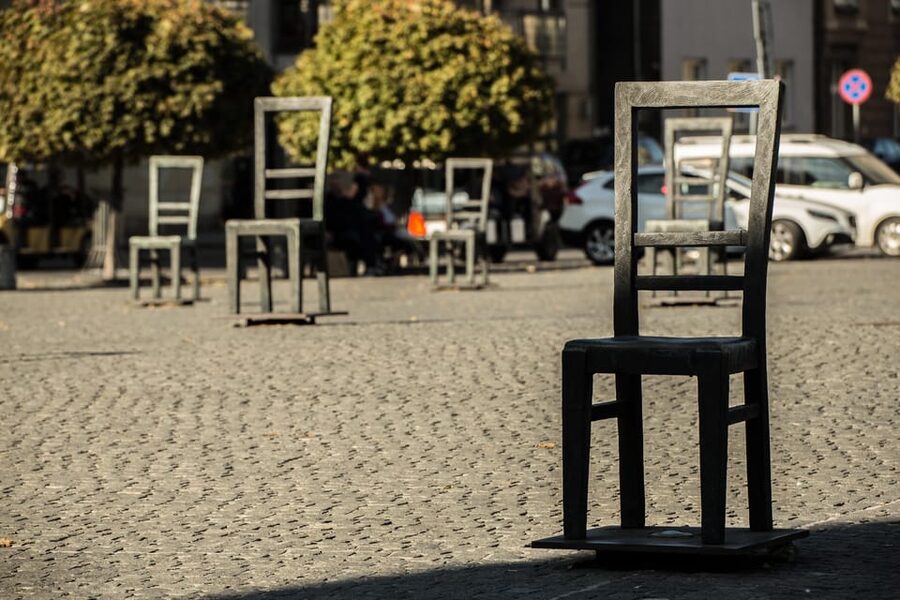
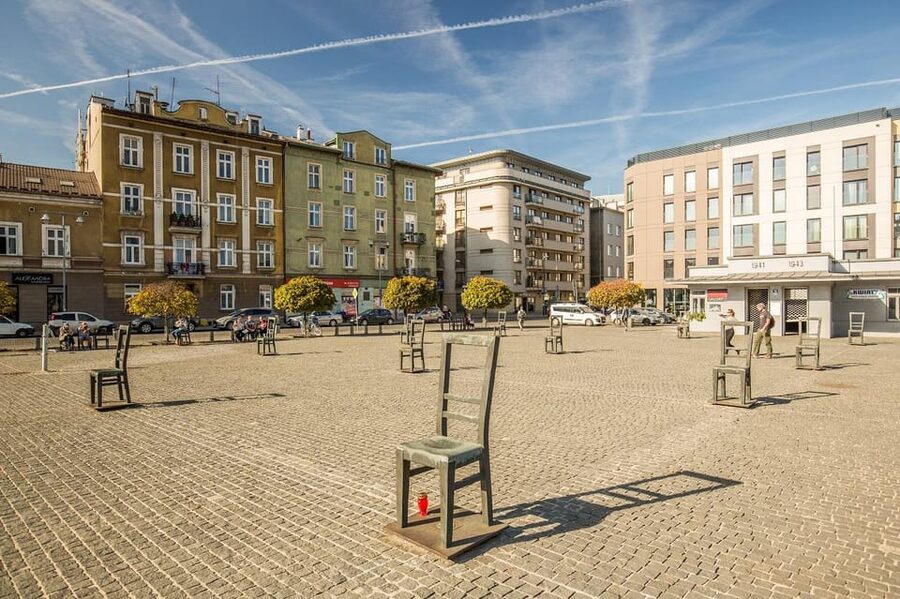
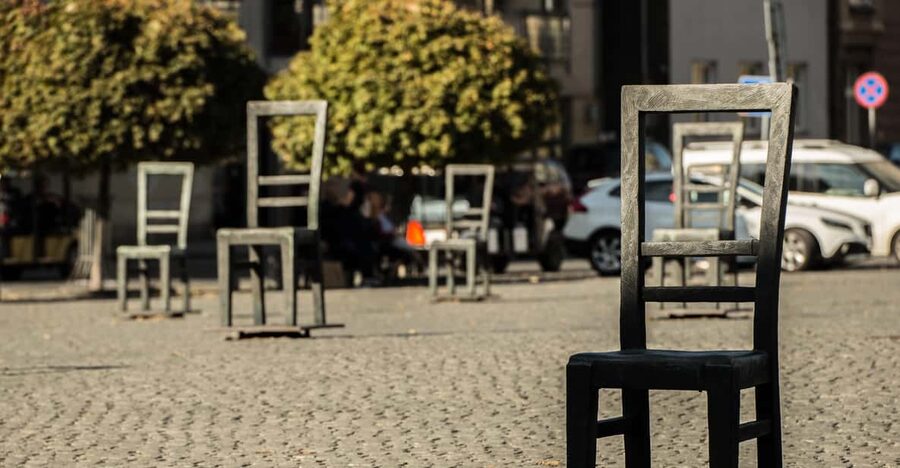
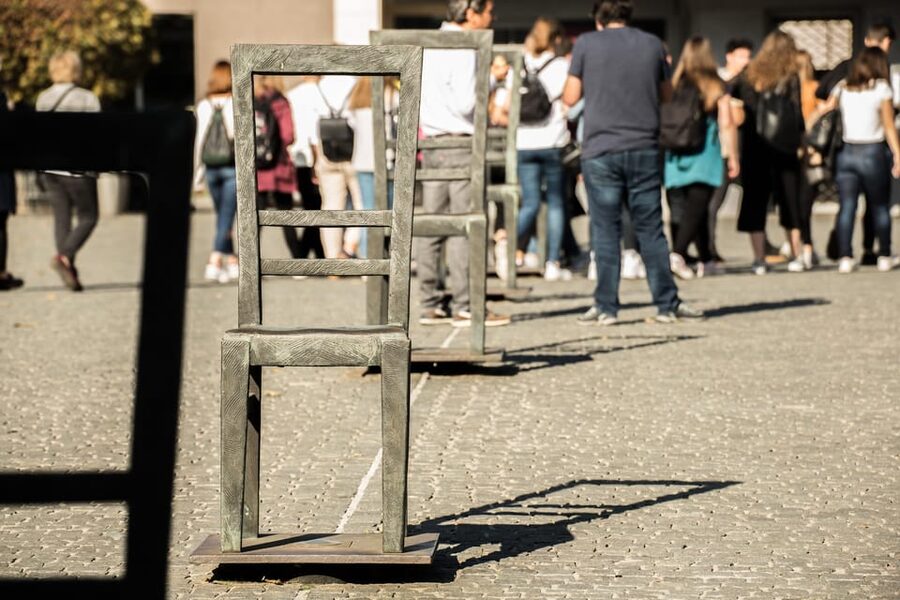
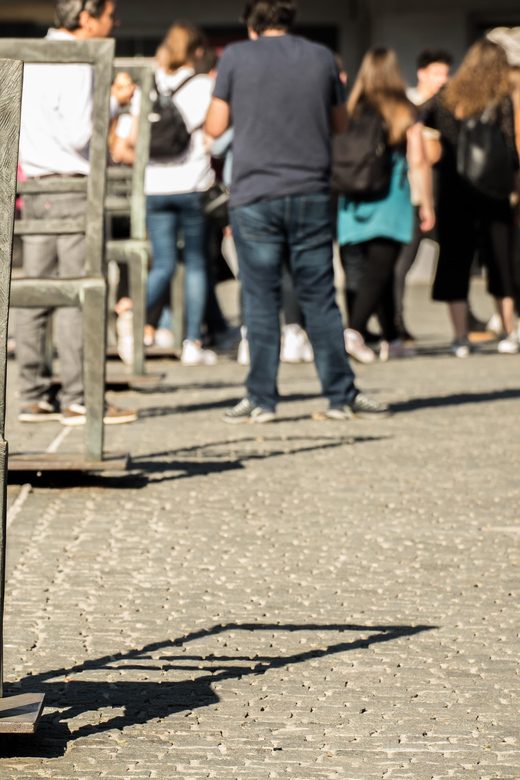
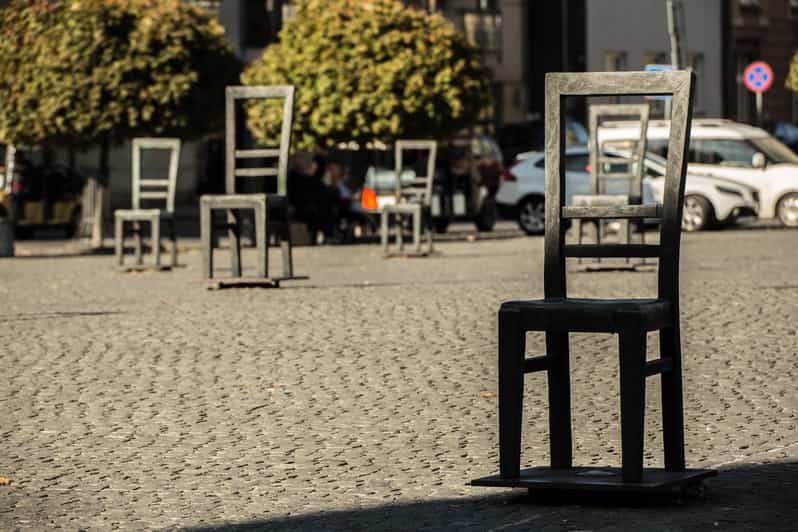
The tour then reaches Ghetto Heroes Square, the emotional center of the route. During the war, this was a place where people were gathered before deportations to concentration camps. Today, dozens of empty metal chairs occupy the square.
The chairs are a simple but powerful memorial. They suggest homes suddenly emptied, families separated, and possessions left behind. You do not need a long explanation to understand the image, but the guide gives the square its historical meaning and explains why this place mattered during the deportations.
I like that the memorial does not rely on a large statue or an elaborate building. The chairs leave space for you to think. They also make the scale of the loss easier to grasp. Each chair can suggest an individual life, while the number of chairs points to a wider community torn apart.
Give yourself a quiet moment here. The tour concludes with time for reflection, and this square is one of the places where that pause matters most. The guide will continue with the group, so you may not have unlimited time alone, but the stop is designed to let the weight of the site register.
A possible drawback is that the square can feel stark if you are expecting a conventional attraction with many displays or objects. Its power comes from the setting and the memorial design, not from a large collection of exhibits. You are here to listen, look, and think.
Under the Eagle Pharmacy and Tadeusz Pankiewicz
Across from the square is the historic Under the Eagle Pharmacy. This stop adds a more personal story to the larger history of the ghetto. Tadeusz Pankiewicz, the pharmacist, and his staff risked their lives to help Jewish residents.
The pharmacy provided medicine and shelter. Those details matter because they show how practical help could become an act of courage. In a place where ordinary contact could carry serious danger, offering medical supplies or a safe place required more than kindness. It required risk.
Your guide shares the story of Pankiewicz and the people connected with the pharmacy. This is one of the tour’s most human stops. Instead of treating the ghetto only as a site of mass suffering, it shows how individuals responded to that suffering.
The pharmacy also gives the route a useful change of focus. At the wall, you think about confinement and boundaries. At the square, you think about deportation and loss. At the pharmacy, you consider care, resistance, and the small decisions that helped people survive.
The supplied information does not say that entry into the pharmacy is included, so you should treat this as an exterior stop and a guided explanation unless your booking details state otherwise. The tour includes a professional guide, but it does not include food, drinks, or a separate museum admission.
A few more Krakow half days to consider
- From Krakow: Auschwitz-Birkenau Guided Tour & Hotel Pickup
★ 4.5 · 33,358 reviews - From Krakow: Auschwitz-Birkenau Guided Tour & Hotel Pickup
★ 4.5 · 29,340 reviews - Krakow: Auschwitz Guided Tour with Optional Hotel Pickup
★ 4.5 · 15,280 reviews - Krakow–Zakopane: Cable Car, Chocholow Baths, Cheese & Vodka
★ 5.0 · 10,720 reviews
Why the Authentic Streets Matter
The route’s real strength is the connection between individual places. You see the wall, move through the old street layout, reach the square, and then hear about the pharmacy across from it. Together, these locations create a clearer picture than any single stop could provide.
The buildings and streets are authentic wartime surroundings. That does not mean every building looks exactly as it did during the occupation, or that the walk recreates the ghetto. It means you are moving through the actual district where these events occurred.
I recommend keeping your attention on the guide’s explanations rather than trying to rush ahead for photographs. The meaning of the tour is in the relationship between the places. A wall without context is just a wall. A square without its wartime role is just an open public space. The guide connects the physical details to daily life, deportations, bravery, and survival.
This also makes the walk useful for people who have already visited Krakow’s main sights. You get a different view of the city, one that moves beyond the Old Town and royal buildings. Podgórze adds a necessary part of Krakow’s modern history.
A One-Hour Tour for a Focused Historical Visit
At $15 per person, the price is reasonable for a guided introduction to several important sites. You are paying for a professional guide who supplies the historical links and helps you read places that might otherwise be easy to pass without understanding.
The value depends on what you want. If you need a detailed, half-day study of Krakow during World War II, this tour will feel too short. If you want a clear, respectful orientation to the former ghetto, one hour is efficient and affordable.
The short duration can also work well in a packed Krakow schedule. You do not need to give up most of a day, and the route covers the wall, the square, the memorial chairs, the pharmacy, and the surrounding streets. I would pair it with additional museum time only if you want more documents, objects, and personal accounts.
Three verified bookings produced a 4.5 rating overall. The comments are limited, but two useful points come through. One visitor praised the guide as fantastic and appreciated a personal recommendation for a rugby bar during a tournament visit. Another described the personal guidance as excellent in German. That suggests the tour can feel responsive rather than purely scripted, though there is not enough information to promise a particular guide or style.
No guide names are provided, so do not book expecting a specific person. Choose your preferred language when checking availability. Live guiding is offered in English, German, Italian, French, and Spanish.
Who Will Get the Most From This Walk
I would recommend this tour to you if you want historical context before or after visiting the Schindler Factory Museum. The meeting point makes it easy to connect the two activities, although the museum visit is not listed as part of the tour.
It also suits first-time visitors who want to understand Podgórze without arranging a complicated independent route. The guide keeps the walk centered on a few meaningful places, so you can learn the basic story without sorting through a large amount of information on your own.
This experience may work especially well for:
- History-minded visitors who want to see the actual ghetto wall and wartime streets.
- First-time Krakow visitors looking for a meaningful activity beyond the Old Town.
- Museum visitors who want outdoor context around the Schindler Factory area.
- Families with older children or teenagers who can engage with a serious Holocaust memorial visit.
- People with limited time who want a focused one-hour introduction.
- Visitors who prefer guided storytelling to reading plaques or navigating alone.
It may be less suitable if you want entertainment, light sightseeing, or a relaxed photo walk. The subject is painful, and the sites call for respect. It is also not the best choice if you need extensive time at each location, since the whole experience lasts only one hour.
Practical Details Before You Book
The tour costs $15 per person and includes a professional guide. Food and drinks are not included, though the route is short enough that you can plan refreshments before or after.
The meeting point is the entrance to the Schindler Factory Museum in Podgórze. Look for an excursions.city sign. Check the starting time carefully because the available departure times can vary.
You can cancel up to 24 hours before the activity for a full refund. You can also reserve now and pay later, which helps if you are still arranging your Krakow schedule.
The tour is offered in English, German, Italian, French, and Spanish. Since the subject involves names, dates, and sensitive historical details, selecting the language in which you can follow complex explanations most easily is worth the effort.
Wear comfortable shoes, even though the tour is only an hour. You are walking through city streets, and the best way to experience the route is to stay with the guide and give yourself time to look carefully at each place.
Should You Book the Krakow Jewish Ghetto Tour?
Book it if you want a short, affordable, and serious introduction to Krakow’s former Jewish Ghetto. The surviving wall, empty chairs in Ghetto Heroes Square, and story of Under the Eagle Pharmacy give the hour a clear structure and real emotional weight.
Skip it if you are seeking a long museum visit or a broad tour of all Krakow’s wartime sites. This walk covers a focused part of the city, and its one-hour format leaves little room for extended discussion.
For $15, I see it as a useful addition to a Krakow itinerary, especially around a visit to the Schindler Factory Museum. Go with time to listen, not just to collect photographs, and the streets of Podgórze will tell you far more than their quiet appearance first suggests.
FAQ
Where does the tour meet?
Meet at the entrance to the Schindler Factory Museum. Look for a guide holding an excursions.city sign.
How long does the tour last?
The walking tour lasts one hour.
How much does the tour cost?
The listed price is $15 per person.
Which languages are available?
Live guiding is available in English, German, Italian, French, and Spanish.
What sites are included?
The route includes the remains of the original ghetto wall, Ghetto Heroes Square, the Chair Memorial, Under the Eagle Pharmacy, and authentic wartime streets and buildings in Podgórze.
Is food or drink included?
No. Food and drinks are not included.
Can I cancel for a full refund?
Yes. You can cancel up to 24 hours in advance for a full refund.
Recently added in Krakow
- Auschwitz-Birkenau and Krakow Private Car Trip from Katowice★ 4.3 · 3 reviews
- Wawel Castle, Old Town with St. Mary’s Church Guided Tour★ 5.0 · 3 reviews
- Private tour to Zakopane and Thermal Baths from Krakow★ 5.0 · 3 reviews
- Wawel Castle, Cathedral, Rynek Underground Tour with Lunch★ 5.0 · 3 reviews
- From Krakow: Chocholow Thermal Hot Springs (hotel pick up)★ 5.0 · 3 reviews
- Legends of Cracow ROBOTIC SHOW★ 4.0 · 3 reviews
- Guided Beer Tour in Krakow★ 4.5 · 3 reviews
- From Krakow: Zakopane and Thermal Pools Guided Trip★ 5.0 · 3 reviews
Jewish Quarter & Kazimierz Tours, compared.

Bike Tour of Old Town, Jewish Quarter and the Ghetto
Read our review →
Kazimierz, Schindler’s Factory & Ghetto Guided Tour
Read our review →
Bike Tour of the Old Town, Kazimierz, and the Ghetto
Read our review →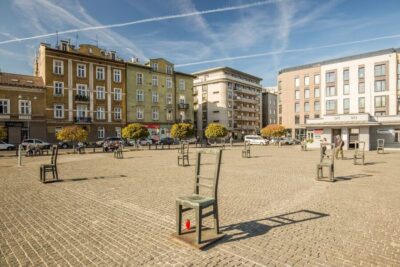

Jewish Quarter and Ghetto Electric Golf Cart Tour
Read our review →
Where else this one turns up