
Reviewed · GDANSK TOURS
Gdansk, Gdynia, and Sopot: 8-Hour Private Sightseeing Tour
Gdansk’s grand waterfront streets, Oliwa’s organ music, Gdynia’s old sailing ship, and Sopot’s long wooden pier make this a full but rewarding introduction to Poland’s Tricity. You move from royal-looking architecture to church music, maritime history, and a Baltic resort in one day.
I especially like the private format, which lets you ask for more time in Gdansk or slow down if the schedule allows. The amber demonstration also gives the old city a hands-on touch, while guides such as Piotr and Marek Barski have been praised for clear explanations and friendly service.
The main caution is pace. Three cities and several major sights in eight hours leave little room for lingering, and one guest found the walking speed too quick. Entrance fees for the Oliwa concert and Dar Pomorza are also extra.
Key points to know before booking
- Hear Oliwa Cathedral’s famous organ: The 16th-century Cistercian church combines Baroque, Rococo, and Renaissance decoration with a memorable recital.
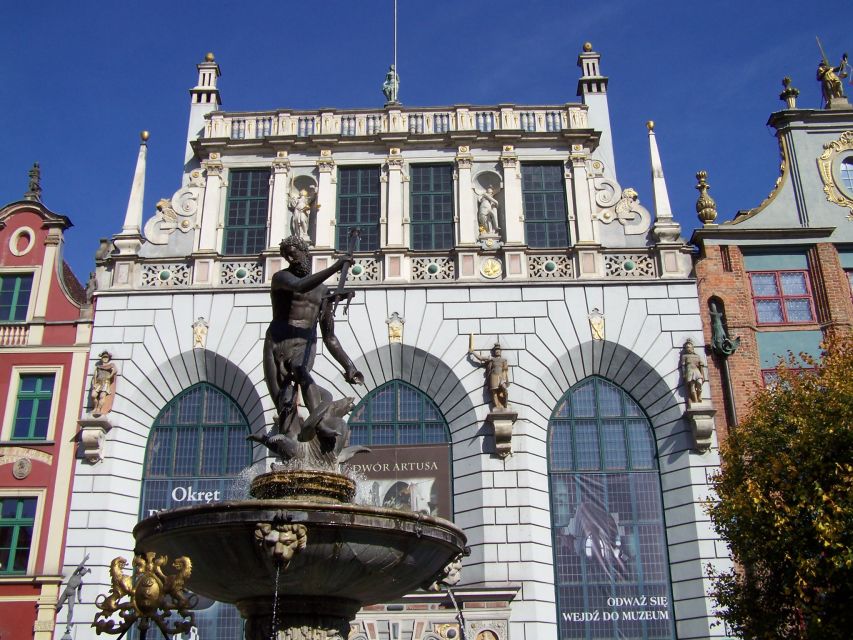
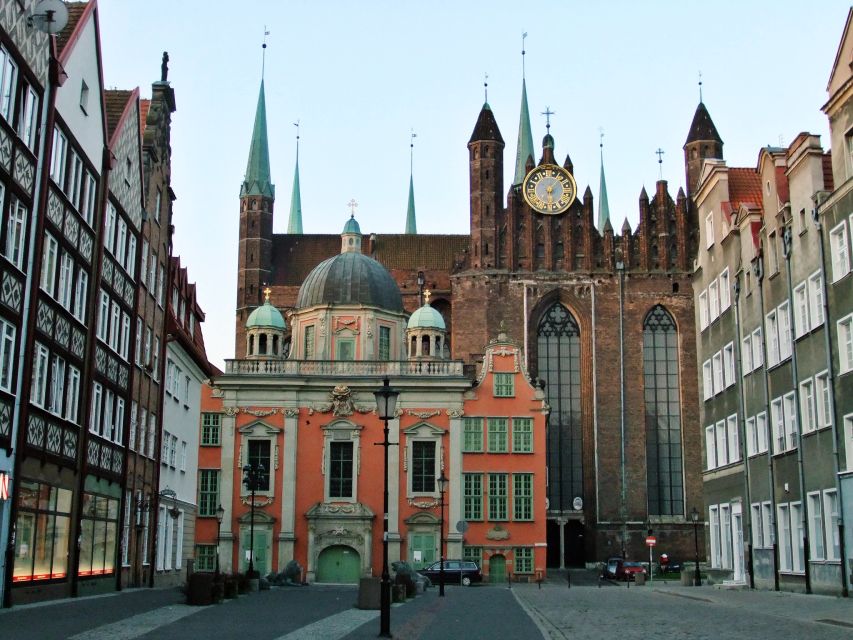
- Follow Gdansk’s ceremonial street: Długa Street runs from the Golden Gate past the Town Hall, Neptune Fountain, Arthur’s Court, and Green Gate.
- See amber being polished: A short talk and demonstration explain one of the Baltic region’s best-known crafts.
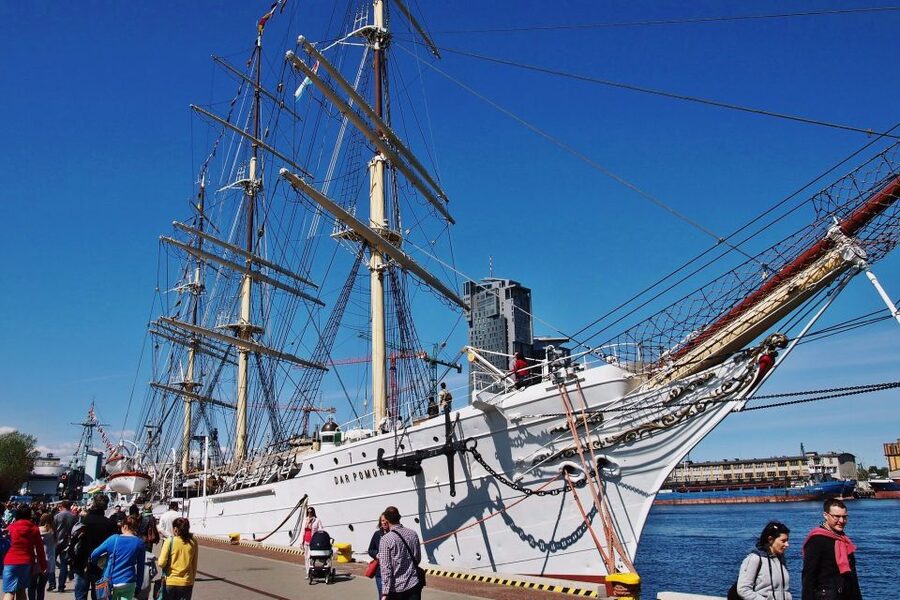
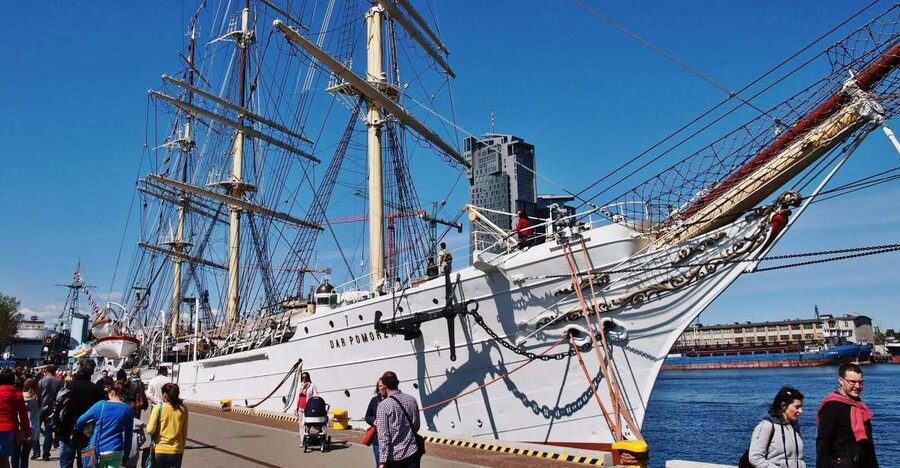
- Board a 1909 sailing frigate: At Gdynia Harbor, Dar Pomorza lets you see the training ship’s decks, maps, and student quarters.
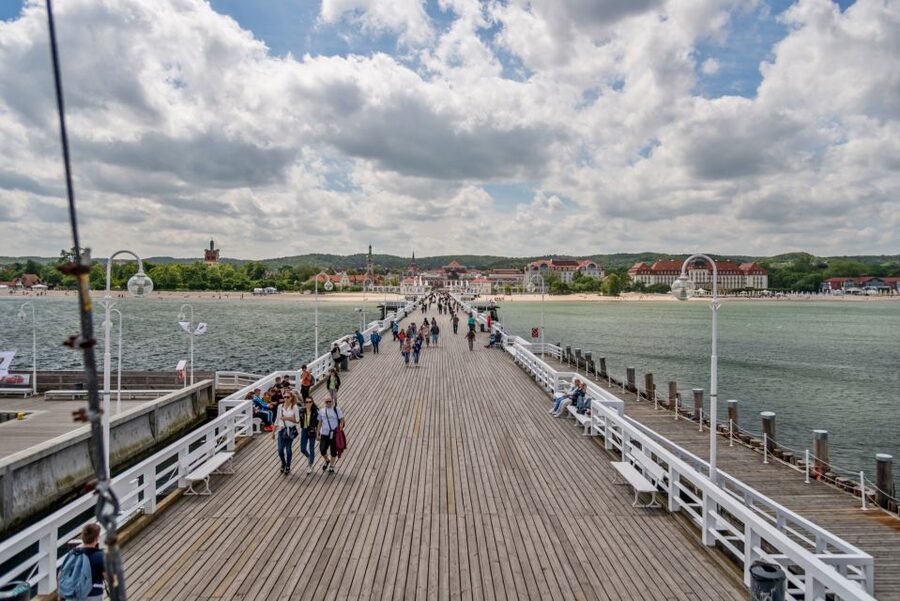
- Walk 500 meters into the bay: Sopot’s wooden pier offers open-water views and a pleasant finish to the day.
- Use the private guide to set priorities: The tour covers a lot, so tell your guide early if Gdansk, maritime history, music, or the seaside matters most to you.
Why this Tricity tour makes sense
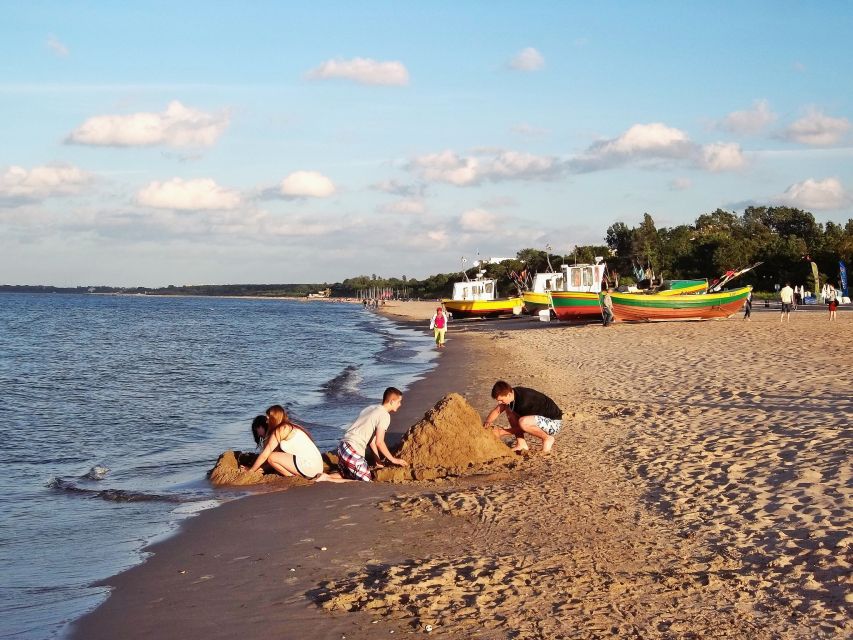
Gdansk, Gdynia, and Sopot sit close together along Gdansk Bay, but they feel like three different places. Gdansk gives you historic streets and monumental churches. Gdynia looks to the sea and Poland’s modern maritime identity. Sopot is a resort town built around the shore, promenade, and pier.
Seeing all three independently can take careful planning. This eight-hour private tour handles the transportation and gives you one guide for the day. That matters most if you have limited time in the area or want an introduction before exploring on your own.
The private setup is the strongest reason to choose this outing over a large group excursion. You can ask questions, request context, and explain what interests you. Still, private does not mean slow. The route has several fixed stops, and the day is designed to show you the main sights rather than give you long free periods.
You are collected at your hotel lobby, where the guide waits with a sign bearing your name. Transportation and guiding are included in the $70 per person price. The two main admission costs, the Oliwa Cathedral concert and Dar Pomorza, are not included, so budget for those separately.
A few more Gdansk half days to consider
- Gdansk: City Cruise on Historical Polish Boat
★ 4.8 · 2,913 reviews - Gdańsk: Sunset Cruise on a Historic Polish Boat
★ 4.9 · 977 reviews - Gdańsk City Sights & History Guided Walking Tour in English
★ 4.8 · 876 reviews
Gdansk’s Długa Street and the old city route
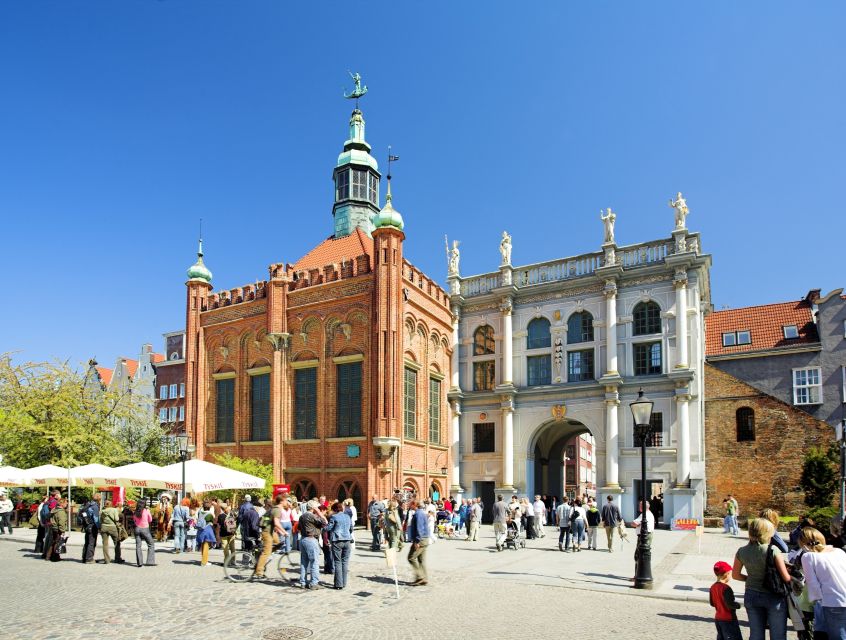
The day begins in Gdansk’s historic center, where Długa Street provides the clearest introduction to the city. The route starts at the Golden Gate and passes a handsome run of Renaissance buildings before reaching the Town Hall, Neptune Fountain, Arthur’s Court, and Green Gate beside the Motława River.
This is a place where your guide adds real value. The façades are easy to admire, but the street also tells you how Gdansk presented its wealth and civic pride. Look upward as you walk, since the buildings are the main attraction here, not just the street-level shops and cafés.
The Neptune Fountain is one of the city’s familiar symbols, while Arthur’s Court gives the route a grand civic setting. The Green Gate brings you toward the river and the city’s waterfront character. You get a strong visual sequence without having to navigate the streets yourself.
The schedule also includes the Museum of Arthur’s Court and its Amber Chamber. Since admission arrangements can affect how much time you spend inside, ask your guide how the visit fits into the day. The supplied plan specifically includes an amber polishing demonstration and a short lecture, making this more than a quick look at souvenir displays.
Amber craft, explained instead of merely displayed
Amber is closely tied to the Baltic coast and to Gdansk’s identity as a place of trade and craft. The polishing demonstration helps you understand how a rough piece becomes a finished object, while the short lecture gives you basic context before you see amber for sale around town.
I like this part because it gives the old city a practical detail. You are not only looking at grand architecture. You also see a local material being worked by hand and learn why it appears so often in Gdansk’s shops and displays.
Keep your expectations in check. This is a short demonstration and lecture, not a long craft workshop where you make your own piece. If you want to shop for amber afterward, ask your guide for suggestions and allow extra time, since the main itinerary already moves at a steady pace.
St Mary’s Church and the Old Crane
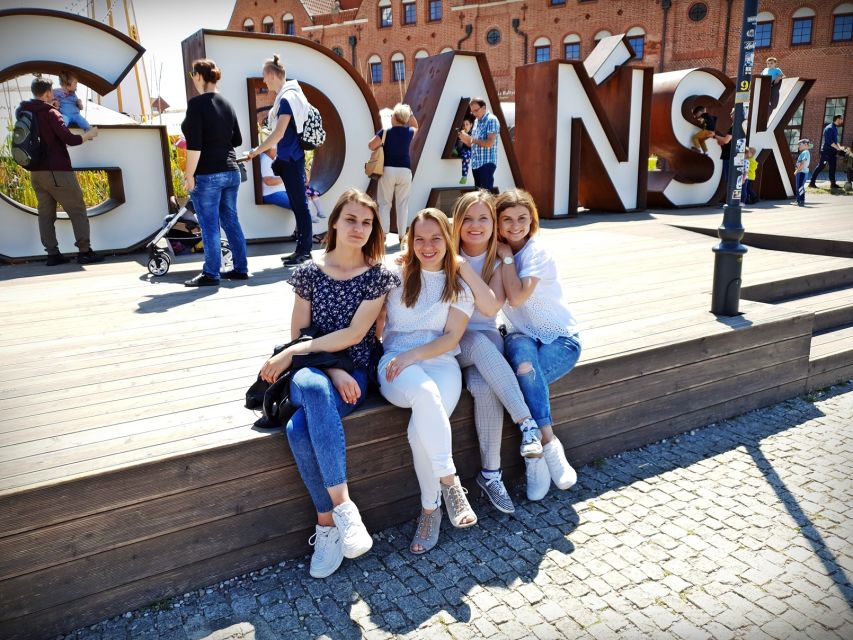
The route continues to two of Gdansk’s most recognizable landmarks. St Mary’s Church is described as Europe’s largest Gothic brick church, and its scale is striking even before you consider the long building tradition behind it.
Brick gives the church a different character from the stone cathedrals you may know elsewhere in Europe. Inside, the sense of size is the main point, so take a moment to look across the broad interior rather than rushing straight through.
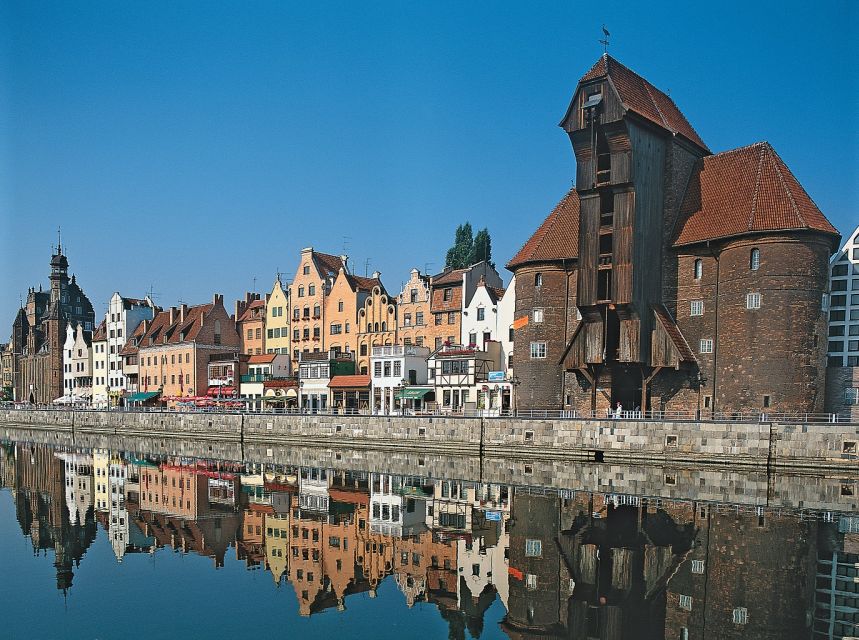
The Old Crane is another city symbol, this time tied to the Motława waterfront. Its historic lifting mechanism recalls the working port that helped shape Gdansk. Together, the church and crane give you two sides of the city: religious power and commercial trade.
This section can feel quick because Gdansk contains more sights than one day can properly cover. If you want photographs, tell the guide before the walk begins. That small request may help prevent the group from moving on just as you find the best angle.
A different kind of day in Gdansk:
- Gdansk: Firearm Shooting Experience with Instructor
★ 4.8 · 866 reviews - Gdansk: Guided Round-Trip Cruise to Westerplatte
★ 4.3 · 865 reviews - Gdańsk: Sightseeing EcoCruise around the Old Town of Gdansk
★ 4.6 · 719 reviews - Main Town Gdańsk Walking Tour
★ 5.0 · 644 reviews
Oliwa Cathedral and the organ recital

A visit to Oliwa changes the mood of the day. The 16th-century Gdansk Oliwa Cathedral is a three-nave basilica and a Cistercian church known for its organ. Its decoration brings together Baroque, Rococo, and Renaissance elements, so the building rewards both the eye and the ear.
The organ recital is the special reason to include this stop. Rather than treating the cathedral as another photo opportunity, you sit inside and hear the building used for music. The concert is described as unforgettable, but your experience will naturally depend on the performance and the timing of the visit.
The cathedral was consecrated in 1594, a detail that helps put the building’s age into perspective. You can look for the mixture of decorative styles as you move through the basilica, although the music may remain the strongest memory.
Admission to Oliwa Cathedral and the concert is not included in the tour price. Confirm the current fee and how tickets are handled when you book. This extra cost is worth factoring into the total, especially if you are comparing this tour with options that appear cheaper at first glance.
The cathedral stop is also one of the day’s quieter moments. After Gdansk’s busy streets and waterfront landmarks, the recital gives you time to sit down and listen. That change of pace is welcome, though it also makes the overall schedule feel full because there is still a harbor and seaside resort ahead.
Gdynia Harbor and Dar Pomorza
At Gdynia Harbor, the focus shifts from old city streets to Poland’s maritime story. Dar Pomorza is a tall sailing frigate dating from 1909. It later served as a sail training ship, and in 1980 it won the Cutty Sark Trophy.
The ship is preserved as a museum, and you can walk its decks rather than viewing it only from the quay. The Twin Deck is particularly useful for understanding life aboard ship, since students lived there during training cruises.
Inside, photographs and maps explain the vessel’s working life. Objects from its sailing past help turn the visit into more than a quick inspection of masts and rigging. You get a sense of the ship as a training environment, not just as a handsome old vessel.
The entrance fee to Dar Pomorza is extra. You should also expect steps and shipboard surfaces rather than the flat, easy walking of a city sidewalk, although the supplied information does not specify accessibility arrangements. If maritime history interests you, this is one of the stops where extra time would be useful.
Gdynia may receive less attention than Gdansk, but it gives the day needed variety. The ship provides a direct connection to the sea and to Poland’s sailing tradition. It is also a good counterpoint to the church music in Oliwa: one stop is still and musical, the other is practical, nautical, and full of working detail.
Sopot’s 500-meter wooden pier
The final major stop is Sopot, a spa and seaside resort known for its promenade and wooden pier. Built in 1827, the pier reaches more than 1,600 feet, or about 500 meters, into Gdansk Bay.
The walk is simple but rewarding. As you head out over the water, you get views back toward Sopot’s terracotta-tiled buildings and a wider sense of the bay. The pier is long enough to feel like a real walk, not just a short platform beside the shore.
Sopot is a good finish because it lets you breathe after the tighter sightseeing schedule. The open water and resort setting feel very different from Gdansk’s brick churches and formal streets.
The catch is weather. The supplied details do not promise shelter or special arrangements, so bring clothing suitable for a seaside walk. If the wind is strong or conditions are poor, ask your guide how much time to spend on the pier.
The tour presents Sopot as a place to see, not as a full resort day. You should not expect hours for a beach visit, leisurely shopping, or a long café stop unless your guide can adjust the schedule. The main value is the pier, promenade, and view back toward town.
How fast is the day?
Eight hours sounds generous until you count the stops. The route includes Gdansk’s old city, the amber presentation, St Mary’s Church, the Old Crane, Oliwa Cathedral and recital, Gdynia Harbor, Dar Pomorza, and Sopot.
That is a lot of ground. One guide, Marek Barski, was praised for giving a very detailed and interesting tour while also adapting to personal wishes. Another guide, Piotr, was praised for driving well and showing all three cities. Those details point to the value of a private guide, but they also show why you should speak up about your priorities.
A previous participant found the guide professional and strong on historical information, but too quick for one companion’s walking pace. Take that seriously if anyone in your group walks slowly. Tell the guide at pickup, not halfway through the day, and ask which stops are essential if time becomes tight.
The tour is best for people who prefer a broad first look. You will see more of the region than you could comfortably cover on foot from Gdansk alone, then receive suggestions about what to explore independently afterward.
Languages, price, and practical value
The tour is offered in English, Spanish, German, Polish, Russian, French, Italian, and Portuguese. Select your language when booking rather than assuming it can be changed later. Clear communication matters on a day with many transitions and a lot of historical explanation.
At $70 per person, the price is attractive for a private eight-hour outing, especially when transportation and a guide are included. The value is strongest for couples, families, or small groups who would otherwise need to arrange transport between three cities and plan the route themselves.
The total cost is not just $70, since the Oliwa concert and Dar Pomorza admissions are separate. Ask for the current entrance prices before committing, then compare the complete amount with other private options.
Free cancellation is available up to 24 hours before the tour for a full refund, and you can reserve now and pay later. Those terms help if your Gdansk schedule may change, but they do not remove the need to check availability and start times.
Who should book this day?
I would choose this tour if you have one day for the Tricity region and want a guide to connect the places. It works especially well for first-time visitors, cruise or short-stay guests, and anyone who values private transport over figuring out regional connections.
It also suits mixed-interest groups. One person can enjoy Gdansk’s architecture, another can focus on amber, another can look forward to the sailing ship, and everyone gets the seaside finish in Sopot.
I would hesitate if you want a relaxed day with long meals, extended museum visits, or plenty of unplanned time. The route is full, the walking pace may be brisk, and two important admissions are extra.
Should you book the Gdansk Tricity tour?
Book it if your main goal is to understand how Gdansk, Gdynia, and Sopot differ in a single day. The combination is unusually varied: a grand urban walk, a working craft demonstration, organ music in Oliwa, a preserved frigate, and a long pier over Gdansk Bay.
Before booking, make three checks. Confirm your preferred language, ask about the current extra entrance fees, and explain any walking concerns or must-see priorities to the guide at the start.
If you want breadth, personal attention, and efficient transport, this is a strong-value choice at $70 per person. If you want to linger, choose one city and explore it slowly instead.
FAQ
How long does the tour last?
The tour lasts eight hours.
Which cities does the tour visit?
It visits Gdansk, Gdynia, and Sopot in Poland’s Tricity region.
Is hotel pickup included?
Yes. The guide waits in your hotel lobby with a sign showing your name, and transportation is included.
Which languages are available?
The tour is offered in Spanish, English, German, Polish, Russian, French, Italian, and Portuguese. Select your required language when booking.
Are the Oliwa Cathedral concert and Dar Pomorza admission included?
No. Entrance to Oliwa Cathedral and the concert, as well as admission to Dar Pomorza, are not included.
Is this a private tour?
Yes. The activity is for a private group.
Can I cancel the tour for a refund?
Yes. You can cancel up to 24 hours in advance for a full refund. You can also reserve now and pay later.
Recently added in Gdansk
- Szymbark: Kashubian Switzerland 5-Hour Private Tour★ 3.7 · 3 reviews
- Segway Tour Gdańsk: Shipyard Tour – 1,5-Hour of Magic!★ 5.0 · 3 reviews
- Stutthof Concentration Camp and Museum of WWII: Private Tour★ 4.7 · 3 reviews
- Sopot Sunset Cruise with Welcome Drink★ 3.5 · 3 reviews
- Gdansk: Basic Bike Tour★ 4.3 · 3 reviews
- Gdansk: Bubble Football with Hotel Transfers★ 5.0 · 3 reviews
- Artus Court and Gdansk Old Town Private Tour with Tickets★ 4.7 · 3 reviews
- Gdansk: Oliwa Zoo with Tickets and Roundtrip Transportation★ 5.0 · 3 reviews
Gdansk Tours, compared.

Gdańsk City Sights & History Guided Walking Tour in English
Read our review →
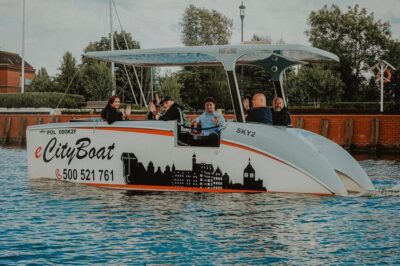
Sightseeing EcoCruise around the Old Town of Gdansk
Read our review →

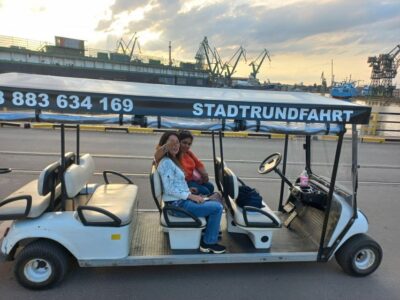
City Sightseeing Tour by Golf Cart/Buggy Guided Tour
Read our review →Where else this one turns up