
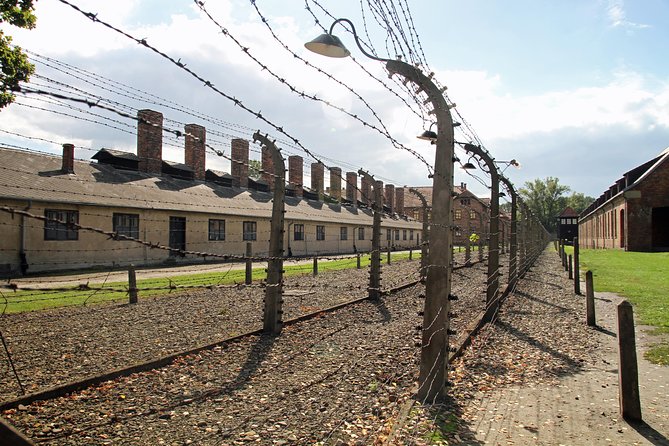
Reviewed · AUSCHWITZ-BIRKENAU MEMORIAL TOURS
Wheelchair accessible PRIVATE transfer to Auschwitz – Birkenau
A wheelchair-accessible private transfer to Auschwitz-Birkenau solves two hard parts of this visit at once: getting there comfortably and managing the long museum day without a shared group. Pickup begins at your Krakow accommodation, then an English-speaking driver takes you the roughly 1.5 hours to Oświęcim.
I like the door-to-door service, especially for anyone using a wheelchair or avoiding crowded public transport. I also like the private setup: one wheelchair and four standard seats, with the driver able to adjust the journey to your needs. The main drawback is that the museum itself is not fully accessible, and entrance tickets are not included.
Key points to know before booking
- Hotel pickup starts at least two hours before your museum entry time, so you do not need to find a meeting place.
- One electric or manual wheelchair fits in the minivan, along with four standard passenger seats.
- Auschwitz I takes about two hours, followed by about one hour at Birkenau.
- Museum admission is separate, and you need to buy tickets in advance because visitor numbers are limited.
- Driver Piotr has shown useful flexibility, helping one party after the museum moved its tour to an earlier time.
- The visit is private, but museum access rules still apply, including security checks and bag limits.
Why this private Krakow transfer makes sense
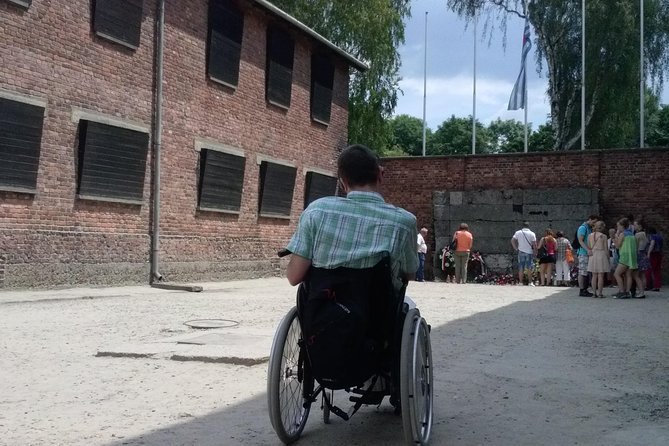
Auschwitz-Birkenau is outside Krakow, and the journey takes time even before you enter the museum. For a wheelchair user, the question is not simply how to reach the site. You also need to think about boarding, storage space, transfers between the two parts of the museum, and what happens if the schedule changes.
This service keeps the transport simple. You give the provider your museum entrance time, and pickup is arranged from your accommodation in Krakow at least two hours before that appointment. You are not asked to reach a city meeting point, find a large tour bus, or coordinate a return journey on your own.
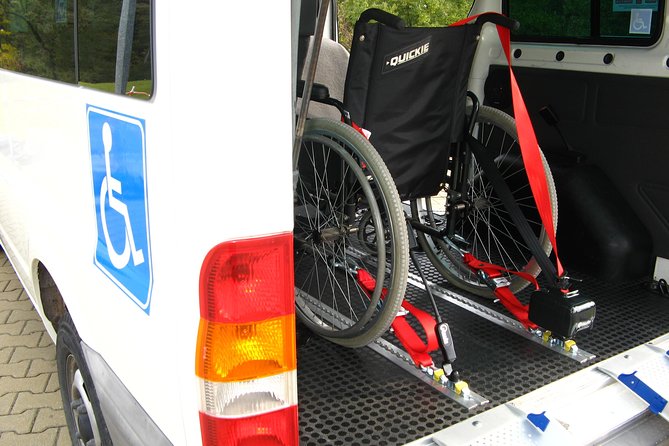
The vehicle has room for one wheelchair and four standard seats. Both manual and electric wheelchairs are accepted. That makes this a sensible option for a small family or group with one wheelchair user, though the limit matters. If more than one person needs wheelchair space, this arrangement will not be enough.
You travel with only your own party. That privacy is useful here because the day can be physically and emotionally demanding. You can discuss practical needs directly with the English-speaking driver rather than trying to keep up with a larger group.
More Private Drivers in Krakow
- Krakow to Auschwitz Birkenau Guided Tour with Transfer and Ticket
★ 5.0 · 8,197 reviews - From Krakow: Auschwitz Birkenau Tour with Transfer
★ 4.0 · 6,134 reviews - Krakow: Auschwitz-Birkenau Guided Tour with Ticket and Transfer
★ 4.5 · 3,784 reviews
Leaving Krakow with a two-hour buffer
The pickup time is based on your museum entry time, not simply on a standard departure schedule. The stated plan is to collect you a minimum of two hours before entering the museum. The drive to Oświęcim takes about 1.5 hours, leaving a stated cushion for arrival and getting to the entrance.
That extra time is important. Museum entry is tied to a particular time, and missing it could disrupt the whole day. I would treat the two-hour buffer as a useful minimum rather than a reason to ask for a later pickup.
At booking, provide the correct museum time and your Krakow accommodation details. The pickup covers accommodations in Krakow, within Lesser Poland Province as specified for the service. Since the driver is also handling the return, you do not need to arrange a second vehicle at the end of the visit.
The drive itself is transport, not a guided sightseeing route. The driver’s role is to get you there, help with practical arrangements, and support your group within the museum’s rules. If you want a full historical tour with extended commentary, confirm that separately before booking. This service is primarily a private accessible transfer.
Arriving at Auschwitz I and getting to the entrance
After about 1.5 hours on the road, the driver brings you to the Auschwitz-Birkenau site in Oświęcim. You are taken to the main museum entrance rather than being left to work out the final approach yourself.
That small detail can matter. The transfer is designed around access needs, so the driver can assist with the practical movement from the minivan to the entrance. Still, the driver must follow the museum’s regulations. Personal help is available, but it does not override site rules or guarantee access to every part of the grounds.
You should buy your museum tickets in advance. Admission is not included in the transfer price, and the number of people allowed into the museum is limited. The transport booking alone does not secure your entry time.
Bring a photo document showing your name and surname. Security checks apply to everyone entering the museum grounds, and electronic devices are used to detect dangerous materials and objects. Anyone who refuses the check will not be admitted.
Pay close attention to the bag rule. The maximum permitted size is 30 by 20 by 10 centimeters. A large backpack will not meet that limit, so pack lightly and measure your bag before leaving Krakow. Food and drinks are also not included in the service, so plan around the museum’s rules rather than assuming you can bring a full day bag.
About two hours at Auschwitz I
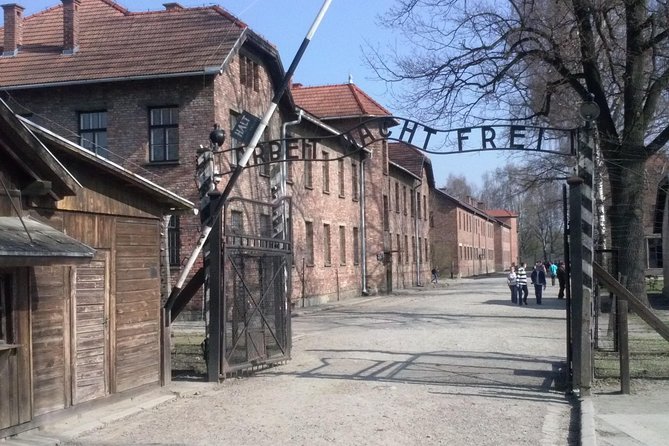
The first part of the visit lasts approximately two hours at Auschwitz I. The transport provider does not set the museum’s visit rules, route, or accessibility arrangements. Your driver brings you to the site and adapts to your individual needs as far as the museum allows.
You will be equipped with a headphone system to make the visit more convenient. This is a useful feature for someone who needs to remain with a wheelchair or who may find it difficult to stay close to a group in every area.
The key point is to keep expectations realistic. The museum is not fully accessible, so wheelchair users should be prepared for possible limits in movement around the site. The service is wheelchair-accessible transport, not a promise that every museum surface, entrance, or section will be easy to use.
That distinction is worth sorting out before you pay. The vehicle can accommodate your wheelchair, but the museum controls access inside the grounds. If your mobility needs are complex, contact the provider before booking and describe your equipment clearly. The available information confirms support for one electric or manual wheelchair, but it does not give dimensions, ramp specifications, or details for every type of chair.
Other guided visits to the Auschwitz-Birkenau Memorial:
- From Krakow: Auschwitz-Birkenau Guided Tour & Hotel Pickup
★ 4.5 · 33,358 reviews - From Krakow: Auschwitz-Birkenau Guided Tour & Hotel Pickup
★ 4.5 · 29,340 reviews - Krakow: Auschwitz Guided Tour with Optional Hotel Pickup
★ 4.5 · 15,280 reviews - Krakow: Auschwitz-Birkenau Guided Tour with Pickup & Lunch
★ 4.5 · 9,800 reviews
The transfer to Birkenau
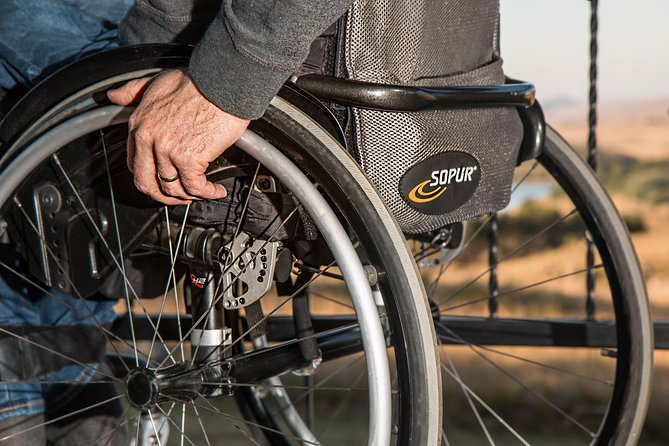
After roughly two hours at Auschwitz I, the same minivan takes you to Birkenau for about one additional hour. Having the same vehicle and driver for this second stage is more convenient than arranging separate transport between the two locations.
The private vehicle also means your group is not waiting for unrelated passengers to finish. That can help you keep the day on schedule, especially when wheelchair boarding and movement take more time than a standard group transfer.
Your driver can adapt to your individual needs, but again, museum regulations remain in force. Birkenau may present different practical conditions from Auschwitz I, and the information provided does not promise full wheelchair access there. Consider the one-hour visit an approximate period, not a guarantee that every section will be reachable.
The order matters for planning your energy. You spend about two hours at Auschwitz I, then one hour at Birkenau, followed by the return journey to Krakow. From pickup to drop-off, the full experience is expected to take eight to nine hours.
The driver’s role and a useful example of flexibility
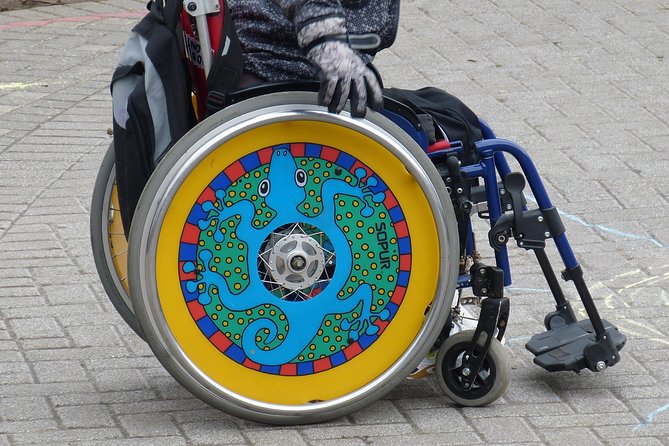
This is not a standard shared shuttle where the driver simply opens the door and points toward the entrance. The service includes an English-speaking driver who provides assistance and handles parking fees.
One particularly useful example involves Piotr, the driver assigned to one booking. The museum tour time changed to an earlier slot that the group could not reach on its original plan. Piotr helped organize a workable solution, explained the situation to the office, and helped the group take part in the remaining tour and see the other part of the visit.
That does not mean every schedule change can be fixed. The cancellation terms do not accept changes made less than 24 hours before the experience, and the museum’s own availability is outside the driver’s control. Still, this example shows why having a private driver can be valuable when the day goes off schedule.
You should contact the provider quickly if your museum time changes. Do not wait until pickup. Give the driver the exact entrance time and confirm the plan before the day of the visit.
What the $295.87 group price really buys
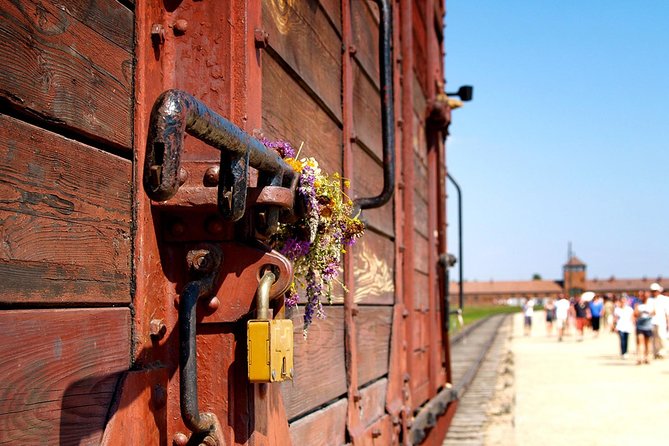
The listed cost is $295.87 per group of up to five people. That is not a per-person museum tour price. It covers private round-trip transport from Krakow, hotel pickup and drop-off, an accessible minivan, parking fees, space for one wheelchair and four seats, and assistance from an English-speaking driver.
For five people, the transport cost works out to about $59 per person before museum admission. For a smaller group, the per-person figure rises, but the value is less about filling every seat and more about solving an access problem with a private vehicle.
You also avoid paying for a separate transfer between Auschwitz I and Birkenau. The same minivan handles that movement as part of the day. Food, drinks, and museum entrance fees are not included, so add those costs to your budget.
I see the price as strongest for a group that needs wheelchair access, hotel pickup, and private timing. If you do not need an accessible vehicle and are happy to share transport, a standard option may cost less. But comparing only the headline price misses the value of having room for an electric wheelchair, a dedicated vehicle, and a driver who can respond to changes.
Accessibility details you should settle first
The vehicle supports manual and electric wheelchairs, but only one wheelchair can be accommodated. Four standard seats are available for companions. This arrangement suits one wheelchair user traveling with up to four other people.
The museum is not fully accessible. That is the most important limitation in the entire booking. The transport can be accessible even when parts of the destination are not, so ask the provider for current practical guidance if you need detailed information about surfaces, entrances, or movement between areas.
The headphone system is supplied to make the museum visit easier. It may help you follow information without needing to stand close to a guide or group, but the available details do not describe the system’s format or language options beyond the driver being English-speaking.
The activity is described as suitable for most people, but it is not recommended for children aged 14 and under. That age guidance is unusually specific, so families should take it seriously when deciding who should join.
A private day, with rules you cannot bend
The privacy here is a real advantage. Only your group participates, and the driver can focus on your departure time, wheelchair needs, and return plan. You also avoid the awkwardness of keeping pace with strangers.
But private transport does not mean private museum access. You still need a valid ticket, a photo document with your name and surname, a small bag, and compliance with security checks. The museum controls visitor numbers and access conditions.
I would think of the service as a carefully arranged transfer around a museum visit, not as a fully customized private tour inside every area. That distinction keeps expectations fair and helps you plan questions before booking.
Cancellation and booking details
Confirmation is sent within 48 hours of booking, subject to availability. Since pickup depends on your museum entrance time, include that time when you book.
You can cancel for a full refund up to 24 hours before the experience start time. Cancellations made less than 24 hours before departure are not refunded, and changes inside that same 24-hour window are not accepted. The cut-off follows local time.
Because museum tickets are separate, you should handle both arrangements early. First secure the museum time, then give the provider the exact details needed to arrange pickup. Visitor numbers are limited, so leaving the museum ticket until the last minute could leave you with transport but no entry.
Who should book this transfer
I would choose this service if one person in your group uses a wheelchair and you want a direct, private trip from Krakow. It also makes sense if four companions need to travel with that person and you want the same vehicle for Auschwitz I, Birkenau, and the return to your accommodation.
It suits you if you value practical help over a large guided group. The door-to-door pickup, parking, private vehicle, and English-speaking driver remove several small problems from a long day.
I would hesitate if you need a fully wheelchair-accessible museum route or detailed confirmation about every part of the site. The information clearly says the museum is not fully accessible, and the transfer provider cannot change that.
I would also think twice if your party includes children aged 14 or younger, since the activity is not recommended for that age group. Finally, remember that this is one wheelchair per vehicle. Two wheelchair users would need a different arrangement.
Should you book it?
Book it if reliable transport is the main challenge and your group fits the vehicle’s limits. The combination of hotel pickup, a private accessible minivan, room for four companions, and the same driver between Auschwitz I and Birkenau gives you a practical way to manage a demanding day from Krakow.
Before committing, secure your museum tickets, check the 30 by 20 by 10 centimeter bag limit, prepare your photo document, and ask specific accessibility questions if the wheelchair user has complex needs. If you can accept that the museum is not fully accessible, this transfer offers a useful and fairly priced way to reach the site without sharing the road or the schedule with strangers.
FAQ
Where does the transfer begin?
Pickup is offered from your accommodation in Krakow, in Lesser Poland Province. You do not need to travel to a separate meeting point.
How long does the experience take?
The full experience lasts approximately eight to nine hours, including pickup, the drive to Oświęcim, the museum visits, and the return to Krakow.
How long is the drive from Krakow to Auschwitz-Birkenau?
The drive to the site takes about 1.5 hours. Pickup is arranged at least two hours before your museum entrance time.
Is the vehicle wheelchair accessible?
Yes. The minivan is wheelchair accessible and accepts both electric and manual wheelchairs.
How many people can ride in the vehicle?
The vehicle has space for one wheelchair and four standard seats, for a maximum group size of five people.
Are museum tickets included?
No. Museum entrance fees are not included. You should buy tickets in advance because the number of visitors is limited.
Does the driver take the group to Birkenau?
Yes. After approximately two hours at Auschwitz I, the same minivan takes the group to Birkenau for about one additional hour.
Is the museum fully accessible?
No. The museum is not fully accessible. The driver can adapt to individual needs, but museum regulations still apply.
What documents and bags are allowed?
You need a document showing your photo, name, and surname. Bags and backpacks must be no larger than 30 by 20 by 10 centimeters, and all visitors are subject to security checks.
Can I cancel the booking for a refund?
Yes. You can cancel at least 24 hours before the experience start time for a full refund. Cancellations or changes made less than 24 hours before the start time are not accepted or refunded.
Recently added in Krakow
- Auschwitz-Birkenau and Krakow Private Car Trip from Katowice★ 4.3 · 3 reviews
- Wawel Castle, Old Town with St. Mary’s Church Guided Tour★ 5.0 · 3 reviews
- Private tour to Zakopane and Thermal Baths from Krakow★ 5.0 · 3 reviews
- Wawel Castle, Cathedral, Rynek Underground Tour with Lunch★ 5.0 · 3 reviews
- From Krakow: Chocholow Thermal Hot Springs (hotel pick up)★ 5.0 · 3 reviews
- Legends of Cracow ROBOTIC SHOW★ 4.0 · 3 reviews
- From Krakow: Zakopane and Thermal Pools Guided Trip★ 5.0 · 3 reviews
- Guided Beer Tour in Krakow★ 4.5 · 3 reviews
Auschwitz-Birkenau Memorial Tours, compared.

Auschwitz-Birkenau Guided Tour & Hotel Pickup
Read our review →Auschwitz Guided Tour with Optional Hotel Pickup
Read our review →
Auschwitz-Birkenau Guided Tour with Pickup & Lunch
Read our review →
Krakow to Auschwitz Birkenau Guided Tour with Transfer and Ticket
Read our review →
Auschwitz Birkenau Small Group Tour with Pickup
Read our review →
Auschwitz Birkenau Guided Tour with Ticket Hotel Pickup Small Van
Read our review →Where else this one turns up