
Reviewed · WALKING TOURS
Private Walking Tour of Old Gdańsk with an architect-guide
Gdańsk is easiest to understand when you see how its canals, gates, churches, merchants’ houses, and defensive walls fit together. This private walk follows that story from the Old Town City Hall and Great Mill to St. Mary’s Church, Mariacka Street, the Long Market, and the old prison gates.
I like the architect’s eye behind the tour, especially when a building’s shape is explained alongside its original purpose. I also like the use of old photographs, which helps you picture the city before the Second World War. The main drawback is that the tour’s length is flexible, from about 90 minutes to four hours, so you should confirm the exact plan and decide in advance which museums you want to enter.
Key points before you book
- A private walk for up to seven people: Your group gets the guide’s attention rather than joining a large public outing.
- An architect-guide named Agnieszka: She explains buildings, city planning, and history with energy, humor, and strong English. Her French is also described as excellent.
- Old photographs add lost detail: Images of the Great Mill area before the Second World War give the walk a useful before-and-after layer.
- Several museums are optional: The Amber Museum, St. Catherine’s tower museum, Artus Court, Main Town Hall, and Uphagen’s House need extra time and, in some cases, separate admission.
- The route covers two parts of Gdańsk: You begin in the Old Town, then pass into the larger Main Town.
- The price works best for a small group: At $264.35 for up to seven people, the per-person cost drops sharply when the group is full.
Why an architect’s tour changes the walk
Gdańsk can look like a pretty collection of restored façades if you only stroll its main streets. The better question is why the city has canals, mills, gates, long commercial streets, huge churches, and grand merchant buildings packed into one compact area.
That is where Agnieszka’s professional background matters. An architect can point out how a building works, not just when it was built. The Great Armoury, for example, is easier to appreciate when you know it was both an impressive Renaissance structure and a place tied to the city’s wealth and military power.
The tour also gives you historical scale. Gdańsk was shaped by the Teutonic Order, Baltic trade, merchants, war, and postwar change. You are not simply moving from one photo stop to another. You are following the growth of a port city through its public buildings and streets.
Agnieszka’s style appears to be lively rather than formal. The available feedback repeatedly highlights her energy, humor, passion, and ability to make complicated subjects clear. One couple spent more than three hours walking with her, which suggests the experience can expand well beyond the shortest advertised version when your group wants more detail.
More Walking Tours in Gdansk
- Gdańsk City Sights & History Guided Walking Tour in English
★ 4.8 · 876 reviews - Main Town Gdańsk Walking Tour
★ 5.0 · 644 reviews - Discover Gdansk Walking Tour
★ 5.0 · 495 reviews
Starting beside the Radunia Canal and Old Town City Hall
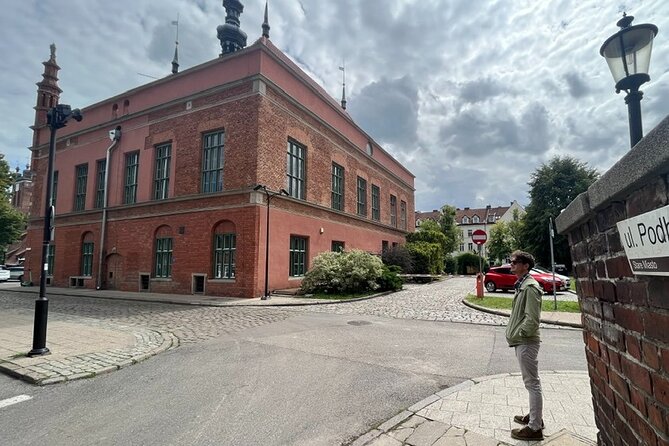
Meet at the Old Town City Hall on Korzenna Street, beside the Radunia Canal. This is a useful starting point because the canal and the city hall introduce two themes that continue through the walk: water-powered industry and civic life.
The guide also introduces the Teutonic Order here. That matters because Gdańsk’s medieval development cannot be separated from the order’s power in the region. Starting with that context gives the later churches, gates, and defensive structures more meaning.
The first stop is planned for about 12 minutes and has no admission charge. That makes it a short orientation rather than a long interior visit. If you arrive early, use the time to get comfortable with the meeting point and prepare for a walking tour that gradually moves from the quieter Old Town toward the grander Main Town.
The Great Mill and Gdańsk before the war
The Great Mill is one of the strongest stops for anyone interested in how a city functioned. Its importance came from work and trade, not just appearance. The building is tied to the Radunia Canal, which helped power milling and supported the practical life of the medieval city.
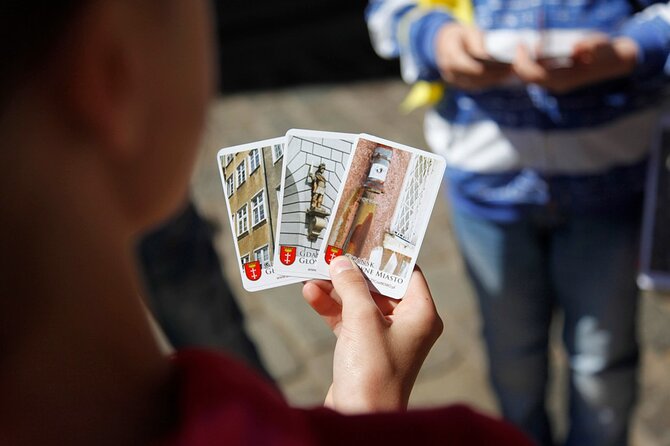
The tour includes old pictures showing what this area looked like before the Second World War. I find that detail especially useful because Gdańsk’s present-day appearance can hide the scale of wartime destruction and rebuilding. A historic image gives you something specific to compare with the street in front of you.
Plan about 10 minutes here during the guided portion. That is enough for the main explanation, but not enough for a careful museum visit. The Amber Museum is in the Great Mill building and is strongly worth considering as an add-on. It is not part of the tour, admission is extra, and the guide can help you decide if it fits before or after your walk.
This is one of the tour’s practical strengths. You can use the architect-guide not only for facts but also for shaping the rest of your Gdańsk visit. If amber is high on your list, visiting the museum before the walk may make sense. If your schedule is tight, keep the exterior explanation and save the interior for another day.
St. Catherine’s tower for strong legs
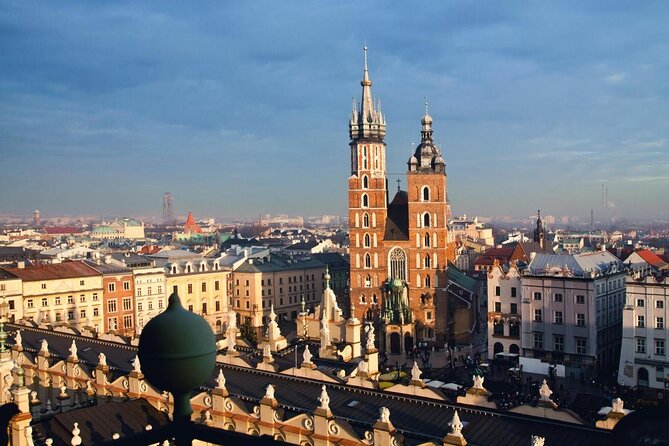
The route information also points to a church with the Museum of Turrets Clocks in its tower. This is an optional stop, not part of the regular tour. The tower requires a serious climb, so it is best suited to people with strong legs and enough time.
The reward, according to the supplied details, includes centuries-old timekeeping devices, Poland’s largest concert carillon, and the world’s first pulsar clock. Those are unusual subjects for a city walk, and the museum could appeal to anyone who likes engineering, clocks, or unusual records.
Do not assume this tower visit is included in your booked walking time. Discuss it with Agnieszka before the walk, since adding it changes the pace and may affect which other interiors you can see.
A different kind of day in Gdansk:
- Gdansk: City Cruise on Historical Polish Boat
★ 4.8 · 2,913 reviews - Gdańsk: Sunset Cruise on a Historic Polish Boat
★ 4.9 · 977 reviews - Gdansk: Firearm Shooting Experience with Instructor
★ 4.8 · 866 reviews - Gdansk: Guided Round-Trip Cruise to Westerplatte
★ 4.3 · 865 reviews
Leaving the Old Town through the medieval defenses
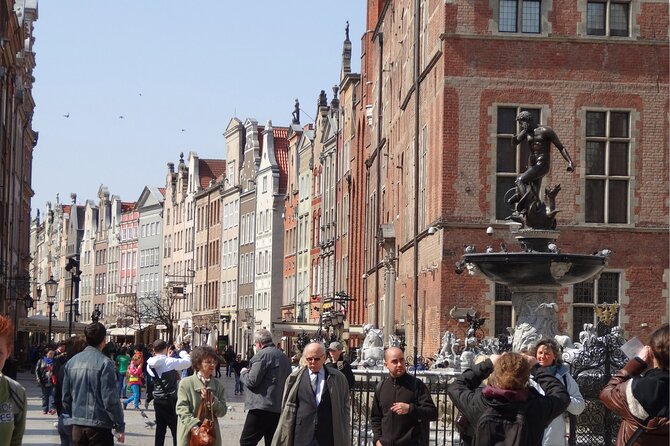
At the highest tower of the medieval fortifications of the Main Town, the walk shifts into a new part of Gdańsk. This transition is easy to miss if you explore alone, since the city’s historic districts flow into one another through gates and streets.
The point is not simply to admire a tower. It marks the move from the Old Town into the Main Town, the larger and more impressive center associated with commerce, public life, and wealthy merchants. That distinction helps explain why Gdańsk can feel like several cities joined together.
The route ends at Katownia, or the Prison Tower, at Targ Węglowy. The final setting is darker than the opening. This was part of the city’s penal complex, and the walk ends where some lives ended. That sober finish gives the tour a useful edge. Gdańsk’s past was not only grand façades, trade, and church towers.
The Great Armoury and the city’s Renaissance wealth
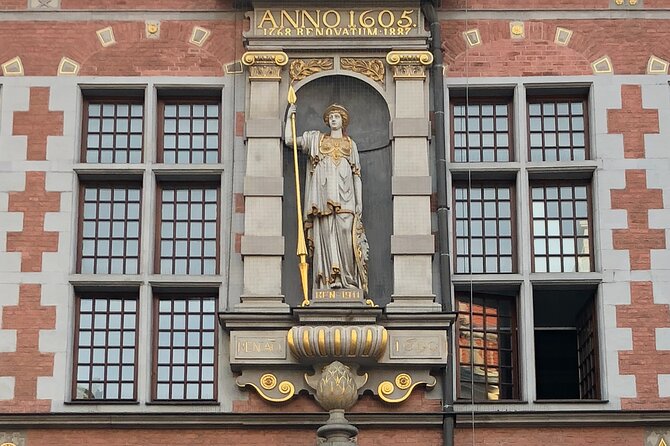
The Great Armoury is a quick stop, planned for about five minutes, but it deserves close attention. Its design is unusually grand for a building with a military function. That contrast is the point: the city wanted its wealth and confidence to show.
Today the building houses the Academy of Fine Art. It may be open during student exhibitions, but you should not count on an interior visit as part of the walk. The exterior is free to see, and the guide can explain why its architecture makes such a strong statement.
I would treat this as a place to listen rather than linger. The building works best when you understand the connection between display, defense, and civic pride. If a student exhibition happens to be open, you may have an extra reason to step inside, but it is not guaranteed.
St. Mary’s Church and the great astronomical clock
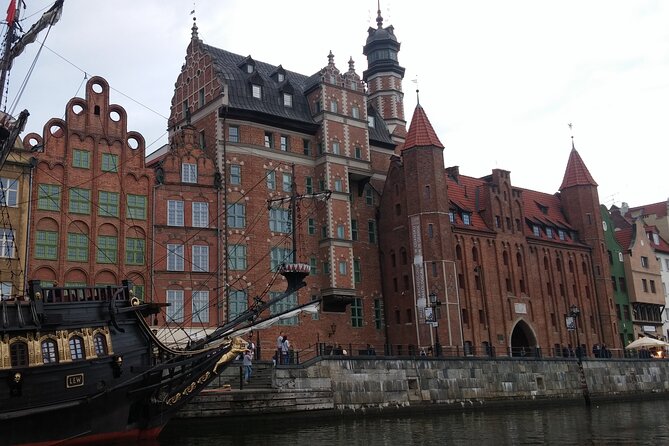
St. Mary’s Church is one of the tour’s major landmarks. It is described as the world’s largest brick church, a claim that immediately conveys its size and ambition. The church is still active, as are almost all the churches along this route, so you need to respect services and religious use.
The planned stop lasts about 15 minutes and admission is free. The main feature highlighted here is the huge astronomical clock from the fifteenth century. It chimes every day at noon, so ask Agnieszka about timing if hearing it matters to you.
Fifteen minutes gives you an introduction, not a full study of the church. If you want quiet time with the interior, prayer, or a longer look at the clock, tell the guide early. The private format makes that sort of adjustment easier, though the total walking time may then move toward the longer end of the range.
Mariacka Street and the old city atmosphere
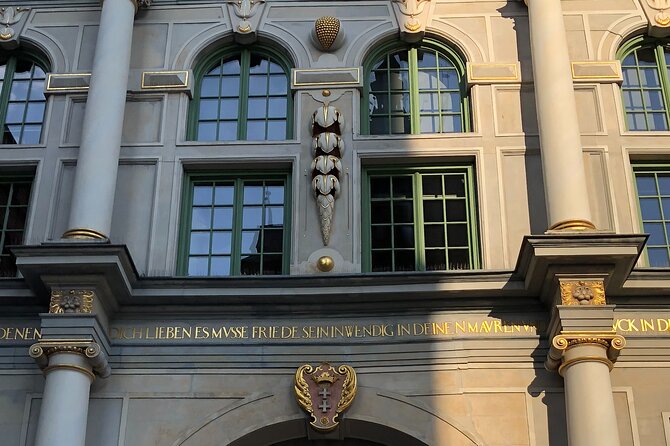
Mariacka Street is planned for about 20 minutes, making it one of the longer pauses on the route. This is where the walk slows down and lets you feel the older street pattern rather than racing between major monuments.
The street is known for its old-time atmosphere, and its position between St. Mary’s Church and the riverfront makes it a natural link in the tour. I like this part because it turns architectural history into a street-level experience. Look at the steps, façades, and narrow space as a whole rather than treating each building as a separate attraction.
The route then passes through St. Mary’s Gate. This five-minute stop leads toward the Long Seashore, where the guide discusses maritime trade. That connection is important. The city’s prosperity came through movement of goods, ships, merchants, and money, and the waterfront helps explain why the Main Town became so grand.
Green Gate, the Long Market, and merchant society
Green Gate marks the entrance to the Great Market, described as the place to be in the old city. From here, the walk enters the area where Gdańsk’s public life and commercial power are most concentrated.
The planned stop is about 10 minutes. You can expect an explanation of how the gate connected the waterfront with the market area, rather than a long interior visit. The setting is useful for understanding the city as a trading center, especially after seeing the canal and mill at the beginning.
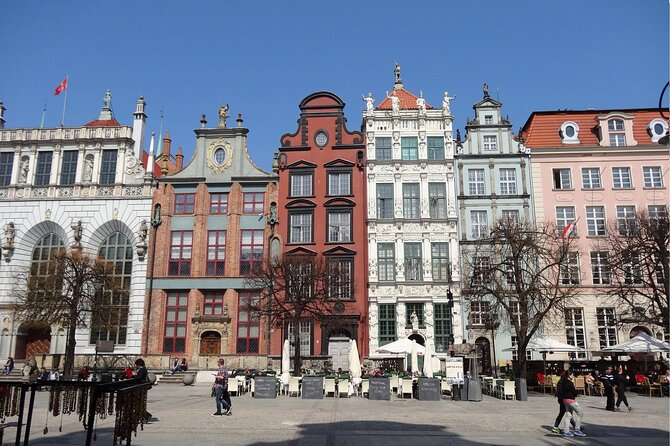
Nearby, Artus Court and the Main Town Hall add another layer. Artus Court was a meeting place for merchants and is now a museum of history and art. The Main Town Hall also has notable interiors. Neither is listed as a standard interior visit, so you should discuss your priorities with the guide before setting off.
This is where a short tour can become a full half-day. If you want Artus Court, the Main Town Hall, or Uphagen’s House, the guide can help you fit them into the route, but you need to allow time beyond the brief exterior stops.
Uphagen’s House and a final look inside the old city
Uphagen’s House, part of the Museum of Gdańsk, offers a quick look into domestic life. Even a brief peek can show you how a prosperous eighteenth-century household was arranged and decorated.
The scheduled stop is only about five minutes, and admission is not included. That makes it a decision point rather than a full museum visit. If period interiors interest you, plan a separate visit or extend the tour.
This is another place where the private format has value. You are not locked into the same pace as a large group. You can ask whether the house is worth your time based on your interests, then make a practical choice instead of trying to see every museum in one afternoon.
The Prison Tower and what the ending adds
The tour ends at the Prison Tower, with about 10 minutes planned there. The location is part of the old gate complex at Targ Węglowy, and it gives the walk a clear endpoint at the edge of the Main Town.
The ending is not cheerful, but it is honest. A city built on trade and wealth also had punishment, confinement, and death. I appreciate that the route does not leave you with only a postcard version of Gdańsk.
You finish at the series of gates leading into one of the Baltic coast’s wealthiest historic cities. From here, you are well placed to continue exploring on your own, though the provided information does not promise transport onward or a return transfer.
Price, timing, and what you actually get
The price is $264.35 per group of up to seven people. For one or two people, that is a significant fee for a walking tour. For six or seven, the cost drops to roughly $38 to $44 per person, before any museum admission, making the private format much easier to justify.
The real value comes from the guide’s attention and flexibility. Agnieszka can explain architecture in detail, show old photographs, answer questions, and help you choose optional museums. You are paying for an informed city walk built around your group, not simply for a list of sights.
The official duration ranges from about 1 hour 30 minutes to four hours. The core stop times add up to roughly 87 minutes, before transitions and conversation. That suggests the shortest version is a brisk overview, while the longer version allows for questions, extra explanation, and possibly optional interiors.
Confirm the length when you book. The experience is offered in English, and the guide’s French has also been praised in the supplied feedback. Pickup is offered, though the stated meeting point is the Old Town City Hall, so clarify exactly where pickup applies to your booking.
Confirmation is sent within 48 hours, subject to availability. The activity is private, service animals are allowed, and it is near public transportation. Most people can take part, but the optional tower climb requires particular physical effort.
Free cancellation is available if you cancel at least 24 hours before the start time. Changes or cancellations inside that window are not accepted for a refund.
Who should book this Gdańsk walk
I would choose this tour if you want Gdańsk explained through architecture, urban planning, and old photographs rather than covered as a quick checklist. It is especially suitable for a small family group, friends, or couples who want to ask questions and set the pace.
It also suits you if Gdańsk is your first stop in the city. The walk connects the Old Town, Main Town, canal, church, market, waterfront, and defensive gates in one clear sequence. That gives you a useful mental map for later museum visits.
You may want something else if you prefer a fixed 90-minute route with every admission included. Several of the most interesting interiors are optional, and the total length depends on what you decide to add. The guide can help with those choices, but you still need to plan your time and budget.
Should you book it?
Book this private walk if your group values a strong guide, thoughtful architectural detail, and the freedom to spend more time on churches, museums, or old photographs. Agnieszka’s humor, French ability, and energetic presentation add useful personal detail, while her architect’s training gives the buildings a clear purpose.
For the best value, bring a group of several people and decide before arrival whether the Amber Museum, the tower clock museum, Artus Court, the Main Town Hall, or Uphagen’s House matters most. If you want a simple orientation, choose the shorter version. If you want Gdańsk’s buildings and past properly explained, reserve closer to the longer end of the time range.
FAQ
Where does the walking tour start?
The tour starts at Ratusz Staromiejski, the Old Town City Hall, at Korzenna 33/35 in Gdańsk.
Where does the tour end?
It ends at Katownia, or the Prison Tower, at Targ Węglowy 26. The finish is at the historic series of gates leading into Gdańsk Main Town.
How long does the tour last?
The experience lasts approximately 1 hour 30 minutes to four hours. The exact length depends on the plan and any optional stops you discuss with the guide.
How many people can join the private tour?
The price covers one private group of up to seven people. Only your group participates.
Is the tour offered in English?
Yes. The tour is offered in English. The supplied details also describe guide Agnieszka as speaking French perfectly, and several visits were conducted in French.
Are museum admissions included?
No. Admission to the Amber Museum, Uphagen’s House, and the Prison Tower is not included. The Great Armoury and St. Mary’s Church are listed with free admission, while some optional interiors may depend on opening conditions.
Can I cancel for a full refund?
Yes, if you cancel at least 24 hours before the experience start time. Cancellations or changes made less than 24 hours before the start are not accepted for a refund.
Recently added in Gdansk
- Szymbark: Kashubian Switzerland 5-Hour Private Tour★ 3.7 · 3 reviews
- Segway Tour Gdańsk: Shipyard Tour – 1,5-Hour of Magic!★ 5.0 · 3 reviews
- Stutthof Concentration Camp and Museum of WWII: Private Tour★ 4.7 · 3 reviews
- Sopot Sunset Cruise with Welcome Drink★ 3.5 · 3 reviews
- Gdansk: Basic Bike Tour★ 4.3 · 3 reviews
- Gdansk: Bubble Football with Hotel Transfers★ 5.0 · 3 reviews
- Artus Court and Gdansk Old Town Private Tour with Tickets★ 4.7 · 3 reviews
- Gdansk: Oliwa Zoo with Tickets and Roundtrip Transportation★ 5.0 · 3 reviews
Walking Tours, compared.




Gdańsk City Sights & History Guided Walking Tour in English
Read our review →


Where else this one turns up