
Reviewed · WAWEL CASTLE TOURS
Krakow: Wawel Castle, St. Mary’s & Rynek Underground Tour
Kraków’s story comes together impressively on this five-and-a-half-hour tour, which links royal apartments, coronation chapels, a famous Gothic altar, and a medieval market hidden below the Main Square. You move from Polish monarchy to university life, trade, religion, and archaeology without having to arrange separate tickets.
I like the detailed explanations from the guide, a point praised in the available feedback, and I like the strong mix of major sights and smaller context, especially Collegium Maius and the old trading world beneath Rynek. The main drawback is the length: 330 minutes is a serious block of your day, and the tour is not suitable for people with disabilities.
Key points at a glance
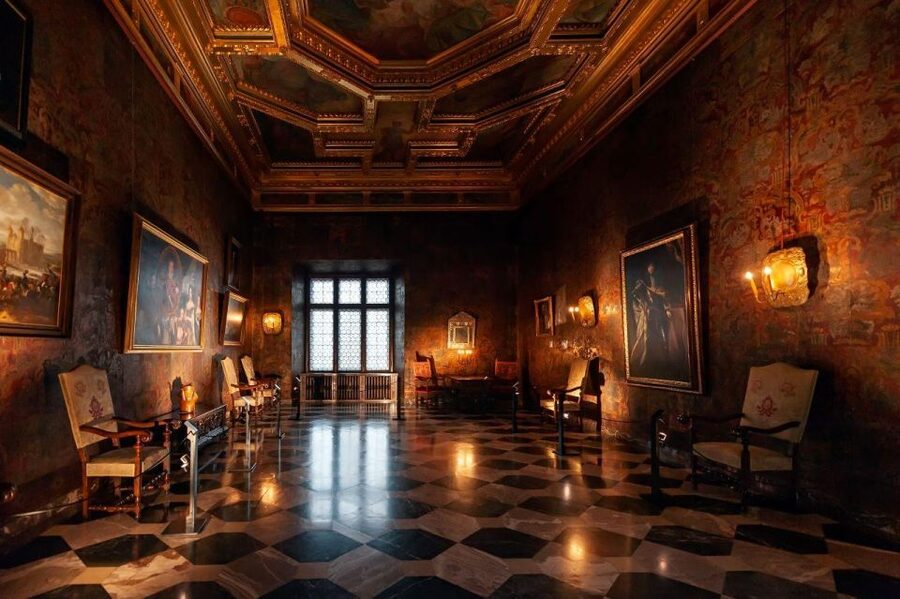
- Wawel’s art collection: See Renaissance and Baroque rooms, Flemish tapestries, Italian works, and an unusual collection of Eastern art, including Europe’s largest set of Ottoman tents.
- The Sigismund Bell: Visit Wawel Cathedral and touch the great bell for good luck, when access is available.
- Veit Stoss’s masterpiece: St. Mary’s Basilica houses one of Europe’s finest Gothic altarpieces.
- Kraków below street level: The Rynek Underground Museum uses archaeological remains and multimedia displays to explain medieval city life.
- One guide, six languages: Tours are offered in English, German, Italian, Polish, Spanish, or French, with groups limited to 30 people.
- Tickets handled for you: Admission includes one permanent Wawel exhibition, Wawel Cathedral, St. Mary’s Basilica, and skip-the-line entry to the underground museum.
Why this Kraków tour works as a history day
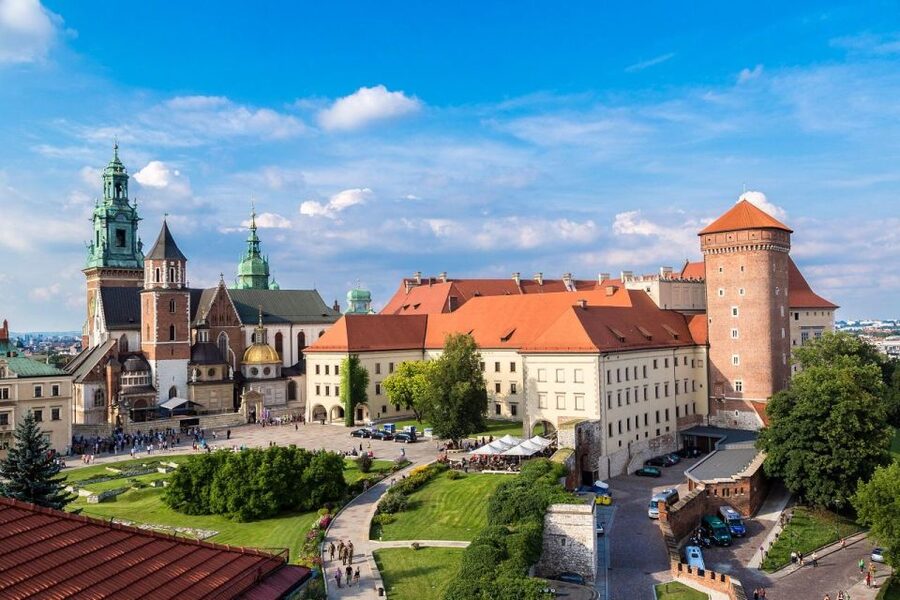
Kraków can feel like several cities pressed into one. Wawel is the royal and religious center. The Old Town square is the commercial heart. The university adds an intellectual thread, while the underground museum reveals the streets and workshops buried beneath modern Kraków.
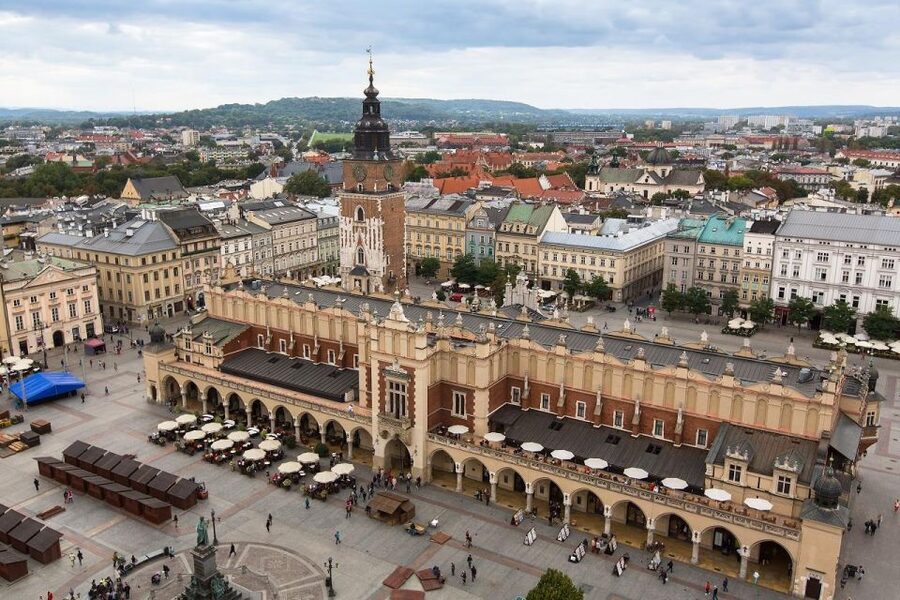
This tour gives you those pieces in a sensible order. You begin beside Wawel Castle, then continue through the Old Town to Collegium Maius and the Main Market Square. St. Mary’s Basilica follows, and the day ends underground at Rynek.
I find that structure useful because each stop answers a different question. Who ruled here? Where did people worship? Where did scholars study? How did merchants make money? What did medieval Kraków look like before later streets and buildings covered it?
The guide matters a great deal. The one available rating that includes written feedback praised the detailed explanation of the tour guide. That is exactly what this itinerary needs. Without clear storytelling, a castle room is just a decorated room, a bell is just a bell, and an archaeological display can become a blur of old stones.
The group can include up to 30 people. That is not a tiny private walk, so you should expect a shared pace and a guide speaking to a sizable group. Still, having the main admissions organized is useful on a packed sightseeing day.
More Wawel Castle visits:
- Krakow: Wawel Castle & Cathedral Guided Tour
★ 4.7 · 2,111 reviews - Old Town Krakow & Wawel Castle Walking Tour
★ 5.0 · 1,508 reviews - Krakow: Wawel Royal Hill with Optional Castle and Cathedral
★ 4.2 · 1,220 reviews
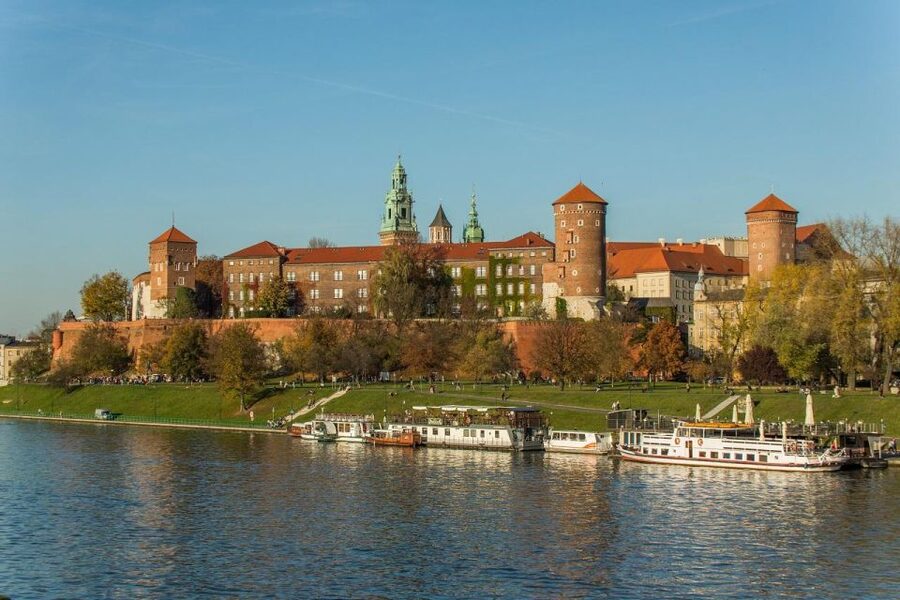
Wawel Castle and the rooms of Polish power
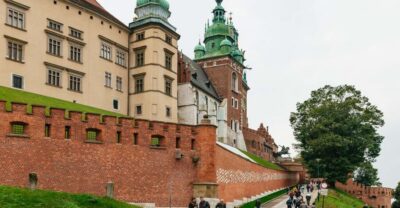
Your first major stop is Wawel Castle, the former seat of Polish monarchs. The focus is not only on the building itself, but on the objects and rooms that show how royal life worked.
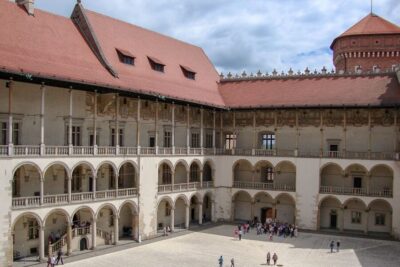
The castle interiors include Renaissance and Baroque decoration, Flemish tapestries, and Italian artworks. These details help you read the rooms as political spaces. A royal residence was designed to impress visiting diplomats, signal wealth, and reinforce the authority of the crown.
The Eastern art collection gives Wawel a less predictable angle. It includes the largest set of Ottoman tents in Europe, an unusual collection that connects Kraków to wider trade and diplomatic networks. This is one of the most distinctive parts of the castle visit, especially if you have already seen plenty of European portraits and palace furniture.
Your ticket covers one permanent Wawel exhibition. The available choice may be the State Rooms, Royal Private Apartments, or Crown Treasury, depending on availability. That qualification matters. You should not assume you will see all three, and the exact exhibition can affect the feel of this part of the tour.
The State Rooms should appeal to you if you want formal spaces and royal ceremony. The Royal Private Apartments offer a more personal view of palace life. The Crown Treasury focuses on objects connected with royal status and power. Whichever exhibition is assigned, your guide provides the larger setting that makes the visit more useful than a quick walk through decorated rooms.
The tour does not promise every Wawel interior. That is the tradeoff for a fixed group visit with one included exhibition. If you want to study every collection at your own pace, you will need additional time outside this experience.
Wawel Cathedral, royal tombs, and the Sigismund Bell
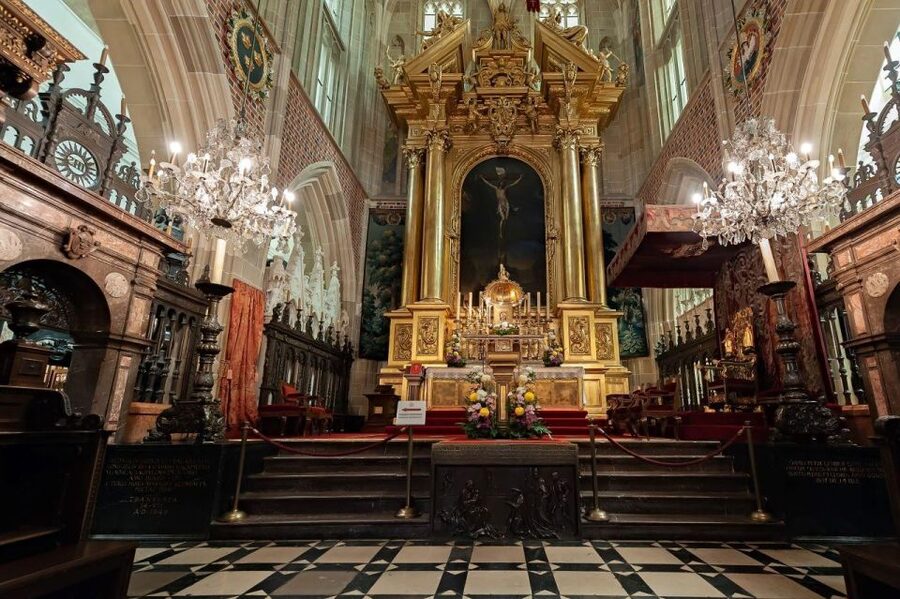
Wawel Cathedral adds a solemn layer to the castle. Polish kings were crowned here, and the building remains tied to royal ceremony and national memory.
Inside, you see richly decorated chapels and the crypts where Polish kings, queens, poets, and national heroes are buried. This part of the tour moves beyond palace grandeur. The cathedral shows how religion, monarchy, and Polish identity have been connected over centuries.
The Sigismund Bell is one of the memorable details. You are invited to touch the mighty bell for good luck, provided access to the tower is available. It is a small physical moment, but it gives the visit a human touch. You are not only looking at a famous object behind a barrier. You are taking part in a local custom linked to one of Wawel’s best-known symbols.
Access can change without notice because Wawel Cathedral is an active place of worship. Religious or state events may restrict entry to the cathedral, royal tombs, or bell tower. In that case, the operator replaces the stop with another site inside the castle complex.
That policy is important to understand before booking. The cathedral is not simply a museum that closes only according to a normal timetable. Ceremony comes first. The tour gives you the cathedral and related access when conditions allow, but no organized visit can guarantee every room on every day.
Dress modestly here. Shorts and sleeveless tops are not allowed, and both men and women must cover their knees and shoulders. This rule also applies at selected museums and places of worship along the route, so dressing appropriately saves you trouble.
Collegium Maius and the scholars of Kraków
After Wawel, the route continues through Kraków’s Old Town to Collegium Maius, the oldest building of the Jagiellonian University. Its quiet courtyard offers a change of pace after the castle and cathedral.
The university gives you a different way to understand Kraków. The city was not only a royal residence and a religious center. It was also a place where scholars shaped European learning.
Your guide tells stories about the people connected with the university, including Nicolaus Copernicus. The stop is brief compared with the major museums, but it adds useful context. A city’s importance is measured not only by its rulers and monuments. It also grows through teaching, research, and the exchange of ideas.
I like this pause because it prevents the Old Town from becoming a procession of famous façades. You get a sense of the people who studied and worked here, and you see how the university fits into the city’s older core.
The courtyard is described as quiet, which makes it a good place for explanation. There is no separate food stop built into the experience, and meals and drinks are not included. If you need a snack, plan it before or after the tour rather than expecting a scheduled break.
More Rynek Underground visits:
- Krakow: Rynek Underground Museum Guided Tour
★ 4.6 · 1,122 reviews - Krakow: Guided Tour of Rynek Underground
★ 4.6 · 113 reviews - Krakow: Rynek Underground Museum Skip-the-line Guided Tour
★ 4.5 · 101 reviews - Krakow: Rynek Underground Guided Tour with Skip-the-Line
★ 4.4 · 55 reviews
The Main Market Square and the Cloth Hall
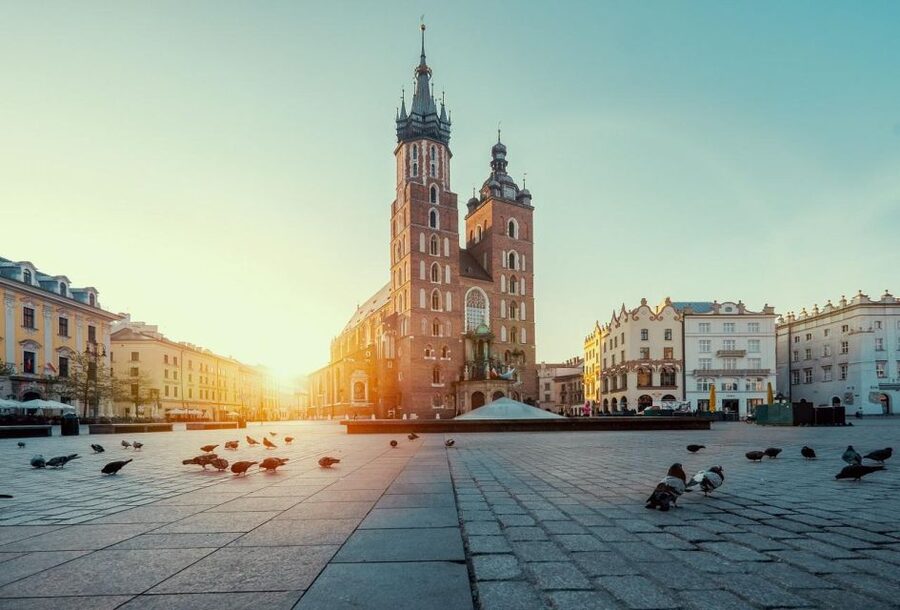
The route then reaches Kraków’s Main Market Square, one of Europe’s largest medieval squares. Its size makes sense once you learn what happened here. This was not just an open civic space. It was a major center of trade.
The Cloth Hall sits at the center of that story. It once connected Kraków’s merchants with markets across the continent. Your guide explains how international trade helped shape the city and why the hall became such an important feature of the square.
This is a useful place to stop and look around before entering the basilica. You can see the square as a working commercial center rather than only a photogenic public space.
The tour does not list free time for shopping in the Cloth Hall. The emphasis is on its history and role in trade. If you want to browse at leisure, you may need to return after the tour, assuming your schedule allows.
The square also helps you understand the final stop. Modern Kraków operates at street level, but much of the medieval city lies beneath it. That change in viewpoint becomes clear once you enter the Rynek Underground Museum.
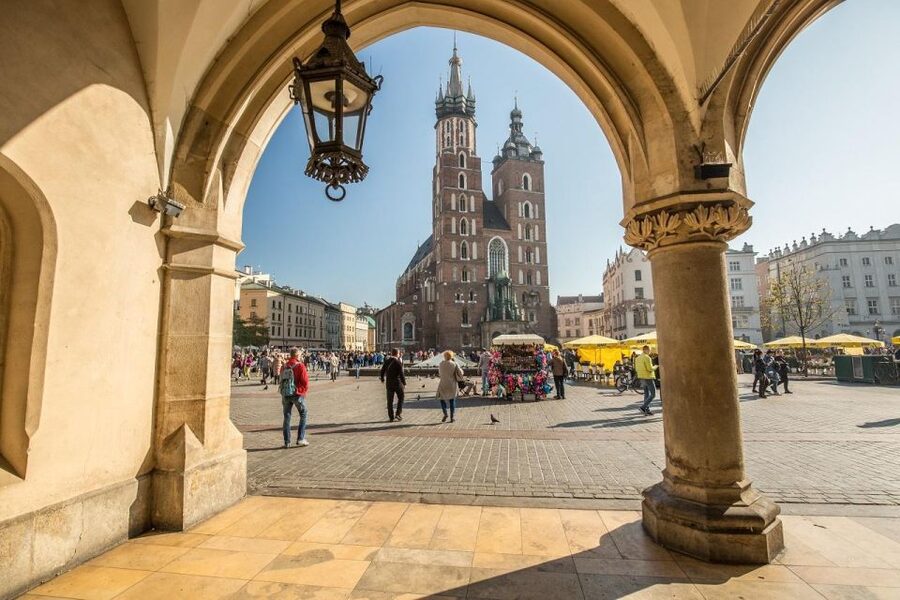
St. Mary’s Basilica and the Veit Stoss altar
St. Mary’s Basilica is one of the tour’s artistic highlights. Inside, you see the famous Veit Stoss altarpiece, a major Gothic work known for its scale, carving, and detail.
The altar is not a quick decorative stop. Your guide explains how it reflects Kraków’s religious devotion and artistic ambition, and how it survived centuries of conflict. Look closely at the carved figures and the surrounding interior rather than treating the basilica as a place to take one photograph and leave.
Painted vaults and stained glass add to the effect. The contrast with Wawel is worthwhile. Wawel presents royal and national power, while St. Mary’s shows how faith shaped daily and public life in the city.
The basilica remains a place of worship, so the atmosphere may be more restrained than in a standard museum. The same clothing rule applies: cover your knees and shoulders, and avoid shorts and sleeveless tops.
The order of stops may change. That could mean St. Mary’s comes earlier or later than described, depending on access and operating conditions. The key point is that the basilica, its altar, and the included admission form a central part of the experience.
Beneath Rynek at the medieval market
The final major stop is the Rynek Underground Museum, located below the Main Market Square. Here, the city’s past becomes physical in a different way. Instead of looking up at towers and façades, you examine archaeological remains and reconstructed medieval streets beneath your feet.
The museum uses multimedia displays to explain the lives of early traders and craftsmen. That makes it a good finish because it brings together themes introduced earlier in the day: commerce, work, city planning, and the growth of Kraków.
You may find the underground setting more engaging than another series of display cases. Reconstructed streets help you picture how people moved through the old market, while the archaeological remains show what survives from earlier layers of the city.
The museum can also change your view of the Main Square. Once you return to street level, the square is no longer just a broad open space with historic buildings around it. You have seen evidence of the working city below, including the commercial life that made Kraków important.
Skip-the-line admission is included here. That saves time at a popular museum, although you still need to follow the group’s pace. The multimedia approach should suit you if you like history explained through objects, models, and visual displays rather than through architecture alone.
What $121 includes, and what it does not
At $121 per person, this is not a bargain-priced walking tour. The price makes more sense if you value a guide, several major admissions, and a tightly organized day.
Included are a licensed local guide, one permanent Wawel exhibition, Wawel Cathedral, St. Mary’s Basilica, and skip-the-line entry to the Rynek Underground Museum. Buying the same group of admissions separately could take time and require you to decide which Wawel exhibition fits your schedule.
The value also comes from the connections between the stops. You are not paying only for entry to four attractions. You are getting a single explanation that links monarchy, religion, art, university life, trade, and archaeology.
Still, the price may feel high if you prefer exploring independently or want only one or two major sights. Food and drinks are not included, and the tour takes most of a day. You should compare the cost with the time you would spend arranging tickets and planning the route.
The included Wawel entry is limited to one permanent exhibition. That is another point to weigh carefully. If your priority is seeing every section of the castle, this experience may not meet that goal by itself.
Timing, meeting point, and practical preparation
The tour lasts 330 minutes, or five hours and 30 minutes. Arrive at least 10 minutes early at St. Mary Magdalene Square, beside the Piotr Skarga Monument. Look for the guide holding an excursions.city sign.
Latecomers cannot join once the group has left, and tickets are non-refundable in that situation. This is a tour where punctuality matters, especially because several timed admissions are built into the route.
You choose one tour language when booking: English, German, Italian, Polish, Spanish, or French. The group conducts the tour in one selected language rather than switching between languages during the day.
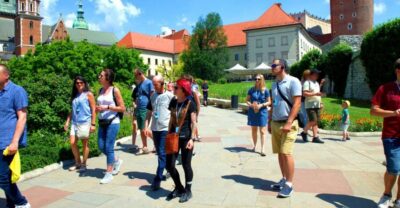
The group limit is 30 participants. That keeps the experience organized, but it will not feel like a private visit. Stay close to the guide and be ready for regular movement through busy historic areas and formal interiors.
The order of sightseeing can change. Cathedral or state events may also restrict access to certain areas. The operator says that another site within the castle complex may replace the affected entry, so you should treat the exact sequence as flexible.
Free cancellation is available up to 24 hours before the tour for a full refund. You can also reserve now and pay later, which helps if your Kraków plans are still shifting.
Who should book this experience?
I would recommend this tour to a first-time Kraków visitor who wants the city’s major historic sights explained in one day. It suits you especially well if you enjoy art, royal stories, church interiors, and archaeological displays, but do not want to coordinate several separate bookings.
It is also a good fit if you want more than a photo stop at Wawel or the Main Square. The guide’s detailed explanations are central to the experience, and the route is strongest when you listen for the links between the locations.
You may want a different plan if you dislike long group tours, need a fully accessible route, or prefer lingering in one museum. The tour is specifically described as unsuitable for people with disabilities, and the schedule gives you limited freedom to pause.
Wear clothing that covers your knees and shoulders, bring patience for a long sightseeing block, and plan food before or after. If the price fits your budget, the package offers a substantial look at Kraków’s old center with the practical advantage of organized entry.
FAQ
How long does the Kraków tour last?
The tour lasts 330 minutes, or five hours and 30 minutes.
Where is the meeting point?
Meet at St. Mary Magdalene Square by the Piotr Skarga Monument. Your guide will hold an excursions.city sign.
Which languages are available?
You can book the tour in English, German, Italian, Polish, Spanish, or French. Each group tour is conducted in one selected language.
What is included in the price?
The price includes a licensed local guide, entry to one permanent exhibition at Wawel Castle, Wawel Cathedral, St. Mary’s Basilica, and skip-the-line admission to the Rynek Underground Museum.
Which Wawel Castle exhibition will I visit?
The included exhibition is subject to availability. It may be the State Rooms, Royal Private Apartments, or Crown Treasury.
Is food included?
No. Food and drinks are not included in the tour price.
Is there a dress code?
Yes. For places of worship and selected museums, shorts and sleeveless tops are not allowed. Knees and shoulders must be covered for both men and women.
Can the cathedral or bell tower be closed?
Yes. Wawel Cathedral is an active place of worship, and religious or state events may restrict access to the cathedral, royal tombs, or bell tower. If that happens, entry is replaced with another site within the castle complex.
Should you book it?
Book this tour if you want Kraków’s essential historic center presented as one connected story, with admissions and a licensed guide arranged for you. The detailed guiding, Veit Stoss altar, Wawel Cathedral, and underground market make the $121 price easier to justify.
Skip it if you want a slow, independent day or need accessible sightseeing. For most first-time visitors who value context and do not mind a long group schedule, this is a well-packed introduction to Kraków’s royal, religious, scholarly, and commercial past.
Recently added in Krakow
- Auschwitz-Birkenau and Krakow Private Car Trip from Katowice★ 4.3 · 3 reviews
- Wawel Castle, Old Town with St. Mary’s Church Guided Tour★ 5.0 · 3 reviews
- Wawel Castle, Cathedral, Rynek Underground Tour with Lunch★ 5.0 · 3 reviews
- From Krakow: Chocholow Thermal Hot Springs (hotel pick up)★ 5.0 · 3 reviews
- Private tour to Zakopane and Thermal Baths from Krakow★ 5.0 · 3 reviews
- Legends of Cracow ROBOTIC SHOW★ 4.0 · 3 reviews
- From Krakow: Zakopane and Thermal Pools Guided Trip★ 5.0 · 3 reviews
- Guided Beer Tour in Krakow★ 4.5 · 3 reviews
Wawel Castle Tours, compared.

Wawel Royal Hill with Optional Castle and Cathedral
Read our review →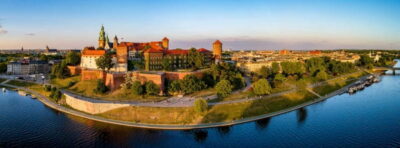
Skip-the-Line Wawel Castle Chambers Private Tour
Read our review →
Private Krakow City Tour, Krakow Old Town and Wawel Castle Tour
Read our review →
Krakow Guided Tour to Iconic Polish Royal Residence Wawel Castle
Read our review →Where else this one turns up