
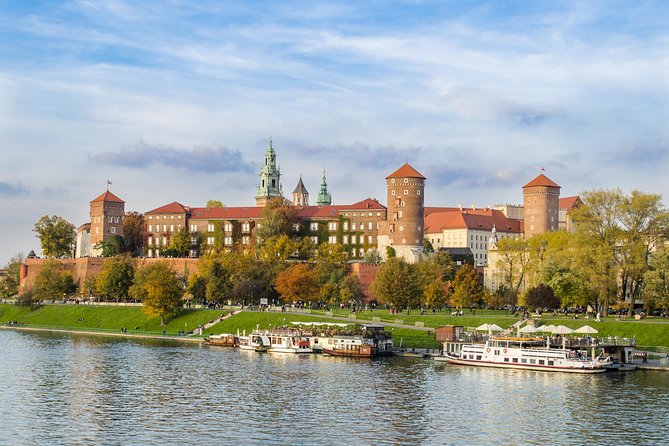
Reviewed · WAWEL CASTLE TOURS
Krakow: Guided Tour of Wawel Castle & Cathedral
Wawel Castle and Cathedral give you Krakow’s royal story in one compact visit. You move from refined State Rooms and Italian paintings to a Gothic church where Polish monarchs were crowned and buried. I like the prebooked admission and the way a guide points out details you could easily miss. I also like the mix of art, religion, military objects, and royal politics.
The drawback is the fixed timing. The tour lasts about two hours, the group can reach 30 people, and late arrivals cannot join once the group has entered. The meeting point is also away from Wawel Hill, so you need to read your voucher carefully and arrive at least 10 minutes early.
Key points before you book
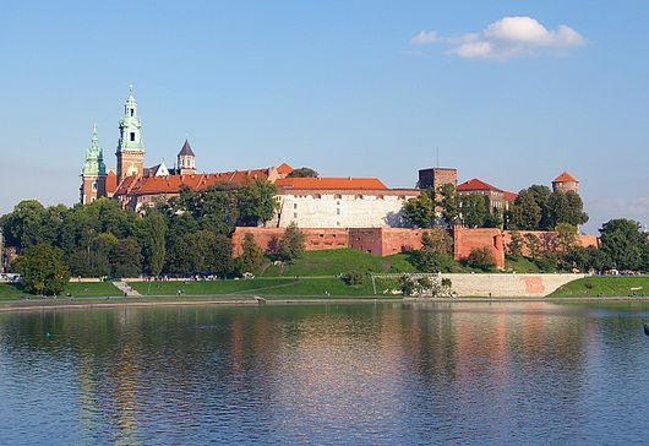
- The tour covers two major sights: You visit one permanent State Rooms exhibition at Wawel Castle and enter Wawel Cathedral.
- Polish royal history is the main thread: Coronations, royal burials, court life, art, and international contacts all appear along the way.
- The Ottoman tent collection is unusual: Wawel holds Europe’s largest set of Ottoman tents, a striking reminder of Poland’s links with the wider region.
- The guide makes the difference: Ania, Anna, and Kuba have been praised for clear English, humorous stories, patience, and careful answers.
- The tour ends at the cathedral: There is no transportation included, and you make your own way to the meeting point in central Krakow.
- Dress rules matter: Shoulders and knees must be covered in the cathedral and selected museum areas.
Why Wawel Castle is one of Krakow’s essential visits
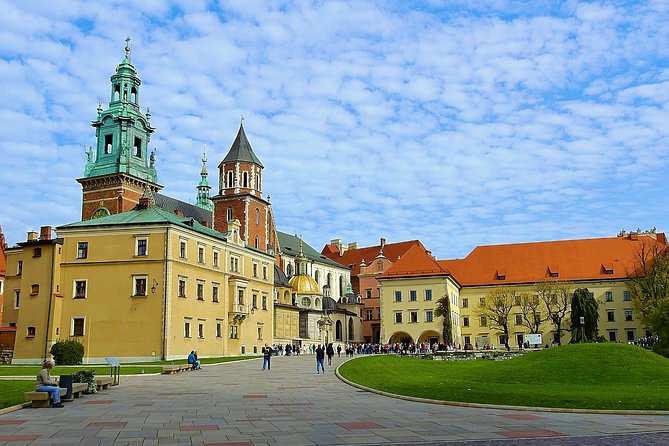
Wawel is more than a pretty hilltop castle. It was the home of Poland’s rulers and a center of political and religious power. The complex now brings together royal apartments, a cathedral, art collections, military objects, and burial places, so it gives you a concentrated introduction to the country’s past.
A guide is especially useful here because the castle is not one simple museum. It is a group of buildings and exhibitions, and the available permanent exhibition can vary. Your admission includes fast-track access to one permanent Wawel Castle exhibition, with the exact choice depending on availability.
That detail is worth noting before you book. You are not buying unlimited access to every room and collection on Wawel Hill. You are paying for a guided visit to a selected exhibition, followed by the cathedral. For a first visit, this focused approach can work well. You get a clear route rather than trying to decide among several museum sections on your own.
The group size can reach 30 people, which is not tiny. Still, it is controlled by museum rules, and headsets are provided for groups of nine or more. That matters in busy rooms, where a guide speaking without audio equipment can be hard to follow.
More Wawel Castle visits:
- Krakow: Wawel Castle & Cathedral Guided Tour
★ 4.7 · 2,111 reviews - Old Town Krakow & Wawel Castle Walking Tour
★ 5.0 · 1,508 reviews - Krakow: Wawel Royal Hill with Optional Castle and Cathedral
★ 4.2 · 1,220 reviews
Inside the State Rooms: court life in polished surroundings
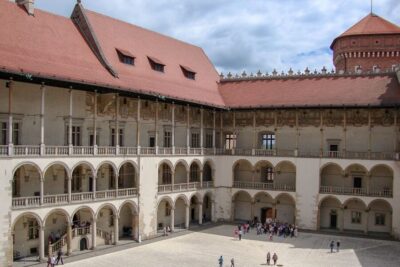
The State Rooms are the castle’s most elegant stop. You will see Renaissance interiors, historic wall hangings, furnishings, and works from the Lanckoroński collection of Italian art. The rooms help you picture the ceremonial side of royal life, where architecture and decoration were used to display authority.
The Italian collection adds another layer. Instead of seeing the castle only as a Polish national monument, you also see how European art shaped the royal court. A good guide can connect a painting or interior detail to the wider cultural world of the period, rather than leaving you with a string of names and dates.
The tour also includes porcelain, arms, and objects from Eastern cultures. This range is one of the visit’s strengths. Wawel was not an isolated court looking only westward. Its collections show Poland as a meeting point between Western Europe and the East.
The Ottoman tents are perhaps the most unexpected part. Wawel has Europe’s largest set of Ottoman tents, and they give the military and diplomatic story a physical presence. After several rooms of polished furniture and art, large textile structures linked to Ottoman campaigns offer a sharp change of mood.
You should expect the guide to do much of the interpreting here. The rooms may be impressive at first glance, but the political meaning of a royal portrait, the purpose of a ceremonial chamber, or the importance of an object from the East is not always obvious. The strongest guides on this tour have been praised for adding small details and stories that help the collection make sense.
Ania, Anna, and Kuba are among the guides specifically praised for their command of Polish history. You should not assume that one particular guide will lead your departure, but the feedback points to a tour style built around explanation rather than a quick walk through grand rooms. Ania, in particular, is described as patient with questions and careful about giving people time at each stop.
Wawel Cathedral and the royal heart of Poland
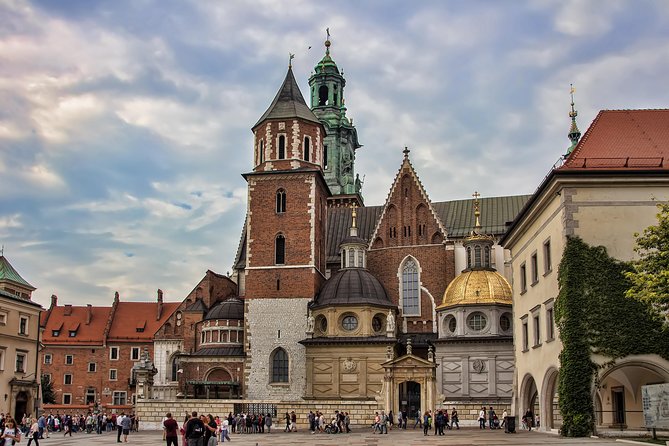
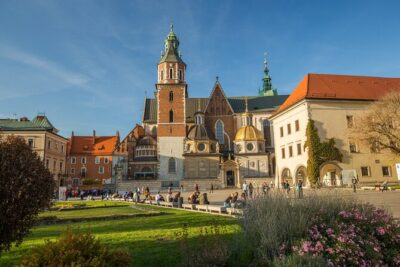
After the castle exhibition, the tour continues to Wawel Cathedral. This is a more solemn place than the State Rooms, and it carries a different kind of importance. Generations of Polish monarchs were crowned here and buried here, making the cathedral a central site in the country’s religious and national story.
Inside, you will see Gothic architecture, ornate chapels, golden domes, and other major architectural features. The building is not simply a single medieval interior. Its chapels and additions reflect different periods, patrons, and artistic tastes, giving the cathedral a layered appearance.
The royal crypts bring the country’s past down to a human scale. You move from public ceremony to the burial place of rulers and other important figures. This part can be especially meaningful if you want to understand why Wawel remains so important to Polish identity.
The itinerary also includes the bell tower, the Sigismund Bell, and panoramic views over Krakow. You can touch the bell before continuing to the crypts. The tower adds a physical element to the tour, while the view gives you a better sense of Wawel’s position above the city.
You should be ready for stairs and a change of pace here. The cathedral is an active place of worship, not only a museum stop, so visitors must dress appropriately. Clothing must cover shoulders and knees, and shorts or sleeveless tops are not permitted. It is safest to dress modestly from the start rather than depend on changing clothes during the day.
The end point is listed as Wawel Cathedral, so the tour does not return you to the original meeting point. That is useful if you plan to continue exploring Wawel Hill or walk onward into Krakow. It also means you should not expect a ride back to your hotel.
What the guides add to the experience
The guide is the main reason to choose this tour instead of visiting the buildings alone. The most praised qualities are clear English, strong command of Polish history, engaging stories, and the ability to answer questions without rushing people along.
One guide, Ania, has been singled out for keeping a good pace and allowing time at each stop. Another guide, Anna, was praised for making the tour informative and interesting. Kuba is described as friendly, flexible, and helpful with historical context around both the castle and cathedral.
Those comments point to a useful distinction. This is not only a ticket with a person leading the way. You are likely to get a running explanation of what you are seeing, why it matters, and which small details deserve your attention. That helps in a place where a first-time visitor can easily focus on decoration and miss the larger story.
The best approach is to ask questions when something catches your attention. The guides have been praised for responding carefully, and the tour is designed to leave room for explanation. If you prefer to walk silently at your own pace and stop wherever you wish, a group tour may feel restrictive. If you want a strong framework for understanding Wawel, the guided format is the better choice.
English is the only language offered for this version of the tour. All group tours are conducted in one selected language, so you should book only if an English-language visit suits you.
A few more Krakow half days to consider
- From Krakow: Auschwitz-Birkenau Guided Tour & Hotel Pickup
★ 4.5 · 33,358 reviews - From Krakow: Auschwitz-Birkenau Guided Tour & Hotel Pickup
★ 4.5 · 29,340 reviews - Krakow: Auschwitz Guided Tour with Optional Hotel Pickup
★ 4.5 · 15,280 reviews - Krakow–Zakopane: Cable Car, Chocholow Baths, Cheese & Vodka
★ 5.0 · 10,720 reviews
Two hours is useful, but tightly planned
The visit lasts about two hours, with roughly one hour at the castle and one hour at the cathedral. That is enough time for a well-organized introduction, but not enough for a complete study of every Wawel collection.
I like this length for a first day in Krakow. You can see the main royal highlights without giving up half a day, then continue to the Old Town, the riverfront, or another museum. The end at the cathedral also makes it easy to keep exploring Wawel on your own afterward.
The tradeoff is that you will not have unlimited time for photographs, long pauses, or every display label. A group of up to 30 people also takes longer to move through narrow rooms and stairs. Headsets should help larger groups hear the guide, but you still need to stay close and keep an eye on the pace.
Arrive at least 10 minutes before departure. The meeting point is at plac Świętej Marii Magdaleny 31, not on Wawel Hill. The voucher gives the exact location, and you should check it before leaving your accommodation. Once the group has entered, late arrivals cannot join, and the tickets cannot be refunded for that missed start.
The tour is near public transportation, but no transportation is included. You handle your own journey to the start and your onward plans after the cathedral.
Is the $59 price good value?

At $59 per person, this is not the cheapest way to see Wawel. The value depends on how much you want from the visit. Your fee covers the guide, admission to the cathedral, fast-track access to one permanent castle exhibition, and a two-hour route through two of Krakow’s most important sites.
I think the price is reasonable if you want context and a planned visit. Wawel can feel confusing when you are choosing between exhibitions, and the royal story stretches across many centuries. A guide helps you spend your limited time on the rooms and details with the greatest meaning.
The value is weaker if you already know Polish history, prefer reading labels alone, or want to visit several castle exhibitions in one day. The included castle access is to one permanent exhibition, and availability varies. You should not book expecting a full pass to every part of the complex.
The strong English skills praised for guides such as Ania, Anna, and Kuba also matter for the price. Historical tours lose much of their value when explanations are vague or difficult to follow. Here, the guide’s storytelling and humor appear to be a central part of what you are buying.
The free cancellation policy gives you some protection. You can cancel at least 24 hours before the start for a full refund. Changes or cancellations made inside that 24-hour window are not accepted for a refund, so keep the local start time in mind.
Who should book this Wawel tour?
I would recommend it to first-time visitors who want a readable introduction to Krakow’s royal and religious history. It also suits anyone who likes art but wants more than a list of paintings, since the State Rooms connect Italian works, court decoration, porcelain, arms, and Ottoman objects.
Families and mixed-age groups may appreciate the two-hour length. The humorous stories used by some guides can keep a history-heavy visit from feeling like a lecture. The bell tower and royal crypts also give the tour variety beyond room after room of objects.
This is a good pick for people with limited time in Krakow. You see the State Rooms and cathedral in one booking, then finish at Wawel Cathedral with the rest of the day free.
You may want another option if you need a private visit, a smaller group, or a language other than English. A maximum of 30 people is manageable but not intimate, and the fixed route leaves less freedom than an independent visit. Also reconsider it if stairs are a concern, since the cathedral portion includes the bell tower.
Should you book it?
Book this tour if you want Wawel to make sense, not merely to see its grand rooms. The combination of Renaissance interiors, Italian art, Ottoman tents, royal crypts, the Sigismund Bell, and city views gives you a strong two-hour introduction to Krakow’s past.
I would book it several weeks ahead, since the experience is commonly reserved about 40 days in advance. Check the meeting point, dress for the cathedral, and arrive early. If those details suit you, the guide-led format and included admissions make the $59 cost a fair choice for a first visit.
FAQ
How long does the Wawel Castle and Cathedral tour last?
The tour lasts approximately two hours, with about one hour at Wawel Royal Castle and one hour at Wawel Cathedral.
What language is the tour offered in?
This tour is offered in English. Group tours use one language selected at the time of booking.
What does the castle admission include?
Admission includes fast-track access to one permanent Wawel Castle exhibition. The specific exhibition depends on availability.
Does the tour include Wawel Cathedral?
Yes. Entrance to Wawel Cathedral is included, along with the guided visit.
Is transportation included?
No. You must make your own way to the meeting point and continue independently after the tour ends at Wawel Cathedral.
Where does the tour start?
The tour starts at plac Świętej Marii Magdaleny 31, 30-001 Krakow. The meeting point is not on Wawel Hill, so check the exact location on your voucher.
How early should I arrive?
Arrive at least 10 minutes before the scheduled start. Late arrivals cannot join after the group has entered, and the tickets are non-refundable in that situation.
What should I wear for the tour?
Shoulders and knees must be covered in places of worship and selected museums. Shorts and sleeveless tops are not permitted.
What is the maximum group size?
The group can include up to 30 people. Headsets are provided for groups of nine or more.
Can I cancel for a refund?
Yes, if you cancel at least 24 hours before the experience start time. Cancellations or changes made less than 24 hours before the start are not accepted for a refund.
Recently added in Krakow
- Auschwitz-Birkenau and Krakow Private Car Trip from Katowice★ 4.3 · 3 reviews
- Wawel Castle, Old Town with St. Mary’s Church Guided Tour★ 5.0 · 3 reviews
- From Krakow: Chocholow Thermal Hot Springs (hotel pick up)★ 5.0 · 3 reviews
- Private tour to Zakopane and Thermal Baths from Krakow★ 5.0 · 3 reviews
- Wawel Castle, Cathedral, Rynek Underground Tour with Lunch★ 5.0 · 3 reviews
- Legends of Cracow ROBOTIC SHOW★ 4.0 · 3 reviews
- From Krakow: Zakopane and Thermal Pools Guided Trip★ 5.0 · 3 reviews
- Guided Beer Tour in Krakow★ 4.5 · 3 reviews
Wawel Castle Tours, compared.

Wawel Royal Hill with Optional Castle and Cathedral
Read our review →
Skip-the-Line Wawel Castle Chambers Private Tour
Read our review →
Private Krakow City Tour, Krakow Old Town and Wawel Castle Tour
Read our review →
Krakow Guided Tour to Iconic Polish Royal Residence Wawel Castle
Read our review →Where else this one turns up