
Reviewed · WAWEL CASTLE TOURS
Wawel Castle and Cathedral with St Mary Basilica tour
Wawel Hill packs Poland’s royal story into one remarkable setting, then this tour carries you through Krakow’s Old Town to the city’s most famous church interior. You’ll see Renaissance rooms, royal tombs, the Sigismund Bell, the Cloth Hall, and Veit Stoss’s great Gothic altar in one well-filled morning or afternoon.
I like the way the tour joins Wawel Castle and Cathedral with St Mary’s Basilica, rather than treating them as isolated sights. I also like the guided context: paintings, royal processions, university history, and the details of the altar make much more sense with a local expert beside you.
The main consideration is pace. You cover a great deal in about three and a half hours, and one published account describes two guided sections with a short break, lasting closer to four hours. The meeting point is also off Wawel Hill, so arrive at least 10 minutes early.
Key points to know before booking
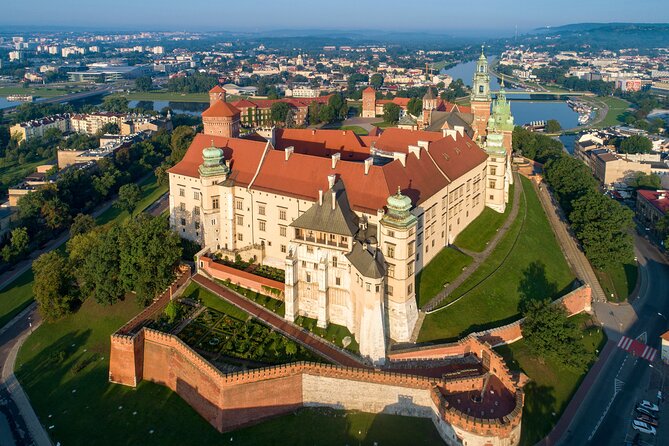
- See three major Krakow sights in one route: Wawel Castle, Wawel Cathedral, and St Mary’s Basilica, with an Old Town walk between them.
- Enter one permanent Wawel exhibition: Fast-track access is included, but the specific exhibition depends on availability.
- Touch the Sigismund Bell: The cathedral visit includes the tower, views, and access to this famous bell.
- Study Veit Stoss’s altar: St Mary’s Basilica provides the tour’s strongest single art experience.
- Expect a full schedule: The official duration is about 3 hours 30 minutes, though the two-part format may take about four hours.
- Dress for churches: Shoulders and knees must be covered, and shorts or sleeveless tops are not allowed in places of worship and selected museums.
Wawel Castle puts Polish royal life first
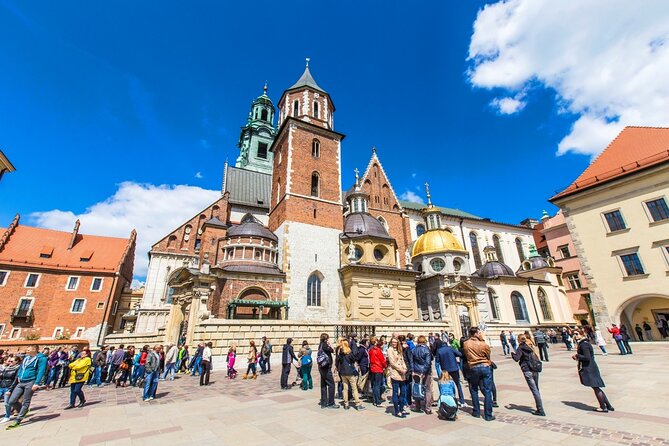
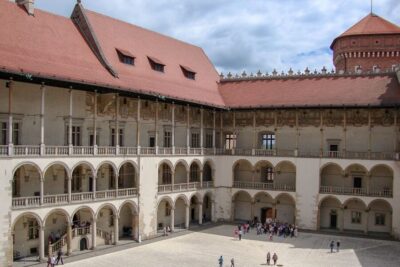
Your first major stop is Wawel Royal Castle, the former seat of Poland’s rulers and now a museum of rooms, art, arms, and decorative objects. The visit focuses on one permanent exhibition, with fast-track entry included when that access is available.
The State Rooms are the heart of this section. You’ll see Renaissance interiors, large decorative hangings, and rooms designed to show royal power without relying on a single grand hall. A guide helps connect the architecture to the people who used it, which matters here because the castle can otherwise feel like a series of impressive rooms without a clear thread.
The Italian paintings from the Lanckoroński collection add another layer. These works show that Wawel was not only a center of government, but also a place where European art was collected and displayed. You’ll also encounter porcelain, weapons, and Eastern art.
The collection of Ottoman tents is a particularly unusual detail. It is described as the largest collection of Ottoman tents in Europe, a reminder that Poland’s royal culture was shaped by contact with many parts of the continent and beyond. This is one reason I value a guided visit here. The objects are not simply attractive displays. They point to diplomacy, military contact, trade, and status.
You should check your voucher for the exact exhibition. Access to one permanent exhibition is included, but exhibitions beyond the one provided are not. If you have a special interest in a particular Wawel collection, this tour may not give you the freedom to choose it.
The castle portion takes about one hour. That is enough time for a focused introduction, but not for every room and collection on the hill. Think of it as a strong first look rather than a complete museum day.
More Wawel Castle visits:
- Krakow: Wawel Castle & Cathedral Guided Tour
★ 4.7 · 2,111 reviews - Old Town Krakow & Wawel Castle Walking Tour
★ 5.0 · 1,508 reviews - Krakow: Wawel Royal Hill with Optional Castle and Cathedral
★ 4.2 · 1,220 reviews
Wawel Cathedral moves from ceremony to royal tombs
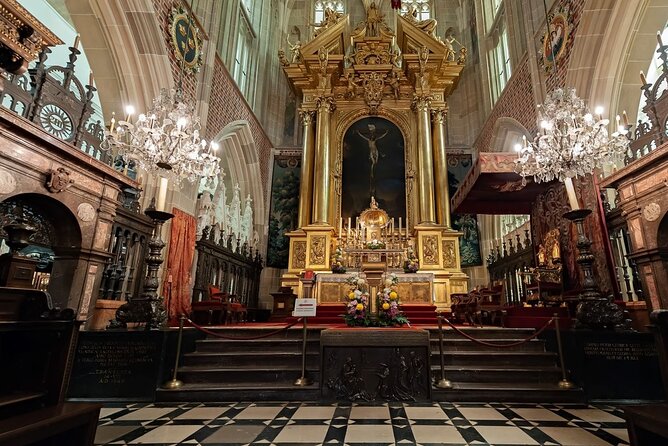
Wawel Cathedral brings a different mood. The castle shows how rulers lived and displayed authority. The cathedral shows where they were crowned, married, and buried.
Inside, look for the ornate chapels, golden domes, and layers of decoration gathered over centuries. The cathedral is a place of worship as well as a historic monument, so the dress rules matter. Cover your shoulders and knees, and do not count on entering in shorts or a sleeveless top.
The tower visit adds a physical challenge and a reward. You can climb for panoramic views and touch the Sigismund Bell. The bell is one of the most memorable parts of the stop because it gives you something concrete to do, not just something to look at. The tower access also makes the visit more active than a standard church tour.
Afterward, you descend to the royal crypts. Poland’s rulers and major national figures are buried here, giving the cathedral a direct link to the country’s public life. The guide’s role is important because names and dates can blur together in an underground burial site. A clear explanation turns the crypts into a story about succession, national memory, and royal ceremony.
Allow about one hour for the cathedral. The sequence from chapels to bell tower to crypts gives the stop a natural shape, though the stairs may make it less suitable for anyone who finds climbing difficult. The supplied information says most people can participate, but it does not promise step-free access.
Krakow Old Town connects the monuments
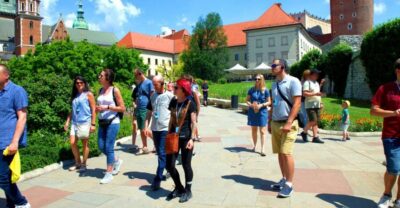
After Wawel, the tour moves into Krakow’s UNESCO-listed Old Town. This is not just a transfer between paid attractions. The walk gives you the city’s civic setting, where royal routes, merchants’ guilds, university life, and daily city activity meet.
The Main Market Square is the central scene. You’ll see the Cloth Hall, long associated with trade, and hear how merchants helped shape Krakow’s fortunes. Royal processions once passed through these streets, so the route links the castle’s political world with the commercial center below the hill.
The Collegium Maius is another useful stop. It is the oldest university building in Poland, and the guide connects it with Nicolaus Copernicus, its most famous student. That detail helps show Krakow as more than a royal capital. It was also a place of study and intellectual work.
This section lasts about one hour and does not include a separate admission ticket. The pace should suit you if you want orientation rather than a long museum visit. You’ll see the key public spaces and hear the main stories, but you will not have much time to wander into side streets or stop for coffee unless the group takes a short pause.
That tradeoff is worth considering. A dedicated Old Town walking tour would give you more time for details. Here, the Old Town works as a bridge between the Wawel visits and St Mary’s Basilica, allowing you to understand how the city fits together.
St Mary’s Basilica saves its finest artwork for last
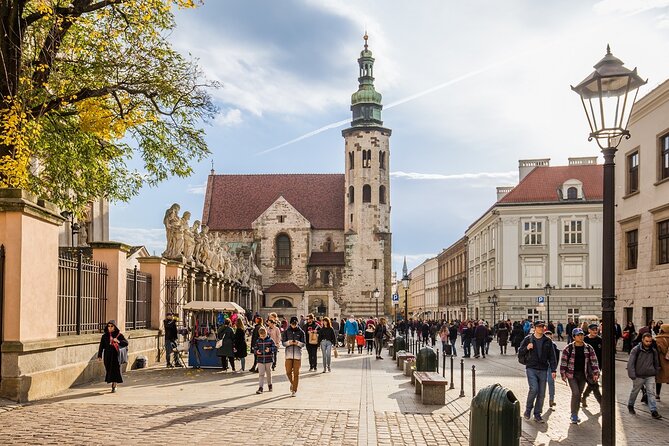
The final stop is St Mary’s Basilica on the Main Market Square. The church is home to the Gothic altar by Veit Stoss, one of Krakow’s great works of medieval art.
The altar is not a small decorative feature tucked into a corner. It is a major visual story, filled with carved figures and scenes. Your guide explains its details and history, which is especially useful because the work can feel overwhelming at first. A few pointed explanations help you notice how the figures, gestures, and scenes work together.
This is the tour’s main art-focused moment. Wawel gives you royal interiors and collections. The cathedral gives you ceremony and burial places. St Mary’s brings the focus to medieval religious art and Krakow’s sense of identity.
The basilica visit lasts about 30 minutes. That is enough for a guided look at the altar and the church, but not a long period for quiet observation. If you are an art specialist, you may want to return later on your own for more time. The included admission is still valuable, since it removes the need to arrange a separate visit during a busy Krakow schedule.
The tour ends at St Mary’s Basilica, at plac Mariacki 5. That is convenient if you plan to continue around the Main Market Square, but it does not return you to Wawel Hill.
A few more Krakow half days to consider
- From Krakow: Auschwitz-Birkenau Guided Tour & Hotel Pickup
★ 4.5 · 33,358 reviews - From Krakow: Auschwitz-Birkenau Guided Tour & Hotel Pickup
★ 4.5 · 29,340 reviews - Krakow: Auschwitz Guided Tour with Optional Hotel Pickup
★ 4.5 · 15,280 reviews - Krakow–Zakopane: Cable Car, Chocholow Baths, Cheese & Vodka
★ 5.0 · 10,720 reviews
The guide matters on a tour this full
A certified local expert leads the tour in the single language selected at booking. Group tours are limited to 30 people under museum regulations, which is a reasonable cap for rooms, galleries, and church interiors.
Thirty people is not the same as a private visit. You may need to stay close to the guide, especially in the Old Town or around busy entrances. Still, the limit keeps the group from becoming unwieldy, and the supplied account describes the guides as open to questions and strong on the subject.
The tour can be conducted in English, and the selected language applies to the whole group. Check that you choose the language you want at booking. You should not expect to switch between languages once the group has started.
The format may include two guided portions with a short pause between them. That break can help after the castle and cathedral, but you should not plan a tight appointment immediately afterward. The official duration is approximately 3 hours 30 minutes, while the described experience took about four hours.
What the $88.16 price really covers
At $88.16 per person, this is not a budget walking tour. The price makes more sense if you want admission, a guide, and a planned route through Krakow’s most important royal and religious sights.
Included access covers one permanent Wawel Castle exhibition, Wawel Cathedral, and St Mary’s Basilica. You also get the Old Town walk without a separate admission charge. The value is strongest if you would otherwise need to organize several tickets and learn the connections between the sights yourself.
The price is less attractive if you prefer to move slowly, choose your own castle exhibition, or spend a full afternoon in one museum. Extra exhibitions at Wawel are not included, and lunch is not included either.
I see this as a time-saving purchase. You are paying for a compact route and interpretation, not only for entry tickets. If this is your first day in Krakow, the tour gives you a firm framework for later independent visits.
Tips are not included. They are optional, so plan for that separately if you want to thank the guide for a good tour.
Meeting point, clothing, and timing
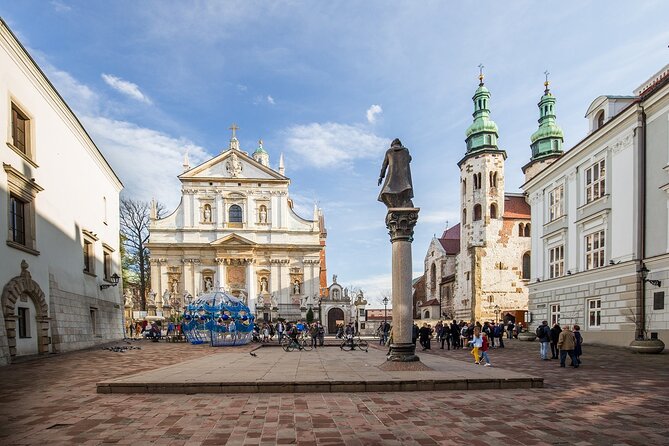
The tour begins at plac Świętej Marii Magdaleny 31, 30-001 Krakow. This is not on Wawel Hill, an important detail when planning your route. Use the exact location on your voucher and arrive at least 10 minutes before departure.
Once the group has entered, late arrivals cannot join. Tickets are non-refundable in that situation, so give yourself extra time to reach the starting point. The area is near public transportation, but the tour information does not specify a particular tram or bus route.
The route ends at St Mary’s Basilica, plac Mariacki 5, 31-042 Krakow. Since the ending point is in the Old Town, you can continue exploring the square afterward, though the tour itself does not include lunch.
Dress modestly from the start. Clothing must cover shoulders and knees in places of worship and selected museums. This is easy to handle with long trousers or a longer skirt and a top with sleeves.
Free cancellation is available if you cancel at least 24 hours before the scheduled start time. Changes or cancellations inside that window are not accepted for a refund, and the cut-off follows local Krakow time.
Who will get the most from this tour
I would choose this experience if you want Krakow’s major sights explained in one sitting. It suits first-time visitors, people with limited time, and anyone who prefers a clear historical narrative to independent reading at every stop.
It is also a good fit for anyone interested in art. The Lanckoroński Italian paintings, Ottoman tents, Renaissance rooms, and Veit Stoss altar give the tour more range than a simple royal palace visit.
Families and mixed-interest groups may also find the route useful because it changes focus often. You move from palace rooms to a church, then outdoors through the Old Town, then back inside for the basilica. That variety can be easier than spending three straight hours in one museum.
I would hesitate if you dislike group pacing or want extended time for photography and quiet viewing. The schedule is full, the group may contain up to 30 people, and the tower portion includes climbing. You should also avoid booking it before a fixed afternoon appointment, since the real timing may run closer to four hours.
Should you book the Wawel and St Mary’s tour?
Book it if you want a well-organized introduction to Krakow’s royal, religious, artistic, and civic story. The strongest features are the combination of Wawel’s State Rooms and royal crypts, the chance to touch the Sigismund Bell, and guided entry to St Mary’s Basilica and its Veit Stoss altar.
Skip it if you want to choose every Wawel exhibition yourself or explore each site at a slow museum pace. At $88.16, the tour earns its price through access and explanation rather than spare time.
For most first visits, I think the route is a sensible choice. Arrive early, dress for church entry, keep your schedule open for four hours, and treat the Old Town section as useful orientation rather than a complete city tour.
FAQ
How long does the tour last?
The official duration is approximately 3 hours 30 minutes. A described experience with two guided sections and a short break lasted about four hours, so allow extra time.
What language is the tour offered in?
The tour is offered in English. Group tours are conducted in one language selected at booking.
Where does the tour start?
It starts at plac Świętej Marii Magdaleny 31, 30-001 Krakow. The meeting point is not on Wawel Hill.
Where does the tour end?
It ends at St Mary’s Basilica, plac Mariacki 5, 31-042 Krakow.
How early should I arrive?
You should arrive at least 10 minutes before the scheduled start time. Late arrivals cannot join after the group has entered, and tickets are non-refundable in that situation.
What is included at Wawel Castle?
Fast-track access to one permanent Wawel Castle exhibition is included when available. Other exhibitions are not included.
Does the tour include Wawel Cathedral?
Yes. Admission to Wawel Cathedral is included, including the cathedral visit, tower access, the Sigismund Bell, and the royal crypts as described in the tour.
Is entry to St Mary’s Basilica included?
Yes. The entrance ticket is included, along with a guided explanation of the Veit Stoss altar.
Is lunch included?
No. Lunch is not included.
What should I wear?
You must wear clothing that covers your shoulders and knees in places of worship and selected museums. Shorts and sleeveless tops are not permitted.
How many people can join the group?
The group can have a maximum of 30 participants, in line with museum regulations.
Can I cancel for a refund?
You can cancel up to 24 hours before the experience starts for a full refund. Cancellations and changes made less than 24 hours before the start time are not accepted for a refund.
Recently added in Krakow
- Auschwitz-Birkenau and Krakow Private Car Trip from Katowice★ 4.3 · 3 reviews
- Wawel Castle, Old Town with St. Mary’s Church Guided Tour★ 5.0 · 3 reviews
- Wawel Castle, Cathedral, Rynek Underground Tour with Lunch★ 5.0 · 3 reviews
- From Krakow: Chocholow Thermal Hot Springs (hotel pick up)★ 5.0 · 3 reviews
- Private tour to Zakopane and Thermal Baths from Krakow★ 5.0 · 3 reviews
- Legends of Cracow ROBOTIC SHOW★ 4.0 · 3 reviews
- From Krakow: Zakopane and Thermal Pools Guided Trip★ 5.0 · 3 reviews
- Guided Beer Tour in Krakow★ 4.5 · 3 reviews
Wawel Castle Tours, compared.

Wawel Royal Hill with Optional Castle and Cathedral
Read our review →
Skip-the-Line Wawel Castle Chambers Private Tour
Read our review →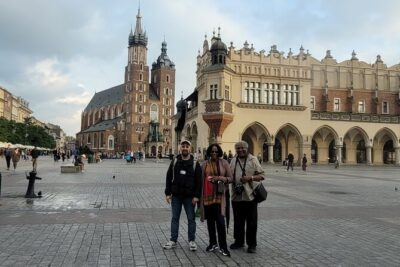
Private Krakow City Tour, Krakow Old Town and Wawel Castle Tour
Read our review →
Krakow Guided Tour to Iconic Polish Royal Residence Wawel Castle
Read our review →Where else this one turns up