
Reviewed · WAWEL CASTLE TOURS
Krakow: Wawel Castle & Cathedral Guided Tour
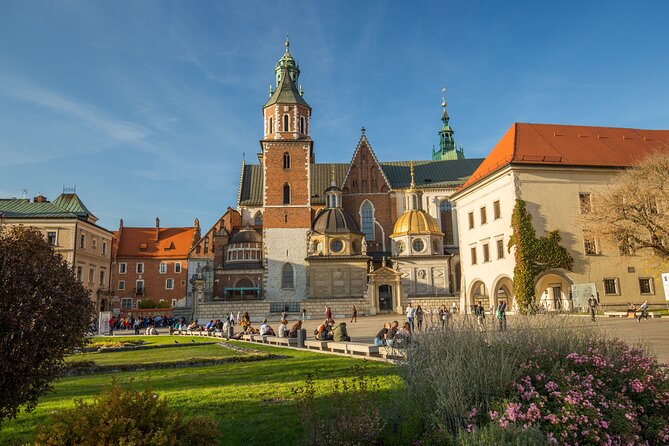
Wawel Castle and Cathedral give Krakow its grandest history lesson, and this two-hour tour puts the key rooms, artworks, royal tombs, and mighty Sigismund Bell into one tidy visit. The castle was home to Polish kings, while the Gothic cathedral witnessed coronations, royal weddings, and funerals.
I like the licensed local guides, whose storytelling brings difficult Polish history down to human size. I also like the chance to enter the cathedral tower and touch the Sigismund Bell for good luck, a small ritual that adds a personal touch to a serious historical site.
The main drawback is time. Two hours is enough for an excellent introduction, not a slow museum visit. Crowds can also limit how long you linger in the cathedral, and the tour involves plenty of walking and stairs.
Key points to know before booking
- The tour joins the castle and cathedral: You get a clear introduction to both of Wawel Hill’s essential sights in one visit.
- Your castle exhibition depends on availability: The tour includes one permanent exhibition, usually the State Rooms, Royal Private Apartments, or Crown Treasury.
- The Sigismund Bell is a memorable extra: You climb the cathedral tower and can touch the bell, a traditional good-luck gesture.
- Guides make the difference: Guides such as Helena, Anna, Jadwiga, Alexandra, and Helen have been praised for clear storytelling and strong knowledge of Polish culture.
- Groups can reach 30 people: Headsets are supplied for groups of nine or more, which helps in crowded rooms.
- Dress rules matter: You must cover your knees and shoulders in the cathedral and selected museum areas.
Why Wawel Hill deserves your first afternoon in Krakow
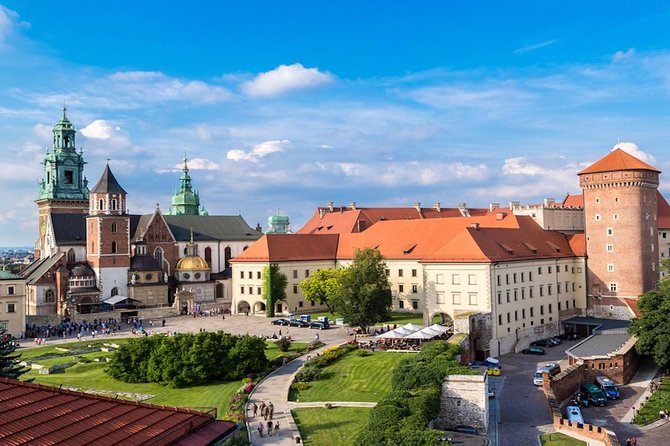
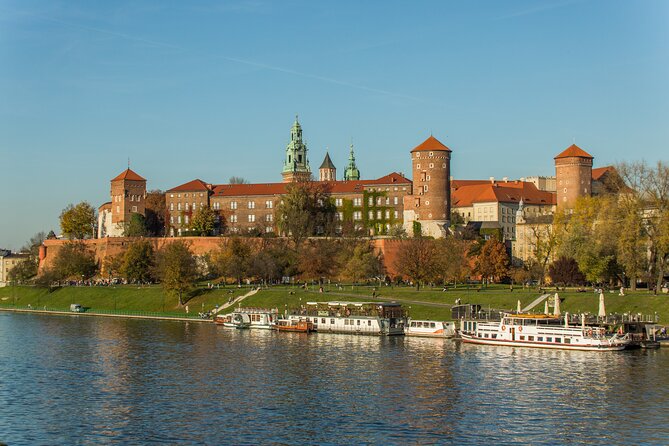
Wawel is not simply an old castle with a church beside it. For centuries, this hill was the center of Polish royal power, religious ceremony, and national memory. The buildings you see today represent several periods, with Gothic, Renaissance, and Baroque elements layered across the site.
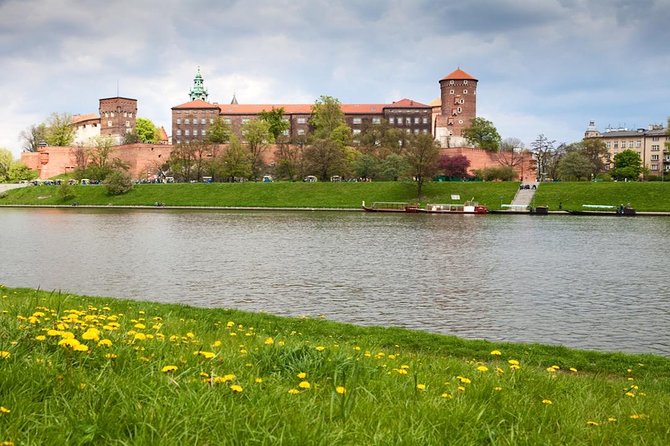
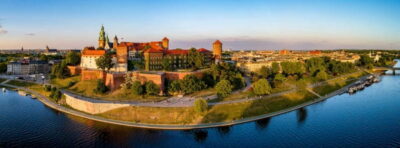
That mixture gives the visit more weight than a quick look at palace rooms. You are moving through the former seat of Polish kings, then into a cathedral where monarchs were crowned and buried. The setting also gives you views over the Vistula River, one reason to allow a little extra time around the tour if your schedule permits.
The meeting point is at St. Mary Magdalene Square, by the Piotr Skarga Monument, not on Wawel Hill itself. Look for the guide holding an excursions.city sign. This detail matters because arriving at the castle entrance instead of the stated meeting point could mean missing the group.
Arrive at least 10 minutes early. Once the group has left, late arrivals cannot join, and the ticket is non-refundable.
More Wawel Castle visits:
- Old Town Krakow & Wawel Castle Walking Tour
★ 5.0 · 1,508 reviews - Krakow: Wawel Royal Hill with Optional Castle and Cathedral
★ 4.2 · 1,220 reviews - Krakow: Wawel Castle and Cathedral Guided Tour
★ 4.6 · 595 reviews
Entering the Royal Castle and its grand rooms
The castle portion includes skip-the-line entry to one permanent exhibition. The exact choice depends on availability, so you may see the State Rooms, Royal Private Apartments, or Crown Treasury. That uncertainty is worth understanding before you book, particularly if one collection is your main reason for visiting.
The State Rooms focus on the public side of royal life. Expect grand interiors, decorative furnishings, paintings, sculptures, porcelain, and military objects. The rooms help you picture how monarchy worked as theatre: visitors entered a controlled world of ceremony, rank, and display.
The Royal Private Apartments offer a more personal angle. Here, the emphasis is on the spaces used by the royal household rather than only on formal public rooms. A guide can help connect furniture and decoration with the people who lived around them, which is far more useful than simply walking past a series of handsome chambers.
The Crown Treasury brings the focus to royal possessions and symbols of power. Since only one permanent exhibition is included, check the available option when booking if this collection matters most to you.
One especially interesting part of Wawel’s collections is the set of Flemish woven wall hangings commissioned by King Sigismund II Augustus. They were not mere decoration. Large textiles helped warm stone interiors and also displayed biblical scenes, symbols, and royal taste.
The castle also contains Italian Renaissance works from the Lanckoroński collection. You will see a striking mix of art and practical objects, including porcelain and furniture. One detail noted by visitors is a huge piece of furniture weighing more than 300 kilograms, the sort of object that becomes memorable once you understand the effort involved in making and moving it.
Art, military objects, and Poland’s eastern connections
Wawel is easy to read as a purely European royal palace, but its collections tell a wider story. The castle has an important group of Eastern art, including Europe’s largest collection of Ottoman tents.
That collection adds useful context. Poland’s political and military connections reached far beyond the castle walls, and the objects show how trade, diplomacy, warfare, and royal collecting overlapped. A guide can explain why such items ended up in a Polish royal residence and what they reveal about the kingdom’s relationship with its neighbours.
This is where a guided visit earns its fee. Labels may identify an object, but they rarely explain why it mattered or how it fits into the story of Poland. Guides including Helena and Alexandra, also known as Ola, have been praised for explaining not only the rooms but the paintings, furniture, and decorative details.
You should still expect a brisk pace. The museum limits group size to a maximum of 30, but that can feel sizeable in narrow rooms. Some departures are much smaller, and a small group makes it easier to ask questions and hear every explanation. Groups of nine or more receive headsets, a useful help when other visitors are nearby.
Wawel Cathedral, where royal ceremonies took place
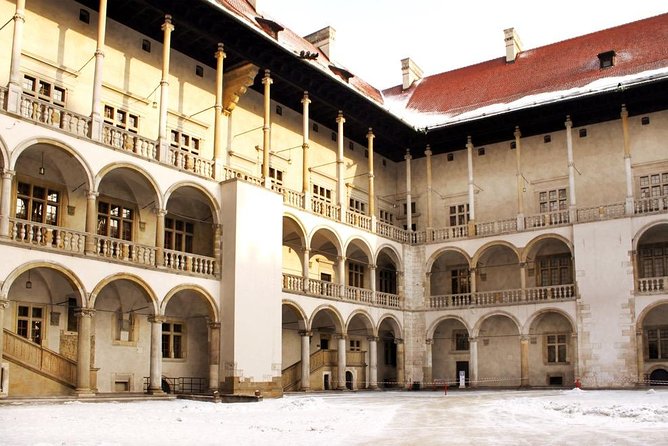
The cathedral shifts the tone from palace life to ceremony, faith, and national remembrance. Its Gothic structure has witnessed coronations, weddings, and funerals for Polish monarchs, so every chapel and altar carries more than an architectural story.
Your guide will lead you through the interior, pointing out chapels, altars, and significant works. The cathedral can feel crowded, especially in high season, and the tour may not allow much quiet time to examine every detail. That is the trade-off for seeing it with a guide and keeping the entire experience to two hours.
Dress with care. Shorts and sleeveless tops are not allowed in places of worship and selected museums. Both men and women must cover their knees and shoulders. This is easy to manage if you pack a light layer or choose suitable clothing for the day.
The cathedral is often the emotional high point of the visit. The castle tells you how rulers displayed authority. The cathedral shows how royal power was tied to religion, ceremony, and burial. The contrast gives the tour a useful rhythm.
A few more Krakow half days to consider
- From Krakow: Auschwitz-Birkenau Guided Tour & Hotel Pickup
★ 4.5 · 33,358 reviews - From Krakow: Auschwitz-Birkenau Guided Tour & Hotel Pickup
★ 4.5 · 29,340 reviews - Krakow: Auschwitz Guided Tour with Optional Hotel Pickup
★ 4.5 · 15,280 reviews - Krakow–Zakopane: Cable Car, Chocholow Baths, Cheese & Vodka
★ 5.0 · 10,720 reviews
Climbing to the Sigismund Bell
The bell tower adds a physical challenge and one of the tour’s most distinctive moments. You climb to see the Sigismund Bell, a massive historic bell associated with Polish national memory. Tradition says that touching it brings good luck.
This is not just a quick photo stop at ground level. You should expect stairs and enough walking to make comfortable shoes a sensible choice. The tower visit can feel like a pleasant surprise because it offers a change from looking at rooms and altars.
The bell also gives the guide a chance to connect everyday custom with national history. Touching it is a simple gesture, but it makes the visit feel less like a museum checklist. You take part in a local tradition, however briefly, rather than only observing from behind a barrier.
If stairs are tiring for you, keep this part in mind when deciding. The supplied details do not specify accessibility arrangements, so ask the provider before booking if you have mobility concerns.
Descending into the royal crypts
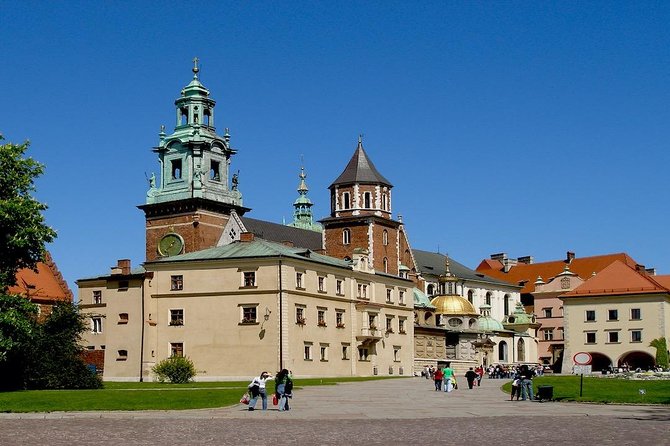
The final part takes you below the cathedral, into crypts where kings, queens, poets, and national heroes are buried. This section gives the tour its strongest sense of continuity. The people introduced in the castle rooms are no longer abstract rulers from a textbook. They become figures connected to real memorials and burial places.
The crypts are also a reminder that Wawel serves as a national shrine as much as a historic attraction. Royal authority, religious devotion, literature, and Polish identity meet here.
Your guide’s role is particularly useful underground. It is easy to lose track of names and dates when several generations of rulers are connected to one place. A clear story helps you understand the succession of power and the later meaning attached to these tombs.
The crypts can feel solemn, so this is not a section to rush through. Still, the whole tour must keep moving to fit the two-hour schedule. If you want time for quiet reflection or close study of individual monuments, return independently after the guided visit if opening conditions allow.
How the guides shape the experience
The strongest part of this tour is the guiding. A good Wawel visit depends on someone who can connect architecture, royal politics, religion, art, and modern Polish identity without turning the whole thing into a list of dates.
Helena has received especially strong praise for her passion, clear explanations, and interactive approach. She has been described as making Polish struggles and relationships with neighbouring powers easier to understand, while also bringing a personal respect to the cathedral. Helen has also been praised for delivering a large amount of information in a way that remains easy to remember.
Other guides named in visitor feedback include Anna, Jadwiga, Alexandra, also called Ola, and Anya. The common strengths are friendly communication, detailed explanations, humour, and a willingness to answer questions. That matters because Wawel contains more material than any two-hour route can cover.
You choose one language at booking: English, Polish, German, Italian, Spanish, or French. Each group tour is conducted in a single language, so you will not be switching between languages during the visit.
Families can enjoy the tour, especially if children respond well to stories about kings, castles, bells, and the Krakow dragon legend. The experience is still information-heavy, and one account described children disrupting the group. If your children need constant movement, plan a break before or after the tour.
Is $57 a fair price for two hours?
At $57 per person, this is not the cheapest way to see Wawel. You are paying for a licensed local guide, entry to one permanent castle exhibition, cathedral admission, and skip-the-line access. The value depends on how much you want explanation rather than simple entry.
For a first visit, I think the price is reasonable if you want both major sites and have limited time. Buying separate admission and trying to connect the royal rooms, cathedral, crypts, and bell tower on your own may save money, but it also leaves you to build the historical framework yourself.
The most important limitation is that only one permanent castle exhibition is included. If you want to see the State Rooms, Royal Private Apartments, and Crown Treasury, this tour alone will not cover everything. Think of it as a well-organized introduction, not a complete Wawel museum pass.
Skip-the-line entry can also have real value on a crowded day. It does not make the interiors empty, but it reduces the risk of spending part of a short Krakow visit waiting for admission.
Timing, crowds, and what to wear
The stated duration is two hours, and that is enough to cover the main route at a steady pace. You will walk through castle rooms, cathedral spaces, the bell tower, and crypts, so wear comfortable shoes.
Crowds affect the experience. In busy periods, the cathedral may allow less time for lingering, and larger groups can make narrow rooms feel tight. Headsets are provided for groups of nine or more, which helps you follow the guide without standing shoulder to shoulder.
Toilets may not always be available during the visit. One account specifically found them closed, so use facilities before gathering at the meeting point when possible.
You can cancel up to 24 hours before the start for a full refund, and the reserve-now, pay-later option gives you some flexibility while planning. Those terms are useful if your Krakow schedule is still shifting.
Who should book this Wawel tour?
I would choose this tour if you are visiting Krakow for the first time, want the main Wawel sights in one outing, or prefer a strong narrative to reading labels alone. It is also a good fit if you have only a few hours and want to understand why the castle and cathedral matter to Poland.
It suits adults and older children who enjoy stories, art, and historical detail. The guides aim to keep the visit interactive, but the pace is still purposeful and the material is substantial.
I would choose a longer or more specialized visit if you already know Wawel well, want several castle exhibitions, or prefer to spend ten minutes studying each painting and chapel. You may also prefer an independent visit if crowds, stairs, or a fixed group pace are a concern.
Should you book it?
Book this tour if you want a focused, well-explained introduction to Krakow’s royal center. The cathedral, royal crypts, and Sigismund Bell make the experience more than a palace walk, while the guide supplies the context that turns impressive rooms into a connected story.
Before paying, check which castle exhibition is available, choose your language carefully, dress for the cathedral, and arrive early at St. Mary Magdalene Square. If you accept the brisk two-hour pace and the possibility of crowds, $57 buys a practical way to see Wawel’s essential sights without wasting time finding your way through them.
FAQ
Where does the Wawel Castle and Cathedral tour meet?
Meet your guide at St. Mary Magdalene Square by the Piotr Skarga Monument. Look for the guide holding an excursions.city sign.
Is the meeting point on Wawel Hill?
No. The meeting point is at the location shown on your voucher, not on Wawel Hill.
How long does the tour last?
The tour lasts two hours.
Which languages are available?
You can book the tour in Spanish, French, Polish, English, German, or Italian.
Is the tour conducted in more than one language?
No. Each group tour is conducted in one language selected at the time of booking.
What castle exhibition is included?
The tour includes one permanent exhibition at Wawel Castle. Depending on availability, this may be the State Rooms, Royal Private Apartments, or Crown Treasury.
Is cathedral admission included?
Yes. The ticket to Wawel Cathedral is included.
Are headphones provided?
Headsets are provided for groups of nine or more.
Is the Sigismund Bell included?
Yes. The itinerary includes a visit to the cathedral tower to see the Sigismund Bell. Tradition says touching it brings good luck.
What clothing is required?
Shorts and sleeveless tops are not allowed in places of worship and selected museums. Your knees and shoulders must be covered.
How early should I arrive?
Arrive 10 minutes before the scheduled start. Late arrivals cannot join after the group has departed, and their tickets are non-refundable.
Can I cancel for a refund?
Yes. You can cancel up to 24 hours in advance for a full refund.
Recently added in Krakow
- Auschwitz-Birkenau and Krakow Private Car Trip from Katowice★ 4.3 · 3 reviews
- Wawel Castle, Old Town with St. Mary’s Church Guided Tour★ 5.0 · 3 reviews
- Wawel Castle, Cathedral, Rynek Underground Tour with Lunch★ 5.0 · 3 reviews
- From Krakow: Chocholow Thermal Hot Springs (hotel pick up)★ 5.0 · 3 reviews
- Private tour to Zakopane and Thermal Baths from Krakow★ 5.0 · 3 reviews
- Legends of Cracow ROBOTIC SHOW★ 4.0 · 3 reviews
- From Krakow: Zakopane and Thermal Pools Guided Trip★ 5.0 · 3 reviews
- Guided Beer Tour in Krakow★ 4.5 · 3 reviews
Wawel Castle Tours, compared.
Wawel Royal Hill with Optional Castle and Cathedral
Read our review →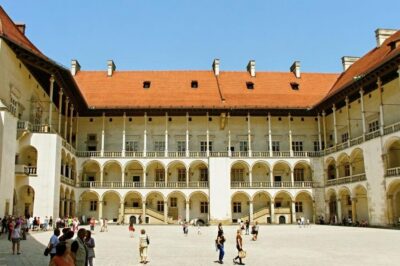
Skip-the-Line Wawel Castle Chambers Private Tour
Read our review →
Private Krakow City Tour, Krakow Old Town and Wawel Castle Tour
Read our review →
Krakow Guided Tour to Iconic Polish Royal Residence Wawel Castle
Read our review →Where else this one turns up